Results by title
28167 books match the query 'History' and 1262 start with b
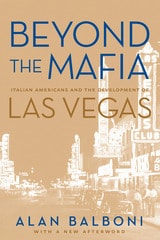
Beyond The Mafia
Italian Americans And The Development Of Las VegasAlan Balboni
University of Nevada Press, 2006
When Beyond the Mafia first appeared in 1996 it was hailed as a significant contribution to the history of Las Vegas and of ethnic minorities in America. Author Alan Balboni traces the history of Italians in Las Vegas from the founding of the city in 1905, recording their activities in the fledgling settlement. As Las Vegas grew, Italian Americans participated in every aspect of the city’s society and economy, including construction, retail establishments, hotels, and—after the statewide legalization of gambling in 1931—the casino industry. Basing his research on well over a hundred interviews, as well as the records of Italian American organizations, public agencies, and other sources, Balboni has produced a sparkling and thoroughly documented account of the history of one of Las Vegas’s most progressive and productive ethnic minorities. This new paperback edition includes an afterword by the author that brings the story of Las Vegas’s Italian Americans up to the present.
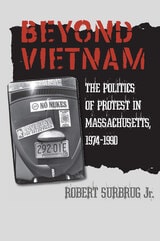
Beyond Vietnam
The Politics of Protest in Massachusetts, 1974-1990Robert Surbrug
University of Massachusetts Press, 2009
Narratives of the 1960s typically describe an ascending arc of political activism that peaked in 1968, then began a precipitous descent as the revolutionary dreams of the New Left failed to come to fruition. The May 1970 killings at Kent State often stand as an epitaph to a decade of protest, after which the principal story becomes the resurgence of the right.
In Beyond Vietnam: The Politics of Protest in Massachusetts, 1974–1990, Robert Surbrug challenges this prevailing paradigm by examining three protest movements that were direct descendants of Vietnam-era activism: the movement against nuclear energy; the nuclear weapons freeze movement; and the Central American solidarity movement. Drawing lessons from the successes and failures of the preceding era, these movements had a significant impact on the liberal wing of the Democratic Party, which itself had been undergoing major transformations in the wake of the 1960s.
By focusing on one state—Massachusetts—Surbrug is able to illuminate the interaction between the activist left and mainstream liberalism, showing how each influenced the other and how together they helped shape the politics of the 1970s and 1980s. During these years, Massachusetts emerged as a center of opposition to nuclear power, the continuing Cold War arms race, and Ronald Reagan's interventionist policies in Central America. The state's role in national policy was greatly enhanced by prominent political figures such as Senator Edward Kennedy, Speaker of the House Thomas “Tip” O'Neill, presidential candidate Governor Michael Dukakis, Vietnam veteran Senator John Kerry, and moderate Republican Silvio Conte.
What Beyond Vietnam shows is that the rise of the right in the aftermath of the 1960s was by no means a unilateral ascendancy. Instead it involved a bifurcation of American politics in which an increasingly strong conservative movement was vigorously contested by an activist left and a reinvigorated mainstream liberalism.
Beyond Words
Discourse and Critical Agency in AfricaAndrew Apter
University of Chicago Press, 2007
Even within anthropology, a discipline that strives to overcome misrepresentations of peoples and cultures, colonialist depictions of the so-called Dark Continent run deep. The grand narratives, tribal tropes, distorted images, and “natural” histories that forged the foundations of discourse about Africa remain firmly entrenched. In Beyond Words, Andrew Apter explores how anthropology can come to terms with the “colonial library” and begin to develop an ethnographic practice that transcends the politics of Africa’s imperial past.
The way out of the colonial library, Apter argues, is by listening to critical discourses in Africa that reframe the social and political contexts in which they are embedded. Apter develops a model of critical agency, focusing on a variety of language genres in Africa situated in rituals that transform sociopolitical relations by self-consciously deploying the power of language itself. To break the cycle of Western illusions in discursive constructions of Africa, he shows, we must listen to African voices in ways that are culturally and locally informed. In doing so, Apter brings forth what promises to be a powerful and influential theory in contemporary anthropology.
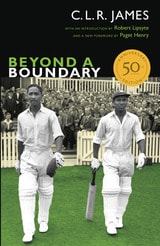
Beyond a Boundary
50th Anniversary EditionC. L .R. James
Duke University Press, 2013
Named one of the Top 50 Sports Books of All Time by Sports Illustrated
"Beyond a Boundary . . . should find its place on the team with Izaak Walton, Ivan Turgenev, A. J. Liebling, and Ernest Hemingway."—Derek Walcott, The New York Times Book Review
"As a player, James the writer was able to see in cricket a metaphor for art and politics, the collective experience providing a focus for group effort and individual performance. . . . [In] his scintillating memoir of his life in cricket, Beyond a Boundary (1963), James devoted some of his finest pages to this theme."—Edward Said, The Washington Post
"A work of double reverence—for the resilient, elegant ritualism of cricket and for the black people of the world."—Whitney Balliett, The New Yorker
"Beyond a Boundary is a book of remarkable richness and force, which vastly expands our understanding of sports as an element of popular culture in the Western and colonial world."—Mark Naison, The Nation
"Everything James has done has had the mark of originality, of his own flexible, sensitive, and deeply cultured intelligence. He conveys not a rigid doctrine but a delight and curiosity in all the manifestations of life, and the clue to everything lies in his proper appreciation of the game of cricket."—E. P. Thompson, author of The Making of the English Working Class
"Beyond a Boundary is . . . first and foremost an autobiography of a living legend—probably the greatest social theorist of our times."—Manning Marable, Journal of Sport & Social Issues
"The great triumph of Beyond a Boundary is its ability to rise above genre and in its very form explore the complex nature of colonial West Indian society."—Caryl Phillips, The New Republic
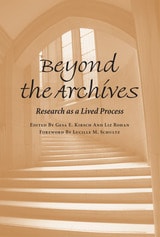
Beyond the Archives
Research as a Lived ProcessEdited by Gesa E. Kirsch and Liz Rohan Foreword by Lucille M. Schultz
Southern Illinois University Press, 2008
This collection of highly readable essays reveals that research is not restricted to library archives. When researchers pursue information and perspectives from sources beyond the archives—from existing people and places— they are often rewarded with unexpected discoveries that enrich their research and their lives.
Beyond the Archives: Research as a Lived Process presents narratives that demystify and illuminate the research process by showing how personal experiences, family history, and scholarly research intersect. Editors Gesa E. Kirsch and Liz Rohan emphasize how important it is for researchers to tap into their passions, pursuing research subjects that attract their attention with creativity and intuition without limiting themselves to traditional archival sources and research methods.
Eighteen contributors from a number of disciplines detail inspiring research opportunities that led to recently published works, while offering insights on such topics as starting and finishing research projects, using a wide range of types of sources and methods, and taking advantage of unexpected leads, chance encounters and simple clues. In addition, the narratives trace the importance of place in archival research, the parallels between the lives of research subjects and researchers, and explore archives as sites that resurrect personal, cultural, and historical memory.
Beyond the Archives sheds light on the creative, joyful, and serendipitous nature of research, addressing what attracts researchers to their subjects, as well as what inspires them to produce the most thorough, complete, and engaged scholarly work. This timely and essential volume supplements traditional-method textbooks and effectively models concrete practices of retrieving and synthesizing information by professional researchers.
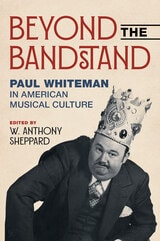
Beyond the Bandstand
Paul Whiteman in American Musical CultureEdited by W. Anthony Sheppard
University of Illinois Press, 2024
The most successful bandleader of the 1920s, Paul Whiteman was an entertainment icon who played a major role in the mainstreaming of jazz. Whiteman and his band premiered Gershwin’s Rhapsody in Blue. Duke Ellington acknowledged his achievements. His astonishing ear for talent vaulted a who’s who of artists toward prominence. But Whiteman’s oversized presence eclipsed Black jazz musicians while his middlebrow music prompted later generations to jettison him from jazz history.
W. Anthony Sheppard’s collection of essays confronts the racial implications of Whiteman’s career. The contributors explore Whiteman’s broad impact on popular culture, tracking his work and influence in American marketing, animated films, the Black press, Hollywood, and the music publication industry, and following him behind the scenes with arrangers, into grand concert halls, across the Atlantic, into the courtroom, and on television.
Multifaceted and cutting-edge, Beyond the Bandstand explores the racial politics and artistic questions surrounding a controversial figure in popular music.
Contributors: Ryan Raul Bañagale, Stephanie Doktor, John Howland, Katherine M. Leo, Sarah Caissie Provost, W. Anthony Sheppard, Catherine Tackley, Elijah Wald, and Christi Jay Wells
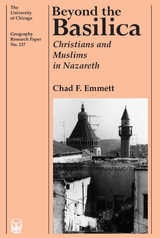
Beyond the Basilica
Christians and Muslims in NazarethChad F. Emmett
University of Chicago Press, 1994
Emmett describes both the positive and negative effects of Nazareth’s residential patterns. He shows that the addition of new and ethnically mixed quarters has promoted mixed schools, joint holiday celebrations, a common political culture, and social networks that cross ethnic boundaries. But he also finds that tensions exist among Christian groups and between Muslims and Christians in regard to intersectarian marriages, religious conversion, attempts to establish a joint Christian cemetery, and the emergence of a local Islamic party.
Extensive interviews with leaders of religious groups, political parties, and residents reveal the way in which members of each ethnic community perceive one another. A survey of 300 families gives a wealth of details about the make-up of Nazareth’s population, including residential histories, religion, level of religious conviction, friendship and shopping patterns, and much more. Fourteen maps trace changes in the distribution of religious groups and political affiliation in Nazareth from the mid-nineteenth century to the present.
Beyond the Basilica will interest cultural geographers, historians, demographers, political scientists, and anyone who would like to learn more about an ethnically divided community in the residents cooperate more than they fight.
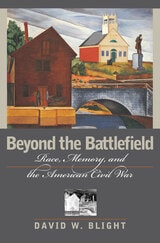
Beyond the Battlefield
Race, Memory, and the American Civil WarDavid W. Blight
University of Massachusetts Press, 2002
The book as a whole demonstrates several ways to probe the history of memory, to understand how and why groups of Americans have constructed versions of the past in the service of contemporary social needs. Topics range from the writing and thought of Frederick Douglass and W.E.B. Du Bois to a comparison of Abraham Lincoln and Douglass on the level of language and memory. The volume also includes a compelling study of the values of a single Union soldier, an analysis of Ken Burns's PBS series The Civil War, and a retrospective treatment of the distinguished African American historian Nathan I. Huggins.
Taken together, these lucidly written pieces offer a thoroughgoing assessment of the stakes of Civil War memory and their consequences for American race relations. Beyond the Battlefield demonstrates not only why we should preserve and study our Civil War battlefields, but also why we should lift our vision above those landscapes and ponder all the unfinished questions of healing and justice, of racial harmony and disharmony, that still bedevil our society and our historical imagination.
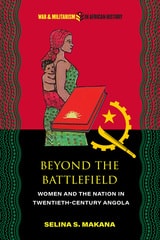
Beyond the Battlefield
Women and the Nation in Twentieth-Century AngolaSelina S. Makana
Ohio University Press, 0
Beyond the Battlefield offers a critical reappraisal of Angola’s nationalist history by centering the experiences and political agency of women during the country’s transition from Portuguese colonial rule to independence. Challenging dominant masculinist narratives that equate anticolonial resistance with armed combat, this study introduces maternalist nationalism as a theoretical framework to illuminate how women engaged in nation building through often-overlooked forms of labor and activism.
While men were largely visible on the battlefield, women fought a parallel struggle on the home front—mobilizing care work, reproductive labor, and political engagement in ways that were essential to the liberation movement and the postindependence state. Drawing on archival sources and women’s testimonies, Makana explores how patriotic motherhood—a concept defined as the fusion of nationalist politics with gendered expectations of women’s roles—enabled women to see themselves as vital contributors to the nation’s future.
This study contributes to scholarship in African history, gender studies, and postcolonial theory by offering a nuanced account of the intersections among militarism, nationalism, and gender. It invites readers to reconsider the frameworks through which political subjectivity and historical memory are constructed. Beyond the Battlefield is an essential resource for scholars and students interested in the gendered dimensions of colonialism, war, and state formation in modern Africa.
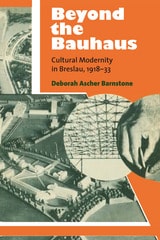
Beyond the Bauhaus
Cultural Modernity in Breslau, 1918-33Deborah Ascher Barnstone
University of Michigan Press, 2016
This richly illustrated volume is the first book in English to address this history, constituting an invaluable addition to the literature on the Weimar period. Its readership includes scholars of German history, art, architecture, urban design, planning, collecting, and exhibition history; of the avant-garde, and of the development of arts academies and arts pedagogy.
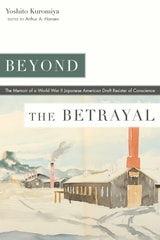
Beyond the Betrayal
The Memoir of a World War II Japanese American Draft Resister of Conscienceby Yoshito Kuromiya edited by ArthurA.Hansen
University Press of Colorado, 2022
Of the 300 Japanese Americans who resisted the military draft on the grounds that the US government had deprived them of their fundamental rights as US citizens, Kuromiya alone has produced an autobiographical volume that explores the short- and long-term causes and consequences of this fateful wartime decision. In his exquisitely written and powerfully documented testament he speaks truth to power, making evident why he is eminently qualified to convey the plight of the Nisei draft resisters. He perceptively reframes the wartime and postwar experiences of the larger Japanese American community, commonly said to have suffered in the spirit of shikata ga nai—enduring that which cannot be changed—and emerged with dignity.
Beyond the Betrayal makes abundantly clear that the unjustly imprisoned Nisei could and did exercise their patriotism even when they refused to serve in the military in the name of civil liberties and social justice. Kuromiya’s account, initially privately circulated only to family and friends, is an invaluable and insightful addition to the Nikkei historical record.
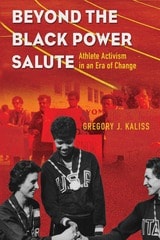
Beyond the Black Power Salute
Athlete Activism in an Era of ChangeGregory J. Kaliss
University of Illinois Press, 2023
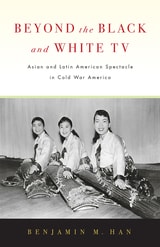
Beyond the Black and White TV
Asian and Latin American Spectacle in Cold War AmericaBenjamin M. Han
Rutgers University Press, 2020
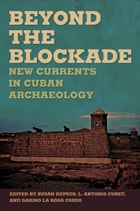
Beyond the Blockade
New Currents in Cuban ArchaeologyEdited by Susan Kepecs, L. Antonio Curet, and Gabino La Rosa Corzo
University of Alabama Press, 2011
An important collection of essays and scholarship by Cuban archaeologists about precontact human settlement on the island.
An important and timely collection of essays that greatly expands knowledge of the human settlement of Cuba and the activities of its indigenous peoples. The collection is a testament to the tenacity of Cuban and US scholars determined to dismantle the political and economic barriers that have impeded collaborative archaeological scholarship in Cuba. Despite economic and political challenges that have limited the pursuit of archaeological research in Cuba, these essays show that Cuban archaeology has made valuable contributions to understanding the cultural processes that have shaped life in the Caribbean in both prehispanic and historic periods and added significantly to our understanding of past Cuban peoples.
The collection, one of only a few studies of Cuban archaeology published in English in the United States, includes essays by both Cuban and US scholars that highlight trends in Cuban archaeology. It recognizes the past pioneers of joint Cuban-US archaeological projects and pays homage to those researchers, including Betty Meggers and Lourdes Dominguez, who sustained scholarly contact across the Florida Straits despite geopolitical roadblocks.

Beyond the Body
The Boundaries of Medicine and English Renaissance DramaWilliam Kerwin
University of Massachusetts Press, 2005
Drawing on research in the social history of medicine as well as a wide-ranging collection of primary narratives of medical encounters, Kerwin pursues the stories of several medical groups. Specifically, he examines women healers in terms of the changing place of women in the public sphere; the connections between drug sellers—apothecaries and alchemists—and an emerging modern economy; the role barbers and surgeons played in early modern concerns for protecting a new sense of privacy and interiority; the ways physicians defined their professional primacy through the language of theaters and actors; and the ways individual patients employed rhetorics of diagnosis as a way of participating in sectarian religious battles. The study moves from the dynamics of medical politics to the work drama does in exposing those dynamics. In addition to offering astute readings of works by Shakespeare and Ben Jonson, the book pays substantial attention to plays by Samuel Daniel, John Fletcher, John Ford, Thomas Heywood, John Lyly, Philip Massinger, and John Webster.
Beyond the Body complements the wealth of recent critical attention given to the body. Kerwin attends to a different sort of material politics; as the book's title suggests, he asks a reader interested in the politics of medicine to look not at the practitioner treating the body but at the social forces influencing the practitioner. Beyond the Body works to erode a widespread cultural bias toward giving medicine deference as a self-defining profession.

Beyond the Booth
Merrill's Fifty Years with the EaglesCindy Reese and Merrill Reese
Temple University Press, 2027
Merrill Reese is the longest tenured radio play-by-play announcer in the history of the NFL. He has been with the Philadelphia Eagles since 1977, covering the team’s players, coaches, and owners in locker rooms, on the sidelines, and on road trips.
Beyond the Booth is a heartfelt history of the Eagles as recounted by Reese in conversation with the interviewer who knows him best—his wife, Cindy. Reese shares his memories and recollections of the team from the Dick Vermeil years through the Nick Sirianni era. (Spoiler alert: he was no Chip Kelly fan.) Cindy draws out her husband’s observations on the authenticity of the team’s personalities and leaders and how they make it successful. Merrill also describes his relationships with his broadcast colleagues and players, including Jalen Hurts.
With her insider perspective, Cindy knows what to ask for Merrill to share his thoughts on his connection with the fans and success as a broadcaster, such as how performing in TV commercials as a child helped him develop his keen memorization skills. (She uses flashcards to test Merrill on players.)
Reese’s passion for the game, shared by his wife, is infectious. Beyond the Booth will excite every Eagles fan.
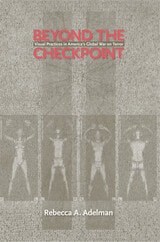
Beyond the Checkpoint
Visual Practices in America's Global War on TerrorRebecca A. Adelman
University of Massachusetts Press, 2014
Tracing the connections between citizenship and spectatorship, and moving beyond the close reading of visual representations, this book focuses on the institutions and actors that create, monitor, and regulate the visual landscape of the GWOT. Adelman looks around and through common images to follow the complex patterns of practice by which institutions and audiences engage them in various contexts. In the process, she proposes a new methodology for studying visual cultures of conflict, and related phenomena like violence, terror, and suffering that are notoriously difficult to represent.
Attending to previously unanalyzed dimensions of this conflict, this book illustrates the complexity of GWOT visual culture and the variegated experiences of citizenship that result as Americans navigate this terrain.
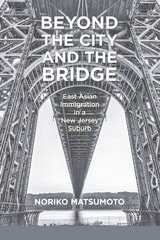
Beyond the City and the Bridge
East Asian Immigration in a New Jersey SuburbMatsumoto, Noriko
Rutgers University Press, 2018
Winner of the Richard P. McCormick Prize from the New Jersey Historical Association
Honorable Mention, 2019 American Sociological Association Book Award - Asia/Asian American Section
In recent decades, the American suburbs have become an important site for immigrant settlement. Beyond the City and the Bridge presents a case study of Fort Lee, Bergen County, on the west side of the George Washington Bridge connecting Manhattan and New Jersey. Since the 1970s, successive waves of immigrants from East Asia have transformed this formerly white community into one of the most diverse suburbs in the greater New York region. Fort Lee today has one of the largest concentrations of East Asians of any suburb on the East Coast, with Chinese, Japanese, and Koreans forming distinct communities while influencing the structure and everyday life of the borough. Noriko Matsumoto explores the rise of this multiethnic suburb—the complex processes of assimilation and reproduction of ethnicities, the changing social relationships, and the conditions under which such transformations have occurred.
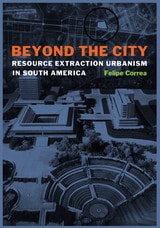
Beyond the City
Resource Extraction Urbanism in South AmericaBy Felipe Correa
University of Texas Press, 2016
During the last decade, the South American continent has seen a strong push for transnational integration, initiated by the former Brazilian president Fernando Henrique Cardoso, who (with the endorsement of eleven other nations) spearheaded the Initiative for the Integration of Regional Infrastructure in South America (IIRSA), a comprehensive energy, transport, and communications network. The most aggressive transcontinental integration project ever planned for South America, the initiative systematically deploys ten east-west infrastructural corridors, enhancing economic development but raising important questions about the polarizing effect of pitting regional needs against the colossal processes of resource extraction. Providing much-needed historical contextualization to IIRSA’s agenda, Beyond the City ties together a series of spatial models and offers a survey of regional strategies in five case studies of often overlooked sites built outside the traditional South American urban constructs.
Implementing the term “resource extraction urbanism,” the architect and urbanist Felipe Correa takes us from Brazil’s nineteenth-century regional capital city of Belo Horizonte to the experimental, circular, “temporary” city of Vila Piloto in Três Lagoas. In Chile, he surveys the mining town of María Elena. In Venezuela, he explores petrochemical encampments at Judibana and El Tablazo, as well as new industrial frontiers at Ciudad Guayana. The result is both a cautionary tale, bringing to light a history of societies that were “inscribed” and administered, and a perceptive examination of the agency of architecture and urban planning in shaping South American lives.
Beyond the Crises
The Pontificate of Benedict XVIRegoli
St. Augustine's Press, 2023
––Benedict XVI, General Audience, 27 February 2013
Roberto Regoli offers a keen and comprehensive preview of Pope Benedict XVI's pontificate, which will be better understood only after time has passed and more becomes available. As an historian, Regoli provides ample context to frame the theology and pastoral priorities of a pope, professor, priest, and figure of history who has been shaped by his times, and who will undoubtedly be remembered as deeply orienting the Church toward the future. The perspective and questions offered by Regoli will likewise be a key component to the scholarship surrounding Pope Benedict's pontificate for decades to come, and he significantly broadens what has already been compiled by Anglophone writers.
Beyond the Death of God
Religion in 21st Century International PoliticsSimone Raudino and Patricia Sohn, Editors
University of Michigan Press, 2022
This volume offers a nuanced picture with specific instances of religion and politics in Muslim, Jewish, Christian, Buddhist, and Hindu contexts, broadly presenting the phenomenon of religion and politics via country and thematic case studies. Qualitative, quantitative, material, philosophical, and theological analyses draw upon social theory to show how (and why) religion matters deeply in each time and place.
The authors and contributors demonstrate that religion is a significant force that drives societies and polities around the world, and that a radical change in the Western understanding of value-driven global politics is needed. Beyond the Death of God offers new, local voices to Western audiences—through essays that suggest the need for an appreciation of Divinity as a quintessence holding a significant place in the hearts, minds, social orders, and political organization of polities around the world.
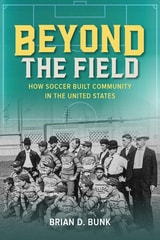
Beyond the Field
How Soccer Built Community in the United StatesBrian D. Bunk
University of Illinois Press, 2025
Played by both migrants and native-born Americans, soccer created communities across the United States. Brian D. Bunk ranges from Pawtucket to Honolulu as he illuminates the deep and diverse origins of the American sport.
Soccer took root as immigration, urbanization, and industrialization triggered immense changes across society. Matches built local pride as teams battled rival neighborhoods and towns. Teammates and supporters shared meals, raised money for fallen players, and attended each other’s weddings and funerals. If sometimes damaged by economic depression or shattered by war, clubs often bounced back to provide a steadying, resilient force in their towns. Bunk follows the story from the 1880s through World War I by profiling the struggles and joys of players while also tracing the overlooked impact of people of African, Chinese, Hawaiian, Jewish, and Filipino descent on American soccer culture.
Engaging and rich in detail, Beyond the Field draws on extensive original research to expand our idea of the people and places that formed the American game.
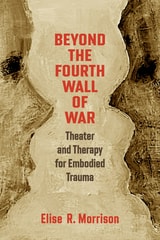
Beyond the Fourth Wall of War
Theater and Therapy for Embodied TraumaElise R. Morrison
University of Michigan Press, 2026
Beyond the Fourth Wall of War sheds light on forms of embodied performance that emerge in the aftermath of structural violence—war, displacement, and militarism—as individual bodies and bodies politic are shaped by communal disorders. As Elise R. Morrison argues that theater that addresses audiences directly by breaking the so-called “fourth wall”—which allows spectators to see but not interact with the events onstage—can offer embodied frameworks for reckoning with war trauma that move beyond traditions of illusionism and spectatorial distance.
Grounded in performance studies, this interdisciplinary study also draws deeply from digital media studies, peace studies, neuroscientific research in embodied cognition and trauma, and drama therapy. Through a comparative analysis of somatic, interactive methodologies in contemporary trauma-informed therapies, Morrison reveals the capacity of theatrical performance to model “somatic witnessing” and kinesthetic empathy and to cultivate communal practices of repair in response to state-sanctioned violence. Underlying this work is a broader inquiry into war’s performative nature, as participatory theater uniquely reorients spectatorship toward rehearsing “performative ethics” in representational and militarized “theaters of war.” Beyond the Fourth Wall of War makes novel interventions into discourses of contemporary warfare by extending the lens of trauma beyond the battlefield to civilian publics who observe conflict from a distance, yet remain entangled in its machinery.
Beyond the Frontier
The Midwestern Voice in American Historical WritingDavid S. Brown
University of Chicago Press, 2009
As the world went to war in 1941, Time magazine founder Henry Luce coined a term for what was rapidly becoming the establishment view of America’s role in the world: the twentieth century, he argued, was the American Century. Many of the nation’s most eminent historians—nearly all of them from the East Coast—agreed with this vision and its endorsement of the vigorous use of power and persuasion to direct world affairs. But an important concentration of midwestern historians actively dissented. With Beyond the Frontier, David S. Brown tells their little-known story of opposition.
Raised in a cultural landscape that combined agrarian provincialism with reform-minded progressivism, these historians—among them Charles Beard, William Appleman Williams, and Christopher Lasch—argued strenuously against the imperial presidencies, interventionist foreign policies, and Keynesian capitalism that swiftly shaped cold war America. Casting a skeptical eye on the burgeoning military-industrial complex and its domestic counterpart, the welfare state, they warned that both components of the liberal internationalist vision jeopardized the individualistic, republican ethos that had long lain at the heart of American democracy.
Drawing on interviews, personal papers, and correspondence of the imoprtant players in the debate, Brown has written a fascinating follow-up to his critically acclaimed biography of Richard Hofstadter. Illuminating key ideas that link midwestern writers from Frederick Jackson Turner all the way to William Cronon and Thomas Frank, Beyond the Frontier is intellectual history at its best: grounded in real lives and focused on issues that remain salient—and unresolved—even today.
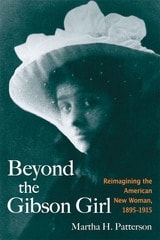
Beyond the Gibson Girl
Reimagining the American New Woman, 1895-1915Martha H. Patterson
University of Illinois Press, 2005
Challenging monolithic images of the New Woman as white, well-educated, and politically progressive, this study focuses on important regional, ethnic, and sociopolitical differences in the use of the New Woman trope at the turn of the twentieth century. Using Charles Dana Gibson's "Gibson Girls" as a point of departure, Martha H. Patterson explores how writers such as Pauline Hopkins, Margaret Murray Washington, Sui Sin Far, Mary Johnston, Edith Wharton, Ellen Glasgow, and Willa Cather challenged and redeployed the New Woman image in light of other “new” conceptions: the "New Negro Woman," the "New Ethics," the "New South," and the "New China."
As she appears in these writers' works, the New Woman both promises and threatens to effect sociopolitical change as a consumer, an instigator of evolutionary and economic development, and (for writers of color) an icon of successful assimilation into dominant Anglo-American culture. Examining a diverse array of cultural products, Patterson shows how the seemingly celebratory term of the New Woman becomes a trope not only of progressive reform, consumer power, transgressive femininity, modern energy, and modern cure, but also of racial and ethnic taxonomies, social Darwinist struggle, imperialist ambition, assimilationist pressures, and modern decay.
Beyond the Iron Rice Bowl
Regimes of Production and Industrial Relations in ChinaBoy Lüthje, Siqi Luo, and Hao Zhang
Campus Verlag, 2013
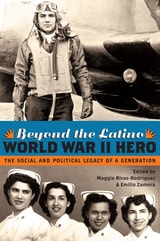
Beyond the Latino World War II Hero
The Social and Political Legacy of a GenerationEdited by Maggie Rivas-Rodríguez and Emilio Zamora
University of Texas Press, 2009
Maggie Rivas-Rodríguez 's edited volume Mexican Americans & World War II brought pivotal stories from the shadows, contributing to the growing acknowledgment of Mexican American patriotism as a meaningful force within the Greatest Generation. In this latest anthology, Rivas-Rodríguez and historian Emilio Zamora team up with scholars from various disciplines to add new insights. Beyond the Latino World War II Hero focuses on home-front issues and government relations, delving into new arenas of research and incorporating stirring oral histories.
These recollections highlight realities such as post-traumatic stress disorder and its effects on veterans' families, as well as Mexican American women of this era, whose fighting spirit inspired their daughters to participate in Chicana/o activism of the 1960s and 1970s. Other topics include the importance of radio as a powerful medium during the war and postwar periods, the participation of Mexican nationals in World War II, and intergovernmental negotiations involving Mexico and Puerto Rico. Addressing the complexity of the Latino war experience, such as the tandem between the frontline and the disruption of the agricultural migrant stream on the home front, the authors and contributors unite diverse perspectives to harness the rich resources of an invaluable oral history.
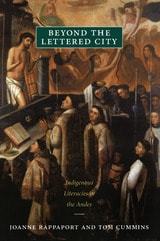
Beyond the Lettered City
Indigenous Literacies in the AndesJoanne Rappaport and Tom Cummins
Duke University Press, 2012

Beyond the Mask
Gordon Craig, Movement, and the ActorIrene Eynat-Confino
Southern Illinois University Press, 1987
Eynat-Confino goes beyond the usual consideration of Craig’s purported theories of the actor, scenery, and the scene painter to get at the heart of Craig’s idea of theater.
She draws not only on the research of contemporary Craig scholars but on material hitherto unavailable—his writings and daybooks and the writings of friends. She ties Craig’s encounter with Isadora Duncan to a decisive modification in his notion of movement. To have an instrument more controllable than the actor, he invented the über-marionette, a giant puppet. Craig also invented the “Scene,” a kinetic stage, the “screens” that brought him worldwide fame were simply an adaptation of this concept.
Eynat-Confino argues that a scenario Craig wrote in 1905, here published for the first time, reveals a theosophical system like that of Blake, a system that was the main force motivating Craig’s artistic quest. In her final chapter, she carefully examines the psychological, aesthetic, and circumstantial factors that kept Craig from completing his work to bring “friendliness—humor—love—ease—peace” to the world.
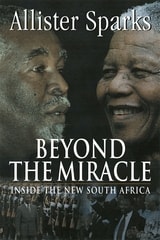
Beyond the Miracle
Inside the New South AfricaAllister Sparks
University of Chicago Press, 2003
Sparks sees South Africa as facing many of the same challenges as the rest of the world, especially a widening gap between rich and poor, exacerbated by the forces of globalization. While the transition government has done much to establish democracy and racial equality in a short time, as well as bring basic services such as clean water to millions who did not have them before, many blacks feel it has not done enough to redress the continuing imbalance of wealth in the country. Many whites, meanwhile, feel disempowered and confused about what role they have to play as a racial minority in a country they used to rule and regard as theirs by divine right. Sparks also covers other burning issues, such as the HIV/AIDS epidemic, high crime rates, the diamond wars, the Congo conflict, and the Zimbabwean land crisis.
Writing vividly and often quite movingly, Sparks draws on his decades of journalistic experience and his recent insider access to key figures in the liberation government to take stock of where South Africa has been, where it's going, and why the rest of the world should not turn away from this country where the First and Third Worlds meet. As Sparks persuasively argues, the success of Mandela's vision of a peaceful "rainbow nation" is crucial not just for the salvation of Africa, but also for the world.
“It is as good a guide to the new South Africa as any.”—Economist
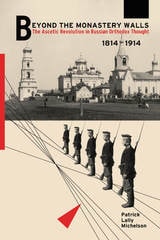
Beyond the Monastery Walls
The Ascetic Revolution in Russian Orthodox Thought, 1814–1914Patrick Lally Michelson
University of Wisconsin Press, 2017
Patrick Lally Michelson's intellectual history of asceticism in Russian Orthodox thought traces the development of these competing arguments from the early nineteenth century to the early months of World War I. He demonstrates that this discourse was an imaginative interpretation of lived Orthodoxy, primarily meant to satisfy the ideological needs of Russian thinkers and Orthodox intellectuals as they responded to the socioeconomic, political, and cultural challenges of modernity.
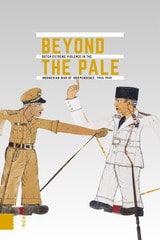
Beyond the Pale
Dutch Extreme Violence in the Indonesian War of Independence, 1945-1949Kon. Inst. v. Taal-, Land- en Volkenkunde (KITLV)
Amsterdam University Press, 2022
In 2005, the Dutch government declared that the Netherlands should never have waged the war. The government’s 1969 position on the violence used by the Dutch armed forces during the war remained unchanged, however: although there had been ‘excesses’, on the whole the armed forces had behaved ‘correctly’. As the indications of Dutch extreme violence mounted, this official position proved increasingly difficult to maintain. In 2016, the Dutch government therefore decided to fund a broad study on the dynamics of the violence. The most important conclusions of that research programme are summarized in this book. The authors show that the Dutch armed forces used extreme violence on a structural basis, and that this was concealed both at the time and for many years after the war by the Dutch government and by society more broadly. All of this – like the entire colonial history – is at odds with the rose-tinted self-image of the Netherlands.
Beyond the Public Sphere
Film and the Feminist ImaginaryMaría Pía Lara
Northwestern University Press, 2021
In Beyond the Public Sphere: Film and the Feminist Imaginary, the renowned philosopher and critical theorist María Pía Lara challenges the notion that the bourgeois public sphere is the most important informal institution between social and political actors and the state.
Drawing on a wide range of films—including The Milk of Sorrow, Ixcanul, Wadja, The Stone of Patience, Marnie, A Streetcar Named Desire, and Talk to Her—Lara dissects cinematic images of women’s struggles and their oppression. She builds on this analysis, developing a concept of the feminist social imaginary as a broader and more complex space that provides a way of thinking through the possibilities for emancipatory social transformation in response to forms of domination perpetuated by patriarchal capitalism.
Beyond the Quagmire
New Interpretations of the Vietnam WarGeoffrey W. Jensen
University of North Texas Press, 2019
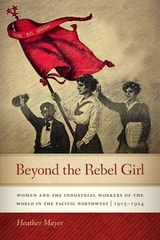
Beyond the Rebel Girl
Women and the Industrial Workers of the World in the Pacific Northwest, 1905-1924Heather Mayer
Oregon State University Press, 2018
In Beyond the Rebel Girl, historian Heather Mayer questions the well-worn vision of Wobblies as young, single, male, itinerant workers. While such workers formed a large portion of the membership, they weren’t the whole picture. In small towns across the Northwest, and in the larger cities of Seattle, Portland, and Spokane, women played an integral role in Wobbly life. Single women, but also families—husband and wife Wobbly teams—played important roles in some of the biggest fights for justice. IWW halls in these Northwest cities often functioned as community centers, with family-friendly events and entertainment.
Women were drawn to the IWW for its radical vision, inclusionary policies, birth control advocacy, and emphasis on freedom of choice in marriage. The IWW also offered women an avenue for activism that wasn’t focused primarily on the fight for suffrage. Beyond the Rebel Girl deepens our understanding of how the IWW functioned and how the union supported women in their fight for birth control, sexual emancipation, and better labor conditions, all while facing persecution at the local, state, and federal levels.
Beyond the River, Under the Eye of Rome
Timothy C. Hart
University of Michigan Press, 2024
Drawing on textual, inscriptional, and archaeological evidence, Hart illustrates how Roman ethnic and ecological stereotypes were employed in the Danubian borderland to support the imperial frontier edifice fundamentally at odds with the region’s natural topography. Distorted Roman perceptions of these Danubian neighbors resulted in disastrous mismanagement of border wars and migrant crises throughout the first five centuries CE. Beyond the River demonstrates how state-supported stereotypes, when coupled with Roman military and economic power, exerted strong influences on the social structures and evolving group identities of the peoples dwelling in the borderland.
Beyond the Sacred Forest
Complicating Conservation in Southeast AsiaMichael R. Dove, Percy E. Sajise, and Amity A. Doolittle, eds.
Duke University Press, 2011
Contributors. Upik Djalins, Amity A. Doolittle, Michael R. Dove, Levita Duhaylungsod, Emily E. Harwell, Jeyamalar Kathirithamby-Wells, Lye Tuck-Po, Percy E. Sajise, Endah Sulistyawati, Yunita T. Winarto
Beyond the Siege of Leningrad
One Woman’s Life during and after the Occupation: The Recollections of Evdokiia Vasil’evna Baskakova-BogachevaPavel Gavrilov
Central European University Press, 2024
This memoir about the experiences of German occupation during the siege of Leningrad (now Saint Petersburg) was written by Moscow-born Evdokiia Vasil’evna Baskakova-Bogacheva (1888–1976), an émigré in Australia, at the age of eighty-one. The text had been forgotten in the Museum of Russian Culture in San Francisco since 1970 until the editors of this volume discovered it.
In the memoirs, after accounting on her youth spent against the background of the First World War and of the two Russian revolutions of 1917, Evdokiia describes the inferno of the Nazi occupation as experienced in a suburb of Leningrad in 1941-43. She survived for nearly two years almost on the front line, within a few kilometers of the blockade ring. As a medical practitioner, she became useful for the occupational authorities and the ever-shrinking town population, until her family was evacuated to the west in October 1943. Besides hunger, discord, disease, the hunt for food and firewood, along with violence and death, Evdokiia’s account deals with various forms of cooperation between Soviet citizens and the new authorities.
All the events she recalls can be confirmed through other sources. The introduction and the detailed notes to the text help the reader to locate Evdokiia’s recollections in time and place, and situate them in their historical context.
Beyond the Sovereign Self
Aesthetic Autonomy from the Avant-Garde to Socially Engaged ArtGrant H. Kester
Duke University Press, 2024

Beyond the Subtitle
Remapping European Art CinemaMark Betz
University of Minnesota Press, 2009
A provocative rethinking of national cinema, authorship, and the discipline of film studies
Examining European art films of the 1950s and 1960s, Mark Betz argues that it is time for film analysis to move beyond prevailing New Wave historiography, mired in outdated notions of nationalism and dragged down by decades of auteurist criticism. Focusing on the cinemas of France and Italy, Betz reveals how the flowering of European art films in the postwar era is inseparable from the complex historical and political frameworks of the time.
Remapping the practices and paradigms of film history, Beyond the Subtitle calls into question the concept of national cinema and explores the largely neglected subjects of subtitling, dubbing, and art film coproductions. Betz also analyzes the iconic figure of the “wandering woman,” or flanêuse, who appears in many of the films under consideration, in light of the postwar boom, modernization, and decolonization. Finally, he rescues the omnibus films to show the need for a new film studies approach. Beyond the Subtitle demonstrates how the geopolitical and institutional contexts that gave rise to these films and to academic film studies should be incorporated into future analysis in order to gain new insight into debates on race, gender, and imperialism.
Beyond the Texts
An Archaeological Portrait of Ancient Israel and JudahWilliam G. Dever
SBL Press, 2017
A handbook for biblical scholars and historians of the Ancient Near East
William G. Dever offers a welcome perspective on ancient Israel and Judah that prioritizes the archaeological remains to render history as it was—not as the biblical writers argue it should have been. Drawing from the most recent archaeological data as interpreted from a nontheological point of view and supplementing that data with biblical material only when it converges with the archaeological record, Dever analyzes all the evidence at hand to provide a new history of ancient Israel and Judah that is accessible to all interested readers.
Features
- A new approach to the history of ancient Israel
- Extensive bibliography
- More than eighty maps and illustrations
Beyond the Trees
Stories of Wisconsin ForestsCandice Gaukel Andrews
Wisconsin Historical Society Press, 2011
Nature writer Candice Andrews weaves together contemporary observations and historical reminisces in Beyond the Trees: Stories of Wisconsin Forests. Readers will journey to some of the most pristine and notable places in the Upper Midwest—Wisconsin’s state and national forests.
The diversity of landscapes evoked in Beyond the Trees is matched only by the characters who inhabit them. Traverse the footsteps of Ojibwe hunters and early explorers in the remote woods of Brule River State Forest. Trek past the remains of bygone logging and CCC camps in the Chequamegon-Nicolet National Forest. Glimpse into the world of Great Lakes shipping in Point Beach State Forest. Walk on trails named after John Muir and Increase Lapham in the Kettle Moraine State Forest, and experience urban green space at Milwaukee’s Havenwoods State Forest. From orchids to oak savanna, beaver to brook trout, and white-tailed deer to timber wolves, discover Wisconsin’s wildlife and flora and fauna. Archival images, informative sidebars, locator maps, and contact information for Wisconsin state and national forests round out this unique book.
Beyond the Usual Beating
The Jon Burge Police Torture Scandal and Social Movements for Police Accountability in ChicagoAndrew S. Baer
University of Chicago Press, 2020
A story of institutionalized police brutality and how Chicago's public outcry led to long-lasting criminal justice reforms.
The malign and long-lasting influence of Chicago police commander Jon Burge cannot be overestimated, particularly as fresh examples of local and national criminal-justice abuse continue to surface with dismaying frequency. Burge’s decades-long tenure on the Chicago police force was marked by racist and barbaric interrogation methods, including psychological torture, burnings, and mock executions—techniques that went far “beyond the usual beating.” After being exposed in 1989, he became a symbol of police brutality and the unequal treatment of nonwhite people, and the persistent outcry against him led to reforms such as the abolition of the death penalty in Illinois.
But Burge hardly developed or operated in a vacuum, as Andrew S. Baer explores to stark effect here. He identifies the darkness of the Burge era as a product of local social forces, arising from a specific milieu beyond the nationwide racialized reactionary fever of the 1960s and 1970s. Similarly, the popular resistance movements that rallied in his wake actually predated Burge’s exposure but cohered with unexpected power due to the galvanizing focus on his crimes and abuses. For more than thirty years, a shifting coalition including torture survivors, their families, civil rights attorneys, and journalists helped to corroborate allegations of violence, free the wrongfully convicted, have Burge fired and incarcerated, and win passage of a municipal reparations package, among other victories. Beyond the Usual Beating reveals that though the Burge scandal underscores the relationship between personal bigotry and structural racism in the criminal justice system, it also shows how ordinary people held perpetrators accountable in the face of intransigent local power.
Beyond the Wall
Writing a Path through PalestineBidisha
Seagull Books, 2025
Their voices come from Bethlehem and Hebron. You can hear them from Jerusalem to Nazareth, and witness their protests in Gaza and Ramallah. From the refugee camps in the West Bank, you can hear the voices of the Palestinian people call out to demand self-determination and a better quality of life. But outside of Israel and the occupied territories, these individual voices are rarely heard—until now.
In Beyond the Wall: Writing a Path through Palestine, internationally renowned feminist critic and writer Bidisha collects the testimonies of an occupied people—ordinary citizens, activists, and children—alongside those of international aid workers and foreign visitors for a revelatory look at a population on the margins.
Called “beautifully belligerent, [and] fiercely intelligent” by The Independent and a “dazzlingly creative writer” by the London Times, Bidisha amplifies the voices of the Palestinian people in this book and lends them her own considerable strength.
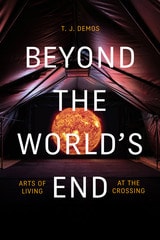
Beyond the World's End
Arts of Living at the CrossingT. J. Demos
Duke University Press, 2020
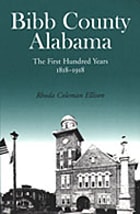
Bibb County, Alabama
The First Hundred YearsRhoda C. Ellison
University of Alabama Press, 1984
This model county history chronicles one hundred years in the life of a representative Deep South county
The history of Bibb County between 1818 and 1918 is in many ways representative of the experience of central Alabama during that period. Bibb County shares physical characteristics with the areas both to its north and to its south. In its northern section is a mineral district and in its southern valleys fertile farming country; therefore, its citizens have sometimes allied themselves with the hill counties and sometimes with their Black Belt neighbors.
Both sections of the county developed in step with the surrounding counties. Bibb's foundries were established during the same time and by the same iron masters as Shelby County, and its coal mines in the same decade as Jefferson County. Its farmers planted the same crops and faced the same problems as those in Perry, Autauga, and Tuscaloosa counties. Like Tuscaloosa, Bibb endeavored to promote river transportation for both its industrial and its agricultural products.
This carefully documented history is based on a variety of original sources, from personal letters to government records. It is generously illustrated with early maps and with old pictures of Bibb landmarks, many of which have now vanished.
Bible Trouble
Queer Reading at the Boundaries of Biblical ScholarshipTeresa J. Hornsby
SBL Press, 2011
The essays in Bible Trouble all engage queer theories for purposes of biblical interpretation, a rare effort to date within biblical scholarship. The title phrase “Bible Trouble” plays on Judith Butler's Gender Trouble, gesturing toward a primary text for contemporary queer theory. The essays consider, among others, the Lazarus story, the Ethiopian eunuch, “gender trouble” in Judges 4 and 5, the Song of Songs, and an unorthodox coupling of the books of Samuel and the film Paris Is Burning. This volume “troubles” not only the boundaries between biblical scholarship and queer theory but also the boundaries between different frameworks currently used in the analysis of biblical literature, including sexuality, gender, race, class, history, and literature. The contributors are Ellen T. Armour, Michael Joseph Brown, Sean D. Burke, Heidi Epstein, Deryn Guest, Jione Havea, Teresa J. Hornsby, Lynn R. Huber, S. Tamar Kamionkowski, Joseph A. Marchal, Jeremy Punt, Erin Runions, Ken Stone, Gillian Townsley, Jay Twomey, and Manuel Villalobos.
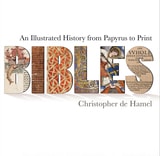
Bibles
An Illustrated History from Papyrus to PrintChristopher de Hamel
Bodleian Library Publishing, 2011
A unique visual history of the world’s best-selling book of all time, Bibles provides a rich snapshot of the biblical bookmaking tradition through images from fifty rare and important Bibles. As the captivating and colorful images collected here reveal, in many ways the history of the Bible mirrors the history of the book and publishing.
Presented chronologically, the Bibles provide a fascinating look into the book making techniques and characteristics of their time. From the fragile papyrus fragments of the ancient world to medieval illuminated manuscripts and glorious modern printed editions, each image is accompanied by a caption which explains its particular significance. In addition, each chapter includes a short introduction that contextualizes each book within its time period. Featuring many unusual examples—some of which have never been illustrated in print before—Bibles includes many of the great biblical texts of the Eastern and Western traditions, including the Magdalen Papyrus, the Laudian Acts, the Anglo-Saxon Exodus, St Margaret’s Gospel-book, the Douce Apocalypse, the Bible Moralisée (MS. Bodley 270b), the Kennicott Bible, the Guttenberg Bible, and the King James Bible.
Drawing exclusively from one of the finest collections of Bibles in the world, which is held at the Bodleian Library at Oxford University, this book tells the remarkable story of the development of the Bible across media, language, and provenance.
Biblical Families in Music
Conflict and Heterodoxy in Oratorios, 1670–1770Robert L. Kendrick
University of Chicago Press, 2025
Based to a great extent on the Old Testament, the largely Catholic musical-dramatic genre was popular in Italy, Austria, and southern Germany in the seventeenth and eighteenth centuries. Biblical Families in Music reveals how difficult stories of fratricide, child sacrifice, death, and forbidden love performed a didactic function in oratorios, teaching early modern audiences about piety and the rules of proper family life.
In the century after 1670, the heavily adapted tales of Abraham and Isaac, Cain and Abel, and the Egyptian slave Hagar and her son Ishmael were set to music by figures such as Alessandro Scarlatti and Antonio Sacchini and performed during Lent in churches and other sacred spaces for an audience of court nobility, clergy, and the urban patriciate. By examining the resonance of Catholic oratorios within predominantly upper-class social realities, the book broadens our cultural understanding of the early modern European family and underscores the centrality of family and familial relation to social position, devotional taste, and identity.

Biblical Judgments
New Legal Readings in the Hebrew BibleDaphne Barak-Erez
University of Michigan Press, 2024
Rather than offering a historical study, Barak-Erez draws upon famous court decisions from around the world to root her analysis in modern law. Organized by subject matter, Biblical Judgments analyzes how the themes of law and government, judging and judges, human rights and social justice, criminal law, private law, and family and inheritance law are presented through a number of different stories. In recounting the compelling narratives of the Hebrew Bible, Biblical Judgments exposes their inherent legal tensions and what we can learn about legal dilemmas today.