Results by title
28167 books match the query 'History' and 1262 start with b
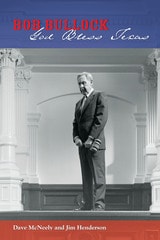
Bob Bullock
God Bless TexasBy Dave McNeely and Jim Henderson
University of Texas Press, 2008
Renowned for his fierce devotion to the people of Texas—as well as his equally fierce rages and unpredictable temper—Bob Bullock was the most powerful political figure in Texas at the end of the twentieth century. First elected to the Texas House of Representatives in 1956, Bullock held several key statewide posts before capturing the lieutenant governor's office in 1990. Though nominally the state's number two official, Bullock in fact became Texas's top power broker, wielding tremendous influence over the legislative agenda and state budget through the 1990s while also mentoring and supporting a future president—George W. Bush.
In this lively, yet thoroughly researched biography, award-winning journalists Dave McNeely and Jim Henderson craft a well-rounded portrait of Bob Bullock, underscoring both his political adroitness and his personal demons. They trace Bullock's rise through state government as Assistant Attorney General, Secretary of State, State Comptroller, and Lieutenant Governor, showing how he increased the power of every office he held. The authors spotlight Bullock's substantial achievements, which included hiring an unprecedented number of women and minorities, instituting a performance review to increase the efficiency of state agencies, restructuring the public school funding system, and creating the state's first water conservation and management plan.

Bob Kleberg and the King Ranch
A Worldwide Sea of GrassBy John Cypher
University of Texas Press, 1996
Ranching on the vast scale that Texas is famous for actually happened at King Ranch, a sea of grass that ultimately spread its pastures to countries around the globe under the fifty-year leadership of Bob Kleberg. This absorbing biography, written by Kleberg's top assistant of many years, captures both the life of the man and the spirit of the kingdom he ruled, offering a rare, insider's view of life on a fabled Texas ranch.
John Cypher spent forty years (1948-1988) on King Ranch. In these pages, he melds highlights of Kleberg's life with memories of his own experiences as the "right hand" who implemented many of Kleberg's grand designs. In a lively story laced with fascinating anecdotes he both recounts his worldwide travels with Kleberg as the ranch expanded its holdings to Latin America, Cuba, Australia, the Philippines, Europe, and Africa, and describes timeless, traditional tasks such as roundup at the home ranch in Kingsville.
Kleberg's accomplishments as the founder of the Santa Gertrudis cattle breed and a breeder of Thoroughbred racing horses receive full attention, as does his fabled lifestyle, which included friendships not merely with the rich and famous but also with Queen Elizabeth the Queen Mother, who shared his love of horse racing. For everyone interested in ranching and one of its most famous practitioners, this book will be essential reading.
Boccaccio's Dante and the Shaping Force of Satire
Robert Hollander
University of Michigan Press, 1997
Among commentators, it had been an unexamined commonplace that the "young" Boccaccio either did not know well or did not understand sufficiently the texts of Dante (even though the "young" Boccaccio is construed as including the thirty-eight-year-old author of the Decameron.) In Boccaccio's Dante and the Shaping Force of Satire, Robert Hollander offers a valuable synthesis of new material and some previously published essays, addressing the question of Dante's influence on Boccaccio, particularly concerning the Commedia and the Decameron.
Hollander reveals that Boccaccio's writings are heavy with reminiscences of the Dante text, which he believed to be the greatest "modern" work. It was Boccaccio's belief that Dante was the only writer who had achieved a status similar to that reserved for the greatest writers of antiquity. Most of these essays try to show how carefully Boccaccio reflects the texts of Dante in the Decameron. Some essays also turn to the question of Boccaccio's allied reading of Ovid, especially the amatory work, as part of his strategy to base his work primarily on these two great authorities as he develops his own vernacular and satiric vision of human foolishness.
Boccaccio's Dante and the Shaping Force of Satire is a welcome addition to the field of Dante studies and to medieval studies in general.
Robert Hollander is Professor in European Literature and Chair, Department of Comparative Literature, Princeton University. He has received the city of Florence's gold medal for work advancing our understanding of Dante.
Boccaccio
A Critical Guide to the Complete WorksEdited by Victoria Kirkham, Michael Sherberg, and Janet Levarie Smarr
University of Chicago Press, 2013
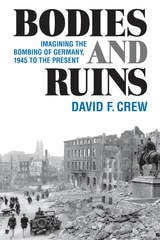
Bodies and Ruins
Imagining the Bombing of Germany, 1945 to the PresentDavid F. Crew
University of Michigan Press, 2017
Bodies and Ruins examines a range of local publications that carried photographic images of German cities destroyed in the air war, images that soon entered the visual memory of World War II. Despite its obvious importance, historians have paid very little attention to the visual representation of the bombing war. This book follows the search for what were considered to be the “right” stories and the “right” pictures of the bombing war in local publications and picture books from 1945 to the present, and is intended for historians as well as general readers interested in World War II, the Allied bombing of German cities, the Holocaust, the history of memory and photographic/visual history.
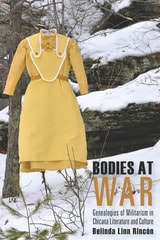
Bodies at War
Genealogies of Militarism in Chicana Literature and CultureBelinda Linn Rincón
University of Arizona Press, 2017
Bodies at War examines the rise of neoliberal militarism from the early 1970s to the present and its transformation of political, economic, and social relations. It charts neoliberal militarism’s impact on democratic practices, economic policies, notions of citizenship, race relations, and gender norms by focusing on how these changes affect the Chicana/o community and, more specifically, on how it shapes and is shaped by Chicana bodies. The book raises important questions about the cultural legacies of war and the gendering of violence—topics that reach across multiple disciplinary fields of inquiry, including cultural and media studies. It draws attention to the relationship between war and society, to neoliberal militarism’s destructive social impact, and to the future of Latina soldiering. Through Chicana art, activism, and writing, Rincón offers a visionary foundation for an antiwar feminist politic.
Bodies in Contact
Rethinking Colonial Encounters in World HistoryTony Ballantyne and Antoinette Burton, eds.
Duke University Press, 2005
Bodies in Contact brings together important scholarship on colonial gender studies gathered from journals around the world. Breaking with approaches to world history as the history of “the West and the rest,” the contributors offer a panoramic perspective. They examine aspects of imperial regimes including the Ottoman, Mughal, Soviet, British, Han, and Spanish, over a span of six hundred years—from the fifteenth century through the mid-twentieth. Discussing subjects as diverse as slavery and travel, ecclesiastical colonialism and military occupation, marriage and property, nationalism and football, immigration and temperance, Bodies in Contact puts women, gender, and sexuality at the center of the “master narratives” of imperialism and world history.
Contributors. Joseph S. Alter, Tony Ballantyne, Antoinette Burton, Elisa Camiscioli, Mary Ann Fay, Carter Vaughn Findley, Heidi Gengenbach, Shoshana Keller, Hyun Sook Kim, Mire Koikari, Siobhan Lambert-Hurley, Melani McAlister, Patrick McDevitt, Jennifer L. Morgan, Lucy Eldersveld Murphy, Rosalind O’Hanlon, Rebecca Overmyer-Velázquez, Fiona Paisley, Adele Perry, Sean Quinlan, Mrinalini Sinha, Emma Jinhua Teng, Julia C. Wells
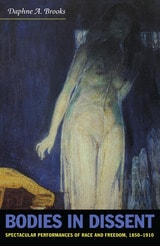
Bodies in Dissent
Spectacular Performances of Race and Freedom, 1850–1910Daphne A. Brooks
Duke University Press, 2006
Brooks pieces together reviews, letters, playbills, fiction, and biography in order to reconstruct not only the contexts of African American performance but also the reception of the stagings of “bodily insurgency” which she examines. Throughout the book, she juxtaposes unlikely texts and entertainers in order to illuminate the complicated transatlantic cultural landscape in which black performers intervened. She places Adah Isaacs Menken, a star of spectacular theatre, next to Sojourner Truth, showing how both used similar strategies of physical gesture to complicate one-dimensional notions of race and gender. She also considers Henry Box Brown’s public re-enactments of his escape from slavery, the Pan-Africanist discourse of Bert Williams’s and George Walker’s musical In Dahomey (1902–04), and the relationship between gender politics, performance, and New Negro activism in the fiction of the novelist and playwright Pauline Hopkins and the postbellum stage work of the cakewalk dancer and choreographer Aida Overton Walker. Highlighting the integral connections between performance and the construction of racial identities, Brooks provides a nuanced understanding of the vitality, complexity, and influence of black performance in the United States and throughout the black Atlantic.
Bodies in Flux
Scientific Methods for Negotiating Medical UncertaintyChrista Teston
University of Chicago Press, 2017
Bodies in Flux explores the inventive ways humans and nonhumans work together to manufacture medical evidence. Each chapter draws on rhetorical theory to investigate a specific scientific method for negotiating medical uncertainty in cancer care, including evidential visualization, assessment, synthesis, and computation. Case studies unveil how doctors rely on visuals when deliberating about a patient’s treatment options, how members of the FDA use inferential statistics to predict a drug’s effectiveness, how researchers synthesize hundreds of clinical trials into a single evidence-based recommendation, and how genetic testing companies compute and commoditize human health. Teston concludes by advocating for an ethic of care that pushes back against the fetishization of certainty—an ethic of care that honors human fragility and bodily flux.
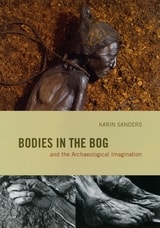
Bodies in the Bog and the Archaeological Imagination
Karin Sanders
University of Chicago Press, 2009

Bodies of Knowledge
Sexuality, Reproduction, and Women's Health in the Second WaveWendy Kline
University of Chicago Press, 2010
Throughout the 1970s and ’80s, women argued that unless they gained access to information about their own bodies, there would be no equality. In Bodies of Knowledge, Wendy Kline considers the ways in which ordinary women worked to position the female body at the center of women’s liberation.
As Kline shows, the struggle to attain this knowledge unified women but also divided them—according to race, class, sexuality, or level of professionalization. Each of the five chapters of Bodies of Knowledge examines a distinct moment or setting of the women’s movement in order to give life to the ideas, expectations, and pitfalls encountered by the advocates of women’s health: the making of Our Bodies, Ourselves (1973); the conflicts surrounding the training and practice of women’s pelvic exams; the emergence of abortion as a feminist issue; the battles over contraceptive regulation at the 1983 Depo-Provera FDA hearings; and the rise of the profession of midwifery. Including an epilogue that considers the experiences of the daughters of 1970s feminists, Bodies of Knowledge is an important contribution to the study of the bodies—that marked the lives—of feminism’s second wave.
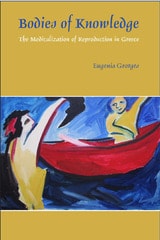
Bodies of Knowledge
The Medicalization of Reproduction in GreeceEugenia Georges
Vanderbilt University Press, 2008
Recipient of the 2006 Norman L. and Roselea J. Goldberg Prize for the best project in the area of medicine.
The author, a second-generation Greek American, returned to Greece with her young daughter to do fieldwork over the course of a decade. Focusing on Rhodes, an island that blends continuity with the past and rapid social change in often unexpected ways, she interviewed over a hundred women, doctors, and midwives about issues of reproduction.
The result is a detailed portrait of how a longstanding system of "local" gynecological and obstetrical knowledge under the control of women was rapidly displaced in the the period following World War II, and how the technologically-intensive biomedical model that took its place in turn assumed its own distinctive signature.
Bodies of Knowledge is a vivid ethnographic study of how a presumably globalizing and homogenizing process like medicalization can be reshaped as women and medical experts alike selectively accept or reject new practices and technologies. Georges found, for example, that women in Rhodes have enthusiastically embraced some new technologies, like fetal imaging during pregnancy, but rejected others, like medical contraception. They are also avid consumers of popular childbirth manuals.
This book is the recipient of the 2006 Norman L. and Roselea J. Goldberg Prize for the best project in the area of medicine.
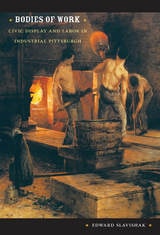
Bodies of Work
Civic Display and Labor in Industrial PittsburghEdward Slavishak
Duke University Press, 2008
Slavishak focuses on the workers whose bodies came to epitomize Pittsburgh, the men engaged in the arduous physical labor demanded by the city’s metals, glass, and coal industries. At the same time, he emphasizes how conceptions of Pittsburgh as quintessentially male limited representations of women in the industrial workplace. The threat of injury or violence loomed large for industrial workers at the turn of the twentieth century, and it recurs throughout Bodies of Work: in the marketing of artificial limbs, statistical assessments of the physical toll of industrial capitalism, clashes between labor and management, the introduction of workplace safety procedures, and the development of a statewide workmen’s compensation system.
Bodies on the Line
Performance and the Sixties Poetry ReadingRaphael Allison
University of Iowa Press, 2014
By comparing these two dominant styles of reading, Allison argues that attention to sixties poetry readings reveals poets struggling between the kind of immediacy and presence that readings suggested and a private retreat from such performance-based publicity, one centered on the text itself. Recordings of Robert Frost, Charles Olson, Gwendolyn Brooks, Larry Eigner, and William Carlos Williams—all of whom emphasized voice, breath, and spoken language and who were inveterate professional readers in the sixties—expose this struggle in often surprising ways. In deconstructing assertions about the role and importance of the poetry reading during this period, Allison reveals just how dramatic, political, and contentious poetry readings could be. By discussing how to "hear" as well as "read" poetry, Bodies on the Line offers startling new vantage points from which to understand American poetry since the 1960s as both performance and text.
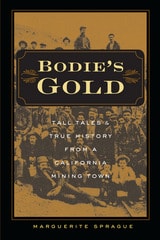
Bodie’s Gold
Tall Tales and True History from a California Mining TownMarguerite Sprague
University of Nevada Press, 2011
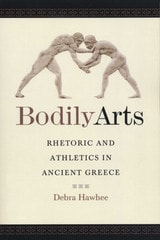
Bodily Arts
Rhetoric and Athletics in Ancient GreeceBy Debra Hawhee
University of Texas Press, 2005
The role of athletics in ancient Greece extended well beyond the realms of kinesiology, competition, and entertainment. In teaching and philosophy, athletic practices overlapped with rhetorical ones and formed a shared mode of knowledge production. Bodily Arts examines this intriguing intersection, offering an important context for understanding the attitudes of ancient Greeks toward themselves and their environment.
In classical society, rhetoric was an activity, one that was in essence "performed." Detailing how athletics came to be rhetoric's "twin art" in the bodily aspects of learning and performance, Bodily Arts draws on diverse orators and philosophers such as Isocrates, Demosthenes, and Plato, as well as medical treatises and a wealth of artifacts from the time, including statues and vases.
Debra Hawhee's insightful study spotlights the notion of a classical gymnasium as the location for a habitual "mingling" of athletic and rhetorical performances, and the use of ancient athletic instruction to create rhetorical training based on rhythm, repetition, and response. Presenting her data against the backdrop of a broad cultural perspective rather than a narrow disciplinary one, Hawhee presents a pioneering interpretation of Greek civilization from the sixth, fifth, and fourth centuries BCE by observing its citizens in action.
Bodily Matters
The Anti-Vaccination Movement in England, 1853–1907Nadja Durbach
Duke University Press, 2005
Analyzing historical documents on both sides of the vaccination debate, Durbach focuses on the key events and rhetorical strategies of the resistance campaign. She shows that those for and against the vaccine had very different ideas about how human bodies worked and how best to safeguard them from disease. Individuals opposed to mandatory vaccination saw their own and their children’s bodies not as potentially contagious and thus dangerous to society but rather as highly vulnerable to contamination and violation. Bodily Matters challenges the notion that resistance to vaccination can best be understood, and thus easily dismissed, as the ravings of an unscientific “lunatic fringe.” It locates the anti-vaccination movement at the very center of broad public debates in Victorian England over medical developments, the politics of class, the extent of government intervention into the private lives of its citizens, and the values of a liberal society.
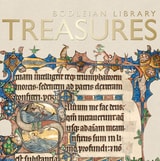
Bodleian Library Treasures
David Vaisey
Bodleian Library Publishing, 2017
Rare books, music, manuscripts, ephemera, and maps, many of the treasures photographed and described for this lavish volume are well-loved around the world, from Jane Austen’s manuscript of The Watsons to notebooks created by the poet Percy Bysshe Shelley, a map of Narnia drawn by C. S. Lewis, and the original manuscript of the renowned children’s work The Wind in the Willows. Others are known for their beauty or historical significance, including the Gutenberg Bible, Magna Carta, and the extraordinary medieval manuscript the Douce Apocalypse. Still others hold poignant stories like the small handwritten book presented as a New Year’s present in 1545 to Katherine Parr by an eleven-year-old stepdaughter who would later become Queen Elizabeth I. Vaisey brings these and other treasures together in chronological order, showcasing the Bodleian Library’s renowned collections.
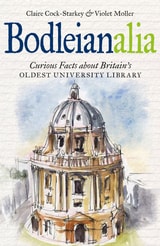
Bodleianalia
Curious Facts about Britain's Oldest University LibraryClaire Cock-Starkey and Violet Moller
Bodleian Library Publishing, 2016
With more than twelve million items and many priceless treasures, including the Gutenberg Bible, Shakespeare’s First Folio, five thirteenth-century copies of Magna Carta, and Tolkien’s original watercolors for The Hobbit, the Bodleian also boasts many strange events and eccentric characters through the ages that contributed to its world-class renown today. From deep within the archives, Cock-Starkey and Moller have compiled a great many lesser-known facts about the Bodleian Library’s fascinating history, organizing them into easily browsable lists, factoids, and statistics.
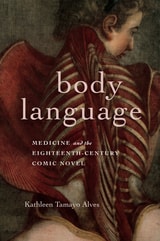
Body Language
Medicine and the Eighteenth-Century Comic NovelKathleen Tamayo Alves
Bucknell University Press, 2026
Body Language examines the complex intersections of British eighteenth-century comic fiction and medical discourse. By engaging medical writings of renowned and widely-read physicians of the Enlightenment such as John Freind, Thomas Sydenham, Albrecht von Haller, John Whytt, and William Cullen, with novels of humor by Henry Fielding, Tobias Smollett, Laurence Sterne, and Charlotte Lennox, Alves explains how medicine shaped comic language by dramatizing female-specific phenomena like menstruation, hysteria, nervous disorders, and pregnancy. In these novels, the medical belief that women are incapable of bodily self-regulation becomes an imperative for policing women’s bodies and highlights the enduring shortcomings of patriarchal systems. Ultimately, these comic representations offer a counternarrative of women’s bodies, agency, and selfhood, exposing masculine anxieties about the effectiveness of marriage to regulate women’s sexuality.
Published by Bucknell University Press. Distributed worldwide by Rutgers University Press.
Body Love
The Amazing Career of Bernarr MacfaddenWilliam R. Hunt
University of Wisconsin Press, 1989
Bernarr Macfadden (1868–1955) entertained and instructed Americans for decades. He championed physical exercise, fasting, and diet reform and was the relentless scourge of established doctors. He presented his views in Physical Culture, a popular magazine featuring photographs of strong men and healthy women and articles promoting the healthy life. While some critics derided him as a health nut, no one could dispute his genius as a magazine publisher. He established the world’s greatest magazine publishing empire through the innovation of such popular publications as True Story, the first confession magazine; True Detective; and many others.
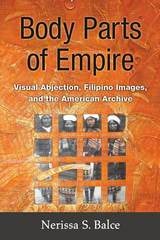
Body Parts of Empire
Visual Abjection, Filipino Images, and the American ArchiveNerissa S. Balce
University of Michigan Press, 2016
Rather than focusing on canonical American authors who wrote at the time of U.S. imperialism, this book examines abject texts—images of naked savages, corpses, clothed native elites, and uniformed American soldiers—as well as bodies of writing that document the goodwill and violence of American expansion in the Philippine colony. Contributing to the fields of American studies, Asian American studies, and gender studies, the book analyzes the actual archive of the Philippine-American War and how the racialization and sexualization of the Filipino colonial native have always been part of the cultures of America and U.S. imperialism. By focusing on the Filipino native as an abject body of the American imperial imaginary, this study offers a historical materialist optic for reading the cultures of Filipino America.
Body and Nation
The Global Realm of U.S. Body Politics in the Twentieth CenturyEmily S. Rosenberg and Shanon Fitzpatrick, eds.
Duke University Press, 2014
Contributors. Frank Costigliola, Janet M. Davis, Shanon Fitzpatrick, Paul A. Kramer, Shirley Jennifer Lim, Mary Ting Yi Lui, Natalia Molina, Brenda Gayle Plummer, Emily S. Rosenberg, Kristina Shull, Annessa C. Stagner, Marilyn B. Young
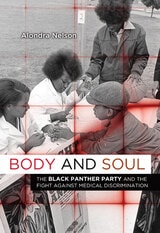
Body and Soul
The Black Panther Party and the Fight against Medical DiscriminationAlondra Nelson
University of Minnesota Press, 2013
Between its founding in 1966 and its formal end in 1980, the Black Panther Party blazed a distinctive trail in American political culture. The Black Panthers are most often remembered for their revolutionary rhetoric and militant action. Here Alondra Nelson deftly recovers an indispensable but lesser-known aspect of the organization’s broader struggle for social justice: health care. The Black Panther Party’s health activism—its network of free health clinics, its campaign to raise awareness about genetic disease, and its challenges to medical discrimination—was an expression of its founding political philosophy and also a recognition that poor blacks were both underserved by mainstream medicine and overexposed to its harms.
Drawing on extensive historical research as well as interviews with former members of the Black Panther Party, Nelson argues that the Party’s focus on health care was both practical and ideological. Building on a long tradition of medical self-sufficiency among African Americans, the Panthers’ People’s Free Medical Clinics administered basic preventive care, tested for lead poisoning and hypertension, and helped with housing, employment, and social services. In 1971, the party launched a campaign to address sickle-cell anemia. In addition to establishing screening programs and educational outreach efforts, it exposed the racial biases of the medical system that had largely ignored sickle-cell anemia, a disease that predominantly affected people of African descent.
The Black Panther Party’s understanding of health as a basic human right and its engagement with the social implications of genetics anticipated current debates about the politics of health and race. That legacy—and that struggle—continues today in the commitment of health activists and the fight for universal health care.
Body of Power, Spirit of Resistance
The Culture and History of a South African PeopleJean Comaroff
University of Chicago Press, 1985
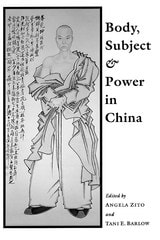
Body, Subject, and Power in China
Edited by Angela Zito and Tani E. Barlow
University of Chicago Press, 1994
Contributors investigate problems of bodiliness, engendered subjectivities, and discourses of power through a variety of sources that include written texts, paintings, buildings, interviews, and observations. Taken together, the essays show that bodies in China have been classified, represented, discussed, ritualized, gendered, and eroticized in ways as rich and multiple as those described in critical histories of the West. Silk robes, rocks, winds, gestures of bowing, yin yang hierarchies, and cross-dressing have helped create experiences of the body specific to Chinese historical life. By pointing to multiple examples of reimagining subjectivity and renegotiating power, the essays encourage scholars to avoid making broad generalizations about China and to rethink traditional notions of power, subject, and bodiliness in light of actual Chinese practices. Body, Subject, and Power in China is at once an example of the changing face of China studies and a work of importance to the entire discipline of cultural studies.

Boeing B-47 Stratojet
the cold war jet bomberNico Braas
Amsterdam University Press, 2023
Bohemia's Jews and Their Nineteenth Century
Texts, Contexts, ReassessmentsJindrich Toman
Karolinum Press, 2023
This book on Jewish culture and literature focuses on the “quiet” decades of the nineteenth century, a scarcely written-about period of time in Bohemian Jewish history. Using a myriad of sources, including travelers’ accounts, poems, essays, short stories, guides, and newspaper articles, the volume explores Jewish expression, Jewish-Czech relations, and the changing attitudes toward Jews between the 1820s and 1880s. It offers close readings of writers like Karel Havlíćek Borovský, Ján Kollár, Siegfried Kapper, and Jan Neruda, as well as lesser-known authors and sources. Combining skillful sustained analysis, judicious argumentation, and elegant writing, the book is a truly enriching reading experience.

Bohemians
The Glamorous OutcastsElizabeth Wilson
Rutgers University Press, 2000
Since the early nineteenth century, the bohemian has been the protagonist of the story the West has wanted to hear about its artists-a story of genius, glamour, and doom. The bohemian takes on many guises: the artist dying in poverty like Modigliani or an outrageous entertainer like Josephine Baker. Elizabeth Wilson's enjoyable book is a quest for the many shifting meanings that constitute the bohemian and bohemia.
She tells unforgettable stories of the artists, intellectuals, radicals, and hangers-on who populated the salons, bars, and cafs of Paris, London, New York, Los Angeles, and San Francisco, including Djuna Barnes, Juliette Greco, Allen Ginsberg, William Burroughs, Jack Kerouac, Amiri Baraka, Andy Warhol, and Jackson Pollock. Bohemians also follows the women who contributed to the myth, including the wives and mistresses, the muses, lesbians, and independent artists. Wilson explores the bohemians' eccentric use of dress, the role of sex and erotic love, the bohemian search for excess, and the intransigent politics of many.
As a new millennium begins, Wilson shows how notions of bohemianism remain at the core of heated cultural debates about the role of art and artists in an increasingly commodified and technological world.
Boko Haram
Brandon Kendhammer
Ohio University Press, 2018
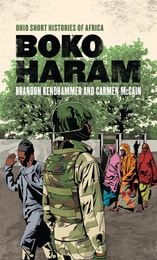
From its small-time origins in the early 2000s to its transformation into one of the world’s most-recognized terrorist groups, this remarkable short book tells the story of Boko Haram’s bloody, decade-long war in northeastern Nigeria. Going beyond the headlines, including the group’s 2014 abduction of 276 girls in Chibok and the international outrage it inspired, Boko Haram provides readers new to the conflict with a clearly written and comprehensive history of how the group came to be, the Nigerian government’s failed efforts to end it, and its enormous impact on ordinary citizens.
Drawing on years of research, Boko Haram is a timely addition to the acclaimed Ohio Short Histories of Africa. Brandon Kendhammer and Carmen McCain—two leading specialists on northern Nigeria—separate fact from fiction within one of the world’s least-understood conflicts. Most distinctively, it is a social history, one that tells the story of Boko Haram’s violence through the journalism, literature, film, and music made by people close to it.
Bold Conscience
Luther to Shakespeare to MiltonJoshua R. Held
University of Alabama Press, 2023
Traces how conscience—inner moral conviction—came to shape public life, fueling martyrdom, free speech, and political revolts
Bold Conscience: Luther to Shakespeare to Milton is a sweeping, original study of how conscience became one of the most powerful ideas in early modern England. Tracing the emergence of what Joshua R. Held calls the “bold conscience,” the book shows how inner moral conviction moved from the realm of private guilt to public action, fueling debates about authority, obedience, free speech, and resistance. By placing conscience at the center of literary, religious, and political conflict, Bold Conscience reveals a vital intellectual throughline linking the Reformation to the birth of modern ideas of liberty and toleration.
The book unfolds chronologically, beginning with Martin Luther and Henry VIII and moving through Shakespeare’s Hamlet and Henry VIII, John Donne’s court sermons, and John Milton’s polemical and poetic works, including Areopagitica and Paradise Lost. Each chapter combines close literary reading with historical and theological analysis, showing how conscience operates across genres—drama, sermon, pamphlet, and epic poetry. Joshua R. Held is a distinguished scholar of early modern literature whose work bridges literary criticism, intellectual history, and religious studies, bringing clarity and narrative energy to complex debates.
Bold Conscience will appeal to scholars and students of early modern literature, Shakespeare, Milton, and Reformation history, as well as readers interested in the origins of religious freedom and political dissent. It will also engage anyone concerned with how moral conviction shapes public life then and now.

Bold! Daring! Shocking! True!
A History of Exploitation Films, 1919-1959Eric Schaefer
Duke University Press, 1999
Bold! Daring! Shocking! True! is a meticulously researched, interdisciplinary study that is informed by a wide range of sources—including both mainstream and industry newspapers and periodicals, archival accounts, personal interviews, and the films themselves. Schaefer begins by exploring the unique mode of production of exploitation movies, their distribution, and the outrageous exhibition practices that were rooted in the traditions of sideshows and carnivals. His close analysis of dozens of films, such as The Road to Ruin, Modern Motherhood, One Way Ticket to Hell, and The Wages of Sin demonstrates that these films were more than simply “bad” movies. By situating exploitation films in a historical context and organizing them according to the social problems they addressed, Schaefer shows how they evolved during a period of forty years and how, during that time, they shaped public policies and attitudes. Finally, he focuses on the changes in the postwar American film industry that led to the decline of the classical exploitation film and set the stage for the rise of “sexploitation” in the 1960s.
Engagingly written, illustrated with rare photographs, posters, production stills, and ad slicks, and offering a full filmography, Bold! Daring! Shocking! True! reveals a forgotten side of film history and American culture. It will delight and inform those interested in film history, cultural studies, American studies and history, and the many fans of exploitation films.
Bolivia in the Age of Gas
Bret Gustafson
Duke University Press, 2020
Bolivia's Radical Tradition
Permanent Revolution in the AndesS. Sándor John
University of Arizona Press, 2012

Bolivia
Revolution and the Power of History in the PresentJames Dunkerley
University of London Press, 2007
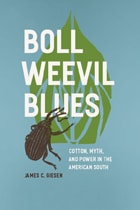
Boll Weevil Blues
Cotton, Myth, and Power in the American SouthJames C. Giesen
University of Chicago Press, 2011
Between the 1890s and the early 1920s, the boll weevil slowly ate its way across the Cotton South from Texas to the Atlantic Ocean. At the turn of the century, some Texas counties were reporting crop losses of over 70 percent, as were areas of Louisiana, Arkansas, and Mississippi. By the time the boll weevil reached the limits of the cotton belt, it had destroyed much of the region’s chief cash crop—tens of billions of pounds of cotton, worth nearly a trillion dollars.
As staggering as these numbers may seem, James C. Giesen demonstrates that it was the very idea of the boll weevil and the struggle over its meanings that most profoundly changed the South—as different groups, from policymakers to blues singers, projected onto this natural disaster the consequences they feared and the outcomes they sought. Giesen asks how the myth of the boll weevil’s lasting impact helped obscure the real problems of the region—those caused not by insects, but by landowning patterns, antiquated credit systems, white supremacist ideology, and declining soil fertility. Boll Weevil Blues brings together these cultural, environmental, and agricultural narratives in a novel and important way that allows us to reconsider the making of the modern American South.
Bollywood’s New Woman
Liberalization, Liberation, and Contested BodiesMegha Anwer
Rutgers University Press, 2021
Bolshevik Visions
First Phase of the Cultural Revolution in Soviet Russia, Part 1William G. Rosenberg, Editor
University of Michigan Press, 1990
Bolívar and the War of Independence
Memorias del General Daniel Florencio O’Leary, NarraciónBy Daniel Florencio O'Leary
University of Texas Press, 1970
The overthrow of Spanish rule and the birth of new republican governments in northern South America at the beginning of the nineteenth century were in large part the work of one man—Simón Bolívar. Bolívar was not only the soldier who built a patriot army from a small band of exiles and led them victoriously across Venezuela and down the spine of the Andes as far as Potosí; he was also the statesman who framed the new republics that sprang to life after the defeat of the Spanish and who called the Congress of Panama in hopes of making real his dream of uniting all the South American republics in a single confederation. He was truly the Liberator.
The Narración, or narrative, of the Memorias of Daniel Florencio O’Leary has long been recognized by Spanish American scholars as one of the most important historical sources for a major part of Bolívar’s life. O’Leary took an active part in the wars for independence, first as a young officer, recruited in the British Isles to aid the patriot cause, and later as Bolívar’s chief aide, often entrusted with diplomatic missions. His firsthand knowledge of the stirring events of the period, his access to relevant documents, and his close association with the major figures in the struggle, as well as his friendship with Bolívar, made O’Leary a particularly valuable chronicler and biographer. Bolívar himself, shortly before his death, requested that O’Leary write the story of his life.
O’Leary’s meticulous attention to military and diplomatic maneuvers and his keen, sometimes acrid, comments on both men and events give the reader not only a vivid portrait of Bolívar—the man and his achievements—but also a remarkable insight into O’Leary’s own position as an autocratic-minded participant in the wars for independence. Although O’Leary’s devotion to, and admiration for, his Chief make for an occasionally partisan view, his stark account of the hardships and disappointments that Bolívar and his armies overcame against almost impossible odds does much to balance the narrative.
In his abridged translation, Robert McNerney has omitted the Apéndice, documents that O’Leary, had he lived, undoubtedly would have used as the source for completing his account of Bolívar’s life. Numerous letters and documents scattered through the original text also have been omitted, leaving a highly readable narrative.
Bomb Children
Life in the Former Battlefields of LaosLeah Zani
Duke University Press, 2019
Bombast And Broadsides
The Lives of George JohnstoneRobin F. A. Fabel
University of Alabama Press, 1987
George Johnstone has never received the scholarly attention he fully merits. Historians have assessed him, usually briefly, as governor of West Florida, or as naval commander, or as a member of parliament. Nevertheless, none has considered his important role in East India Company politics, nor, until Bombast and Broadsides, has one synthesized the various roles in which Johnstone was entrusted with high responsibilities.
Through research in Cardiff, Edinburgh, Kew, London, Philadelphia, and Washington in largely unpublished manuscripts, together with the use of secondary sources, the author has been able to present the first coherent picture of Johnstone, a vigorous and intelligent but turbulent and always controversial figure. Johnstone was effective as a colonial governor at a difficult time; in the navy he performed several coups de main; in parliament he was formidable in debate but an opportunist; and at East India House he was a doughty, conservative, and largely successful defender of the proprietary interest.
Bombay Brokers
Lisa Björkman, editor
Duke University Press, 2021
Contributors. Anjali Arondekar, Sarthak Bagchi, Tobias Baitsch, Sangeeta Banerji, Srimati Basu, Tarini Bedi, Amita Bhide, Lisa Björkman, Uday Chandra, Simon Chauchard, Ka-Kin Cheuk, Michael Collins, Daisy Deomampo, Maura Finkelstein, Ajay Gandhi, Rupali Gupte, Kathryn C. Hardy, Lalitha Kamath, Prasad Khanolkar, Bhushan Korgaonkar, Ratoola Kundu, Ken Kuroda, Annelies Kusters, Lisa Mitchell, Shailaja Paik, Gautam Pemmaraju, Lubaina Rangwala, Llerena Guiu Searle, Atreyee Sen, Prasad Shetty, Rohan Shivkumar, Edward Simpson, David Strohl, Rachel Sturman, R. Swaminathan, Aneri Taskar, Yaffa Truelove, Sahana Udupa, Lalit Vachani, Leilah Vevaina
Bombay Modern
Arun Kolatkar and Bilingual Literary CultureAnjali Nerlekar
Northwestern University Press, 2016
Bombay Modern uncovers an alternative and provincial modernism through poetry, a genre that is marginal to postcolonial studies, and through bilingual scholarship across English and Marathi texts, a methodology that is currently peripheral at best to both modernist studies and postcolonial literary criticism in India. Eschewing any attempt to define an overarching or universal modernism, Bombay Modern delimits its sphere of study to "Bombay" and to the "post-1960" (the sathottari period) in an attempt to examine at close range the specific way in which this poetry redeployed the regional, the national, and the international to create a very tangible yet transient local.
Bombing Pompeii
World Heritage and Military NecessityNigel Pollard
University of Michigan Press, 2020
Bombs Away
Militarization, Conservation, and Ecological RestorationDavid G. Havlick
University of Chicago Press, 2018
Looking at particular international sites of transition—from Indiana’s Big Oaks National Wildlife Refuge to Cold War remnants along the former Iron Curtain—Havlick argues that these new frontiers of conservation must accomplish seemingly antithetical aims: rebuilding and protecting ecosystems, or restoring life, while also commemorating the historical and cultural legacies of warfare and militarization. Developing these ideas further, he shows that despite the ecological devastation often wrought by military testing and training, these activities need not be inconsistent with environmental goals, and in some cases can even complement them—a concept he calls ecological militarization. A profound, clear explication of landscapes both fraught and fecund, marked by death but also reservoirs of life, Bombs Away shows us how “military activities, conservation goals, and ecological restoration efforts are made to work together to create new kinds of places and new conceptions of place.”

Bombs in the Backyard
Atomic Testing and American PoliticsA. Constandina Titus
University of Nevada Press, 2001
Bonapartists in the Borderlands
French Exiles and Refugees on the Gulf Coast, 1815-1835Rafe Blaufarb
University of Alabama Press, 2005
Bonapartists in the Borderlands debunks the standard account of the Vine and Olive Colony, which stresses the failure of aristocratic, luxury-loving French to tame the wilderness. Rafe Blaufarb recounts how Napoleonic exiles and French refugees from Europe and the Caribbean joined forces with Latin American insurgents, Gulf pirates, and international adventurers to seek their fortune in the Gulf borderlands. The US Congress welcomed the French and granted them a capacious tract of rich Black Belt land near Demopolis, Alabama, on the condition that they would establish a Mediterranean-style Vine and Olive colony.
Blaufard shows that it was not a lack of grit that caused the enterprise to fail. Rather, the Napoleonic officers involved in the colony sold their land shares to speculators to finance an even more perilous adventure—invading the Texas borderlands contested by Spain and the US. Their departure left the Vine and Olive colony in the hands of French refugees from the Haitian slave revolt. They soon abandoned vine cultivation and fused with the neighboring communities of Anglo-American slaveholding cotton planters and speculators.
Rafe Blaufarb examines the underlying motivations and aims that inspired this endeavor and details the nitty-gritty politics, economics, and backroom bargaining that resulted in the settlement. He employs a wide variety of local, national, and international resources: from documents held by the Alabama State Archives, Marengo County court records, and French-language newspapers published in America to material from the War Ministry Archives at Vincennes, the Diplomatic Archives at the Quai d’Orasy, and the French National Archives.
Bondmen and Rebels
A Study of Master-Slave Relations in AntiguaDavid Barry Gaspar
Duke University Press, 1985

Bonds of Enterprise
John Murray Forbes and Western Development in America's Railway AgeJohn Lauritz Larson
University of Iowa Press, 2001
Bonds of Wool
The Pallium and Papal Power in the Middle AgesSteven A. Schoenig
Catholic University of America Press, 2016