Results by title
221 books match the query 'Beyond' and 101 start with b
Beyond the Iron Rice Bowl
Regimes of Production and Industrial Relations in ChinaBoy Lüthje, Siqi Luo, and Hao Zhang
Campus Verlag, 2013
Beyond the Laboratory
Scientists as Political Activists in 1930s AmericaPeter J. Kuznick
University of Chicago Press, 1987
Beyond the Laboratory
Scientists as Political Activists in 1930s AmericaPeter J. Kuznick
University of Chicago Press, 1987
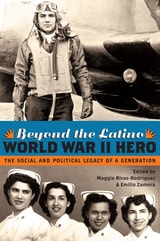
Beyond the Latino World War II Hero
The Social and Political Legacy of a GenerationEdited by Maggie Rivas-Rodríguez and Emilio Zamora
University of Texas Press, 2009
Maggie Rivas-Rodríguez 's edited volume Mexican Americans & World War II brought pivotal stories from the shadows, contributing to the growing acknowledgment of Mexican American patriotism as a meaningful force within the Greatest Generation. In this latest anthology, Rivas-Rodríguez and historian Emilio Zamora team up with scholars from various disciplines to add new insights. Beyond the Latino World War II Hero focuses on home-front issues and government relations, delving into new arenas of research and incorporating stirring oral histories.
These recollections highlight realities such as post-traumatic stress disorder and its effects on veterans' families, as well as Mexican American women of this era, whose fighting spirit inspired their daughters to participate in Chicana/o activism of the 1960s and 1970s. Other topics include the importance of radio as a powerful medium during the war and postwar periods, the participation of Mexican nationals in World War II, and intergovernmental negotiations involving Mexico and Puerto Rico. Addressing the complexity of the Latino war experience, such as the tandem between the frontline and the disruption of the agricultural migrant stream on the home front, the authors and contributors unite diverse perspectives to harness the rich resources of an invaluable oral history.
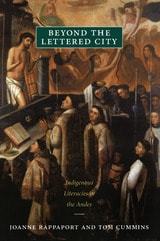
Beyond the Lettered City
Indigenous Literacies in the AndesJoanne Rappaport and Tom Cummins
Duke University Press, 2012
Beyond the Makerspace
Making and Relational RhetoricsAnn Shivers-McNair
University of Michigan Press, 2021
Beyond the Makerspace contributes not only to our understanding of making and makerspaces, but also to our understanding of how to study making—and meaning making, more broadly—in ways that examine and intervene in the marking of difference. Thus, the book examines what (and whose) values and practices we are taking up when we identify as makers or when we turn a writing classroom or a library space into a makerspace.
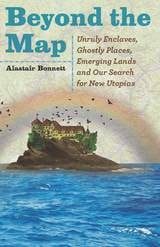
Beyond the Map
Unruly Enclaves, Ghostly Places, Emerging Lands and Our Search for New UtopiasAlastair Bonnett
University of Chicago Press, 2018
In Beyond the Map, Bonnett presents stories of the world’s most extraordinary spaces—many unmarked on any official map—all of which challenge our assumptions about what we know—or think we know—about our world. As cultural, religious and political boundaries ebb and flow with each passing day, traditional maps unravel and fragment. With the same adventurous spirit he effused in the acclaimed Unruly Places, Bonnett takes us to thirty-nine incredible spots around the globe to explore these changing boundaries and stimulate our geographical imagination. Some are tied to disruptive contemporary political turbulence, such as the rise of ISIL, Russia’s incursions into Ukraine and the Brexit vote in the United Kingdom. Others explore the secret places not shown on Google Earth or reflect fast-changing landscapes.
Beyond the Map journeys out into a world of mysterious, daunting and magical spaces. It is a world of hidden cultures and ghostly memories, of uncountable new islands and curious stabs at paradise. From the phantom tunnels of the Tokyo subway to a stunning movie-set re-creation of 1950s-era Moscow; from the caliphate of the Islamic State to virtual cybertopias—this book serves as an imaginative guide to the farthest fringes of geography.

Beyond the Mask
Gordon Craig, Movement, and the ActorIrene Eynat-Confino
Southern Illinois University Press, 1987
Eynat-Confino goes beyond the usual consideration of Craig’s purported theories of the actor, scenery, and the scene painter to get at the heart of Craig’s idea of theater.
She draws not only on the research of contemporary Craig scholars but on material hitherto unavailable—his writings and daybooks and the writings of friends. She ties Craig’s encounter with Isadora Duncan to a decisive modification in his notion of movement. To have an instrument more controllable than the actor, he invented the über-marionette, a giant puppet. Craig also invented the “Scene,” a kinetic stage, the “screens” that brought him worldwide fame were simply an adaptation of this concept.
Eynat-Confino argues that a scenario Craig wrote in 1905, here published for the first time, reveals a theosophical system like that of Blake, a system that was the main force motivating Craig’s artistic quest. In her final chapter, she carefully examines the psychological, aesthetic, and circumstantial factors that kept Craig from completing his work to bring “friendliness—humor—love—ease—peace” to the world.
Beyond the Meme
Development and Structure in Cultural EvolutionAlan C. Love
University of Minnesota Press, 2019
Interdisciplinary perspectives on cultural evolution that reject meme theory in favor of a complex understanding of dynamic change over time
How do cultures change? In recent decades, the concept of the meme, posited as a basic unit of culture analogous to the gene, has been central to debates about cultural transformation. Despite the appeal of meme theory, its simplification of complex interactions and other inadequacies as an explanatory framework raise more questions about cultural evolution than it answers.
In Beyond the Meme, William C. Wimsatt and Alan C. Love assemble interdisciplinary perspectives on cultural evolution, providing a nuanced understanding of it as a process in which dynamic structures interact on different scales of size and time. By focusing on the full range of evolutionary processes across distinct contexts, from rice farming to scientific reasoning, this volume demonstrates how a thick understanding of change in culture emerges from multiple disciplinary vantage points, each of which is required to understand cultural evolution in all its complexity. The editors provide an extensive introductory essay to contextualize the volume, and Wimsatt contributes a separate chapter that systematically organizes the conceptual geography of cultural processes and phenomena.
Any adequate account of the transmission, elaboration, and evolution of culture must, this volume argues, recognize the central roles that cognitive and social development play in cultural change and the complex interplay of technological, organizational, and institutional structures needed to enable and coordinate these processes.
Contributors: Marshall Abrams, U of Alabama at Birmingham; Claes Andersson, Chalmers U of Technology; Mark A. Bedau, Reed College; James A. Evans, U of Chicago; Jacob G. Foster, U of California, Los Angeles; Michel Janssen, U of Minnesota; Sabina Leonelli, U of Exeter; Massimo Maiocchi, U of Chicago; Joseph D. Martin, U of Cambridge; Salikoko S. Mufwene, U of Chicago; Nancy J. Nersessian, Georgia Institute of Technology and Harvard U; Paul E. Smaldino, U of California, Merced; Anton Törnberg, U of Gothenburg; Petter Törnberg, U of Amsterdam; Gilbert B. Tostevin, U of Minnesota.
Beyond the Miracle
Inside the New South AfricaAllister Sparks
University of Chicago Press, 2003
Sparks sees South Africa as facing many of the same challenges as the rest of the world, especially a widening gap between rich and poor, exacerbated by the forces of globalization. While the transition government has done much to establish democracy and racial equality in a short time, as well as bring basic services such as clean water to millions who did not have them before, many blacks feel it has not done enough to redress the continuing imbalance of wealth in the country. Many whites, meanwhile, feel disempowered and confused about what role they have to play as a racial minority in a country they used to rule and regard as theirs by divine right. Sparks also covers other burning issues, such as the HIV/AIDS epidemic, high crime rates, the diamond wars, the Congo conflict, and the Zimbabwean land crisis.
Writing vividly and often quite movingly, Sparks draws on his decades of journalistic experience and his recent insider access to key figures in the liberation government to take stock of where South Africa has been, where it's going, and why the rest of the world should not turn away from this country where the First and Third Worlds meet. As Sparks persuasively argues, the success of Mandela's vision of a peaceful "rainbow nation" is crucial not just for the salvation of Africa, but also for the world.
“It is as good a guide to the new South Africa as any.”—Economist
Beyond the Moment
Connecting Histories of Latinx Performance and ResistanceIrene Mata
University of Texas Press, 2026
Exploring cultural resistance by creating and archiving Latinx performance art
Performance is often seen as ephemeral, a condition that seemingly reduces its activist possibilities. After all, not everyone can take part or bear witness. Beyond the Moment shows how Latinx artists have responded with a theater of dissent that endures—performance art that also documents and can itself be archived, creating opportunities for sustained solidarity and resistance.
Through close readings of works such as Coco Fusco’s multi-genre performance A Field Guide for Female Interrogators, Irene Mata theorizes what she calls “textual mentoring.” This method involves tracing previous moments of resistance, archiving the creative process itself, and transforming the performance into a pedagogical tool. By means of textual mentoring, a work like The Panza Monologues becomes a lesson in confronting systemic oppression through collaborative storytelling. Mata also shows how the 2012 No Papers, No Fear Ride for Justice, a multistate immigrant-rights action, relies on a vocabulary of refusal of movements of the past—like the Freedom Rides of the Civil Rights era—and continues its activism beyond its immediate performance context by digitally archiving its process. With an emphasis on intersectional critique, Beyond the Moment positions performance as a radical form of resistance that educates and inspires across generations and movements.
Beyond the Monastery Walls
The Ascetic Revolution in Russian Orthodox Thought, 1814–1914Patrick Lally Michelson
University of Wisconsin Press, 2017
Patrick Lally Michelson's intellectual history of asceticism in Russian Orthodox thought traces the development of these competing arguments from the early nineteenth century to the early months of World War I. He demonstrates that this discourse was an imaginative interpretation of lived Orthodoxy, primarily meant to satisfy the ideological needs of Russian thinkers and Orthodox intellectuals as they responded to the socioeconomic, political, and cultural challenges of modernity.
Beyond the Page
Poetry and Performance in Spanish AmericaJill S. Kuhnheim
University of Arizona Press, 2014
Jill S. Kuhnheim, looking at poetry and performance in Spanish America over time, has organized the book to begin with the early twentieth century and arrive at the present day. She includes noteworthy poets and artists such as José Martí, Luis Palés Matos, Eusebia Cosme, Nicomedes Santa Cruz, Pablo Neruda, César Vallejo, and Nicolás Guillén, as well as very recent artists whose performance work is not as well known. Offering fresh historical material and analysis, the author illuminates the relationship between popular and elite cultural activity in Spanish America and reshapes our awareness of the cultural work poetry has done in the past and may do in the future, particularly given the wide array of technological possibilities. The author takes a broad view of American cultural production and creates a dialogue with events and criticism from the United States as well as from Spanish American traditions.
Oral and written elements in poetry are complementary, says Kuhnheim, not in opposition, and they may reach different audiences. As poetry enjoys a revival with modern media, performance is part of the new platform it spans, widening the kind of audience and expanding potential meanings.
Beyond the Page will appeal to readers with an interest in poetry and performance, and in how poetry circulates beyond the page. With an international perspective and dynamic synthesis, the book offers an innovative methodology and theoretical model for humanists beyond the immediate field, reaching out to readers interested in the intersection between poetry and identity or the juncture of popular-elite and oral-written cultures.
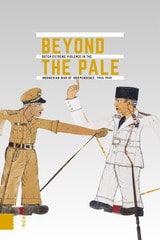
Beyond the Pale
Dutch Extreme Violence in the Indonesian War of Independence, 1945-1949Kon. Inst. v. Taal-, Land- en Volkenkunde (KITLV)
Amsterdam University Press, 2022
In 2005, the Dutch government declared that the Netherlands should never have waged the war. The government’s 1969 position on the violence used by the Dutch armed forces during the war remained unchanged, however: although there had been ‘excesses’, on the whole the armed forces had behaved ‘correctly’. As the indications of Dutch extreme violence mounted, this official position proved increasingly difficult to maintain. In 2016, the Dutch government therefore decided to fund a broad study on the dynamics of the violence. The most important conclusions of that research programme are summarized in this book. The authors show that the Dutch armed forces used extreme violence on a structural basis, and that this was concealed both at the time and for many years after the war by the Dutch government and by society more broadly. All of this – like the entire colonial history – is at odds with the rose-tinted self-image of the Netherlands.
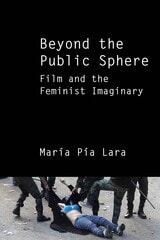
Beyond the Public Sphere
Film and the Feminist ImaginaryMaría Pía Lara
Northwestern University Press, 2021
In Beyond the Public Sphere: Film and the Feminist Imaginary, the renowned philosopher and critical theorist María Pía Lara challenges the notion that the bourgeois public sphere is the most important informal institution between social and political actors and the state.
Drawing on a wide range of films—including The Milk of Sorrow, Ixcanul, Wadja, The Stone of Patience, Marnie, A Streetcar Named Desire, and Talk to Her—Lara dissects cinematic images of women’s struggles and their oppression. She builds on this analysis, developing a concept of the feminist social imaginary as a broader and more complex space that provides a way of thinking through the possibilities for emancipatory social transformation in response to forms of domination perpetuated by patriarchal capitalism.
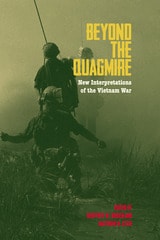
Beyond the Quagmire
New Interpretations of the Vietnam WarGeoffrey W. Jensen
University of North Texas Press, 2019
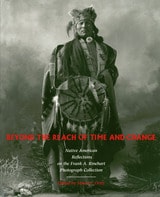
Beyond the Reach of Time and Change
Native American Reflections on the Frank A. Rinehart Photograph CollectionEdited by Simon J. Ortiz
University of Arizona Press, 2004
This book provides an unusual perspective on the Rinehart collection. It features one hundred outstanding images printed from the original negatives made by Rinehart and Muhr at the Congress and over the course of the next two years. It also includes 14 essays by modern Native American writers, artists, and educators—some of them descendants of the individuals photographed—reflecting on the place of these images in their heritage.
Beyond the Reach of Time and Change is not another coffee-table book of historical Indian photographs but rather a conversation between Indian people of a century ago and today. Just as the Rinehart collection offers today's Native Americans a unique connection to the past, this book offers all readers a positive understanding of continuity and endurance within the American Indian community.
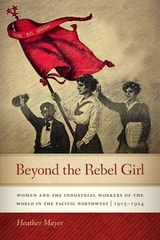
Beyond the Rebel Girl
Women and the Industrial Workers of the World in the Pacific Northwest, 1905-1924Heather Mayer
Oregon State University Press, 2018
In Beyond the Rebel Girl, historian Heather Mayer questions the well-worn vision of Wobblies as young, single, male, itinerant workers. While such workers formed a large portion of the membership, they weren’t the whole picture. In small towns across the Northwest, and in the larger cities of Seattle, Portland, and Spokane, women played an integral role in Wobbly life. Single women, but also families—husband and wife Wobbly teams—played important roles in some of the biggest fights for justice. IWW halls in these Northwest cities often functioned as community centers, with family-friendly events and entertainment.
Women were drawn to the IWW for its radical vision, inclusionary policies, birth control advocacy, and emphasis on freedom of choice in marriage. The IWW also offered women an avenue for activism that wasn’t focused primarily on the fight for suffrage. Beyond the Rebel Girl deepens our understanding of how the IWW functioned and how the union supported women in their fight for birth control, sexual emancipation, and better labor conditions, all while facing persecution at the local, state, and federal levels.

Beyond the Ring
The Role of Boxing in American SocietyJeffrey T. Sammons
University of Illinois Press, 1988
Primitive, dangerous, low-paying, crooked, exploitive--boxing, in all but a few cases, offered its athletes very little while taking everything. Why does boxing exist? What accounted for its decades-long popularity? What does its presence on the sport history landscape say about America?
Jeffrey T. Sammons looks at how boxing reflected the society that fostered it at different points in history. In the time of John L. Sullivan, the sport provided an arena for testing law, order, and social growth. Jack Johnson's career reflected the racism, nationalism, and xenophobia of the Progressive era. At its popular peak in the 1920s, boxing expressed tensions as disparate as the tug-of-war between modernism and tradition and the women's rights movement. From there, Sammons traces how the sport intertwined with Nazi antisemitism, reflected the hopes of the New Deal, produced the seminal figure Joe Louis, and stood at the nexus of the union of organized crime with business and television. Finally, he shows how Muhammad Ali and reactions to him exposed the shifting tides of racial issues and American involvement in Vietnam.

Beyond the Rink
Behind the Images of Residential School HockeyAlexandra Giancarlo
University of Manitoba Press, 2025
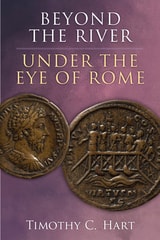
Beyond the River, Under the Eye of Rome
Timothy C. Hart
University of Michigan Press, 2024
Drawing on textual, inscriptional, and archaeological evidence, Hart illustrates how Roman ethnic and ecological stereotypes were employed in the Danubian borderland to support the imperial frontier edifice fundamentally at odds with the region’s natural topography. Distorted Roman perceptions of these Danubian neighbors resulted in disastrous mismanagement of border wars and migrant crises throughout the first five centuries CE. Beyond the River demonstrates how state-supported stereotypes, when coupled with Roman military and economic power, exerted strong influences on the social structures and evolving group identities of the peoples dwelling in the borderland.
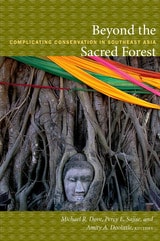
Beyond the Sacred Forest
Complicating Conservation in Southeast AsiaMichael R. Dove, Percy E. Sajise, and Amity A. Doolittle, eds.
Duke University Press, 2011
Contributors. Upik Djalins, Amity A. Doolittle, Michael R. Dove, Levita Duhaylungsod, Emily E. Harwell, Jeyamalar Kathirithamby-Wells, Lye Tuck-Po, Percy E. Sajise, Endah Sulistyawati, Yunita T. Winarto
Beyond the Schoolhouse Gate
Free Speech and the Inculcation of ValuesRobert Wheeler Lane
Temple University Press, 1995
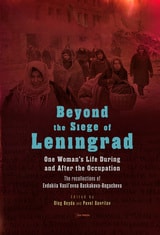
Beyond the Siege of Leningrad
One Woman’s Life during and after the Occupation: The Recollections of Evdokiia Vasil’evna Baskakova-BogachevaPavel Gavrilov
Central European University Press, 2024
This memoir about the experiences of German occupation during the siege of Leningrad (now Saint Petersburg) was written by Moscow-born Evdokiia Vasil’evna Baskakova-Bogacheva (1888–1976), an émigré in Australia, at the age of eighty-one. The text had been forgotten in the Museum of Russian Culture in San Francisco since 1970 until the editors of this volume discovered it.
In the memoirs, after accounting on her youth spent against the background of the First World War and of the two Russian revolutions of 1917, Evdokiia describes the inferno of the Nazi occupation as experienced in a suburb of Leningrad in 1941-43. She survived for nearly two years almost on the front line, within a few kilometers of the blockade ring. As a medical practitioner, she became useful for the occupational authorities and the ever-shrinking town population, until her family was evacuated to the west in October 1943. Besides hunger, discord, disease, the hunt for food and firewood, along with violence and death, Evdokiia’s account deals with various forms of cooperation between Soviet citizens and the new authorities.
All the events she recalls can be confirmed through other sources. The introduction and the detailed notes to the text help the reader to locate Evdokiia’s recollections in time and place, and situate them in their historical context.
Beyond the Sovereign Self
Aesthetic Autonomy from the Avant-Garde to Socially Engaged ArtGrant H. Kester
Duke University Press, 2024

Beyond the Stars 2
Plot Conventions in American Popular FilmUniversity of Wisconsin Press, 0

Beyond the Stars 3
The Material World in American Popular FilmPaul Loukides
University of Wisconsin Press, 0
This anthology deals with such diverse conventions as the treatment of food, the iconography of weapons, the paraphernalia of baseball, the uses of clothing, tools, and technologies, and the representation of art and print media within the world of film. The essays within this collection help to reveal how the objects in American movies reflect both the fixed and changeable cultural assumptions of film makers and film audiences.
Beyond the Stars 4
Locales in American Popular FilmPaul Loukides
University of Wisconsin Press, 1990
In this volume of the Beyond the Stars series, the subject of the various individual essays are discrete conventions of movie locales, but the subject of the volume as a whole—as with the other books in the series—is the viability of film convention studies as a tool for the study of film and American culture.
Beyond the Stars 5
Themes and Ideologies in American Popular FilmUniversity of Wisconsin Press, 1990
Beyond the Stars
Stock Characters in American Popular FilmUniversity of Wisconsin Press, 1990

Beyond the Subtitle
Remapping European Art CinemaMark Betz
University of Minnesota Press, 2009
A provocative rethinking of national cinema, authorship, and the discipline of film studies
Examining European art films of the 1950s and 1960s, Mark Betz argues that it is time for film analysis to move beyond prevailing New Wave historiography, mired in outdated notions of nationalism and dragged down by decades of auteurist criticism. Focusing on the cinemas of France and Italy, Betz reveals how the flowering of European art films in the postwar era is inseparable from the complex historical and political frameworks of the time.
Remapping the practices and paradigms of film history, Beyond the Subtitle calls into question the concept of national cinema and explores the largely neglected subjects of subtitling, dubbing, and art film coproductions. Betz also analyzes the iconic figure of the “wandering woman,” or flanêuse, who appears in many of the films under consideration, in light of the postwar boom, modernization, and decolonization. Finally, he rescues the omnibus films to show the need for a new film studies approach. Beyond the Subtitle demonstrates how the geopolitical and institutional contexts that gave rise to these films and to academic film studies should be incorporated into future analysis in order to gain new insight into debates on race, gender, and imperialism.
Beyond the Sword Maiden
A Storyteller's Introduction to the Heroine's JourneyDorothy Cleveland & Barbara Schutzgruber
Parkhurst Brothers, Inc., 2017
---Csenge Virág Zalka, storyteller, author of Tales of Superhuman Powers and Dancing on Blades
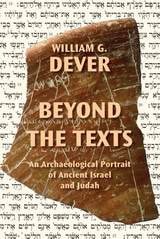
Beyond the Texts
An Archaeological Portrait of Ancient Israel and JudahWilliam G. Dever
SBL Press, 2017
A handbook for biblical scholars and historians of the Ancient Near East
William G. Dever offers a welcome perspective on ancient Israel and Judah that prioritizes the archaeological remains to render history as it was—not as the biblical writers argue it should have been. Drawing from the most recent archaeological data as interpreted from a nontheological point of view and supplementing that data with biblical material only when it converges with the archaeological record, Dever analyzes all the evidence at hand to provide a new history of ancient Israel and Judah that is accessible to all interested readers.
Features
- A new approach to the history of ancient Israel
- Extensive bibliography
- More than eighty maps and illustrations

Beyond the Trees
Stories of Wisconsin ForestsCandice Gaukel Andrews
Wisconsin Historical Society Press, 2011
Nature writer Candice Andrews weaves together contemporary observations and historical reminisces in Beyond the Trees: Stories of Wisconsin Forests. Readers will journey to some of the most pristine and notable places in the Upper Midwest—Wisconsin’s state and national forests.
The diversity of landscapes evoked in Beyond the Trees is matched only by the characters who inhabit them. Traverse the footsteps of Ojibwe hunters and early explorers in the remote woods of Brule River State Forest. Trek past the remains of bygone logging and CCC camps in the Chequamegon-Nicolet National Forest. Glimpse into the world of Great Lakes shipping in Point Beach State Forest. Walk on trails named after John Muir and Increase Lapham in the Kettle Moraine State Forest, and experience urban green space at Milwaukee’s Havenwoods State Forest. From orchids to oak savanna, beaver to brook trout, and white-tailed deer to timber wolves, discover Wisconsin’s wildlife and flora and fauna. Archival images, informative sidebars, locator maps, and contact information for Wisconsin state and national forests round out this unique book.
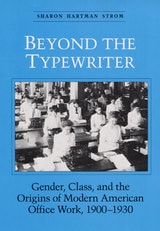
Beyond the Typewriter
Gender, Class, and the Origins of Modern American Office Work, 1900-1930Sharon Hartman Strom
University of Illinois Press, 1992
Beyond the Usual Beating
The Jon Burge Police Torture Scandal and Social Movements for Police Accountability in ChicagoAndrew S. Baer
University of Chicago Press, 2020
A story of institutionalized police brutality and how Chicago's public outcry led to long-lasting criminal justice reforms.
The malign and long-lasting influence of Chicago police commander Jon Burge cannot be overestimated, particularly as fresh examples of local and national criminal-justice abuse continue to surface with dismaying frequency. Burge’s decades-long tenure on the Chicago police force was marked by racist and barbaric interrogation methods, including psychological torture, burnings, and mock executions—techniques that went far “beyond the usual beating.” After being exposed in 1989, he became a symbol of police brutality and the unequal treatment of nonwhite people, and the persistent outcry against him led to reforms such as the abolition of the death penalty in Illinois.
But Burge hardly developed or operated in a vacuum, as Andrew S. Baer explores to stark effect here. He identifies the darkness of the Burge era as a product of local social forces, arising from a specific milieu beyond the nationwide racialized reactionary fever of the 1960s and 1970s. Similarly, the popular resistance movements that rallied in his wake actually predated Burge’s exposure but cohered with unexpected power due to the galvanizing focus on his crimes and abuses. For more than thirty years, a shifting coalition including torture survivors, their families, civil rights attorneys, and journalists helped to corroborate allegations of violence, free the wrongfully convicted, have Burge fired and incarcerated, and win passage of a municipal reparations package, among other victories. Beyond the Usual Beating reveals that though the Burge scandal underscores the relationship between personal bigotry and structural racism in the criminal justice system, it also shows how ordinary people held perpetrators accountable in the face of intransigent local power.

Beyond the Veil of Knowledge
Triangulating Security, Democracy, and Academic ScholarshipPiki Ish-Shalom
University of Michigan Press, 2019

Beyond the Visual
Multisensory Modes of Beholding ArtEdited by Ken Wilder and Aaron McPeake
University College London, 2025
In what ways can visual art be enjoyed beyond sight? Bringing together leading international scholars and artists in the emerging field of “blindness arts”—including blind and partially blind artists, curators, advocates for inclusive practices and models of audio description, cognitive psychologists, and theorists of installation, performance, and sound art—Beyond the Visual seeks to broaden the discussion of multisensory ways of beholding contemporary art, with a particular emphasis on modes that transcend a dependency upon sight. Through diverse examples of multisensory engagement, it contributes to ongoing conversations around accessibility and blindness in art while also challenging and expanding our understanding of how art is experienced.
Beyond the Wall
Writing a Path through PalestineBidisha
Seagull Books, 2012
Beyond the Wall
Writing a Path through PalestineBidisha
Seagull Books, 2025
Their voices come from Bethlehem and Hebron. You can hear them from Jerusalem to Nazareth, and witness their protests in Gaza and Ramallah. From the refugee camps in the West Bank, you can hear the voices of the Palestinian people call out to demand self-determination and a better quality of life. But outside of Israel and the occupied territories, these individual voices are rarely heard—until now.
In Beyond the Wall: Writing a Path through Palestine, internationally renowned feminist critic and writer Bidisha collects the testimonies of an occupied people—ordinary citizens, activists, and children—alongside those of international aid workers and foreign visitors for a revelatory look at a population on the margins.
Called “beautifully belligerent, [and] fiercely intelligent” by The Independent and a “dazzlingly creative writer” by the London Times, Bidisha amplifies the voices of the Palestinian people in this book and lends them her own considerable strength.
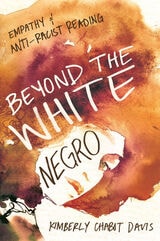
Beyond the White Negro
Empathy and Anti-Racist ReadingKimberly Chabot Davis
University of Illinois Press, 2014
Davis analyzes how white engagement with African American novels, film narratives, and hip-hop can help form anti-racist attitudes that may catalyze social change and racial justice. Though acknowledging past failures to establish cross-racial empathy, she focuses on examples that show avenues for future progress and change. Her study of ethnographic data from book clubs and college classrooms shows how engagement with African American culture and pedagogical support can lead to the kinds of white self-examination that make empathy possible. The result is a groundbreaking text that challenges the trend of focusing on society's failures in achieving cross-racial empathy and instead explores possible avenues for change.
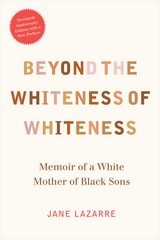
Beyond the Whiteness of Whiteness
Memoir of a White Mother of Black SonsJane Lazarre
Duke University Press, 1996

Beyond the Wire
Former Prisoners and Conflict Transformation in Northern IrelandPeter Shirlow and Kieran McEvoy
Pluto Press, 2008
This book provides the first detailed examination of the role played by former loyalist and republican prisoners in grass roots conflict transformation work in the Northern Ireland peace process. It challenges the assumed passivity of former prisoners and ex-combatants. Instead, it suggests that such individuals and the groups which they formed have been key agents of conflict transformation. They have provided leadership in challenging cultures of violence, developed practical methods of resolving inter-communal conflict and found ways for communities to explore their troubled past. In analysing this, the authors challenge the sterile demonisation of former prisoners and the processes that maintain their exclusion from normal civic and social life.
The book is a constructive reminder of the need for full participation of both former combatants and victims in post-conflict transformation. It also lays out a new agenda for reconciliation which suggests that conflict transformation can and should begin ‘from the extremes’.
The book will be of interest to students of criminology, peace and conflict studies, law and politics, geography and sociology as well as those with a particular interest in the Northern Ireland conflict.
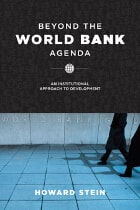
Beyond the World Bank Agenda
An Institutional Approach to DevelopmentHoward Stein
University of Chicago Press, 2008
Drawing on the examples of Africa, Asia, Latin America, and transitional European economies, this revolutionary volume proposes an alternative vision of institutional development with chapter-length applications to finance, state formation, and health care to provide a holistic, contextualized solution to the problems of developing nations. Beyond the World Bank Agenda will be essential reading for anyone concerned with forging a new strategy for sustainable development.

Beyond the World of Men
Women’s Fiction at the Czech Fin de SiècleEdited by Geoffrey Chew
Karolinum Press, 2024
Bringing together Czech fiction published by women between 1890 and 1910, Beyond the World of Men presents works that confront pivotal issues of the time, including the “woman question” and women’s rights, class conflict, lesbian love, and the relationship between the aristocracy and the Czech peasantry (as in two stories originally written in German by the aristocrat Marie von Ebner-Eschenbach). The collection contains stories that are of literary merit, but also hold historical value. In these works, the authors offer trenchant social commentary while injecting both comic and sentimental elements into their writing, employing humanity and subtlety.
As a whole, the collection suggests a revision of the critical understanding of Czech literary modernism; these writers represent voices that were not usually heard in the male writing of the period. They also demand evaluation in their differing (but constant) reactions to earlier women’s writing in Czech and in other European languages, but particularly that of the central figure of Božena Nemcová, to whose canonic novel Babicka they constantly return.

Beyond the World's End
Arts of Living at the CrossingT. J. Demos
Duke University Press, 2020
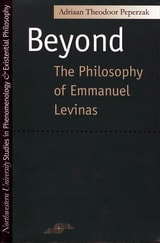
Beyond
The Philosophy of Emmanuel LevinasAdriaan Theodoor Peperzak
Northwestern University Press, 1997
Peperzak's examination begins with a general overview of Levinas's life and thought, and shows how issues of ethics, politics, and religion are intertwined in Levinas's philosophy. Peperzak also discusses the development of Levinas's relations with Husserl and Heidegger, demonstrating thematically the evolution of both Levinas's anti-Heideggerian view of technology and his critical attitude toward nature.
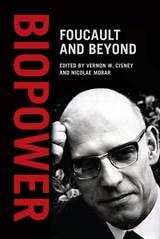
Biopower
Foucault and BeyondEdited by Vernon W. Cisney and Nicolae Morar
University of Chicago Press, 2015
Situating biopower as a radical alternative to traditional conceptions of power—what Foucault called “sovereign power”—the contributors examine a host of matters centered on life, the body, and the subject as a living citizen. Altogether, they pay testament to the lasting relevance of biopower in some of our most important contemporary debates on issues ranging from health care rights to immigration laws, HIV prevention discourse, genomics medicine, and many other topics.

Brewtown Tales
More Stories from Milwaukee and BeyondJohn Gurda
Wisconsin Historical Society Press, 2022
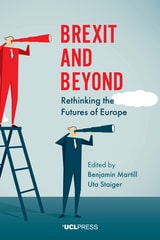
Brexit and Beyond
Rethinking the Futures of EuropeEdited by Benjamin Martill and Uta Staiger
University College London, 2018
Drawing the discussion of Brexit beyond Britain, Benjamin Martill, Uta Staiger, and a team of twenty-eight contributors explore the consequences for Europe and the European Union. Marshaling the perspectives and methodologies of a diverse range of disciplines, the contributors chart the likely effects of Brexit on institutional relations, law, political economy, foreign affairs, democratic governance, and the idea of Europe itself. While the contributors at times offer divergent predictions for the future of Europe after Brexit, they share the conviction that careful analysis is in needed—now more than ever—if we are to understand what lies ahead.
Brexit and Beyond is the first book to focus on the broader consequences of Brexit, and its clear, comprehensive, and trenchant analysis will be invaluable to understanding the complex effects.