Results by title
1993 books match the query 'Latin America' and 94 start with b
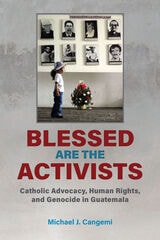
Blessed Are the Activists
Catholic Advocacy, Human Rights, and Genocide in GuatemalaMichael J. Cangemi
University of Alabama Press, 2024
Blessed Are the Activists examines US Catholic activists’ influence on US-Guatemalan relations during the Guatemalan civil war’s most violent years in the 1970s and 1980s. Cangemi argues that Catholic activists’ definition of human rights, advocacy methods, and structure caused them to act as a transnational human rights NGO that engaged Guatemalan and US government officials on human rights issues, reported on Guatemala’s human rights violations, and criticized US foreign policy decisions as a contributing factor in Guatemala’s inequality, poverty, and violence. His work foregrounds how Catholic activists emphasized dignity for Guatemala’s poorest citizens and the connections they made between justice, solidarity, and peace and brought Guatemala’s violence, poverty, and inequality to greater global attention, often at great personal risk.
Cangemi pays considerable attention to multiple facets of the strained US-Guatemala diplomatic relationship, including how and why Guatemala’s military dictatorship exposed the internal flaws within the Carter administration’s decision to link military aid to human rights and how internal foreign policy debates in the Carter and Reagan administrations helped to intensify Guatemala’s bloody civil war. He also includes interviews conducted with Guatemalan genocide survivors and refugees to provide firsthand accounts of the consequences of those policymaking decisions. Finally, he offers readers an in-depth examination of the US Catholic press’s sharp rebukes of US policies on Guatemala and all of Central America when the broader Roman Catholic Church began to move farther toward the ideological right under John Paul II.
Blessed Are the Activists offers rich, original research and a gripping narrative. With Guatemala and other countries in Latin America still experiencing human rights abuses, this book will continue to provide context. It will appeal to a broad swath of readers, from scholars to the general public and students.
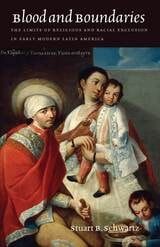
Blood and Boundaries
The Limits of Religious and Racial Exclusion in Early Modern Latin AmericaStuart B. Schwartz
Brandeis University Press, 2020
In Blood and Boundaries, Stuart B. Schwartz takes us to late medieval Latin America to show how Spain and Portugal’s policies of exclusion and discrimination based on religious origins and genealogy were transferred to their colonies in Latin America. Rather than concentrating on the three principal divisions of colonial society—Indians, Europeans, and people of African origins—as is common in studies of these colonial societies, Schwartz examines the three minority groups of moriscos, conversos, and mestizos. Muslim and Jewish converts and their descendants, he shows, posed a special problem for colonial society: they were feared and distrusted as peoples considered ethnically distinct, but at the same time their conversion to Christianity seemed to violate stable social categories and identities. This led to the creation of “cleanliness of blood” regulations that explicitly discriminated against converts. Eventually, Schwartz shows, those regulations were extended to control the subject indigenous and enslaved African populations, and over time, applied to the growing numbers of mestizos, peoples of mixed ethnic origins. Despite the efforts of civil and church and state institutions to regulate, denigrate, and exclude, members of these affected groups often found legal and practical means to ignore, circumvent, or challenge the efforts to categorize and exclude them, creating in the process the dynamic societies of Latin America that emerged in the nineteenth century.
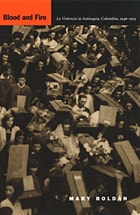
Blood and Fire
La Violencia in Antioquia, Colombia, 1946-1953Mary Roldan
Duke University Press, 2003
Through an analysis of the evolution of violence in Antioquia, which at the time was the wealthiest and most economically diverse region of Colombia, Roldán demonstrates how tensions between regional politicians and the weak central state, diverse forms of social prejudice, and processes of economic development combined to make violence a preferred mode of political action. Privatization of state violence into paramilitary units and the emergence of armed resistance movements exacted a horrible cost on Colombian civic life, and these processes continue to plague the country.
Roldan’s reading of the historical events suggests that Antioquia’s experience of la Violencia was the culmination of a brand of internal colonialism in which regional identity formation based on assumptions of cultural superiority was used to justify violence against racial or ethnic "others" and as a pretext to seize land and natural resources. Blood and Fire demonstrates that, far from being a peculiarity of the Colombians, la Violencia was a logical product of capitalist development and state formation in the modern world.
This is the first study to analyze intersections of ethnicity, geography, and class to explore the genesis of Colombian violence, and it has implications for the study of repression in many other nations.
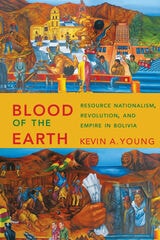
Blood of the Earth
Resource Nationalism, Revolution, and Empire in BoliviaBy Kevin A. Young
University of Texas Press, 2017
Conflicts over subterranean resources, particularly tin, oil, and natural gas, have driven Bolivian politics for nearly a century. “Resource nationalism”—the conviction that resource wealth should be used for the benefit of the “nation”—has often united otherwise disparate groups, including mineworkers, urban workers, students, war veterans, and middle-class professionals, and propelled an indigenous union leader, Evo Morales, into the presidency in 2006. Blood of the Earth reexamines the Bolivian mobilization around resource nationalism that began in the 1920s, crystallized with the 1952 revolution, and continues into the twenty-first century.
Drawing on a wide array of Bolivian and US sources, Kevin A. Young reveals that Bolivia became a key site in a global battle among economic models, with grassroots coalitions demanding nationalist and egalitarian alternatives to market capitalism. While US-supported moderates within the revolutionary regime were able to defeat more radical forces, Young shows how the political culture of resource nationalism, though often comprising contradictory elements, constrained government actions and galvanized mobilizations against neoliberalism in later decades. His transnational and multilevel approach to the 1952 revolution illuminates the struggles among Bolivian popular sectors, government officials, and foreign powers, as well as the competing currents and visions within Bolivia’s popular political cultures. Offering a fresh appraisal of the Bolivian Revolution, resource nationalism, and the Cold War in Latin America, Blood of the Earth is an ideal case study for understanding the challenges shared by countries across the Global South.
Blood, Ink, and Culture
Miseries and Splendors of the Post-Mexican ConditionRoger Bartra
Duke University Press, 2002
Written with verve over a period of twenty years, these essays—most translated into English here for the first time—suggest why Bartra has become one of Latin America’s leading public intellectuals. The essays cover a broad range of topics, from the canonical forms of Mexican culture to the meaning of postnational identity in a globalizing age, from the repercussions of the 1994 Zapatista uprising to the 2000 election of Vicente Fox and the end of the PRI’s seven-decade rule. Across this range of topics, Bartra imparts astute insights into a critical period of transition in Mexican history, stressing throughout the importance of democracy, the complexity of identity, and the vibrancy of the Left. In Blood, Ink, and Culture, he provides a stimulating inside look at political and intellectual life in the southern reaches of North America.
Bloody Numbers
The Early Atlantic Slave Trade and the Invention of Modern CorporealityPablo F. Gómez
University of Chicago Press, 2026
Upends current thinking about how early modern people started to conceptualize human beings in terms of populations.
Bloody Numbers is a provocative account of the violent world of the sixteenth- and seventeenth-century South Atlantic slave-trading societies, where traders, financiers, officials, surgeons, notaries, ship captains, and others began thinking about human bodies as aggregate populations understood through numbers: measurements, averages, and calculations of risk and value assessed through the tabulation of heights, weights, tumors, scars, and other characteristics. Pablo F. Gómez explores how figures within the world of slave trading used this model for understanding human bodies to generalize about behavior and disease in ways that foreshadowed the work of modern epidemiologists and public health officials—though they employed their calculations with the aim of protecting their financial interests rather than of caring for enslaved people. The ruthlessness inherent in these practices became ingrained in the modern corporeal mathematics that emerged from the early slave trade and diffused through its vast political, financial, logistical, and intellectual networks.
A pathbreaking work, Bloody Numbers reveals the historical actions that rendered populations quantifiable. In doing so, it shows that confronting these origins is essential to understanding the violent political, legal, economic, and scientific practices that ascribe numbers to our own bodies.
Bodies on the Front Lines
Performance, Gender, and Sexuality in Latin America and the CaribbeanBrenda Werth and Katherine Zien, Editors
University of Michigan Press, 2024
The volume’s contributors draw from rich legacies of theater, performance, and activism in the region, as well as decolonial and intersectional theorizing, to demonstrate the ways that performance practices enable activists to sustain their movements. The chapters engage diverse perspectives from Argentina, Brazil, Bolivia, Chile, Colombia, Cuba, the Dominican Republic, transnational Central America, Peru, Puerto Rico, and Mexico.
Rather than taking an approach that simplifies complexities among states, Bodies on the Front Lines takes seriously the geopolitical stakes of examining Latin America and the Caribbean as a heterogeneous site of nations and networks. In chapters covering this wide geographical area, leading scholars in the fields of theater and performance studies showcase the aesthetic, social, and political work of performance in generating and fortifying gender and sexual activism in the Americas.
Bolivia in the Age of Gas
Bret Gustafson
Duke University Press, 2020
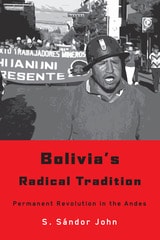
Bolivia's Radical Tradition
Permanent Revolution in the AndesS. Sándor John
University of Arizona Press, 2012

Bolivia
Revolution and the Power of History in the PresentJames Dunkerley
University of London Press, 2007
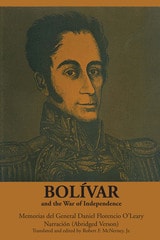
Bolívar and the War of Independence
Memorias del General Daniel Florencio O’Leary, NarraciónBy Daniel Florencio O'Leary
University of Texas Press, 1970
The overthrow of Spanish rule and the birth of new republican governments in northern South America at the beginning of the nineteenth century were in large part the work of one man—Simón Bolívar. Bolívar was not only the soldier who built a patriot army from a small band of exiles and led them victoriously across Venezuela and down the spine of the Andes as far as Potosí; he was also the statesman who framed the new republics that sprang to life after the defeat of the Spanish and who called the Congress of Panama in hopes of making real his dream of uniting all the South American republics in a single confederation. He was truly the Liberator.
The Narración, or narrative, of the Memorias of Daniel Florencio O’Leary has long been recognized by Spanish American scholars as one of the most important historical sources for a major part of Bolívar’s life. O’Leary took an active part in the wars for independence, first as a young officer, recruited in the British Isles to aid the patriot cause, and later as Bolívar’s chief aide, often entrusted with diplomatic missions. His firsthand knowledge of the stirring events of the period, his access to relevant documents, and his close association with the major figures in the struggle, as well as his friendship with Bolívar, made O’Leary a particularly valuable chronicler and biographer. Bolívar himself, shortly before his death, requested that O’Leary write the story of his life.
O’Leary’s meticulous attention to military and diplomatic maneuvers and his keen, sometimes acrid, comments on both men and events give the reader not only a vivid portrait of Bolívar—the man and his achievements—but also a remarkable insight into O’Leary’s own position as an autocratic-minded participant in the wars for independence. Although O’Leary’s devotion to, and admiration for, his Chief make for an occasionally partisan view, his stark account of the hardships and disappointments that Bolívar and his armies overcame against almost impossible odds does much to balance the narrative.
In his abridged translation, Robert McNerney has omitted the Apéndice, documents that O’Leary, had he lived, undoubtedly would have used as the source for completing his account of Bolívar’s life. Numerous letters and documents scattered through the original text also have been omitted, leaving a highly readable narrative.
Bones, Clones, and Biomes
The History and Geography of Recent Neotropical MammalsEdited by Bruce D. Patterson and Leonora P. Costa
University of Chicago Press, 2012
As explorers and scientists have known for decades, the Neotropics harbor a fantastic array of our planet’s mammalian diversity, from capybaras and capuchins to maned wolves and mouse opossums to sloths and sakis. This biological bounty can be attributed partly to the striking diversity of Neotropical landscapes and climates and partly to a series of continental connections that permitted intermittent faunal exchanges with Africa, Antarctica, Australia, and North America. Thus, to comprehend the development of modern Neotropical mammal faunas requires not only mastery of the Neotropics’ substantial diversity, but also knowledge of mammalian lineages and landscapes dating back to the Mesozoic.
Bones, Clones, and Biomes offers just that—an exploration of the development and relationships of the modern mammal fauna through a series of studies that encompass the last 100 million years and both Central and South America. This work serves as a complement to more taxonomically driven works, providing for readers the long geologic and biogeographic contexts that undergird the abundance and diversity of Neotropical mammals. Rather than documenting diversity or distribution, this collection traverses the patterns that the distributions and relationships across mammal species convey, bringing together for the first time geology, paleobiology, systematics, mammalogy, and biogeography. Of critical importance is the book’s utility for current conservation and management programs, part of a rapidly rising conservation paleobiology initiative.
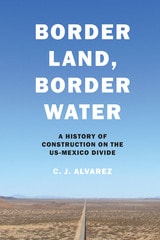
Border Land, Border Water
A History of Construction on the US-Mexico DivideBy C. J. Alvarez
University of Texas Press, 2019
Winner, Abbott Lowell Cummings Award, Vernacular Architecture Forum, 2020
Winner, Elisabeth Blair MacDougall Book Award, Society of Architectural Historians, 2021
From the boundary surveys of the 1850s to the ever-expanding fences and highway networks of the twenty-first century, Border Land, Border Water examines the history of the construction projects that have shaped the region where the United States and Mexico meet.
Tracing the accretion of ports of entry, boundary markers, transportation networks, fences and barriers, surveillance infrastructure, and dams and other river engineering projects, C. J. Alvarez advances a broad chronological narrative that captures the full life cycle of border building. He explains how initial groundbreaking in the nineteenth century transitioned to unbridled faith in the capacity to control the movement of people, goods, and water through the use of physical structures. By the 1960s, however, the built environment of the border began to display increasingly obvious systemic flaws. More often than not, Alvarez shows, federal agencies in both countries responded with more construction—“compensatory building” designed to mitigate unsustainable policies relating to immigration, black markets, and the natural world. Border Land, Border Water reframes our understanding of how the border has come to look and function as it does and is essential to current debates about the future of the US-Mexico divide.
Border Odyssey
Travels along the U.S./Mexico DivideBy Charles D. Thompson, Jr.
University of Texas Press, 2015
“We were trying to change the vision and the conversation about border fears.”
Border Odyssey takes us on a drive toward understanding the U.S./Mexico divide: all 1,969 miles—from Boca Chica to Tijuana—pressing on with the useful fiction of a map.
“We needed to go to the place where countless innocent people had been kicked, cussed, spit on, arrested, detained, trafficked, and killed. It would become clear that the border, la frontera, was more multifaceted and profound than anything we could have invented about it from afar.”
Along the journey, five centuries of cultural history (indigenous, French, Spanish, Mexican, African American, colonist, and U.S.), wars, and legislation unfold. And through observation, conversation, and meditation, Border Odyssey scopes the stories of the people and towns on both sides.
“Stories are the opposite of walls: they demand release, retelling, showing, connecting, each image chipping away at boundaries. Walls are full stops. But stories are like commas, always making possible the next clause.”
Among the terrain traversed: walls and more walls, unexpected roadblocks and patrol officers; a golf course (you could drive a ball across the border); a Civil War battlefield (you could camp there); the southernmost plantation in the United States; a hand-drawn ferry, a road-runner tracked desert, and a breathtaking national park; barbed wire, bridges, and a trucking-trade thoroughfare; ghosts with guns; obscured, unmarked, and unpaved roads; a Catholic priest and his dogs, artwork, icons, and political cartoons; a sheriff and a chain-smoking mayor; a Tex-Mex eatery empty of customers and a B&B shuttering its doors; murder-laden newspaper headlines at breakfast; the kindness of the border-crossing underground; and too many elderly, impoverished, ex-U.S. farmworkers, braceros, lined up to have Thompson take their photograph.
Borderland on the Isthmus
Race, Culture, and the Struggle for the Canal ZoneMichael E. Donoghue
Duke University Press, 2014
Borderlands Curanderos
The Worlds of Santa Teresa Urrea and Don Pedrito JaramilloBy Jennifer Koshatka Seman
University of Texas Press, 2021
2022 Americo Paredes Award, Center for Mexican American Studies at South Texas College
A historical exploration of the worlds and healing practices of two curanderos (faith healers) who attracted thousands, rallied their communities, and challenged institutional powers.
Santa Teresa Urrea and Don Pedrito Jaramillo were curanderos—faith healers—who, in the late nineteenth and early twentieth centuries, worked outside the realm of "professional medicine," seemingly beyond the reach of the church, state, or certified health practitioners whose profession was still in its infancy. Urrea healed Mexicans, Indigenous people, and Anglos in northwestern Mexico and cities throughout the US Southwest, while Jaramillo conducted his healing practice in the South Texas Rio Grande Valley, healing Tejanos, Mexicans, and Indigenous people there. Jennifer Koshatka Seman takes us inside the intimate worlds of both "living saints," demonstrating how their effective healing—curanderismo—made them part of the larger turn-of-the century worlds they lived in as they attracted thousands of followers, validated folk practices, and contributed to a modernizing world along the US-Mexico border.
While she healed, Urrea spoke of a Mexico in which one did not have to obey unjust laws or confess one's sins to Catholic priests. Jaramillo restored and fed drought-stricken Tejanos when the state and modern medicine could not meet their needs. Then, in 1890, Urrea was expelled from Mexico. Within a decade, Jaramillo was investigated as a fraud by the American Medical Association and the US Post Office. Borderlands Curanderos argues that it is not only state and professional institutions that build and maintain communities, nations, and national identities but also those less obviously powerful.
Borderlands Saints
Secular Sanctity in Chicano/a and Mexican CultureMartín, Desirée A
Rutgers University Press, 2013
Winner of the 2014 Latina/o Studies Section - LASA Outstanding Book Award
In Borderlands Saints, Desirée A. Martín examines the rise and fall of popular saints and saint-like figures in the borderlands of the United States and Mexico. Focusing specifically on Teresa Urrea (La Santa de Cabora), Pancho Villa, César Chávez, Subcomandante Marcos, and Santa Muerte, she traces the intersections of these figures, their devotees, artistic representations, and dominant institutions with an eye for the ways in which such unofficial saints mirror traditional spiritual practices and serve specific cultural needs.
Popular spirituality of this kind engages the use and exchange of relics, faith healing, pilgrimages, and spirit possession, exemplifying the contradictions between high and popular culture, human and divine, and secular and sacred. Martín focuses upon a wide range of Mexican and Chicano/a cultural works drawn from the nineteenth century to the present, covering such diverse genres as the novel, the communiqué, drama, the essay or crónica, film, and contemporary digital media. She argues that spiritual practice is often represented as narrative, while narrative—whether literary, historical, visual, or oral—may modify or even function as devotional practice.
Borderless Borders
edited by Frank Bonilla, Edwin Meléndez, Rebecca Morales and María de los Angeles Torres
Temple University Press, 2000
Borderless Borders describes the structural processes and active interventions taking place inside and outside U.S. Latino communities. After a context-setting introduction by urban planner Rebecca Morales, the contributors focus on four themes. Economist Manuel Pastor Jr., urban sociologist Saskia Sassen, and political scientist Carol Wise look at emerging forms of global and transnational interdependence and at whether they are likely to produce individuals who are economically independent or simply more dependent. Sociologist Jorge Chapa, social anthropologist Maria P. Fernandez Kelly, and economist Edwin Melendez examine the negative impact of economic and political restructuring within the United States,especially within Latino communities. Performance artist Guillermo Gomez-Pena, legal scholar Gerald Torres, political scientist Maria de los Angeles Torres, and modern language specialist Silvio Torres-Saillant consider the implications -- for community formation, citizenship, political participation, and human rights -- of the fact that individuals are forced to construct identities for themselves in more than one sociopolitical setting. Finally, sociologist Jeremy Brecher, sociologist Frank Bonilla, and political scientist Pedro Caban speculate on new paths into international relations and issue-oriented social movements and organizations among these mobile populations. To supplement the written contributions, Painter Bibiana Suarez has chosen several artworks that contribute to the interdisciplinary scope of the book.
Borges and Kafka, Bolaño and Bloom
Latin American Authors and the Western CanonJuan E. De Castro
Vanderbilt University Press, 2022
Borges and Kafka, Bolaño and Bloom is a parsing not simply of these authors' reactions to a canon, but of the notion of canon writ large and the inequities and erasures therein. It concludes with a look at the testimonial and autobiographical writings of Rigoberta Menchú and Lurgio Gavilán, who arguably represent the trajectory of Indigenous testimonial and autobiographical writing during the last forty years, noting how their texts represent alternative ways of relating to national and, on occasion, Western cultures. This study is a new attempt to map writers' diverse ways of thinking about locality and universality from within and without what is known as the canon.
Born Again in Brazil
The Pentecostal Boom and the Pathogens of PovertyR. Andrew Chesnut
Rutgers University Press, 1997
Born of War in Colombia
Reproductive Violence and Memories of AbsenceTatiana Sanchez Parra
Rutgers University Press, 2024
Bountiful Deserts
Sustaining Indigenous Worlds in Northern New SpainCynthia Radding
University of Arizona Press, 2022
Common understandings drawn from biblical references, literature, and art portray deserts as barren places that are far from God and spiritual sustenance. In our own time, attention focuses on the rigors of climate change in arid lands and the perils of the desert in the northern Mexican borderlands for migrants seeking shelter and a new life.
Bountiful Deserts foregrounds the knowledge of Indigenous peoples in the arid lands of northwestern Mexico, for whom the desert was anything but barren or empty. Instead, they nurtured and harvested the desert as a bountiful and sacred space. Drawing together historical texts and oral testimonies, archaeology, and natural history, author Cynthia Radding develops the relationships between people and plants and the ways that Indigenous people sustained their worlds before European contact through the changes set in motion by Spanish encounters, highlighting the long process of colonial conflicts and adaptations over more than two centuries. This work reveals the spiritual power of deserts by weaving together the cultural practices of historical peoples and contemporary living communities, centered especially on the Yaqui/Yoeme and Mayo/Yoreme.
Radding uses the tools of history, anthropology, geography, and ecology to paint an expansive picture of Indigenous worlds before and during colonial encounters. She re-creates the Indigenous worlds in both their spiritual and material realms, bringing together the analytical dimension of scientific research and the wisdom of oral traditions in its exploration of different kinds of knowledge about the natural world.
Published in cooperation with the William P. Clements Center for Southwest Studies, Southern Methodist University
Branding Brazil
Transforming Citizenship on ScreenLeslie L. Marsh
Rutgers University Press, 2021
Brazil Imagined
1500 to the PresentBy Darlene J. Sadlier
University of Texas Press, 2008
The first comprehensive cultural history of Brazil to be written in English, Brazil Imagined: 1500 to the Present captures the role of the artistic imaginary in shaping Brazil's national identity. Analyzing representations of Brazil throughout the world, this ambitious survey demonstrates the ways in which life in one of the world's largest nations has been conceived and revised in visual arts, literature, film, and a variety of other media.
Beginning with the first explorations of Brazil by the Portuguese, Darlene J. Sadlier incorporates extensive source material, including paintings, historiographies, letters, poetry, novels, architecture, and mass media to trace the nation's shifting sense of its own history. Topics include the oscillating themes of Edenic and cannibal encounters, Dutch representations of Brazil, regal constructs, the literary imaginary, Modernist utopias, "good neighbor" protocols, and filmmakers' revolutionary and dystopian images of Brazil. A magnificent panoramic study of race, imperialism, natural resources, and other themes in the Brazilian experience, this landmark work is a boon to the field.
Brazil and the Dialectic of Colonization
Alfredo Bosi
University of Illinois Press, 2015
Portugal extracted wealth from its Brazilian colony. Slaves--first indigenous peoples, later Africans--mined its ore and cut its sugarcane. From the customs of the colonists and the aspirations of the enslaved rose Brazil. Bosi scrutinizes signal points in the creation of Brazilian culture--the plays and poetry, the sermons of missionaries and Jesuit priests, the Indian novels of José de Alencar and the Voices of Africa of poet Castro Alves. His portrait of the country's response to the pressures of colonial conformity offers a groundbreaking appraisal of Brazilian culture as it emerged from the tensions between imposed colonial control and the African and Amerindian cults--including the Catholic-influenced ones--that resisted it.
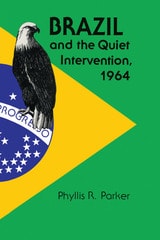
Brazil and the Quiet Intervention, 1964
By Phyllis R. Parker
University of Texas Press, 1979
When the Brazilian military overthrew President João Goulart in 1964, American diplomats characterized the coup as a "100 percent Brazilian movement." It has since become apparent, largely through government documents declassified during the course of research for this book, that the United States had an invisible but pervasive part in the coup.
Relying principally on documents from the Johnson and Kennedy presidential libraries, Phyllis Parker unravels the events of the coup in fascinating detail. The evidence she presents is corroborated by interviews with key participants.
U.S. interference in the Goulart regime began when normal diplomatic pressure failed to produce the desired enthusiasm from him for the Alliance of Progress. Political and economic manipulations also proving ineffective, the United States stood ready to back a military takeover of Brazil's constitutional democracy.
U.S. operation "Brother Sam" involved shipments of petroleum, a naval task force, and tons of arms and ammunition in preparation for intervention during the 1964 coup. When the Brazilian military gained control without calling on the ready assistance, U.S. policy makers immediately accorded recognition to the new government and set in motion plans for economic support.
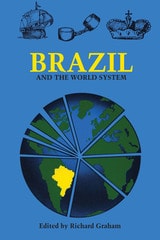
Brazil and the World System
Edited and with an introduction by Richard Graham; with chapters by Fernando A. Novais, John R. Hall, and Luís Carlos Soares
University of Texas Press, 1991
Has the world economy shaped and defined Brazil’s economic and political history and, if so, to what extent? Is Brazil’s past to be explained principally by its insertion in a single world capitalist system? The authors of the three essays in this volume reflect critically on these questions along with the following: Should the determining factors be understood as sociological-cultural (as in a heritage of patrimonial rule) or were they based on material reality? What was the connection between the presence of slavery in the Americas and the emergence of capitalism in Europe? What accounts for Brazil’s centuries-long reliance on exports and the slow development of its industry?
The chapters in this book draw contrasting judgments on virtually every major issue in Brazilian history because they begin from divergent premises. In arguing their cause, noted scholars John R. Hall, Fernando A. Novais, and Luís Carlos Soares provide a formidable intellectual point and counterpoint whose theoretical assumptions bear heavily on all social scientists engaged in exploring colonialism, imperialism, capitalism, dependency, and relative international poverty.
Brazil and the World System provides provocative insights not only about Brazil but also about the nature of colonialism in general and its relationship to the rise of capitalism in Europe. It should appeal to Latin Americanists of all disciplinary persuasions as well as to general readers curious about great patterns of change in history. Stuart Schwartz, director of the Center for Early Modern History at the University of Minnesota, says, “ . . . an excellent collection . . . North American scholarship will find these essays an eye-opener.
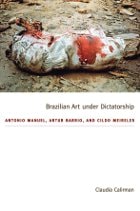
Brazilian Art under Dictatorship
Antonio Manuel, Artur Barrio, and Cildo MeirelesClaudia Calirman
Duke University Press, 2012
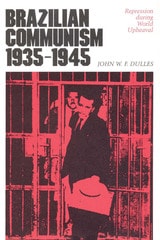
Brazilian Communism, 1935-1945
Repression during World UpheavalBy John W. F. Dulles
University of Texas Press, 1983
The Brazilian Communist Party was one of the largest Communist parties in Latin America until its split and dissolution in the 1990s. Although not granted legal status as a political party of Brazil until 1985, the Partido Comunista Brasileiro (PCB) has been tolerated by that country's regime.
Such governmental tolerance of the PCB was not always the case. In the past, the regime of Getúlio Vargas practiced savage forms of repression against Brazilian leftists, whose "Red extremism" was cited by both government leaders and the press as sufficient cause for Vargas' adoption of the most extreme measures.
Brazilian Communism, 1935–1945 is an objective and remarkably comprehensive account of the Brazilian Communist Party's struggle to survive those days of repression.
From his prison cell, PCB leader Luís Carlos Prestes guided the Party's quarreling factions. All who were associated with the Left shared a common enemy: the police, who used the most brutal forms of torture to extract information about leftist activities. Young Elza Fernandes, companion of the PCB's secretary general, was one whom the police interrogated. Suspecting that she had betrayed them, the Party itself arranged her murder.
Dulles' vivid account of this violent chapter in Latin American history is based on exclusive interviews with leading activists of the period and exhaustive research in the archives of both the PCB and the Brazilian police. The results make fascinating reading for Latin Americanists, historians of World War II, and students of international Communism alike.
Brazilian Popular Music and Citizenship
Idelber Avelar and Christopher Dunn, eds.
Duke University Press, 2011
Contributors. Idelber Avelar, Christopher Dunn, João Freire Filho, Goli Guerreiro, Micael Herschmann, Ari Lima, Aaron Lorenz, Shanna Lorenz, Angélica Madeira, Malcolm K. McNee, Frederick Moehn, Flávio Oliveira, Adalberto Paranhos, Derek Pardue, Marco Aurélio Paz Tella, Osmundo Pinho, Carlos Sandroni, Daniel Sharp, Hermano Vianna, Wivian Weller
Brazilian Women's Filmmaking
From Dictatorship to DemocracyLeslie Marsh
University of Illinois Press, 2012
At most recent count, there are no fewer than forty-five women in Brazil directing or codirecting feature-length fiction or documentary films. In the early 1990s, women filmmakers in Brazil were credited for being at the forefront of the rebirth of filmmaking, or retomada, after the abolition of the state film agency and subsequent standstill of film production. Despite their numbers and success, films by Brazilian women directors are generally absent from discussions of Latin American film and published scholarly works.
Brazilian-African Diaspora in Ghana
The Tabom, Slavery, Dissonance of Memory, Identity, and Locating HomeKwame Essien
Michigan State University Press, 2016
Bridging National Borders in North America
Transnational and Comparative HistoriesBenjamin H. Johnson and Andrew R. Graybill, eds.
Duke University Press, 2010
The contributors engage topics such as how mixed-race groups living on the peripheries of national societies dealt with the creation of borders in the nineteenth century, how medical inspections and public-health knowledge came to be used to differentiate among bodies, and how practices designed to channel livestock and prevent cattle smuggling became the model for regulating the movement of narcotics and undocumented people. They explore the ways that U.S. immigration authorities mediated between the desires for unimpeded boundary-crossings for day laborers, tourists, casual visitors, and businessmen, and the restrictions imposed by measures such as the Chinese Exclusion Act of 1882 and the 1924 Immigration Act. Turning to the realm of culture, they analyze the history of tourist travel to Mexico from the United States and depictions of the borderlands in early-twentieth-century Hollywood movies. The concluding essay suggests that historians have obscured non-national forms of territoriality and community that preceded the creation of national borders and sometimes persisted afterwards. This collection signals new directions for continental dialogue about issues such as state-building, national expansion, territoriality, and migration.
Contributors: Dominique Brégent-Heald, Catherine Cocks, Andrea Geiger, Miguel Ángel González Quiroga, Andrew R. Graybill, Michel Hogue, Benjamin H. Johnson, S. Deborah Kang, Carolyn Podruchny, Bethel Saler, Jennifer Seltz, Rachel St. John, Lissa Wadewitz
Published in cooperation with the William P. Clements Center for Southwest Studies, Southern Methodist University.
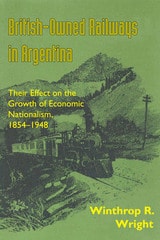
British-Owned Railways in Argentina
Their Effect on the Growth of Economic Nationalism, 1854-1948By Winthrop R. Wright
University of Texas Press, 1974
During the nineteenth century, British-owned railways grew under the protection of an Argentine ruling elite that considered railways both instruments and symbols of progress. Under this program of support for foreign enterprise, Argentina had by 1914 built the largest railway network in Latin America.
During the first decades of the twentieth century, the railways were successful in following a policy of calculated disregard for Argentine interests in general. However, following the end of World War I, the British economic empire began to decline and Argentine economic nationalism grew. A number of popularistic political movements incorporated economic nationalism into their platforms, and even among the ruling elite there were signs of increasing nationalistic sentiment.
Although most studies of economic nationalism have emphasized the importance of the middle-class Radical party in the rise of xenophobia, Winthrop R. Wright's study shows that antiforeign economic nationalism was not entirely a reaction to the conservative elite. Between 1932 and 1938 the nationalistic programs of General Agustin Justo's government—basically a conservative regime—led the British interests to decide to sell their holdings. The British govemment had arrived at a position of supporting the economic withdrawal of the large British-owned firms long before Juan D. Perón appeared on the political scene.
Perón combined traditional Argentine economic nationalism with his own scheme to gain power over all elements in Argentina. His solution to the railway problem, although more dramatically executed, did not differ greatly from that of the conservative Justo. Perón purchased the railways outright in 1947–1948, but his use of nationalism was in reality covering his own inability to outbargain Britain and the United States following the conclusion of World War II.
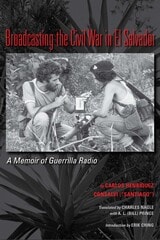
Broadcasting the Civil War in El Salvador
A Memoir of Guerrilla RadioBy Carlos Henriquez Consalvi ("Santiago")
University of Texas Press, 2010
During the 1980s war in El Salvador, Radio Venceremos was the main news outlet for the Frente Farabundo Martí para la Liberación Nacional (FMLN), the guerrilla organization that challenged the government. The broadcast provided a vital link between combatants in the mountains and the outside world, as well as an alternative to mainstream media reporting. In this first-person account, "Santiago," the legend behind Radio Venceremos, tells the story of the early years of that conflict, a rebellion of poor peasants against the Salvadoran government and its benefactor, the United States.
Originally published as La Terquedad del Izote, this memoir also addresses the broader story of a nationwide rebellion and its international context, particularly the intensifying Cold War and heavy U.S. involvement in it under President Reagan. By the war's end in 1992, more than 75,000 were dead and 350,000 wounded—in a country the size of Massachusetts. Although outnumbered and outfinanced, the rebels fought the Salvadoran Army to a draw and brought enough bargaining power to the negotiating table to achieve some of their key objectives, including democratic reforms and an overhaul of the security forces.
Broadcasting the Civil War in El Salvador is a riveting account from the rebels' point of view that lends immediacy to the Salvadoran conflict. It should appeal to all who are interested in historic memory and human rights, U.S. policy toward Central America, and the role the media can play in wartime.
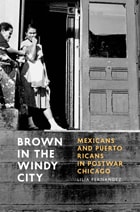
Brown in the Windy City
Mexicans and Puerto Ricans in Postwar ChicagoLilia Fernández
University of Chicago Press, 2012
Brown in the Windy City is the first history to examine the migration and settlement of Mexicans and Puerto Ricans in postwar Chicago. Lilia Fernández reveals how the two populations arrived in Chicago in the midst of tremendous social and economic change and, in spite of declining industrial employment and massive urban renewal projects, managed to carve out a geographic and racial place in one of America’s great cities. Through their experiences in the city’s central neighborhoods over the course of these three decades, Fernández demonstrates how Mexicans and Puerto Ricans collectively articulated a distinct racial position in Chicago, one that was flexible and fluid, neither black nor white.

Bruno
Conversations with a Brazilian Drug DealerRobert Gay
Duke University Press, 2015
Buenos Aires
400 YearsEdited by Stanley R. Ross and Thomas F. McGann
University of Texas Press, 1982
Building Nineteenth-Century Latin America
Re-Rooted Cultures, Identities, and NationsWilliam Garrett Acree
Vanderbilt University Press, 2009
Building the King’s Highway
Labor, Society, and Family on Mexico’s Caminos Reales, 1757-1804Bruce A. Castleman
University of Arizona Press, 2005
Focusing on the camino real linking Mexico City and the port of Veracruz, Bruce Castleman has written a social history of road construction laborers in late Bourbon Mexico. He has drawn on employment and census records to study a major shift in methods used by the Spanish colonial regime to mobilize the supply of unskilled labor—and concomitant changes in the identities those laborers asserted for themselves.
Through a close analysis of wages actually paid to named individuals from one week to the next, Castleman opens a new window on Mexican history. In the 1760s, a free-wage labor regime replaced a draft-labor system, and by examining records of road construction he traces both this transformation and its implications. During this time, free-wage artisans saw their earnings reduced, and they were pushed into the labor pool, and Castleman reveals how a shift occurred in the way that laborers identified themselves as the Spanish casta system of racial classification became increasingly fluid.
In his study, Castleman introduces some of the principle players of eighteenth-century Mexico, from viceroys to tobacco planters to military engineers. He then fleshes out the lives of working persons, drawing on a complete set of construction records from the construction of the Puente de Escamela at Orizaba to forge a collective biography that considers their existences apart from the workplace. By linking census and employment records, he uncovers a host of social indicators such as marriage preference, family structure, and differences over time in how the caste system was used to classify people according to ancestry.
As Castleman shows, roads did not so much link Mexico to the global economy as forge regional markets within New Spain, and his work provides an astute analysis of struggles between the Bourbon colonial state, the important consulados of Mexico City and Veracruz, and more localized interests over road policy. More important, Building the King’s Highway provides a valuable new perspective on people’s lives as it advances our understanding of labor in late colonial Latin America.
Building the Urban Environment
Visions of the Organic City in the United States, Europe, and Latin AmericaHarold L Platt
Temple University Press, 2015
Building the Urban Environment is a comparative study of the contestation among planners, policymakers, and the grassroots over the production and meaning of urban space. Award-winning historian Harold Platt presents case studies of seven cities, including Rotterdam, Chicago, and Sao Paulo, to show how, over time, urban life created hybrid spaces that transformed people, culture, and their environments.
As Platt explains, during the post-1945 race to technological modernization, policymakers gave urban planners of the International Style extraordinary influence to build their utopian vision of a self-sustaining “organic city.” However, in the 1960s, they faced a revolt of the grassroots. Building the Urban Environment traces the rise and fall of the Modernist planners during an era of Cold War, urban crisis, unnatural disasters, and global restructuring in the wake of the oil-energy embargo of the ’70s.
Ultimately, Platt provides a way to measure different visions of the postwar city against actual results in terms of the built environment, contrasting how each city created a unique urban space.
Butterflies Will Burn
Prosecuting Sodomites in Early Modern Spain and MexicoBy Federico Garza Carvajal
University of Texas Press, 2003
As Spain consolidated its Empire in the sixteenth and seventeenth centuries, discourses about the perfect Spanish man or "Vir" went hand-in-hand with discourses about another kind of man, one who engaged in the "abominable crime and sin against nature"—sodomy. In both Spain and Mexico, sodomy came to rank second only to heresy as a cause for prosecution, and hundreds of sodomites were tortured, garroted, or burned alive for violating Spanish ideals of manliness. Yet in reality, as Federico Garza Carvajal argues in this groundbreaking book, the prosecution of sodomites had little to do with issues of gender and was much more a concomitant of empire building and the need to justify political and economic domination of subject peoples.
Drawing on previously unpublished records of some three hundred sodomy trials conducted in Spain and Mexico between 1561 and 1699, Garza Carvajal examines the sodomy discourses that emerged in Andalucía, seat of Spain's colonial apparatus, and in the viceroyalty of New Spain (Mexico), its first and largest American colony. From these discourses, he convincingly demonstrates that the concept of sodomy (more than the actual practice) was crucial to the Iberian colonizing program. Because sodomy opposed the ideal of "Vir" and the Spanish nationhood with which it was intimately associated, the prosecution of sodomy justified Spain's domination of foreigners (many of whom were represented as sodomites) in the peninsula and of "Indios" in Mexico, a totally subject people depicted as effeminate and prone to sodomitical acts, cannibalism, and inebriation.
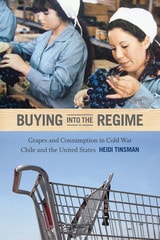
Buying into the Regime
Grapes and Consumption in Cold War Chile and the United StatesHeidi Tinsman
Duke University Press, 2014
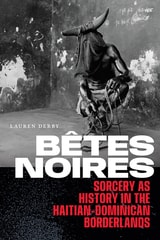
Bêtes Noires
Sorcery as History in the Haitian-Dominican BorderlandsLauren Derby
Duke University Press, 2025