Results by title
2916 books match the query 'Politics and government' and 133 start with b
Beyond Vietnam
The Politics of Protest in Massachusetts, 1974-1990Robert Surbrug
University of Massachusetts Press, 2009
Narratives of the 1960s typically describe an ascending arc of political activism that peaked in 1968, then began a precipitous descent as the revolutionary dreams of the New Left failed to come to fruition. The May 1970 killings at Kent State often stand as an epitaph to a decade of protest, after which the principal story becomes the resurgence of the right.
In Beyond Vietnam: The Politics of Protest in Massachusetts, 1974–1990, Robert Surbrug challenges this prevailing paradigm by examining three protest movements that were direct descendants of Vietnam-era activism: the movement against nuclear energy; the nuclear weapons freeze movement; and the Central American solidarity movement. Drawing lessons from the successes and failures of the preceding era, these movements had a significant impact on the liberal wing of the Democratic Party, which itself had been undergoing major transformations in the wake of the 1960s.
By focusing on one state—Massachusetts—Surbrug is able to illuminate the interaction between the activist left and mainstream liberalism, showing how each influenced the other and how together they helped shape the politics of the 1970s and 1980s. During these years, Massachusetts emerged as a center of opposition to nuclear power, the continuing Cold War arms race, and Ronald Reagan's interventionist policies in Central America. The state's role in national policy was greatly enhanced by prominent political figures such as Senator Edward Kennedy, Speaker of the House Thomas “Tip” O'Neill, presidential candidate Governor Michael Dukakis, Vietnam veteran Senator John Kerry, and moderate Republican Silvio Conte.
What Beyond Vietnam shows is that the rise of the right in the aftermath of the 1960s was by no means a unilateral ascendancy. Instead it involved a bifurcation of American politics in which an increasingly strong conservative movement was vigorously contested by an activist left and a reinvigorated mainstream liberalism.
Beyond the Miracle
Inside the New South AfricaAllister Sparks
University of Chicago Press, 2003
Sparks sees South Africa as facing many of the same challenges as the rest of the world, especially a widening gap between rich and poor, exacerbated by the forces of globalization. While the transition government has done much to establish democracy and racial equality in a short time, as well as bring basic services such as clean water to millions who did not have them before, many blacks feel it has not done enough to redress the continuing imbalance of wealth in the country. Many whites, meanwhile, feel disempowered and confused about what role they have to play as a racial minority in a country they used to rule and regard as theirs by divine right. Sparks also covers other burning issues, such as the HIV/AIDS epidemic, high crime rates, the diamond wars, the Congo conflict, and the Zimbabwean land crisis.
Writing vividly and often quite movingly, Sparks draws on his decades of journalistic experience and his recent insider access to key figures in the liberation government to take stock of where South Africa has been, where it's going, and why the rest of the world should not turn away from this country where the First and Third Worlds meet. As Sparks persuasively argues, the success of Mandela's vision of a peaceful "rainbow nation" is crucial not just for the salvation of Africa, but also for the world.
“It is as good a guide to the new South Africa as any.”—Economist
Beyond the Quagmire
New Interpretations of the Vietnam WarGeoffrey W. Jensen
University of North Texas Press, 2019

Beyond the Wire
Former Prisoners and Conflict Transformation in Northern IrelandPeter Shirlow and Kieran McEvoy
Pluto Press, 2008
This book provides the first detailed examination of the role played by former loyalist and republican prisoners in grass roots conflict transformation work in the Northern Ireland peace process. It challenges the assumed passivity of former prisoners and ex-combatants. Instead, it suggests that such individuals and the groups which they formed have been key agents of conflict transformation. They have provided leadership in challenging cultures of violence, developed practical methods of resolving inter-communal conflict and found ways for communities to explore their troubled past. In analysing this, the authors challenge the sterile demonisation of former prisoners and the processes that maintain their exclusion from normal civic and social life.
The book is a constructive reminder of the need for full participation of both former combatants and victims in post-conflict transformation. It also lays out a new agenda for reconciliation which suggests that conflict transformation can and should begin ‘from the extremes’.
The book will be of interest to students of criminology, peace and conflict studies, law and politics, geography and sociology as well as those with a particular interest in the Northern Ireland conflict.

Bhopal Dance
A NovelJennifer Natalya Fink, Foreword by Mary Caponegro
University of Alabama Press, 2018
An imaginative, erotic rethinking of Bhopal’s disaster—and perhaps our own
On the night of December 2, in the midst of the Reaganomic era, an explosion at an American-owned factory in Bhopal, India, released untold amounts of toxic gas on uncounted numbers of people, creating a human and environmental disaster of insurmountable proportions. Known as the Bhopal disaster, it once dominated international headlines, and is now barely remembered.
Yet Bhopal remains emblematic of all the many quickly forgotten disasters that followed, and of the permanent state of globalized disaster in which we now dwell. What does it mean when corporations instead of states control not only the means to create environmental disasters, but also the tools to bury them? How does one revolt against these unelected entities? How do our most private desires get shaped by this stateless horror? Jennifer Natalya Fink’s Bhopal Dance is an epic and epochal tale of such a horror and its buried consequences.
At the center of the novel is Cordelia, an owlish woman with a ménage of lovers, who leads a revolutionary Canadian political movement catalyzed by the Bhopal disaster, only to end up imprisoned with just a toilet to talk to. Who she hallucinates is her father. Who is her father. Who is the State. Who may be her mother. Or her twin/lover. Cordelia is a remarkable bird in her own right, and ‘owlishness’ is a feathery conceit deployed in both the book’s form and content, a way of exploring queer possibilities for altering the terms of one’s imprisonment. For setting corporatized corporeality alight. Ablaze. Pets and punk rock, dentists and dyslexia, Shakespeare and salsa: they all dance together here.

Big Bill Thompson, Chicago, and the Politics of Image
Douglas Bukowski
University of Illinois Press, 1998
A brilliant chameleon of a politician, Thompson could move from pro- to anti-prohibition, from opposing the Chicago Teachers Federation to opposing a superintendent hostile to it, from being anti-Catholic to winning, in huge numbers, the Catholic vote. Shape-shifter extraordinaire, Thompson stayed in power by repeatedly altering his political image. In Big Bill Thompson, Chicago, and the Politics of Image, Douglas Bukowski captures the essence of this wily urban politico as no other biographer or historian has. Using materials accessible only thanks to the Freedom of Information Act, Bukowski has fashioned an unforgettable story of a volatile Chicago leader and his era. And he does it with such grace and in such an irresistible style that readers will yearn to visit the local speakeasy and lift a glass to colorful politicians gone by.

Big Bill of Chicago
Lloyd Wendt and Herman Kogan
Northwestern University Press, 2005
To some he was a humanitarian and builder. Others scorned him as a fake and friend of gangsters with "the carcass of a rhinoceros and the brain of a baboon." This rollicking history traces the rise of William Hale "Big Bill" Thompson, Chicago's famous reform mayor, from his upper class roots to his years as a teenaged cowboy, from his fame as a star athlete to the years as a master politician in a world where the ward boss ruled and whiskey for the voters cost a quarter a shot. Big Bill of Chicago profiles the whole brawling arena of city politics from the turn of the century to the Prohibition Era. It is a primer in the way American politics worked-and works-and a map along the countless winding ways even the dirtiest deal can lead to something great.
Bill Clinton on Stump, State, and Stage
The Rhetorical Road to the White HouseStephen A. Smith
University of Arkansas Press, 1994

Bill and Hillary
The Politics of the PersonalWilliam H. Chafe
Duke University Press, 2012
Billionaires and Stealth Politics
Benjamin I. Page, Jason Seawright, and Matthew J. Lacombe
University of Chicago Press, 2018
Page, Seawright, and Lacombe argue that while political contributions offer a window onto billionaires’ influence, especially on economic policy, they do not present a full picture of policy preferences and political actions. That is because on some of the most important issues, including taxation, immigration, and Social Security, billionaires have chosen to engage in “stealth politics.” They try hard to influence public policy, making large contributions to political parties and policy-focused causes, leading policy-advocacy organizations, holding political fundraisers, and bundling others’ contributions—all while rarely talking about public policy to the media. This means that their influence is not only unequal but also largely unaccountable to and unchallengeable by the American people. Stealth politics makes it difficult for ordinary citizens to know what billionaires are doing or mobilize against it. The book closes with remedies citizens can pursue if they wish to make wealthy Americans more politically accountable, such as public financing of political campaigns and easier voting procedures, and notes the broader types of reforms, such as a more progressive income tax system, that would be needed to increase political equality and reinvigorate majoritarian democracy in the United States.

Biopower in Putin’s Russia
From Taking Care to Taking LivesSergei Medvedev
Central European University Press, 2024
In this book, Makarychev and Medvedev examine the importance of biopolitics in fueling Russia’s confrontation with the West. In their view, the development of Putin’s illiberal authoritarianism was largely triggered by what they call a biopolitical turn. This shift is exemplified by the use of an increasing number of regulatory mechanisms to discipline and constrain the human body. Such political practices concern issues of sexuality, reproductive behavior, adoption, fertility, family planning, public hygiene, and demography. This turn created a new disciplinary framework for the population and the elite. Bans and restrictions of a biopolitical nature, became one of the main tools for articulating the rules of belonging in the political community and drawing its political boundaries. Biopolitical discourses have taken up the core of the Russian identity formation, which contrasts a positive “conservative Russia” with a supposedly vicious “liberal West.”
The presentation of the political genealogy of the body-centric structures of power and hegemony in Russia implies their transformation from bio- to necropolitics. Necropolitical (repressive and life-depriving) components are inscribed in the biopolitical regimes of power: they form the core of Putin’s rule over Russia and are a key factor behind the war against Ukraine.

Birmingham's Rabbi
Morris Newfield and Alabama, 1895-1940Mark Cowett
University of Alabama Press, 1986
Taking a multidimensional approach, Cowett places Newfield's early life in the context of his Hungarian childhood and also relates Newfield’s career to those of fellow Hebrew Union College graduates and to national Reform Jewish history. The reader is made aware constantly of changing conditions in Birmingham, in Alabama, and in the south and how those changes affected Newfield’s congregants. Cowett illuminates Newfield’s efforts to help Jews maintain a sense of religious identity in a predominately Southern and Christian environment.
Based upon essential sources including interviews, newspapers, and manuscript collections in Alabama and at the American Jewish Archives in Cincinnati, Cowett shows Newfield’s struggle to support social welfare efforts in Alabama during the Progressive Era. He recognized the need for Jews to develop bonds with other American ethnic groups. Cowett portrays him as a mediator between not only Jew and Christian but also black and white, labor and capital, liberal and conservative—in short, within the full spectrum of political and social exchange in an industrial city of the New South.
Biscuits, the Dole, and Nodding Donkeys
Texas Politics, 1929-1932By Norman D. Brown, edited and with an introduction by Rachel Ozanne
University of Texas Press, 2019
When the venerable historian Norman D. Brown published Hood, Bonnet, and Little Brown Jug in 1984, he earned national acclaim for revealing the audacious tactics at play in Texas politics during the Roaring Twenties, detailing the effects of the Ku Klux Klan, newly enfranchised women, and Prohibition. Shortly before his death in 2015, Brown completed Biscuits, the Dole, and Nodding Donkeys, which picks up just as the Democratic Party was poised for a bruising fight in the 1930 primary. Charting the governorships of Dan Moody, Ross Sterling, Miriam “Ma” Ferguson in her second term, and James V. Allred, this engrossing sequel takes its title from the notion that Texas politicians should give voters what they want (“When you cease to deliver the biscuits they will not be for you any longer,” said Jim “Pa” Ferguson) while remaining wary of federal assistance (the dole) in a state where the economy is fueled by oil pump jacks (nodding donkeys).
Taking readers to an era when a self-serving group of Texas politicians operated in a system that was closed to anyone outside the state’s white, wealthy echelons, Brown unearths a riveting, little-known history whose impact continues to ripple at the capitol.

Bismarck and His Times
George O. Kent
Southern Illinois University Press, 1978
A new account of the life and policies of the first German chancellor, Otto von Bismarck, this concise historical-biography reflects, for the first time in English, the historical shift in emphasis from the traditional political-economic approach to the more complex social-economic one of post—World War II scholarship.
Since the middle of the 1950s, much new material on Bismarck and nineteenth-century Germany and new interpretations of existing material have been published in Germany, Great Britain, and the United States. Professor George O. Kent’s brilliant synthesis, drawing on this mass of material, examines changes in emphasis in post—World War II scholarship. The book, particularly in the historiographical notes and bibliographical essay, provides the serious student with an invaluable guide to the intricacies of recent Bismarckian scholarship. For the general reader, the main text presents a picture of the man, the issues, and the age in the light of modern scholarship.
The major shift in historical emphasis described in this new account is the importance scholars give to the period 1877–79, the years of change from free trade to protectionism, rather than to 1870–71 the founding of the Reich. Bismarck’s political machinations, particularly his willingness to explore the possibilities of a coup d’état, are more fully discussed here than in any other book.
Bitter Fruit
Black Politics and the Chicago Machine, 1931-1991William J. Grimshaw
University of Chicago Press, 1992
Black America in the Shadow of the Sixties
Notes on the Civil Rights Movement, Neoliberalism, and PoliticsClarence Lang
University of Michigan Press, 2015
Black Baltimore
A New Theory of CommunityHarold Mcdougall
Temple University Press, 1993
Through extensive neighborhood interviews and a compelling assessment of the problems of unraveling communities in urban America, Harold McDougall reveals how, in sections of Baltimore, a "New Community" is developing. Relying more on vernacular culture, personal networking, and mutual support than on private wealth or public subsidy, the communities of black Baltimore provide an example of self-help and civic action that could and should be occurring in other inner-city areas. In this political history of Old West Baltimore, McDougall describes how "base communities"—small peer groups that share similar views, circumstances, and objectives—have helped neighborhoods respond to the failure of both government and the market to create conditions for a decent quality of life for all.
Arguing for the primacy of church leadership within the black community, the author describes how these small, flexible groups are creating the foundation of what he calls a New Community, where community-spirited organizers, clergy, public interest advocates, business people, and government workers interact and build relationships through which Baltimore's urban agenda is being developed.
Black Critics and Kings
The Hermeneutics of Power in Yoruba SocietyAndrew Apter
University of Chicago Press, 1992
Documenting the development of a Yoruba kingdom from its nineteenth-century genesis to Nigeria's 1983 elections and subsequent military coup, Apter identifies the central role of ritual in reconfiguring power relations both internally and in relation to wider political arenas. What emerges is an ethnography of an interpretive vision that has broadened the horizons of local knowledge to embrace Christianity, colonialism, class formation, and the contemporary Nigerian state. In this capacity, Yoruba òrìsà worship remains a critical site of response to hegemonic interventions.
With sustained theoretical argument and empirical rigor, Apter answers critical anthropologists who interrogate the possibility of ethnography. He reveals how an indigenous hermeneutics of power is put into ritual practice—-with multiple voices, self-reflexive awareness, and concrete political results. Black Critics and Kings eloquently illustrates the ethnographic value of listening to the voice of the other, with implications extending beyond anthropology to engage leading debates in black critical theory.
Black Elected Officials
Study of Black Americans Holding Government OfficeJames Conyers
Russell Sage Foundation, 1976

Black Empire
The Masculine Global Imaginary of Caribbean Intellectuals in the United States, 1914–1962Michelle Ann Stephens
Duke University Press, 2005
Stephens argues that the global black political consciousness she identifies was constituted by both radical and reactionary impulses. On the one hand, Garvey, McKay, and James saw freedom of movement as the basis of black transnationalism. The Caribbean archipelago—a geographic space ideally suited to the free movement of black subjects across national boundaries—became the metaphoric heart of their vision. On the other hand, these three writers were deeply influenced by the ideas of militarism, empire, and male sovereignty that shaped global political discourse in the early twentieth century. As such, their vision of transnational blackness excluded women’s political subjectivities. Drawing together insights from American, African American, Caribbean, and gender studies, Black Empire is a major contribution to ongoing conversations about nation and diaspora.
Black Flag Boricuas
Anarchism, Antiauthoritarianism, and th eLeft in Puerto Rico, 1897-1921Kirwin R. Shaffer
University of Illinois Press, 2013

Black Girlhood in the Nineteenth Century
Nazera Sadiq Wright
University of Illinois Press, 2016
As Wright shows, the figure of the black girl in African American literature provided a powerful avenue for exploring issues like domesticity, femininity, and proper conduct. The characters' actions, however fictional, became a rubric for African American citizenship and racial progress. At the same time, their seeming dependence and insignificance allegorized the unjust treatment of African Americans. Wright reveals fascinating girls who, possessed of a premature knowing and wisdom beyond their years, projected a courage and resiliency that made them exemplary representations of the project of racial advance and citizenship.
Black Legislators in Louisiana during Reconstruction
Charles Vincent
Southern Illinois University Press, 2011
Now updated with a new preface, this volume endures as an important work that illustrates the strength of minorities in state government during Reconstruction. It focuses on the achievements of the black representatives and senators in the Louisiana legislature who, through tireless fighting, were able to push forward many progressive reforms, such as universal public education, and social programs for the less fortunate.
Black Political Organizations in the Post-Civil Rights Era
Edited by Ollie A. Johnson III, Karin L. Stanford
Rutgers University Press, 2002
We know a great deal about civil rights organizations during the 1960s, but relatively little about black political organizations since that decade. Questions of focus, accountability, structure, and relevance have surrounded these groups since the modern Civil Rights Movement ended in 1968. Political scientists Ollie A. Johnson III and Karin L. Stanford have assembled a group of scholars who examine the leadership, membership, structure, goals, ideology, activities, accountability, and impact of contemporary black political organizations and their leaders. Questions considered are: How have these organizations adapted to the changing sociopolitical and economic environment? What ideological shifts, if any, have occurred within each one? What issues are considered important to black political groups and what strategies are used to implement their agendas? The contributors also investigate how these organizations have adapted to changes within the black community and American society as a whole.
Organizations covered include well-known ones such as the NAACP, Rainbow/PUSH Coalition, the Southern Christian Leadership Conference, the Urban League, and the Congress of Racial Equality, as well as organizations such as the National Association of Colored Women’s Clubs. Religious groups, including black churches and the Nation of Islam, are also considered.
Black Power Ideologies
An Essay in African American Political ThoughtJohn T. McCartney
Temple University Press, 1993
In a systematic survey of the manifestations and meaning of Black Power in America, John McCartney analyzes the ideology of the Black Power Movement in the 1960s and places it in the context of both African-American and Western political thought. He demonstrates, though an exploration of historic antecedents, how the Black Power versus black mainstream competition of the sixties was not unique in American history. Tracing the evolution of black social and political movements from the 18th century to the present, the author focuses on the ideas and actions of the leaders of each major approach.
Starting with the colonization efforts of the Pan-Negro Nationalist movement in the 18th century, McCartney contrasts the work of Bishop Turner with the opposing integrationist views of Frederick Douglass and his followers. McCartney examines the politics of accommodation espoused by Booker T. Washington; W.E.B. Du Bois's opposition to this apolitical stance; the formation of the NAACP, the Urban League, and other integrationist organizations; and Marcus Garvey's reawakening of the separatist ideal in the early 20th century. Focusing on the intense legal activity of the NAACP from the 1930s to the 1960s, McCartney gives extensive treatment to the moral and political leadership of Martin Luther King, Jr., and his challenge from the Black Power Movement in 1966.
Black Power in the Belly of the Beast
Edited by Judson L. Jeffries
University of Illinois Press, 2006
The volume’s twelve contributors include well-known scholars such as James A. Geschwender and Douglas Glasgow as well as prominent community activists Akbar Muhammad Ahmad, Floyd W. Hayes III, and Komozi Woodard. Each of their chapters explores a single Black Power organization including Us, the Black Panther Party, and the Deacons for Defense and Justice. Important but lesser-known Black Power organizations such as the Republic of New Afrika and Sons of Watts are paid equal attention, as contributors address issues including self-defense, Black identity, and the politics of class and gender. Throughout, authors emphasize the primary role that Black institutions and charismatic leaders played in the rise, development, and eventual decline of the overall movement.
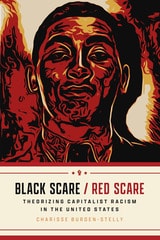
Black Scare / Red Scare
Theorizing Capitalist Racism in the United StatesCharisse Burden-Stelly
University of Chicago Press, 2023
In the early twentieth century, two panics emerged in the United States. The Black Scare was rooted in white Americans’ fear of Black Nationalism and dread at what social, economic, and political equality of Black people might entail. The Red Scare, sparked by communist uprisings abroad and subversion at home, established anticapitalism as a force capable of infiltrating and disrupting the American order. In Black Scare / Red Scare, Charisse Burden-Stelly meticulously outlines the conjoined nature of these state-sanctioned panics, revealing how they unfolded together as the United States pursued capitalist domination. Antiradical repression, she shows, is inseparable from anti-Black oppression, and vice versa.
Beginning her account in 1917—the year of the Bolshevik Revolution, the East St. Louis Race Riot, and the Espionage Act—Burden-Stelly traces the long duration of these intertwined and mutually reinforcing phenomena. She theorizes two bases of the Black Scare / Red Scare: US Capitalist Racist Society, a racially hierarchical political economy built on exploitative labor relationships, and Wall Street Imperialism, the violent processes by which businesses and the US government structured domestic and foreign policies to consolidate capital and racial domination. In opposition, Radical Blackness embodied the government’s fear of both Black insurrection and Red instigation. The state’s actions and rhetoric therefore characterized Black anticapitalists as foreign, alien, and undesirable. This reactionary response led to an ideology that Burden-Stelly calls True Americanism, the belief that the best things about America were absolutely not Red and not Black, which were interchangeable threats.
Black Scare / Red Scare illuminates the anticommunist nature of the US and its governance, but also shines a light on a misunderstood tradition of struggle for Black liberation. Burden-Stelly highlights the Black anticapitalist organizers working within and alongside the international communist movement and analyzes the ways the Black Scare/Red Scare reverberates through ongoing suppression of Black radical activism today. Drawing on a range of administrative, legal, and archival sources, Burden-Stelly incorporates emancipatory ideas from several disciplines to uncover novel insights into Black political minorities and their legacy.
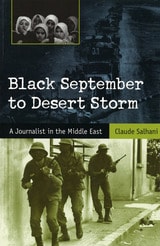
Black September to Desert Storm
A Journalist in the Middle EastClaude Salhani
University of Missouri Press, 1998
For more than twenty years, Claude Salhani traveled throughout the volatile Middle East as a photojournalist and reporter in search of the region's biggest stories. Wars, terrorist acts, demonstrations by religious extremists, and the flight of refugees were among the events he witnessed. "I have seen much through my lens . . . the most terrible cruelties, the most horrible suffering—and the most improbable and moving acts of love and generosity. I have been warmly received by kings, prime ministers, and secretaries of state. I have been shot at, kidnapped, and rifle-butted," writes Salhani in the prologue of this fascinating account.
From exclusive travels with former U.S. Secretary of State Henry Kissinger to intimate moments with combatants in the battle for Beirut to the forbidden world of drug smugglers in Lebanon, to the Iranian Revolution, and finally to the rise of Desert Storm, Salhani transports readers behind the scenes of many groundbreaking news stories. He proves that behind the front-page story we see, an equally intriguing tale is often hidden—that of the difficult, bizarre, even comical circumstances in which news is obtained.
Offering insight into the potent mixture of journalism and warfare, Black September to Desert Storm shares with readers an extraordinary journey into the headline-grabbing sagas that have plagued the Middle East in the last three decades. Salhani's "behind-the-lens" perspective will appeal to students of journalism and the Middle East, as well as anyone simply fascinated by the trials that many journalists undergo to capture "The Story."
Black Star, Crescent Moon
The Muslim International and Black Freedom beyond AmericaSohail Daulatzai
University of Minnesota Press, 2012
“The same rebellion, the same impatience, the same anger that exists in the hearts of the dark people in Africa and Asia,” Malcolm X declared in a 1962 speech, “is existing in the hearts and minds of 20 million black people in this country who have been just as thoroughly colonized as the people in Africa and Asia.” Four decades later, the hip-hop artist Talib Kweli gave voice to a similar Pan-African sentiment in the song “K.O.S. (Determination)”: “The African diaspora represents strength in numbers, a giant can't slumber forever.”
Linking discontent and unrest in Harlem and Los Angeles to anticolonial revolution in Algeria, Egypt, and elsewhere, Black leaders in the United States have frequently looked to the anti-imperialist movements and antiracist rhetoric of the Muslim Third World for inspiration. In Black Star, Crescent Moon, Sohail Daulatzai maps the rich, shared history between Black Muslims, Black radicals, and the Muslim Third World, showing how Black artists and activists imagined themselves not as national minorities but as part of a global majority, connected to larger communities of resistance. Daulatzai traces these interactions and alliances from the Civil Rights movement and the Black Power era to the “War on Terror,” placing them within a broader framework of American imperialism, Black identity, and the global nature of white oppression.
From Malcolm X and Muhammad Ali to contemporary artists and activists like Rakim and Mos Def, Black Star, Crescent Moon reveals how Muslim resistance to imperialism came to occupy a central position within the Black radical imagination, offering a new perspective on the political and cultural history of Black internationalism from the 1950s to the present.
Black Visions
The Roots of Contemporary African-American Political IdeologiesMichael C. Dawson
University of Chicago Press, 2001
Black Women against the Land Grab
The Fight for Racial Justice in BrazilKeisha-Khan Y. Perry
University of Minnesota Press, 2013
In Brazil and throughout the African diaspora, black women, especially poor black women, are rarely considered leaders of social movements let alone political theorists. But in the northeastern city of Salvador, Brazil, it is these very women who determine how urban policies are established. Focusing on the Gamboa de Baixo neighborhood in Salvador’s city center, Black Women against the Land Grab explores how black women’s views on development have radicalized local communities to demand justice and social change.
In Black Women against the Land Grab, Keisha-Khan Y. Perry describes the key role of local women activists in the citywide movement for land and housing rights. She reveals the importance of geographic location for understanding the gendered aspects of urban renewal and the formation of black women–led social movements. How have black women shaped the politics of urban redevelopment, Perry asks, and what does this kind of political intervention tell us about black women’s agency? Her work uncovers the ways in which political labor at the neighborhood level is central to the mass mobilization of black people against institutional racism and for citizenship rights and resources in Brazil.
Highlighting the political life of black communities, specifically those in urban contexts often represented as socially pathological and politically bankrupt, Black Women against the Land Grab offers a valuable corrective to how we think about politics and about black women, particularly poor black women, as a political force.

Black Women’s Intellectual Traditions
Speaking Their MindsEdited by Kristin B. Waters and Carol B. Conaway
University Press of New England, 2007

Black Women’s Intellectual Traditions
Speaking Their MindsEdited by Kristin Waters and Carol B. Conaway
Brandeis University Press, 2022
An astonishing wealth of literary and intellectual work by nineteenth-century Black women is being rediscovered and restored to print in scholarly and popular editions. In Kristin Waters’s and Carol B. Conaway’s landmark edited collection, Black Women’s Intellectual Traditions: Speaking Their Minds, sophisticated commentary on this rich body of work chronicles a powerful and interwoven legacy of activism based in social and political theories that helped shape the history of North America. The book meticulously reclaims this American legacy, providing a collection of critical analyses of the primary sources and their vital traditions. Written by leading scholars, Black Women’s Intellectual Traditions is particularly powerful in its exploration of the pioneering thought and action of the nineteenth-century Black woman lecturer and essayist Maria W. Stewart, abolitionist Sojourner Truth, novelist and poet Frances Ellen Watkins Harper, educator Anna Julia Cooper, newspaper editor Mary Ann Shadd Cary, and activist Ida B. Wells. The distinguished contributors are Hazel V. Carby, Patricia Hill Collins, Karen Baker-Fletcher, Kristin Waters, R. Dianne Bartlow, Carol B. Conaway, Olga Idriss Davis, Vanessa Holford Diana, Evelyn Simien, Janice W. Fernheimer, Michelle N. Garfield, Joy James, Valerie Palmer-Mehta, Carla L. Peterson, Marilyn Richardson, Evelyn M. Simien, Ebony A. Utley, Mary Helen Washington, Melina Abdullah, and Lena Ampadu. The volume will interest scholars and readers of African-American and women’s studies, history, rhetoric, literature, poetry, sociology, political science, and philosophy. This updated edition features a new preface by the editors in the light of new developments in current scholarship.

Blair
Mick Temple
Haus Publishing, 2006
Blessings from Beijing
Inside China's Soft-Power War on TibetGreg C. Bruno
University Press of New England, 2018
Blood and Capital
The Paramilitarization of ColombiaJasmin Hristov
Ohio University Press, 2009
WOLA-Duke Book Award Finalist
In Blood and Capital: The Paramilitarization of Colombia, Jasmin Hristov examines the complexities, dynamics, and contradictions of present-day armed conflict in Colombia. She conducts an in-depth inquiry into the restructuring of the state’s coercive apparatus and the phenomenon of paramilitarism by looking at its military, political, and legal dimensions. Hristov demonstrates how various interrelated forms of violence by state forces, paramilitary groups, and organized crime are instrumental to the process of capital accumulation by the local elite as well as the exercise of political power by foreign enterprises. She addresses, as well, issues of forced displacement, proletarianization of peasants, concentration of landownership, growth in urban and rural poverty, and human rights violations in relation to the use of legal means and extralegal armed force by local dominant groups and foreign companies.
Hristov documents the penetration of major state institutions by right-wing armed groups and the persistence of human rights violations against social movements and sectors of the low-income population. Blood and Capital raises crucial questions about the promised dismantling of paramilitarism in Colombia and the validity of the so-called demobilization of paramilitary groups, both of which have been widely considered by North American and some European governments as proof of Colombian president Álvaro Uribe’s advances in the wars on terror and drugs.
Blood and Fire
La Violencia in Antioquia, Colombia, 1946-1953Mary Roldan
Duke University Press, 2003
Through an analysis of the evolution of violence in Antioquia, which at the time was the wealthiest and most economically diverse region of Colombia, Roldán demonstrates how tensions between regional politicians and the weak central state, diverse forms of social prejudice, and processes of economic development combined to make violence a preferred mode of political action. Privatization of state violence into paramilitary units and the emergence of armed resistance movements exacted a horrible cost on Colombian civic life, and these processes continue to plague the country.
Roldan’s reading of the historical events suggests that Antioquia’s experience of la Violencia was the culmination of a brand of internal colonialism in which regional identity formation based on assumptions of cultural superiority was used to justify violence against racial or ethnic "others" and as a pretext to seize land and natural resources. Blood and Fire demonstrates that, far from being a peculiarity of the Colombians, la Violencia was a logical product of capitalist development and state formation in the modern world.
This is the first study to analyze intersections of ethnicity, geography, and class to explore the genesis of Colombian violence, and it has implications for the study of repression in many other nations.
Blood and Religion
The Unmasking of the Jewish and Democratic StateJonathan Cook
Pluto Press, 2006
"An original and powerful book." --Ilan Pappe, Senior Lecturer in Political Science, Haifa University, and author of A Modern History of Palestine
"Very impressive. . . . Some of his findings will astound even the knowledgeable reader." --Salim Tamari, Director, Institute of Jerusalem Studies
What is Israel hoping to achieve with its recent withdrawal from Gaza and the buildiing of a 700 km wall? Journalist Jonathan Cook presents a lucid account of the motives. The heart of the issue, he argues, is demography. Israel fears the moment when the region's Palestinians--Israel's own Palestinian citizens and those in the Occupied Territories--become a majority. Inevitable omparisons with apartheid in South Africa will be drawn. The book charts Israel's increasingly desperate responses, including military repression of Palestinian dissent; a ban on marriages between Israel's Palestinian population and Palestinians living under occupation to prevent a right of return "through the back door;" and the redrawing of the Green Line to create an expanded state. Ultimately, the author concludes, these abuses will lead to a third, far deadlier intifada.
Jonathan Cook, a former staff journalist of the Guardian newspaper, has written for the Times, Le Monde diplomatique, the International Herald Tribune, al-Ahram Weekly, and Aljazeera.net. He is based in Nazareth.
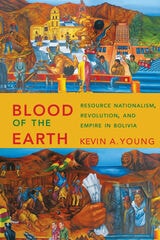
Blood of the Earth
Resource Nationalism, Revolution, and Empire in BoliviaBy Kevin A. Young
University of Texas Press, 2017
Conflicts over subterranean resources, particularly tin, oil, and natural gas, have driven Bolivian politics for nearly a century. “Resource nationalism”—the conviction that resource wealth should be used for the benefit of the “nation”—has often united otherwise disparate groups, including mineworkers, urban workers, students, war veterans, and middle-class professionals, and propelled an indigenous union leader, Evo Morales, into the presidency in 2006. Blood of the Earth reexamines the Bolivian mobilization around resource nationalism that began in the 1920s, crystallized with the 1952 revolution, and continues into the twenty-first century.
Drawing on a wide array of Bolivian and US sources, Kevin A. Young reveals that Bolivia became a key site in a global battle among economic models, with grassroots coalitions demanding nationalist and egalitarian alternatives to market capitalism. While US-supported moderates within the revolutionary regime were able to defeat more radical forces, Young shows how the political culture of resource nationalism, though often comprising contradictory elements, constrained government actions and galvanized mobilizations against neoliberalism in later decades. His transnational and multilevel approach to the 1952 revolution illuminates the struggles among Bolivian popular sectors, government officials, and foreign powers, as well as the competing currents and visions within Bolivia’s popular political cultures. Offering a fresh appraisal of the Bolivian Revolution, resource nationalism, and the Cold War in Latin America, Blood of the Earth is an ideal case study for understanding the challenges shared by countries across the Global South.
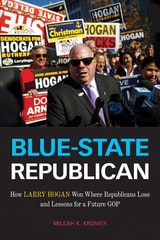
Blue-State Republican
How Larry Hogan Won Where Republicans Lose and Lessons for a Future GOPMileah K. Kromer
Temple University Press, 2023
Larry Hogan is one of the most popular political figures in the United States today. The two-term Republican governor of Maryland first won his seat after upsetting a favorite of the Democratic political establishment, and then overcame the Trump-driven wave in the heartland of the #resistance to win a second term in 2018.
Blue-State Republican is the remarkable story of how his carefully messaged, pragmatic approach to governance helped build a coalition of moderate and conservative Democrats, independents, women, college-educated and Black voters and maintained his GOP base during a time of polarization and negative partisanship. Mileah Kromer takes readers inside Maryland politics to illustrate exactly how Hogan won where Republicans lose and consider whether the un-Trump Republican offers any lessons for how the GOP can win the center-right voters who continue to make up a majority of the country.
Kromer conducts interviews with key political leaders and insiders, including Hogan himself, to explain the mechanics of his political success. She also provides a cogent analysis of public opinion polls and focus groups, ultimately showing why the success of a blue-state Republican matters outside of his home state, especially as Hogan considers a 2024 Presidential run.

Blueprints for a House Divided
The Constitutional Logic of the Yugoslav ConflictsRobert M. Hayden
University of Michigan Press, 2000
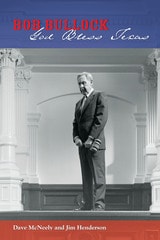
Bob Bullock
God Bless TexasBy Dave McNeely and Jim Henderson
University of Texas Press, 2008
Renowned for his fierce devotion to the people of Texas—as well as his equally fierce rages and unpredictable temper—Bob Bullock was the most powerful political figure in Texas at the end of the twentieth century. First elected to the Texas House of Representatives in 1956, Bullock held several key statewide posts before capturing the lieutenant governor's office in 1990. Though nominally the state's number two official, Bullock in fact became Texas's top power broker, wielding tremendous influence over the legislative agenda and state budget through the 1990s while also mentoring and supporting a future president—George W. Bush.
In this lively, yet thoroughly researched biography, award-winning journalists Dave McNeely and Jim Henderson craft a well-rounded portrait of Bob Bullock, underscoring both his political adroitness and his personal demons. They trace Bullock's rise through state government as Assistant Attorney General, Secretary of State, State Comptroller, and Lieutenant Governor, showing how he increased the power of every office he held. The authors spotlight Bullock's substantial achievements, which included hiring an unprecedented number of women and minorities, instituting a performance review to increase the efficiency of state agencies, restructuring the public school funding system, and creating the state's first water conservation and management plan.
Body and Nation
The Global Realm of U.S. Body Politics in the Twentieth CenturyEmily S. Rosenberg and Shanon Fitzpatrick, eds.
Duke University Press, 2014
Contributors. Frank Costigliola, Janet M. Davis, Shanon Fitzpatrick, Paul A. Kramer, Shirley Jennifer Lim, Mary Ting Yi Lui, Natalia Molina, Brenda Gayle Plummer, Emily S. Rosenberg, Kristina Shull, Annessa C. Stagner, Marilyn B. Young
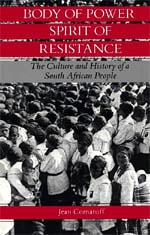
Body of Power, Spirit of Resistance
The Culture and History of a South African PeopleJean Comaroff
University of Chicago Press, 1985
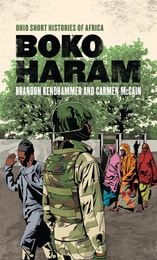
Boko Haram
Brandon Kendhammer
Ohio University Press, 2018
From its small-time origins in the early 2000s to its transformation into one of the world’s most-recognized terrorist groups, this remarkable short book tells the story of Boko Haram’s bloody, decade-long war in northeastern Nigeria. Going beyond the headlines, including the group’s 2014 abduction of 276 girls in Chibok and the international outrage it inspired, Boko Haram provides readers new to the conflict with a clearly written and comprehensive history of how the group came to be, the Nigerian government’s failed efforts to end it, and its enormous impact on ordinary citizens.
Drawing on years of research, Boko Haram is a timely addition to the acclaimed Ohio Short Histories of Africa. Brandon Kendhammer and Carmen McCain—two leading specialists on northern Nigeria—separate fact from fiction within one of the world’s least-understood conflicts. Most distinctively, it is a social history, one that tells the story of Boko Haram’s violence through the journalism, literature, film, and music made by people close to it.
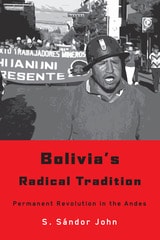
Bolivia's Radical Tradition
Permanent Revolution in the AndesS. Sándor John
University of Arizona Press, 2012
Bolivia
Refounding the NationKepa Artaraz
Pluto Press, 2012
The election of the Movimiento al Socialismo (MAS, movement towards socialism) to power in Bolivia in 2006 marked a historic break from centuries of foreign domination and indigenous marginalisation. Evo Morales, leader of the MAS, became the first indigenous president of Bolivia.
Kepa Artaraz looks at the attempt to 'refound the nation' which the new government has made as its goal. He shows how the mix of Marxism, indigenous liberation politics, anti-imperialism and environmentalism has made Bolivia one of the most interesting and unique political experiments of Latin America's 'red decade'.
As the historic left-turn in Latin America reaches a crossroads, Bolivia: Refounding the Nation guides us through the politics and ideas which have animated this popular movement, drawing out important lessons for progressive politics everywhere.
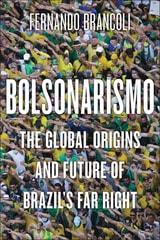
Bolsonarismo
The Global Origins and Future of Brazil’s Far RightFernando Brancoli
Rutgers University Press, 2024
Through interviews, archival research, and newly available public documents, this book presents a comprehensive and compelling portrait of the neo-evangelical pastors, military personnel, and meritocratic ideologues who are the actors behind the far-right movement. Adding to our understanding of Bolsonarismo's growth in Brazilian politics and the contributing factors behind it, the book also sheds light on the impact of Bolsonarismo on world politics. As a prominent leader of the far-right movement, Jair Bolsonaro's political views and policies have reverberated beyond Brazil's borders, influencing the discourse on issues such as climate change, democracy, and human rights around the world.

Bombs in the Backyard
Atomic Testing and American PoliticsA. Constandina Titus
University of Nevada Press, 2001

Bonar Law
Andrew Taylor
Haus Publishing, 2006