Results by title
870 books match the query 'Sports & Recreation' and 78 start with b
Big Game, Small World
A Basketball AdventureAlexander Wolff
Duke University Press, 2022
During the late 1990s, eminent basketball journalist Alexander Wolff traveled the globe to determine how a game invented by a Canadian clergyman became an international phenomenon. Big Game, Small World presents Wolff’s dispatches from sixteen countries spread across five continents and multiple US states. In them, he asks: What can the game tell us about the world? And what can the world tell us about the game? Whether traveling to Bhutan to challenge its king to a pickup game, exploring the women’s game in Brazil, or covering the Afrobasket tournament in Luanda, Angola, during a civil war, Wolff shows how basketball has the power to define an individual, a culture, and even a country.
This updated twentieth anniversary edition features a new preface in which Wolff outlines the contemporary rise of athlete-activists while discussing the increasing dominance within the NBA of marquee international players like Luka Dončić and Giannis Antetokounmpo. A loving celebration of basketball, Big Game, Small World is one of the most insightful books ever written about the game.
Bike Lust
Harleys, Women, And American SocietyBarbara Joans
University of Wisconsin Press, 2001
Bike Lust roars straight into the world of women bikers and offers us a ride. In this adventure story that is also an insider’s study of an American subculture, Barbara Joans enters as a passenger on the back of a bike, but soon learns to ride her own. As an anthropologist she untangles the rules, rituals, and rites of passage of the biker culture. As a new member of that culture, she struggles to overcome fear, physical weakness, and a tendency to shoot her mouth off—a tendency that very nearly gets her killed.
Bike Lust travels a landscape of contradictions. Outlaws still chase freedom on the highway, but so do thousands of riders of all classes, races, and colors. Joans introduces us to the women who ride the rear—the biker chick, the calendar slut straddling the hot engine, the back-seat Betty at the latest rally, or the underage groupie at the local run. But she also gives us the first close look at women who ride in their own right, on their own bikes, as well as a new understanding of changing world of male bikers. These are ordinary women’s lives made extraordinary, adding a dimension of courage to the sport not experienced by males, risking life and limb for a glimpse of the very edge of existence. This community of riders exists as a primal tribute to humanity's lust for freedom.
Bill Giles and Baseball
John B Lord
Temple University Press, 2014
Bill Giles oversaw one of the greatest eras of winning that the Philadelphia Phillies ever enjoyed. In Bill Giles and Baseball, John Lord chronicles Giles' remarkable career--which includes 44 years with the Phillies--to provide an insider's view of the business of the sport, which takes place off the field.
Based on extensive interviews, Bill Giles and Baseball spans Giles' life from his childhood growing up in the game to the tumultuous years he spent as the president and managing partner of the Phillies. Purchasing the team in 1981, when baseball experienced its first serious labor stoppages, Giles also watched baseball add franchises, grapple with franchise fees, realign the leagues, and restructure baseball's postseason. Yet Giles, the public face of the Phillies championship teams of 1980, 1983, and 1993, is best remembered for his critical role in creating innovative TV deals, and leading the efforts to build the Phillies' beautiful new ballpark.
A book about the business of baseball as seen through the eyes of one of the architects of the game, Bill Giles and Baseball captures the spectacle of the sport through fascinating behind-the-scenes stories of our national pastime.
Bill Veeck's Crosstown Classic
Bill Veeck and Ed Linn
University of Chicago Press, 1962
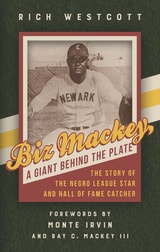
Biz Mackey, a Giant behind the Plate
The Story of the Negro League Star and Hall of Fame CatcherRich Westcott
Temple University Press, 2020
“The best all-around catcher in black baseball history”—Cumberland Posey, Owner of the Homestead Grays
National Baseball Hall of Fame catcher James Raleigh “Biz” Mackey’s professional career spanned nearly three decades in the Negro Leagues and elsewhere. He distinguished himself as a defensive catcher who also had an impressive batting average and later worked as a manager of the Newark Eagles and the Baltimore Elite Giants.
Using archival materials and interviews with former Negro League players, baseball historian Rich Westcott chronicles the catcher’s life and remarkable career in Biz Mackey, a Giant behind the Plate as well as providing an in-depth look at Philadelphia Negro League history. Westcott traces Mackey’s childhood in Texas as the son of sharecroppers to his success on the baseball diamond where he displayed extraordinary defensive skills and an exceptional ability to hit and to handle pitchers. Mackey spent one third of his career playing in Philadelphia, winning championships with the Hilldale Daisies and the Philadelphia Stars. Mackey also mentored famed catcher Roy Campanella and had an unlikely role in the story of baseball’s development in Japan.
A celebrated ballplayer before African Americans were permitted to join Major League Baseball, Biz Mackey ranks as one of the top catchers ever to play the game. With Biz Mackey, he finally gets the biography he deserves.
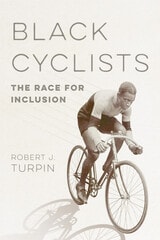
Black Cyclists
The Race for InclusionRobert J. Turpin
University of Illinois Press, 2024
Eye-opening and long overdue, Black Cyclists uses race, technology, and mobility to explore a forgotten chapter in cycling history.
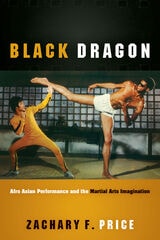
Black Dragon
Afro Asian Performance and the Martial Arts ImaginationZachary F. Price
The Ohio State University Press, 2022
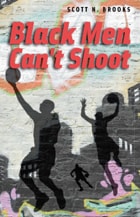
Black Men Can't Shoot
Scott N. Brooks
University of Chicago Press, 2009
The myth of the natural black athlete is widespread, though it’s usually talked about only when a sports commentator or celebrity embarrasses himself by bringing it up in public. Those gaffes are swiftly decried as racist, but apart from their link to the long history of ugly racial stereotypes about black people—especially men—they are also harmful because they obscure very real, hard-fought accomplishments. As Black Men Can’t Shoot demonstrates, such successes on the basketball court don’t happen just because of natural gifts—instead, they grow out of the long, tough, and unpredictable process of becoming a known player.
Scott Norman Brooks spent four years coaching summer league basketball in Philadelphia. And what he saw, heard, and felt working with the young black men on his team tells us much about how some kids are able to make the extraordinary journey from the ghetto to the NCAA. He tells the story of two young men, Jermaine and Ray, following them through their high school years and chronicling their breakthroughs and frustrations on the court as well as their troubles at home. Black Men Can’t Shoot is a moving coming-of-age story that counters the belief that basketball only exploits kids and lures them into following empty dreams—and shows us that by playing ball, some of these young black men have already begun their education even before they get to college.
Black Sporting Resistance
Diaspora, Transnationalism, and InternationalismJoseph N. Cooper
Rutgers University Press, 2025

Blaze Orange
Whitetail Deer Hunting in WisconsinTravis Dewitz
Wisconsin Historical Society Press, 2014
Bleacher Seats and Luxury Suites
Democracy and Division at the Twentieth-Century BallparkSeth S. Tannenbaum
University of Illinois Press, 2026
Major League Baseball owners and executives masked exclusion and division by touting the game’s accessibility and instituting few overtly discriminatory policies. Affluent white males enjoyed a comfortable, safe space that reinforced their status as the prototypical American citizen. At the same time, ballparks relocated in response to how these favored fans felt about cities. Tannenbaum traces this journey from the urban locales of the Polo Grounds and Yankee Stadium through the suburban-oriented Dodger Stadium and Houston Astrodome to the cloistered fantasy of city life offered by Camden Yards. As he shows, owners’ pursuit of greater profits incorporated existing barriers that helped shape the structure of modern parks.
A revealing social history, Bleacher Seats and Luxury Suites revises the persistent myth of the ballpark as an egalitarian melting pot.
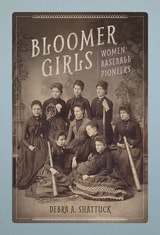
Bloomer Girls
Women Baseball PioneersDebra A Shattuck
University of Illinois Press, 2017
Debra A. Shattuck pulls from newspaper accounts and hard-to-find club archives to reconstruct a forgotten era in baseball history. Her fascinating social history tracks women players who organized baseball clubs for their own enjoyment and even found roster spots on men's teams. Entrepreneurs, meanwhile, packaged women's teams as entertainment, organizing leagues and barnstorming tours. If the women faced financial exploitation and indignities like playing against men in women's clothing, they and countless ballplayers like them nonetheless staked a claim to the nascent national pastime. Shattuck explores how the determination to take their turn at bat thrust female players into narratives of the women's rights movement and transformed perceptions of women's physical and mental capacity.
Vivid and eye-opening, Bloomer Girls is a first-of-its-kind portrait of America, its women, and its game.
Blue Ice
The Story of Michigan HockeyJohn U. Bacon
University of Michigan Press, 2001
Blue Ice relates the tale of the University of Michigan's hockey program--from its fight to become a varsity sport in the 1920s to its 1996 and 1998 NCAA national championships.
This history of the hockey program profiles the personalities who shaped the program--athletic directors, coaches, and players. From Fielding Yost, who made the decision to build the team a rink with artificial ice before the Depression (which ensured hockey would be played during those lean years), to coaches Joseph Barss, who survived World War I and the ghastly Halifax explosion before becoming the program's first coach, to Red Berenson, who struggled to return his alma mater's hockey team to prominence in the 1980s and 1990s. Players from Eddie Kahn, who scored Michigan's first goal in 1923, to Brendan Morrison, who upon winning the 1996 national championship with his goal said, "This is for all the [Michigan] guys who never had a chance to win it."
Blue Ice also explores the players' exotic backgrounds, from Calumet in the Upper Peninsula to Minnesota's Iron Range to Regina, Saskatchewan; how coach Vic Heygliger launched the NCAA tournament at the glamorous Broadmoor Hotel; and how commissioner Bill Beagan transformed the country's premier hockey conference.
In Blue Ice, fans of hockey will learn the stories behind the curse of the Boston University Terriers, the hockey team's use of the winged helmet, and the unlikely success of Ann Arbor's home-grown talent.
Unlike other sports at the collegiate level, the hockey players at Michigan haven't been motivated by fame or fortune; rather, they came to Michigan get an education and to play the game they loved.
John U. Bacon has won numerous national writing awards and now freelances for Sports Illustrated,Time,ESPN Magazine,and the New York Times, among others.
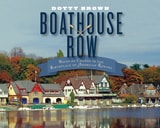
Boathouse Row
Waves of Change in the Birthplace of American RowingDotty Brown
Temple University Press, 2016
The history of Philadelphia’s Boathouse Row is both wide and deep.Dotty Brown, an avid rower and former editor at the Philadelphia Inquirer, immersed herself in boathouse archives to provide a comprehensive history of rowing in Philadelphia. She takes readers behind the scenes to recount the era when rowing was the spectator sport of its time—and the subject of Thomas Eakins’ early artwork—through the heyday of the famed Kelly dynasty, and the fight for women to get the right to row. (Yes, it really was a fight, and it took generations to win.)
With more than 160 photographs, a third of them in full color, Boathouse Row chronicles the “waves of change” as various groups of different races, classes, and genders fought for access to water and the sport. Chapters also discuss the architectural one-upmanship that defined Boathouse Row after Frank Furness designed the stunning and eclectic Undine Barge Club, and the regattas that continue to take place today on the Schuylkill River, including the forgotten forces that propelled high school rowing.
Beautifully written and illustrated, Boathouse Row will be a keepsake for rowers and spectators alike.
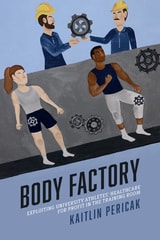
Body Factory
Exploiting University Athletes' Healthcare for Profit in the Training RoomKaitlin Pericak
Temple University Press, 2025
Body Factory enters an NCAA Division I athletic training room to examine the disconnect between what the NCAA states as its goal of athlete healthcare and what is actually happening. Kaitlin Pericak conducts observations in this space and interviews injured athletes and sports medicine staff members to show how institutional control over “best interests” often ends up exploiting the individual athlete. The influences at work are part of a neoliberal paradigm that explains why interest in an athlete’s care is greatly diminished once they are injured and can no longer play.
Body Factory considers how race, gender, and health before and after injury are deciding factors in these university training centers. The bureaucratic organization has a goal of maintaining power to generate profit, and Pericak shows this is almost always at the expense of the athlete.
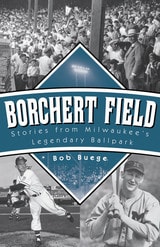
Borchert Field
Stories from Milwaukee’s Legendary BallparkBob Buege
Wisconsin Historical Society Press, 2017
Someone lucky enough to live on Milwaukee’s near north side between 1888 and 1952 could experience the world without ever leaving the neighborhood. Nestled between North Seventh and Eighth Streets and West Chambers and Burleigh, Borchert Field was Milwaukee’s major sports venue for 64 years. In this rickety wooden stadium (originally called Athletic Park), Wisconsin residents had a close-up view of sports history in the making, along with rodeos, thrill shows, and even multiple eruptions of Mount Vesuvius. In Borchert Field, baseball historian Bob Buege introduces the famous and fascinating athletes who dazzled audiences in Milwaukee’s venerable ballpark. All the legendary baseball figures—the Bambino, Satchel Paige, Ty Cobb, Joltin’ Joe, Jackie Robinson, the Say Hey Kid—played there. Olympic heroes Jim Thorpe, Babe Didrikson, and Jesse Owens displayed their amazing talents in Borchert. Knute Rockne’s Fighting Irish competed there, and Curly Lambeau’s Green Bay Packers took the field 10 times. Buege tells stories of other monumental moments at Borchert as well, including a presidential visit, women ballplayers, the arrival of television broadcasting, the 1922 national balloon race, and an appearance by scat-singing bandleader Cab Calloway. Borchert Field is long gone, but every page of this book takes readers back to the sights, sounds, and spectacle of its heyday.
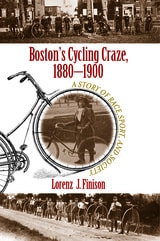
Boston's Cycling Craze, 1880-1900
A Story of Race, Sport, and SocietyLorenz J. Finison
University of Massachusetts Press, 2014
Lorenz J. Finison explores the remarkable rise of Boston cycling through the lives of several participants, including Kittie Knox, a biracial twenty-year-old seamstress who challenged the color line; Mary Sargent Hopkins, a self-proclaimed expert on women's cycling and publisher of The Wheelwoman; and Abbot Bassett, a longtime secretary of the League of American Wheelman and a vocal cycling advocate for forty years. Finison shows how these riders and others interacted on the road and in their cycling clubhouses, often constrained by issues of race, class, religion, and gender. He reveals the challenges facing these riders, whether cycling for recreation or racing, in a time of segregation, increased immigration, and debates about the rights of women.
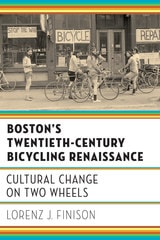
Boston's Twentieth-Century Bicycling Renaissance
Cultural Change on Two WheelsLorenz J. Finison
University of Massachusetts Press, 2019
Finison traces the city's cycling history, chronicling the activities of environmental and social justice activists, stories of women breaking into male-dominated professions by becoming bike messengers and mechanics, and challenges faced by African American cyclists. Making use of newspaper archives, newly discovered records of local biking organizations, and interviews with Boston-area bicyclists and bike builders, Boston's Twentieth-Century Bicycling Renaissance brings these voices and battles back to life.
Bottom of the Ninth
Great Contemporary Baseball Short StoriesEdited and with an Introduction by John McNally. Foreword by Richard Russo
Southern Illinois University Press, 2003
Skillfully edited by John McNally, Bottom of the Ninth: Great Contemporary Baseball Short Stories collects nineteen contemporary baseball short stories from a successful mix of well-established writers, lesser-knowns, and a few up-and-comers. These stories are characterized by the same dramatic elements that draw people to the sport itself—the mythologizing of players, the obsessions and romance of the game, the bonds between players and fans, parents and children. From a key play, a missed catch, a chance lost, these are tales of characters facing high stakes and calls to action, metaphorically and literally, in the bottom of the ninth.
Boxing Is . . .
Reflections on the Sweet ScienceThomas Hauser
University of Arkansas Press, 2010

Break Point
Two Minnesota Athletes and the Road to Title IXSheri Brenden
University of Minnesota Press, 2022
How two teenage girls in Minnesota jump-started a revolution in high school athletics
Peggy Brenden, a senior, played tennis. Toni St. Pierre, a junior, was a cross country runner and skier. All these two talented teenagers wanted was a chance to compete on their high school sports teams. But in Minnesota in 1972 the only way on the field with the boys ran through a federal court—so that was where the girls went. Break Point tells the story, for the first time, of how two teenagers took on the unequal system of high school athletics, setting a legal precedent for schools nationwide before the passage of Title IX.
As Peggy’s younger sister, author Sheri Brenden is uniquely positioned to convey the human drama of the case, the stakes, and the consequences for two young women facing the legal machinery of the state, in court and in school. In an account that begins with Peggy painstakingly typing her appeal to the Minnesota Civil Liberties Union and concludes with a long view of what Brenden v. Independent School District 742 set in motion, Sheri Brenden summons the salient details of this landmark case as it makes its way through the courts. Peggy and Toni, coaches, administrators, and experts testify before Judge Miles Lord, whose decision, upheld in a precedent-setting appeal, would change these girls’ lives and open up athletic opportunities for innumerable others.
Grounded in newspaper coverage, court records, and interviews, Brenden’s deeply researched, scrupulously reported book is at heart the story of two talented teenage girls whose pluck and determination—and, often, heartache—led to a victory much greater than any high school championship.
Breaking Babe Ruth
Baseball's Campaign Against Its Biggest StarEdmund F. Wehrle
University of Missouri Press, 2025
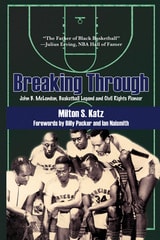
Breaking Through
John B. McLendon, Basketball Legend and Civil Rights PioneerMilton S. Katz
University of Arkansas Press, 2007
Winner, William Rockhill Nelson Award
John B. McLendon was the last living protégé of basketball’s inventor, Dr. James Naismith, and one of the “top ten basketball coaches of the century” in Billy Packer’s opinion. McLendon’s amazing records in college and pro basketball earned him a spot in the Basketball Hall of Fame (the first black coach to be inducted), and his coaching philosophy has had a huge influence on basketball coaches. Breaking Through is also a powerful and inspirational story about segregation and a champion’s struggle for equality in 1940s and 50s America.
Black Magic, ESPN’s Peabody Award–winning documentary about players and coaches who attended historically black colleges and universities, covers many of the events in McLendon’s life that Katz writes about in his book.
John McLendon was elected to the Naismith Memorial Basketball Hall of Fame in 2016.
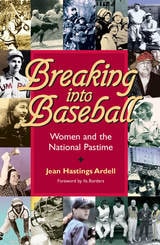
Breaking into Baseball
Women and the National PastimeJean Hastings Ardell. Foreword by Ila Borders
Southern Illinois University Press, 2005
While baseball is traditionally perceived as a game to be played, enjoyed, and reported from a masculine perspective, it has long been beloved among women—more so than any other spectator sport. Breaking into Baseball: Women and the National Pastime upends baseball’s accepted history to at last reveal just how involved women are, and have always been, in the American game.
Through provocative interviews and deft research, Jean Hastings Ardell devotes a detailed chapter to each of the seven ways women participate in the game—from the stands as fans, on the field as professionals or as amateur players, behind the plate as umpires, in the front office as executives, in the press box as sportswriters and reporters, or in the shadows as Baseball Annies. From these revelatory vantage points, Ardell invites overdue appreciation for the affinity and talent women bring to baseball at all levels and shows us our national game anew.
From its ancient origins in spring fertility rituals through contemporary marketing efforts geared toward an ever-increasing female fan base, baseball has always had a feminine side, and generations of women have sought—and been sought after—to participate in the sport, even when doing so meant challenging the cultural mores of their era. In that regard, women have been breaking into baseball from the very beginning. But recent decades have witnessed great strides in legitimizing women’s roles on the diamond as players and umpires as well as in vital management and media roles. In her thoughtfully organized and engagingly written survey, Ardell offers a chance for sports enthusiasts and historians of both genders to better appreciate the storied and complex relationship women have so long shared with the game and to glimpse the future of women in baseball.
Breaking into Baseball is augmented by twenty-four illustrations and a foreword from Ila Borders, the first woman to play more than three seasons of men’s professional baseball.
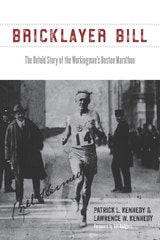
Bricklayer Bill
The Untold Story of the Workingman's Boston MarathonPatrick L. Kennedy and Lawrence W. Kennedy
University of Massachusetts Press, 2017
Two weeks after the United States officially entered World War I, Irish American “Bricklayer Bill” Kennedy won the Boston Marathon wearing his stars-and-stripes bandana, rallying the crowd of patriotic spectators. Kennedy became an American hero and, with outrageous stories of his riding the rails and sleeping on pool tables, a racing legend whose name has since appeared in almost every book written on the Boston Marathon.
When journalist Patrick Kennedy and historian Lawrence Kennedy unearthed their uncle's unpublished memoir, they discovered a colorful character who lived a tumultuous life, beyond his multiple marathons. The bricklayer survived typhoid fever, a five-story fall, auto and train accidents, World War action, Depression-era bankruptcy, decades of back-breaking work, and his own tendency to tipple. In many ways, Bill typified the colorful, newly emerging culture and working-class ethic of competitive long-distance running before it became a professionalized sport. Bricklayer Bill takes us back to another time, when bricklayers, plumbers, and printers could take the stage as star athletes.
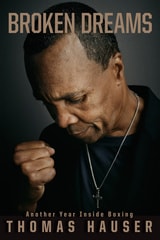
Broken Dreams
Another Year Inside BoxingThomas Hauser
University of Arkansas Press, 2021
Each year, readers, writers, and critics alike look forward to Thomas Hauser’s newest collection of articles about the contemporary boxing scene. As Booklist has proclaimed, “Many journalists have written fine boxing pieces, but none has written as extensively or as memorably as Thomas Hauser. . . . Hauser remains the current champion of boxing. . . . Hauser is a treasure.”
Broken Dreams meets this high standard with its coverage of 2020’s most important fighters and fights, outside-the-ring controversies, regulatory missteps, and other issues that defined the year’s boxing scene. Hauser explores the heavyweight trio of Tyson Fury, Anthony Joshua, and Deontay Wilder in depth, as well as Canelo Álvarez and historic greats like Jack Dempsey, Carlos Monzon, and Muhammad Ali.
Hauser also tackles the larger social challenges that imposed themselves so assertively in 2020, including the coronavirus pandemic, the Black Lives Matter movement, runaway social media, the presidential election, and other forces that left a deep imprint on the sport and business of boxing.
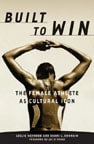
Built To Win
The Female Athlete As Cultural IconLeslie Heywood
University of Minnesota Press, 2003
A timely look at the rise of women in sports
The sculpted speed of Marion Jones. The grit and agility of Mia Hamm. The slam-dunk style of Lisa Leslie. The skill and finesse of these sports figures are widely admired, no longer causing the puzzlement and discomfort directed toward earlier generations of athletic women. Built to Win explores this relatively recent phenomenon—the confident, empowered female athletes found everywhere in American popular culture.
Leslie Heywood and Shari L. Dworkin examine the role of female athletes through interviews with elementary- and high school-age girls and boys; careful readings of ad campaigns by Nike, Reebok, and others; discussions of movies like Fight Club and Girlfight; and explorations of their own sports experiences. They ask: what, if any, dissonance is there between popular images and the actual experiences of these athletes? Do these images really “redefine femininity” and contribute to a greater inclusion of all women in sport? Are sexualized images of these women damaging their quest to be taken seriously? Do they inspire young boys to respect and admire female athletes, and will this ultimately make a difference in the ways gender and power are constructed and perceived?Proposing a paradigm shift from second- to third-wave feminism, Heywood and Dworkin argue that, in the years since the passage of Title IX, gender stereotypes have been destabilized in profound ways, and they assert that female athletes and their imagery are doing important cultural work to that end. Important, refreshing, and engrossing, Built to Win examines sport in all its complexity.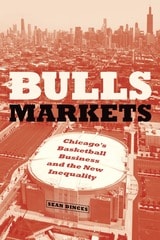
Bulls Markets
Chicago's Basketball Business and the New InequalitySean Dinces
University of Chicago Press, 2018
The 1990s were a glorious time for the Chicago Bulls, an age of historic championships and all-time basketball greats like Scottie Pippen and Michael Jordan. It seemed only fitting that city, county, and state officials would assist the team owners in constructing a sparkling new venue to house this incredible team that was identified worldwide with Chicago. That arena, the United Center, is the focus of Bulls Markets, an unvarnished look at the economic and political choices that forever reshaped one of America’s largest cities—arguably for the worse.
Sean Dinces shows how the construction of the United Center reveals the fundamental problems with neoliberal urban development. The pitch for building the arena was fueled by promises of private funding and equitable revitalization in a long-blighted neighborhood. However, the effort was funded in large part by municipal tax breaks that few ordinary Chicagoans knew about, and that wound up exacerbating the rising problems of gentrification and wealth stratification. In this portrait of the construction of the United Center and the urban life that developed around it, Dinces starkly depicts a pattern of inequity that has become emblematic of contemporary American cities: governments and sports franchises collude to provide amenities for the wealthy at the expense of poorer citizens, diminishing their experiences as fans and—far worse—creating an urban environment that is regulated and surveilled for the comfort and protection of that same moneyed elite.