Results by title
22279 books match the query 'Social Science' and 1147 start with b

Brandeis Modern Hebrew
Vardit Ringvald, Bonit Porath, Yaron Peleg, Esther Shorr, and Sara Hascal
Brandeis University Press, 2015
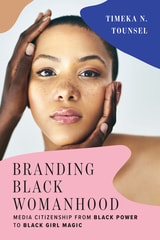
Branding Black Womanhood
Media Citizenship from Black Power to Black Girl MagicTimeka N. Tounsel
Rutgers University Press, 2022
Beginning with the inception of the Essence brand in the late 1960s, Timeka N. Tounsel examines the individuals and institutions that have reconfigured Black women’s empowerment as a business enterprise. Ultimately, these commercial gatekeepers have constructed an image economy that operates as both a sacred space for Black women and an easy hunting ground for their dollars.
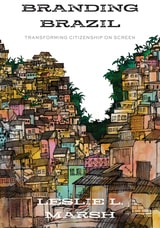
Branding Brazil
Transforming Citizenship on ScreenLeslie L. Marsh
Rutgers University Press, 2021
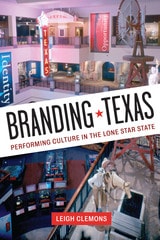
Branding Texas
Performing Culture in the Lone Star StateBy Leigh Clemons
University of Texas Press, 2008
Ask anyone to name an archetypal Texan, and you're likely to get a larger-than-life character from film or television (say John Wayne's Davy Crockett or J. R. Ewing of TV's Dallas) or a politician with that certain swagger (think LBJ or George W. Bush). That all of these figures are white and male and bursting with self-confidence is no accident, asserts Leigh Clemons. In this thoughtful study of what makes a "Texan," she reveals how Texan identity grew out of the history—and, even more, the myth—of the heroic deeds performed by Anglo men during the Texas Revolution and the years of the Republic and how this identity is constructed and maintained by theatre and other representational practices.
Clemons looks at a wide range of venues in which "Texanness" is performed, including historic sites such as the Alamo, the battlefield at Goliad, and the San Jacinto Monument; museums such as the Bob Bullock Texas State History Museum; seasonal outdoor dramas such as Texas! at Palo Duro Canyon; films such as John Wayne's The Alamo and the IMAX's Alamo: The Price of Freedom; plays and TV shows such as the Tuna trilogy, Dallas, and King of the Hill; and the Cavalcade of Texas performance at the 1936 Texas Centennial. She persuasively demonstrates that these performances have created a Texan identity that has become a brand, a commodity that can be sold to the public and even manipulated for political purposes.
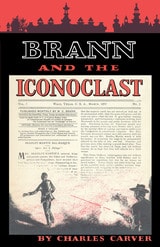
Brann and the Iconoclast
By Charles Carver
University of Texas Press, 1957
"They wouldn't let him rest—even in his grave." Thus Charles Carver opens his story of the climactic years of a journalist who had poured out such blazing prose that readers from England to Hawaii mourned his murder.
The impact of William Cowper Brann's Iconoclast upon the town of Waco, Texas, in the 1890's was like a rocket burst in a quiet sky. Rebelling against Victorian hypocrisy, the newspaperman took aim at organized virtue, exemplified for him by Baylor University and other Baptist organizations.
Dr. Roy Bedichek, noted author and naturalist, knew Brann, and after reading this book in manuscript said, "I am at once delighted and disappointed: disappointed to find my teen-age hero reduced to size... delighted with the art of the biographer.... It has genuine literary excellence... is a chapter in the history of the publishing business in Texas that needs to be put into print...."

Brave Are My People
Indian Heroes Not ForgottenFrank Waters
Ohio University Press, 1998
Pontiac, Sequoyah, Geronimo, Sitting Bull, Chief Joseph, and Chief Seattle. These legendary names are familiar even to the uninitiated in Native American history, yet the life stories of these great spiritual leaders have been largely unknown.
In this, his last book, internationally celebrated author Frank Waters makes vivid the poignant, humorous, and tragic stories of these neglected and heroic Native Americans. From the brilliant tactical abilities of famed warriors to the eloquent oratory of indigenous philosophers, poets, and statesmen, the profiles in Brave Are My People help correct this error of omission.
Now in paperback, Brave Are My People represents a major contribution to Water’s remarkable literary work.
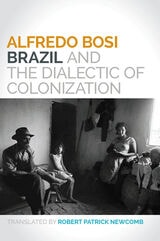
Brazil and the Dialectic of Colonization
Alfredo Bosi
University of Illinois Press, 2015
Portugal extracted wealth from its Brazilian colony. Slaves--first indigenous peoples, later Africans--mined its ore and cut its sugarcane. From the customs of the colonists and the aspirations of the enslaved rose Brazil. Bosi scrutinizes signal points in the creation of Brazilian culture--the plays and poetry, the sermons of missionaries and Jesuit priests, the Indian novels of José de Alencar and the Voices of Africa of poet Castro Alves. His portrait of the country's response to the pressures of colonial conformity offers a groundbreaking appraisal of Brazilian culture as it emerged from the tensions between imposed colonial control and the African and Amerindian cults--including the Catholic-influenced ones--that resisted it.

Brazil at the Dawn of the Eighteenth Century
André João Antonil
Tagus Press, 2012

Brazil's Sex Wars
The Aesthetics of Queer Activism in São PauloJoseph Jay Sosa
University of Texas Press, 2024
An ethnography and media analysis of LGBT+ activism in São Paulo during Brazil’s conservative turn from 2010 to 2018.
For decades, LGBT+ activists across the globe have secured victories by persuasively articulating rights to sexual autonomy. Brazilian activists, some of the world’s most energetic, have kept pace. But since 2010, a backlash has set in, as defenders of “tradition” and “family” have countered LGBT+ rights discourses using a rights-based language of their own.
To understand this shifting ground, Joseph Jay Sosa collaborated with Brazilian LGBT+ activists, who use the language of rights while knowing that rights are not what they seem. Drawing on the symbolic and affective qualities of rights, activists mobilize slogans, bodies, and media to articulate an alternative democratic sensorium. Beyond conventional notions of rights as tools for managing the obligations of states vis-à-vis citizens, activists show how rights operate aesthetically—enjoining the public to see and feel as activists do. Sosa tracks the fate of LGBT+ rights in a growing authoritarian climate that demands “human rights for the right humans.” Interpreting conflicts between advocates and opponents over LGBT+ autonomy as not just an ideological struggle but an aesthetic one, Brazil’s Sex Wars rethinks a style of politics that seems both utterly familiar and counterintuitive.
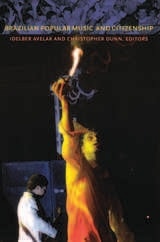
Brazilian Popular Music and Citizenship
Idelber Avelar and Christopher Dunn, eds.
Duke University Press, 2011
Contributors. Idelber Avelar, Christopher Dunn, João Freire Filho, Goli Guerreiro, Micael Herschmann, Ari Lima, Aaron Lorenz, Shanna Lorenz, Angélica Madeira, Malcolm K. McNee, Frederick Moehn, Flávio Oliveira, Adalberto Paranhos, Derek Pardue, Marco Aurélio Paz Tella, Osmundo Pinho, Carlos Sandroni, Daniel Sharp, Hermano Vianna, Wivian Weller
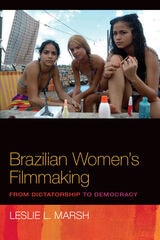
Brazilian Women's Filmmaking
From Dictatorship to DemocracyLeslie Marsh
University of Illinois Press, 2012
At most recent count, there are no fewer than forty-five women in Brazil directing or codirecting feature-length fiction or documentary films. In the early 1990s, women filmmakers in Brazil were credited for being at the forefront of the rebirth of filmmaking, or retomada, after the abolition of the state film agency and subsequent standstill of film production. Despite their numbers and success, films by Brazilian women directors are generally absent from discussions of Latin American film and published scholarly works.
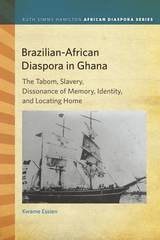
Brazilian-African Diaspora in Ghana
The Tabom, Slavery, Dissonance of Memory, Identity, and Locating HomeKwame Essien
Michigan State University Press, 2016

Bread and Roses
Gender and Class Under CapitalismAndrea D'Atri
Pluto Press, 2021
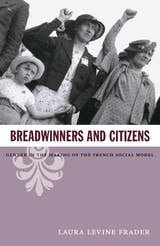
Breadwinners and Citizens
Gender in the Making of the French Social ModelLaura Levine Frader
Duke University Press, 2008
Frader’s analysis moves between the everyday lives of ordinary working women and men and the actions of national policymakers, political parties, and political movements, including feminists, pro-natalists, and trade unionists. In the years following World War I, the many women and an increasing number of immigrant men in the labor force competed for employment and pay. Family policy was used not only to encourage reproduction but also to regulate wages and the size of the workforce. Policies to promote married women’s and immigrants’ departure from the labor force were more common when jobs were scarce, as they were during the Depression. Frader contends that gender and ethnicity exerted a powerful and unacknowledged influence on French social policy during the Depression era and for decades afterward.
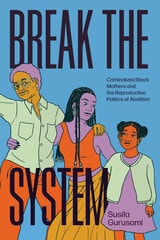
Break the System
Criminalized Black Mothers and the Reproductive Politics of AbolitionSusila Gurusami
University of Chicago Press, 2026
Upends the “broken systems” myth and reveals how the law deliberately criminalizes and punishes Black women, inflicting lasting harm on Black communities in the process.
The United States has one of the highest rates of incarceration in the world, with Black Americans representing a disproportionate share of theimprisoned. Many view this statistic as evidence of a broken system. But sociologist Susila Gurusami argues that the carceral system that so disproportionately harms Black families is not broken at all. In fact, it works just as it was intended. Looking closely at the lives of formerly incarcerated Black mothers, Gurusami shows how state institutions—the criminal-legal, child welfare, and healthcare systems—keep Black mothers from their families, harming Black communities in the process. She also shows how Black women work towards conditions that seem impossible—and even utopian—as part of their everyday mothering labor, but find themselves criminalized for these same actions.
Drawing on ethnographic data and interviews with formerly incarcerated Black women in South Los Angeles, Gurusami challenges dominant assumptions about mothering and criminal justice reform. Gurusami finds that criminalized Black women endure multigenerational political, social, and embodied assaults–what she calls “reproductive warfare”— and still, they build networks, practices, and theories of radical care that protect Black maternal life, legacies, and futures. With incarcerated, formerly incarcerated, and system-impacted Black mothers at the forefront of the growing movement to abolish prisons and jails, Gurusami demonstrates how their everyday mothering work—what she calls “abolitionist motherwork”—is essential to imagining the end of incarceration and ultimately achieving it.
Written with a tender and honest voice, Break the System shares moving vignettes that underscore why we must break the system, rather than reform it, and why we must imagine a future that is radically different than the one we’re told we must accept or salvage.
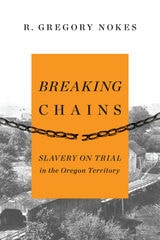
Breaking Chains
Slavery on Trial in the Oregon TerritoryR. Gregory Nokes
Oregon State University Press, 2013
In Breaking Chains, R. Gregory Nokes tells the story of the only slavery case adjudicated in Oregon’s pre-Civil War courts—Holmes v. Ford. Through the lens of this landmark case, Nokes explores the historical context of racism in Oregon and the West, reminding readers that there actually were slaves in Oregon, though relatively few in number.
Drawing on the court record, Nokes offers an intimate account of the relationship between a slave and his master from the slave’s point of view. He also explores the experiences of other slaves in early Oregon, examining attitudes toward race and revealing contradictions in the state’s history. Oregon was the only free state admitted to the union with a voter-approved constitutional clause banning African Americans and, despite the prohibition of slavery in the state, many in Oregon tolerated it and supported politicians who advocated for slavery, including Oregon’s first territorial governor.
Breaking Chains sheds light on a somber part of Oregon’s history, bringing the story of slavery in Oregon to a broader audience. The book will appeal to readers interested in Pacific Northwest history and in the history of slavery in the United States.
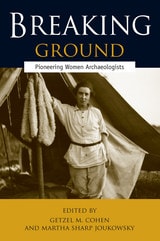
Breaking Ground
Pioneering Women ArchaeologistsGetzel M. Cohen and Martha Sharp Joukowsky, Editors
University of Michigan Press, 2004
-Claire Lyons, The Getty Museum
"Behind these pioneering women lie a wide range of fascinating and inspiring life stories. Though each of their tales is unique, they were all formidable scholars whose important contributions changed the field of archaeology. Kudos to the authors for making their stories and accomplishments known to us all!"
-Jodi Magness, University of North Carolina, Chapel Hill
This book presents twelve fascinating women whose contributions to the development and progress of Old World archaeology---in an area ranging from Italy to Mesopotamia---have been immeasurable. Each essay in this collection examines the life of a pioneer archaeologist in the early days of the discipline, tracing her path from education in the classics to travel and exploration and eventual international recognition in the field of archaeology. The lives of these women may serve as models both for those interested in gender studies and the history of archaeology because in fact, they broke ground both as women and as archaeologists.
The interest inherent in these biographies will reach well beyond defined disciplines and subdisciplines, for the life of each of these exciting and accomplished individuals is an adventure story in itself
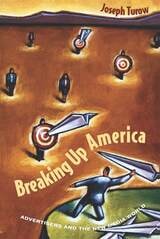
Breaking Up America
Advertisers and the New Media WorldJoseph Turow
University of Chicago Press, 1997
"An important book for anyone wanting insight into the advertising and media worlds of today. In plain English, Joe Turow explains not only why our television set is on, but what we are watching. The frightening part is that we are being watched as we do it."—Larry King
"Provocative, sweeping and well made . . . Turow draws an efficient portrait of a marketing complex determined to replace the 'society-making media' that had dominated for most of this century with 'segment-making media' that could zero in on the demographic and psychodemographic corners of our 260-million-person consumer marketplace."—Randall Rothenberg, Atlantic Monthly
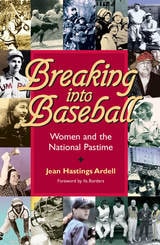
Breaking into Baseball
Women and the National PastimeJean Hastings Ardell. Foreword by Ila Borders
Southern Illinois University Press, 2005
While baseball is traditionally perceived as a game to be played, enjoyed, and reported from a masculine perspective, it has long been beloved among women—more so than any other spectator sport. Breaking into Baseball: Women and the National Pastime upends baseball’s accepted history to at last reveal just how involved women are, and have always been, in the American game.
Through provocative interviews and deft research, Jean Hastings Ardell devotes a detailed chapter to each of the seven ways women participate in the game—from the stands as fans, on the field as professionals or as amateur players, behind the plate as umpires, in the front office as executives, in the press box as sportswriters and reporters, or in the shadows as Baseball Annies. From these revelatory vantage points, Ardell invites overdue appreciation for the affinity and talent women bring to baseball at all levels and shows us our national game anew.
From its ancient origins in spring fertility rituals through contemporary marketing efforts geared toward an ever-increasing female fan base, baseball has always had a feminine side, and generations of women have sought—and been sought after—to participate in the sport, even when doing so meant challenging the cultural mores of their era. In that regard, women have been breaking into baseball from the very beginning. But recent decades have witnessed great strides in legitimizing women’s roles on the diamond as players and umpires as well as in vital management and media roles. In her thoughtfully organized and engagingly written survey, Ardell offers a chance for sports enthusiasts and historians of both genders to better appreciate the storied and complex relationship women have so long shared with the game and to glimpse the future of women in baseball.
Breaking into Baseball is augmented by twenty-four illustrations and a foreword from Ila Borders, the first woman to play more than three seasons of men’s professional baseball.
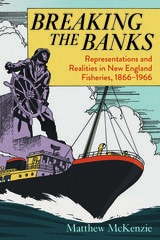
Breaking the Banks
Representations and Realities in New England Fisheries, 1866-1966Matthew McKenzie
University of Massachusetts Press, 2018
Books, films, and the media have long portrayed the Yankee fisherman's hard-scrabble existence, as he faced brutal weather on the open seas and unnecessary governmental restrictions. As McKenzie contends, this simplistic view has long betrayed commercial fisheries' sophisticated legislative campaigns in Washington, DC, as they sought federal subsidies and relief and, eventually, fewer constricting regulations. This clash between fisheries' representation and their reality still grips fishing communities today as they struggle to navigate age-old trends of fleet consolidation, stock decline, and intense competition.

Breaking the Chains
Gender, Context, and the Politics of Writing in Modern ChinaDong Limin
Seagull Books, 2025
How has literature shaped gender politics in modern China? How has the concept of “woman” evolved within the shifting sociopolitical landscape? Old Chains and New delves into these questions by examining the dynamic interplay between literature, gender, and historical change. Drawing from literary studies, history, and sociology, this book reveals how women’s writing has not only reflected but also actively shaped cultural and national transformations.
From the late Qing era, when the “woman question” emerged as part of China’s response to imperialist pressures, to the ongoing evolution of feminist literary scholarship, this study argues that gender and literature are deeply interwoven. Women’s liberation in modern China was never solely about gender equality—it became a driving force for broader social change and national identity formation. Engaging with the complexities of women’s literature through a cultural-political lens, this book challenges static definitions and calls for a reevaluation of women’s literature not just as a literary category but as a key component in shaping China’s modern intellectual and cultural history.
By adopting the framework of “China as method,” Old Chains and New reimagines the role of literature in ideological and cultural shifts. It highlights women’s writing as a unique form of aesthetic politics—one with the power to intervene in and transform reality.
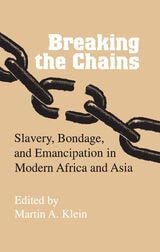
Breaking the Chains
Slavery, Bondage, and Emancipation in Modern Africa and AsiaMartin A. Klein
University of Wisconsin Press, 1993
“Martin Klein has brought together recent work on the abolition of slavery, from Ottoman Turkey to Thailand and from South India to West Africa. This anthology builds on the recent scholarship on both slavery in Asia and Africa and the end of slavery as a world-wide historical phenomenon. Whereas other anthologies have tended to focus on either Africa or Asia, this project brings together in one volume case studies and methodological approaches concerning both regions. Breaking the Chains will be an important part of the relatively sparse literature on emancipation in comparative and global context.”—Richard Roberts, Stanford University
Because the American history of slavery and emancipation tends to be foremost in Western minds, few realize that traditional forms of servitude still exist in a variety of places around the world: children are sold on the streets of Bangkok, bondage persists in India despite official efforts to abolish it, and until 1980 slavery was legal in Mauritania.
Breaking the Chains deals with emancipation in African and Asian societies which were either colonized or came under the domination of European powers in the nineteenth century. In these societies, emancipation involved the imposition on non-European societies of an explicitly European discourse on slavery, and, in most cases, a free labor ideology. Most of the slave masters described in these essays were not European and found European ideas on emancipation difficult to accept.
Against this backdrop, the essayists (many of whom contribute their own non-Western perspective) focus on the transition from slavery (or other forms of bondage) to emancipation. They show that in each case the process involved pressure from European abolition movements, the extension of capitalist relations of production, the concerns and perceptions of the colonial state, and the efforts of non-Western elites to modernize their cultures.
Martin A. Klein argues that the Asian and African experience has much in common with the American experience, particularly in efforts to control labor and family life. The struggle to control the labor of former slaves has often been intense and, he suggests, has had a continuing impact on the social order in former slave societies.
Breaking the Circle
Death and the Afterlife in BuddhismCarl B. Becker
Southern Illinois University Press, 1993
In this much-needed examination of Buddhist views of death and the afterlife, Carl B. Becker bridges the gap between books on death in the West and books on Buddhism in the East.
Other Western writers have addressed the mysteries surrounding death and the afterlife, but few have approached the topic from a Buddhist perspective. Here, Becker resolves questions that have troubled scholars since the beginning of Buddhism: How can Buddhism reconcile its belief in karma and rebirth with its denial of a permanent soul? What is reborn? And when, exactly, is the moment of death?
By systematically tracing Buddhism’s migration from India through China, Japan, and Tibet, Becker demonstrates how culture and environment affect Buddhist religious tradition.
In addition to discussing historical Buddhism, Becker shows how Buddhism resolves controversial current issues as well. In the face of modern medicine’s trend toward depersonalization, traditional Buddhist practices imbue the dying process with respect and dignity. At the same time, Buddhist tradition offers documented precedents for decision making in cases of suicide and euthanasia.
Breaking the Gender Code
Women and Urban Public Space in the Twentieth-Century United StatesGeorgina Hickey
University of Texas Press, 2023
A history of the activism that made public spaces in American cities more accessible to women.
From the closing years of the nineteenth century, women received subtle—and not so subtle—messages that they shouldn’t be in public. Or, if they were, that they were not safe. Breaking the Gender Code tells the story of both this danger narrative and the resistance to it.
Historian Georgina Hickey investigates challenges to the code of urban gender segregation in the twentieth century, focusing on organized advocacy to make the public spaces of American cities accessible to women. She traces waves of activism from the Progressive Era, with its calls for public restrooms, safe and accessible transportation, and public accommodations, through and beyond second-wave feminism, and its focus on the creation of alternative, women-only spaces and extensive anti-violence efforts. In doing so, Hickey explores how gender segregation intertwined with other systems of social control, as well as how class, race, and sexuality shaped activists' agendas and women's experiences of urban space. Drawing connections between the vulnerability of women in public spaces, real and presumed, and contemporary debates surrounding rape culture, bathroom bills, and domestic violence, Hickey unveils both the strikingly successful and the incomplete initiatives of activists who worked to open up public space to women.
Breaking the Silence
The German Who Exposed the Final Solution.Walter Laqueur and Richard Breitman
Brandeis University Press, 1994
Breaking the Silence
The Little Rock Women's Emergency Committee to Open Our Schools, 1958–1963Sara Murphy
University of Arkansas Press, 1997
The Little Rock Central High School integration crisis did not end in1957 when President Eisenhower sent a portion of the first Airborne Division to protect nine black students. The turmoil was entering its second year in 1958 when Arkansas governor Orval Faubus invoked a hastily passed state law to close the high schools rather than obey the federal court orders that would integrate them.
A group of respectable, middle-class white women, faced with the prospect of no schools as well as the further loss of their city’s good name, turned militant. Led by Adolphine Fletcher Terry, a prominent, “old family” civic leader in her seventies, the women quickly put together the Women’s Emergency Committee to Open Our Schools (WEC), a highly effective organization that bombarded the city with ads, fliers, and statements challenging Faubus’s action. At peak membership, the WEC mustered two thousand to their cause. Largely inexperienced in politics when they joined the WEC, these women became articulate, confident promoters of public schools and helped others to understand that those schools must be fully integrated.
Forty years later, Sara Murphy, a key member of the WEC, recounts the rarely told sto1y of these courageous women who formed a resistance movement. With passion and sensitivity, she reconstructs the challenges and triumphs of that battle, which issued from the mutual link Southern white women shared with disfranchised African Americans in their common goal for full citizenship.
Breaking the World
Black Insecurity and the Horizons of Speculative FictionJustin L. Mann
Duke University Press, 2026
Breaks in the Air
The Birth of Rap Radio in New York CityJohn Klaess
Duke University Press, 2022

Breast Cancer in the Academy
Solidarity in the Fight for Our LivesWendy K.Z. Anderson
Rutgers University Press, 2027
This edited collection is an interdisciplinary dialogue about how breast cancer diagnosis, treatment, and healing is experienced by academic women. The contributors fostered dialogue rooted in critical, qualitative, and autoethnographic traditions about how breast cancer diagnosis, treatment, and healing was experienced by a group with academic privileges, such as the ability to research and advocate for themselves. The book takes on a global perspective, incorporating pieces from medical doctors who became patients, BIPOC women, as well as scholars who identify as LBGTQIA, as they faced decisions about issues such as flat closures, fertility treatments, and being one-sided. These seventeen academic women navigated and resisted healthcare systems to develop a theory of coalitional survivorship.

Breathing Aesthetics
Jean-Thomas Tremblay
Duke University Press, 2022

Breathtaking
Asthma Care in a Time of Climate ChangeAlison Kenner
University of Minnesota Press, 2018
Analyzing asthma care in the twenty-first century
Asthma is not a new problem, but today the disease is being reshaped by changing ecologies, healthcare systems, medical sciences, and built environments. A global epidemic, asthma (and our efforts to control it) demands an analysis attentive to its complexity, its contextual nature, and the care practices that emerge from both. At once clearly written and theoretically insightful, Breathtaking provides a sweeping ethnographic account of asthma’s many dimensions through the lived experiences of people who suffer from disordered breathing, as well as by considering their support networks, from secondary school teachers and coaches, to breathing educators and new smartphone applications designed for asthma control.
Against the backdrop of unbreathable environments, Alison Kenner describes five modes of care that illustrate how asthma is addressed across different sociocultural scales. These modes of care often work in combination, building from or preceding one another. Tensions also exist between them, a point reflected by Kenner’s description of the structural conditions and material rhythms that shape everyday breathing, chronic disease, and our surrounding environments. She argues that new modes of distributed, collective care practices are needed to address asthma as a critical public health issue in the time of climate change.

Breeding Better Vermonters
The Eugenics Project in the Green Mountain StateNancy L. Gallagher
Brandeis University Press, 1999

Brick City Vanguard
Amiri Baraka, Black Music, Black ModernityJames Smethurst
University of Massachusetts Press, 2020
Amiri Baraka is unquestionably the most recognized leader of the Black Arts Movement of the 1960s and 1970s, and one of the key literary and cultural figures of the postwar United States. While Baraka's political and aesthetic stances changed considerably over the course of his career, Brick City Vanguard demonstrates the continuity in his thinking about the meaning of black music in the material, psychic, and ideological development of black people. Drawing on primary texts, paratexts (including album liner notes), audio and visual recordings, and archival sources, James Smethurst takes a new look at how Baraka's writing on and performance of music envisioned the creation of an African American people or nation, as well as the growth and consolidation of a black working class within that nation, that resonates to this day. This vision also provides a way of understanding the encounter of black people with what has been called “the urban crisis” and a projection of a liberated black future beyond that crisis.
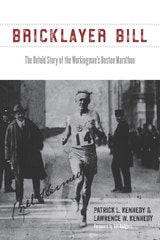
Bricklayer Bill
The Untold Story of the Workingman's Boston MarathonPatrick L. Kennedy and Lawrence W. Kennedy
University of Massachusetts Press, 2017
Two weeks after the United States officially entered World War I, Irish American “Bricklayer Bill” Kennedy won the Boston Marathon wearing his stars-and-stripes bandana, rallying the crowd of patriotic spectators. Kennedy became an American hero and, with outrageous stories of his riding the rails and sleeping on pool tables, a racing legend whose name has since appeared in almost every book written on the Boston Marathon.
When journalist Patrick Kennedy and historian Lawrence Kennedy unearthed their uncle's unpublished memoir, they discovered a colorful character who lived a tumultuous life, beyond his multiple marathons. The bricklayer survived typhoid fever, a five-story fall, auto and train accidents, World War action, Depression-era bankruptcy, decades of back-breaking work, and his own tendency to tipple. In many ways, Bill typified the colorful, newly emerging culture and working-class ethic of competitive long-distance running before it became a professionalized sport. Bricklayer Bill takes us back to another time, when bricklayers, plumbers, and printers could take the stage as star athletes.
Bride of the Revolution
Krupskaya and LeninRobert H. McNeal
University of Michigan Press, 1972

Bridge and Tunnel Boys
Bruce Springsteen, Billy Joel, and the Metropolitan Sound of the American CenturyJim Cullen
Rutgers University Press, 2024
Bridge and Tunnel Boys compares the life and work of Long Islander Joel and Asbury Park, New Jersey, native Springsteen, considering how each man forged a distinctive sound that derived from his unique position on the periphery of the Big Apple. Locating their music within a longer tradition of the New York metropolitan sound, dating back to the early 1900s, cultural historian Jim Cullen explores how each man drew from the city’s diverse racial and ethnic influences. His study explains how, despite frequently releasing songs that questioned the American dream, Springsteen and Joel were able to appeal to wide audiences during both the national uncertainty of the 1970s and the triumphalism of the Reagan era. By placing these two New York–area icons in a new context, Bridge and Tunnel Boys allows us to hear their most beloved songs with new appreciation.
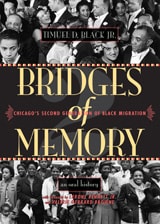
Bridges of Memory Volume 2
Chicago's Second Generation of Black MigrationTimuel Black
Northwestern University Press, 2008
In the second volume of Bridges of Memory, historian Timuel D. Black Jr. continues his conversations with African-Americans who migrated to Chicago from the South in search of economic, social, and cultural opportunities. With his trademark gift for interviewing, Black-himself the son of first-generation migrants to Chicago-guides these individual discussions with ease, resulting in first-person narratives that are informative and entertaining.
Picking up where the first book left off, volume 2 introduces the reader to more members of the first wave of migration and also members of the second generation, the children of those who came in the first wave. In telling their stories, the interviewees paint a vivid picture of the thriving and tight-knit Chicago community formerly known as the Black Belt—today's historic Bronzeville neighborhood. They bring to life the role of family, religion, business, music, and, most of all, the hopes, dreams, and perseverance that enabled a group of people to establish a successful community within a larger society that seemed determined to keep them from success. The experiences of these diverse and vivid personalities often illustrate the role that racial prejudice has played in shaping the specific arcs of their lives. But personal histories such as these are not just chronicles of frustration and despair; more important these narratives reveal an unwavering dedication to breaking the color line and a tireless pursuit of their right to the promise of America.
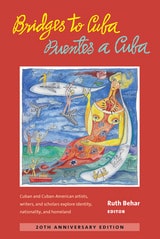
Bridges to Cuba/Puentes a Cuba
Ruth Behar, Editor
University of Michigan Press, 2015
Bridging Benjamin
A Philosophy of Technology, Place, and EducationDominic Smith
University of Minnesota Press, 2026
Walter Benjamin reimagined through the forgotten power of radio
Philosopher and cultural critic Walter Benjamin (1892–1940) has long been recognized for his influence on the fields of literature, film, media studies, critical legal theory, and philosophy. Bringing fresh attention to an often-overlooked aspect of his oeuvre, Bridging Benjamin examines the dozens of radio broadcasts he produced, primarily for children, between 1927 and 1933. Delivered after the academic rejection of his notoriously complex Trauerspiel, these shows became a testing ground for Benjamin’s developing ideas and experimental pedagogy. Though they were cast off as inconsequential by both Benjamin and his contemporaries, Dominic Smith reveals the broadcasts to be a fruitful site for a novel, “derailed” interpretation of Benjamin’s larger body of work.
Reading Benjamin’s radio production as a dynamic site of philosophical experimentation, Smith uses it as a channel and amplifier for three integral but underappreciated aspects of Benjamin’s work: his philosophies of technology, place, and education. Showing how he used broadcast media to explore the increasing “virtualization” of place in networked society, Bridging Benjamin encourages an embrace of Benjamin in contrast to his divisive historical counterparts in the philosophy of technology, such as Martin Heidegger and Carl Schmitt.
Interpreting Benjamin’s broadcasts as a form of peripatetic thinking—deeply embedded in place, yet mobile and mediated—Bridging Benjamin offers a compelling model for reassessing attachments to the technologies and practices shaping our contemporary worlds.
Retail e-book files for this title are screen-reader friendly.

Bridging Borders
Portraits of Community and MigrationUniversity Neighborhood Partners
University of Utah Press, 2027

Bridging Enigma
Cubans on Cuba, Volume 96Ambrosio Fornet
Duke University Press, 0
Fostered by both caution and audacity, in a climate of both trust and tension, and in the face of sustained North American hostility through nearly four decades, Cuban artists and writers have succeeded in building bridges between domestic and foreign cultural institutions, partly offsetting the profound material deprivations under which they have labored. The work collected in this volume introduces a group of writers, artists, and filmmakers who provide a window on Cuban life, illuminating this enigmatic island and bridging the troubled waters it shares with its continental neighbor to the north.
Contributors. Arturo Arango, Emilio Bejel, Rosa Ileana Boudet, Roberto Fernández Retamar, Ambrosio Fornet, Rafael Hernández, Francisco López Sacha, Humberto Manduley López, Vivian Martínez Tabares, Margarita Mateo Palmer, Miguel Mejides, Reinaldo Montero, Lisandro Otero, Graziella Pogolotti, Magda Resik, Cintio Vitier
Bridging Scholarship and Activism
Reflections from the Frontlines of Collaborative ResearchBernd Reiter
Michigan State University Press, 2015
CONTENTS:
Introduction, Ulrich Oslender and Bernd Reiter
Part One. The Promises and Pitfalls of Collaborative Research
- Of Academic Embeddedness: Communities of Choice and How to Make Sense of Activism and Research Abroad, Bernd Reiter
- New Shapes of Revolution, Gustavo Esteva
- The Accidental Activist Scholar: A Memoir on Reactive Boundary and Identity Work for Social Change within the Academy, Rob Benford
- Leaving the Field: How to Write about Disappointment and Frustration in Collaborative Research, Ulrich Oslender
- Invisible Heroes, Eshe Lewis
- El Muntuen America, Manuel Zapata Olivella
- Activism as History Making: The Collective and the Personal in Collaborative Research with the Process of Black Communities in Colombia, Arturo Escobar
- Out of Bounds: Negotiating Researcher Positionality in Brazil, Elizabeth Hordge-Freeman
- Between Soapboxes and Shadows: Activism, Theory, and the Politics of Life and Death in Salvador, Bahia, Brazil, Christen A. Smith
- State Violence and the Ethnographic Encounter: Feminist Research and Racial Embodiment, Keisha-Khan Y. Perry
- The Challenges Resulting from Combining Scientific Production and Social-Political Activism in the Brazilian Academy, Fernando Conceição
- The Challenge of Doing Applied/Activist Anti-Racist Anthropology in Revolutionary Cuba, Gayle L. McGarrity
- Conclusion, Ulrich Oslender and Bernd Reiter
- About the Authors
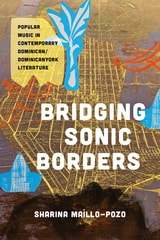
Bridging Sonic Borders
Popular Music in Contemporary Dominican/Dominicanyork LiteratureSharina Maíllo-Pozo
University of Texas Press, 2025
2026 Creative Research Medal, Office of Research at the University of Georgia
2026 Isis Duarte Book Prize, Haiti/Dominican Republic Section, Latin American Studies Association
How music depicted in literature shapes Dominican and Dominican New Yorkers’ identities and links the homeland to the diaspora.
Music has played a large role in recent Dominican literature, whether of the island or the diaspora. Bridging Sonic Borders explores this sonic connection linking the homeland and far-flung locales—especially New York, the center of Dominican cultural production in the United States. Sharina Maíllo-Pozo argues that literary representations of popular music delineate a shared aesthetic territory for US and Caribbean Dominicans, fostering an inclusive and transnational Dominicanidad.
Examining works written in Spanish, English, and Dominicanish, Maíllo-Pozo focuses on Dominican/Dominicanyork writings that have nurtured a borderless aesthetics through their shared investment in hip-hop, jazz, blues, pop, rock, and merengue. For Dominican writers, popular music has become a way of exploring memory and nostalgia and a means of centering people rejected from hegemonic identity formation—the working class, those of African descent, rural and queer people. For example, many works focused on the life of rocker Luis “Terror” Días have emphasized the in-between identity of being both Dominican and a New Yorker. Collectively, these writings have created a space in which boundaries of nation and diaspora are revealed for their fundamental porosity.
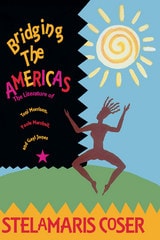
Bridging The Americas
The Literature of Paule Marshall, Toni Morrison, and Gayl JonesStelamaris Coser
Temple University Press, 1994
A literary study of three important black women writers, this book examines the "inter-American" characteristics in the work of Marshall, Morrison, and Jones, including detailed discussions of Morrison's Song of Solomon and Tar Baby, Jones's Corregidora and Song of Anninho, and Marshall's The Chose Place, The Timeless People.
Coser defines the inter-American characteristics in these authors' novels as a connection based on a common African heritage and a shared legacy of colonialism and racism. These three authors redefine the boundaries between the Americas, bridging the "extended Caribbean" that stretches from the U.S. Atlantic coast to Brazil. Their work reinterprets ethnic and sexual identity. Issues of race, class, and nationality overlap. History and identity are reinvented.
To explore the collective forms of resistance and cultural processes in Brazil, the Caribbean, and the United States, Coser also makes provocative connections between the visibility of black women writers and the popularity of male Latin American novelists like Carlos Fuentes and Gabriel Garcia Marquéz.
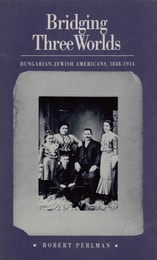
Bridging Three Worlds
Hungarian-Jewish Americans, 1848-1914Robert Perlman
University of Massachusetts Press, 1991
Between 1848 and 1914, approximately 100,000 Jews emigrated from Hungary to the United States. They came in two waves. The first group, catalyzed by the 1848 revolutions against the Austrian monarchy, consisted mainly of political dissidents and well educated, cosmopolitan, middle-class Jews seeking greater personal, religious, and political freedoms in the New World. The second and much larger group, which began to arrive around 1880, consisted primarily of unskilled laborers and lower-middle-class artisans and tradespeople, beckoned to America by the promise of vast economic opportunity.
In the abundant literature on Jewish immigration to the United States, virtually nothing has been written specifically about the Hungarian-Jewish experience, which differed in many respects from that of other Jewish national groups. Bridging Three Worlds offers such a chronicle, relating the immigrants’ history from their political and cultural roots in the Old Country to their acculturation as citizens in a newly adopted land. Based on primary archival materials, oral histories, and secondary sources, the book is also informed by the author’s own experiences as an American of Hungarian-Jewish origins.
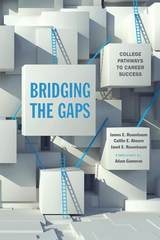
Bridging the Gaps
College Pathways to Career SuccessJames E. Rosenbaum
Russell Sage Foundation, 2017
The authors find that sub-baccalaureate credentials—associate degrees and college certificates—can improve employment outcomes. Young adults who complete these credentials have higher employment rates, earnings, autonomy, career opportunities, and job satisfaction than those who enroll but do not complete credentials. Sub-BA credentials can be completed at community college in less time than bachelor’s degrees, making them an affordable option for many low-income students.
Bridging the Gaps shows that when community colleges overemphasize bachelor’s degrees, they tend to funnel resources into remedial programs, and try to get low-performing students on track for a BA. Yet, remedial programs have inconsistent success rates and can create unrealistic expectations, leading struggling students to drop out before completing any degree. The authors show that colleges can devise procedures that reduce remedial placements and help students discover unseen abilities, attain valued credentials, get good jobs, and progress on degree ladders to higher credentials.
To turn college-for-all into a reality, community college students must be aware of their multiple credential and career options. Bridging the Gaps shows how colleges can create new pathways for non-traditional students to achieve success in their schooling and careers.
Bridging the Gaps
Integrating Archaeology and History in Oaxaca, Mexico; A Volume in Memory of Bruce E. BylandDanny Zborover
University Press of Colorado, 2015
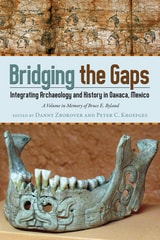
Bridging the Gaps: Integrating Archaeology and History in Oaxaca, Mexico does just that: it bridges the gap between archaeology and history of the Precolumbian, Colonial, and Republican eras of the state of Oaxaca, Mexico, a cultural area encompassing several of the longest-enduring literate societies in the world.
Fourteen case studies from an interdisciplinary group of archaeologists, anthropologists, ethnohistorians, and art historians consciously compare and contrast changes and continuities in material culture before and after the Spanish conquest, in Prehispanic and Colonial documents, and in oral traditions rooted in the present but reflecting upon the deep past. Contributors consider both indigenous and European perspectives while exposing and addressing the difficulties that arise from the application of this conjunctive approach.
Inspired by the late Dr. Bruce E. Byland’s work in the Mixteca, which exemplified the union of archaeological and historical evidence and inspired new generations of scholars, Bridging the Gaps promotes the practice of integrative studies to explore the complex intersections between social organization and political alliances, religion and sacred landscape, ethnic identity and mobility, colonialism and resistance, and territoriality and economic resources.
Bridging
How Gloria Anzaldúa's Life and Work Transformed Our OwnEdited by AnaLouise Keating and Gloria González-López
University of Texas Press, 2011
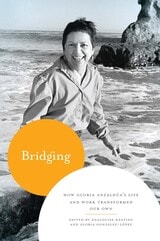
The inspirational writings of cultural theorist and social justice activist Gloria Anzaldúa have empowered generations of women and men throughout the world. Charting the multiplicity of Anzaldúa's impact within and beyond academic disciplines, community trenches, and international borders, Bridging presents more than thirty reflections on her work and her life, examining vibrant facets in surprising new ways and inviting readers to engage with these intimate, heartfelt contributions.
Bridging is divided into five sections: The New Mestizas: "transitions and transformations"; Exposing the Wounds: "You gave me permission to fly in the dark"; Border Crossings: Inner Struggles, Outer Change; Bridging Theories: Intellectual Activism with/in Borders; and "Todas somos nos/otras": Toward a "politics of openness." Contributors, who include Norma Elia Cantú, Elisa Facio, Shelley Fisher Fishkin, Aída Hurtado, Andrea Lunsford, Denise Segura, Gloria Steinem, and Mohammad Tamdgidi, represent a broad range of generations, professions, academic disciplines, and national backgrounds. Critically engaging with Anzaldúa's theories and building on her work, they use virtual diaries, transformational theory, poetry, empirical research, autobiographical narrative, and other genres to creatively explore and boldly enact future directions for Anzaldúan studies.
A book whose form and content reflect Anzaldúa's diverse audience, Bridging perpetuates Anzaldúa's spirit through groundbreaking praxis and visionary insights into culture, gender, sexuality, religion, aesthetics, and politics. This is a collection whose span is as broad and dazzling as Anzaldúa herself.
Bright Signals
A History of Color TelevisionSusan Murray
Duke University Press, 2018
Brilliance in Exile
The Diaspora of Hungarian Scientists from John von Neumann to Katalin KarikóIstván Hargittai
Central European University Press, 2023
By addressing the enigma of the exceptional success of Hungarian emigrant scientists and telling their life stories, Brilliance in Exile combines scholarly analysis with fascinating portrayals of uncommon personalities. István and Balazs Hargittai discuss the conditions that led to five different waves of emigration of scientists from the early twentieth century to the present. Although these exodes were driven by a broad variety of personal motivations, the attraction of an open society with inclusiveness, tolerance, and – needless to say – better circumstances for working and living, was the chief force drawing them abroad.
While emigration from East to West is a general phenomenon, this book explains why and how the emigration of Hungarian scientists is distinctive. The high number of Nobel Prizes among this group is only one indicator. Multicultural tolerance, a quickly emerging, considerably Jewish, urban middle class, and a very effective secondary school system were positive legacies of the Austro-Hungarian Monarchy. Multiple generations, shaped by these conditions, suffered from the increasingly exclusionist, intolerant, antisemitic, and economically stagnating environment, and chose to go elsewhere. “I would rather have roots than wings, but if I cannot have roots, I shall use wings," explained Leo Szilard, one of the fathers of the Atom Bomb.