Results by title
4413 books match the query 'Anthropology' and 193 start with b
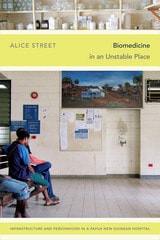
Biomedicine in an Unstable Place
Infrastructure and Personhood in a Papua New Guinean HospitalAlice Street
Duke University Press, 2014
In the hospital's clinics, biomedical practitioners struggle amid severe resource shortages to make the diseased body visible and knowable to the clinical gaze. That struggle is entangled with attempts by doctors, nurses, and patients to make themselves visible to external others—to kin, clinical experts, global scientists, politicians, and international development workers—as socially recognizable and valuable persons. Here hospital infrastructures emerge as relational technologies that are fundamentally fragile but also offer crucial opportunities for making people visible and knowable in new, unpredictable, and powerful ways.
Biosocial Worlds
Anthropology of Health Environments Beyond DeterminismEdited by Jens Seeberg, Andreas Roepstorff, and Lotte Meinert
University College London, 2020
Health topics in the book include diabetes, trauma, cancer, HIV, tuberculosis, prevention of neonatal disease, and wider issues of epigenetics. In addition, the book addresses constructions of health and disease in a wide range of environments and engages with analyses of the concept of environment. Anthropological reflection and ethnographic case studies, meanwhile, explore how health and environment are entangled in ways that moves their relation beyond interdependence to one of inseparability.
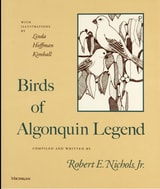
Birds of Algonquin Legend
Compiled and Written by Robert E. Nichols, Jr, with illustrations by Linda Hoffman Kimball
University of Michigan Press, 1996
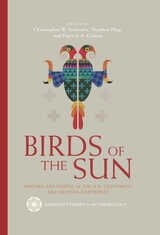
Birds of the Sun
Macaws and People in the U.S. Southwest and Mexican NorthwestEdited by Christopher W. Schwartz, Stephen Plog, and Patricia A. Gilman
University of Arizona Press, 2022
Scarlet macaws are native to tropical forests ranging from the Gulf Coast and southern regions of Mexico to Bolivia, but they are present at numerous archaeological sites in the U.S. Southwest and Mexican Northwest. Although these birds have been noted and marveled at through the decades, new syntheses of early excavations, new analytical methods, and new approaches to understanding the past now allow us to explore the significance and distribution of scarlet macaws to a degree that was previously impossible.
Birds of the Sun explores the many aspects of macaws, especially scarlet macaws, that have made them important to Native peoples living in this region for thousands of years. Leading experts discuss the significance of these birds, including perspectives from a Zuni author, a cultural anthropologist specializing in historic Pueblo societies, and archaeologists who have studied pre-Hispanic societies in Mesoamerica and the U.S. Southwest and Mexican Northwest. Chapters examine the highly variable distribution and frequency of macaws in the past, their presence on rock art and kiva murals, the human experience of living with and transporting macaws, macaw biology and life history, and what skeletal remains suggest about the health of macaws in the past. Experts provide an extensive, region-by-region analysis, from early to late periods, of what we know about the presence, health, and depositional contexts of macaws and parrots, with specific case studies from the Hohokam, Chaco, Mimbres, Mogollon Highlands, Northern Sinagua, and Casas Grandes regions, where these birds are most abundant.
The expertise offered in this stunning new volume, which includes eight full color pages, will lay the groundwork for future research for years to come.
Contributors
Katelyn J. Bishop
Patricia L. Crown
Samantha Fladd
Randee Fladeboe
Patricia A. Gilman
Thomas K. Harper
Michelle Hegmon
Douglas J. Kennett
Patrick D. Lyons
Charmion R. McKusick
Ben A. Nelson
Stephen Plog
José Luis Punzo Díaz
Polly Schaafsma
Christopher W. Schwartz
Octavius Seowtewa
Christine R. Szuter
Kelley L. M. Taylor
Michael E. Whalen
Peter M. Whiteley
Birthing Fathers
The Transformation of Men in American Rites of BirthRichard K. Reed
Rutgers University Press, 2005
In the past two decades, men have gone from being excluded from the delivery room to being admitted, then invited, and, finally, expected to participate actively in the birth of their children. No longer mere observers, fathers attend baby showers, go to birthing classes, and share in the intimate, everyday details of their partners' pregnancies.
In this unique study, Richard Reed draws on the feminist critique of professionalized medical birthing to argue that the clinical nature of medical intervention distances fathers from child delivery. He explores men's roles in childbirth and the ways in which birth transforms a man's identity and his relations with his partner, his new baby, and society. In other societies, birth is recognized as an important rite of passage for fathers. Yet, in American culture, despite the fact that fathers are admitted into delivery rooms, little attention is given to their transition to fatherhood.
The book concludes with an exploration of what men's roles in childbirth tell us about gender and American society. Reed suggests that it is no coincidence that men's participation in the birthing process developed in parallel to changing definitions of fatherhood more broadly. Over the past twenty years, it has become expected that fathers, in addition to being strong and dependable, will be empathetic and nurturing.
Well-researched, candidly written, and enriched with personal accounts of over fifty men from all parts of the world, this book is as much about the birth of fathers as it is about fathers in birth.
Black Athena
Afroasiatic Roots of Classical Civilization, Volume I: The Fabrication of Ancient Greece, 1785-1985Edited by Martin Bernal
Rutgers University Press, 1987
Could Greek philosophy be rooted in Egyptian thought? Is it possible that the Pythagorean theory was conceived on the shores of the Nile and the Euphrates rather than in ancient Greece? Could it be that much of Western civilization was formed on the “Dark Continent”? For almost two centuries, Western scholars have given little credence to the possibility of such scenarios.
In Black Athena, an audacious three-volume series that strikes at the heart of today’s most heated culture wars, Martin Bernal challenges Eurocentric attitudes by calling into question two of the longest-established explanations for the origins of classical civilization. To use his terms, the Aryan Model, which is current today, claims that Greek culture arose as the result of the conquest from the north by Indo-European speakers, or “Aryans,” of the native “pre-Hellenes.” The Ancient Model, which was maintained in Classical Greece, held that the native population of Greece had initially been civilized by Egyptian and Phoenician colonists and that additional Near Eastern culture had been introduced to Greece by Greeks studying in Egypt and Southwest Asia. Moving beyond these prevailing models, Bernal proposes a Revised Ancient Model, which suggests that classical civilization in fact had deep roots in Afroasiatic cultures.
This long-awaited third and final volume of the series is concerned with the linguistic evidence that contradicts the Aryan Model of ancient Greece. Bernal shows how nearly 40 percent of the Greek vocabulary has been plausibly derived from two Afroasiatic languages—Ancient Egyptian and West Semitic. He also reveals how these derivations are not limited to matters of trade, but extended to the sophisticated language of politics, religion, and philosophy. This evidence, according to Bernal, greatly strengthens the hypothesis that in Greece an Indo-European–speaking population was culturally dominated by Ancient Egyptian and West Semitic speakers
Provocative, passionate, and colossal in scope, this volume caps a thoughtful rewriting of history that has been stirring academic and political controversy since the publication of the first volume.

Black British Cultural Studies
A ReaderEdited by Houston A. Baker, Jr., Manthia Diawara, and Ruth H. Lindeborg
University of Chicago Press, 1996
From Stuart Hall's classic study of racially structured societies to an interview by Manthia Diawara with Sonia Boyce, a leading figure in the Black British arts movement, the papers included here have transformed cultural studies through their sustained focus on the issue of race. Much of the book centers on Black British arts, especially film, ranging from a historical overview of Black British cinema to a weighing of the costly burden on Black artists of representing their communities. Other essays consider such topics as race and representation and colonial and postcolonial discourse.
This anthology will be an invaluable and timely resource for everyone interested in cultural studies. It also has much to offer students of anthropology, sociology, media and film studies, and literary criticism.
Black Critics and Kings
The Hermeneutics of Power in Yoruba SocietyAndrew Apter
University of Chicago Press, 1992
Documenting the development of a Yoruba kingdom from its nineteenth-century genesis to Nigeria's 1983 elections and subsequent military coup, Apter identifies the central role of ritual in reconfiguring power relations both internally and in relation to wider political arenas. What emerges is an ethnography of an interpretive vision that has broadened the horizons of local knowledge to embrace Christianity, colonialism, class formation, and the contemporary Nigerian state. In this capacity, Yoruba òrìsà worship remains a critical site of response to hegemonic interventions.
With sustained theoretical argument and empirical rigor, Apter answers critical anthropologists who interrogate the possibility of ethnography. He reveals how an indigenous hermeneutics of power is put into ritual practice—-with multiple voices, self-reflexive awareness, and concrete political results. Black Critics and Kings eloquently illustrates the ethnographic value of listening to the voice of the other, with implications extending beyond anthropology to engage leading debates in black critical theory.
Black Cultural Life in South Africa
Reception, Apartheid, and EthicsLily Saint
University of Michigan Press, 2018
This study provocatively posits that states of oppression, including colonial and postcolonial rule, can elicit ethical responses to imaginative identification through encounters with popular culture, and it asks whether and how they carry over into ethical action. Its consideration of how globalized popular culture “travels” not just in material form, but also through the circuits of the imaginary, opens a new window for exploring the ethical and liberatory stakes of popular culture. Each chapter focuses on a separate genre, yet the overall interdisciplinary approach to the study of genre and argument for an expansion of ethical theory that draws on texts beyond the Western canon speak to growing concerns about studying genres and disciplines in isolation. Freed from oversimplified treatments of popular forms—common to cultural studies and ethical theory alike—this book demonstrates that people can do things with mass culture that reinvigorate ethical life.
Lily Saint’s new volume will interest Africanists across the humanities and the social sciences, and scholars of Anglophone literary, globalization, and cultural studies; race; ethical theories and philosophies; film studies; book history and material cultures; and the burgeoning field of comics and graphic novels.
Black Feminist Anthropology, 25th Anniversary Edition
Theory, Politics, Praxis, and PoeticsIrma McClaurin
Rutgers University Press, 2025
Black Feminist Anthropology
Theory, Politics, Praxis, and PoeticsMcClaurin, Irma
Rutgers University Press, 2001
In this volume, Irma McClaurin has collected-for the first time-essays that explore the role and contributions of black feminist anthropologists. She has asked her contributors to disclose how their experiences as black women have influenced their anthropological practice in Africa, the Caribbean, and the United States, and how anthropology has influenced their development as black feminists. Every chapter is a unique journey that enables the reader to see how scholars are made. The writers present material from their own fieldwork to demonstrate how these experiences were shaped by their identities. Finally, each essay suggests how the author's field experiences have influenced the theoretical and methodological choices she has made throughout her career.
Not since Diane Wolf's Feminist Dilemmas in the Field or Hortense Powdermaker's Stranger and Friend have we had such a breadth of women anthropologists discussing the critical (and personal) issues that emerge when doing ethnographic research.

Black Fox
A Life of Emilie Demant Hatt, Artist and EthnographerBarbara Sjoholm
University of Wisconsin Press, 2017
In recounting Demant Hatt's fascinating life, Barbara Sjoholm investigates the boundaries and influences between ethnographers and sources, the nature of authorship and visual representation, and the state of anthropology, racial biology, and politics in Scandinavia during the first half of the twentieth century.
Black Magic
White Hollywood and African American CultureKrin Gabbard
Rutgers University Press, 2004
As Krin Gabbard brilliantly reveals in Black Magic, we duly recognize the cultural heritage of African Americans in literature, music, and art, but there is a disturbing pattern in the roles that blacks are asked to play-particularly in the movies. Many recent films, including The Matrix, Fargo, The Green Mile, Ghost, The Talented Mr. Ripley, Pleasantville, The Bridges of Madison County, and Crumb, reveal a fascination with black music and sexuality even as they preserve the old racial hierarchies. Quite often the dependence on African American culture remains hidden-although it is almost perversely pervasive. In the final chapters of Black Magic, Gabbard looks at films by Robert Altman and Spike Lee that attempt to reverse many of these widespread trends.

Black Swan Lake
Life of a WetlandRod Giblett
Intellect Books, 2013
Black Women against the Land Grab
The Fight for Racial Justice in BrazilKeisha-Khan Y. Perry
University of Minnesota Press, 2013
In Brazil and throughout the African diaspora, black women, especially poor black women, are rarely considered leaders of social movements let alone political theorists. But in the northeastern city of Salvador, Brazil, it is these very women who determine how urban policies are established. Focusing on the Gamboa de Baixo neighborhood in Salvador’s city center, Black Women against the Land Grab explores how black women’s views on development have radicalized local communities to demand justice and social change.
In Black Women against the Land Grab, Keisha-Khan Y. Perry describes the key role of local women activists in the citywide movement for land and housing rights. She reveals the importance of geographic location for understanding the gendered aspects of urban renewal and the formation of black women–led social movements. How have black women shaped the politics of urban redevelopment, Perry asks, and what does this kind of political intervention tell us about black women’s agency? Her work uncovers the ways in which political labor at the neighborhood level is central to the mass mobilization of black people against institutional racism and for citizenship rights and resources in Brazil.
Highlighting the political life of black communities, specifically those in urban contexts often represented as socially pathological and politically bankrupt, Black Women against the Land Grab offers a valuable corrective to how we think about politics and about black women, particularly poor black women, as a political force.
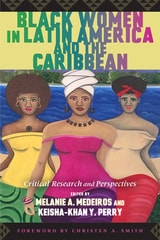
Black Women in Latin America and the Caribbean
Critical Research and PerspectivesMelanie A. Medeiros
Rutgers University Press, 2023
Black and Green
Afro-Colombians, Development, and Nature in the Pacific LowlandsKiran Asher
Duke University Press, 2009
The Pacific region had yet to be overrun by drug traffickers, guerrillas, and paramilitary forces in the early 1990s. It was better known as the largest area of black culture in the country (90 percent of the region’s population is Afro-Colombian) and as a supplier of natural resources, including timber, gold, platinum, and silver. Colombia’s Law 70, passed in 1993, promised ethnic and cultural rights, collective land ownership, and socioeconomic development to Afro-Colombian communities. At the same time that various constituencies sought to interpret and implement Law 70, the state was moving ahead with large-scale development initiatives intended to modernize the economically backward coastal lowlands. Meanwhile national and international conservation organizations were attempting to protect the region’s rich biodiversity. Asher explores this juxtaposition of black rights, economic development, and conservation—and the tensions it catalyzed. She analyzes the meanings attached to “culture,” “nature,” and “development” by the Colombian state and Afro-Colombian social movements, including women’s groups. In so doing, she shows that the appropriation of development and conservation discourses by the social movements had a paradoxical effect. It legitimized the presence of state, development, and conservation agencies in the Pacific region even as it influenced those agencies’ visions and plans.

Black and Indigenous
Garifuna Activism and Consumer Culture in HondurasMark Anderson
University of Minnesota Press, 2009
Garifuna live in Central America, primarily Honduras, and the United States. Identified as Black by others and by themselves, they also claim indigenous status and rights in Latin America. Examining this set of paradoxes, Mark Anderson shows how, on the one hand, Garifuna embrace discourses of tradition, roots, and a paradigm of ethnic political struggle. On the other hand, Garifuna often affirm blackness through assertions of African roots and affiliations with Blacks elsewhere, drawing particularly on popular images of U.S. blackness embodied by hip-hop music and culture.
Black and Indigenous explores the politics of race and culture among Garifuna in Honduras as a window into the active relations among multiculturalism, consumption, and neoliberalism in the Americas. Based on ethnographic work, Anderson questions perspectives that view indigeneity and blackness, nativist attachments and diasporic affiliations, as mutually exclusive paradigms of representation, being, and belonging.
As Anderson reveals, within contemporary struggles of race, ethnicity, and culture, indigeneity serves as a normative model for collective rights, while blackness confers a status of subaltern cosmopolitanism. Indigeneity and blackness, he concludes, operate as unstable, often ambivalent, and sometimes overlapping modes through which people both represent themselves and negotiate oppression.

Black into White
Race and Nationality in Brazilian ThoughtThomas E. Skidmore
Duke University Press, 1993
Blazing the Trail
Waymarks in the Exploration of SymbolsVictor Turner
University of Arizona Press, 1992
"The essays reveal a passionate struggle between a committed conceptualization and a dedication to the telling detail. Turner is willing to address the moral and spiritual dimensions of being human, which are all too easily set aside by much social science."—Anthropos
Blindness Through the Looking Glass
The Performance of Blindness, Gender, and the Sensory BodyGili Hammer
University of Michigan Press, 2019

Blood Work
Life and Laboratories in PenangJanet Carsten
Duke University Press, 2019
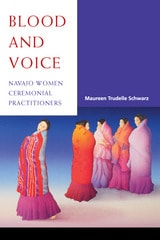
Blood and Voice
Navajo Women Ceremonial PractitionersMaureen Trudelle Schwarz
University of Arizona Press, 2003
The maintenance of the latter tradition has long been held to be the function of the Navajo singer, a role usually viewed as male. But despite this longstanding assumption, women can and do fill this role. Drawing on interviews with seventeen Navajo women practitioners and five apprentices, Maureen Trudelle Schwarz explicates women's role as ceremonial practitioners and shows that it is more complex than has previously been thought. She examines gender differences dictated by the Navajo origin story, details how women came to be practitioners, and reveals their experiences and the strategies they use to negotiate being both woman and singer.
Women who choose careers as singers face complex challenges, since some rules prohibit menstruating women from conducting ceremonies and others regarding sexual continence can strain marital relationships. Additionally, oral history places men in charge of all ceremonial matters. Schwarz focuses on how the reproductive life courses of Navajo women influence their apprenticeships and practices to demonstrate how they navigate these issues to preserve time-honored traditions. Through the words of actual practitioners, she shows how each woman brings her own unique life experience to the role. While differing among individuals, these experiences represent a commitment to shared cultural symbols and result in a consensus that sustains social cohesion.
By showing the differences and similarities between the apprenticeship, initiation, and practice of men and women singers, Blood and Voice offers a better understanding of the role of Navajo women in a profession usually viewed as a male activity—and of the symbolic construction of the self in Navajo culture. It also addresses classic questions concerning the sexual division of labor, menstrual taboos, gender stereotypes, and the tension between tradition and change that will enlighten students of other cultures.
Bloodsucking Witchcraft
An Epistemological Study of Anthropomorphic Supernaturalism in Rural TlaxcalaHugo G. Nutini
University of Arizona Press, 1993
"The most comprehensive statement on this centrally important ethnographic phenomenon in the last forty years. It bears ready comparison with the two great classics, Evans-Pritchard's Witchcraft Among the Azande and Clyde Kluckhohn's Navaho Witchcraft."—Henry H. Selby

Blue-Ribbon Babies and Labors of Love
Race, Class, and Gender in U.S. Adoption PracticeBy Christine Ward Gailey
University of Texas Press, 2010
Most Americans assume that shared genes or blood relationships provide the strongest basis for family. What can adoption tell us about this widespread belief and American kinship in general? Blue-Ribbon Babies and Labors of Love examines the ways class, gender, and race shape public and private adoption in the United States. Christine Ward Gailey analyzes the controversies surrounding international, public, and transracial adoption, and how the political and economic dynamics that shape adoption policies and practices affect the lives of people in the adoption nexus: adopters, adoptees, birth parents, and agents within and across borders. Interviews with white and African-American adopters, adoption social workers, and adoption lawyers, combined with her long-term participant-observation in adoptive communities, inform her analysis of how adopters' beliefs parallel or diverge from the dominant assumptions about kinship and family. Gailey demonstrates that the ways adoptive parents speak about their children vary across hierarchies of race, class, and gender. She shows that adopters' notions about their children's backgrounds and early experiences, as well as their own "family values," influence child rearing practices. Her extensive interviews with 131 adopters reveal profoundly different practices of kinship in the United States today.
Moving beyond the ideology of "blood is thicker than water," Gailey presents a new way of viewing kinship and family formation, suitable to times of rapid social and cultural change.

Blueprints for a House Divided
The Constitutional Logic of the Yugoslav ConflictsRobert M. Hayden
University of Michigan Press, 2000

Blues Music in the Sixties
A Story in Black and WhiteUlrich Adelt
Rutgers University Press, 2010
In the 1960s, within the larger context of the civil rights movement and the burgeoning counterculture, the blues changed from black to white in its production and reception, as audiences became increasingly white. Yet, while this was happening, blackness--especially black masculinity--remained a marker of authenticity. Crossing color lines and mixing the beats of B.B. King, Eric Clapton, and Janis Joplin; the Newport Folk Festival and the American Folk Blues Festival; and publications such as Living Blues, Ulrich Adelt discusses these developments, including the international aspects of the blues. He highlights the performers and venues that represented changing racial politics and addresses the impact and involvement of audiences and cultural brokers.

Bodies as Evidence
Security, Knowledge, and PowerMark Maguire, Ursula Rao, and Nils Zurawski, editors
Duke University Press, 2018
Contributors. Carolina Alonso-Bejarano, Gregory Feldman, Francisco J. Ferrándiz, Daniel M. Goldstein, Ieva Jusionyte, Amade M’charek, Mark Maguire, Joseph P. Masco, Ursula Rao, Antonius C. G. M. Robben, Joseba Zulaika, Nils Zurawski

Bodies in Formation
An Ethnography of Anatomy and Surgery EducationRachel Prentice
Duke University Press, 2012
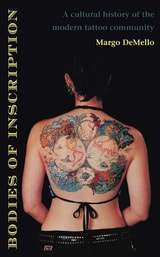
Bodies of Inscription
A Cultural History of the Modern Tattoo CommunityMargo DeMello
Duke University Press, 2004
Community publications, tattoo conventions, articles in popular magazines, and DeMello’s numerous interviews illustrate the interplay between class, culture, and history that orchestrated a shift from traditional Americana and biker tattoos to new forms using Celtic, tribal, and Japanese images. DeMello’s extensive interviews reveal the divergent yet overlapping communities formed by this class-based, American-style repackaging of the tattoo. After describing how the tattoo has moved from a mark of patriotism or rebellion to a symbol of exploration and status, the author returns to the predominantly middle-class movement that celebrates its skin art as spiritual, poetic, and self-empowering. Recognizing that the term “community” cannot capture the variations and class conflict that continue to thrive within the larger tattoo culture, DeMello finds in the discourse of tattooed people and their artists a new and particular sense of community and explores the unexpected relationship between this discourse and that of other social movements.
This ethnography of tattooing in America makes a substantive contribution to the history of tattooing in addition to relating how communities form around particular traditions and how the traditions themselves change with the introduction of new participants. Bodies of Inscription will have broad appeal and will be enjoyed by readers interested in cultural studies, American studies, sociology, popular culture, and body art.
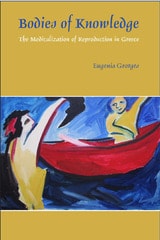
Bodies of Knowledge
The Medicalization of Reproduction in GreeceEugenia Georges
Vanderbilt University Press, 2008
Recipient of the 2006 Norman L. and Roselea J. Goldberg Prize for the best project in the area of medicine.
The author, a second-generation Greek American, returned to Greece with her young daughter to do fieldwork over the course of a decade. Focusing on Rhodes, an island that blends continuity with the past and rapid social change in often unexpected ways, she interviewed over a hundred women, doctors, and midwives about issues of reproduction.
The result is a detailed portrait of how a longstanding system of "local" gynecological and obstetrical knowledge under the control of women was rapidly displaced in the the period following World War II, and how the technologically-intensive biomedical model that took its place in turn assumed its own distinctive signature.
Bodies of Knowledge is a vivid ethnographic study of how a presumably globalizing and homogenizing process like medicalization can be reshaped as women and medical experts alike selectively accept or reject new practices and technologies. Georges found, for example, that women in Rhodes have enthusiastically embraced some new technologies, like fetal imaging during pregnancy, but rejected others, like medical contraception. They are also avid consumers of popular childbirth manuals.
This book is the recipient of the 2006 Norman L. and Roselea J. Goldberg Prize for the best project in the area of medicine.

Body Burdens
Toxic Endurance and Decolonial Desire in the French AtlanticVanessa Agard-Jones
Duke University Press, 2027
Body Thoughts
Andrew J. Strathern
University of Michigan Press, 1996
Body and Enhancement Technology
Eunjeong Ma, editor
Duke University Press, 2016
This issue explores the practice of applying science and technology to expand our cognitive and physical capacities. Covering global Asia, these articles investigate enhancement in relation to aesthetics, genetics, cognition, and musculature and consider enhancement’s ethical and societal implications. The contributors address a range of topics—from elite sports to the socioeconomics of plastic surgery in South Korea to memory devices in Blade Runner—and problematize increasing efforts to engineer and augment human bodily functions. This issue illustrates how the emergence of new technologies and their merging with the body will challenge our perception of normal human conditions: our physical strength, our appearance, and our cognitive capabilities.
Contributors
Eduardo Zachary Albrecht, Masato Fukushima, Jaehwan Hyun, So Yeon Leem, Eunjeong Ma
Body of Power, Spirit of Resistance
The Culture and History of a South African PeopleJean Comaroff
University of Chicago Press, 1985
Bodymakers
A Cultural Anatomy of Women's Body BuildingLeslie Heywood
Rutgers University Press, 1998
"Bodymakers is most ambitious in terms of its engagement with feminist cultural criticism and its unconventional scope. Heywood comments on film, novels, magazine pictures, popular criticisms of feminism, the J. Crew catalog, [and] the concept of power feminism." --Gender and Society
"In this brilliantly insightful and immensely readable book, Leslie Heywood makes us think about women's body building in an entirely new way. She argues persuasively that, far from being an individualistic, apolitical act, it is a powerful form of resistance, empowering women to overcome their victim status and heal past abuse." --Myra Dinnerstein, University of Arizona
"Bodymakers has a power and an honesty that is unusual in a book with its theoretical sophistication." --Susan Bordo, author of Unbearable Weight and Twilight Zones: The Hidden Life of Cultural Images from Plato to O.J.
"With clarity, force, and passionate investment grounded in both theory and her own experience, Heywood understands that women can strengthen body, mind, and spirit through everyday practice. Her argument that body building is this kind of activist practice is as inspirational as it is poignant." --Joanna Frueh, author of Erotic Faculties
"Flexing her muscles through autobiographical, theoretical, and spectacular acts, Heywood insists that we read the muscular female body not as an 'extreme oddity' but as a 'form of activism' through which we can understand anew larger cultural issues and trends, including the American romance with individualism and the relationship of second and third wave feminisms. Muscular female bodies will never be read in the same way again." --Sidonie Smith, University of Michigan
Women with muscles are a recent phenomenon, so recent that, while generating a good deal of interest, their importance to the cultural landscape has yet to be acknowledged. Leslie Heywood looks at the sport and image of female body building as a metaphor for how women fare in our current political and cultural climate. She argues that the movement in women's body building from small, delicate bodies to large powerful ones and back again is directly connected to progress and backlash within the abortion debate, the ongoing struggle for race and gender equality, and the struggle to define "feminism" in the context of the nineties. She discusses female body building as activism, as an often effective response to abuse, race and masculinity in body building, and the contradictory ways that photographers treat female body builders. Engaging and accessible, Bodymakers reveals how female body builders find themselves both trapped and empowered by their sport.

Bohemians
The Glamorous OutcastsElizabeth Wilson
Rutgers University Press, 2000
Since the early nineteenth century, the bohemian has been the protagonist of the story the West has wanted to hear about its artists-a story of genius, glamour, and doom. The bohemian takes on many guises: the artist dying in poverty like Modigliani or an outrageous entertainer like Josephine Baker. Elizabeth Wilson's enjoyable book is a quest for the many shifting meanings that constitute the bohemian and bohemia.
She tells unforgettable stories of the artists, intellectuals, radicals, and hangers-on who populated the salons, bars, and cafs of Paris, London, New York, Los Angeles, and San Francisco, including Djuna Barnes, Juliette Greco, Allen Ginsberg, William Burroughs, Jack Kerouac, Amiri Baraka, Andy Warhol, and Jackson Pollock. Bohemians also follows the women who contributed to the myth, including the wives and mistresses, the muses, lesbians, and independent artists. Wilson explores the bohemians' eccentric use of dress, the role of sex and erotic love, the bohemian search for excess, and the intransigent politics of many.
As a new millennium begins, Wilson shows how notions of bohemianism remain at the core of heated cultural debates about the role of art and artists in an increasingly commodified and technological world.
Bolivia in the Age of Gas
Bret Gustafson
Duke University Press, 2020
Bomb Children
Life in the Former Battlefields of LaosLeah Zani
Duke University Press, 2019
Bombay Brokers
Lisa Björkman, editor
Duke University Press, 2021
Contributors. Anjali Arondekar, Sarthak Bagchi, Tobias Baitsch, Sangeeta Banerji, Srimati Basu, Tarini Bedi, Amita Bhide, Lisa Björkman, Uday Chandra, Simon Chauchard, Ka-Kin Cheuk, Michael Collins, Daisy Deomampo, Maura Finkelstein, Ajay Gandhi, Rupali Gupte, Kathryn C. Hardy, Lalitha Kamath, Prasad Khanolkar, Bhushan Korgaonkar, Ratoola Kundu, Ken Kuroda, Annelies Kusters, Lisa Mitchell, Shailaja Paik, Gautam Pemmaraju, Lubaina Rangwala, Llerena Guiu Searle, Atreyee Sen, Prasad Shetty, Rohan Shivkumar, Edward Simpson, David Strohl, Rachel Sturman, R. Swaminathan, Aneri Taskar, Yaffa Truelove, Sahana Udupa, Lalit Vachani, Leilah Vevaina
Bones of Contention
Controversies in the Search for Human OriginsRoger Lewin
University of Chicago Press, 1997
in many ways, remains contentious.
"[An] un-put-downable book."—John Gribbon, Times Educational Supplement
"Not just another 'stones and bones' account of human evolution. It is Lewin's thesis, amply demonstrated, that paleoanthropology is the most subjective of sciences because it engages the emotions of virtually everyone; and since the evidence is scrappy, interpretation is everything. . . . A splendid, stirring, and eye-opening account, to be devoured."—Kirkus Reviews, starred review
"[Lewin shows] 'how very unscientific the process of scientific inquiry can be.'. . . Bones of Contention is . . . serious intellectual history."—Edward Dolnick, Wall Street Journal
"[Lewin] documents his thesis in persuasive detail. . . . The reader is carried along by the power of Mr. Lewin's reporting."—Robert Wright, New York Times Book Review
Bones of the Maya
Studies of Ancient SkeletonsEdited by Stephen L. Whittington and David M. Reed
University of Alabama Press, 2006
New techniques in osteology have yielded findings on Maya diet and health that challenge the ecological model of collapse. This benchmark collection of essays defined the state of Mayan skeletal studies. Its coverage spans the formative through colonial periods, with a geographic focus on the Maya lowlands of northern Guatemala, Belize, and western Honduras. Bringing together for the first time a broad spectrum of bioarchaeologists and revealing remarkable data on Maya genetic relationship, demographic, and diseases, the collection covers divers topics such as osteological, dental, bone chemistry, and DNA analyses. The diet and health status of Maya populations is a major theme, especially in relation to social status, gender, and the historical problem of the "collapse."
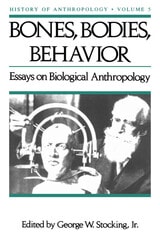
Bones, Bodies amd Behavior
Essays in Behavioral AnthropologyEdited by George W. Stocking, Jr.
University of Wisconsin Press, 1990
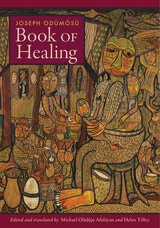
Book of Healing
Joseph Odùmósù
University of Wisconsin Press, 2026
While the existence of Odùmósù’s massive work is well-known in southwestern Nigeria, it has not previously been available in English. Michael Ọládẹ̀jọ Afọláyan and Helen Tilley have translated the volume in its entirety, and here use it as an entrée into greater understandings of Yorùbá medicine, spirituality, and print culture during a time of rapid change under British colonialism and the spread of Christianity.
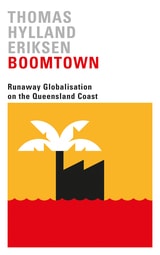
Boomtown
Runaway Globalisation on the Queensland CoastThomas Hylland Eriksen
Pluto Press, 2018
Capturing Gladstone at the peak of its accelerated growth in 2013–14, Thomas Hylland Eriksen dissects here the boomtown phenomenon in all its profound ambivalence. Based on ethnographic fieldwork, the book examines local identity, family life, infrastructure, and local services and explores the tensions and resentments surrounding migrant workers.
Writ large in Boomtown are the clashes of scale at the heart of the town’s contradictions, where the logic of big industry and the state compete with those of the individual and the local community and ecology, crystallizing the current crisis of political legitimacy that is unfurling all over the world.
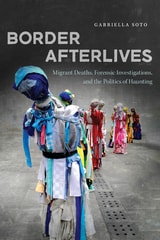
Border Afterlives
Migrant Deaths, Forensic Investigations, and the Politics of HauntingGabriella Soto
University of Arizona Press, 2026
Drawing on over a decade of ethnographic, participatory, and community-engaged research, author Gabriella Soto examines the postmortem journeys of these migrants through the fragmented infrastructure of medicolegal death investigation in the U.S. Southwest. She reveals how the state’s deterrence-based border policies not only generate death but also fail to provide adequate care for the dead. Soto argues that these deaths should be understood as structural homicides and that the forensic neglect they face is a form of ongoing violence.
Moving between the practical and the philosophical, Soto asks what it means to care for the dead and what society owes to those who die in its name. Through the lens of haunting, she explores how the dead continue to shape the living, not as objects of horror but as moral agents whose presence demands justice. Border Afterlives offers a border-scale comparative account of forensic practices, critiques the limits of “best practices” in under-resourced systems, and calls for a reimagining of forensic humanitarianism grounded in reciprocity and dignity, beyond human rights. This is a book that insists on remembering the dead.

Border Brokers
Children of Mexican Immigrants Navigating U.S. Society, Laws, and PoliticsChristina M. Getrich
University of Arizona Press, 2019
Based on ethnographic fieldwork in San Diego over more than a decade, Border Brokers documents the continuing deleterious effects of U.S. immigration policies and enforcement practices on a group of now young adults and their families. In the first book-length longitudinal study of mixed-status families, Christina M. Getrich provides an on-the-ground portrayal of these young adults’ lives from their own perspectives and in their own words.
More importantly, Getrich identifies how these individuals have developed resiliency and agency beginning in their teens to improve circumstances for immigrant communities. Despite the significant constraints their families face, these children have emerged into adulthood as grounded and skilled brokers who effectively use their local knowledge bases, life skills honed in their families, and transborder competencies. Refuting the notion of their failure to assimilate, she highlights the mature, engaged citizenship they model as they transition to adulthood to be perhaps their most enduring contribution to creating a better U.S. society.
An accessible ethnography rooted in the everyday, this book portrays the complexity of life in the U.S.-Mexico borderlands. It offers important insights for anthropologists, educators, policy-makers, and activists working on immigration and social justice issues.
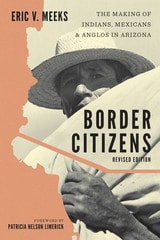
Border Citizens
The Making of Indians, Mexicans, and Anglos in ArizonaBy Eric V. Meeks; foreword by Patricia Nelson Limerick
University of Texas Press, 2007
In Border Citizens, historian Eric V. Meeks explores how the racial classification and identities of the diverse indigenous, mestizo, and Euro-American residents of Arizona’s borderlands evolved as the region was politically and economically incorporated into the United States. First published in 2007, the book examines the complex relationship between racial subordination and resistance over the course of a century. On the one hand, Meeks links the construction of multiple racial categories to the process of nation-state building and capitalist integration. On the other, he explores how the region’s diverse communities altered the blueprint drawn up by government officials and members of the Anglo majority for their assimilation or exclusion while redefining citizenship and national belonging.
The revised edition of this highly praised and influential study features dozens of new images, an introductory essay by historian Patricia Nelson Limerick, and a chapter-length afterword by the author. In his afterword, Meeks details and contextualizes Arizona’s aggressive response to undocumented immigration and ethnic studies in the decade after Border Citizens was first published, demonstrating that the broad-based movement against these measures had ramifications well beyond Arizona. He also revisits the Yaqui and Tohono O’odham nations on both sides of the Sonora-Arizona border, focusing on their efforts to retain, extend, and enrich their connections to one another in the face of increasingly stringent border enforcement.

Border Killers
Neoliberalism, Necropolitics, and Mexican MasculinityElizabeth Villalobos
University of Arizona Press, 2024
Villalobos focuses on representations of “border killers” in literature, film, and theater. The author develops a metaphor of “maquilization” to describe the mass-production of masculine violence as a result of neoliberalism. The author demonstrates that the killer is an interchangeable cog in a societal factory of violence whose work is to produce dead bodies. By turning to cultural narratives, Villalobos seeks to counter the sensationalistic and stereotyped media depictions of border residents as criminals. The cultural works she examines instead indict the Mexican state and the global economic system for producing agents of violence.
Focusing on both Mexico’s northern and southern borders, Border Killers uses Achille Mbembe’s concept of necropolitics and various theories of masculinity to argue that contemporary Mexico is home to a form of necropolitical masculinity that has flourished in the neoliberal era and made the exercise of death both profitable and necessary for the functioning of Mexico’s state-cartel-corporate governance matrix.

Border Rhetorics
Citizenship and Identity on the US-Mexico FrontierEdited by D. Robert DeChaine
University of Alabama Press, 2012
Undertakes a wide-ranging examination of the US-Mexico border as it functions in the rhetorical production of civic unity in the United States
A “border” is a powerful and versatile concept, variously invoked as the delineation of geographical territories, as a judicial marker of citizenship, and as an ideological trope for defining inclusion and exclusion. It has implications for both the empowerment and subjugation of any given populace. Both real and imagined, the border separates a zone of physical and symbolic exchange whose geographical, political, economic, and cultural interactions bear profoundly on popular understandings and experiences of citizenship and identity.
The border’s rhetorical significance is nowhere more apparent, nor its effects more concentrated, than on the frontier between the United States and Mexico. Often understood as an unruly boundary in dire need of containment from the ravages of criminals, illegal aliens, and other undesirable threats to the national body, this geopolitical locus exemplifies how normative constructions of “proper”; border relations reinforce definitions of US citizenship, which in turn can lead to anxiety, unrest, and violence centered around the struggle to define what it means to be a member of a national political community.