Results by title
3745 books match the query 'Europe' and 155 start with b
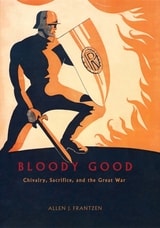
Bloody Good
Chivalry, Sacrifice, and the Great WarAllen J. Frantzen
University of Chicago Press, 2003
Here for the first time, Allen J. Frantzen traces these chivalric ideals from the Great War back to their origins in the Middle Ages and shows how they resulted in highly influential models of behavior for men in combat. Drawing on a wide selection of literature and images from the medieval period, along with photographs, memorials, postcards, war posters, and film from both sides of the front, Frantzen shows how such media shaped a chivalric ideal of male sacrifice based on the Passion of Jesus Christ. He demonstrates, for instance, how the wounded body of Christ became the inspiration for heroic male suffering in battle. For some men, the Crucifixion inspired a culture of revenge, one in which Christ's bleeding wounds were venerated as badges of valor and honor. For others, Christ's sacrifice inspired action more in line with his teachings—a daring stay of hands or reason not to visit death upon one's enemies.
Lavishly illustrated and eloquently written, Bloody Good will be must reading for anyone interested in World War I and the influence of Christian ideas on modern life.
Bloomsbury Scientists
Science and Art in the Wake of DarwinMichael Boulter
University College London, 2017

Bluestocking Feminism and British-German Cultural Transfer, 1750-1837
Alessa Johns
University of Michigan Press, 2014
Boccaccio's Dante and the Shaping Force of Satire
Robert Hollander
University of Michigan Press, 1997
Among commentators, it had been an unexamined commonplace that the "young" Boccaccio either did not know well or did not understand sufficiently the texts of Dante (even though the "young" Boccaccio is construed as including the thirty-eight-year-old author of the Decameron.) In Boccaccio's Dante and the Shaping Force of Satire, Robert Hollander offers a valuable synthesis of new material and some previously published essays, addressing the question of Dante's influence on Boccaccio, particularly concerning the Commedia and the Decameron.
Hollander reveals that Boccaccio's writings are heavy with reminiscences of the Dante text, which he believed to be the greatest "modern" work. It was Boccaccio's belief that Dante was the only writer who had achieved a status similar to that reserved for the greatest writers of antiquity. Most of these essays try to show how carefully Boccaccio reflects the texts of Dante in the Decameron. Some essays also turn to the question of Boccaccio's allied reading of Ovid, especially the amatory work, as part of his strategy to base his work primarily on these two great authorities as he develops his own vernacular and satiric vision of human foolishness.
Boccaccio's Dante and the Shaping Force of Satire is a welcome addition to the field of Dante studies and to medieval studies in general.
Robert Hollander is Professor in European Literature and Chair, Department of Comparative Literature, Princeton University. He has received the city of Florence's gold medal for work advancing our understanding of Dante.
Boccaccio
A Critical Guide to the Complete WorksEdited by Victoria Kirkham, Michael Sherberg, and Janet Levarie Smarr
University of Chicago Press, 2013
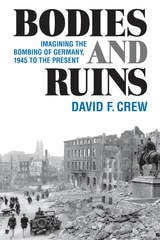
Bodies and Ruins
Imagining the Bombing of Germany, 1945 to the PresentDavid F. Crew
University of Michigan Press, 2017
Bodies and Ruins examines a range of local publications that carried photographic images of German cities destroyed in the air war, images that soon entered the visual memory of World War II. Despite its obvious importance, historians have paid very little attention to the visual representation of the bombing war. This book follows the search for what were considered to be the “right” stories and the “right” pictures of the bombing war in local publications and picture books from 1945 to the present, and is intended for historians as well as general readers interested in World War II, the Allied bombing of German cities, the Holocaust, the history of memory and photographic/visual history.
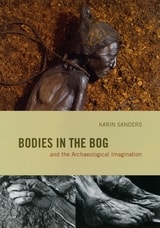
Bodies in the Bog and the Archaeological Imagination
Karin Sanders
University of Chicago Press, 2009
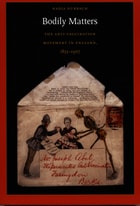
Bodily Matters
The Anti-Vaccination Movement in England, 1853–1907Nadja Durbach
Duke University Press, 2005
Analyzing historical documents on both sides of the vaccination debate, Durbach focuses on the key events and rhetorical strategies of the resistance campaign. She shows that those for and against the vaccine had very different ideas about how human bodies worked and how best to safeguard them from disease. Individuals opposed to mandatory vaccination saw their own and their children’s bodies not as potentially contagious and thus dangerous to society but rather as highly vulnerable to contamination and violation. Bodily Matters challenges the notion that resistance to vaccination can best be understood, and thus easily dismissed, as the ravings of an unscientific “lunatic fringe.” It locates the anti-vaccination movement at the very center of broad public debates in Victorian England over medical developments, the politics of class, the extent of government intervention into the private lives of its citizens, and the values of a liberal society.
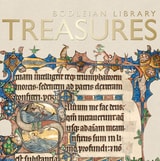
Bodleian Library Treasures
David Vaisey
Bodleian Library Publishing, 2017
Rare books, music, manuscripts, ephemera, and maps, many of the treasures photographed and described for this lavish volume are well-loved around the world, from Jane Austen’s manuscript of The Watsons to notebooks created by the poet Percy Bysshe Shelley, a map of Narnia drawn by C. S. Lewis, and the original manuscript of the renowned children’s work The Wind in the Willows. Others are known for their beauty or historical significance, including the Gutenberg Bible, Magna Carta, and the extraordinary medieval manuscript the Douce Apocalypse. Still others hold poignant stories like the small handwritten book presented as a New Year’s present in 1545 to Katherine Parr by an eleven-year-old stepdaughter who would later become Queen Elizabeth I. Vaisey brings these and other treasures together in chronological order, showcasing the Bodleian Library’s renowned collections.
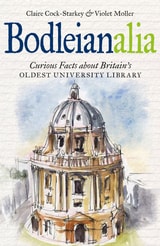
Bodleianalia
Curious Facts about Britain's Oldest University LibraryClaire Cock-Starkey and Violet Moller
Bodleian Library Publishing, 2016
With more than twelve million items and many priceless treasures, including the Gutenberg Bible, Shakespeare’s First Folio, five thirteenth-century copies of Magna Carta, and Tolkien’s original watercolors for The Hobbit, the Bodleian also boasts many strange events and eccentric characters through the ages that contributed to its world-class renown today. From deep within the archives, Cock-Starkey and Moller have compiled a great many lesser-known facts about the Bodleian Library’s fascinating history, organizing them into easily browsable lists, factoids, and statistics.

Bones of Contention
The living archive of Vasil Levski and the making of Bulgaria's national heroMaria Todorova
Central European University Press, 2009

Book and Verse
A Guide to Middle English Biblical LiteratureJames H. Morey
University of Illinois Press, 2000
Book and Verse is an indispensable guide to the variety and extent of biblical literature in England, exclusive of drama and the Wycliffite Bible that appeared between the twelfth and the fifteenth centuries. Entries provide detailed information on how much of what parts of the Bible appear in Middle English and where this biblical material can be found. Comprehensive indexing by name, keyword, and biblical verse allows a researcher to find, for example, all the occurrences of the Flood Story or of the encounter between Elijah and the Widow of Sarephta. An invaluable resource, Book and Verse provides the first easy access to the "popular Bible" assembled before and after John Wyclif's translation of the Vulgate into English.

Book of Beasts
A Facsimile of MS. Bodley 764Christopher de Hamel
Bodleian Library Publishing, 2008
Books against Tyranny
Catalan Publishers under FrancoLaura Vilardell
Vanderbilt University Press, 2022
Author Laura Vilardell examines documents including firsthand witness accounts, correspondence, memoirs, censorship files, newspapers, original interviews, and unpublished material housed in various Spanish archives. As such, Books against Tyranny opens up the field and serves as an informative tool for scholars of Franco's Spain, Catalan social movements, and censorship more generally.

Books of Secrets
Natural Philosophy in England, 1550-1600Allison Kavey
University of Illinois Press, 2007
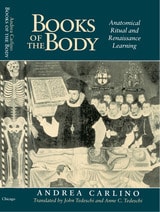
Books of the Body
Anatomical Ritual and Renaissance LearningAndrea Carlino
University of Chicago Press, 1999
In Books of the Body, Andrea Carlino explores the nature and causes of this intellectual inertia. On the one hand, anatomical practice was constrained by a reverence for classical texts and the belief that the study of anatomy was more properly part of natural philosophy than of medicine. On the other hand, cultural resistance to dissection and dismemberment of the human body, as well as moral and social norms that governed access to cadavers and the ritual of their public display in the anatomy theater, also delayed anatomy's development.
A fascinating history of both Renaissance anatomists and the bodies they dissected, this book will interest anyone studying Renaissance science, medicine, art, religion, and society.
Border Mediascapes
Cinematic Itineraries at the Edge of EuropeFrancesco Zucconi
University of Minnesota Press, 2026
How the cinematic gaze reveals the hidden operations of border zones
Examining a variety of documentary films made along the borders of Europe since the turn of the twenty-first century, Border Mediascapes takes a cinematic eye to the technologies employed in governing spatial movement. Working at the intersections of social sciences, political theory, contemporary media, and cinema aesthetics, this book expands our understanding of the border as not just a static political boundary inscribed on a map but a complex, dynamic network of human and nonhuman agents.
Francesco Zucconi asserts that contemporary borders are environments defined by media: a perpetually shifting set of interactions between physical bodies and sensors, surveillance cameras, satellites, mapping programs, digital signage, and cellular devices. Analyzing documentaries filmed by or in collaboration with migrants, Border Mediascapes demonstrates how cinema can be used to reveal the otherwise unseen apparatuses that facilitate systematized practices of recognition, expulsion, and erasure.
As he details the ways specific border technologies measure and identify individuals as part of the larger project of territorial control, Zucconi illustrates the effectiveness of cinema for capturing the entanglement of geopolitics and biopolitics. Viewing the cinematic perspective as simultaneously analytical, critical, and complicit with the new technological frontier, Zucconi shows how the medium can deepen our understanding of borders as sites of power, resistance, and resilience.
Retail e-book files for this title are screen-reader friendly with images accompanied by short alt text and/or extended descriptions.
Borders of Belief
Religious Nationalism and the Formation of Identity in Ireland and TurkeyGregory J. Goalwin
Rutgers University Press, 2022

Borges in Sicily
Journey with a Blind GuideAlejandro Luque
Haus Publishing, 2017
This winding journey features literati both past and present, indigenous and foreign. These characters live alongside Luque’s own comments and observations in a narrative that is rich in historical and personal detail. The writer who inspired this great journey, Borges himself, becomes a character in this narrative that is infused with extracts and reflections from his essays and poetry. Borges in Sicily acts as a travel diary, a guide to the most fascinating places in Sicily, a recounting of Borges’s journey around the island, and a deeply poetic story of Luque’s own adventures. The book also includes twenty-three photographs from the renowned Magnum photographer Ferdinando Scianna, and it won the 1st Premio International del Libros de Viajes.
Bosnia the Good
Tolerance and TraditionRusmir Mahmutcehajic
Central European University Press, 2000

Bosnian Studies
Perspectives from an Emerging FieldDzeneta Karabegovic
University of Missouri Press, 2023
Diaspora communities have formed in North America (especially in St. Louis), Europe, and Australia because of war and displacement, and have themselves become a considerable topic of study spanning the disciplines of anthropology, migration studies, political science, memory studies, conflict and security studies, psychology, and geography.
This volume seeks to illuminate how Bosnian migrant and diaspora scholars are contributing to the development of Bosnian Studies. The authors included in this volume are either writing from their (new) home bases in Australia, Austria, Canada, Switzerland, the United Kingdom, and the United States, among others, or they have returned to Bosnia after a period of migration. Their chapters have distinct entry points of inquiry, demonstrating how scholars have integrated Bosnia as a theme across the range of disciplines in which they are situated. The selections included in the volume range from literary analysis to personal memoirs of the conflict, from studies of heritage and identity to political science analysis of diaspora voting, to genocide studies and questions of (or lack of) ethics in the growing field of Bosnian Studies.
Both from the Ears and Mind
Thinking about Music in Early Modern EnglandLinda Phyllis Austern
University of Chicago Press, 2020
Botticelli Blue Skies
An American in FlorenceMerrill Joan Gerber
University of Wisconsin Press, 2002
When writer Merrill Joan Gerber is invited to join her husband, a history professor, as he takes a class of American college students to study in Florence, Italy, she feels terrified at the idea of leaving her comforts, her friends, and her aged mother in California. Her husband tries to assure her that her fear of Italy—and her lack of knowledge of the Italian language—will be offset by the discoveries of travel. "I can’t tell you exactly what will happen, but something will. And it will all be new and interesting." Botticelli Blue Skies is the tale of a woman who readily admits to fear of travel, a fear that many experience but are embarrassed to admit. When finally she plunges into the new adventure, she describes her experiences in Florence with wit, humor, and energy.
Instead of sticking to the conventional tourist path, Gerber follows her instincts. She makes discoveries without tour guides droning in her ear and reclaims the travel experience as her own, taking time to shop in a thrift shop, eat in a Chinese restaurant that serves "Dragon chips," make friends with her landlady who turns out to be a Countess, and visit the class of a professor at the university. She discovers a Florence that is not all museums and wine. With newfound patience and growing confidence, Gerber makes her way around Florence, Venice, and Rome. She visits famous places and discovers obscure ones—in the end embracing all that is Italian. Botticelli Blue Skies (accompanied by the author’s own photographs) is an honest, lyrical, touching account of the sometimes exhausting, often threatening, but always enriching physical and emotional challenge that is travel.
Bourgeois Dignity
Why Economics Can't Explain the Modern WorldDeirdre Nansen McCloskey
University of Chicago Press, 2010
The big economic story of our times is not the Great Recession. It is how China and India began to embrace neoliberal ideas of economics and attributed a sense of dignity and liberty to the bourgeoisie they had denied for so long. The result was an explosion in economic growth and proof that economic change depends less on foreign trade, investment, or material causes, and a whole lot more on ideas and what people believe.
Or so says Deirdre N. McCloskey in Bourgeois Dignity, a fiercely contrarian history that wages a similar argument about economics in the West. Here she turns her attention to seventeenth- and eighteenth-century Europe to reconsider the birth of the industrial revolution and the rise of capitalism. According to McCloskey, our modern world was not the product of new markets and innovations, but rather the result of shifting opinions about them. During this time, talk of private property, commerce, and even the bourgeoisie itself radically altered, becoming far more approving and flying in the face of prejudices several millennia old. The wealth of nations, then, didn’t grow so dramatically because of economic factors: it grew because rhetoric about markets and free enterprise finally became enthusiastic and encouraging of their inherent dignity.
An utterly fascinating sequel to her critically acclaimed book The Bourgeois Virtues, Bourgeois Dignity is a feast of intellectual riches from one of our most spirited and ambitious historians—a work that will forever change our understanding of how the power of persuasion shapes our economic lives.
Bourgeois Equality
How Ideas, Not Capital or Institutions, Enriched the WorldDeirdre Nansen McCloskey
University of Chicago Press, 2016
Why? Most economists—from Adam Smith and Karl Marx to Thomas Piketty—say the Great Enrichment since 1800 came from accumulated capital. McCloskey disagrees, fiercely. “Our riches,” she argues, “were made not by piling brick on brick, bank balance on bank balance, but by piling idea on idea.” Capital was necessary, but so was the presence of oxygen. It was ideas, not matter, that drove “trade-tested betterment.” Nor were institutions the drivers. The World Bank orthodoxy of “add institutions and stir” doesn’t work, and didn’t. McCloskey builds a powerful case for the initiating role of ideas—ideas for electric motors and free elections, of course, but more deeply the bizarre and liberal ideas of equal liberty and dignity for ordinary folk. Liberalism arose from theological and political revolutions in northwest Europe, yielding a unique respect for betterment and its practitioners, and upending ancient hierarchies. Commoners were encouraged to have a go, and the bourgeoisie took up the Bourgeois Deal, and we were all enriched.
Few economists or historians write like McCloskey—her ability to invest the facts of economic history with the urgency of a novel, or of a leading case at law, is unmatched. She summarizes modern economics and modern economic history with verve and lucidity, yet sees through to the really big scientific conclusion. Not matter, but ideas. Big books don’t come any more ambitious, or captivating, than Bourgeois Equality.

Brave new world
Imperial and democratic nation-building in Britain between the warsVolume editor Laura Beers and Geraint Thomas
University of London Press, 2012

Bread and Work
The Experience of Unemployment 1918-39Matt Perry
Pluto Press, 2000
Looking beyond statistics and economic cycles, Perry investigates the human impact of unemployment. He uncovers the experience of being jobless from the perspective of those who lived through it, their employers and their communities. He uses oral history, memoirs, literary accounts, and newspaper articles to reveal the reality of unemployment.
Perry argues that the scale of the crisis has been minimised by historians who have tended to emphasise that prolonged unemployment was the problem of the distressed fringe.
Finally, Perry argues that the lessons of the 1930s have direct relevance today since the structural problems of industrial capitalism remain inherent.

Bread of Dreams
Food and Fantasy in Early Modern EuropePiero Camporesi
University of Chicago Press, 1989
"Camporesi is as much a poet as a historian. . . . His appeal is to the senses as well as to the mind. . . . Fascinating in its details and compelling in its overall message."—Vivian Nutton, Times Literary Supplement
"It is not often that an academic monograph in history is also a book to fascinate the discriminating general reader. Bread of Dreams is just that."—Kenneth McNaught, Toronto Star
"Not religion but bread was the opiate of the poor, Mr. Camporesi argues. . . . Food has always been a social and mythological construct that conditions what we vainly imagine to be matters of personal taste. Our hunger for such works should tell us that food is not only good but essential to think and to read as if our lives depended on it, which they do."—Betty Fussell, New York Times Book Review
Breadwinners and Citizens
Gender in the Making of the French Social ModelLaura Levine Frader
Duke University Press, 2008
Frader’s analysis moves between the everyday lives of ordinary working women and men and the actions of national policymakers, political parties, and political movements, including feminists, pro-natalists, and trade unionists. In the years following World War I, the many women and an increasing number of immigrant men in the labor force competed for employment and pay. Family policy was used not only to encourage reproduction but also to regulate wages and the size of the workforce. Policies to promote married women’s and immigrants’ departure from the labor force were more common when jobs were scarce, as they were during the Depression. Frader contends that gender and ethnicity exerted a powerful and unacknowledged influence on French social policy during the Depression era and for decades afterward.
Breaking the South Slav Dream
The Rise and Fall of YugoslaviaKate Hudson
Pluto Press, 2003

Brexit and Beyond
Rethinking the Futures of EuropeEdited by Benjamin Martill and Uta Staiger
University College London, 2018
Drawing the discussion of Brexit beyond Britain, Benjamin Martill, Uta Staiger, and a team of twenty-eight contributors explore the consequences for Europe and the European Union. Marshaling the perspectives and methodologies of a diverse range of disciplines, the contributors chart the likely effects of Brexit on institutional relations, law, political economy, foreign affairs, democratic governance, and the idea of Europe itself. While the contributors at times offer divergent predictions for the future of Europe after Brexit, they share the conviction that careful analysis is in needed—now more than ever—if we are to understand what lies ahead.
Brexit and Beyond is the first book to focus on the broader consequences of Brexit, and its clear, comprehensive, and trenchant analysis will be invaluable to understanding the complex effects.
Bringing the Empire Back Home
France in the Global AgeHerman Lebovics
Duke University Press, 2004
In Bringing the Empire Back Home, the inventive cultural historian Herman Lebovics provides a riveting account of how intense disputes about what it means to be French have played out over the past half-century, redefining Paris, the regions, and the former colonies in relation to one another and the world at large. In a narrative populated with peasants, people from the former colonies, museum curators, former colonial administrators, left Christians, archaeologists, anthropologists, soccer players and their teenage fans, and, yes, leading government officials, Lebovics reveals contemporary French society and cultures as perhaps the West’s most important testing grounds of pluralism and assimilation. A lively cultural history, Bringing the Empire Back Home highlights not only the political significance of France’s efforts to synthesize the regional, national, European, ethnic postcolonial, and global but also the chaotic beauty of the endeavor.
Bringing the Empire Home
Race, Class, and Gender in Britain and Colonial South AfricaZine Magubane
University of Chicago Press, 2003
Bringing the Empire Home tracks colonial images of blackness from South Africa to England and back again to answer questions such as these. Before the mid-1800s, black Africans were considered savage to the extent that their plight mirrored England's internal Others—women, the poor, and the Irish. By the 1900s, England's minority groups were being defined in relation to stereotypes of black South Africans. These stereotypes, in turn, were used to justify both new capitalist class and gender hierarchies in England and the subhuman treatment of blacks in South Africa. Bearing this in mind, Zine Magubane considers how marginalized groups in both countries responded to these racialized representations.
Revealing the often overlooked links among ideologies of race, class, and gender, Bringing the Empire Home demonstrates how much black Africans taught the English about what it meant to be white, poor, or female.
Britain and World Power since 1945
Constructing a Nation's Role in International PoliticsDavid M. McCourt
University of Michigan Press, 2014

Britain in Transition
The Twentieth CenturyAlfred F. Havighurst
University of Chicago Press, 1985
Britain's Imperial Histories
Jeremy black
St. Augustine's Press, 2025
Military historian Jeremy Black continues his review of the global context of martial conflict and spatial conquest into the modern era (16th–20th centuries), focusing on the British empire and its lasting effect on this landscape. Black offers a representation of the "imperial experience" that is eye-opening for a generation of readers who associate this with a strictly negative connotation. But the notion of an empire is not understood at all if this is true. Indeed, not only is there "no one type of empire, no prototype," the basis of empire is much more 'order' than it is 'invasion.' Furthermore, reflecting on the unavoidable cultural and sociological symbiosis and transfer, Black makes the case that in all instances of influence and encounter, sameness between peoples never results. But how does one distinguish influence from control? What are the long-term benefits among peoples? "To many today, empire might seem obvious: governors with ostrich-feathers in their colonial garb ruling non-White peoples; but this scarcely describes the situation across time and place."
Why did the European empires ultimately fall? When approaching this question, Britain's Imperial Histories proposes that the perspective of "making and remaking of the international system" be made distinct from the "rational pursuit of power and wealth and the use of technology." As seen in earlier work, Black's brilliance is centered in his capacity to incorporate the complexity of war and its battles in his assessments, while never neglecting the fact that wars themselves have specific and broad contexts that must be read thoroughly.
Another highlight of the present work includes more insight into the British-American relationship and American political identity. "If the British empire is blamed for many of the aspects of modernization and globalization, is also serves as a way of offering historical depth to a critique of American power." Yet he is also adept at drawing in Asia into the study and does so with uncommon acumen. This book provides an approach to history that has been neglected, especially in the New World, and connects the present to the past with a kind of hermeneutical responsibility that has been of late abandoned.
Britain, France and the Decolonization of Africa
Future Imperfect?Edited by Andrew W.M. Smith and Chris Jeppesen
University College London, 2017
British History 1600-2000
Expansion in PerspectiveEdited by Kazuhiko Kondo
University of London Press, 2010
British Romanticism and Prison Reform
Jonas Cope
Bucknell University Press, 2025
In eighteenth-century Britain, criminals were routinely whipped, branded, hanged, or transported to America. Only in the last quarter of the century—with the War of American Independence and legal and sociopolitical challenges to capital punishment—did the criminal justice system change, resulting in the reformed prison, or penitentiary, meant to educate, rehabilitate, and spiritualize even hardened felons. This volume is the first to explore the relationship between historical penal reform and Romantic-era literary texts by luminaries such as Godwin, Keats, Byron, and Austen. The works examined here treat incarceration as ambiguous: prison walls oppress and reinforce the arbitrary power of legal structures but can also heighten meditation, intensify the imagination, and awaken the conscience. Jonas Cope skillfully traces the important ideological work these texts attempt: to reconcile a culture devoted to freedom with the birth of the modern prison system that presents punishment as a form of rehabilitation.
Published by Bucknell University Press. Distributed worldwide by Rutgers University Press.
British Soldiers, American War
Voices of the American RevolutionDonald N. Hagist
Westholme Publishing, 2012
Nine Rare and Fascinating First-Person Profiles of Soldiers Who Fought for the British Crown
Much has been written about the colonists who took up arms during the American Revolution and the army they created. Far less literature, however, has been devoted to their adversaries. The professional soldiers that composed the British army are seldom considered on a personal level, instead being either overlooked or inaccurately characterized as conscripts and criminals. Most of the British Redcoats sent to America in defense of their government’s policies were career soldiers who enlisted voluntarily in their late teens or early twenties. They came from all walks of British life, including those with nowhere else to turn, those aspiring to improve their social standing, and all others in between. Statistics show that most were simply hardworking men with various amounts of education who had chosen
the military in preference to other occupations. Very few of these soldiers left writings from which we can learn their private motives and experiences.
British Soldiers, American War: Voices of the American Revolution is the first collection of personal narratives by British common soldiers ever assembled and published. Author Don N. Hagist has located first-hand accounts of nine soldiers who served in America in the 1770s and 1780s. In their own words we learn of the diverse population—among them a former weaver, a boy who quarelled with his family, and a man with wanderlust—who joined the army and served tirelessly and dutifully, sometimes faithfully and sometimes irresolutely, in the uniform of their nation. To accompany each narrative, the author provides a contextualizing essay based on archival research giving background on the soldier and his military service. Taken as a whole these true stories reveal much about the individuals who composed what was, at the time, the most formidable fighting force in the world.
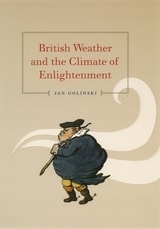
British Weather and the Climate of Enlightenment
Jan Golinski
University of Chicago Press, 2007
Enlightenment inquiries into the weather sought to impose order on a force that had the power to alter human life and social conditions. British Weather and the Climate of Enlightenment reveals how a new sense of the national climate emerged in the eighteenth century from the systematic recording of the weather, and how it was deployed in discussions of the health and welfare of the population. Enlightened intellectuals hailed climate’s role in the development of civilization but acknowledged that human existence depended on natural forces that would never submit to rational control.
Reading the Enlightenment through the ideas, beliefs, and practices concerning the weather, Jan Golinski aims to reshape our understanding of the movement and its legacy for modern environmental thinking. With its combination of cultural history and the history of science, British Weather and the Climate of Enlightenment counters the claim that Enlightenment progress set humans against nature, instead revealing that intellectuals of the age drew characteristically modern conclusions about the inextricability of nature and culture.

Broadcasters and Citizens in Europe
Trends in Media Accountability and Viewer ParticipationEdited by Paolo Baldi and Uwe Hasebrink
Intellect Books, 2007
European media is experiencing a paradoxical form of growth: as media outlets surge and new technologies develop, major broadcasting companies are consolidating like never before. In Broadcasters and Citizens in Europe, an esteemed group of contributors look at what this paradox might mean for the European community. Are broadcasting audiences better informed than they were twenty years ago? And how has the advent of the European Union changed media practices? This essential volume explores a new media world in the context of a continent in flux.
Brothers and Strangers
The East European Jew in German and German Jewish Consciousness, 1800–1923Steven E. Aschheim
University of Wisconsin Press, 1983
Brothers and Strangers traces the history of German Jewish attitudes, policies, and stereotypical images toward Eastern European Jews, demonstrating the ways in which the historic rupture between Eastern and Western Jewry developed as a function of modernism and its imperatives. By the 1880s, most German Jews had inherited and used such negative images to symbolize rejection of their own ghetto past and to emphasize the contrast between modern “enlightened” Jewry and its “half-Asian” counterpart. Moreover, stereotypes of the ghetto and the Eastern Jew figured prominently in the growth and disposition of German anti-Semitism. Not everyone shared these negative preconceptions, however, and over the years a competing post-liberal image emerged of the Ostjude as cultural hero. Brothers and Strangers examines the genesis, development, and consequences of these changing forces in their often complex cultural, political, and intellectual contexts.
Brussels, the Gentle Monster
or the Disenfranchisement of EuropeHans Magnus Enzensberger
Seagull Books, 2011
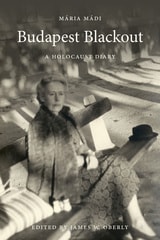
Budapest Blackout
A Holocaust Diaryby Máriá Mádi, edited by James W. Oberly
University of Wisconsin Press, 2023
Mádi’s family donated the entire collection of her diaries to the US Holocaust Memorial Museum. This edition transcribes a selection of Mádi’s writings focusing on the period of March 1944 to November 1945, from the Nazi invasion and occupation of Hungary, through the Battle of Budapest, to the ensuing Soviet occupation. While bearing witness to the catastrophe in Hungary, Mádi hid a Jewish family in her small flat from October 1944 to February 1945. She received a posthumous Righteous among Nations Medal from Yad Vashem, the World Holocaust Remembrance Center.
Editorial commentary by James W. Oberly situates Mádi’s observations, and a critical introduction by the Holocaust scholar András Lénárt outlines the wider sociopolitical context in which her diaries gain meaning.
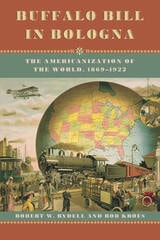
Buffalo Bill in Bologna
The Americanization of the World, 1869-1922Robert W. Rydell and Rob Kroes
University of Chicago Press, 2005
Buffalo Bill in Bologna reveals that the process of globalizing American mass culture began as early as the mid-nineteenth century. In fact, by the end of World War I, the United States already boasted an advanced network of culture industries that served to promote American values. Rydell and Kroes narrate how the circuses, amusement parks, vaudeville, mail-order catalogs, dime novels, and movies developed after the Civil War—tools central to hastening the reconstruction of the country—actually doubled as agents of American cultural diplomacy abroad. As symbols of America's version of the "good life," cultural products became a primary means for people around the world, especially in Europe, to reimagine both America and themselves in the context of America's growing global sphere of influence. Paying special attention to the role of the world's fairs, the exporting of Buffalo Bill's Wild West show to Europe, the release of The Birth of a Nation, and Woodrow Wilson's creation of the Committee on Public Information, Rydell and Kroes offer an absorbing tour through America's cultural expansion at the turn of the century. Buffalo Bill in Bologna is thus a tour de force that recasts what has been popularly understood about this period of American and global history.

Building for the Army in the Age of Empires
Modern Military Infrastructure and the Urban ExperienceDragan Damjanovic
Central European University Press, 2027
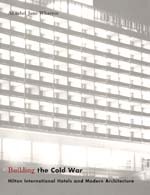
Building the Cold War
Hilton International Hotels and Modern ArchitectureAnnabel Jane Wharton
University of Chicago Press, 2001
Building the Cold War examines the architectural means by which the Hilton was written into the urban topographies of the major cities of Europe and the Middle East as an effective representation of the United States. Between 1953 and 1966, Hilton International built sixteen luxury hotels abroad. Often the Hilton was the first significant modern structure in the host city, as well as its finest hotel. The Hiltons introduced a striking visual contrast to the traditional architectural forms of such cities as Istanbul, Cairo, Athens, and Jerusalem, where the impact of its new architecture was amplified by the hotel's unprecedented siting and scale. Even in cities familiar with the Modern, the new Hilton often dominated the urban landscape with its height, changing the look of the city. The London Hilton on Park Lane, for example, was the first structure in London that was higher than St. Paul's cathedral.
In his autobiography, Conrad N. Hilton claimed that these hotels were constructed for profit and for political impact: "an integral part of my dream was to show the countries most exposed to Communism the other side of the coin—the fruits of the free world." Exploring everything the carefully drafted contracts for the buildings to the remarkable visual and social impact on their host cities, Wharton offers a theoretically sophisticated critique of one of the Cold War's first international businesses and demonstrates that the Hilton's role in the struggle against Communism was, as Conrad Hilton declared, significant, though in ways that he could not have imagined.
Many of these postwar Hiltons still flourish. Those who stay in them will learn a great deal about their experience from this new assessment of hotel space.
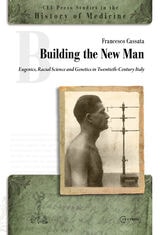
Building the New Man
Eugenics, Racial Science and Genetics in Twentieth-Century ItalyFrancesco Cassata
Central European University Press, 2011
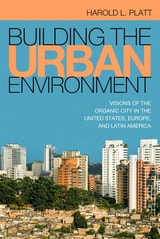
Building the Urban Environment
Visions of the Organic City in the United States, Europe, and Latin AmericaHarold L Platt
Temple University Press, 2015
Building the Urban Environment is a comparative study of the contestation among planners, policymakers, and the grassroots over the production and meaning of urban space. Award-winning historian Harold Platt presents case studies of seven cities, including Rotterdam, Chicago, and Sao Paulo, to show how, over time, urban life created hybrid spaces that transformed people, culture, and their environments.
As Platt explains, during the post-1945 race to technological modernization, policymakers gave urban planners of the International Style extraordinary influence to build their utopian vision of a self-sustaining “organic city.” However, in the 1960s, they faced a revolt of the grassroots. Building the Urban Environment traces the rise and fall of the Modernist planners during an era of Cold War, urban crisis, unnatural disasters, and global restructuring in the wake of the oil-energy embargo of the ’70s.
Ultimately, Platt provides a way to measure different visions of the postwar city against actual results in terms of the built environment, contrasting how each city created a unique urban space.