Results by title
2646 books match the query 'History & Criticism' and 137 start with b
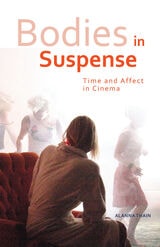
Bodies in Suspense
Time and Affect in CinemaAlanna Thain
University of Minnesota Press, 2017
Bodies in Suspense presents a powerful new way to think through postdigital cinema and the affective turn in critical theory. According to Alanna Thain, suspense films allow us to experience the relation between two bodies: that of the film and that of the viewer. Through the “time machine” of suspense, film form, gender, genre, and spectatorship are revealed in innovative and different ways. These films not only engage us directly in ethical concerns, but also provide a key for understanding corporeal power in the digital era.
Offering a new framework for understanding cinematic suspense, Bodies in Suspense argues that the “body in time” enables us to experience the temporal dimension of the body directly. This is the first book to link two contemporary frames of analysis: questions of cinematic temporality and contemporary affect theory. Thain conducts close readings of influential suspense films by Alfred Hitchcock, David Lynch, Christian Marclay, Rian Johnson, and Lou Ye, and sets forth a compelling new theory of cinema, reading for the productivity of the “crime of time” that stages the duplicity of cinematic bodies. Through these films that foreground doubled characters and looping, Thain explores Gilles Deleuze’s claim that “the direct time-image is the phantom which has always haunted cinema.”
A vital new addition to film theory, corporeality and affect theory, feminist theory, and the philosophy of time—and one of the first books to explore David Lynch’s Hollywood trilogy—Bodies in Suspense asks us to pay attention, above all, to the ways in which the condition of spectatorship creates a doubling sensation with important philosophical repercussions.
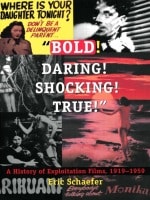
Bold! Daring! Shocking! True!
A History of Exploitation Films, 1919-1959Eric Schaefer
Duke University Press, 1999
Bold! Daring! Shocking! True! is a meticulously researched, interdisciplinary study that is informed by a wide range of sources—including both mainstream and industry newspapers and periodicals, archival accounts, personal interviews, and the films themselves. Schaefer begins by exploring the unique mode of production of exploitation movies, their distribution, and the outrageous exhibition practices that were rooted in the traditions of sideshows and carnivals. His close analysis of dozens of films, such as The Road to Ruin, Modern Motherhood, One Way Ticket to Hell, and The Wages of Sin demonstrates that these films were more than simply “bad” movies. By situating exploitation films in a historical context and organizing them according to the social problems they addressed, Schaefer shows how they evolved during a period of forty years and how, during that time, they shaped public policies and attitudes. Finally, he focuses on the changes in the postwar American film industry that led to the decline of the classical exploitation film and set the stage for the rise of “sexploitation” in the 1960s.
Engagingly written, illustrated with rare photographs, posters, production stills, and ad slicks, and offering a full filmography, Bold! Daring! Shocking! True! reveals a forgotten side of film history and American culture. It will delight and inform those interested in film history, cultural studies, American studies and history, and the many fans of exploitation films.
Bollywood’s New Woman
Liberalization, Liberation, and Contested BodiesMegha Anwer
Rutgers University Press, 2021
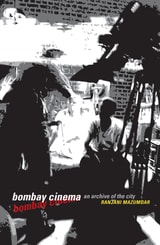
Bombay Cinema
An Archive of the CityRanjani Mazumdar
University of Minnesota Press, 2007
In this analysis of the cinematic city, Mazumdar reveals a complex postnationalist world, convulsed by the social crisis of the 1970s and transformed by the experience of globalization in the 1990s. She argues that the upheaval of postcolonial nationalism led to Bombay cinema’s articulation of urban life in entirely new terms. Specifically, the place of the village in the imaginary constitution of anticolonial nationalism gave way to a greater acknowledgment, even centrality, of urban space. Bombay Cinema takes the reader on an inventive journey through a cinematic city of mass crowds, violence, fashion, architectural fantasies, and subcultural identities. Moving through the world of gangsters and vamps, families and drifters, and heroes and villains, Bombay Cinema explores an urban landscape marked by industrial decline, civic crisis, working-class disenchantment, and diverse street life.Combining the anecdotal with the theoretical, the philosophical with the political, and the textual with the historical, Bombay Cinema leads the reader into the heart of the urban labyrinth in India, revising and deepening our understanding of both the city and the cinema.
"A landmark study—carefully researched, well organized and offering refreshingly uncondescending and strikingly insightful discussions of mainstream films—that deserves to be read by anyone interested in India's popular cinema or its contemporary urban life." —Journal of Asian Studies
"Bombay Cinema is an exciting and important contribution to a field that has, to date, been under researched and under theorized. Lively, provocative and richly suggestive, it will also serve as a surefire incentive to watch those films all over again." —Screen
"Here, at last, is a book length study on Cinema in India that does not get locked into a dance of hermetic closure between what transpires on screen and a set of stock off screen textual and cultural references, but more importantly, walks the streets where the films are set, looks at shop windows, publicity material, costumes, fashion, architecture, telecommunications and the concrete materiality that surrounds the film object." —Seminar
"Bombay Cinema is lucid, provocative, stylish and substantial. It is an illuminating scholarly study that spares no effort to bring Bombay cinema out of the academic closet." —The Book Review India
"Departing from the obsession that Film Studies in India has displayed with the idea of cinema as a national allegory, the book convincingly argues for the need to examine the city's hidden archive as one that cannot be subsumed within the sign of the national." —Biblio
"Mazumdar has a great capacity to discuss Indian cinema, with a brilliant grasp of its political, historical, and aesthetic developments, but equally she is well attuned to the interests and ruptures in the academic discourse of film and cinema studies."—Film International
"Mazumdar's experience as a filmmaker allowed her to offer significant readings of not just the narratives and character development in the films, but of the cinematography, mise-en-scene, and other technical and performance aspects of production." —Journal of Popular Culture
"At once about Hindi films, spatial practices, urban modernity and globalization . . . the strength of Bombay Cinema lies in bringing all of them together in a productive conversation.” —Economic and Political Weekly
"Bombay Cinema is methodologically challenging in its deployment of moments rather than discursiveformations of film as text. The book also refuses to read film alone, but interprets the medium alongside the detailed insights of people involved in making them, and with the recent history of Bombay, within which the film industry is located. In Mazumdar's evocative reading of the films she engages with, the cinematic city becomes the space of critique of the nation, the site of the ruin of the modern nationalist project." —Contemporary South Asia
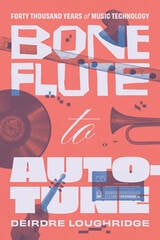
Bone Flute to Auto-Tune
Forty Thousand Years of Music TechnologyDeirdre Loughridge
University of Chicago Press, 2026
An accessible history of music technology from the earliest days to the present.
For more than forty thousand years, humans have been using technologies simple and complex to fashion instruments for making music, the earliest surviving examples being simple bone flutes. The first book to offer a history of western music through the lens of tools, Bone Flute to Auto-Tune explores the relationship between music and technology from the Paleolithic Age to the present day. Taking an expansive view of music technology, Deirdre Loughridge develops critical perspectives on on the ways the past is built into the present, the affordances and constraints of tools, and the trade-offs made in adopting one tool rather than another. By examining music-technological transitions from across history, including the violin, piano, cymbal, electric guitar, and synthesizer, Bone Flute to Auto-Tune shows how earlier eras have been built into later technologies, influencing not only the sound of our music but also how our tools can both help and hinder us.
The result is a music history attuned to the possibilities that new technologies open up or reveal and those they foreclose or conceal, and that considers what is gained and lost in the transition from one technology to another. By identifying turning points and trade-offs, a long historical perspective enables us to see alternate paths along which music technologies might have developed, and to grapple with our own moment in the ongoing interplay between technological change and the enduring human need for music.
Bong Joon Ho
Joseph Jonghyun Jeon
University of Illinois Press, 2024
Insightful and engaging, Bong Joon Ho offers an up-to-date analysis of the genre-bending international director.
Book Reports
A Music Critic on His First Love, Which Was ReadingRobert Christgau
Duke University Press, 2019
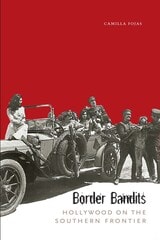
Border Bandits
Hollywood on the Southern FrontierBy Camilla Fojas
University of Texas Press, 2008
The southern frontier is one of the most emotionally charged zones in the United States, second only to its historical predecessor and partner, the western frontier. Though they span many genres, border films share common themes, trace the mood swings of public policy, and shape our cultural agenda.
In this examination, Camilla Fojas studies how major Hollywood films exploit the border between Mexico and the United States to tell a story about U.S. dominance in the American hemisphere. She charts the shift from the mythos of the open western frontier to that of the embattled southern frontier by offering in-depth analyses of particular border films, from post-World War II Westerns to drug-trafficking films to contemporary Latino/a cinema, within their historical and political contexts.
Fojas argues that Hollywood border films do important social work by offering a cinematic space through which viewers can manage traumatic and undesirable histories and ultimately reaffirm core "American" values. At the same time, these border narratives delineate opposing values and ideas.
Latino border films offer a critical vantage onto these topics; they challenge the presumptions of U.S. nationalism and subsequent cultural attitudes about immigrants and immigration, and often critically reconstruct their Hollywood kin.
By analyzing films such as Duel in the Sun, The Wild Bunch, El Norte, The Border, Traffic, and Brokeback Mountain, Fojas demands that we reexamine the powerful mythology of the Hollywood borderlands. This detailed scrutiny recognizes that these films are part of a national narrative comprised of many texts and symbols that create the myth of the United States as capital of the Americas.
Border Cinema
Reimagining Identity through AestheticsEdited by Monica Hanna and Rebecca A. Sheehan
Rutgers University Press, 2019
Boston Mass-Mediated
Urban Space and Culture in the Digital AgeStanley Corkin
University of Massachusetts Press, 2024
In the mid-nineteenth century, Boston fashioned itself as a global hub. By the early 1970s, it was barely a dot on the national picture. It had gained a reputation as a decaying city rife with crime and dysfunctional politics, as well as decidedly retrograde race relations, prominently exemplified by white resistance to school integration. Despite this historical ebb in its national and international presence, it still possessed the infrastructure—superb educational institutions such as Harvard and MIT, world-class sports teams like the Celtics and Red Sox, powerful media outlets like The Boston Globe, and extensive shipping capacity—required to eventually thrive in an age of global trade and mass communication.
In Boston Mass-Mediated, Stanley Corkin explores the power of mass media to define a place. He examines the tensions between the emergent and prosperous city of the late twentieth and early twenty-first centuries and its representation in a range of media genres such as news journalism, professional sports broadcasting, and popular films like Mystic River and The Departed. This mass media, with its ever-increasing digital reach, has emphasized a city restricted by tropes suggestive of an earlier Boston—racism, white ethnic crime, Catholicism, and a pre-modern insularity—even as it becomes increasingly international and multicultural. These tropes mediate our understanding and experience of the city. Using Boston as a case study, Corkin contends that our contemporary sense of place occurs through a media saturated world, a world created by the explosion of digital technology that is steeped in preconceptions.
Both from the Ears and Mind
Thinking about Music in Early Modern EnglandLinda Phyllis Austern
University of Chicago Press, 2020
Bound for America
Three British ComposersNicholas Temperley
University of Illinois Press, 2002
Brain Is The Screen
Deleuze and the Philosophy of CinemaGregory Flaxman
University of Minnesota Press, 2000
Brazilian Women's Filmmaking
From Dictatorship to DemocracyLeslie Marsh
University of Illinois Press, 2012
At most recent count, there are no fewer than forty-five women in Brazil directing or codirecting feature-length fiction or documentary films. In the early 1990s, women filmmakers in Brazil were credited for being at the forefront of the rebirth of filmmaking, or retomada, after the abolition of the state film agency and subsequent standstill of film production. Despite their numbers and success, films by Brazilian women directors are generally absent from discussions of Latin American film and published scholarly works.
Breaking Bad and Cinematic Television
Angelo Restivo
Duke University Press, 2019
Breaks in the Air
The Birth of Rap Radio in New York CityJohn Klaess
Duke University Press, 2022
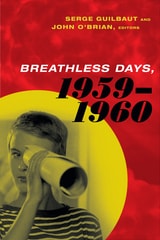
Breathless Days, 1959-1960
Serge Guilbaut and John O'Brien, editors
Duke University Press, 2017
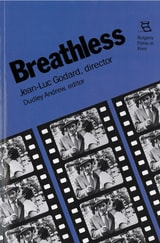
Breathless
Jean-Luc Godard, DirectorDudley Andrew
Rutgers University Press, 1988
In his introduction, Dudley Andrew brilliantly explains what Godard set out to accomplish in Breathless. He illuminates the intertextual and cultural references of the film and the tensions within it between tradition and innovation. This volume also features, for the first time in English, the complete and accurate continuity script of Breathless, together with Francois Truffaut's surprisingly detailed original treatment. Also included are an in-depth selection of reviews and criticism in French and English; a brief biographical sketch of the director's life that covers the development of his career, as well as a filmography and selected bibliography.
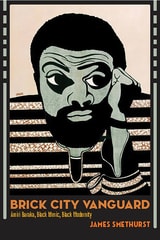
Brick City Vanguard
Amiri Baraka, Black Music, Black ModernityJames Smethurst
University of Massachusetts Press, 2020
Amiri Baraka is unquestionably the most recognized leader of the Black Arts Movement of the 1960s and 1970s, and one of the key literary and cultural figures of the postwar United States. While Baraka's political and aesthetic stances changed considerably over the course of his career, Brick City Vanguard demonstrates the continuity in his thinking about the meaning of black music in the material, psychic, and ideological development of black people. Drawing on primary texts, paratexts (including album liner notes), audio and visual recordings, and archival sources, James Smethurst takes a new look at how Baraka's writing on and performance of music envisioned the creation of an African American people or nation, as well as the growth and consolidation of a black working class within that nation, that resonates to this day. This vision also provides a way of understanding the encounter of black people with what has been called “the urban crisis” and a projection of a liberated black future beyond that crisis.
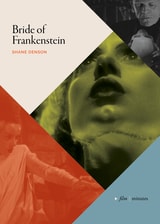
Bride of Frankenstein
Shane Denson
Lever Press, 2025
Volumes in the film|minutes series cut up films into segments of exactly one minute and transform each minute into an innovative tool for thinking with the film. Each volume works rigorously with the concept of “the minute” as a non-cinematic scale/quantity, a means to zoom in on (dis)orderly fragments that do not necessarily respect the confinements of cinematic form or meaning. As a critical practice, the focus on minutes causes disruptions and displacement that create novel connections and perspectives, and uncovers hidden traces, making it possible to watch each film anew.
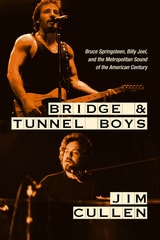
Bridge and Tunnel Boys
Bruce Springsteen, Billy Joel, and the Metropolitan Sound of the American CenturyJim Cullen
Rutgers University Press, 2024
Bridge and Tunnel Boys compares the life and work of Long Islander Joel and Asbury Park, New Jersey, native Springsteen, considering how each man forged a distinctive sound that derived from his unique position on the periphery of the Big Apple. Locating their music within a longer tradition of the New York metropolitan sound, dating back to the early 1900s, cultural historian Jim Cullen explores how each man drew from the city’s diverse racial and ethnic influences. His study explains how, despite frequently releasing songs that questioned the American dream, Springsteen and Joel were able to appeal to wide audiences during both the national uncertainty of the 1970s and the triumphalism of the Reagan era. By placing these two New York–area icons in a new context, Bridge and Tunnel Boys allows us to hear their most beloved songs with new appreciation.
Bright Signals
A History of Color TelevisionSusan Murray
Duke University Press, 2018
Bring on the Books for Everybody
How Literary Culture Became Popular CultureJim Collins
Duke University Press, 2010
Collins explores how digital technologies and the convergence of literary, visual, and consumer cultures have changed what counts as a “literary experience” in phenomena ranging from lush film adaptations such as The English Patient and Shakespeare in Love to the customer communities at Amazon. Central to Collins’s analysis and, he argues, to contemporary literary culture, is the notion that refined taste is now easily acquired; it is just a matter of knowing where to access it and whose advice to trust. Using recent novels, he shows that the redefined literary landscape has affected not just how books are being read, but also what sort of novels are being written for these passionate readers. Collins connects literary bestsellers from The Jane Austen Book Club and Literacy and Longing in L.A. to Saturday and The Line of Beauty, highlighting their depictions of fictional worlds filled with avid readers and their equations of reading with cultivated consumer taste.
Bringing Up Baby
Howard Hawks, DirectorMast, Gerald
Rutgers University Press, 1988
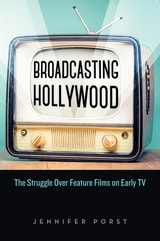
Broadcasting Hollywood
The Struggle over Feature Films on Early TVJennifer Porst
Rutgers University Press, 2021
Broadcasting Modernity
Cuban Commercial Television, 1950-1960Yeidy M. Rivero
Duke University Press, 2015
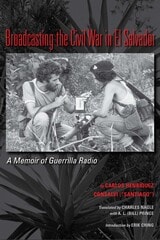
Broadcasting the Civil War in El Salvador
A Memoir of Guerrilla RadioBy Carlos Henriquez Consalvi ("Santiago")
University of Texas Press, 2010
During the 1980s war in El Salvador, Radio Venceremos was the main news outlet for the Frente Farabundo Martí para la Liberación Nacional (FMLN), the guerrilla organization that challenged the government. The broadcast provided a vital link between combatants in the mountains and the outside world, as well as an alternative to mainstream media reporting. In this first-person account, "Santiago," the legend behind Radio Venceremos, tells the story of the early years of that conflict, a rebellion of poor peasants against the Salvadoran government and its benefactor, the United States.
Originally published as La Terquedad del Izote, this memoir also addresses the broader story of a nationwide rebellion and its international context, particularly the intensifying Cold War and heavy U.S. involvement in it under President Reagan. By the war's end in 1992, more than 75,000 were dead and 350,000 wounded—in a country the size of Massachusetts. Although outnumbered and outfinanced, the rebels fought the Salvadoran Army to a draw and brought enough bargaining power to the negotiating table to achieve some of their key objectives, including democratic reforms and an overhaul of the security forces.
Broadcasting the Civil War in El Salvador is a riveting account from the rebels' point of view that lends immediacy to the Salvadoran conflict. It should appeal to all who are interested in historic memory and human rights, U.S. policy toward Central America, and the role the media can play in wartime.
Brother Is a Street Musician
Viewing the Landscape of Modernity Through Korean Popular MusicZhang Eujeong
Rutgers University Press, 2026
The history of the Korean popular music industry dates back a century before the beginnings of K-Pop, to when the Korean peninsula was still under Japanese rule. Though Koreans didn’t have an independent country, they were still able to use recorded music to assert a distinct cultural identity.
Brother Is a Street Musician chronicles the development of Korean popular music over the first half of the twentieth century, examining both industry trends and talented composers and performers like Nam Insu and Yi Nanyǒng. Drawing from rare archives of gramophone records and lyric books, musicologist Zhang Eujeong shows how Korean musicians drew from folk traditions to create totally new genres, ranging from comic songs to Western-influenced jazz records. She also includes English translations and detailed analyses of lyrics from some of the era’s most popular songs.
A landmark study of Korean music, now available in English for the first time, Brother Is a Street Musician tells the inspiring story of how a colonized people developed their own form of popular music, planting the seeds for an industry that would grow to export Korean culture around the world.
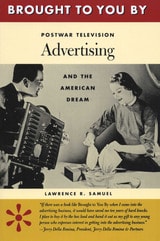
Brought to You By
Postwar Television Advertising and the American DreamBy Lawrence R. Samuel
University of Texas Press, 2002
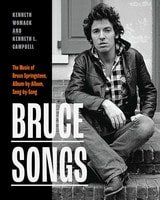
Bruce Songs
The Music of Bruce Springsteen, Album-by-Album, Song-by-SongKenneth Womack
Rutgers University Press, 2024
Bruce Songs is an authoritative guide that offers an in-depth exploration of Bruce Springsteen's musical legacy. Covering Springsteen's entire discography, from Greetings from Asbury Park, N.J. to Only the Strong Survive, this unique book combines historical context, literary analysis, and meticulous research.
Unlike any other resource, it provides detailed analyses of each album, essays on their historical significance, and a chronological examination of every studio song. Discover the stories behind the recordings and gain insight into Springsteen's creative process.
Rich with contemporary reviews, insider accounts, photographs, and special sections highlighting pivotal moments and key figures, Bruce Songs is an indispensable companion for fans and scholars. It offers an immersive journey through the music of the Boss, making it an essential read for anyone captivated by Springsteen's enduring musical legacy.
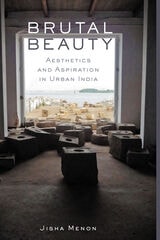
Brutal Beauty
Aesthetics and Aspiration in Urban IndiaJisha Menon
Northwestern University Press, 2022
Jisha Menon conveys the affective life of the city through multiple aesthetic projects that express a range of urban feelings, including aspiration, panic, and obsolescence. As developers and policymakers remodel the city through tumultuous construction projects, urban beautification, privatization, and other templated features of “world‑class cities,” urban citizens are also changing—transformed by nostalgia, narcissism, shame, and the spaces where they dwell and work. Sketching out scenes of urban aspiration and its dark underbelly, Menon delineates the creative and destructive potential of India’s lurch into contemporary capitalism, uncovering the interconnectedness of local and global power structures as well as art’s capacity to absorb and critique liberalization’s discontents. She argues that neoliberalism isn’t just an economic, social, and political phenomenon; neoliberalism is also a profoundly aesthetic project.
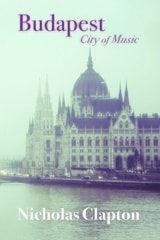
Budapest
City of MusicNicholas Clapton
Haus Publishing, 2017
With rich musical traditions, both classical and folk, and possessing a language like almost no other, Hungary is in the process of abandoning the trappings of its communist past while attempting to preserve its culture from creeping globalization. Clapton delights in the fact that certain old-fashioned attitudes of courtesy, at times stemming from the very structures of the Magyar tongue, are still deeply ingrained in Hungarian society. At the same time, despite its association with world-famous composers such as Bartók, Liszt, and Kodály, music is far from an activity enjoyed only by the elite. Including plenty of tips on food, drink, and sites of interest, Budapest describes the capital in uniquely melodic terms and will delight lovers of travel and music alike.
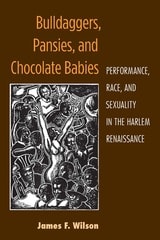
Bulldaggers, Pansies, and Chocolate Babies
Performance, Race, and Sexuality in the Harlem RenaissanceJames F. Wilson
University of Michigan Press, 2011
—David Krasner, author of A Beautiful Pageant: African American Theatre, Drama, and Performance in the Harlem Renaissance, 1910-1927
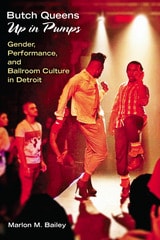
Butch Queens Up in Pumps
Gender, Performance, and Ballroom Culture in DetroitMarlon M. Bailey
University of Michigan Press, 2013
Butch Queens Up in Pumpsexamines Ballroom culture, in which inner-city LGBT individuals dress, dance, and vogue to compete for prizes and trophies. Participants are affiliated with a house, an alternative family structure typically named after haute couture designers and providing support to this diverse community. Marlon M. Bailey’s rich first-person performance ethnography of the Ballroom scene in Detroit examines Ballroom as a queer cultural formation that upsets dominant notions of gender, sexuality, kinship, and community.
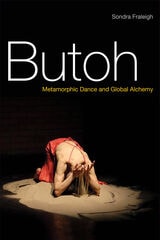
Butoh
Metamorphic Dance and Global AlchemySondra Fraleigh
University of Illinois Press, 2010
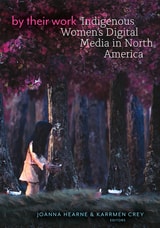
By Their Work
Indigenous Women's Digital Media in North AmericaJoanna Hearne
University of Minnesota Press, 2025
A first-of-its-kind collection to transform our understanding of digital media from Indigenous women creators
Indigenous women form a vital force in digital media production now and have over the past several decades—in fact, nearly three quarters of the projects at the 2017 imagineNATIVE Film and Media Arts Festival were created by women. By Their Work highlights the prismatic nature of Indigenous women’s digital media, connecting the digital arts with their creative labor and adaptive activism.
Joanna Hearne and Karrmen Crey bring together a collection of essays and interviews to highlight the voices of powerful and important media makers, from Indigenous video game creators to animators to social media influencers and from theorists of early Indigenous digital media to current practitioners, including trans and nonbinary creators often left out of public narratives about the digital. Creating a space to hear critical voices on Indigenous media history, theory, and production, the contributors share stories, genealogies, and practices behind Indigenous women’s power and presence in the digital world.
Focusing on the history of digital media as a whole, this collection presents a compelling case for Indigenous women’s crucial roles across the history of digital forms and platforms. In doing so, By Their Work transforms digital Indigenous studies in the twenty-first century.
Contributors: Nanobah Becker; Reilley Bishop-Stall, McGill U; Meagan Byrne; Tawny Trottier Cale; Dana Claxton; Crystal Harrison Collin; Elizabeth Day; Kristin L. Dowell, Florida State U; Miranda Due; Heid E. Erdrich; Marcella Ernest, U of New Mexico; Marisa Erven; David Gaertner, U of British Columbia; Carol Geddes; Faye Ginsburg, New York U; Patuk N. Glenn; Lisa Jackson; Jacqueline Land, William Jewell College; Jason Edward Lewis, Concordia University, Montreal; Joshua D. Miner, U of Kansas; Salma Monani, Gettysburg College; Jas M. Morgan, Simon Fraser U; Archer Pechawis, York U; Mikhel Proulx, Queen’s U Canada; Ryan Rice; Jolene Rickard, Cornell U; Channette Romero, U of Georgia; Wendi Sierra, Texas Christian U; Skawennati.
Bytes and Backbeats
Repurposing Music in the Digital AgeSteve Savage
University of Michigan Press, 2013
From Attali's "cold social silence" to Baudrillard's hallucinatory reality, reproduced music has long been the target of critical attack. In Bytes and Backbeats, however, Steve Savage deploys an innovative combination of designed recording projects, ethnographic studies of contemporary music practice, and critical analysis to challenge many of these traditional attitudes about the creation and reception of music. Savage adopts the notion of "repurposing" as central to understanding how every aspect of musical activity, from creation to reception, has been transformed, arguing that the tension within production between a naturalizing "art" and a self-conscious "artifice" reflects and feeds into our evolving notions of creativity, authenticity, and community.
At the core of the book are three original audio projects, drawing from rock & roll, jazz, and traditional African music, through which Savage is able to target areas of contemporary practice that are particularly significant in the cultural evolution of the musical experience. Each audio project includes a studio study providing context for the social and cultural analysis that follows. This work stems from Savage's experience as a professional recording engineer and record producer.