Results by title
4030 books match the query 'Language Arts & Disciplines' and 126 start with b
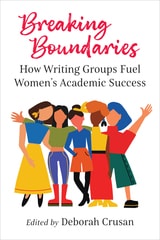
Breaking Boundaries
How Writing Groups Fuel Women's Academic SuccessEdited by Deborah Crusan
University of Michigan Press, 2026
Writing groups often fly under the radar in academia, but they can make a big difference. Faculty are under constant pressure to publish while juggling teaching, research, and service. Add packed schedules and limited time, and writing can easily get sidelined—especially for women balancing work and family. Breaking Boundaries: How Writing Groups Fuel Women’s Academic Success explores how writing groups offer support, structure, and community to help navigate these challenges.
Whether you’re a grad student trying to finish a dissertation, a stuck faculty member, or someone newly tenured wondering what’s next—you’re in the right place. This book shares honest stories, insights, and encouragement from women who have found strength in writing together. Each chapter highlights real experiences with writing groups—what helped, what didn’t, and how these groups shaped the authors’ scholarly identities. They discuss topics such as overcoming imposter syndrome, access to writing resources, navigating the stress of tenure, making academic contributions outside traditional paths, and creating sustainable writing habits. The contributors come from diverse disciplines and deliver practical advice for making writing fit into a hectic academic life. Their message is clear: when scholars support each other in writing, they not only grow their own careers, but also become mentors, leaders, and role models in the academic world.
Breaking Up (at) Totality
A Rhetoric of LaughterD. Diane Davis
Southern Illinois University Press, 2000
Rhetoric and composition theory has shown a renewed interest in sophistic countertraditions, as seen in the work of such "postphilosophers" as Jacques Derrida, Michel Foucault, and Hélène Cixous, and of such rhetoricians as Susan Jarratt and Steven Mailloux. As D. Diane Davis traces today’s theoretical interest to those countertraditions, she also sets her sights beyond them.
Davis takes a “third sophistics” approach, one that focuses on the play of language that perpetually disrupts the “either/or” binary construction of dialectic. She concentrates on the nonsequential third—excess—that overflows language’s dichotomies. In this work, laughter operates as a trope for disruption or breaking up, which is, from Davis’s perspective, a joyfully destructive shattering of our confining conceptual frameworks.

Breakthrough Branding
Positioning Your Library to Survive and ThriveKent Jackson
American Library Association, 2013
Breve historia de la lengua española
Spanish editionDavid A. Pharies
University of Chicago Press, 2007
Después de los capítulos introductorios de lo que significa el estudio de la historia de una lengua, el concepto del cambio lingüístico y de la naturaleza de las familias lingüísticas, Pharies hace un seguimiento al desarrollo del español desde sus raíces latinas, todo ello con una mínima cantidad de lenguaje técnico posible. En las secciones centrales del libro, los lectores son llevados por una presentación sucinta, comprometedora y admirable, de la genealogía y desarrollo de la lengua incluyendo explicaciones de las estructuras y peculiaridades del latín, los eventos históricos y culturales que influenciaron profundamente la forma del lenguaje, la naturaleza del español medieval, los mitos lingüísticos formando parte del español y el desarrollo de la lengua más allá de la península ibérica, en particular, en el continente americano. Centrándose en las más importantes facetas de la evolución de la lengua, esta obra concisa hace que la historia del español sea accesible a todos, con una comprensión del mismo y una disposición para entender los conceptos básicos del lenguaje.
Disponible en ambas ediciones, inglés y español, Una Breve Historia de la Lengua Española, nos brinda una extraordinaria introducción a la fascinante historia de una de las más importantes lenguas del mundo.
Spanish is the fourth most widely spoken language in the world and a language of ever-increasing importance in the United States. In what will likely become the introduction to the history of the Spanish language, David Pharies clearly and concisely charts the evolution of Spanish from its Indo-European roots to its present form. An internationally recognized expert on the history and development of this language, Pharies brings to his subject a precise sense of what students of Spanish linguistics need to know.
After introductory chapters on what it means to study the history of a language, the concept of linguistic change, and the nature of language families, Pharies traces the development of Spanish from its Latin roots, all with the minimum amount of technical language possible. In the core sections of the book, readers are treated to an engaging and remarkably succinct presentation of the genealogy and development of the language, including accounts of the structures and peculiarities of Latin, the historical and cultural events that deeply influenced the shaping of the language, the nature of Medieval Spanish, the language myths that have become attached to Spanish, and the development of the language beyond the Iberian Peninsula, especially in the Americas. Focusing on the most important facets of the language’s evolution, this compact work makes the history of Spanish accessible to anyone with a knowledge of Spanish and a readiness to grasp basic linguistic concepts.
Available in both English and Spanish editions, A Brief History of the Spanish Language provides a truly outstanding introduction to the exciting story of one of the world’s great languages.
Bridges
United States Academia for First-Generation and International College StudentsShawn Higgins
Temple University Press, 2020
An enhanced edition of this textbook is available on the Press’s Manifold platform: https://temple.manifoldapp.org/projects/bridges

Bridging Worlds
Emerging Mode Ls And Practices OfRaymond Pun
Assoc of College & Research Libraries, 2016
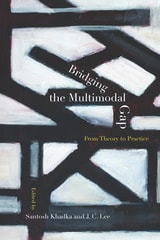
Bridging the Multimodal Gap
From Theory to PracticeSantosh Khadka
Utah State University Press, 2018
After an introductory section reviewing the theory literature, chapters present research on implementing multimodal composition in diverse contexts. Contributors address starter subjects like using comics, blogs, or multimodal journals; more ambitious topics such as multimodal assignments in online instruction or digital story telling; and complex issues like assessment, transfer, and rhetorical awareness.
Bridging the Multimodal Gap translates theory into practice and will encourage teachers, including WPAs, TAs, and contingent faculty, to experiment with multiple modes of communication in their projects.
Contributors: Sara P. Alvarez, Steven Alvarez, Michael Baumann, Joel Bloch, Aaron Block, Jessie C. Borgman, Andrew Bourelle, Tiffany Bourelle, Kara Mae Brown, Jennifer J. Buckner, Angela Clark-Oates, Michelle Day, Susan DeRosa, Dànielle Nicole DeVoss, Stephen Ferruci, Layne M. P. Gordon, Bruce Horner, Matthew Irwin, Elizabeth Kleinfeld, Ashanka Kumari, Laura Sceniak Matravers, Jessica S. B. Newman, Mark Pedretti, Adam Perzynski, Breanne Potter, Caitlin E. Ray, Areti Sakellaris, Khirsten L. Scott, Rebecca Thorndike-Breeze, Jon Udelson, Shane A. Wood, Rick Wysocki, Kathleen Blake Yancey
Bringing the Arts into the Library
Carol Smallwood
American Library Association, 2013
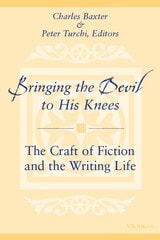
Bringing the Devil to His Knees
The Craft of Fiction and the Writing LifeCharles Baxter and Peter Turchi, Editors
University of Michigan Press, 2001
Each of the contributors is a current or former lecturer at the Warren Wilson College MFA Program for Writers, one of the most highly respected writing programs in the country. Included are essays by Charles Baxter, Robert Boswell, Karen Brennan, Judith Grossman, Ehud Havazelet, C. J. Hribal, Margot Livesey, Michael Martone, Kevin McIlvoy, Pablo Medina, Antonya Nelson, Susan Neville, Richard Russo, Steven Schwartz, Jim Shepard, Joan Silber, Debra Spark, Peter Turchi, and Chuck Wachtel.
Rich with masterful examples and personal anecdotes, these imaginative essays provide hard-earned insight into a writer's work. The book will interest not only those seeking inspiration and guidance to become stronger writers, but also readers of contemporary literary fiction, who will find a number of surprising and original approaches to the writer's work by award-winning practitioners adept at teaching others what they know.
Charles Baxter is author of several novels, including The Feast of Love, Shadow Play, and First Light. and collections of stories including Believers and A Relative Stranger. He teaches writing at the University of Michigan. Peter Turchi is author of the novel The Girls Next Door, a collection of stories, Magician, and a book of non-fiction, The Pirate Prince. He is Director of the MFA Program for Writers, Warren Wilson College.
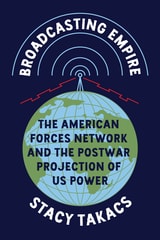
Broadcasting Empire
The American Forces Network and the Postwar Projection of US PowerStacy Takacs
University of Illinois Press, 2026
Stacy Takacs traces the AFN’s role in the worldwide expansion of American-style broadcasting and illuminates its impact on how foreign audiences viewed the United States. The AFN’s transformation emerged from collaborations between military leaders, foreign governments, commercial media companies, and local communities and turned the sprawling archipelago of US military bases into a potent instrument of soft power. Yet at times shifting alliances, practical problems, and the everyday routines of military life led to problems that complicated its mission
Knowledgeable and multidimensional, Broadcasting Empire combines big-picture analysis with case studies and oral history to reveal an important but overlooked tool of American influence.
Broken Pieces
Michael Gorman
American Library Association, 2011

Build a Great Team
One Year to SuccessCatherine Hakala-Ausperk
American Library Association, 2013
Building & Managing eBook Collections
Richard Kaplan
American Library Association, 2012
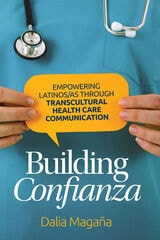
Building Confianza
Empowering Latinos/as Through Transcultural Health Care CommunicationDalia Magaña
The Ohio State University Press, 2021
Building Digital Libraries
Kyle Banerjee
American Library Association, 2018
Building Digital Libraries
American Library Association, 2008
Building Fiction
How to Develop Plot and StructureJesse Lee Kercheval
University of Wisconsin Press, 2003
Building Science 101
Scott Osgood
American Library Association, 2010
Building Teaching and Learning Communities
Creating Shared Meaning and PurposeCraig Gibson
Assoc of College & Research Libraries, 2019
Building Writing Center Assessments That Matter
Ellen Schendel and William J. Macauley, Jr.
Utah State University Press, 2012
No less than other divisions of the college or university, contemporary writing centers find themselves within a galaxy of competing questions and demands that relate to assessment—questions and demands that usually embed priorities from outside the purview of the writing center itself. Writing centers are used to certain kinds of assessment, both quantitative and qualitative, but are often unprepared to address larger institutional or societal issues. In Building Writing Center Assessments that Matter, Schendel and Macauley start from the kinds of assessment strengths already in place in writing centers, and they build a framework that can help writing centers satisfy local needs and put them in useful dialogue with the larger needs of their institutions, while staying rooted in writing assessment theory.
The authors begin from the position that tutoring writers is already an assessment activity, and that good assessment practice (rooted in the work of Adler-Kassner, O'Neill, Moore, and Huot) already reflects the values of writing center theory and practice. They offer examples of assessments developed in local contexts, and of how assessment data built within those contexts can powerfully inform decisions and shape the futures of local writing centers. With additional contributions by Neal Lerner, Brian Huot and Nicole Caswell, and with a strong commitment to honoring on-site local needs, the volume does not advocate a one-size-fits-all answer. But, like the modeling often used in a writing consultation, examples here illustrate how important assessment principles have been applied in a range of local contexts. Ultimately, Building Writing Assessments that Matter describes a theory stance toward assessment for writing centers that honors the uniqueness of the writing center context, and examples of assessment in action that are concrete, manageable, portable, and adaptable.
Building Your Play
Theory and Practice for the Beginning PlaywrightDavid Rush
Southern Illinois University Press, 2010
David Rush takes beginning playwrights through the first draft of a play and deep into the revision process. Drawing on examples from such classics as Othello and The Glass Menagerie, Rush provides detailed models for writers to evaluate their work for weaknesses and focus on the in-depth development of their plays.
Rush encourages writers to make sure their plays are clear and focused. He shows how to keep plays dramatically compelling and offers ways to avoid common mistakes that make them dull, confusing, or ineffective. He then distills the essence of traditional revision into key questions and discusses frequently overlooked tools, terms, and strategies that go beyond established methods of evaluation.
Building a Buzz
Libraries & Word-of-Mouth MarketingPeggy Barber
American Library Association, 2010
Building a Core Print Collection for Preschoolers
Alan R. Bailey
American Library Association, 2014
Building the Digital Branch
Guidelines for Transforming Your Library WebsiteDavid Lee American Library Association
American Library Association, 0
Burnin' Daylight
Building a Principle-Driven Writing ProgramRyan J. Dippre
Utah State University Press, 2024
WPAs face a range of challenges on a regular basis: organizing class schedules, leading professional learning events, conducting program assessments, responding to student needs, meeting with deans and provosts, and more. Additionally, WPAs need to learn about and direct their programs strategically when considering the kind of program they currently have, the sort of program they envision, and how they can transition from one to another. Burnin’ Daylight acts as a roadmap for IRB-approved research and provides WPAs—specifically, new and returning WPAs—with a detailed yet flexible plan for understanding the inner workings of a writing program and how to develop a future trajectory for it.
Burnin’ Daylight is for writing program administrators of all experience levels and other administrators interested in taking a “principled practices” approach to their work.
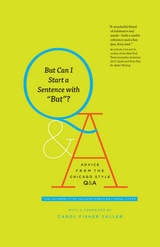
But Can I Start a Sentence with "But"?
Advice from the Chicago Style Q&AThe University of Chicago Press Editorial Staff
University of Chicago Press, 2016
A. The idiom is “happy medium,” but I like the image of commuters taking refuge from road rage on the happy median.
Q. How do I write a title of a song in the body of the work (caps, bold, underline, italics, etc.)? Example: The Zombies’ “She’s Not There” looped in his head.
A. Noooo! Now that song is looping in my head (“but it’s too late to say you’re sorry . . .”). Use quotation marks. Thanks a lot.
Every month, tens of thousands of self-declared word nerds converge upon a single site: The Chicago Manual of Style Online's Q&A. There the Manual’s editors open the mailbag and tackle readers’ questions on topics ranging from abbreviation to word division to how to reform that coworker who still insists on two spaces between sentences. Champions of common sense, the editors offer smart, direct, and occasionally tongue-in-cheek responses that have guided writers and settled arguments for more than fifteen years.
But Can I Start a Sentence with “But”? brings together the best of the Chicago Style Q&A. Curated from years of entries, it features some of the most popular—and hotly debated—rulings and also recovers old favorites long buried in the archives.
Questions touch on myriad matters of editorial style—capitalization, punctuation, alphabetizing, special characters—as well as grammar, usage, and beyond (“How do I spell out the sound of a scream?”). A foreword by Carol Fisher Saller, the Q&A’s longtime editor, takes readers through the history of the Q&A and addresses its reputation for mischief. (“It’s not that we set out to be cheeky,” she writes.)
Taken together, the questions and answers offer insights into some of the most common issues that face anyone who works with words. They’re also a comforting reminder that even the best writer or editor needs a little help—and humor—sometimes.