Results by title
2817 books match the query 'Nature' and 134 start with b

Blue Legalities
The Life and Laws of the SeaIrus Braverman and Elizabeth R. Johnson, editors
Duke University Press, 2019
Contributors. Stacy Alaimo, Amy Braun, Irus Braverman, Holly Jean Buck, Jennifer L. Gaynor, Stefan Helmreich, Elizabeth R. Johnson, Stephanie Jones, Zsofia Korosy, Berit Kristoffersen, Jessica Lehman, Astrida Neimanis, Susan Reid, Alison Rieser, Katherine G. Sammler, Astrid Schrader, Kristen L. Shake, Phil Steinberg
Blues and Roots/Rue and Bluets
A Garland for the Southern AppalachiansJonathan Williams
Duke University Press, 1985

Bond
The Nature of UsJill Sission Quinn
University of Iowa Press, 2027

Bonelight
Ruin And Grace In The New SouthwestMary Sojourner
University of Nevada Press, 2004
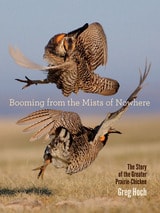
Booming from the Mists of Nowhere
The Story of the Greater Prairie-ChickenGreg Hoch
University of Iowa Press, 2015
Skillfully interweaving lyrical accounts from early settlers, hunters, and pioneer naturalists with recent scientific research on the grouse and its favored grasslands, Hoch reveals that the prairie-chicken played a key role in the American settlement of the Midwest. Many hungry pioneers regularly shot and ate the bird, as well as trapping hundreds of thousands, shipping them eastward by the trainload for coastal suppers. As a result of both hunting and habitat loss, the bird’s numbers plummeted to extinction across 90 percent of its original habitat. Iowa, whose tallgrass prairies formed the very center of the greater prairie-chicken’s range, no longer supports a native population of the bird most symbolic of prairie habitat.
The steep decline in the prairie-chicken population is one of the great tragedies of twentieth-century wildlife management and agricultural practices. However, Hoch gives us reason for optimism. These birds can thrive in agriculturally productive grasslands. Careful grazing, reduced use of pesticides, well-placed wildlife corridors, planned burning, higher plant, animal, and insect diversity: these are the keys. If enough blocks of healthy grasslands are scattered over the midwestern landscape, there will be prairie-chickens—and many of their fellow creatures of the tall grasses. Farmers, ranchers, conservationists, and citizens can reverse the decline of grassland birds and insure that future generations will hear the booming of the prairie-chicken.
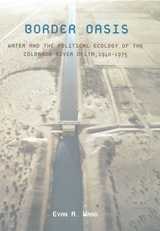
Border Oasis
Water and the Political Ecology of the Colorado River Delta, 1940–1975Evan R. Ward
University of Arizona Press, 2003
Evan Ward explores the rapid development of this region, examining the ways in which regional politics and international relations created a garden in the Mexicali, Yuma, and Imperial Valleys while simultaneously threatening the life of the Colorado River. Tracing the transformation of the delta by irrigated agribusiness through the twentieth century, he draws on untapped archival resources from both sides of the border to offer a new look at one of the world's most contested landscapes.
Border Oasis tells how two very different nations developed the delta into an agricultural oasis at enormous environmental cost. Focusing on the years 1940 to 1975—including the disastrous salinity crisis of the 1960s and 1970s—it combines Mexican, Native American, and U.S. perspectives to demonstrate that the political and diplomatic influences on the delta played as much a part in the region's transformation as did irrigation. Ward reveals how mistrust among political and economic participants has been fueled by conflict between national and local officials on both sides of the border, by Mexican nationalism, and by a mutual recognition that water is the critical ingredient for regional economic development.
With overemphasis on development in both nations leading to an ecological breaking point, Ward demonstrates that conflicting interests have made sound binational management of the delta nearly impossible. By weaving together all of these threads that have produced the fabric of today's lower Colorado, his study shows that the environmental history of the delta must be understood as a whole, not from the standpoint of only one of many competing interests.

Border Water
The Politics of U.S.-Mexico Transboundary Water Management, 1945–2015Stephen Paul Mumme
University of Arizona Press, 2023
The international boundary between the United States and Mexico spans more than 1,900 miles. Along much of this international border, water is what separates one country from the other. Border Water provides a historical account of the development of governance related to transboundary and border water resources between the United States and Mexico in the last seventy years.
This work examines the phases and pivot points in the development of U.S.-Mexico border water resources and reviews the theoretical approaches and explanation that impart a better understanding of these events. Author Stephen Paul Mumme, a leading expert in water policy and border studies, describes three important periods in the chronology of transboundary water management. First, Mumme examines the 1944 Water Treaty, the establishment of the International Boundary and Water Commission (IBWC) in 1945, and early transborder politics between the two governments. Next, he describes the early 1970s and the rise of environmentalism. In this period, pollution and salinization of the Colorado River Delta come into focus. Mumme shows how new actors, now including environmentalists and municipalities, broadened and strengthened the treaty’s applications in transboundary water management. The third period of transborder interaction described covers the opening and restricting of borders due to NAFTA and then 9/11.
Border Water places transboundary water management in the frame of the larger binational relationship, offering a comprehensive history of transnational water management between the United States and Mexico. As we move into the next century of transnational water management, this important work offers critical insights into lessons learned and charts a path for the future.
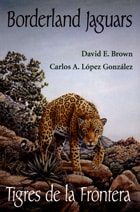
Borderland Jaguars
Tigres de la FronteraDavid E. Brown
University of Utah Press, 2001
"What is it about these borderland cats which has so fired up people? Scarcity combined with beauty explains some of the appeal. So does the animal’s legendary strength and power as befits its role as the region’s top predator. The jaguar’s neotropical origins also add to its mystique...But there is something more. That such a large cat is out there somewhere...invokes the depths of our imagination. Nor does it matter one whit that the chance of any one individual actually seeing one is almost nil. The thought of such a cat’s presence is enough in itself."—from the book
In 1996 a rancher hunting mountain lions just north of the Arizona-Mexico border treed a jaguar. Instead of reaching for a rifle, the rancher went for his camera. Later that year another party photographed a jaguar in Arizona’s Baboquivari Mountains. These compelling photographs sparked public interest in jaguars and have resulted in calls for listing jaguars as an endangered species.
Borderland Jaguars documents the human-jaguar contact in the Southwest and presents jaguar folklore from both sides of the border. But the book is primarily a natural history of the jaguar, and discusses its distribution, habitats, and hunting and breeding characteristics before concluding with a section on the status and management of borderland jaguars, and a proposed conservation plan. Written in an engaging style, and replete with a wealth of photographs, Borderland Jaguars is a wonderful introduction to this elusive resident of the Southwest.

Born to Pull
The Glory of Sled DogsBob Cary
University of Minnesota Press, 1999

Borne of the Wind
Michigan Sand DunesDennis A. Albert
University of Michigan Press, 2006
Borne of the Wind describes the environmental factors necessary for dune creation in an easy-to-understand format, introducing readers to the rich ecology of Michigan's dunes. Each of the distinct types of dunes encountered along the Great Lakes shoreline is explained and illustrated with color photographs and line drawings, while color photographs of the plants and animals found in duneland areas complement the story of these fragile, ever-changing landscapes.
For scholars and enthusiasts alike, Borne of the Wind provides a comprehensive and colorful introduction to one of our finest yet least-understood natural features.
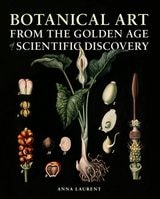
Botanical Art from the Golden Age of Scientific Discovery
Anna Laurent
University of Chicago Press, 2016
This beautifully illustrated oversized book gives the humble wall chart its due, reproducing more than two hundred of them in dazzling full color. Each wall chart is accompanied by captions that offer accessible information about the species featured, the scientists and botanical illustrators who created it, and any particularly interesting or innovative features the chart displays. And gardeners will be pleased to discover useful information about plant anatomy and morphology and species differences. We see lilies and tulips, gourds, aquatic plants, legumes, poisonous plants, and carnivorous plants, all presented in exquisite, larger-than-life detail.
A unique fusion of art, science, and education, the wall charts gathered here offer a glimpse into a wonderful scientific heritage and are sure to thrill naturalists, gardeners, and artists alike.

Botanical Companions
A Memoir of Plants and PlaceFrieda Knobloch
University of Iowa Press, 2005
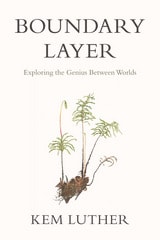
Boundary Layer
Exploring the Genius Between WorldsKem Luther
Oregon State University Press, 2016
In Boundary Layer, Luther takes a voyage of discovery through the stegnon, exploring the life forms that thrive there and introducing readers to the scientists who study them. With a keen ear for conversation and an eye for salient detail, the author brings a host of characters to life, people as unique and intriguing as the species inhabiting the stegnon.
A pair of park employees on a windswept beach shows how the violent clash of sea and land creates a sandy home for some of the world’s most endangered plants, including the almost-extinct pink sand-verbena. An expert on mosses, as ingenuous as the plants he loves, leads the author up a mountain and into a sphagnum bog. A husband and wife team, exiled by brutal repression in the wake of the Prague Spring, introduce European plant sociology to North America. A scientist, while revolutionizing the study of lichens, hides himself, hermitlike, inside one of the largest park reserves in the American West.
An exhilarating mix of natural history, botanical exploration, and philosophical speculation, Boundary Layer guides readers, in the end, into the author’s own landscape of metaphor. It will be welcomed by naturalists, botanists, outdoor adventurers, and anyone who savors good storytelling. Luther translates into luminous prose what boundary regions have to say, not only about the in-between places of nature, but also about the conceptual borderlands that lie between species and ecosystems, culture and nature, science and the humanities.
Bountiful Deserts
Sustaining Indigenous Worlds in Northern New SpainCynthia Radding
University of Arizona Press, 2022
Common understandings drawn from biblical references, literature, and art portray deserts as barren places that are far from God and spiritual sustenance. In our own time, attention focuses on the rigors of climate change in arid lands and the perils of the desert in the northern Mexican borderlands for migrants seeking shelter and a new life.
Bountiful Deserts foregrounds the knowledge of Indigenous peoples in the arid lands of northwestern Mexico, for whom the desert was anything but barren or empty. Instead, they nurtured and harvested the desert as a bountiful and sacred space. Drawing together historical texts and oral testimonies, archaeology, and natural history, author Cynthia Radding develops the relationships between people and plants and the ways that Indigenous people sustained their worlds before European contact through the changes set in motion by Spanish encounters, highlighting the long process of colonial conflicts and adaptations over more than two centuries. This work reveals the spiritual power of deserts by weaving together the cultural practices of historical peoples and contemporary living communities, centered especially on the Yaqui/Yoeme and Mayo/Yoreme.
Radding uses the tools of history, anthropology, geography, and ecology to paint an expansive picture of Indigenous worlds before and during colonial encounters. She re-creates the Indigenous worlds in both their spiritual and material realms, bringing together the analytical dimension of scientific research and the wisdom of oral traditions in its exploration of different kinds of knowledge about the natural world.
Published in cooperation with the William P. Clements Center for Southwest Studies, Southern Methodist University
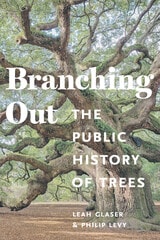
Branching Out
The Public History of TreesEdited by Leah S. Glaser and Philip Levy
University of Massachusetts Press, 2025
Trees are not just natural resources; they are also cultural ones that present unique challenges and opportunities for public historians. Trees can serve as important objects of memory, recalling past triumphs or tragedies. They can be the last living witness to important events or community stories. Trees can also be objects of preservation, sometimes as individuals, other times as stands or even forests, all of which can take on historical significance for people, sites, and institutions. But as living entities they defy the kind of permanent legal preservation applicable to buildings and other non-living historical objects. Furthermore, their organic fragility can actually make them significant problems for historical sites and local preservation activities. For example, communities have had to cope with extensive tree loss from storm and fire damage, and dying trees can drop limbs or topple over, creating considerable danger to people and resources. Climate-change-driven increasing storm intensity has also highlighted the ways that trees—however historical or beloved—can become considerable threats.
The fourteen new essays in this volume explore the many ways that trees are an integral part of public history practice and sites. The authors draw on a range of approaches and historiographies to look at how memories of race-based hate, patriotic stories, community identities, and changed places have all centered on trees. In addition to contributions from the volume editors, this collection features scholarship by Sonja Dümpelmann Andrew Hurley, Carolyn M. Barske Crawford, Brian Dempsey, Liz Sargent, Sasha Coles, Mariaelena DiBenigno, Evan Haefeli, Krista McCracken, Alena Pirok, Christian Kosmas Mayer Alaina Scapicchio, and David Glassberg.

Breathing Aesthetics
Jean-Thomas Tremblay
Duke University Press, 2022
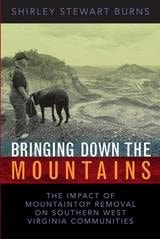
Bringing Down the Mountains
The Impact of Mountainttop Removal on Southern West Virginia CommunitiesShirley Stewart Burns
West Virginia University Press, 2007
Coal is West Virginia’s bread and butter. For more than a century, West Virginia has answered the energy call of the nation—and the world—by mining and exporting its coal. In 2004, West Virginia’s coal industry provided almost forty thousand jobs directly related to coal, and it contributed $3.5 billion to the state’s gross annual product. And in the same year, West Virginia led the nation in coal exports, shipping over 50 million tons of coal to twenty-three countries. Coal has made millionaires of some and paupers of many. For generations of honest, hard-working West Virginians, coal has put food on tables, built homes, and sent students to college. But coal has also maimed, debilitated, and killed.
Bringing Down the Mountains provides insight into how mountaintop removal has affected the people and the land of southern West Virginia. It examines the mechanization of the mining industry and the power relationships between coal interests, politicians, and the average citizen. Shirley Stewart Burns holds a BS in news-editorial journalism, a master’s degree in social work, and a PhD in history with an Appalachian focus, from West Virginia University. A native of Wyoming County in the southern West Virginia coalfields and the daughter of an underground coal miner, she has a passionate interest in the communities, environment, and histories of the southern West Virginia coalfields. She lives in Charleston, West Virginia.
Bringing Home the Wild
A Riparian Garden in a Southwest CityJuliet C. Stromberg
University of Arizona Press, 2023
When living in a large sprawling city, one may feel disconnected and adrift. Finding ways to belong and have positive effects is challenging. In Bringing Home the Wild, botanist Juliet C. Stromberg demonstrates how ecologically guided gardening develops a sense of place, restores connections to nature, and brings joy and meaning to our lives.
This book follows a two-decade journey in ecologically guided gardening on a four-acre irrigated parcel in Phoenix, Arizona, from the perspective of a retired botanist and her science historian partner. Through humor and playful use of language, Bringing Home the Wild not only introduces the plants who are feeding them, buffering the climate, and elevating their moods but also acknowledges the animals and fungi who are pollinating the plants and recycling the waste. Some of the plants featured are indigenous to the American Southwest, while others are part of the biocultural heritage of the cityscape. This book makes the case for valuing inclusive biodiversity and for respectful interactions with all wild creatures, regardless of their historical origin.
As author and partner learn to cohabit with the plants who feed them, calm them, entertain them, and protect them from the increasing heat, their desire to live sustainably, ethically, and close to the land becomes even stronger, revealing the importance of observing, appreciating, and learning from the ecosystems of which we are a part.
Brown Bears in Alaska's National Parks
Conservation of a Wilderness IconGrant V. Hilderbrand
University of Alaska Press, 2025
Brown bears are powerful symbols of wilderness, thriving in the vast, untamed ecosystems of Alaska’s remote national parks. Brown Bears in Alaska’s National Parks is a unique and thorough exploration of the conservation, ecology, and management of brown bears in these parks, including examinations of bear biology, human-bear interactions, population estimation methods, and the effects of climate change on bear populations. This lavishly illustrated volume offers fresh perspectives about the complex challenges that bears and humans face as they navigate coexistence in the evolving wilderness of Alaska.
Through park-specific chapters, the authors clearly present the current understanding of brown bear ecology across a wide range of ecosystems—from the sparse and frigid Gates of the Arctic, entirely above the Arctic Circle, to the bountiful coast of Katmai, where the marine and terrestrial systems converge. In Glacier Bay, bears roam newly exposed ecosystems shaped by retreating glaciers, while the interior landscapes of Lake Clark and Denali provide a mix of boreal forests, tundra, rivers, and towering mountains.
Brown bears—and the many species that share their habitats—face numerous challenges, with climate change among the greatest threats. The warming climate intensifies other pressures, such as industrial development, both within and around park boundaries. Management actions may also reduce native brown bear populations and, in turn, threaten healthy and naturally functioning ecosystems. The adaptability of brown bears, in concert with thoughtful and science-based management, is essential for the conservation of these majestic creatures and the wilderness landscapes on which they depend.
Written by the wildlife biologists and anthropologists who have dedicated their careers to studying brown (grizzly) bears and their relationship to people, Brown Bears in Alaska’s National Parks is a premier reference for bear enthusiasts, biologists, managers, and academics, as well as advocates for wild things and wild places.

Brutal
Manhood and the Exploitation of AnimalsBrian Luke
University of Illinois Press, 2007
In Brutal, Brian Luke explores the gender divide over our treatment of animals, exposing the central role of masculinity in systems of animal exploitation. Employing philosophical analysis, reference to empirical research, and relevant personal experience, Luke develops a new theory of how exploitative institutions do not work to promote human flourishing but instead merely act as support for a particular construction of manhood. The resulting work is of significant interest both to animal advocates and opponents of sexism.

Bryozoan Evolution
Frank K. McKinney and Jeremy B. C. Jackson
University of Chicago Press, 1991
"Bryozoan Evolution is profusely illustrated and has a bibliography of over 400 titles. It will find an appreciative audience of paleontologists, invertebrate zoologists, and ecologists thanks to its innovative and detailed evaluations of the roles of ecology, adaptive and functional morphology, life histories, biomechanics, developmental constraints, and chance on the evolution of the marine taxa of this speciose group."—Russel L. Zimmer, Science
"This book is an excellent source of information on the functional morphology and variety of colonial architecture in bryozoans, very well illustrated, and worth reading at least twice."-Robert L. Anstey, Paleobiology
"Even as one of the converted, I found the book a stimulating combination of paleobiology and ecology. In many ways it is a 'teaser'-the authors suggest a number of interesting hypotheses, and can test only some of them. Perhaps most important, McKinney and Jackson provide a plethora of fascinating ideas and examples that demonstrate the potential of this group of animals, and that should stimulate more work."-Michael S. Keough, TREE
"This stimulating book is sure to promote further interest in bryozoans. It will appeal to biologists and paleontologists alike."-Paul Taylor, Times Higher Education Supplement
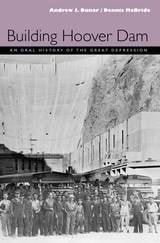
Building Hoover Dam
An Oral History Of The Great DepressionAndrew J. Dunar
University of Nevada Press, 2001
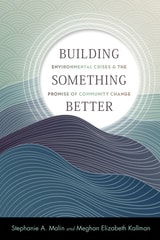
Building Something Better
Environmental Crises and the Promise of Community ChangeStephanie A. Malin
Rutgers University Press, 2022
Sociologists Stephanie A. Malin and Meghan Elizbeth Kallman offer a clear, accessible volume that demonstrates the ways that communities adapt in the face of crises and explains that sociology can help us understand how and why they do this challenging work. Tackling neoliberalism head-on, these communities are making big changes by crafting distributive and regenerative systems that depart from capitalist approaches. The vivid case studies presented range from activist water protectors to hemp farmers to renewable energy cooperatives led by Indigenous peoples and nations. Alongside these studies, Malin and Kallman present incisive critiques of colonialism, extractive capitalism, and neoliberalism, while demonstrating how sociology’s own disciplinary traditions have been complicit with those ideologies—and must expand beyond them.
Showing that it is possible to challenge social inequality and environmental degradation by refusing to continue business-as-usual, Building Something Better offers both a call to action and a dose of hope in a time of crises.

Bureaucrats, Clients, and Geography
The Bailly Nuclear Power Plant Battle in Northern IndianaNancy J. Obermeyer
University of Chicago Press, 1989
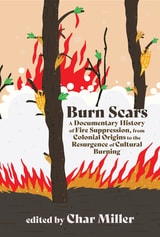
Burn Scars
A Documentary History of Fire Suppression, from Colonial Origins to the Resurgence of Cultural BurningChar Miller
Oregon State University Press, 2024
In Burn Scars, historian Char Miller assembles a collection of primary sources focused on debates over “light burning” (as prescribed or controlled burning was called). These historic documents show that not only was fire suppression controversial, but that it was also driven by explicitly racist and colonial beliefs. Yet the suppression paradigm contained within it the seeds of its destruction: Indigenous people continued to use fire as did non-Indigenous land managers. By the 1920s, scientific evidence was beginning to reveal that fire was essential for regenerating grasslands and forests; by the 1930s even the Forest Service was testing fire’s ecological benefits.
Burn Scars focuses on the burning debates of the early twentieth century, but Miller also provides evidence of a powerful counternarrative emerging from southern non-Indigenous foresters who used fire to revive longleaf pine ecosystems. The volume begins and ends with contributions from Indigenous practitioners discussing the long history and resurgent practice of cultural burning as part of traditional land management.

Burntwater
Scott Thybony
University of Arizona Press, 1997
This book takes the backroads, crossing the Colorado Plateau from the headwaters of the Virgin River to the mouth of the Dirty Devil, from the badlands below Twin Angels to a remote mesa in Bandelier. As the miles go by and the stories unfold, there is a growing sense of mystery, of words not spoken, of messages carried on the wind. Reaching the Shrine of the Stone Lions, the writer recounts a near-fatal descent into the Grand Canyon where he finds a way to reconnect with the beauty of life. There his journey ends with an emotional punch that goes straight to the mind and the heart.
Butterflies in Your Pocket
A Guide to the Butterflies of the Upper MidwestSteve & Diane Hendrix & Debinski
University of Iowa Press, 2003
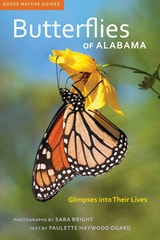
Butterflies of Alabama
Glimpses into Their LivesPaulette H. Ogard, Sara C. Bright
University of Alabama Press, 2010
Capture Every Stage of Alabama’s Butterfly Wonder.
Butterflies of Alabama is a full-color, richly illustrated guide to the 84 known species of “true” butterflies (Papilionoidea) found within the state’s borders. For more than 14 years, the authors have made a close study of these showy, winged stars of the insect world, pursuing them in a great variety of habitats, rearing them, and photographing their remarkable life cycle stages—egg, larva (caterpillar), pupa (chrysalid or “cocoon”), and adult.
Each species account is accompanied by color photographs of live subjects in their natural habitats. Close-ups reveal fascinating details of camouflage, mimicry, coloration, and warning devices. The engaging text explains the highly evolved relationships between butterflies and the plants upon which they depend as well as the specialized adaptations that enable their survival within specific environmental niches. Included are range maps, flight times, caterpillar host plants, adult nectar sources, and identification tips—abundant information to tantalize budding as well as experienced butterfly watchers. In addition, pertinent conservation issues are addressed and appendices provide an annotated checklist of the state’s butterflies, a list of accidentals and strays, information on butterfly organizations, and recommended further reading.
With its non-technical language, simple format, and beautiful images, Butterflies of Alabama is accessible and appealing to anyone who appreciates Alabama’s amazing natural wealth.
Publication is supported in part by the Citizens of the City of Selma, Alabama's Butterfly Capital.
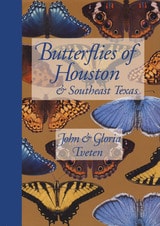
Butterflies of Houston and Southeast Texas
By John and Gloria Tveten
University of Texas Press, 1996
All across the country, butterflies are becoming as popular as birds and wildflowers, especially among people seeking to enjoy the rich natural resources that Texas possesses. John and Gloria Tveten have been studying butterflies in Southeast Texas for thirty-five years, and here they offer their considerable knowledge to everyone who shares their passion for butterflies.
In this easy-to-use field guide, the Tvetens describe and illustrate more than 100 species of butterflies that live in Southeast Texas and can often be found across the state. Striking color photographs of living butterflies and caterpillars (a unique addition) show the key marks and characteristics necessary for field identification. The Tvetens' enjoyable and authoritative text describes each species' life history, habits, flight patterns, and characteristic markings.
An account of the different butterfly families, from swallowtails to longwings to skippers, precedes the descriptions of the species within each family. The Tvetens also include an interesting discussion of butterfly biology, a complete checklist of area butterflies, an index of butterfly-attracting plants, and pointers to other butterfly resources.
This field guide is the first to focus exclusively on Southeast Texas butterflies. It will be the essential reference for everyone seeking a reliable way to identify these butterflies, from field observers to apartment dwellers who wonder what is fluttering around the pot plants on the balcony.
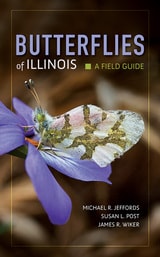
Butterflies of Illinois
A Field GuideMichael R. Jeffords, Susan L. Post, and James R. Wiker
University of Illinois Press, 2019
- identification quick guides depicting the tops and undersides of all butterfly species
- scientific information and photos that explain life cycles, habitats, and ecology
- range maps
- flight period charts
- key characteristics relevant to field identification
- descriptions of rarely seen butterflies and irregular visitors from nearby states
- supplemental information on various species, including collection records and unusual sightings

Butterflies of New Jersey
A Guide to Their Status, Distribution, and AppreciationMichael Gochfeld and Joanna Burger
Rutgers University Press, 1997
Butterfly watching has begun to gain the popularity that bird watching has enjoyed for half a century. Much as birds served as a flagship of the conservation movement in this country, butterflies are coming to be seen as the rallying point for the protection of invertebrate species--now regarded as increasingly important for the well-being of all members of the ecosystem.
Butterflies of New Jersey discusses the behavior, status, distribution, taxonomy, ecology, and conservation of butterflies in New Jersey. It is an innovative companion and complement to any butterfly identification guide of the Northeast. It pays particular attention to the place of butterflies in the ecosystem of New Jersey and neighboring regions and their relationships to other butterflies around the world. Its detailed species accounts of 140-plus kinds of butterflies found in the state and neighboring regions (out of 700 North American species) alert butterfly watchers to changes in populations over time. Where other butterfly guides typically include a section on collecting butterflies, this one includes a detailed chapter on protecting them by creating butterfly gardens and preventing habitat destruction.
Butterflies of New Jersey is indispensable for everyone interested in the butterflies and natural history of the Garden State and its neighbor.

Butterflies, Moths, and Other Invertebrates of Costa Rica
A Field GuideBy Carrol L. Henderson, with photographs by the author
University of Texas Press, 2010
At the biological crossroads of the Americas, Costa Rica hosts an astonishing array of plants and animals—over half a million species! Ecotourists, birders, and biologists come from around the world, drawn by the likelihood of seeing more than three or four hundred species of birds and other animals during even a short stay. To help all these visitors, as well as local residents, identify and enjoy the wildlife of Costa Rica, Carrol Henderson published Field Guide to the Wildlife of Costa Rica in 2002, and it instantly became the indispensable guide.
Now Henderson has created a dedicated field guide to more than one hundred tropical butterflies, moths, and other invertebrates that travelers are most likely to see while exploring the wild lands of Costa Rica. He includes fascinating information on their natural history, ecology, identification, and behavior gleaned from his forty years of travels and wildlife viewing, as well as details on where to see these remarkable and beautiful creatures. The butterflies, moths, and other invertebrates are illustrated by over 180 stunning and colorful photographs—most of which were taken in the wild by Henderson. A detailed and invaluable appendix that identifies many of Costa Rica's best wildlife-watching destinations, lodges, and contact information for trip-planning purposes completes the volume.
Butterflies
Ecology and Evolution Taking FlightEdited by Carol L. Boggs, Ward B. Watt, and Paul R. Ehrlich
University of Chicago Press, 2003
The first international synthesis of butterfly biology in two decades, Butterflies: Ecology and Evolution Taking Flight offers students, scientists, and amateur naturalists a concise overview of the latest developments in the field. Furthermore, it articulates an exciting new perspective of the whole group of approximately 15,000 species of butterflies as a comprehensive model system for all the sciences concerned with biodiversity and its preservation.
Contributors:
Carol L. Boggs, Paul M. Brakefield, Adriana D. Briscoe, Dana L. Campbell, Elizabeth E. Crone, Mark Deering, Henri Descimon, Erika I. Deinert, Paul R. Ehrlich, John P. Fay, Richard ffrench-Constant, Sherri Fownes, Lawrence E. Gilbert, André Gilles, Ilkka Hanski, Jane K. Hill, Brian Huntley, Niklas Janz, Greg Kareofelas, Nusha Keyghobadi, P. Bernhard Koch, Claire Kremen, David C. Lees, Jean-François Martin, Antónia Monteiro, Paulo César Motta, Camille Parmesan, William D. Patterson, Naomi E. Pierce, Robert A. Raguso, Charles Lee Remington, Jens Roland, Ronald L. Rutowski, Cheryl B. Schultz, J. Mark Scriber, Arthur M. Shapiro, Michael C. Singer, Felix Sperling, Curtis Strobeck, Aram Stump, Chris D. Thomas, Richard VanBuskirk, Hans Van Dyck, Richard I. Vane-Wright, Ward B. Watt, Christer Wiklund, and Mark A. Willis

Buying Time
Environmental Collapse and the Future of EnergyKaz Makabe
University Press of New England, 2017