Results by title
4743 books match the query 'Religion' and 170 start with b
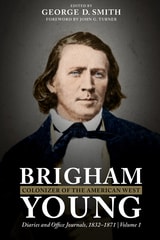
Brigham Young, Colonizer of the American West
Diaries and Office Journals, 1832–1871George D. Smith
Signature Books, 2019
Thus, by 1877, some 400 Mormon settlements spanned the western frontier from Salt Lake City to outposts in Idaho, Nevada, Arizona, Wyoming, and California. As prophet of the LDS Church and governor of the proposed State of Deseret, Young led several campaigns for Utah statehood while defending polygamy and local sovereignty. His skillful and authoritarian leadership led historian Bernard de Voto to classify him as an “American genius,” responsible for turning Joseph Smith’s visions “into the seed of life.”
Young’s diaries and journals reveal a man dedicated to his church, defensive of his spiritual and temporal claims to authority, and determined to create a modern Zion within the Utah desert. Editor George D. Smith’s careful organization and annotation of Young’s personal writings provide insights into the mind of Mormonism’s dynamic church leader and frontier statesman.
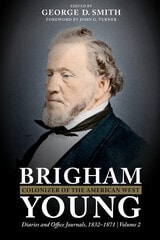
Brigham Young, Colonizer of the American West
Diaries and Office Journals, 1832–1871: Volume 2George D. Smith
Signature Books, 2021
Thus, by 1877, some 400 Mormon settlements spanned the western frontier from Salt Lake City to outposts in Idaho, Nevada, Arizona, Wyoming, and California. As prophet of the LDS Church and governor of the proposed State of Deseret, Young led several campaigns for Utah statehood while defending polygamy and local sovereignty. His skillful and authoritarian leadership led historian Bernard de Voto to classify him as an “American genius,” responsible for turning Joseph Smith’s visions “into the seed of life.”
Young’s diaries and journals reveal a man dedicated to his church, defensive of his spiritual and temporal claims to authority, and determined to create a modern Zion within the Utah desert. Editor George D. Smith’s careful organization and annotation of Young’s personal writings provide insights into the mind of Mormonism’s dynamic church leader and frontier statesman.
Brigham Young, the Quorum of the Twelve, and the Latter-Day Saint Investigation of the Mountain Meadows Massacre
Arrington Lecture No. TwelveThomas G. Alexander
Utah State University Press, 2007
In this 12th volume of the Arrington Lecture Series, Thomas Alexander (Lemuel Redd Professor of Western American History, Emeritus, at Brigham Young University), asserts that Brigham Young and the LDS Church’s governing Quorum of Twelve made timely and diligent efforts to investigate the massacre and encouraged legal proceedings but were hindered by federal territorial officials and lied to by massacre participant John D. Lee, preventing Young from learning the full truth for many years.
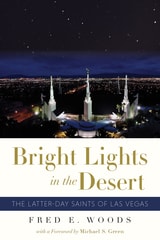
Bright Lights in the Desert
The Latter-day Saints of Las VegasFred E Woods
University of Nevada Press, 2023
Bright Lights in the Desert explores the history of how members of the Church of Jesus Christ of Latter-day Saints in Las Vegas have improved the regions’ neighborhoods, inspired educational institutions, brought integrity to the marketplace, and provided wholesome entertainment and cultural refinement. The LDS influence has helped shape the metropolitan city because of its members’ focus on family values and community service.
Woods discusses how, through their beliefs and work ethics, they have impacted the growth of the area from the time of their first efforts to establish a mission in 1855 through the present day. Bright Lights in the Desert reveals Las Vegas as more than just a tourist destination and shows the LDS community’s commitment to making it a place of deep religious faith and devotion to family.
Bringing Down the Temple House
Engendering Tractate YomaMarjorie Lehman
Brandeis University Press, 2022
While the use of feminist analysis as a methodological lens is not new to the study of Talmudic literature or to the study of individual tractates, this book demonstrates that such an intervention with the Babylonian Talmud reveals new perspectives on the rabbis’ relationship with the temple and its priesthood. More specifically, through the relationships most commonly associated with home, such as those of husband-wife, father-son, mother-son, and brother-brother, the rabbis destabilize the temple bayit (or temple house). Moving beyond the view that the temple was replaced by the rabbinic home, and that rabbinic rites reappropriate temple practices, a feminist approach highlights the inextricable link between kinship, gender, and the body, calling attention to the ways the rabbis deconstruct the priesthood so as to reconstruct themselves.
Bringing Their Mother Home
Roman Multiculturalism and the Mother of the GodsKrishni Burns
University of Michigan Press, 2025
Drawing on historical, literary, and archaeological evidence, Bringing Their Mother Home reevaluates the semiotics and practices of the Magna Mater cult as a way to perform the multicultural Roman identity and explores the political and military climate of the Mediterranean leading up to the cult's adoption in 204 BCE.
Broken English
An Amish Country MysteryP. L. Gaus
Ohio University Press, 2000
Broken English is a tale of honor, deception, and revenge, one in which circumstances and the search for justice test the mettle of the closest of friends and reveal the desperate measures of the strongest of foes. Following on the critical and popular success of P. L. Gaus’ acclaimed Amish mystery series, this new edition of Broken English includes an exclusive interview with the author, discussion questions for reading groups, and a detailed map and driving guide to Holmes County, Ohio, with everything one needs to visit the iconic scenes depicted in the story.
The peaceful town of Millersburg, Ohio, in the heart of Amish country, is rocked by the vicious murder of a woman at the hands of an ex-convict. When a local reporter covering the story turns up dead, while the convict is already behind bars, suspicion falls on David Hawkins, the first victim’s father. With Hawkins nowhere to be found among the protective Amish community that had taken him in as one of its own, Professor Michael Branden, Sheriff Bruce Robertson, and Pastor Cal Troyer set out to uncover the elusive truth in this otherwise quiet corner of the world.
Brooklyn Odyssey
My Journey out of HasidismZalman Newfield
Temple University Press, 2026
Growing up in Crown Heights, Brooklyn as a member of the Chabad-Lubavitch Hasidic Orthodox Jewish community, Zalman Newfield was raised in an atmosphere of strict gender segregation, rigorous religious education, and nearly all-consuming ritual practices. Trained to be a Lubavitch emissary, he traveled around the world doing Jewish outreach to help usher in the messianic redemption. However, after exposure to the wider world, he abandoned the faith of his youth.
Brooklyn Odyssey is Newfield’s poignant and hopeful memoir about exiting Orthodoxy. He recounts asserting his individuality and taking the radical step of shaving his beard. Reflective about his upbringing, Newfield is open to and curious about a world beyond Brooklyn while also maintaining his profound bond with his family and Jewish tradition. He writes candidly about his emotional, intellectual, and social experiences in and out of the Lubavitch community.
From pivotal moments of devastation, including the illness and death of his younger brother and of his revered spiritual leader Rabbi Menachem Mendel Schneerson, to moments of joyful resolve, including the decision to pursue a doctorate and marry a non-Orthodox Jew, Newfield takes readers on his moving and impactful journey.
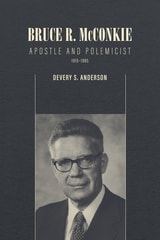
Bruce R. McConkie
Apostle and Polemicist, 1915–1985Anderson, Devery S.
Signature Books, 2024
Although he served as an apostle in the Church of Jesus Christ of Latter-day Saints for only twelve and a half years, Bruce R. McConkie’s twenty-six years’ service in the First Council of Seventy had already made him a household name within the church. Called to full-time church service at age thirty-one, McConkie quickly gained a reputation as a theologian and doctrinal teacher. He became a prolific writer, and his controversial book, Mormon Doctrine, remained a bestseller for decades. His writing style, dogmatic approach, and quickness to reprimand others he believed in error made him many enemies, while others endeared themselves to him because of those very traits.
McConkie the man was far more complex than the serious and focused general authority most church members saw and heard at the pulpit. Those who knew him best experienced his profound sense of humor. His passion for jogging, rock hounding, and jewelry making occupied much of his free time. Those who witnessed his final address delivered days before his death felt compassion toward him, no matter how they had always viewed him as a writer, speaker, or leader. Truly, to understand Bruce R. McConkie one must look closely at the entire picture.
Buddhism Betrayed?
Religion, Politics, and Violence in Sri LankaStanley Jeyaraja Tambiah
University of Chicago Press, 1992
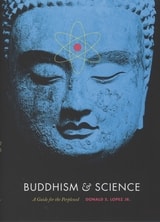
Buddhism and Science
A Guide for the PerplexedDonald S. Lopez Jr.
University of Chicago Press, 2008
In Buddhism and Science, Donald S. Lopez Jr. is less interested in evaluating the accuracy of such claims than in exploring how and why these two seemingly disparate modes of understanding the inner and outer universe have been so persistently linked. Lopez opens with an account of the rise and fall of Mount Meru, the great peak that stands at the center of the flat earth of Buddhist cosmography—and which was interpreted anew once it proved incompatible with modern geography. From there, he analyzes the way in which Buddhist concepts of spiritual nobility were enlisted to support the notorious science of race in the nineteenth century. Bringing the story to the present, Lopez explores the Dalai Lama’s interest in scientific discoveries, as well as the implications of research on meditation for neuroscience.
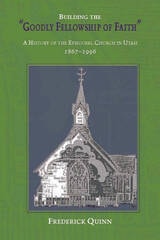
Building The Goodly Fellowship Of Faith
A History of the Episcopal Church in Utah, 1867-1996Frederick Quinn
Utah State University Press, 2004
Frederick Quinn, an Episcopal priest and historian, is adjunct professor of history at Utah State University and adjunct professor of political science at the University of Utah. His previous books include Democracy at Dawn, Notes From Poland and Points East, a TLS International Book of the Year, and African Saints, Martyrs, and Holy People, a Black Catholic Congress Book of the Month. A former chaplain at Washington National Cathedral, he holds a doctorate in history from the University of California at Los Angeles.
Building Your Biblical Hebrew Vocabulary
Learning Words by Frequency and CognateGeorge M. Landes
SBL Press, 2001
A classic resource for beginning Hebrew students
First published over thirty years ago under the title A Student's Vocabulary of Biblical Hebrew, this classic work has been completely revised, updated, and expanded by the author to assist a new generation of students in naturally developing a basic Biblical Hebrew vocabulary. Designed to help beginning Hebrew readers acquire vocabulary quickly, this valuable teaching tool focuses on words that occur most frequently in the Hebrew Bible, while arranging them by roots and cognates allowing students to naturally expand their working vocabulary. Vocabulary lists have been kept to a manageable size; extensive cross-references document when words appear frequently with different meanings, and an index allows rapid location of every word encountered. As a result, students who master this volume will remember words more easily, consult a lexicon less frequently but more intelligently, and translate the Hebrew Bible at sight more readily and enjoyably.
Features
- Vocabulary groupings based on frequency, roots, and cognates
- Separate listing for nouns without verbal roots in the Hebrew Bible
- Appendices including proper names and the forms and meanings of pronominal suffixes
Building Your New Testament Greek Vocabulary, Third Edition
Robert E. Van Voorst
SBL Press, 2022
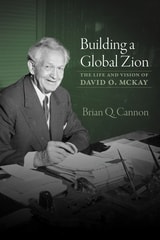
Building a Global Zion
The Life and Vision of David O. McKayBrian Q. Cannon
Signature Books, 2025
Called as an apostle in 1906, David O. McKay devoted the remaining sixty-four years of his life to serving in the Church of Jesus Christ of Latter-day Saints, including nineteen as church president. That lengthy tenure, combined with his warmth, extensive personal ministry, broadmindedness, deep spirituality, and unprecedented global travel made him one of the church’s most beloved and influential leaders of all time. When he died in 1970, roughly 60 percent of the church’s membership had known no other church president. Memories of McKay’s teachings and ministry remain a taproot for the spiritual convictions and values of many Latter-day Saints.
Brian Q. Cannon’s biography offers a fresh perspective on important features of McKay’s life, showing how his mission to Scotland, round-the-world tour as an apostle, and service as president of the European Mission shaped his global vision and priorities. Building a Global Zion illuminates previously underappreciated facets of McKay’s reach, including his crusades against alcohol consumption and political corruption, his long-term administration of missionary work, his spiritual impressions, his personnel decisions, and his mediation of interpersonal impasses in administrative settings. Cannon carefully reconstructs facets of McKay’s vast ministry to individuals, highlights distinctive themes of his teachings, and explores challenges that confronted McKay’s associates as his health and acuity waned.
Bulgaria's Synagogue Poets
The KastoreansEdited by Leon J. Weinberger
University of Alabama Press, 1983
Critical Edition with introduction and commentary by Leon J. Weinberger
This is the first in-depth study of three 11th- to 12th-century poets from Balkan Byzantium. Included are all of the known works by Moses b. Hiyya, Joseph b. Jacob Qalai, and Isaac b. Judah, collected from rare manuscripts and printed editions and from Geniza collections at Oxford and Cambridge. These works provide the evidence that the Balkan synagogue poets favored distinctive literary forms even as they show the strong influence of the Hispanic-Hebrew writers. Completing the volume are indexes of rabbinic, Aramaic, and payyetanic usages and tables of metonymical terms.Published by the Hebrew Union College Press, distributed by The University of Alabama Press.
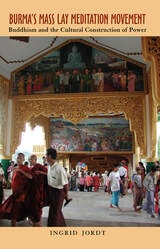
Burma’s Mass Lay Meditation Movement
Buddhism and the Cultural Construction of PowerIngrid Jordt
Ohio University Press, 2007
Burma's Mass Lay Meditation Movement: Buddhism and the Cultural Construction of Power describes a transformation in Buddhist practice in contemporary Burma. This revitalization movement has had real consequences for how the oppressive military junta, in power since the early 1960s, governs the country.
Drawing on more than ten years of extensive fieldwork in Burma, Ingrid Jordt explains how vipassanā meditation has brought about a change of worldview for millions of individuals, enabling them to think and act independently of the totalitarian regime. She addresses human rights as well as the relationship between politics and religion in a country in which neither the government nor the people clearly separates the two. Jordt explains how the movement has been successful in its challenge to the Burmese military dictatorship where democratically inspired resistance movements have failed.
Jordt's unsurpassed access to the centers of political and religious power in Burma becomes the reader's opportunity to witness the political workings of one of the world's most secretive and tyrannically ruled countries. Burma's Mass Lay Meditation Movement is a valuable contribution to Buddhist studies as well as anthropology, religious studies, and political science.
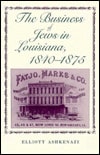
Business Of Jews In Louisiana, 1840–1875
Elliot Ashkenazi
University of Alabama Press, 1988
Goes beyond institutional history to concentrate on commercial and social matters
The author’s findings imply that Jewish immigrants to the South in the first half of the 19th century came from particular locales with similar social, economic, and religious backgrounds, and they chose to live in the South because of those traditions. The experience of Jews with commercial capitalism, rather than landowning, in agricultural societies, gave the Jews of Louisiana a comparable niche in America, and they participated in the commercial aspects of a regional economy based on agricultural production. Commercial and family connections with other Jewish groups facilitated their development into a settled community. In growth and decline, Jewish communities in Louisiana and elsewhere became permanent features of the landscape and influenced, and were influenced, by the areas in which they lived.
By Words Alone
The Holocaust in LiteratureSidra DeKoven Ezrahi
University of Chicago Press, 1980
By knowledge & by love
charity and knowledge in the moral theology of St. Thomas AquinasMichael S. Sherwin
Catholic University of America Press, 2005