Results by title
4038 books match the query 'Social aspects' and 174 start with b

Breaking Up (at) Totality
A Rhetoric of LaughterD. Diane Davis
Southern Illinois University Press, 2000
Rhetoric and composition theory has shown a renewed interest in sophistic countertraditions, as seen in the work of such "postphilosophers" as Jacques Derrida, Michel Foucault, and Hélène Cixous, and of such rhetoricians as Susan Jarratt and Steven Mailloux. As D. Diane Davis traces today’s theoretical interest to those countertraditions, she also sets her sights beyond them.
Davis takes a “third sophistics” approach, one that focuses on the play of language that perpetually disrupts the “either/or” binary construction of dialectic. She concentrates on the nonsequential third—excess—that overflows language’s dichotomies. In this work, laughter operates as a trope for disruption or breaking up, which is, from Davis’s perspective, a joyfully destructive shattering of our confining conceptual frameworks.

Breaking Up America
Advertisers and the New Media WorldJoseph Turow
University of Chicago Press, 1997
"An important book for anyone wanting insight into the advertising and media worlds of today. In plain English, Joe Turow explains not only why our television set is on, but what we are watching. The frightening part is that we are being watched as we do it."—Larry King
"Provocative, sweeping and well made . . . Turow draws an efficient portrait of a marketing complex determined to replace the 'society-making media' that had dominated for most of this century with 'segment-making media' that could zero in on the demographic and psychodemographic corners of our 260-million-person consumer marketplace."—Randall Rothenberg, Atlantic Monthly
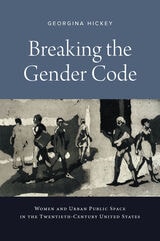
Breaking the Gender Code
Women and Urban Public Space in the Twentieth-Century United StatesGeorgina Hickey
University of Texas Press, 2023
A history of the activism that made public spaces in American cities more accessible to women.
From the closing years of the nineteenth century, women received subtle—and not so subtle—messages that they shouldn’t be in public. Or, if they were, that they were not safe. Breaking the Gender Code tells the story of both this danger narrative and the resistance to it.
Historian Georgina Hickey investigates challenges to the code of urban gender segregation in the twentieth century, focusing on organized advocacy to make the public spaces of American cities accessible to women. She traces waves of activism from the Progressive Era, with its calls for public restrooms, safe and accessible transportation, and public accommodations, through and beyond second-wave feminism, and its focus on the creation of alternative, women-only spaces and extensive anti-violence efforts. In doing so, Hickey explores how gender segregation intertwined with other systems of social control, as well as how class, race, and sexuality shaped activists' agendas and women's experiences of urban space. Drawing connections between the vulnerability of women in public spaces, real and presumed, and contemporary debates surrounding rape culture, bathroom bills, and domestic violence, Hickey unveils both the strikingly successful and the incomplete initiatives of activists who worked to open up public space to women.
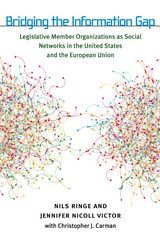
Bridging the Information Gap
Legislative Member Organizations as Social Networks in the United States and the European UnionNils Ringe and Jennifer Nicoll Victor with Christopher J. Carman
University of Michigan Press, 2013
Legislative member organizations (LMOs)—such as caucuses in the U.S. Congress and intergroups in the European Parliament—exist in lawmaking bodies around the world. Unlike parties and committees, LMOs play no obvious, predefined role in the legislative process. They provide legislators with opportunities to establish social networks with colleagues who share common interests. In turn, such networks offer valuable opportunities for the efficient exchange of policy-relevant—and sometimes otherwise unattainable—information between legislative offices. Building on classic insights from the study of social networks, the authors provide a comparative overview of LMOs across advanced, liberal democracies. In two nuanced case studies of LMOs in the European Parliament and the U.S. Congress, the authors rely on a mix of social network analysis, sophisticated statistical methods, and careful qualitative analysis of a large number of in-depth interviews.
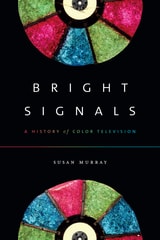
Bright Signals
A History of Color TelevisionSusan Murray
Duke University Press, 2018
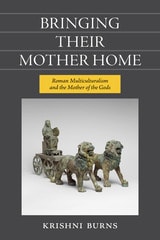
Bringing Their Mother Home
Roman Multiculturalism and the Mother of the GodsKrishni Burns
University of Michigan Press, 2025
Drawing on historical, literary, and archaeological evidence, Bringing Their Mother Home reevaluates the semiotics and practices of the Magna Mater cult as a way to perform the multicultural Roman identity and explores the political and military climate of the Mediterranean leading up to the cult's adoption in 204 BCE.

Brokered Subjects
Sex, Trafficking, and the Politics of FreedomElizabeth Bernstein
University of Chicago Press, 2018

Brotherhood University
Black Men's Friendships and the Transition to AdulthoodBrandon A. Jackson
Rutgers University Press, 2024
Brothers in Grief
The Hidden Toll of Gun Violence on Black Boys and Their SchoolsNora Gross
University of Chicago Press, 2024
JahSun, a dependable, much-loved senior at Boys’ Prep was just hitting his stride in the fall of 2017. He had finally earned a starting position on the varsity football team and was already weighing two college acceptances. Then, over Thanksgiving, tragedy struck. An altercation at his older sister’s home escalated into violence, killing the unarmed teenager in a hail of bullets. JahSun’s untimely death overwhelmed his entire community, sending his family, friends, and school into seemingly insurmountable grief. Worse yet, that spring two additional Boys’ Prep students would be shot to death in their neighborhood. JahSun and his peers are not alone in suffering the toll of gun violence, as every year in the United States teenagers die by gunfire in epidemic numbers, with Black boys most deeply affected.
Brothers in Grief closely attends to the neglected victims of youth gun violence: the suffering friends and classmates who must cope, mostly out of public view, with lasting grief and hidden anguish. Set at an ambitious urban high school for boys during the heartbreaking year following the death of JahSun, the book chronicles the consequences of untimely death on Black teen boys and on a school community struggling to recover. Sociologist Nora Gross tells the story of students attempting to grapple with unthinkable loss, inviting readers in to observe how they move through their days at school and on social media in the aftermath of their friends’ and classmates’ deaths. Gross highlights the discrepancy between their school’s educational mission and teachers’ and administrators’ fraught attempts to care for students’ emotional wellbeing. In the end, the school did not provide adequate space for grief, making it more difficult for students to heal, reengage with school, and imagine hopeful futures. Even so, supportive relationships deepened among students and formed across generations, offering promising examples of productive efforts to channel student grief into positive community change.
A searing testimony of our collective failure to understand the inner lives of our children in crisis, Brothers in Grief invites us all to wrestle with the hidden costs of gun violence on racial and educational inequity.
Brown Saviors and Their Others
Race, Caste, Labor, and the Global Politics of Help in IndiaArjun Shankar
Duke University Press, 2023

Buddhism Betrayed?
Religion, Politics, and Violence in Sri LankaStanley Jeyaraja Tambiah
University of Chicago Press, 1992
Building Bodies
Moore, Pamela L
Rutgers University Press, 1997
Building Diaspora
Filipino Cultural Community Formation on the InternetIgnacio, Emily N
Rutgers University Press, 2004
In Building Diaspora, Emily Noelle Ignacio explores how Filipinos have used these subtle, cyber, but very real social connections to construct and reinforce a sense of national, ethnic, and racial identity with distant others. Through an extensive analysis of newsgroup debates, listserves, and website postings, she illustrates the significant ways that computer-mediated communication has contributed to solidifying what can credibly be called a Filipino diaspora. Lively cyber-discussions on topics including Eurocentrism, Orientalism, patriarchy, gender issues, language, and "mail-order-brides" have helped Filipinos better understand and articulate their postcolonial situation as well as their relationship with other national and ethnic communities around the world. Significant attention is given to the complicated history of Philippine-American relations, including the ways Filipinos are racialized as a result of their political and economic subjugation to U.S. interests.
As Filipinos and many other ethnic groups continue to migrate globally, Building Diaspora makes an important contribution to our changing understanding of "homeland." The author makes the powerful argument that while home is being further removed from geographic place, it is being increasingly territorialized in space.

Building Nature's Market
The Business and Politics of Natural FoodsLaura J. Miller
University of Chicago Press, 2017
Building Nature’s Market shows how the meaning of natural foods was transformed as they changed from a culturally marginal, religiously inspired set of ideas and practices valorizing asceticism to a bohemian lifestyle to a mainstream consumer choice. Laura J. Miller argues that the key to understanding this transformation is to recognize the leadership of the natural foods industry. Rather than a simple tale of cooptation by market forces, Miller contends the participation of business interests encouraged the natural foods movement to be guided by a radical skepticism of established cultural authority. She challenges assumptions that private enterprise is always aligned with social elites, instead arguing that profit-minded entities can make common cause with and even lead citizens in advocating for broad-based social and cultural change.
Building Resilience
Social Capital in Post-Disaster RecoveryDaniel P. Aldrich
University of Chicago Press, 2012
Building on Borrowed Time
Rising Seas and Failing Infrastructure in SemarangLukas Ley
University of Minnesota Press, 2021
A timely ethnography of how Indonesia’s coastal dwellers inhabit the “chronic present” of a slow-motion natural disaster
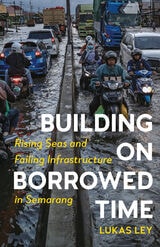
Ice caps are melting, seas are rising, and densely populated cities worldwide are threatened by floodwaters, especially in Southeast Asia. Building on Borrowed Time is a timely and powerful ethnography of how people in Semarang, Indonesia, on the north coast of Java, are dealing with this global warming–driven existential challenge. In addition to antiflooding infrastructure breaking down, vast areas of cities like Semarang and Jakarta are rapidly sinking, affecting the very foundations of urban life: toxic water oozes through the floors of houses, bridges are submerged, traffic is interrupted.
As Lukas Ley shows, the residents of Semarang are constantly engaged in maintaining their homes and streets, trying to live through a slow-motion disaster shaped by the interacting temporalities of infrastructural failure, ecological deterioration, and urban development. He casts this predicament through the temporal lens of a “meantime,” a managerial response that means a constant enduring of the present rather than progress toward a better future—a “chronic present.”
Building on Borrowed Time takes us to a place where a flood crisis has already arrived—where everyday residents are not waiting for the effects of climate change but are in fact already living with it—and shows that life in coastal Southeast Asia is defined not by the temporality of climate science but by the lived experience of tidal flooding.
Building on a Borrowed Past
Place and Identity in Pipestone, MinnesotaSally J. Southwick
Ohio University Press, 2005
Why is there a national monument near a small town on the Minnesota prairie? Why do the town’s residents dress as Indians each summer and perform a historical pageant based on a Victorian-era poem? To answer such questions, Building on a Borrowed Past: Place and Identity in Pipestone, Minnesota shows what happens when one culture absorbs the heritage of another for civic advantage.
Founded in 1874, Pipestone was named for the quarries where regional tribes excavated soft stone for making pipes. George Catlin and Henry Wadsworth Longfellow described the place and its tribal history. Promotion by white residents of the quarries as central to America’s Indian heritage helped Pipestone obtain a federal Indian boarding school in the 1890s and a national monument in the 1930s. The annual “Song of Hiawatha” pageant attracted tourists after World War II. Sally J. Southwick’s prizewinning study demonstrates how average, small–town citizens contributed to the generic image of “the Indian” in American culture.
Examining oral histories, memoirs, newspapers, federal documents, civic group records, and promotional literature, Southwick focuses on the role of middle–class individuals in establishing a historical, place–based identity. Building on a Borrowed Past reveals how identities are formed through adaptation of cultural, spiritual, racial, and historical symbols.
Built To Win
The Female Athlete As Cultural IconLeslie Heywood
University of Minnesota Press, 2003
A timely look at the rise of women in sports
The sculpted speed of Marion Jones. The grit and agility of Mia Hamm. The slam-dunk style of Lisa Leslie. The skill and finesse of these sports figures are widely admired, no longer causing the puzzlement and discomfort directed toward earlier generations of athletic women. Built to Win explores this relatively recent phenomenon—the confident, empowered female athletes found everywhere in American popular culture.
Leslie Heywood and Shari L. Dworkin examine the role of female athletes through interviews with elementary- and high school-age girls and boys; careful readings of ad campaigns by Nike, Reebok, and others; discussions of movies like Fight Club and Girlfight; and explorations of their own sports experiences. They ask: what, if any, dissonance is there between popular images and the actual experiences of these athletes? Do these images really “redefine femininity” and contribute to a greater inclusion of all women in sport? Are sexualized images of these women damaging their quest to be taken seriously? Do they inspire young boys to respect and admire female athletes, and will this ultimately make a difference in the ways gender and power are constructed and perceived?Proposing a paradigm shift from second- to third-wave feminism, Heywood and Dworkin argue that, in the years since the passage of Title IX, gender stereotypes have been destabilized in profound ways, and they assert that female athletes and their imagery are doing important cultural work to that end. Important, refreshing, and engrossing, Built to Win examines sport in all its complexity.
Bulls, Bullfighting, and Spanish Identities
Carrie B. Douglass
University of Arizona Press, 1997
In talking about bulls and bullfighting, observes Douglass, one ends up talking not only about differences in region, class, and politics in Spain but also about that country's ongoing struggle between modernity and tradition. She relates how Spaniards and outsiders see bullfighting as representative of a traditional, irrational Spain contrasted with a more civilized Europe, and she shows how Spaniards' ambivalence about bullfighting is actually a way of expressing ambivalence about the loss of traditional culture in a modern world. To fully explore the symbolism of bulls and bullfighting, Douglass offers an overview of Spain's fiesta cycle, in which the bull is central. She broadly and meticulously details three different fiestas through ethnographic fieldwork conducted over a number of years, delineating the differences in festivals held in different regions.
She also shows how a cycle of these fiestas may hold the key to resolving some of Spain's fundamental political contradictions by uniting the different regions of Spain and reconciling opposing political camps--the right, which holds that there is one Spain, and the left, which contends that there are many. Bulls, Bullfighting, and Spanish Identities is an intriguing study of symbolism used to examine the broader anthropological issues of identity and nationhood. Through its focus on the political discourse of bulls and bullfighting, it makes an original contribution to understanding not only Spanish politics but also Spain's place in the modern world.
Burma’s Mass Lay Meditation Movement
Buddhism and the Cultural Construction of PowerIngrid Jordt
Ohio University Press, 2007
Burma's Mass Lay Meditation Movement: Buddhism and the Cultural Construction of Power describes a transformation in Buddhist practice in contemporary Burma. This revitalization movement has had real consequences for how the oppressive military junta, in power since the early 1960s, governs the country.
Drawing on more than ten years of extensive fieldwork in Burma, Ingrid Jordt explains how vipassanā meditation has brought about a change of worldview for millions of individuals, enabling them to think and act independently of the totalitarian regime. She addresses human rights as well as the relationship between politics and religion in a country in which neither the government nor the people clearly separates the two. Jordt explains how the movement has been successful in its challenge to the Burmese military dictatorship where democratically inspired resistance movements have failed.
Jordt's unsurpassed access to the centers of political and religious power in Burma becomes the reader's opportunity to witness the political workings of one of the world's most secretive and tyrannically ruled countries. Burma's Mass Lay Meditation Movement is a valuable contribution to Buddhist studies as well as anthropology, religious studies, and political science.
Burnt Cork
Traditions and Legacies of Blackface MinstrelsyStephen Johnson
University of Massachusetts Press, 2012
Beginning in the 1830s and continuing for more than a century, blackface minstrelsy—stage performances that claimed to represent the culture of black Americans—remained arguably the most popular entertainment in North America. A renewed scholarly interest in this contentious form of entertainment has produced studies treating a range of issues: its contradictory depictions of class, race, and gender; its role in the development of racial stereotyping; and its legacy in humor, dance, and music, and in live performance, film, and television. The style and substance of minstrelsy persist in popular music, tap and hip-hop dance, the language of the standup comic, and everyday rituals of contemporary culture. The blackface makeup all but disappeared for a time, though its influence never diminished—and recently, even the makeup has been making a comeback.
This collection of original essays brings together a group of prominent scholars of blackface performance to reflect on this complex and troublesome tradition. Essays consider the early relationship of the blackface performer with American politics and the antislavery movement; the relationship of minstrels to the commonplace compromises of the touring “show” business and to the mechanization of the industrial revolution; the exploration and exploitation of blackface in the mass media, by D. W. Griffith and Spike Lee, in early sound animation, and in reality television; and the recent reappropriation of the form at home and abroad.
In addition to the editor, contributors include Dale Cockrell, Catherine Cole, Louis Chude-Sokei, W. T. Lhamon, Alice Maurice, Nicholas Sammond, and Linda Williams.
Buy It Now
Lessons from eBayMichele White
Duke University Press, 2012

Buyers Beware
Insurgency and Consumption in Caribbean Popular CulturePatricia Joan Saunders
Rutgers University Press, 2022
By Touch Alone
Blindness and Reading in Nineteenth-Century CultureVanessa Warne
University of Michigan Press, 2025
While By Touch Alone features the writing and ideas of an understudied community of nineteenth-century blind authors, innovators, and activists, it also engages the work of sighted authors such as George Eliot and Rudyard Kipling to explore the culture-wide effects of reading by touch. The emergence of a new category of readers who did not rely on sight to read prompted sighted people to reimagine blindness and adopt more progressive attitudes toward blind people. In our own era, one characterized by the increasing digitization of our reading lives, Vanessa Warne’s exploration positions scholars and blind readers to navigate present-day developments and shape the future of their reading lives. A carefully contextualized study of how reading by touch shaped Victorian culture, By Touch Alone adds new chapters to the history of disability and reading.