Results by title
5159 books match the query 'Biography' and 297 start with b
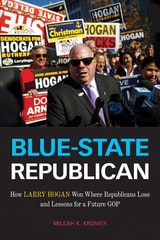
Blue-State Republican
How Larry Hogan Won Where Republicans Lose and Lessons for a Future GOPMileah K. Kromer
Temple University Press, 2023
Larry Hogan is one of the most popular political figures in the United States today. The two-term Republican governor of Maryland first won his seat after upsetting a favorite of the Democratic political establishment, and then overcame the Trump-driven wave in the heartland of the #resistance to win a second term in 2018.
Blue-State Republican is the remarkable story of how his carefully messaged, pragmatic approach to governance helped build a coalition of moderate and conservative Democrats, independents, women, college-educated and Black voters and maintained his GOP base during a time of polarization and negative partisanship. Mileah Kromer takes readers inside Maryland politics to illustrate exactly how Hogan won where Republicans lose and consider whether the un-Trump Republican offers any lessons for how the GOP can win the center-right voters who continue to make up a majority of the country.
Kromer conducts interviews with key political leaders and insiders, including Hogan himself, to explain the mechanics of his political success. She also provides a cogent analysis of public opinion polls and focus groups, ultimately showing why the success of a blue-state Republican matters outside of his home state, especially as Hogan considers a 2024 Presidential run.
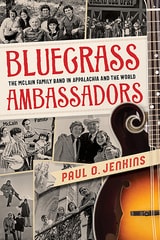
Bluegrass Ambassadors
The McLain Family Band in Appalachia and the WorldPaul O. Jenkins
West Virginia University Press, 2020
Interpreting the band’s diverse repertoire as both a source of its popularity and a reason for its exclusion from the bluegrass pantheon, Paul Jenkins advances subtle arguments about genre, criticism, and audience. Bluegrass Ambassadors analyzes the McLains’ compositions, recordings, and performances, and features a complete discography.
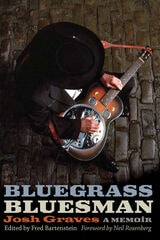
Bluegrass Bluesman
A MemoirJosh Graves; Edited by Fred Bartenstein; Foreword by Neil Rosenberg
University of Illinois Press, 2012
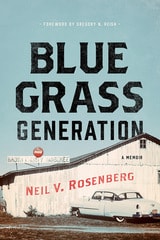
Bluegrass Generation
A MemoirNeil V Rosenberg
University of Illinois Press, 2018
Rosenberg's memoir shines a light on the changing bluegrass scene of the early 1960s. Already a fan and aspiring musician, his appetite for banjo music quickly put him on the Jamboree stage. Rosenberg eventually played with Monroe and spent four months managing the Jamboree. Those heights gave him an eyewitness view of nothing less than bluegrass's emergence from the shadow of country music into its own distinct art form. As the likes of Bill Keith and Del McCoury played, Rosenberg watched Monroe begin to share a personal link to the music that tied audiences to its history and his life--and helped turn him into bluegrass's foundational figure.
An intimate look at a transformative time, Bluegrass Generation tells the inside story of how an American musical tradition came to be.

Bluejackets in the Blubber Room
A Biography of the William Badger,1828-1865Kurtz, Peter
University of Alabama Press, 2013
Blues All Day Long
The Jimmy Rogers StoryWayne Everett Goins, foreword by Kim Wilson
University of Illinois Press, 2014
In Blues All Day Long, Wayne Everett Goins mines seventy-five hours of interviews with Rogers' family, collaborators, and peers to follow a life spent in the blues. Goins' account takes Rogers from recording Chess classics and barnstorming across the South to a late-in-life renaissance that included new music, entry into the Blues Hall of Fame, and high profile tours with Eric Clapton and the Rolling Stones. Informed and definitive, Blues All Day Long fills a gap in twentieth century music history with the story of one of the blues' eminent figures and one of the genre's seminal bands.
Blues Before Sunrise 2
Interviews from the Chicago SceneSteve Cushing
University of Illinois Press, 2019
Blues Before Sunrise 3
Guitar Slingers and BackbeatersSteve Cushing. Introduction by Wayne Everett Goins
University of Illinois Press, 2025
Steve Cushing’s third volume of interviews from Blues Before Sunrise puts fans face-to-face with music legends and industry figures. The volume kicks off with a roundtable featuring drumming all-stars Earl Phillips, S.P. Leary, Odie Payne, Clifton James, and Fred Below discussing their lives and craft. Cushing segues to one-on-one interviews with Howlin’ Wolf sideman Phillips; Leary, a fellow Wolf alum and player with Sonny Boy Williamson II; Payne, known for his kick drum technique; longtime Muddy Waters drummer Willie “Big Eyes” Smith; next-generation standard bearer and session mainstay Casey Jones; and King Records house drummer Phillip Paul.
Interviews with guitarists include talks with Honeyboy Edwards, whose friendships with innumerable Chicago blues legends (and Robert Johnson) predated the Great Migration; jazz player turned bluesman Guitar Shorty; and figures like Texas native Roy Gaines, Johnny Heartsman of Oakland, and Memphis-born Floyd Murphy. A final section offers interviews with vocalists, record label founders, and other figures. Music scholar Wayne Everett Goins provides an introduction on blues history, blues style, and the careers of the featured artists.
Interviews: Joel Dorn, Honeyboy Edwards, Slim Gaillard, Roy Gaines, Johnny Heartsman, Franz Jackson, Casey Jones, S.P. Leary, Floyd Murphy, Jimmy “T-99” Nelson, Johnny Parth, Phillip Paul, Odie Payne, Earl Phillips, Art Sheridan, Guitar Shorty, Willie “Big Eyes” Smith, and Norvel Taborn
Blues Before Sunrise
The Radio InterviewsSteve Cushing, Foreword by Jim O'Neal
University of Illinois Press, 2010
This collection assembles the best interviews from Steve Cushing's long-running radio program Blues Before Sunrise, the nationally syndicated, award-winning program focusing on vintage blues and R&B. As both an observer and performer, Cushing has been involved with the blues scene in Chicago for decades. His candid, colorful interviews with prominent blues players, producers, and deejays reveal the behind-the-scenes world of the formative years of recorded blues. Many of these oral histories detail the careers of lesser-known but greatly influential blues performers and promoters.
The book focuses in particular on pre–World War II blues singers, performers active in 1950s Chicago, and nonperformers who contributed to the early blues world. Interviewees include Alberta Hunter, one of the earliest African American singers to transition from Chicago's Bronzeville nightlife to the international spotlight, and Ralph Bass, one of the greatest R&B producers of his era. Blues expert, writer, record producer, and cofounder of Living Blues Magazine Jim O'Neal provides the book's foreword.
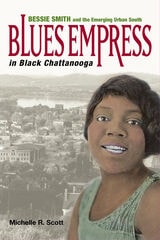
Blues Empress in Black Chattanooga
Bessie Smith and the Emerging Urban SouthMichelle R. Scott
University of Illinois Press, 2007
As one of the first African American vocalists to be recorded, Bessie Smith is a prominent figure in American popular culture and African American history. Michelle R. Scott uses Smith's life as a lens to investigate broad issues in history, including industrialization, Southern rural to urban migration, black community development in the post-emancipation era, and black working-class gender conventions.
Arguing that the rise of blues culture and the success of female blues artists like Bessie Smith are connected to the rapid migration and industrialization in the late nineteenth and early twentieth centuries, Scott focuses her analysis on Chattanooga, Tennessee, the large industrial and transportation center where Smith was born. This study explores how the expansion of the Southern railroads and the development of iron foundries, steel mills, and sawmills created vast employment opportunities in the postbellum era. Chronicling the growth and development of the African American Chattanooga community, Scott examines the Smith family's migration to Chattanooga and the popular music of black Chattanooga during the first decade of the twentieth century, and culminates by delving into Smith's early years on the vaudeville circuit.
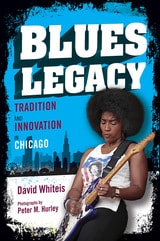
Blues Legacy
Tradition and Innovation in ChicagoDavid Whiteis
University of Illinois Press, 2019
David Whiteis delves into how the current and upcoming Chicago blues generations carry on this legacy. Drawing on in-person interviews, Whiteis places the artists within the ongoing social and cultural reality their work reflects and helps create. Beginning with James Cotton, Eddie Shaw, and other bequeathers, he moves through an all-star council of elders like Otis Rush and Buddy Guy and on to inheritors and today's heirs apparent like Ronnie Baker Brooks, Shemekia Copeland, and Nellie "Tiger" Travis.
Insightful and wide-ranging, Blues Legacy reveals a constantly adapting art form that, whatever the challenges, maintains its links to a rich musical past.
Blues for Cannibals
The Notes from UndergroundBy Charles Bowden
University of Texas Press, 2018
Cultivated from the fierce ideas seeded in Blood Orchid, Blues for Cannibals is an elegiac reflection on death, pain, and a wavering confidence in humanity’s own abilities for self-preservation. After years of reporting on border violence, sex crimes, and the devastation of the land, Bowden struggles to make sense of the many ways in which we destroy ourselves and whether there is any way to survive. Here he confronts a murderer facing execution, sex offenders of the most heinous crimes, a suicidal artist, a prisoner obsessed with painting portraits of presidents, and other people and places that constitute our worst impulses and our worst truths. Painful, heartbreaking, and forewarning, Bowden at once tears us apart and yearns for us to find ourselves back together again.
Blues of a Lifetime
Autobiography of Cornell WoolrichEdited by Mark T. Bassett
University of Wisconsin Press, 1991

Bob Bilyeu Camblin
An Iconoclast in Houston's Emerging Art SceneSandra Jensen Rowland
University of North Texas Press, 2020
Bob Bullock
God Bless TexasBy Dave McNeely and Jim Henderson
University of Texas Press, 2008
Renowned for his fierce devotion to the people of Texas—as well as his equally fierce rages and unpredictable temper—Bob Bullock was the most powerful political figure in Texas at the end of the twentieth century. First elected to the Texas House of Representatives in 1956, Bullock held several key statewide posts before capturing the lieutenant governor's office in 1990. Though nominally the state's number two official, Bullock in fact became Texas's top power broker, wielding tremendous influence over the legislative agenda and state budget through the 1990s while also mentoring and supporting a future president—George W. Bush.
In this lively, yet thoroughly researched biography, award-winning journalists Dave McNeely and Jim Henderson craft a well-rounded portrait of Bob Bullock, underscoring both his political adroitness and his personal demons. They trace Bullock's rise through state government as Assistant Attorney General, Secretary of State, State Comptroller, and Lieutenant Governor, showing how he increased the power of every office he held. The authors spotlight Bullock's substantial achievements, which included hiring an unprecedented number of women and minorities, instituting a performance review to increase the efficiency of state agencies, restructuring the public school funding system, and creating the state's first water conservation and management plan.
Bob Kleberg and the King Ranch
A Worldwide Sea of GrassBy John Cypher
University of Texas Press, 1996
Ranching on the vast scale that Texas is famous for actually happened at King Ranch, a sea of grass that ultimately spread its pastures to countries around the globe under the fifty-year leadership of Bob Kleberg. This absorbing biography, written by Kleberg's top assistant of many years, captures both the life of the man and the spirit of the kingdom he ruled, offering a rare, insider's view of life on a fabled Texas ranch.
John Cypher spent forty years (1948-1988) on King Ranch. In these pages, he melds highlights of Kleberg's life with memories of his own experiences as the "right hand" who implemented many of Kleberg's grand designs. In a lively story laced with fascinating anecdotes he both recounts his worldwide travels with Kleberg as the ranch expanded its holdings to Latin America, Cuba, Australia, the Philippines, Europe, and Africa, and describes timeless, traditional tasks such as roundup at the home ranch in Kingsville.
Kleberg's accomplishments as the founder of the Santa Gertrudis cattle breed and a breeder of Thoroughbred racing horses receive full attention, as does his fabled lifestyle, which included friendships not merely with the rich and famous but also with Queen Elizabeth the Queen Mother, who shared his love of horse racing. For everyone interested in ranching and one of its most famous practitioners, this book will be essential reading.
Bobby Braddock
A Life on Nashville’s Music RowBobby Braddock
Vanderbilt University Press, 2015
If you're looking for insight into Nashville, the life of music in this town, and the story of a force of nature on the Row to this day, Bobby Braddock will take you there.
Boccaccio
A BiographyMarco Santagata
University of Chicago Press, 2025
Boccaccio (1313–75) stands with Dante and Petrarch as one of the “Three Crowns” of Italian letters, a trio of writers who shaped the history of humanism, literature, and poetry. In this book, Dante’s award-winning biographer, Marco Santagata, takes up the moving life and legacy of Boccaccio—whose unflinching story of a pandemic-era community (the Decameron) created new possibilities for vernacular Italian prose.
This landmark biography sheds new light on Boccaccio’s life—his family, friends, and foes, his aspirations, fears, and frustrations—and it shows how he was affected by transformations in Italian society. It also charts the influences that shaped Boccaccio’s understanding of literature: what kinds of stories it could tell and what kinds of characters it could depict; and, perhaps most importantly, what role art could play in a changing world. An insightful portrait of one of literature’s most important figures, this book promises to be the definitive biography of Boccaccio for many years to come.
Bodie’s Gold
Tall Tales and True History from a California Mining TownMarguerite Sprague
University of Nevada Press, 2011

Body Love
The Amazing Career of Bernarr MacfaddenWilliam R. Hunt
University of Wisconsin Press, 1989
Bernarr Macfadden (1868–1955) entertained and instructed Americans for decades. He championed physical exercise, fasting, and diet reform and was the relentless scourge of established doctors. He presented his views in Physical Culture, a popular magazine featuring photographs of strong men and healthy women and articles promoting the healthy life. While some critics derided him as a health nut, no one could dispute his genius as a magazine publisher. He established the world’s greatest magazine publishing empire through the innovation of such popular publications as True Story, the first confession magazine; True Detective; and many others.
Body Problems
What Intersex Priest Sally Gross Teaches Us About Embodiment, Justice, and BelongingM. Wolff
Duke University Press, 2025

Body Story
Julia K. De Pree
Ohio University Press, 2004
For De Pree, between being a girl and being a woman, there was starvation. Body Story is her intimate account of girlhood, virginity, anorexia, and motherhood. De Pree's prose is spare and unguarded, revealing in vivid flashbacks and poignant vignettes the sources of her inner pain.
In high school, the five-foot-ten De Pree weighed as little as 114 pounds. She was too weak to raise her arms above her head. “In a paradoxical way, I starved my body in order to understand my life,” she writes. “I had to place my body in suspension before I could move physically into sexuality. Starving allowed me to create an interim space between innocence and experience.”
De Pree renders the starkness of anorexia along with the process of recovery, relapse, and, ultimately, redemption. She also tells the story of the physical landscape, from her origins in the Midwest to the American South, Paris, and the vast New Mexican desert, as well as the psychic landscape of her body as it encounters the joys and challenges of maturation, childbirth, and motherhood.
De Pree offers readers a new way of understanding women¿s bodily experience, as she writes about the mystery and the meaning of her illness. As many as eight million Americans suffer from eating disorders. Body Story, unlike clinical reports or news accounts, illuminates the complexity of anorexia as the narrative moves toward a subjective and deeply personal truth.
This evocative and often radiant vision is a unique window into womanhood and selfhood in middle-class, contemporary America.
Body, Remember
A MemoirKenny Fries
University of Wisconsin Press, 2003
In this poetic, introspective memoir, Kenny Fries illustrates his intersecting identities as gay, Jewish, and disabled. While learning about the history of his body through medical records and his physical scars, Fries discovers just how deeply the memories and psychic scars run. As he reflects on his relationships with his family, his compassionate doctor, the brother who resented his disability, and the men who taught him to love, he confronts the challenges of his life. Body, Remember is a story about connection, a redemptive and passionate testimony to one man’s search for the sources of identity and difference.
Bold Words
A Century of Asian American WritingEdited by Rajini Srikanth
Rutgers University Press, 2001
Bombast And Broadsides
The Lives of George JohnstoneRobin F. A. Fabel
University of Alabama Press, 1987
George Johnstone has never received the scholarly attention he fully merits. Historians have assessed him, usually briefly, as governor of West Florida, or as naval commander, or as a member of parliament. Nevertheless, none has considered his important role in East India Company politics, nor, until Bombast and Broadsides, has one synthesized the various roles in which Johnstone was entrusted with high responsibilities.
Through research in Cardiff, Edinburgh, Kew, London, Philadelphia, and Washington in largely unpublished manuscripts, together with the use of secondary sources, the author has been able to present the first coherent picture of Johnstone, a vigorous and intelligent but turbulent and always controversial figure. Johnstone was effective as a colonial governor at a difficult time; in the navy he performed several coups de main; in parliament he was formidable in debate but an opportunist; and at East India House he was a doughty, conservative, and largely successful defender of the proprietary interest.
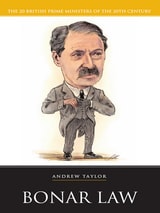
Bonar Law
Andrew Taylor
Haus Publishing, 2006
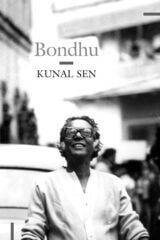
Bondhu
My Father, My FriendKunal Sen
Seagull Books, 2023
“No one remembers when and why I started calling my father Bondhu. It was a strange way to address a father, as the word means ‘friend’ in Bengali. . . . As I got older, I became very self-conscious about such an odd name . . . and yet I cannot explain why I could not switch to the more acceptable Baba or something similar.”
Just as Kunal Sen, son of actor Gita Sen and filmmaker Mrinal Sen, was approaching adolescence, his father’s cinematic celebrity was reaching new heights. In this memoir, Kunal reflects on growing up in a middle-class household in South Calcutta, where his father’s Marxist beliefs and unrelenting urge “to be challenged and contradicted” often collided with the practical challenges of making a living. Through it all, what emerges is a picture of a family’s unyielding commitment to the craft of cinema, the risks each of its members took, and their endearing sense of humor. Celebrating Mrinal Sen’s birth centenary in 2023, Bondhu takes us on an intimate journey of a son attempting to reconcile his father’s public and private selves.

Bonds of Enterprise
John Murray Forbes and Western Development in America's Railway AgeJohn Lauritz Larson
University of Iowa Press, 2001
Bones of Contention
The living archive of Vasil Levski and the making of Bulgaria's national heroMaria Todorova
Central European University Press, 2009
Bones on the Ground
Elizabeth O'Maley
Indiana Historical Society Press, 2014
Book for the Hour of Recreation
María de San José Salazar
University of Chicago Press, 2002
María wrote this book as a defense of the Discalced practice of setting aside two hours each day for conversation, music, and staging of religious plays. Casting the book in the form of a dialogue, María demonstrates through fictional conversations among a group of nuns during their hours of recreation how women could serve as very effective spiritual teachers for each other. The book includes one of the first biographical portraits of Teresa and Maria's personal account of the troubled founding of the Discalced convent at Seville, as well as her tribulations as an Inquisitional suspect. Rich in allusions to women's affective relationships in the early modern convent, Book for the Hour of Recreation also serves as an example of how a woman might write when relatively free of clerical censorship and expectations.
A detailed introduction and notes by Alison Weber provide historical and biographical context for Amanda Powell's fluid translation.

Boots, Bikes, and Bombers
Adventures of Alaska Conservationist Ginny Hill WoodEdited by Karen Brewster
University of Alaska Press, 2012
Border Healing Woman
The Story of Jewel Babb as told to Pat LittleDog (second edition)By Jewel Babb as told to Pat Littledog
University of Texas Press, 1994
The story of Jewel Babb, from her early years as a tenderfoot ranch wife to her elder years as a desert healing woman, has enthralled readers since Border Healing Woman was first published in 1981. In this second edition, Pat LittleDog adds an epilogue to conclude the story, describing the mixed blessings that publicity brought to Jewel Babb before her death in 1991.
Border Junkies
Addiction and Survival on the Streets of Juárez and El PasoBy Scott Comar
University of Texas Press, 2011
The drug war that has turned Juárez, Mexico, into a killing field that has claimed more than 7,000 lives since 2008 captures headlines almost daily. But few accounts go all the way down to the streets to investigate the lives of individual drug users. One of those users, Scott Comar, survived years of heroin addiction and failed attempts at detox and finally cleaned up in 2003. Now a graduate student at the University of Texas at El Paso in the history department's borderlands doctoral program, Comar has written Border Junkies, a searingly honest account of his spiraling descent into heroin addiction, surrender, change, and recovery on the U.S.-Mexico border.
Border Junkies is the first book ever written about the lifestyle of active addiction on the streets of Juárez. Comar vividly describes living between the disparate Mexican and American cultures and among the fellow junkies, drug dealers, hookers, coyote smugglers, thieves, and killers who were his friends and neighbors in addiction—and the social workers, missionaries, shelter workers, and doctors who tried to help him escape. With the perspective of his anthropological training, he shows how homelessness, poverty, and addiction all fuel the use of narcotics and the rise in their consumption on the streets of Juárez and contribute to the societal decay of this Mexican urban landscape. Comar also offers significant insights into the U.S.-Mexico borderland's underground and peripheral economy and the ways in which the region's inhabitants adapt to the local economic terrain.
Borderlands Curanderos
The Worlds of Santa Teresa Urrea and Don Pedrito JaramilloBy Jennifer Koshatka Seman
University of Texas Press, 2021
2022 Americo Paredes Award, Center for Mexican American Studies at South Texas College
A historical exploration of the worlds and healing practices of two curanderos (faith healers) who attracted thousands, rallied their communities, and challenged institutional powers.
Santa Teresa Urrea and Don Pedrito Jaramillo were curanderos—faith healers—who, in the late nineteenth and early twentieth centuries, worked outside the realm of "professional medicine," seemingly beyond the reach of the church, state, or certified health practitioners whose profession was still in its infancy. Urrea healed Mexicans, Indigenous people, and Anglos in northwestern Mexico and cities throughout the US Southwest, while Jaramillo conducted his healing practice in the South Texas Rio Grande Valley, healing Tejanos, Mexicans, and Indigenous people there. Jennifer Koshatka Seman takes us inside the intimate worlds of both "living saints," demonstrating how their effective healing—curanderismo—made them part of the larger turn-of-the century worlds they lived in as they attracted thousands of followers, validated folk practices, and contributed to a modernizing world along the US-Mexico border.
While she healed, Urrea spoke of a Mexico in which one did not have to obey unjust laws or confess one's sins to Catholic priests. Jaramillo restored and fed drought-stricken Tejanos when the state and modern medicine could not meet their needs. Then, in 1890, Urrea was expelled from Mexico. Within a decade, Jaramillo was investigated as a fraud by the American Medical Association and the US Post Office. Borderlands Curanderos argues that it is not only state and professional institutions that build and maintain communities, nations, and national identities but also those less obviously powerful.
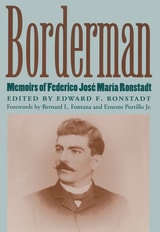
Borderman
Memoirs of Federico José María RonstadtEdited by Edward F. Ronstadt; Forewords by Bernard L. Fontana and Ernesto Portillo, Jr.
University of Arizona Press, 2003
Writing proudly of his Mexican and American heritages, Ronstadt offers readers an extraordinary portrait of the Arizona-Mexico borderlands during the late nineteenth century. His memoirs provide a richness of detail and insight unmatched by traditional histories, relating such scenarios as the hardships of Yaqui hardrock miners working under primitive conditions, the travails of pearl divers in the Gulf of California, and the insurrection of Francisco Serna in 1875 Sonora. They also depict the simple activities of childhood, with its schooling and musical training, its games and mischief. Ronstadt relates his apprenticeship to a wagon- and carriage-maker in Tucson, recalling labor relations in the shop, the establishment of his own business, and the joys and anguish of his personal life. He tells of how he drew on talents nurtured in childhood to become a musician and bandleader, playing weekly concerts with Club Filarmónica Tucsonense for nine years—musical talents that were eventually passed on to his children, his grandchildren (including Linda), and great-grandchildren.
Through Ronstadt's memories, we are better able to understand the sense of independence and self-reliance found today among many lifelong residents of Sonora and Baja California—people isolated from major supply sources and centers of power—and to appreciate a different view of Tucson's past. Enhanced by 22 historical photos, Borderman is a treasure trove of historical source material that will enlighten all readers interested in borderlands history.
Born a Chief
The Nineteenth Century Hopi Boyhood of Edmund Nequatewa, as told to Alfred F. WhitingEdmund Nequatewa
University of Arizona Press, 1993
"This story was fascinating. . . . One worth the telling and one which will stay with the reader."—American Desert Magazine
"Recommended."—Choice
Borrowed Time
Survivors of Nazi Terezín RememberDennis Carlyle Darling
University of Texas Press, 2024
Honorable Mention — The International Photography Awards 2024 Book Category
Documentation, through photographs and interviews, of those who survived the unique Nazi ghetto/camp located at Terezín, Czech Republic.
Dennis Carlyle Darling has photographed and interviewed hundreds of Holocaust survivors who spent time at the German transit camp and ghetto at Terezín, a former eighteenth-century military garrison located north of Prague. Many of the prisoners were kept there until they could be transported to Auschwitz or other camps, but unlike German captives elsewhere, they were allowed to participate in creative activities that the Nazis used for propaganda purposes to show the world how well they were treating Jews. Although it was not classified as a “death camp,” more than 33,000 prisoners died at Terezín from hunger, disease, and mistreatment.
In Borrowed Time, Darling reveals Terezín as a place of painful contradictions, through striking and intimate portraits that retrace time and place with his subjects, the last remnants of those who survived the experience. Returning to sites of painful memories with his interview subjects to photograph them, Darling respectfully depicts these survivors and tells their stories.
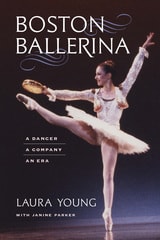
Boston Ballerina
A Dancer, a Company, an EraLaura Young and Janine Parker
University Press of New England, 2017
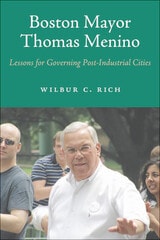
Boston Mayor Thomas Menino
Lessons for Governing Post-Industrial CitiesWilbur C. Rich
University of Massachusetts Press, 2023
Hailed as one of Boston’s most beloved mayors and its longest serving, Thomas Menino (1942–2014) deftly managed the city’s finances and transformed Boston into the hub of innovation that it is today. During his time in office, Boston embraced modern industrial growth and moved forward with noteworthy developments that altered neighborhoods, while also facing ongoing racial strife, challenges of unaffordable housing, and significant public union negotiations.
Mayors in modern American cities occupy unique positions as government leaders who need to remain active parts of their communities in addition to being tasked with fixing neighborhood issues, managing crises, and keeping schools and public infrastructure on course. Situating news coverage alongside interviews with the mayor and his administration, political scientist Wilbur C. Rich chronicles Menino’s time in office while also considering his personal and professional background, his larger-than-life personality, and his ambitions. Menino’s approach to these challenges and opportunities offers enduring lessons to anyone interested in urban government and political leadership.

Botanical Companions
A Memoir of Plants and PlaceFrieda Knobloch
University of Iowa Press, 2005
Bound for America
Three British ComposersNicholas Temperley
University of Illinois Press, 2002
Bourdieu's Secret Admirer in the Caucasus
A World-System BiographyGeorgi M. Derluguian
University of Chicago Press, 2005
Exploring globalization, democratization, ethnic identity, and international terrorism, Derluguian contextualizes Shanib's personal trajectory from de-Stalinization through the nationalist rebellions of the 1990s, to the recent rise in Islamic militancy. He masterfully reveals not only how external economic and political forces affect the former Soviet republics but how those forces are in turn shaped by the individuals, institutions, ethnicities, and social networks that make up those societies. Drawing on the work of Charles Tilly, Immanuel Wallerstein, and, of course, Bourdieu, Derluguian's explanation of the recent ethnic wars and terrorist acts in Russia succeeds in illuminating the role of human agency in shaping history.
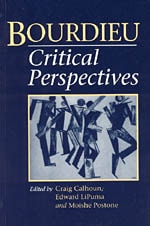
Bourdieu
Critical PerspectivesEdited by Craig Calhoun, Edward LiPuma, and Moishe Postone
University of Chicago Press, 1993
American reception of his works, however, has lacked a full understanding of their place within the broad context of French human science. His individual works separated by distinct boundaries between social science fields in American academia, Bourdieu's cohesive thought has come to this country in fragments.
Bourdieu: Critical Perspectives provides a unified and balanced appraisal of Bourdieu's varied works by both proponents and skeptics. The essays are written from the varied viewpoints of cultural anthropology, ethnomethodology and other varieties of sociology, existential and Wittgensteinian philosophies, linguistics, media studies, and feminism. They work around three main themes: Bourdieu's effort to transcend gaps between practical knowledge and universal structures, his central concept of "reflexivity," and the relations between social structure, systems of classification, and language.
Ultimately, the contributors raise a variety of crucial theoretical questions and address problems that are important not only to understanding Bourdieu but to advancing empirical work of the kind he has pioneered. In an essay written especially for this volume, Bourdieu describes his own "mode of intellectual production" and the reasons he sees for its common misunderstanding.
The contributors are Hubert Dreyfus, Paul Rabinow, Charles Taylor, Aaron Cicourel, James Collins, William Hanks, Beate Krais, Nicholas Garnham, Scott Lash, Roger Brubaker, and Loic Wacquant, and the editors.

Bowie
An Illustrated LifeBy María Hesse and Fran Ruiz; translated by Ned Sublette
University of Texas Press, 2019
David Bowie was a master of artifice and reinvention. In that same spirit, illustrator María Hesse and writer Fran Ruiz have created a vivid retelling of the life of David Robert Jones, from his working-class childhood to glam rock success to superstardom, concluding with the final recording sessions after his cancer diagnosis.
Narrated from the rock star’s point of view, Bowie colorfully renders both the personal and the professional turning points in a life marked by evolution and innovation. We see Bowie facing the sorrow of his brother’s mental illness, kicking a cocaine habit while other musicians succumbed to deadly overdoses, contending with a tumultuous love life, and radiating joy as a father. Along the way, he describes how he shattered the boundaries of song and society with a counterculture cast that included Iggy Pop, Brian Eno, and Freddie Mercury—as well as his own creations, Ziggy Stardust and the Thin White Duke.
Evocatively illustrated from start to finish, Bowie is a stellar tribute to an inimitable star.
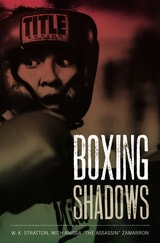
Boxing Shadows
By W. K. Stratton, with Anissa "The Assassin" Zamarron
University of Texas Press, 2009
Reaching the top in any sport requires a long, hard climb. But when you start with the baggage of years of family dysfunction and incarceration in a hellish mental hospital, the climb is especially steep. Yet even with such weights to carry, Anissa Zamarron won not one, but two, world championships in women's boxing. Her story, as dramatically intense as the Clint Eastwood film Million Dollar Baby, is one of tremendous courage and determination to overcome the odds against her as a Latina and as a woman working through mental illness and addiction—a fight in which Zamarron has been as powerful and successful as she has been in the boxing ring.
In this compelling biography, acclaimed author W. K. "Kip" Stratton collaborates with Zamarron to tell the story of her unlikely rise to the pinnacle of women's boxing. With searing honesty, Zamarron describes how the chaotic breakup of her childhood family caused her to develop "demons" that drove her to aggressive behavior in school, an addiction to self-destructive habits, including cutting, and eventually to a corrupt for-profit mental hospital in which she spent eighteen months tied to a bed. She explains how boxing became her salvation as an adult; she learned how to turn her anger and aggression into motivation to train hard and excel at her sport, not only becoming the first woman to fight as a professional in a sanctioned fight in New York, but also fighting more ten-round fights than any other woman in history. A gripping account of Zamarron's 2005 upset win over Maribel Zurita to claim her second world championship caps the book.
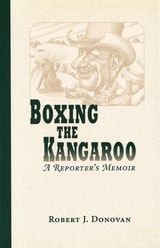
Boxing the Kangaroo
A Reporter's MemoirRobert J. Donovan
University of Missouri Press, 2000
"The host had brought out a pair of boxing gloves and asked the president if any of his friends would like to indulge in the Australian sport of boxing kangaroos. Once the president of the United States had selected me, there was almost no way out, unless I ran home to tell my mother."
In Boxing the Kangaroo: A Reporter's Memoir, Robert J. Donovan shares many exciting events that highlighted his stellar journalistic career. As an investigative reporter during five presidential administrations, Donovan has had many "insider" experiences. His memoir delightfully humanizes each of the five presidents he reported on: Truman, Eisenhower, Kennedy, Johnson, and Nixon.
Donovan began his career working as a night copyboy for the Buffalo Courier-Express, earning seven dollars a week. In 1937, he got a job as a reporter for the New York Herald Tribune, where he worked for many years. By 1942 the Herald Tribune had assigned Donovan to cover City Hall and the lively activities of Fiorello La Guardia. After his service in World War II he returned to the Herald Tribune to cover the man from Missouri who followed FDR. Ultimately, Donovan served as chief of the New York Herald Tribune Washington bureau and the Los Angeles Times Washington bureau.
Donovan traveled across the country with Harry S. Truman during his "Give 'Em Hell, Harry" campaign. He covered Dwight D. Eisenhower's election, about which he says there was never a doubt--Ike, the war hero, mesmerized the country. He was a personal friend of John F. Kennedy, having written about the President's PT-109 heroics in World War II, and was on the scene the day Kennedy was assassinated: "The drama in the second press bus, in which I rode in the presidential motorcade in Dallas, is unforgettable. `Why has the motorcade stopped?' a reporter asked as we drew near the Texas School Book Depository. . . . `I heard a shot,' another said. A voice in the rear contradicted him. `That was a motorcycle backfiring.'" Donovan would find out shortly before the rest of the world that, in fact, it was not a motorcycle backfiring, but the firing of an assassin's bullet that killed the nation's thirty-fifth president.
Boxing the Kangaroo is one of the best "I was there" accounts of American history. This fascinating book will appeal to journalists, American history buffs, and the general reader alike.
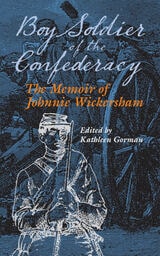
Boy Soldier of the Confederacy
The Memoir of Johnnie WickershamEdited by Kathleen Gorman
Southern Illinois University Press, 2006
Johnnie Wickersham was fourteen when he ran away from his Missouri home to fight for the Confederacy. Fifty years after the war, he wrote his memoir at the request of family and friends and distributed it privately in 1915. Boy Soldier of the Confederacy: The Memoir of Johnnie Wickersham offers not only a rare look into the Civil War through the eyes of a child but also a coming-of-age story.
Edited by Kathleen Gorman, the volume presents a new introduction and annotations that explain how the war was glorified over time, the harsh realities suppressed in the nation’s collective memory. Gorman describes a man who nostalgically remembers the boy he once was. She maintains that the older Wickersham who put pen to paper decades later likely glorified and embellished the experience, accepting a polished interpretation of his own past.
Wickersham recounts that during his first skirmish he was "wild with the ecstasy of it all" and notes that he was "too young to appreciate the danger." The memoir traces his participation in an October 1861 Confederate charge against Springfield, Missouri; his fight at the battle of Pea Ridge in March 1862; his stay at a plantation he calls Fairyland; and the battle of Corinth.
The volume details Wickersham’s assignment as an orderly for General Sterling Price, his capture at Vicksburg in 1863, his parole, and later his service with General John Bell Hood for the 1864 fighting around Atlanta. Wickersham also describes the Confederate surrender in New Orleans, the reconciliation of the North and the South, and his own return and reunification with his family.
While Gorman’s incisive introduction and annotations allow readers to consider how memories can be affected by the passage of time, Wickersham’s boy-turned-soldier tale offers readers an engaging narrative, detailing the perceptions of a child on the cusp of adulthood during a turbulent period in our nation’s history.

Boys Will Be Boys
A Daughter's ElegySara Suleri Goodyear
University of Chicago Press, 2003
Taking its title from that jokingly chosen by her father for his unwritten autobiography, Boys Will Be Boys dips in and out of Suleri Goodyear's upbringing in Pakistan and her life in the United States, moving between public and private history and addressing questions of loss and cultural displacement through a resolutely comic lens. In this rich portrait, Pip emerges as a prodigious figure: an ardent agitator against British rule in the 1930s and 1940s, a founder of the Times of Karachi and the Evening Times, on-and-off editor of the Pakistan Times, for a brief time director of the Pakistan military intelligence service, and a frequently jailed antagonist of successive Pakistani leaders. To the author, though, he was also "preposterous . . . counting himself king of infinite space," a man who imposed outrageously on his children. As Suleri Goodyear chronicles, Pip demanded their loyalty yet banished them easily from his favor; contrary and absurdly unfair, he read their diaries, interfered in their relationships, and believed in a father's inalienable right to oppress his children.
Suleri Goodyear invites the reader into an intimacy shaped equally by history and intensely personal detail, creating an elegant elegy for a man of force and contradiction. And perhaps Pip was not so preposterous after all: "On Judgment Day," he told his daughter, "I will say to God, 'Be merciful, for I have already been judged by my child.'"
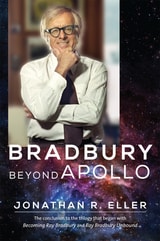
Bradbury Beyond Apollo
Jonathan R. Eller
University of Illinois Press, 2020
Drawing on numerous interviews with Bradbury and privileged access to personal papers and private collections, Jonathan R. Eller examines the often-overlooked second half of Bradbury's working life. As Bradbury's dreams took him into a wider range of nonfiction writing and public lectures, the diminishing time that remained for creative pursuits went toward Hollywood productions like the award-winning series Ray Bradbury Theater. Bradbury developed the Spaceship Earth narration at Disney's EPCOT Center; appeared everywhere from public television to NASA events to comic conventions; published poetry; and mined past triumphs for stage productions that enjoyed mixed success. Distracted from storytelling as he became more famous, Bradbury nonetheless published innovative experiments in autobiography masked as detective novels, the well-received fantasy The Halloween Tree and the masterful time travel story "The Toynbee Convector." Yet his embrace of celebrity was often at odds with his passion for writing, and the resulting tension continuously pulled at his sense of self.
The revelatory conclusion to the acclaimed three-part biography, Bradbury Beyond Apollo tells the story of an inexhaustible creative force seeking new frontiers.