Results by title
18284 books match the query 'United States' and 902 start with b

Behind the Academic Curtain
How to Find Success and Happiness with a PhDFrank F. Furstenberg
University of Chicago Press, 2013
While the greatest anxieties for PhD candidates and postgrads are often centered on getting that tenure-track dream job, each stage of an academic career poses a series of distinctive problems. Furstenberg divides these stages into five chapters that cover the entire trajectory of an academic life, including how to make use of a PhD outside of academia. From finding the right job to earning tenure, from managing teaching loads to conducting research, from working on committees to easing into retirement, he illuminates all the challenges and opportunities an academic can expect to encounter. Each chapter is designed for easy consultation, with copious signposts, helpful suggestions, and a bevy of questions that all academics should ask themselves throughout their career, whether at a major university, junior college, or a nonacademic organization. An honest and up-to-date portrayal of how this life really works, Behind the Academic Curtain is an essential companion for any scholar, at any stage of his or her career.

Behind the Backlash
Muslim Americans After 9/11Lori Peek
Temple University Press, 2010
As the nation tried to absorb the shock of the 9/11 attacks, Muslim Americans were caught up in an unprecedented wave of backlash violence. Public discussion revealed that widespread misunderstanding and misrepresentation of Islam persisted, despite the striking diversity of the Muslim community.
Letting the voices of 140 ordinary Muslim American men and women describe their experiences, Lori Peek's path-breaking book, Behind the Backlash presents moving accounts of prejudice and exclusion. Muslims speak of being subjected to harassment before the attacks, and recount the discrimination they encountered afterwards. Peek also explains the struggles of young Muslim adults to solidify their community and define their identity during a time of national crisis.
Behind the Backlash seeks to explain why blame and scapegoating occur after a catastrophe. Peek sets the twenty-first century experience of Muslim Americans, who were vilified and victimized, in the context of larger sociological and psychological processes. Peek’s book will be of interest to those in disaster research studies, sociology of religion, and race and ethnic relations.

Behind the Burnt Cork Mask
Early Blackface Minstrelsy and Antebellum American Popular CultureWilliam J. Mahar
University of Illinois Press, 1999
The songs, dances, jokes, parodies, spoofs, and skits of blackface groups such as the Virginia Minstrels and Buckley's Serenaders became wildly popular in antebellum America. Drawing on an unprecedented archival study of playbills, newspapers, sketches, monologues, and music, William J. Mahar explores the racist practices of minstrel entertainers and considers their performances as troubled representations of ethnicity, class, gender, and culture in the nineteenth century.
Mahar investigates the relationships between blackface comedy and other Western genres and traditions; between the music of minstrel shows and its European sources; and between "popular" and "elite" constructions of culture. Locating minstrel performances within their complex sites of production, Mahar reassesses the historiography of the field.
Behind the Development Banks
Washington Politics, World Poverty, and the Wealth of NationsSarah Babb
University of Chicago Press, 2009
The World Bank and other multilateral development banks (MDBs) carry out their mission to alleviate poverty and promote economic growth based on the advice of professional economists. But as Sarah Babb argues in Behind the Development Banks, these organizations have also been indelibly shaped by Washington politics—particularly by the legislative branch and its power of the purse.
Tracing American influence on MDBs over three decades, this volume assesses increased congressional activism and the perpetual “selling” of banks to Congress by the executive branch. Babb contends that congressional reluctance to fund the MDBs has enhanced the influence of the United States on them by making credible America’s threat to abandon the banks if its policy preferences are not followed. At a time when the United States’ role in world affairs is being closely scrutinized, Behind the Development Banks will be necessary reading for anyone interested in how American politics helps determine the fate of developing countries.

Behind the Gas Mask
The U.S. Chemical Warfare Service in War and PeaceThomas Faith
University of Illinois Press, 2014
As Faith shows, the believers in chemical weapons staffing the CWS allied with supporters in the military, government, and private industry to lobby to add chemical warfare to the country's permanent arsenal. Their argument: poison gas represented an advanced and even humane tool in modern war, while its applications for pest control and crowd control made a chemical capacity relevant in peacetime. But conflict with those aligned against chemical warfare forced the CWS to fight for its institutional life--and ultimately led to the U.S. military's rejection of battlefield chemical weapons.
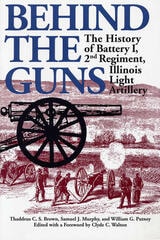
Behind the Guns
The History of Battery I, 2nd Regiment, Illinois Light ArtilleryThaddeus C. S. Brown, Samuel J. Murphy, and William G. Putney. Edited with a Foreword by Clyde C. Walton
Southern Illinois University Press, 2000
Much has been written of the infantry and the cavalry during the Civil War, but little attention has been paid the artillery. Through the battles of Chickamauga and Missionary Ridge in 1863 and the Atlanta Campaign of 1864 and with General Sherman’s forces on the famous March to the Sea, the acts of a courageous fighting group are vividly recounted in Behind the Guns: The History of Battery I, 2nd Regiment, Illinois Light Artillery. Originally published in 1965 in a limited edition, this regimental history of a light artillery unit was written by three of its soldiers, including the bugler.
Battery I was formed in 1861 by Charles W. Keith of Joliet and Henry B. Plant of Peoria. More than a hundred men were mustered into service in December near Springfield and left for Cairo in February 1862. The battery trained at Camp Paine across the Ohio River in Kentucky until March, when the men were dispatched to the South. During the war, the Battery was attached to three different armies: the Army of the Mississippi, the Army of the Ohio, and the Army of the Cumberland.
Clyde C. Walton’s foreword and the narrative discuss the variety of weapons used by the unit, including James, Parrott, and Rodman guns and the bronze, muzzle-loading Napoleons that fired twelve-pound projectiles. The book also includes an account of the prisoner-of-war experience of Battery I lieutenant Charles McDonald, biographical sketches of the battery soldiers, and eighteen maps and five line drawings.
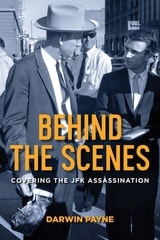
Behind the Scenes
Covering the JFK AssassinationDarwin Payne
University of North Texas Press, 2023
Being Chinese, Becoming Chinese American
Shehong Chen
University of Illinois Press, 2002
The 1911 revolution in China sparked debates that politicized and divided Chinese communities in the United States. People in these communities affirmed traditional Chinese values and expressed their visions of a modern China, while nationalist feelings emboldened them to stand up for their rights as an integral part of American society. When Japan threatened the China's young republic, the Chinese response in the United States revealed the limits of Chinese nationalism and the emergence of a Chinese American identity.
Shehong Chen investigates how Chinese immigrants to the United States transformed themselves into Chinese Americans during the crucial period between 1911 and 1927. Chen focuses on four essential elements of a distinct Chinese American identity: support for republicanism over the restoration of monarchy; a wish to preserve Confucianism and traditional Chinese culture; support for Christianity, despite a strong anti-Christian movement in China; and opposition to the Nationalist party's alliance with the Soviet Union and cooperation with the Chinese Communist Party.
Sensitive and enlightening, Being Chinese, Becoming Chinese American documents how Chinese immigrants survived exclusion and discrimination, envisioned and maintained Chineseness, and adapted to American society.

Being Governor
The View from the OfficeThad L. Beyle and Lynn Muchmore, eds.
Duke University Press, 1983
The editors base their data on personal experience; interviews with governors, former governors, and staff; on -site visits; and responses to a series of nineteen surveys of governors and their staff conducted between 1976 and 1981. The research was undertaken by the Center for Policy Research of the National Governors' Association.
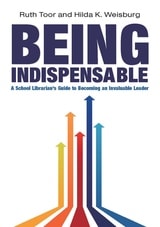
Being Indispensable
A School Librarian's Guide to Becoming an Invaluable LeaderRuth Toor
American Library Association, 2010
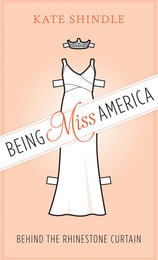
Being Miss America
Behind the Rhinestone CurtainBy Kate Shindle
University of Texas Press, 2014
For nearly a hundred years, young women have competed for the title of Miss America—although what it means to wear the crown and be our “ideal” has changed dramatically over time. The Miss America Pageant began as a bathing beauty contest in 1920s Atlantic City, New Jersey, sponsored by businessmen trying to extend the tourist season beyond Labor Day. In the post–World War II years, the pageant evolved into a national coronation of an idealized “girl next door,” as pretty and decorous as she was rarely likely to speak her mind on issues of substance. Since the cultural upheavals of the 1960s, the pageant has struggled to find a balance between beauty and brains as it tries to remain relevant to women who aspire to become leaders in the community, not hot babes in swimsuits.
In Being Miss America, Kate Shindle interweaves an engrossing, witty memoir of her year as Miss America 1998 with a fascinating and insightful history of the pageant. She explores what it means to take on the mantle of America’s “ideal,” especially considering the evolution of the American female identity since the pageant’s inception. Shindle profiles winners and organization leaders and recounts important moments in the pageant’s story, with a special focus on Miss America’s iconoclasts, including Bess Myerson (1945), the only Jewish Miss America; Yolande Betbeze (1951), who crusaded against the pageant’s pinup image; and Kaye Lani Rae Rafko (1987), a working-class woman from Michigan who wanted to merge her famous title with her work as an oncology nurse. Shindle’s own account of her work as an AIDS activist—and finding ways to circumvent the “gown and crown” stereotypes of Miss America in order to talk honestly with high school students about safer sex—illuminates both the challenges and the opportunities that keep young women competing to become Miss America.
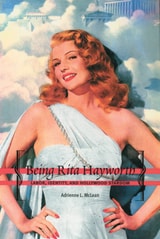
Being Rita Hayworth
Labor, Identity, and Hollywood StardomMcLean, Adrienne L
Rutgers University Press, 2004
Who was Rita Hayworth? Born Margarita Carmen Cansino, she spent her life subjected to others' definitions of her, no matter how hard she worked to claim her own identity. Although there have been many "revelations" about her life and career, Adrienne McLean's book is the first to show that such disclosures were part of a constructed image from the outset.
McLean explores Hayworth's participation in the creation of her star persona, particularly through her work as a dancer-a subject ignored by most film scholars. The passive love goddess, as it turns out, had a unique appeal to other women who, like her, found it extraordinarily difficult to negotiate the competing demands of family, domesticity, and professional work outside the home. Being Rita Hayworth also considers the ways in which the actress has been treated by film scholarship over the years to accomplish its own goals, sometimes at her expense. Several of Hayworth's best-known star vehicles-among them Gilda (1946), Down to Earth (1947), The Lady from Shanghai (1948), and Affair in Trinidad (1952)- are discussed in depth.
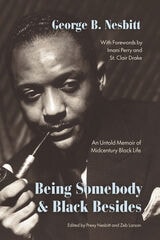
Being Somebody and Black Besides
An Untold Memoir of Midcentury Black LifeGeorge B. Nesbitt
University of Chicago Press, 2021
The late Chicagoan George Nesbitt could perhaps best be described as an ordinary man with an extraordinary gift for storytelling. In his newly uncovered memoir—written fifty years ago, yet never published—he chronicles in vivid and captivating detail the story of how his upwardly mobile Midwestern Black family lived through the tumultuous twentieth century.
Spanning three generations, Nesbitt’s tale starts in 1906 with the Great Migration and ends with the Freedom Struggle in the 1960s. He describes his parents’ journey out of the South, his struggle against racist military authorities in World War II, the promise and peril of Cold War America, the educational and professional accomplishments he strove for and achieved, the lost faith in integration, and, despite every hardship, the unwavering commitment by three generations of Black Americans to fight for a better world. Through all of it—with his sharp insights, nuance, and often humor—we see a family striving to lift themselves up in a country that is working to hold them down.
Nesbitt’s memoir includes two insightful forewords: one by John Gibbs St. Clair Drake (1911–90), a pioneer in the study of African American life, the other a contemporary rumination by noted Black studies scholar Imani Perry. A rare first-person, long-form narrative about Black life in the twentieth century, Being Somebody and Black Besides is a remarkable literary-historical time capsule that will delight modern readers.

Being a Minor Writer
Gail Gilliland
University of Iowa Press, 1994
There are countless theoretical arguments that attempt to define “major” and “minor” literatures, but this lively and deeply felt work is one of the first to speak from the authority of the experience of being minor—of being the “minor writer” who, according to the definition of “author” given by Michel Foucault, does not possess a “name.” This book, then, is an impassioned critical and ethical defense of the act of writing for purposes other than critical acclaim.
In the tradition of Horace's
Ars Poetica,Gilliland uses comments by a broad range of writers, as well as her own experience as a minor woman writer, to consider the basic Horatian questions of purpose, choice of subject matter and genre, diction, characterization, setting, and style. She points out that in the absence of major recognition, the minor writer is continually confronted by the existential question, why do I (still) write? This book offers not only a challenge to existing critical theories but an argument in favor of being—for
stillbeing, for continuing
anywaywith one's life and art

Being a Teen Library Services Advocate
Linda Braun
American Library Association, 2012
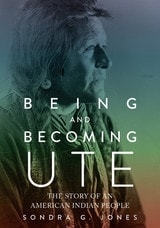
Being and Becoming Ute
The Story of an American Indian PeopleSondra G. Jones
University of Utah Press, 2019
Neither a portrait of a people frozen in a past time and place nor a tragedy in which vanishing Indians sank into oppressed oblivion, the history of the Ute people is dynamic and evolving. While it includes misfortune, injustice, and struggle, it reveals the adaptability and resilience of an American Indian people.

Being and Belonging
Muslims in the United States since 9/11Katherine Pratt Ewing
Russell Sage Foundation, 2008

Beleaguered Poets and Leftist Critics
Stevens, Cummings, Frost, and Williams in the 1930sMilton A. Cohen
University of Alabama Press, 2011
A critical examination of modernist poetry and the demands of leftist literary theory.
Different as they were as poets, Wallace Stevens, E. E. Cummings, Robert Frost, and William Carlos Williams grappled with the highly charged literary politics of the 1930s in comparable ways. As other writers moved sharply to the Left, and as leftist critics promulgated a proletarian aesthetics, these modernist poets keenly felt the pressure of the times and politicized literary scene. All four poets saw their reputations critically challenged in these years and felt compelled to respond to the new politics, literary and national, in distinct ways, ranging from rejection to involvement.
Beleaguered Poets and Leftist Critics closely examines the dynamics of these responses: what these four poets wrote—in letters, essays, lectures, fiction (for Williams), and most importantly, in their poems; what they believed politically and aesthetically; how critics, particularly leftist critics, reviewed their work; how these poets reacted to that criticism and to the broader milieu of leftism. Each poet’s response and its subsequent impact on his poetic output is a unique case study of the conflicting demands of art and politics in a time of great social change.

Belgians in Michigan
Bernard A. Cook
Michigan State University Press, 2007
At the beginning of the twenty-first century, Michigan was home to the second-largest Belgian population in the United States, and Detroit had one of the largest Belgian populations in the nation. Although immigration declined after World War I, the Belgian- American community is still prominent in the state. Political, religious, and economic conditions, including a nineteenth- century economic depression, helped motivate the move to America. Belgians brought with them the ability and willingness to innovate, as well as a tradition of hard work and devotion. The Gazette van Detroit, a Flemish-language newspaper first printed in Detroit in 1914, continues to be produced and distributed to subscribers throughout the United States and overseas. Belgian-Americans continue to incorporate traditional values with newfound American values, enabling them to forever preserve their heritage.
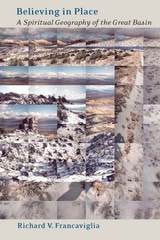
Believing In Place
A Spiritual Geography Of The Great BasinRichard V. Francaviglia
University of Nevada Press, 2016
The austere landscape of the Great Basin has inspired diverse responses from the people who have moved through or settled in it. Author Richard V. Francaviglia is interested in the connection between environment and spirituality in the Great Basin, for here, he says, "faith and landscape conspire to resurrect old myths and create new ones." As a geographer, Francaviglia knows that place means more than physical space. Human perceptions and interpretations are what give place its meaning. In Believing in Place, he examines the varying human perceptions of and relationships with the Great Basin landscape, from the region's Native American groups to contemporary tourists and politicians, to determine the spiritual issues that have shaped our connections with this place. In doing so, he considers the creation and flood myths of several cultures, the impact of the Judeo-Christian tradition and individualism, Native American animism and shamanist traditions, the Mormon landscape, the spiritual dimensions of gambling, the religious foundations of Cold War ideology, stories of UFOs and alien presence, and the convergence of science and spirituality.
Believing in Place is a profound and totally engaging reflection on the ways that human needs and spiritual traditions can shape our perceptions of the land. That the Great Basin has inspired such a complex variety of responses is partly due to its enigmatic vastness and isolation, partly to the remarkable range of peoples who have found themselves in the region. Using not only the materials of traditional geography but folklore, anthropology, Native American and Euro-American religion, contemporary politics, and New Age philosophies, Francaviglia has produced a fascinating and timely investigation of the role of human conceptions of place in that space we call the Great Basin.
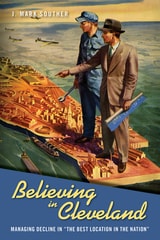
Believing in Cleveland
Managing Decline in “The Best Location in the Nation”J. Mark Souther
Temple University Press, 2017
Detractors have called it "The Mistake on the Lake." It was once America’s "Comeback City." According to author J. Mark Souther, Cleveland has long sought to defeat its perceived civic malaise. Believing in Cleveland chronicles how city leaders used imagery and rhetoric to combat and, at times, accommodate urban and economic decline.
Souther explores Cleveland's downtown revitalization efforts, its neighborhood renewal and restoration projects, and its fight against deindustrialization. He shows how the city reshaped its image when it was bolstered by sports team victories. But Cleveland was not always on the upswing. Souther places the city's history in the postwar context when the city and metropolitan area were divided by uneven growth. In the 1970s, the city-suburb division was wider than ever.
Believing in Cleveland recounts the long, difficult history of a city that entered the postwar period as America's sixth largest, then lost ground during a period of robust national growth. But rather than tell a tale of decline, Souther provides a fascinating story of resilience for what some folks called "The Best Location in the Nation."
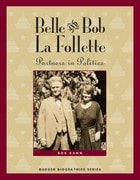
Belle and Bob La Follette
Partners in PoliticsBob Kann
Wisconsin Historical Society Press, 2008
The most famous couple in Wisconsin politics, "Fighting Bob" La Follette and his wife, Belle Case La Follette, come to life in the pages of the newest addition to the Badger Biographies series for young readers. In an accessible format that includes historic images, a glossary of terms, and sidebars explaining political concepts, students learn about Progressive politics and reform in the early 20th century through the experiences of this pioneering couple.
The father of "Progressive politics," Bob La Follette was famous for digging in his heels when it came to reforming government corruption. He also gained a reputation for fiery speeches on the campaign trail and on the Senate floor. Belle La Follette was political in her own right. The first woman to graduate from the University of Wisconsin's Law School, she was an advocate for world peace and an agitator for the women's vote. She was also Bob's most trusted political advisor. Together, the couple raised a family and fought for the changes they believed would make the world a better place.

Belo
From Newspapers to New MediaBy Judith Garrett Segura
University of Texas Press, 2008
Founded in Galveston in 1842 with the launch of the Daily News, the Belo Corporation entered the twenty-first century as a powerhouse conglomerate, owning four daily newspapers (including the Dallas Morning News), twenty-six television and cable stations, and over thirty interactive Web sites. The first comprehensive work to bring to life this remarkable success story, Belo blends biography with a history of corporate strategies.
Drawing on company archives and private papers of key figures, including A. H. Belo and G. B. Dealey, former company archivist Judith Garrett Segura brings to life important chapters in the cultural life of Texas, from Galveston's days as the largest and most vibrant town in the Republic of Texas, through the wars that followed statehood, periods of economic hardship, and the effects of sweeping social change. Turning points in the company's history, such as the sale of its Galveston paper when company revenues were dramatically affected by candid reporting of Ku Klux Klan activities in the 1920s, highlight crucial elements of the press's role in the life of a community. Segura also charts technological advances, from the telegraph and the typographers' union to the dawn of the Information Age. Finally, she includes the most complete portrait of the Dallas Times Herald Company to date, documenting the rise and fall of Belo's chief rival.
This is a story of frontier survival and futuristic thinking, marketing genius and historic reporting, nurtured by a family of mavericks.
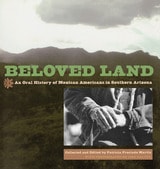
Beloved Land
An Oral History of Mexican Americans in Southern ArizonaCollected and Edited by Patricia Preciado Martin, with Photographs by José Galvez
University of Arizona Press, 2004
For Doña Ramona as well as for countless generations of Mexican Americans, memories of rural life recall la querida tierra, the beloved land. Through good times and bad, the land provided sustenance. Today, many of those homesteads and ranches have succumbed to bulldozers that have brought housing projects and strip malls in their wake.
Now a writer and a photographer who have long been intimately involved with Arizona's Hispanic community have preserved the voices and images of men and women who are descendants of pioneer ranching and farming families in southern Arizona. Ranging from Tucson to the San Rafael Valley and points in between, this book documents the contributions of Mexican American families whose history and culture are intertwined with the lifestyle of the contemporary Southwest. These were hardy, self-reliant pioneers who settled in what were then remote areas. Their stories tell of love affairs with the land and a way of life that is rapidly disappearing.
Through oral histories and a captivating array of historic and contemporary photos, Beloved Land records a vibrant and resourceful way of life that has contributed so much to the region. Individuals like Doña Ramona tell stories about rural life, farming, ranching, and vaquero culture that enrich our knowledge of settlement, culinary practices, religious traditions, arts, and education of Hispanic settlers of Arizona. They talk frankly about how the land changed hands—not always by legal means—and tell how they feel about modern society and the disappearance of the rural lifestyle.
"Our ranch homes and fields, our chapels and corrals may have been bulldozed by progress or renovated into spas and guest ranches that never whisper our ancestors' names," writes Patricia Preciado Martin. "The story of our beautiful and resilient heritage will never be silenced . . . as long as we always remember to run our fingers through the nourishing and nurturing soil of our history." Beloved Land works that soil as it revitalizes that history for the generations to come.
Below the Stars
How the Labor of Working Actors and Extras Shapes Media ProductionBy Kate Fortmueller
University of Texas Press, 2021
Longlisted for the 2022 Kraszna-Krausz Book Award, Moving Image Category
Despite their considerable presence in Hollywood, extras and working actors have received scant attention within film and media studies as significant contributors to the history of the industry. Looking not to the stars but to these supporting players in film, television, and, recently, streaming programming, Below the Stars highlights such actors as precarious laborers whose work as freelancers has critically shaped the entertainment industry throughout the twentieth and twenty-first centuries. By addressing ordinary actors as a labor force, Kate Fortmueller proposes a media industry history that positions underrepresented and quotidian experiences as the structural elements of the culture and business of Hollywood.
Resisting a top-down assessment, Fortmueller explores the wrangling of labor unions and guilds that advocated for collective action for everyday actors and helped shape professional norms. She pulls from archival research, in-person interviews, and firsthand observation to examine a history that cuts across industry boundaries and situates actors as a labor group at the center of industrial and technological upheavals, with lasting implications for race, gender, and labor relations in Hollywood.
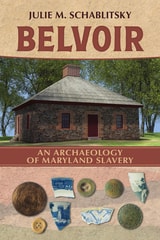
Belvoir
An Archaeology of Maryland SlaveryJulie M. Schablitsky
University of Alabama Press, 2025
Unearthed truths, buried lives: Belvoir reveals the pain, resilience, and reckoning found beneath the soil of a Maryland plantation.
Near Annapolis, Maryland, a former tobacco plantation dating to the 1730s holds centuries of untold history. In Belvoir: An Archaeology of Maryland Slavery, Julie M. Schablitsky leads readers on an archaeological narrative to unearth the lives and stories still buried there.The book begins with an introduction to the estate’s history, detailing its ownership by prominent families such as the Rosses, Scotts, Worthingtons, and Welshes. Schablitsky highlights the landscape of the estate, including the unique thirty-two-square-foot stone quarter built for enslaved people.
With sensitivity and scientific rigor, Schablitsky shifts focus to the enslaved people who lived and labored at Belvoir for more than eighty years. Through detailed excavation of the stone quarter and analysis of everyday artifacts—buttons, tobacco pipes, food remains, ceramics—she reconstructs the daily life, acts of resistance, and the cultural endurance of a community forced to navigate brutality.
Yet what makes Belvoir especially vital is its ethical compass. Schablitsky centers the voices of descendants, allowing their questions, memories, and presence to shape the narrative. The result is a groundbreaking archaeological case study and a blueprint for restorative justice at sites of enslavement. Scholars, archaeologists, and general readers alike will find Belvoir a deeply human, profoundly necessary book, one that confronts the past with clarity, care, and the hope of reconciliation.
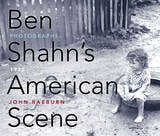
Ben Shahn's American Scene
Photographs, 1938John Raeburn
University of Illinois Press, 2010
The paintings, murals, and graphics of Ben Shahn (1898-1969) have made him one of the most heralded American artists of the twentieth century, but during the 1930s he was also among the nation's premier photographers. Much of his photographic work was sponsored by the New Deal's Farm Security Administration, where his colleagues included Dorothea Lange and Walker Evans.
Ben Shahn's American Scene: Photographs, 1938 presents one hundred superb photographs from his most ambitious FSA project, a survey of small-town life in the Depression. John Raeburn's accompanying text illuminates the thematic and formal significance of individual photographs and reveals how, taken together, they address key cultural and political issues of the years leading up to World War II. Shahn's photographs highlight conflicts between traditional values and the newer ones introduced by modernity as represented by the movies, chain stores, and the tantalizing allure of consumer goods, and they are particularly rich in observation about the changes brought about by Americans' universal reliance on the automobile. They also explore the small town's standing as the nation's symbol of democratic community and expose the discriminatory social and racial practices that subverted this ideal in 1930s America.
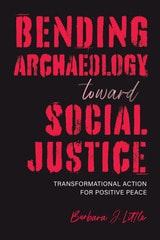
Bending Archaeology toward Social Justice
Transformational Action for Positive PeaceBarbara J. Little
University of Alabama Press, 2023
Introduces an analytic model for how archaeologists can work toward social justice
In this time of Black Lives Matter, the demands of NAGPRA, and climate crises, the field of American archaeology needs a radical transformation. It has been largely a white, male, privileged domain that replicates an entrenched patriarchal, colonial, and capitalist system. In Bending Archaeology toward Social Justice, Barbara J. Little explores the concepts and actions required for such a change, looking to peace studies, anthropology, sociology, social justice activism, and the achievements of community-based archaeology for helpful approaches in keeping with the UN Sustainable Development Goals. She introduces an analytic model that uses the strengths of archaeology to destabilize violence and build peace.
As Little explains, the Diachronic Transformational Action model and the peace/violence triad of interconnected personal, cultural, and structural domains of power can help disrupt the injustice of all forms of violence. Diachronic connects the past to the present to understand how power worked in the past and works now. Transformational influences power now by disrupting the stability of the violence triad. Action refers to collaborative work to diagnose power relations and transform toward social justice.
Using this framework, Little confronts the country’s founding and myth of liberty and justice for all, as well as the American Dream. She also examines whiteness, antiracism, privilege, and intergenerational trauma, and offers white archaeologists concepts to grapple with their own racialized identities and to consider how to relinquish white supremacy. Archaeological case studies examine cultural violence and violent direct actions against women, Indigenous peoples, African Americans, and Japanese Americans, while archaeologies of poverty, precarity, and labor are used to show how archaeologists have helped expose the roots of these injustices. Because climate justice is integral to social justice, Little showcases insights that archaeology can bring to bear on the climate crisis and how lessons from the past can inform direct actions today. Finally, Little invites archaeologists to embrace inquiry and imagination so that they can both imagine and achieve the positive peace of social justice.
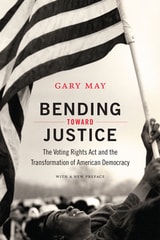
Bending Toward Justice
The Voting Rights Act and the Transformation of American DemocracyGary May
Duke University Press, 2015
Bending the Future
Fifty Ideas for the Next Fifty Years of Historic Preservation in the United StatesEdited by Max Page and Marla R. Miller
University of Massachusetts Press, 2016
The year 2016 marks the fiftieth anniversary of the National Historic Preservation Act, the cornerstone of historic preservation policy and practice in the United States. The act established the National Register of Historic Places, a national system of state preservation offices and local commissions, set up federal partnerships between states and tribes, and led to the formation of the standards for preservation and rehabilitation of historic structures. This book marks its fiftieth anniversary by collecting fifty new and provocative essays that chart the future of preservation.
The commentators include leading preservation professionals, historians, writers, activists, journalists, architects, and urbanists. The essays offer a distinct vision for the future and address related questions, including, Who is a preservationist? What should be preserved? Why? How? What stories do we tell in preservation? How does preservation contribute to the financial, environmental, social, and cultural well-being of communities? And if the “arc of the moral universe . . . bends towards justice,” how can preservation be a tool for achieving a more just society and world?

Bending the Law
The Story of the Dalkon Shield BankruptcyRichard B. Sobol
University of Chicago Press, 1991
"Mr. Sobol has produced a readable yet fully researched and detailed study of the operation of the bankruptcy and its effects upon all concerned—the women who were injured, the swarms of lawyers who represented parties in the bankruptcy, and the court which oversaw the bankruptcy in Richmond. . . . This book adds greatly to the current debate about how strong a managerial federal judge our system should have."—Paul D. Rheingold, New York Law Journal
"Bending the Law is polemical and relentless. It is also minutely researched, fluidly written, and persuasive."—Paul Reidinger, ABA Journal
"Bending the Law is a must read for bankruptcy practitioners, and for anyone else concerned about the use of bankruptcy law to deal with mass torts. Although its author is a civil rights lawyer, he details the subtle art of practicing bankruptcy law with a discerning eye, and is a gifted storyteller as well."—Joryn Jenkins, Federal Bar News and Journal
"This is an accessible history of the case by a veteran civil-rights lawyer."—Washington Post Book World
Bending the Rules
Procedural Politicking in the BureaucracyRachel Augustine Potter
University of Chicago Press, 2019
With Bending the Rules, Rachel Augustine Potter shows that rulemaking is not the rote administrative activity it is commonly imagined to be but rather an intensely political activity in its own right. Because rulemaking occurs in a separation of powers system, bureaucrats are not free to implement their preferred policies unimpeded: the president, Congress, and the courts can all get involved in the process, often at the bidding of affected interest groups. However, rather than capitulating to demands, bureaucrats routinely employ “procedural politicking,” using their deep knowledge of the process to strategically insulate their proposals from political scrutiny and interference. Tracing the rulemaking process from when an agency first begins working on a rule to when it completes that regulatory action, Potter shows how bureaucrats use procedures to resist interference from Congress, the President, and the courts at each stage of the process. This exercise reveals that unelected bureaucrats wield considerable influence over the direction of public policy in the United States.
Beneath These Red Cliffs
An Ethnohistory of the Utah PaiutesRonald L. Holt
Utah State University Press, 2006
With a foreword by Lora Tom, chair of the Paiute Indian Tribe of Utah.

Beneath the Starry Flag
New Jersey's Civil War ExperienceSiegel, Alan A
Rutgers University Press, 2001
Few events in American history can match the triumph and tragedy of the Civil War. Many books have been written about the War between the States, but until now, none has chronicled—in their own words—the many important roles played by people from New Jersey.
Beneath the Starry Flag is a collection of richly detailed eyewitness accounts by New Jerseyans who lived during the Civil War. Drawing from letters, journals, regimental histories, and newspaper accounts, Alan A. Siegel places the reader in the midst of these desperate times. The book depicts the war years chronologically, from the tense days when one state, then another seceded from the Union, through battles lost and won, to the victory at Appomattox and Lincoln’s funeral procession across New Jersey.
Readers will learn of the remarkable valor of New Jersey soldiers such as John Beech, a Trenton potter who won a Medal of Honor for bravery at Spotsylvania’s Bloody Angle. They will learn too of the sacrifices made by civilians, such as Cornelia Hancock of Salem County, who ministered to soldiers wounded on battlefields from Gettysburg to Petersburg. Siegel also tells of other people and institutions who played very different roles in the war, including Somerset County’s Daniel Cory, who said he would shoot the president if he could, the state’s leading Copperhead newspapers, which denounced the draft and discouraged enlistments, and the State Legislature, which at one point called for a truce and negotiations to end the conflict.
Siegel allows them all, enlisted men and officers, politicians and plain citizens, patriots and conspirators, to speak in their own words in often moving firsthand accounts. Their motives, emotions, and deeds are chronicled in this collection of stories, some which have been out of print for many years, others that have not been heard since they were first written more than a century ago.
[Beneath the Starry Flag is an invaluable addition to what we know about this remarkable time in American history, perfect for the general reader or Civil War historian.]
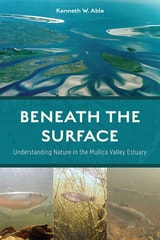
Beneath the Surface
Understanding Nature in the Mullica Valley EstuaryKenneth W. Able
Rutgers University Press, 2020
The Mullica Valley estuary and its watershed, formed over the last 10,000 years, are among the cleanest estuaries along the east coast of the United States. This 365,000-acre ecosystem benefits from a combination of protected watershed, low human population density, and general lack of extensive development. In Beneath the Surface, marine scientist Ken Able helps the reader penetrate the surface and gain insights into the kinds of habitats, animals, and plants that live there. Readers will gain a better understanding of the importance of these shallow waters; how the amount of salt in the water determines where animals and plants are found in estuaries; the day-night, seasonal, and annual variation in their occurrence; and how change is occurring as the result of climate variation. Throughout the book are insightful sidebars telling intimate stories of where various animals came from and where they are going as they travel through the estuary on their way to and from other portions of the east coast. Beneath the Surface emphasizes the kinds and importance of the animals and plants that live beneath the surface of this unique ecosystem.
Benevolence, Moral Reform, Equality
Women's Activism in Kansas City, 1870 to 1940K. David Hanzlick
University of Missouri Press, 2018
Benjamin Franklin and His Gods
Kerry S. Walters
University of Illinois Press, 1999
the towering figure--and mind--of Benjamin Franklin. A Renaissance man
in a Revolutionary time, Franklin had interests and knowledge not only
in religion but in literature, philosophy, politics, publishing, history,
and scientific inquiry, among many other disciplines.
Kerry S. Walters examines Franklin's search for the Divine using a similar,
multifaceted approach--and in so doing has created the first extended
treatment of Franklin's religious thought in thirty years. Walters brings
the same intellectual range and depth to the understanding of Franklin's
beliefs that Franklin brought to his own quest. What emerges from this
pilgrimage into the soul of one of America's greatest figures is a very
human Benjamin Franklin who grew with the accumulation of knowledge to
arrive at a "theistic perspectivism," which provided him with
a philosophical explanation for the diversity of religious faiths--and
a justification for the liberty of conscience he advocated throughout
his life.
Benjamin Franklin and His Gods is an original and beautifully
challenging spiritual and intellectual biography. Destined to be a classic.
Benjamin Franklin's Printing Network
Disseminating Virtue in Early AmericaRalph Frasca
University of Missouri Press, 2005

Benjamin Franklin, Pennsylvania, and the First Nations
The Treaties of 1736-62Edited by Susan Kalter
University of Illinois Press, 2006

Benjamin Shambaugh and the Intellectual Foundations of Public Hisory
Rebecca Conard
University of Iowa Press, 2001
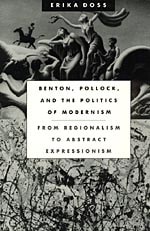
Benton, Pollock, and the Politics of Modernism
From Regionalism to Abstract ExpressionismErika Doss
University of Chicago Press, 1991
"A welcome addition to the growing body of literature that deals with the art and culture of the depression and cold war eras. It is a pioneering work that makes a valuable contribution to our understanding of a puzzling conundrum of American art—the shift from regionalism to abstract expressionism."—M. Sue Kendall, Winterthur Portfolio
"An important scholarly contribution. . . . This book will stand as a step along the way to a better understanding of the most amazing transition in the art of our tumultuous century."—James G. Rogers, Jr., Art Journal
"A valuable and interesting book that restores continuity and political context to the decades of depression and war."—Marlene Park, American Historical Review
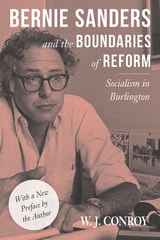
Bernie Sanders and the Boundaries of Reform
Socialism in BurlingtonW. J. Conroy
Temple University Press, 2016
In his preface to this reissue of the 1990 book, Challenging the Boundaries of Reform, W. J. Conroy reflects on the recent legacy of Sanders, his Agenda for America, and his appeal to young voters. His book then looks back to identify Sanders’ experience in Burlington by examining several case studies that unfolded amidst a conservative trend nationally, an unsympathetic state government, and a hostile city council.
Ultimately, Conroy asks what lessons can be drawn from the case of Burlington that would aid the American left in its struggle to capture both government and civil society?
Beside You in Time
Sense Methods and Queer Sociabilities in the American Nineteenth CenturyElizabeth Freeman
Duke University Press, 2019
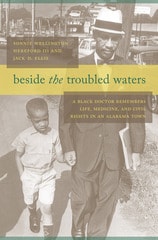
Beside the Troubled Waters
A Black Doctor Remembers Life, Medicine, and Civil Rights in an Alabama TownSonnie Wellington Hereford III and Jack D. Ellis
University of Alabama Press, 2011
A memoir by an African American physician in Alabama whose story in many ways typifies the lives and careers of black doctors in the south during the segregationist era
Beside the Troubled Waters is a memoir by an African American physician in Alabama whose story in many ways typifies the lives and careers of black doctors in the south during the segregationist era while also illustrating the diversity of the black experience in the medical profession. Based on interviews conducted with Hereford over ten years, the account includes his childhood and youth as the son of a black sharecropper and Primitive Baptist minister in Madison County, Alabama, during the Depression; his education at Huntsville’s all-black CouncillSchool and medical training at MeharryMedicalCollege in Nashville; his medical practice in Huntsville’s black community beginning in 1956; his efforts to overcome the racism he met in the white medical community; his participation in the civil rights movement in Huntsville; and his later problems with the Medicaid program and state medical authorities, which eventually led to the loss of his license.

Best Backpacking Trips in California and Nevada
Mike White
University of Nevada Press, 2015
The guide includes thirteen detailed trail descriptions, along with information on additional resources, governing agencies, and permits and fees. It also provides listings of the nearest airports, outdoor retailers, campgrounds, transportation, and amenities and attractions. Accompanying the specific information on each trip are captivating historical vignettes and entertaining personal essays, enhancing the reader’s understanding of the area. Whether journeying from near or far, Best Backpacking Trips of California and Nevada is the most complete resource for turning a dream trip into reality.

Best Backpacking Trips in Montana, Wyoming, and Colorado
Mike White
University Press of Colorado, 2019
Best Backpacking Trips in Montana, Wyoming, and Colorado provides everything you need to know to organize and execute the best backpacking trips in the Mountain West. Mike White and Douglas Lorain, who have walked every mile of the trails described inside, take readers and hikers into some of the wildest and most scenic backcountry landscapes in the nation and help them design the ultimate trip.
Focusing on one-week excursions, the book offers details on all the aspects of trip planning—trail narratives, technical data, maps, gear, food, information on regulations and permits, and more. But it is more than a basic guidebook. Trip information is enriched by valuable and interesting sidebars on history and ecology that will increase appreciation for these natural areas and the people who were instrumental in their discovery or protection.
In Best Backpacking Trips in Montana, Wyoming, and Colorado, White and Lorain pass on their knowledge of quality hikes, planning and preparation, and the unique satisfaction of multi-day backpacking. This guide, put into practice, will result in the trip of a lifetime.

Best Backpacking Trips in Utah, Arizona, and New Mexico
Mike White
University of Nevada Press, 2016
This is the second book in a series of detailed guidebooks covering all the best “life-list” backpacking vacations in the spectacular backcountry of the American West. This new volume specifically covers the best such adventures in the states of Utah, Arizona, and New Mexico. Every conceivable aspect of trip planning is covered in the guide, including maps and descriptions of the trail, where to locate the nearest airport, other area attractions that shouldn’t be missed, and guide services that are available. A noteworthy feature of the book is the individual vignettes that give insight into the historical significance of many of the trails. Also unique are the interesting and humorous personal accounts that the authors share from their personal experiences hiking these routes. Backpackers will find a wide range of outstanding trips, from high mountain adventures to some of the world’s best lower-elevation canyon hikes. Best Backpacking Trips in Utah, Arizona, and New Mexico provides an extensive choice of terrific expeditions.
Best Books for Young Adults
American Library Association, 2007
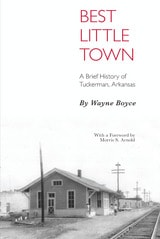
Best Little Town
A Brief History of Tuckerman, ArkansasWayne Boyce
Mockingbird Press, 2015

Best Practices For Credit- Bearing Information Literacy
Christopher Hollister
Assoc of College & Research Libraries, 2011