Results by title
3703 books match the query '19th Century' and 228 start with c
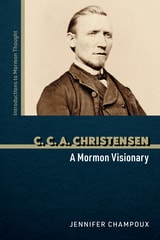
C. C. A. Christensen
A Mormon VisionaryJennifer Champoux
University of Illinois Press, 2026
Drawing on the artist’s voluminous writings, Jennifer Champoux illuminates Christensen’s influential art, including recently rediscovered works. Christensen received Church commissions and approval and helped shape Latter-day Saints’ vision of themselves. Over time the work of other artists eclipsed his achievements, but a twenty-first century revival of interest began to restore his reputation. Champoux also profiles how Christensen’s expansive activities outside of the art world gave him a unique vantage point for chronicling how the Latter-day Saint faith and culture evolved in Utah.
A revealing intellectual biography, C. C. A. Christensen offers a rare in-depth look at a major Latter-day Saint artist.
CERTAIN OTHER COUNTRIES
Homicide, Gender, and National Identity in Late Nineteenth-Century England, Ireland, Scotland, and WalesCarolyn A. Conley
The Ohio State University Press, 2007
By combining quantitative techniques in the analysis of over seven thousand cases, as well as careful and detailed readings of individual cases, the book exposes trends and patterns that might not have been evident in works using only one method. For instance, by examining all homicide trials rather than concentrating exclusively on a few highly celebrated ones, it becomes clear that most female killers were not viewed with particular horror, but were treated much like their male counterparts.
The conclusions offer challenges and correctives to existing scholarship on gender, ethnicity, class, and violence. The book also demonstrates that the Welsh, Scots, and English remained quite distinct long after their melding as Britons was announced and celebrated. By blending a study of trends in violent behavior with ideas about national identity, Conley brings together rich and hotly debated fields of modern history. This book will be valuable both for scholars of crime and violence as well as for those studying British history.
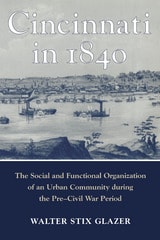
CINCINNATI IN 1840
The Social and Functional Organization of an Urban Community during the Pre-Civil War PeriodWALTER STIX GLAZER
The Ohio State University Press, 1999
During the pre-Civil War period, Cincinnati was the fastest growing and, according to many contemporary observers, most interesting city in America. This classic study, completed in the early 1970s, focuses on the community in 1840 to explain its success but also to suggest some broader patterns in the city’s development and American urbanization.
Using local census records, city directories, tax lists, newspapers, and other contemporary sources, Walter Stix Glazer describes the demographic, social, economic, and political structure of the adult white male population in 1840 and then develops a unified model of its social and functional organizations. This analysis (based on computerized records of thousands of Cincinnatians) also documents some broader trends between 1820 and 1860: the volatility of Cincinnati’s labor force, the career patterns of its homeowners, and the leadership of a small group of successful citizens active in a broad range of voluntary associations.
This statistical analysis is complemented with sections of traditional historical narrative and biographical profiles that illustrate the general themes of the book. Glazer argues that Cincinnati’s success up to 1840 was due to a unified booster vision and a cohesive community elite that gradually broke down, as a result of ethnic and economic division, over the next twenty years. This story has broader implications in terms of the character of Jacksonian democracy and American urbanization.

CONSUMING FANTASIES
LABOR, LEISURE, AND THE LONDON SHOPGIRL,LISE SHAPIRO SANDERS
The Ohio State University Press, 2006
CONTROLLING VICE
REGULATING BROTHEL PROSTITUTION IN ST. PAUL, 1865–1883JOEL BEST
The Ohio State University Press, 1998
For eighteen years following the Civil War, the police in St. Paul, Minnesota, informally regulated brothel prostitution. Each month, the madams who ran the brothels were charged with keeping houses of ill fame and fined in the city’s municipal court. In effect, they were paying licensing fees in order to operate illegal enterprises. This arrangement was open; during this period, the city’s newspapers published hundreds of articles about vice and its regulation.
Joel Best claims that the sort of informal regulation in St. Paul was common in the late nineteenth century and was far more typical than the better known but brief experiment with legalization tried in St. Louis. With few exceptions, the usual approach to these issues of social control has been to treat informal regulation as a form of corruption, but Best’s view is that St. Paul’s arrangement exposes the assumption that the criminal justice system must seek to eradicate crime. He maintains that other policies are possible.
In a book that integrates history and sociology, the author has reconstructed the municipal court records for most of 1865–83, using newspaper articles, an arrest ledger kept by the St. Paul police, and municipal court dockets. He has been able to trace which madams operated brothels and the identities of many of the prostitutes who lived and worked in them.
CRIMINAL CONVERSATIONS
Victorian Crimes, Social Panic, and Moral OutrageEdited by Judith Rowbotham and Kim Stevenson
The Ohio State University Press, 2005

Cahaba Prison and the Sultana Disaster
William O. Bryant
University of Alabama Press, 1990
With a death rate of 5 percent, Alabama's Cahaba Federal Prison boasted a better survival rate than the notorious Confederate prisoner-of-war camps of Andersonville, Libby Prison, Elmira, Rock Island, Johnson's Island, and Camp Douglas. Yet it was a ghastly facility, a hastily converted agricultural warehouse so overcrowded that each man barely had space to lie down to sleep.
At the war's conclusion in 1865, however, in a harrowing reversal of the inmates' fates, captured Union soldiers were sent on a grueling overland march to the Mississippi River. Held there in camps at Vicksburg along with other prisoners of war, the soldiers embarked on the steamship Sultana for transportation north.
Traveling first to New Orleans and then heading north, the vessel held by some estimates six times more passengers than its safe limit, many of them ill, injured, or malnourished. The flow of the swollen Mississippi that April was wide, swift, and cold, and the Sultana struggled to make the journey. Then, on April 27, 1865, seven miles north of Memphis, a series of three boilers exploded within seconds of one another.
The lucky passengers were flung into the water as chunks of the Sultana blasted apart. The remaining wooden structure caught fire and the upper deck collapsed. Only an estimated one third of the passengers survived, hundreds of whom later died from their wounds.
First published in 1988, Bryant's account weaves together the many strands of the Cahaba story. Combining masterful storytelling and insightful analysis, he describes Civil War prisons, the history of the Cahaba Federal Prison and its construction, as well as the prison's commanders, prisoners, and local women who provided medical care and food to the prisoners. He tells of the violent struggles among Union inmates, a mutiny and flood that occurred during the final days of the camp, and the harrowing deaths of the liberated soldiers aboard the Sultana. Bryant's Cahaba Prison and the Sultana Disaster remains a vital part of any library of Civil War history.
Calaveras Gold
The Impact Of Mining On A Mother Lode CountyRonald H. Limbaugh
University of Nevada Press, 2003
California’s Calaveras County—made famous by Mark Twain and his celebrated Jumping Frog—is the focus of this comprehensive study of Mother Lode mining. Most histories of the California Mother Lode have focused on the mines around the American and Yuba Rivers. However, the “Southern Mines”—those centered around Calaveras County in the central Sierra—were also important in the development of California’s mineral wealth. Calaveras Gold offers a detailed and meticulously researched history of mining and its economic impact in this region from the first discoveries in the 1840s until the present. Mining in Calaveras County covered the full spectrum of technology from the earliest placer efforts through drift and hydraulic mining to advanced hard-rock industrial mining. Subsidiary industries such as agriculture, transportation, lumbering, and water supply, as well as a complex social and political structure, developed around the mines. The authors examine the roles of race, gender, and class in this frontier society; the generation and distribution of capital; and the impact of the mines on the development of political and cultural institutions. They also look at the impact of mining on the Native American population, the realities of day-to-day life in the mining camps, the development of agriculture and commerce, the occurrence of crime and violence, and the cosmopolitan nature of the population. Calaveras County mining continued well into the twentieth century, and the authors examine the ways that mining practices changed as the ores were depleted and how the communities evolved from mining camps into permanent towns with new economic foundations and directions. Mining is no longer the basis of Calaveras’s economy, but memories of the great days of the Mother Lode still attract tourists who bring a new form of wealth to the region.
Calculating Worth
A History of Value in Nineteenth-Century North AmericaEdited by Joanna Cohen Laura F. Edwards
University of Chicago Press, 2027
Explores the history of value as a concept, one that we regularly use but tend to take for granted as the monetary expression of market mechanisms.
Calculating Worth, a collection of essays edited by historians Joanna Cohen and Laura F. Edwards, reshapes our concept of what “value” meant in the past. Collectively, the essays reorient conventional narratives and reveal multiple methods of determining value, some traditional, some new, but all based in human agency. Calculating Worth brings together scholars of legal history, Native American history, women’s history, material culture, the history of slavery, and African American history, with topics that range widely over the nineteenth century, across North America and beyond.
Through studying subjects as varied as personal property, land, enslaved people, and intangibles such as prayer, reputation, and suffering, this portrait of value is diverse, humanistic, and far more capacious than what typically fits within the bounds of the concept of capitalism. Rather, value turns out to be a question of power—and how it is used.
Calhoun and Popular Rule
The Political Theory of the Disquisition and DiscourseH. Lee Cheek, Jr.
University of Missouri Press, 2004
Although John C. Calhoun (1782-1850) remains one of the major figures in American political thought, many of his critics have tried to discredit him as merely a Southern partisan whose ideas were obsolete even during his lifetime. In Calhoun and Popular Rule, H. Lee Cheek, Jr., attempts to correct such misconceptions by presenting Calhoun as an original political thinker who devoted his life to the recovery of a "proper mode of popular rule." He argues that Calhoun had a coherent, systematic view of human nature and society and made a lasting contribution to the theory of constitutionalism and democracy.
Cheek suggests that Calhoun was not a political or philosophical aberration, but an authentic exponent of American constitutionalism. He contends that Calhoun's view of democracy forms part of a philosophy of humankind and politics that has relevance beyond the American experience. Although his idea of popular rule was original, it was also related to earlier attempts in America and elsewhere to limit the power of the majority and protect minority interests. According to Cheek, Calhoun stood in the American political tradition and attempted to rearticulate some of its central elements. He explains Calhoun's idea of the concurrent majority and examines how it has been presented by Calhoun's critics, as well as his followers.
As the first combined evaluation of Calhoun's most important treatises, The Disquisition and The Discourse, this work merges Calhoun's theoretical position with his endeavors to restore the need for popular rule. It also compares Calhoun's ideas with those of other great political thinkers such as Thomas Jefferson and James Madison--while explaining what is truly unique about Calhoun's political thought.
Calhoun's philosophy—his understanding of the need for ethical and political restraint and for institutional means for obtaining concurrence—is still relevant today, especially given the current growing ethnic and cultural conflict of the Western world. Scholars of government, American history, and political thought, as well as those interested in understanding "popular rule" and its theoretical and practical impact on modern American government, will find this groundbreaking work to be of great value.
Californio Voices
The Oral Memoirs of Jose Maria Amador and Lorenzo AsisaraGregorio Mora-Torres
University of North Texas Press, 2005
Californios, Anglos, and the Performance of Oligarchy in the U.S. West
Andrew Gibb
Southern Illinois University Press, 2018
This interdisciplinary study draws on performance studies, theatre historiography, and New Western History to identify how the unique power relations of historical California were constituted and perpetuated through public performances—not only traditional theatrical productions but also social events such as elite weddings and community dances—and historical events like the U.S. seizure of the city of Monterey, the feting of Commodore Stockton in San Francisco, and the Bear Flag Revolt.
Call School
Rural Education in the Midwest to 1918Paul Theobald
Southern Illinois University Press, 1995
Paul Theobald chronicles the history of the one-room country schools that were spread throughout the rural Midwest during the nineteenth and early twentieth centuries.
Focusing on the region’s educational history in light of the religious, economic, and political atmosphere, Theobald explores the tight connection between educational preferences and religious views, between the economics of the countryside and the educational experiences of children, and between the politics of local power and the educational prospects of the powerless.
Basing his study on extensive archival research, including findings from eight midwestern states, Theobald neither condemns nor lauds the one-room school experience. Providing an objective evaluation, he examines rural school records, correspondence of early school officers, contemporary texts, and diaries and letters of rural students and teachers.
As he weaves together a contextualized account of the circumstances surrounding and within the one-room country schools of the Midwest, Theobald stresses that religion was of primary importance in nineteenth-century American life. Yet he also looks carefully at the shifting economic environment at work in the countryside, particularly in regard to the development of widespread farm tenancy and the consolidation of agricultural and related industries. He challenges readers to analyze how a national move from an agrarian to an industrial view caused conflict and confusion, thereby introducing irrevocable change into rural American life.
Theobald’s study illuminates the history of education on the plains and sheds light on the social foundations of the period.
Calvinists Incorporated
Welsh Immigrants on Ohio's Industrial FrontierAnne Kelly Knowles
University of Chicago Press, 1996
capitalist transformation, Anne Kelly Knowles traces a community of
Welsh immigrants to Jackson and Gallia counties in southern Ohio. After
reconstructing the gradual process of community-building, Knowles
focuses on the pivotal moment when the immigrants became involved with
the industrialization of their new region as workers and investors in
Welsh-owned charcoal iron companies. Setting the southern Ohio Welsh in
the context of Welsh immigration as a whole from 1795 to 1850, Knowles
explores how these strict Calvinists responded to the moral dilemmas
posed by leaving their native land and experiencing economic success in
the United States.
Knowles draws on a wide variety of sources, including obituaries and
community histories, to reconstruct the personal histories of over 1,700
immigrants. The resulting account will find appreciative readers not
only among historical geographers, but also among American economic
historians and historians of religion.

Camera Indica
The Social Life of Indian PhotographsChristopher Pinney
University of Chicago Press, 1997
These quiet but moving images represent the changing role of photographic portraiture in India, a topic anthropologist Christopher Pinney explores in Camera Indica. Studying photographic practice in India, Pinney traces photography's various purposes and goals from colonial through postcolonial times. He identifies three key periods in Indian portraiture: the use of photography under British rule as a quantifiable instrument of measurement, the later role of portraiture in moral instruction, and the current visual popular culture and its effects on modes of picturing. Photographic culture thus becomes a mutable realm in which capturing likeness is only part of the project. Lavishly illustrated, Pinney's account of the change from depiction to invention uncovers fascinating links between these evocative images and the society and history from which they emerge.
Camera Orientalis
Reflections on Photography of the Middle EastAli Behdad
University of Chicago Press, 2016
Considering a range of Western and Middle Eastern archival material from the late nineteenth and early twentieth centuries, Ali Behdad offers a rich account of how photography transformed Europe’s distinctly Orientalist vision into what seemed objective fact, a transformation that proved central to the project of European colonialism. At the same time, Orientalism was useful for photographers from both regions, as it gave them a set of conventions by which to frame exotic Middle Eastern cultures for Western audiences. Behdad also shows how Middle Eastern audiences embraced photography as a way to foreground status and patriarchal values while also exoticizing other social classes.
An important examination of previously overlooked European and Middle Eastern photographers and studios, Camera Orientalis demonstrates that, far from being a one-sided European development, Orientalist photography was the product of rich cultural contact between the East and the West.
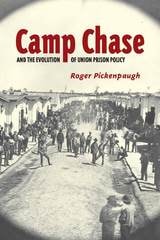
Camp Chase and the Evolution of Union Prison Policy
Roger Pickenpaugh
University of Alabama Press, 2007
Camp Chase was a major Union POW camp and also served at various times as a Union military training facility and as quarters for Union soldiers who had been taken prisoner by the Confederacy and released on parole or exchanged. As such, this careful, thorough, and objective examination of the history and administration of the camp will be of true significance in the literature on the Civil War.
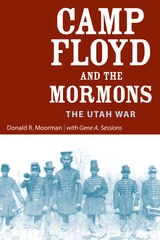
Camp Floyd and the Mormons
The Utah WarDonald R Moorman
University of Utah Press, 1992
Camp Floyd and the Mormons traces the history of the sojourn of “Johnston’s Army” in Utah Territory from the beginning of the Utah War in 1857 through the abandonment of Camp Floyd in Cedar Valley west of Utah Lake at the outbreak of the Civil War. The book describes the relationship between the invading army and the local Mormon population, gives an account of Indian affairs in Utah, and describes the activities of federal officials in Utah during that volatile period.
Completed posthumously by Gene Sessions, Moorman’s colleague at Weber State University, Camp Floyd and the Mormons is a comprehensive analysis of the history of frontier Utah as a decade of isolation ended and confrontations with the United States government began. Moorman had unprecedented access to materials in the LDS Church Archives on subjects ranging from the Mountain Meadows Massacre to the Mormon responses to the presence of the army in Utah from 1858 through 1861.
First published by the University of Utah Press in 1992, this reprint edition includes a new introduction by Gene Sessions in which he recounts Moorman’s research adventures during the 1960s "in the bowels of the old Church Administration Building, where Joseph Fielding Smith and A. Will Lund watched over the contents of the archives like wide-eyed mother hens."
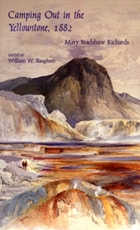
Camping Out In The Yellowstone
William W. Slaughter
University of Utah Press, 1994
Camping out in Yellowstone, 1882 describes the park at a time when Yellowstone was truly an "out-back and beyond" experience.
Writing just five years after the army chased the Nez Peirce Indians through the area, and only ten years after the park’s establishment, Mary Richards provides a vivid picture of the undeveloped and untouristed Yellowstone Park: Fire Hole Basin, Mammoth Hot Spring, Lower Falls, and the Excelsior Geyser, now defunct but mightier at the time than Old Faithful. Augmented by twenty-eight contemporary photographs, this book offers a fascinating perspective for present-day Park lovers.
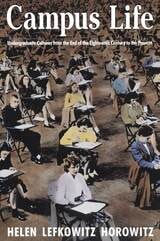
Campus Life
Undergraduate Cultures from the End of the Eighteenth Century to the PresentHelen Lefkowitz Horowitz
University of Chicago Press, 1988
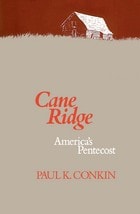
Cane Ridge
America's PentecostPaul K. Conkin
University of Wisconsin Press, 1990
Paul Conkin tells the story of Cane Ridge in all its dimensions. The backdrop involves the convoluted history of Scotch-Irish Presbyterianism in America, the pluralistic religious environment in early Kentucky, and the gradual evolution of a new form of evangelical religious culture in eighteenth-century America.
The aftermath was complex. Cane Ridge helped popularize religious camps and influenced the subsequent development of planned camp meetings. It exposed deep and developing divisions of doctrine among Presbyterian clergy, and contributed to the birth of two new denominations —Christians (Disciples of Christ) and Cumberland Presbyterians and furthered the growth of a new revival culture, keyed to a crisis-like conversion experience, even as it marked a gradual decline in sacramentalism.
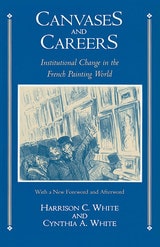
Canvases and Careers
Institutional Change in the French Painting WorldHarrison C. White and Cynthia A. White
University of Chicago Press, 1993
Originally published in 1965, this ground-breaking work is a classic piece of empirical research in the sociology of art. In this edition, Harrison C. White's new Foreword compares the marketing approaches of two contemporary painters, while Cynthia A. White's new Afterword reviews recent scholarship in the field.
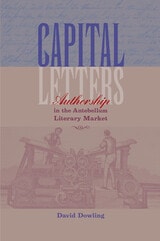
Capital Letters
Authorship in the Antebellum Literary MarketDavid Dowling
University of Iowa Press, 2009
In the 1840s and 1850s, as the market revolution swept the United States, the world of literature confronted for the first time the gaudy glare of commercial culture. Amid growing technological sophistication and mounting artistic rejection of the soullessness of materialism, authorship passed from an era of patronage and entered the clamoring free market. In this setting, romantic notions of what it meant to be an author came under attack, and authors became professionals.
In lively and provocative writing, David Dowling moves beyond a study of the emotional toll that this crisis in self-definition had on writers to examine how three sets of authors—in pairings of men and women: Harriet Wilson and Henry David Thoreau, Fanny Fern and Walt Whitman, and Rebecca Harding Davis and Herman Melville—engaged with and transformed the book market. What were their critiques of the capitalism that was transforming the world around them? How did they respond to the changing marketplace that came to define their very success as authors? How was the role of women influenced by these conditions?
Capital Letters concludes with a fascinating and daring transhistorical comparison of how two superstar authors—Herman Melville in the nineteenth century and Stephen King today—have negotiated the shifty terrain of the literary marketplace. The result is an important contribution to our understanding of print culture and literary work.
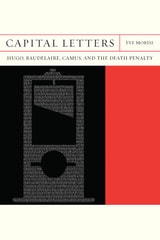
Capital Letters
Hugo, Baudelaire, Camus, and the Death PenaltyÈve Morisi
Northwestern University Press, 2020
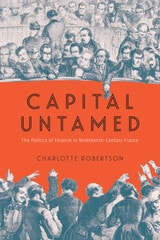
Capital Untamed
The Politics of Finance in Nineteenth-Century FranceCharlotte Robertson
University of Chicago Press, 2026
The story of a bold political experiment in nineteenth-century France to establish power through finance.
Amid the rise of industrial capitalism and revolutionary upheaval, French reformers asserted that finance should be reimagined as an instrument of economic and social transformation rather than left to the logic of private profit and speculation. In the 1850s, under Napoleon III’s authoritarian regime, this vision took institutional form as the Bonapartist state strategically deployed finance, broadened market participation, and sponsored new banks with the promise of directing investment toward infrastructure and industry. Yet this effort to harness and mobilize capital ran into a problem: The financial markets refused to be tamed.
Drawing on rich archival sources—from police surveillance and courtroom transcripts to investment manuals and petitions for incorporation—Capital Untamed reveals how the financial markets became an instrument of political power, frustrated state ambitions, and ultimately escaped attempts at mastery. In this striking debut, historian Charlotte Robertson shows how the French state and its citizens navigated a turbulent era of European capitalism animated by debates over the social purpose of financial capital. Ultimately, politicians’ efforts to establish legitimacy by reorganizing finance—and their confrontations with the limits of that project—set the stage for a form of modern discontent with the financial system that survives to this day.
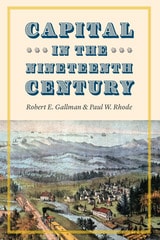
Capital in the Nineteenth Century
Robert E. Gallman and Paul W. Rhode
University of Chicago Press, 2020
When we think about history, we often think about people, events, ideas, and revolutions, but what about the numbers? What do the data tell us about what was, what is, and how things changed over time? Economist Robert E. Gallman (1926–98) gathered extensive data on US capital stock and created a legacy that has, until now, been difficult for researchers to access and appraise in its entirety.
Gallman measured American capital stock from a range of perspectives, viewing it as the accumulation of income saved and invested, and as an input into the production process. He used the level and change in the capital stock as proxy measures for long-run economic performance. Analyzing data in this way from the end of the US colonial period to the turn of the twentieth century, Gallman placed our knowledge of the long nineteenth century—the period during which the United States began to experience per capita income growth and became a global economic leader—on a strong empirical foundation. Gallman’s research was painstaking and his analysis meticulous, but he did not publish the material backing to his findings in his lifetime. Here Paul W. Rhode completes this project, giving permanence to a great economist’s insights and craftsmanship. Gallman’s data speak to the role of capital in the economy, which lies at the heart of many of the most pressing issues today.
Capital of Mind
The Idea of a Modern American UniversityAdam R. Nelson
University of Chicago Press, 2024
Capital of Mind is the second volume in a breathtakingly ambitious new economic history of American higher education. Picking up from the first volume, Exchange of Ideas, Adam R. Nelson looks at the early decades of the nineteenth century, explaining how the idea of the modern university arose from a set of institutional and ideological reforms designed to foster the mass production and mass consumption of knowledge. This “industrialization of ideas” mirrored the industrialization of the American economy and catered to the demands of a new industrial middle class for practical and professional education. From Harvard in the north to the University of Virginia in the south, new experiments with the idea of a university elicited intense debate about the role of scholarship in national development and international competition, and whether higher education should be supported by public funds, especially in periods of fiscal austerity. The history of capitalism and the history of the university, Nelson reveals, are intimately intertwined—which raises a host of important questions that remain salient today. How do we understand knowledge and education as commercial goods? Should they be public or private? Who should pay for them? And, fundamentally, what is the optimal system of higher education for a capitalist democracy?
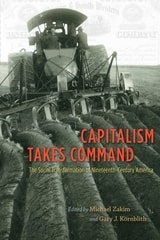
Capitalism Takes Command
The Social Transformation of Nineteenth-Century AmericaEdited by Michael Zakim and Gary J. Kornblith
University of Chicago Press, 2011
Most scholarship on nineteenth-century America’s transformation into a market society has focused on consumption, romanticized visions of workers, and analysis of firms and factories. Building on but moving past these studies, Capitalism Takes Command presents a history of family farming, general incorporation laws, mortgage payments, inheritance practices, office systems, and risk management—an inventory of the means by which capitalism became America’s new revolutionary tradition.
Capitalism, Politics, and Railroads in Jacksonian New England
Michael J. Connolly
University of Missouri Press, 2003
Capitalism, Slavery, and Republican Values
American Political Economists, 1819-1848By Allen Kaufman
University of Texas Press, 1982
In the troubled days before the American Civil War, both Northern protectionists and Southern free trade economists saw political economy as the key to understanding the natural laws on which every republican political order should be based. They believed that individual freedom was one such law of nature and that this freedom required a market economy in which citizens could freely pursue their particular economic interests and goals.
But Northern and Southern thinkers alike feared that the pursuit of wealth in a market economy might lead to the replacement of the independent producer by the wage laborer. A worker without property is a potential rebel, and so the freedom and commerce that give birth to such a worker would seem to be incompatible with preserving the content citizenry necessary for a stable, republican political order.
Around the resolution of this dilemma revolved the great debate on the desirability of slavery in this country. Northern protectionists argued that independent labor must be protected at the same time that capitalist development is encouraged. Southern free trade economists answered that the formation of a propertyless class is inevitable; to keep the nation from anarchy and rebellion, slavery—justified by racism—must be preserved at any cost.
Battles of the economists such as these left little room for political compromise between North and South as the antebellum United States confronted the corrosive effects of capitalist development. And slavery's retardant effect on the Southern economy ultimately created a rift within the South between those who sought to make slavery more like capitalism and those who sought to make capitalism more like slavery.
Captain Jack Helm
A Victim of Texas Reconstruction ViolenceChuck Parsons
University of North Texas Press, 2018
Captain Rock
The Irish Agrarian Rebellion of 1821–1824James S. Donnelly, Jr.
University of Wisconsin Press, 2009
Originating in west Limerick, the Rockite movement spread quickly under the impact of a prolonged economic depression. Before long the insurgency embraced many of the better-off farmers. The intensity of the Rockites’ grievances, the frequency of their resort to sensational violence, and their appeal on such key issues as rents and tithes presented a nightmarish challenge to Dublin Castle—prompting in turn a major reorganization of the police, a purging of the local magistracy, the introduction of large military reinforcements, and a determined campaign of judicial repression. A great upsurge in sectarianism and millenarianism, Donnelly shows, added fuel to the conflagration. Inspired by prophecies of doom for the Anglo-Irish Protestants who ruled the country, the overwhelmingly Catholic Rockites strove to hasten the demise of the landed elite they viewed as oppressors.
Drawing on a wealth of sources—including reports from policemen, military officers, magistrates, and landowners as well as from newspapers, pamphlets, parliamentary inquiries, depositions, rebel proclamations, and threatening missives sent by Rockites to their enemies—Captain Rock offers a detailed anatomy of a dangerous, widespread insurgency whose distinctive political contours will force historians to expand their notions of how agrarian militancy influenced Irish nationalism in the years before the Great Famine of 1845–51.

Captains of Charity
The Writing and Wages of Postrevolutionary Atlantic BenevolenceMary Kathleen Eyring
University of New Hampshire Press, 2017
According to Eyring, the men and women who most successfully wrote about and engaged in benevolent work strategically connected their work with the affluence generated by maritime commerce. The water trades supported the growth of the American publishing industry, but they also generated both vast inequities in wealth and physically and economically hazardous conditions that, in the absence of a welfare state, required the intervention of benevolent societies. Laborers in Atlantic port cities barred from lucrative professions by gender, race, physical ability, or social status found a way to make a living wage by conjoining the literary with the charitable—and attaching both to a profit structure. In so doing, they transformed the nature of American benevolence and gave rise to the nonprofit sector, which has since its inception provided discontented laborers with a forum in which to express their critique of for-profit American enterprise, by imitating it.
In Captains of Charity, Eyring looks at writers who overcame their marginalized status by bringing together the strands of maritime industry, publishing, and benevolence. These include Richard Allen and Absalom Jones, two black clergymen who managed a massive relief effort when refugees fleeing revolution in Haiti transported the yellow fever virus to Philadelphia in 1793; Nancy Prince, a free woman of color who sought her livelihood in the Protestant missions of Jamaica in the years immediately following Britain's emancipation of laborers in its Caribbean colonies; Sarah Josepha Hale, who parlayed the social influence she had gained as the founder of a seaman's aid society in Boston into a role as editor of the hugely popular periodical Godey's Lady's Book; and Sarah Pogson Smith, who donated the proceeds of her writing to such prominent charitable causes as the New York Institution for the Instruction of the Deaf and Dumb and then capitalized on the goodwill this charity work generated among her wealthy friends in New York City, Philadelphia, and Charleston.
Hardcover is un-jacketed.
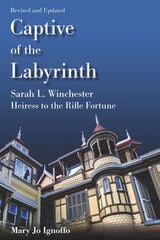
Captive of the Labyrinth
Sarah L. Winchester, Heiress to the Rifle Fortune, Revised and Updated EditionMary Jo Ignoffo
University of Missouri Press, 2022
Author and historian Mary Jo Ignoffo’s definitive biography unearths the truth about this reclusive eccentric, revealing that she was not a maddened spiritualist driven by remorse but an intelligent, articulate woman who sought to protect her private life amidst the chaos of her public existence and the social mores of the time. The author takes readers through Winchester’s several homes, explores her private life, and, by excerpting from personal correspondence, one learns the widow’s true priority was not dissipating her fortune on the mansion in San José but endowing a hospital to eradicate a dread disease.
Sarah Winchester has been exploited for profit for over a century, but Captive of the Labyrinth finally puts to rest the myths about this American heiress, and, in the process, uncovers her true legacies.
Captives in Blue
The Civil War Prisons of the ConfederacyRoger Pickenpaugh
University of Alabama Press, 2013
A gripping account of Union soldiers behind Confederate bars—where survival, sacrifice, and the unforgiving realities of Civil War imprisonment collide.
In Captives in Blue, Roger Pickenpaugh examines the ways the Confederate army contended with the growing prison population, the variations in the policies and practices of different Confederate prison camps, the effects these policies and practices had on Union prisoners, and the logistics of prisoner exchanges. He explores conditions that arose from conscious government policy decisions and conditions that were the product of local officials or unique local situations. He also considers how Confederate prisons and policies dealt with African American Union soldiers. Black soldiers held captive in Confederate prisons faced uncertain fates; many former slaves were returned to their former owners, while others faced harsh treatment in the camps. Drawing on prisoner diaries, Pickenpaugh provides compelling first-person accounts of life in prison camps often overlooked by scholars in the field.
This study of Union captives in Confederate prisons is a companion to Roger Pickenpaugh’s earlier groundbreaking book Captives in Gray: The Civil War Prisons of the Union and extends his examination of Civil War prisoner-of-war facilities into the Confederacy.
Captives in Gray
The Civil War Prisons of the UnionRoger Pickenpaugh
University of Alabama Press, 2009
“This is a vivid description of conditions and events rarely described: the imprisonment of captured Confederate soldiers during the Civil War. Its many parallels to circumstances in Andersonville are especially intriguing.” —Jimmy Carter, 39th President of the United States
Contains contemporary reports from prisoners and witnesses humanize the grim realities of the POW camps.
Captives in Gray is Civil War prison camp authority Roger Pickenpaugh’s acclaimed and definitive account of the Union’s POW camps. Combining his own extensive research into official records and a rich variety of letters and diaries with the best contemporary scholarship, Pickenpaugh covers every major northern camp.
Because the Union won few victories in 1861 and took few prisoners, the North had time to plan and build prison camps, an opportunity it largely squandered. Pickenpaugh gives illuminating accounts of the role and leadership of thrifty Lieutenant Colonel William Hoffman, the commissary general of prisoners for most of the conflict, and President Abraham Lincoln's secretaries of war, the incompetent Simon Cameron and the malignant Edwin M. Stanton.
Death came in many ways. Soldiers from the Deep South had no experience with extreme cold, and they died by the hundreds each winter. In one memorable freeze, Rock Island, Illinois, saw temperatures between twenty-eight and thirty-one degrees below zero. With insufficient fuel and inadequate shelter, clothing, and blankets, prisoners there and in other camps froze to death. Food rations varied widely. A few Confederates enjoyed better rations than they had in the CSA armies, but the majority supplemented their meager rations by eating rats, dogs, cats, and seagulls.
Poor medical care added to the death toll. Treatment was bad even by the standards of Civil War medicine, often due to Hoffman's reluctance to spend. Prisoners suffered from lice and scurvy, as well as pneumonia, measles, and a variety of fevers. As in both armies, diarrhea and dysentery were chronic. Smallpox epidemics killed many. Poor sanitation and drainage caused 385 deaths at Elmira, New York, in September 1864 alone.
During the war, over 12 percent of rebel prisoners, or 25,976 of the 214,865, died in captivity. Together with his Captives in Blue, Captives in Gray gives the fullest account of the experiences of prisoners of war in the American Civil War.

Captivity and Sentiment
Cultural Exchange in American Literature, 1682–1861Michelle Burnham
Dartmouth College Press, 2000

Cartophilia
Maps and the Search for Identity in the French-German BorderlandCatherine Tatiana Dunlop
University of Chicago Press, 2015
Turning to a previously undiscovered archive of popular maps, Cartophilia reveals Alsace-Lorraine’s lively world of citizen mapmakers that included linguists, ethnographers, schoolteachers, hikers, and priests. Together, this fresh group of mapmakers invented new genres of maps that framed French and German territory in original ways through experimental surveying techniques, orientations, scales, colors, and iconography. In focusing on the power of “bottom-up” maps to transform modern European identities, Cartophilia argues that the history of cartography must expand beyond the study of elite maps and shift its emphasis to the democratization of cartography in the modern world.
Casanova's Lottery
The History of a Revolutionary Game of ChanceStephen M. Stigler
University of Chicago Press, 2022
In the 1750s, at the urging of famed adventurer Giacomo Casanova, the French state began to embrace risk in adopting a new Loterie. The prize amounts paid varied, depending on the number of tickets bought and the amount of the bet, as determined by each individual bettor. The state could lose money on any individual Loterie drawing while being statistically guaranteed to come out on top in the long run. In adopting this framework, the French state took on risk in a way no other has, before or after. At each drawing the state was at risk of losing a large amount; what is more, that risk was precisely calculable, generally well understood, and yet taken on by the state with little more than a mathematical theory to protect it.
Stephen M. Stigler follows the Loterie from its curious inception through its hiatus during the French Revolution, its renewal and expansion in 1797, and finally to its suppression in 1836, examining throughout the wider question of how members of the public came to trust in new financial technologies and believe in their value. Drawing from an extensive collection of rare ephemera, Stigler pieces together the Loterie’s remarkable inner workings, as well as its implications for the nature of risk and the role of lotteries in social life over the period 1700–1950.
Both a fun read and fodder for many fields, Casanova's Lottery shines new light on the conscious introduction of risk into the management of a nation-state and the rationality of playing unfair games.
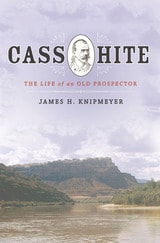
Cass Hite
The Life of an Old ProspectorJames H. Knipmeyer
University of Utah Press, 2016
Despite this notoriety, no one has written a full-length, scholarly account of Hite’s life. This biography fills that void, detailing Hite’s story from his birth in central Illinois in 1845 to his death in Glen Canyon in 1914. It corrects some of the long-accepted stories about Hite and puts others in their proper perspective, while revealing new information. Scores of photographs and excerpts from Hite’s own writing further illuminate this colorful prospector’s life.
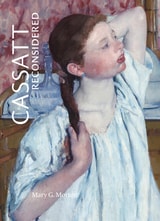
Cassatt Reconsidered
Mary G. Morton
J. Paul Getty Trust, The, 0
A sweeping reconsideration of the artist we thought we knew—and the forces that obscured her legacy.
Fiercely ambitious and independent, Mary Cassatt defied expectations to become one of the most radical artists of the Impressionist movement, though she was—and remains—the least understood. Cassatt commanded and manipulated strains of old master and contemporary painting to express her female subjectivity through a brilliantly modern oeuvre on par with those of the most revered Impressionists. However, mishandled by the Parisian art establishment during her lifetime, and later by art historians and curators, she became known almost exclusively as a sentimentalizing painter of mothers and children.
How did this happen to the most aspiring, revolutionary female artist of the late nineteenth and early twentieth centuries? In Cassatt Reconsidered, author Mary G. Morton probes this central question and more, demonstrating how Cassatt disturbed conventional ideals of femininity, childhood, and maternity, an uncompromising feat for which she paid dearly during her lifetime and in the annals of art historiography.
Vibrantly illustrated with more than 100 images, Cassatt Reconsidered rewards readers with a fuller understanding of an artist who stands apart for daring to express, on her own terms, the unique, intimate experiences of modern women.
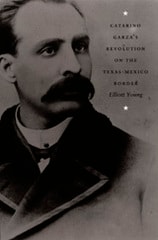
Catarino Garza's Revolution on the Texas-Mexico Border
Elliott Young
Duke University Press, 2004
Elliott Young provides the first full-length analysis of the revolt and its significance, arguing that Garza’s rebellion is an important and telling chapter in the formation of the border between Mexico and the United States and in the histories of both countries. Throughout the nineteenth century, the borderlands were a relatively coherent region. Young analyzes archival materials, newspapers, travel accounts, and autobiographies from both countries to show that Garza’s revolution was more than just an effort to overthrow Díaz. It was part of the long struggle of borderlands people to maintain their autonomy in the face of two powerful and encroaching nation-states and of Mexicans in particular to protect themselves from being economically and socially displaced by Anglo Americans. By critically examining the different perspectives of military officers, journalists, diplomats, and the Garzistas themselves, Young exposes how nationalism and its preeminent symbol, the border, were manufactured and resisted along the Rio Grande.

Cattle In The Cold Desert, Expanded Edition
James A. Young
University of Nevada Press, 2002
A sophisticated ecological analysis of ranching in northern Nevada featuring a new chapter and new epilogue by the authors.First published in 1985, Cattle in the Cold Desert has become a classic in the environmental history of the Great Basin, brilliantly combining a lively account of the development of the Great Basin grazing industry with a detailed scientific discussion of the ecology of its sagebrush/grassland plant communities. The volume traces the history of white settlement in the Great Basin from about 1860, along with the arrival of herds of cattle and sheep to exploit the forage resources of a pristine environment and, through the history of John Sparks, a pioneer cattleman, illustrates how the herdsmen interacted with the sagebrush/grasslands of the cold desert West. As the story unfolds on two levels—that of the herdsmen adapting their livelihood to the challenging conditions of the Great Basin's scanty forage, aridity, and fierce winters, and that of the fragile ecology of the desert plant communities responding to the presence of huge herds of livestock—we see the results of a grand experiment initiated by men willing to venture beyond the limits of accepted environmental potential to settle the Great Basin, as well as the often ruinous consequences of the introduction of domestic livestock into the plant communities of the region. The result is a remarkably balanced and insightful discussion of the grazing industry in the Intermountain West. This new paperback edition includes an additional chapter that addresses the impact of wild mustangs on the Great Basin rangelands, and an epilogue that discusses changes in rangeland management and in rangeland conditions, especially the impact of recent wildfires. As concern over the future of the Great Basin's unique rangeland environment and its principal agricultural industry grows, Cattle in the Cold Desert remains essential reading for everyone who cares about this underappreciated region of the American West.
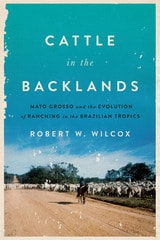
Cattle in the Backlands
Mato Grosso and the Evolution of Ranching in the Brazilian TropicsBy Robert W. Wilcox
University of Texas Press, 2017
Henry A. Wallace Award, The Agricultural History Society, 2018
Brazil has the second-largest cattle herd in the world and is a major exporter of beef. While ranching in the Amazon—and its destructive environmental consequences—receives attention from both the media and scholars, the states of Mato Grosso and Mato Grosso do Sul actually host the most cattle. A significant beef producer in Brazil beginning in the late nineteenth century, the region served as a laboratory for raising cattle in the tropics, where temperate zone ranching practices do not work. Mato Grosso ranchers and cowboys transformed ranching’s relationship with the environment, including the introduction of an exotic cattle breed—the Zebu—that now dominates Latin American tropical ranching.
Cattle in the Backlands presents a comprehensive history of ranching in Mato Grosso. Using extensive primary sources, Robert W. Wilcox explores three key aspects: the economic transformation of a remote frontier region through modern technical inputs; the resulting social changes, especially in labor structures and land tenure; and environmental factors, including the long-term impact of ranching on ecosystems, which, he contends, was not as detrimental as might be assumed. Wilcox demonstrates that ranching practices in Mato Grosso set the parameters for tropical beef production in Brazil and throughout Latin America. As the region was incorporated into national and international economic structures, its ranching industry experienced the entry of foreign investment, the introduction of capitalized processing facilities, and nascent discussions of ecological impacts—developments that later affected many sectors of the Brazilian economy.
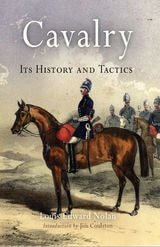
Cavalry
Its History and TacticsLouis Edward Nolan
Westholme Publishing, 2020
A New Edition of One of the Great Military Treatises of the Nineteenth Century
First published in 1853, Cavalry: Its History and Tactics had a major impact on military theorists and officers for decades—it was reprinted as a manual during the American Civil War—and its influence on European cavalry performance can be traced into World War I. It is an intelligent work which discusses the history and development of cavalry over the ages, advocates a program of reform for Britain’s horsed troops, and covers many aspects of equipment, training, drill, organization, formation, and battlefield tactics. The author, an experienced and gifted cavalryman, first served in the Austrian army, then joined the British army’s 15th Hussars in 1839, fought in India, and became the regimental riding master. Captain Nolan’s 1852 tour of European armies, wide reading in many languages, and service in Europe and India makes Cavalry an extraordinary statement on mid-nineteenth-century theory and practice.
As historian Jon Coulston explains in his introduction, Nolan was writing at the cusp of technological change, drawing upon the experiences of the Napoleonic Wars, continental suppression of the 1848 Revolutions, and Britain’s wars in India, but with an eye to firepower developments on the eve of the Crimean War. In 1854, at the Battle of Balaklava, Nolan rode with the written order which unleashed the Charge of the Light Brigade, an action in which he lost his life. Presented here as the first modern reprint, complete with a new introduction and further reading, Nolan’s Cavalry remains a hallmark of military history.
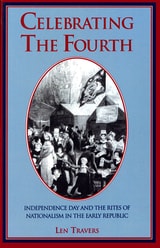
Celebrating the Fourth
Independence Day and the Rites of Nationalism in the Early RepublicLen Travers
University of Massachusetts Press, 1997
A CHOICE Outstanding Academic Book
Public rituals have always held a vital place in American culture. By far the noisiest and most popular of these to emerge in the nation's early years was Independence Day. After a decade of fitful starts, the Fourth of July eclipsed local and regional patriotic observances to become the premier “American Jubilee.” Celebrating the Fourth provides a history of this holiday and explores its role in shaping a national identity and consciousness in three cities—Boston, Charleston, and Philadelphia—during the first fifty years of the American republic. Independence Day celebrations justified, validated, and helped maintain nationalism among people unused to offering political allegiance beyond their own state borders. As the observances became increasingly popular and symbolically important, political partisans competed hotly for the right to control the meaning of the festivals.
Central America, 1821-1871
Liberalism before Liberal ReformLowell Gudmundson
University of Alabama Press, 1995
Reassessing the foundations of liberalism, nation-building, and economic change in nineteenth-century Central America.
Central America and its ill-fated federation (1824-1839) are often viewed as the archetype of the “anarchy” of early independent Spanish America. This book consists of two interrelated essays dealing with the economic, social, and political changes that took place in Central America, changes that let to both Liberal regime consolidation and export agricultural development after the middle of the last century. The authors provide a challenging reinterpretation of Central American history and the most detailed analysis available in English of this most heterogeneous and obscure of societies. It avoids the dichotomous (Costa Rica versus the rest of Central America) and the centralist (Guatemala as the standard or model) treatments dominant in the existing literature and is required reading for anyone with an interest in 19th century Latin America.
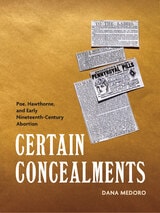
Certain Concealments
Poe, Hawthorne, and Early Nineteenth-Century AbortionDana Medoro
University of Massachusetts Press, 2022
Antebellum America saw a great upsurge in abortion, driven in part by the rise of the pharmaceutical industry. Unsurprisingly, the practice became increasingly visible in the popular culture and literature of the era, appearing openly in advertisements, popular fiction, and newspaper reports. One figure would come to dominate national headlines from the 1840s onward: Madame Restell. Facing public condemnation and mob attacks at her home for her dogged support of women’s reproductive rights, Restell built an empire selling her powders, pills, and services along the Eastern Seaboard.
Edgar Allan Poe and Nathaniel Hawthorne undoubtedly knew of Restell’s work and would go on to depict the incompatibility of abortion and nationalism in their writings. Through the thwarted plotlines, genealogical interruptions, and terminated ideas of Poe’s Dupin trilogy and Hawthorne’s The Scarlet Letter, The House of Seven Gables, and The Blithedale Romance, these authors consider new concepts around race, reproduction, and American exceptionalism. Dana Medoro demonstrates that their work can be usefully read in the context of debates on fetal life and personhood that circulated in the era.

Cezanne and the End of Impressionism
A Study of the Theory, Technique, and Critical Evaluation of Modern ArtRichard Shiff
University of Chicago Press, 1984
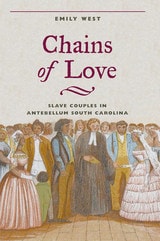
Chains of Love
Slave Couples in Antebellum South CarolinaEmily West
University of Illinois Press, 2004
Focusing on South Carolina, West deals directly with the most intimate areas of the slave experience including courtship, love and affection between spouses, the abuse of slave women by white men, and the devastating consequences of forced separations. Slaves fought these separations through cross-gender bonding and cross-plantation marriages, illustrating West's thesis about slave marriage as a fierce source of resistance to the oppression of slavery in general.
Making expert use of sources such as the Works Progress Administration narratives, slave autobiographies, slave owner records, and church records, this book-length study is the first to focus on the primacy of spousal support as a means for facing oppression. Chains of Love provides telling insights into the nature of the slave family that emerged from these tensions, celebrates its strength, and reveals new dimensions to the slaves' struggle for freedom.