Results by title
314 books match the query 'African' and 21 start with c
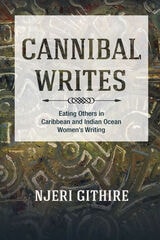
Cannibal Writes
Eating Others in Caribbean and Indian Ocean Women's WritingNjeri Githire
University of Illinois Press, 2014
In Cannibal Writes, Njeri Githire concentrates on the gendered and sexualized dimensions of these visceral metaphors of consumption in works by women writers from Haiti, Jamaica, Mauritius, and elsewhere. Employing theoretical analysis and insightful readings of English- and French-language texts, she explores the prominence of alimentary-related tropes and their relationship to sexual consumption, writing, global geopolitics and economic dynamics, and migration. As she shows, the use of cannibalism in particular as a central motif opens up privileged modes for mediating historical and sociopolitical issues.
Ambitiously comparative, Cannibal Writes ranges across the works of well-known and lesser known writers to tie together two geographic and cultural spaces that have much in common but are seldom studied in parallel.
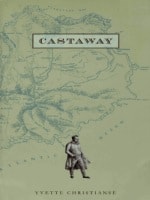
Castaway
Yvette Christiansë
Duke University Press, 1999
Instead of offering a linear narrative, Christiansë renders the poems as if they were emerging from the pages of imaginary books, documents now disrupted and scattered. An emperor’s point of view is juxtaposed with the perspectives of various explorers, sailors, and unknown slaves until finally they all open upon the book’s “castaway,” the authorial female voice that negotiates a way to write about love and desire after centuries of oppression and exploitation.
Daring and sophisticated, Castaway challenges and captivates the reader with not only its lyrical richness and conceptual depth but also its implicit and haunting reflections on diaspora and postcolonialism. It will be highly regarded by readers and writers of poetry and will appeal to those engaged with issues of race, gender, exile, multiculturalism, colonialism, and history.

Changing Uganda
Dilemmas of Structural AdjustmentHölger Bernt Hansen
Ohio University Press, 1992
Yoweri Museveni battled to power in 1986. His government has impressed many observers as Uganda’s most innovative since it gained independence from Britain in 1962. The Economist recommended it as a model for other African states struggling to develop their resources in the best interests of their peoples.
But where was change to start? At the bottom in building resistance committees, or at the top in tough negotiations with the IMF? How was it to continue? Was it in the restructuring of the national army, in increasing respect for human rights, in the reform of education, in tackling AIDS, or in getting Ugandans to speak a common language? Was it in building more viable survival strategies for the poorest Ugandans or in restructuring the national constitution? The last five years have shown a radical approach to Uganda’s dilemmas.
Holger Bernt Hansen and Michael Twaddle previously edited Uganda Now. It was brought together at a significant moment just as President Museveni was gaining power in 1985-6. It was so much in demand that it even entered the magendo market on the streets of Kampala. The book, which is still in print, was described by The Canadian Journal of African Studies as ‘virtually a mini-encyclopedia of Uganda’ and by The African Studies Review as ‘the best overview of Uganda’s trauma in the last two decades.’
The editors have assembled another team of Ugandan and international scholars to review the dilemmas of introducing revolutionary changes in an African country deeply affected by structural adjustment plans which have been imposed from outside.
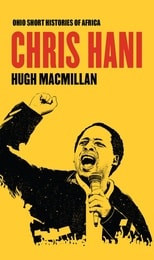
Chris Hani
Hugh Macmillan
Ohio University Press, 2021
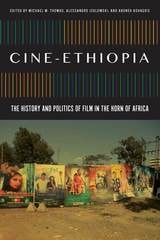
Cine-Ethiopia
The History and Politics of Film in the Horn of AfricaMichael W. Thomas
Michigan State University Press, 2018
Citizens of Beauty
Poems of Jean SénacJean Sénac
Michigan State University Press, 2016
City of Bones
A TestamentKwame Dawes
Northwestern University Press, 2017
As if convinced that all divination of the future is somehow a re-visioning of the past, Kwame Dawes reminds us of the clairvoyance of haunting. The lyric poems in City of Bones: A Testament constitute a restless jeremiad for our times, and Dawes’s inimitable voice peoples this collection with multitudes of souls urgently and forcefully singing, shouting, groaning, and dreaming about the African diasporic present and future.
As the twentieth collection in the poet’s hallmarked career, City of Bones reaches a pinnacle, adding another chapter to the grand narrative of invention and discovery cradled in the art of empathy that has defined his prodigious body of work. Dawes’s formal mastery is matched only by the precision of his insights into what is at stake in our lives today. These poems are shot through with music from the drum to reggae to the blues to jazz to gospel, proving that Dawes is the ambassador of words and worlds.
Civilizing War
Imperial Politics and the Poetics of National RuptureNasser Mufti
Northwestern University Press, 2018
Honorable Mention for the 2019 Sonya Rudikoff Prize, awarded by the Northeast Victorian Studies Association
Civilizing War traces the historical transformation of civil war from a civil affair into an uncivil crisis. Civil war is today synonymous with the global refugee crisis, often serving as grounds for liberal-humanitarian intervention and nationalist protectionism.
In Civilizing War, Nasser Mufti situates this contemporary conjuncture in the long history of British imperialism, demonstrating how civil war has been and continues to be integral to the politics of empire. Through comparative readings of literature, criticism, historiography, and social analysis, Civilizing War shows how writers and intellectuals of Britain’s Anglophone empire articulated a “poetics of national rupture” that defined the metropolitan nation and its colonial others.
Mufti’s tour de force marshals a wealth of examples as diverse as Thomas Carlyle, Benjamin Disraeli, Friedrich Engels, Arthur Conan Doyle, Rudyard Kipling, Joseph Conrad, V. S. Naipaul, Nadine Gordimer, and Michael Ondaatje to examine the variety of forms this poetics takes—metaphors, figures, tropes, puns, and plot—all of which have played a central role in Britain’s civilizing mission and its afterlife. In doing so, Civilizing War shifts the terms of Edward Said’s influential Orientalism to suggest that imperialism was not only organized around the norms of civility but also around narratives of civil war.
Clear Word and Third Sight
Folk Groundings and Diasporic Consciousness in African Caribbean WritingCatherine A. John
Duke University Press, 2003
Contesting popular discourses about what constitutes culture and maintaining that neglected strains in negritude discourse provide a crucial philosophical perspective on the connections between folk practices, cultural memory, and collective consciousness, John examines the diasporic principles in the work of the negritude writers Léon Damas, Aimé Césaire, and Léopold Senghor. She traces the manifestations and reworkings of their ideas in Afro-Caribbean writing from the eastern and French Caribbean, as well as the Caribbean diaspora in the United States. The authors she discusses include Jamaica Kincaid, Earl Lovelace, Simone Schwarz-Bart, Audre Lorde, Paule Marshall, and Edouard Glissant, among others. John argues that by incorporating what she calls folk groundings—such as poems, folktales, proverbs, and songs—into their work, Afro-Caribbean writers invoke a psychospiritual consciousness which combines old and new strategies for addressing the ongoing postcolonial struggle.
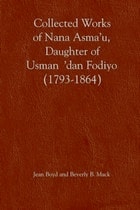
Collected Works of Nana Asma'u
Daughter of Usman 'dan Fodiyo (1793-1864)Jean Boyd
Michigan State University Press, 1997
Nana Asma'u Bint Usman 'dan Fodiyo, a nineteenth-century Muslim scholar, lived in the region now known as northern Nigeria and was an eyewitness to battles of the largest of the West-African jihads of the era. The preparation and conduct of the jihad provide the topics for Nana Asma'u's poetry. Her work also includes treatises on history, law, mysticism, theology, and politics, and was heavily influenced by the Arabic poetic tradition.
This volume contains annotated translations of works by the 19th century intellectual giant, Nana Asma'u, including 54 poems and prose texts. Asma'u rallied public opinion behind a movement devoted to the revival of Islam in West Africa, and organized a public education system for women.
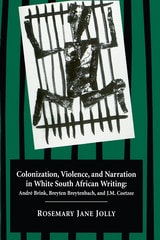
Colonization, Violence, and Narration in White South African Writing
André Brink, Breyten Breytenbach, and J. M. CoetzeeRosemary Jane Jolly
Ohio University Press, 1995
The representation of pain and suffering in narrative form is an ongoing ethical issue in contemporary South African literature. Can violence be represented without sensationalistic effects, or, alternatively, without effects that tend to be conservative because they place the reader in a position of superiority over the victim or the perpetrator?
Jolly looks at three primary South African authors—André Brink, Breyten Breytenbach, and J. M. Coetzee—to consider violence in the context of apartheid and colonialism and their inherent patriarchies.
Jolly also discusses the violence attendant upon the act of narration in the broader context of critiques of Kafka, Freud, Hegel, the postcolonial critics Jan Mohamed and Bhabha, and feminists such as Susan Suleiman.
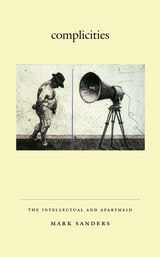
Complicities
The Intellectual and ApartheidMark Sanders
Duke University Press, 2002
Sanders gives detailed analyses of widely divergent thinkers: Afrikaner nationalist poet N. P. van Wyk Louw, Drum writer Bloke Modisane, Xhosa novelist A. C. Jordan, Afrikaner dissident Breyten Breytenbach, and Black Consciousness leader Steve Biko. Drawing on theorists including Derrida, Sartre, and Fanon, and paying particular attention to the linguistic intricacy of the literary and political texts considered, Sanders shows how complicity emerges as a predicament for intellectuals across the ideological and social spectrum. Through discussions of the colonial intellectuals Olive Schreiner and Sol T. Plaatje and of post-apartheid feminist critiques of the Truth and Reconciliation Commission, Complicities reveals how sexual difference joins with race to further complicate issues of collusion.
Complicities sheds new light on the history and literature of twentieth-century South Africa as it weighs into debates about the role of the intellectual in public life.

Conflict Bodies
The Politics of Rape Representation in the Francophone ImaginaryRégine Michelle Jean-Charles
The Ohio State University Press, 2014
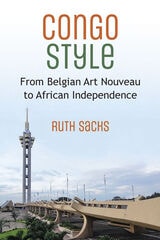
Congo Style
From Belgian Art Nouveau to African IndependenceRuth Sacks
University of Michigan Press, 2023
Congo Style presents a postcolonial approach to discussing the visual culture of two now-notorious regimes: King Leopold II’s Congo Colony and the state sites of Mobutu Sese Seko’s totalitarian Zaïre. Readers are brought into the living remains of sites once made up of ambitious modernist architecture and art in Kinshasa, Democratic Republic of the Congo. From the total artworks of Art Nouveau to the aggrandizing sites of post-independence Kinshasa, Congo Style investigates the experiential qualities of man-made environments intended to entertain, delight, seduce, and impress.
In her study of visual culture, Ruth Sacks sets out to reinstate the compelling wonder of nationalist architecture from Kinshasa’s post-independence era, such as the Tower of the Exchange (1974), Gécamines Tower (1977), and the artworks and exhibitions that accompanied them. While exploring post-independence nation-building, this book examines how the underlying ideology of Belgian Art Nouveau, a celebrated movement in Belgium, led to the dominating early colonial settler buildings of the ABC Hotels (circa 1908–13). Congo Style combines Sacks’s practice as a visual artist and her academic scholarship to provide an original study of early colonial and independence-era modernist sites in their African context.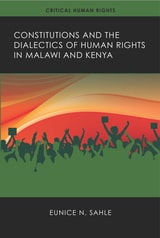
Constitutions and the Dialectics of Human Rights in Malawi and Kenya
Eunice N. Sahle
University of Wisconsin Press, 2026
As in many other countries, the protection of human rights and other practices of constitutionalism remains uneven in Malawi and Kenya. In this book, Eunice N. Sahle argues that the adoption in 1994 and 2010 in Malawi and Kenya, respectively, of new constitutional frameworks, which have the markings of “critical constitutional events,” provided significant openings for the promotion of human rights. Nonetheless, the emergence of such opportunities does not mean that the protection of human rights is automatic. Sahle zeroes in on the tension between the possibilities of human rights promotion on one hand, and the historical and contemporary factors influencing that process on the other. In that regard, her analysis shows the importance and limits of transformative constitutional frameworks as tools for social change. Further, by focusing on the promotion of human rights by a diverse range of social actors—individuals, civil society, organizations, and public institutions—she demonstrates the need to broaden who “counts” as an agent of human rights and to go beyond a strictly state-centric approach.
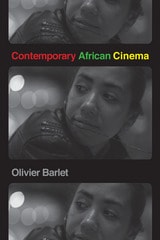
Contemporary African Cinema
Olivier Barlet
Michigan State University Press, 2016
Drawing on more than 1,500 articles, reviews, and interviews written over the past fifteen years, Olivier Barlet identifies the critical questions brought about by the evolution of African cinema. In the process, he offers us a personal and passionate vision, making this book an indispensable sum of thought that challenges preconceived ideas and enriches an approach to cinema as a critical art.
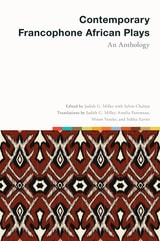
Contemporary Francophone African Plays
An AnthologyJudith G. Miller
Bucknell University Press, 2024

Continental Drift
From National Characters to Virtual SubjectsEmily Apter
University of Chicago Press, 1999
Among the many topics Apter explores are the fate of national literatures in an increasingly transnational literary climate; the volatile stakes of Albert Camus's life and reputation against the backdrop of Algerian civil strife; the use of literary and theatrical productions to "script" national character for the colonies; belly-dancing and aesthetic theory; and the impact of new media on colonial and postcolonial representation, from tourist photography to the videos of Digital Diaspora.
Continental Drift advances debates not just in postcolonial studies, but also in gender, identity, and cultural studies; ethnography; psychoanalysis; and performance studies.
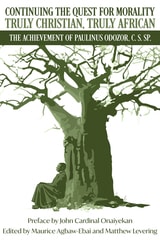
Continuing the Quest for Morality Truly Christian, Truly African
The Achievement of Paulinus Odozor, C,S,Sp.Maurice Ashley Agbaw-Ebai
St. Augustine's Press, 2025
Paulinus Ikechukwu Odozor is among the preeminent moral theologians of our time. He has reached the pinnacle of his profession after serving more than two decades as a professor of theology at the University of Notre Dame. Among African theologians, he stands at the forefront of the generation that came of age in the early postconciliar period. Fr. Odozor’s work in Morality Truly Christian, Truly African: Foundational, Methodological, and Theological Considerations (2014) has become a classic in the field of Catholic moral theology. His contribution to reuniting moral theology to dogmatics is a key element to processing the contention in theological scholarship in the wake of Vatican II and the shifting of the socio-economic global landscape. Understanding the influence of theologians such as Richard McCormick, Charles Curran, and Edward Schillebeeckx, Fr. Odozor, he is unable to ignore the work of John Paul II, Joseph Ratzinger, Joseph Boyle, and John Cavadini as essential to the age of renewal in the field of moral theology.
The essays in this volume highlight the fruits of Fr. Odozor's ability to move between the spheres of moral and dogmatic theology, and his particular treatment of the nature of God, ecclesiology, and interreligious dialogue. He is a theologian who is rightly positioned within a postconciliar moral theological context, and his thought is critical as we enter a new era in the Church that no longer takes Vatican II as its reference point––that is, the Church is reorienting toward the future, in continuity but seeking to discern what lies ahead. Claiming postconciliar theologians shared basic agreement regarding the mission of the Church, within the foggy contention among pre- and postconciliar moral theologians Odozor sees a legitimate albeit complex connection. Fr. Odozor's appreciation for Humanae Vitae and Veritatis Splendor is clear, and his fidelity to seeing issues like contraception as a "God question" and representing the concerns and voices of Africa make him an indispensable leader of the Church in this field of study. His mission to "bring Africa to the University of Notre Dame, and Notre Dame to Africa," has been more successful than former dean John Cavadini expected: African theology is no longer separated from the wider world thanks to this partnership and Fr. Odozor's acumen to establish moral theology's stature in the wider field.
Contributions include: Maurice Agbaw-Ebai, "Ratzinger's Theological Anthropology in Conversation with Aspects of Paulinus Odozor's Understanding of the Human Person in Christ"; Raymond Olusesan Aina, MSP, "Paulinus Ikechukwu Odozor’s Unfinished Quest for a Truly African and Christian Moral Theology of Marriage"; Anthony Akinwale, OP, "Politics, the Common Good and Holiness"; Melanie Susan Barrett, "Aquinas, Balthasar, and African Tradition: Christian Conversion of Individuals and Cultures"; Jana M. Bennett, "The Importance of Anamnesis for Moral Life"; John Berkman, "Abominations and Absolute Prohibitions: Killing the Innocent According to Anscombe and Odozor"; John C. Cavadini, "African Theology and a Classical Theory of Inculturation"; David A. Clairmont, "Catholic Comparative Theological Ethics: Elements of an Approach to Tradition, Ethics, and Dialogue (with Odozor and Clooney, in the Church)"; David Elliot, "The Legacy of the African Church Fathers to St. Thomas Aquinas’ Account of Virtue Growth and Spiritual Practice"; Dennis Kasule, "Facing Up to the Challenge of Moral Formation in African Catechumenates Today: Drawing on African Catechumenates of the Past and Paulinus Odozor’s Seven Guidelines for Inculteration"; Matthew Levering, "Natural Law in Bénézet Bujo, Paulinus Odozor, and Stephen L. Brock"; Tegha Afuhwi Nji, "Paulinus Odozor and Joseph Ratzinger on the Question of Moral Objectivity: A Morality Truly African and Truly Christian?"; Emmanuel Ojeifo, "African and Christian: Black Sanctity and the Future of African Catholicism"; Bede Ukwuije, C.S.Sp., "Trinitarian Conception of God as Basis for an African Christian Ethics"; Paulinus Odozor, C.S.Sp., "Continuing the Quest for a Morality Truly Christian and African."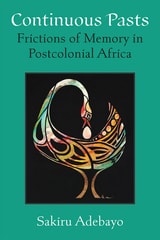
Continuous Pasts
Frictions of Memory in Postcolonial AfricaSakiru Adebayo
University of Michigan Press, 2023
Finalist: Memory Studies Association 2025 First Book Award Shortlist | April 7, 2025
In Continuous Pasts, author Sakiru Adebayo claims that the post-conflict fiction of memory in Africa depicts the intricate ways in which the past is etched on bodies and topographies, resonant in silences and memorials, and continuous even in experiences as well as structures of migration. Adebayo argues that the post-conflict fiction of memory in Africa invites critical deliberations on the continuity of the past within the realm of positionality and the domain of subjectivity—that is to say, the past is not merely present; instead, it survives, lives on, and is mediated through the subject positions of victims, perpetrators, as well as secondary and transgenerational witnesses. The book also argues that post-conflict fiction of memory in Africa shows the unfinished business of the past produces fragile regimes of peace and asynchronous temporalities that challenge progressive historicism. It contends that, in most cases in Africa, the post-conflict present is beset with a tight political economy wherein the scramble for survival trumps the ability to imagine a just future among survivors—and that it is precisely this despairing disposition toward the future that some writers of post-conflict fiction attempt to confront in their works. On the whole, Continuous Pasts shows how post-conflict fictions of memory in Africa recalibrate discourses of futurity, solidarity, responsibility, justice, survival, and reconciliation. It also contends that post-conflict fictions of memory in Africa provide the tools for imagining and theorizing a collective African memory. Each text analyzed in the book provides, in very interesting ways, an imaginative possibility and template for how post-independence African countries can ‘remember together’ using what the author describes as an African transnational memory framework.
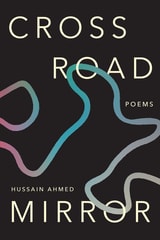
Crossroad Mirror
PoemsHussain Ahmed
Northwestern University Press, 2026
War and its reverberations propel people across the Nigerian landscape in Hussain Ahmed’s third collection
In Crossroad Mirror many poems begin after sundown—in quiet moments when the bounds between the past and the present, the living and the dead, blur. War and its aftershocks often form the backdrop for these scenes, though Ahmed’s verse rarely brings us to the battlefield itself. Instead, we hear the stories of refugees, civilian casualties, and ordinary soldiers trying to make sense of their circumstances. “There’s no vocabulary in the army—for grief, or death,” writes Ahmed. “Each door you exit, leads to another parade ground.” A group of soldiers wait out a rainstorm—and the war—together in a tent. Their families linger by the radio and listen for news. The “missing” loom as large as the dead.
Tracing the threads of migration that war so often catalyzes, Crossroad Mirror takes us from grassland to cornfield to coastline and explores the role storytelling and spirituality play in leaving and grieving.