Results by title
209 books match the query 'Alaska' and 18 start with c

Cabin 135
A Memoir of AlaskaKatie Eberhart
University of Alaska Press, 2020
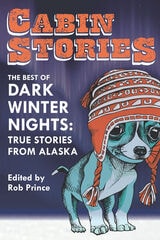
Cabin Stories
The Best of Dark Winter Nights: True Stories from AlaskaRob Prince
University of Alaska Press, 2022
From the humorous to the heart-wrenching, these are the stories told up north on dark winter nights. Anyone curious about what living in Alaska is really like will appreciate this wild and fun anthology.
Contributors: Glenner Anderson, Kat Betters, Randy Brown, Melissa Buchta, JB Carnahan, Philip Charette, Roy Churchwell, Richard Coleman, Michael Daku, Wendy Demers, Alexandra Dunlap, Alyssa Enriquez, Jan Hanscom, Mike Hopper, James Mennaker, Ken Moore, Steve Neumeth, Kaiti Ott, Lori Schoening, Bill Schnabel, Guy Schroder, Ed Shirk, Eric Stevens, Chris Zwolinski
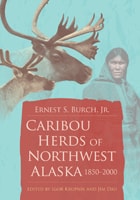
Caribou Herds of Northwest Alaska, 1850-2000
Ernest S. Burch, Jr.
University of Alaska Press, 2012
In his final, major publication Ernest S. “Tiger” Burch Jr. reconstructs the distribution of caribou herds in northwest Alaska using data and information from research conducted over the past several decades as well as sources that predate western science by more than one hundred years. Additionally, he explores human and natural factors that contributed to the demise and recovery of caribou and reindeer populations during this time. Burch provides an exhaustive list of published and unpublished literature and interviews that will intrigue laymen and experts alike. The unflinching assessment of the roles that humans and wolves played in the dynamics of caribou and reindeer herds will undoubtedly strike a nerve. Supplemental essays before and after the unfinished work add context about the author, the project of the book, and the importance of both.

Catching the Ebb
Drift-Fishing for Life in Cook InletBert Bender
Oregon State University Press, 2008
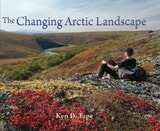
Changing Arctic Landscape
Ken Tape
University of Alaska Press, 2010
The resulting volume is a stunning reminder of inexorable change; divided into sections on vegetation, permafrost, and glaciers, the images show the startling effects of climate change. In addition, each section presents a short biography of a pioneering scientist who was instrumental in both obtaining the antique photographs and advancing the study of arctic ecosystems, as well as interviews with scientists who have spent decades working in Alaska for the United States Geological Survey. The Changing Arctic Landscape is a profile of transformation—complex and not yet fully understood.
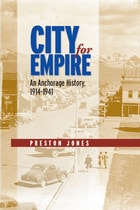
City for Empire
An Anchorage History, 1914-1941Preston Jones
University of Alaska Press, 2010
First settled in 1915, Anchorage, Alaska, was founded with the American empire in mind. During World War I, it served as a conduit through which coal could be shipped to the Pacific, where the US Navy was engaged with Japan. Decades later, during World War II, Anchorage became an equally important site for the defense of the mainland and the projection of American power. City for Empire tells the story of Anchorage's development in that period, focusing in particular on the international context of the city's early decades and its surprisingly diverse inhabitants. A thorough yet accessible read, City for Empire captures the history of this remarkable city.
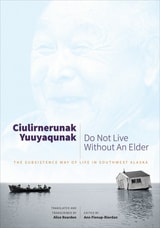
Ciulirnerunak Yuuyaqunak/Do Not Live Without an Elder
The Subsistence Way of Life in Southwest AlaskaEdited by Ann Fienup-Riordan
University of Alaska Press, 2016
This book gathers the men’s stories for the current generation and those to come. Taken together, they become more than simply oral histories—rather, they testify to the importance of transmitting memories and culture and of preserving knowledge of vanishing ways of life.
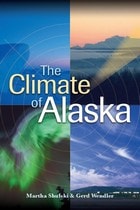
Climate of Alaska
Martha Shulski and Gerd Wendler
University of Alaska Press, 2007
Replete with striking photos, maps, and charts, The Climate of Alaska presents a detailed picture of what to expect in this state of climate extremes. From the 40-below temperatures of the Interior to the twenty-four hours of daylight in a northern summer, Alaska’s climate presents challenges to its inhabitants on a daily basis. Readers will find accessible descriptions of temperature, humidity, precipitation, and climate change that will enrich a visit to the state and provide insight on the living conditions of this fascinating place.
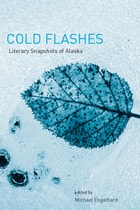
Cold Flashes
Literary Snapshots of AlaskaEdited by Michael Engelhard
University of Alaska Press, 2010
As the old adage goes, "if you can't say it in a few pages, you won't in a hundred." The selections in Cold Flashes—very short prose and black-and-white photographs—embody perfectly this transparency, thrift, and restraint. Found here are highly polished micro-narratives, both fiction and nonfiction, and a series of eloquent and artistic halftones that capture their sizeable subjects in a nutshell. By minimizing the exposition, the selections stimulate the imagination to reflect on the rich diversity of people and places that make up Alaska. To be savored piecemeal at coffee shops, on the bus, or while waiting in line, the images and text in Cold Flashes will resonate with both the reader and each other, fusing into something profound yet elusive.
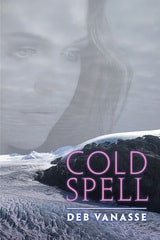
Cold Spell
Deb Vanasse
University of Alaska Press, 2014
From the moment Ruth Sanders rips a glossy photo of a glacier from a magazine, she believes her fate is intertwined with the ice. Her unsettling fascination bewilders her daughter, sixteen-year-old Sylvie, still shaken by her father’s leaving. When Ruth uproots Sylvie and her sister from their small Midwestern town to follow her growing obsession—and a man—to Alaska, they soon find themselves entangled with an unfamiliar wilderness, a divided community, and one another. As passions cross and braid, the bond between mother and daughter threatens to erode from the pressures of icy compulsion and exposed secrets.
Inspired by her own experience arriving by bush plane to live on the Alaska tundra, Deb Vanasse vividly captures the reality of life in Alaska and the emotional impact of loving a remote and unforgiving land.
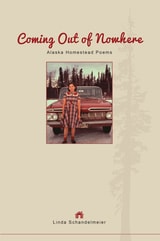
Coming Out of Nowhere
Alaska Homestead PoemsLinda Schandelmeier
University of Alaska Press, 2018
Homestead life is often romanticized as a valiant, resilient family persisting in the clean isolation of pristine wilderness, living off the land and depending only on each other. But there can be a darker side to this existence.
Linda Schandelmeier was raised on a family homestead six miles south of the fledgling town of Anchorage, Alaska in the 1950s and ’60s. But hers is not a typical homestead story. In this book, part poetic memoir and part historical document, a young girl comes of age in a family fractured by divorce and abuse. Schandelmeier does not shy away from these details of her family history, but she also recognizes her childhood as one that was unique and nurturing, and many of her poems celebrate homestead life. Her words hint at her way of surviving and even transcending the remoteness by suggesting a deeper level of human experience beyond the daily grind of homestead life; a place in which the trees and mountains are almost members of the family. These are poems grounded in the wilds that shimmer with a mythic quality. Schandelmeier’s vivid descriptions of homesteading will draw in readers from all types of lives.
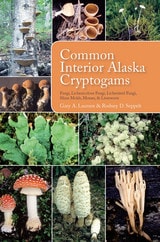
Common Interior Alaska Cryptogams
Fungi, Lichenicolous Fungi, Lichenized Fungi, Slime Molds, Mosses, and LiverwortsGary A. Laursen and Rodney D. Seppelt
University of Alaska Press, 2009
With Common Interior Alaska Cryptogams, Gary A. Laursen and Rodney Seppelt offer the first field guide to cryptogams of the Denali National Park and Preserve. Useful to both lay and professional investigators, this fully illustrated compendium covers mushroom fungi, lichenized fungi, lichenicolous fungi, slime molds, mosses, and liverworts. This field guide to commonly seen cryptogams will provide a basis for understanding their vast diversity of taxa, speciation, edibility, relative abundance, and utility, as well as the ecological roles played by these organisms.
Communities of Practice
An Alaskan Native Model for Language Teaching and LearningEdited by Patrick E. Marlow and Sabine Siekmann
University of Arizona Press, 2013
In Alaska, the Second Language Acquisition Teacher Education (SLATE) project was designed to enable Indigenous communities and schools to improve the quality of native-language and English-language instruction and assessment by focusing on the elimination of barriers that have historically hindered degree completion for Indigenous and rural teachers. The Guided Research Collaborative (GRC) model, was employed to support the development of communities of practice through near-peer mentoring and mutual scaffolding. Through this important new model, teachers of both the heritage language, in this case Central Yup’ik, and English were able to situate their professional development into a larger global context based on current notions of multilingualism.
In Communities of Practice contributors show how the SLATE program was developed and implemented, providing an important model for improving second-language instruction and assessment. Through an in-depth analysis of the program, contributors show how this project can be successfully adapted in other communities via its commitment to local control in language programming and a model based on community-driven research.
Communities of Practice demonstrates how an initial cohort of Yup’ik- and English-language teachers collaborated to negotiate and ultimately completed the SLATE program. In so doing, these educators enhanced the program and their own effectiveness as teachers through a greater understanding of language learning. It is these understandings that will ultimately allow heritage- and English-language teachers to work together to foster their students’ success in any language.
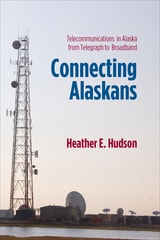
Connecting Alaskans
Telecommunications in Alaska from Telegraph to BroadbandHeather E. Hudson
University of Alaska Press, 2015
Connecting Alaskans tells the unique history of providing radio, television, phone, and Internet services to more than six hundred thousand square miles. It is a history of a place where military needs often trumped civilian ones, where ham radios offered better connections than telephone lines, and where television shows aired an entire day later than in the rest of the country.
Heather E. Hudson covers more than a century of successes while clearly explaining the connection problems still faced by remote communities today. Her comprehensive history is perfect for anyone interested in telecommunications technology and history, and she provides an important template for policy makers, rural communities, and developing countries struggling to develop their own twenty-first-century infrastructure.
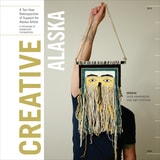
Creative Alaska
A Ten-Year Retrospective of Support for Alaska Artists, 2004-2013Edited by Sven Haakanson and Amy Steffian
University of Alaska Press, 2016
Creative Alaska profiles the award winners from 2004 to 2013 in three categories: Distinguished Artists, Fellowships, and Project Awards. Richly illustrated accounts of each of the artists and their work illuminate the challenges and opportunities of the artistic life in Alaska and the powerful impact of the Rasmuson Foundation’s support.
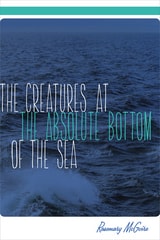
Creatures at the Absolute Bottom of the Sea
Rosemary McGuire
University of Alaska Press, 2015
These are fishing stories, told as such stories are meant to be: simple, often coarse, and tinged with the elemental beauty of the sea. They reflect rugged lives lived on the edge of the ocean’s borders, where grief and grace ride the same waves. Rosemary McGuire, a fisherman herself, captures the essential humanity at the heart of each tale. No one comes through unscathed, but all retain a sense of hope and belief in earthly miracles, however humble.
A dazzling debut, The Creatures at the Absolute Bottom of the Sea will leave readers with a sense of the fragility and beauty inherent in eroded lives spent in proximity to danger.
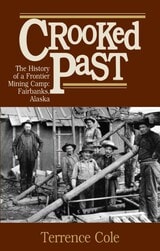
Crooked Past
The History of a Frontier Mining CampTerrence Cole
University of Alaska Press, 1991
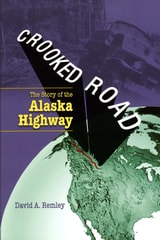
Crooked Road
The Story of the Alaska HighwayDavid A. Remley
University of Alaska Press, 2008