Results by title
702 books match the query 'America' and 39 start with c
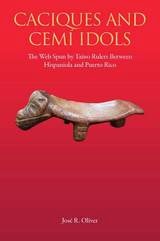
Caciques and Cemi Idols
The Web Spun by Taino Rulers Between Hispaniola and Puerto RicoJose R Oliver
University of Alabama Press, 2009
Cemís are both portable artifacts and embodiments of persons or spirit, which the Taínos and other natives of the Greater Antilles (ca. AD 1000-1550) regarded as numinous beings with supernatural or magic powers. This volume takes a close look at the relationship between humans and other (non-human) beings that are imbued with cemí power, specifically within the Taíno inter-island cultural sphere encompassing Puerto Rico and Hispaniola. The relationships address the important questions of identity and personhood of the cemí icons and their human “owners” and the implications of cemí gift-giving and gift-taking that sustains a complex web of relationships between caciques (chiefs) of Puerto Rico and Hispaniola.
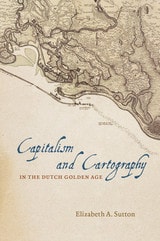
Capitalism and Cartography in the Dutch Golden Age
Elizabeth A. Sutton
University of Chicago Press, 2015
Building her exploration around the central figure of Claes Jansz Vischer, an Amsterdam-based publisher closely tied to the Dutch West India Company, Sutton shows how printed maps of Dutch Atlantic territories helped rationalize the Dutch Republic’s global expansion. Maps of land reclamation projects in the Netherlands, as well as the Dutch territories of New Netherland (now New York) and New Holland (Dutch Brazil), reveal how print media were used both to increase investment and to project a common narrative of national unity. Maps of this era showed those boundaries, commodities, and topographical details that publishers and the Dutch West India Company merchants and governing Dutch elite deemed significant to their agenda. In the process, Sutton argues, they perpetuated and promoted modern state capitalism.
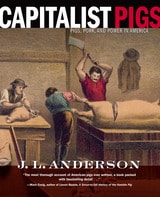
Capitalist Pigs
Pigs, Pork, and Power in AmericaJ. L. Anderson
West Virginia University Press, 2019
Pigs are everywhere in United States history. They cleared frontiers and built cities (notably Cincinnati, once known as Porkopolis), served as an early form of welfare, and were at the center of two nineteenth-century “pig wars.” American pork fed the hemisphere; lard literally greased the wheels of capitalism.
J. L. Anderson has written an ambitious history of pigs and pig products from the Columbian exchange to the present, emphasizing critical stories of production, consumption, and waste in American history. He examines different cultural assumptions about pigs to provide a window into the nation’s regional, racial, and class fault lines, and maps where pigs are (and are not) to reveal a deep history of the American landscape. A contribution to American history, food studies, agricultural history, and animal studies, Capitalist Pigs is an accessible, deeply researched, and often surprising portrait of one of the planet’s most consequential interspecies relationships.

Cartographic Encounters
Perspectives on Native American Mapmaking and Map UseEdited by G. Malcolm Lewis
University of Chicago Press, 1998
G. Malcolm Lewis provides accessible and detailed overviews of the history of native North American maps, mapmaking, and scholarly interest in these topics. Other contributions include a study of colonial Aztec cartography that highlights the connections among maps, space, and history; an account of the importance of native maps as archaeological evidence; and an interpretation of an early-contact-period hide painting of an actual encounter involving whites and two groups of warring natives.
Although few original native maps have survived, contemporary copies and accounts of mapmaking form a rich resource for anyone interested in the history of Native American encounters or the history of cartography and geography.
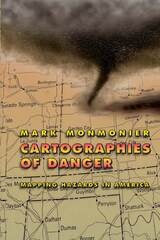
Cartographies of Danger
Mapping Hazards in AmericaMark Monmonier
University of Chicago Press, 1997
California, for example, takes earthquakes seriously, with a comprehensive program of seismic mapping, whereas Washington has been comparatively lax about earthquakes in Puget Sound. But as the Northridge earthquake in January 1994 demonstrated all too clearly to Californians, even reliable seismic-hazard maps can deceive anyone who misinterprets "known fault-lines" as the only places vulnerable to earthquakes.
Important as it is to predict and prepare for catastrophic natural hazards, more subtle and persistent phenomena such as pollution and crime also pose serious dangers that we have to cope with on a daily basis. Hazard-zone maps highlight these more insidious hazards and raise awareness about them among planners, local officials, and the public.
With the help of many maps illustrating examples from all corners of the United States, Monmonier demonstrates how hazard mapping reflects not just scientific understanding of hazards but also perceptions of risk and how risk can be reduced. Whether you live on a faultline or a coastline, near a toxic waste dump or an EMF-generating power line, you ignore this book's plain-language advice on geographic hazards and how to avoid them at your own peril.
Cash For Your Trash
Scrap Recycling in AmericaCarl A. Zimring
Rutgers University Press, 2005
Over the past two decades, concern about the environment has brought with it a tremendous increase in recycling in the United States and around the world. For many, it has become not only a civic, but also a moral obligation. Long before our growing levels of waste became an environmental concern, however, recycling was a part of everyday life for many Americans, and for a variety of reasons. From rural peddlers who traded kitchen goods for scrap metal to urban children who gathered rags in exchange for coal, individuals have been finding ways to reuse discarded materials for hundreds of years.
In Cash for Your Trash, Carl A. Zimring provides a fascinating history of scrap recycling, from colonial times to the present. Moving beyond the environmental developments that have shaped modern recycling enterprises, Zimring offers a unique cultural and economic portrait of the private businesses that made large-scale recycling possible. Because it was particularly common for immigrants to own or operate a scrap business in the nineteenth century, the history of the industry reveals much about ethnic relationships and inequalities in American cities. Readers are introduced to the scrapworkers, brokers, and entrepreneurs who, like the materials they handled, were often marginalized.
Integrating findings from archival, industrial, and demographic records, Cash for Your Trash demonstrates that over the years recycling has served purposes far beyond environmental protection. Its history and evolution reveals notions of Americanism, the immigrant experience, and the development of small business in this country.
Cesare Pavese and America
Life, Love, and LiteratureLawrence G. Smith
University of Massachusetts Press, 2008
Challenges of Diversity
Essays on AmericaSollors, Werner
Rutgers University Press, 2017
What unites and what divides Americans as a nation? Who are we, and can we strike a balance between an emphasis on our divergent ethnic origins and what we have in common? Opening with a survey of American literature through the vantage point of ethnicity, Werner Sollors examines our evolving understanding of ourselves as an Anglo-American nation to a multicultural one and the key role writing has played in that process.
Challenges of Diversity contains stories of American myths of arrival (pilgrims at Plymouth Rock, slave ships at Jamestown, steerage passengers at Ellis Island), the powerful rhetoric of egalitarian promise in the Declaration of Independence and the heterogeneous ends to which it has been put, and the recurring tropes of multiculturalism over time (e pluribus unum, melting pot, cultural pluralism). Sollors suggests that although the transformation of this settler country into a polyethnic and self-consciously multicultural nation may appear as a story of great progress toward the fulfillment of egalitarian ideals, deepening economic inequality actually exacerbates the divisions among Americans today.
Challenging Pregnancy
A Journey through the Politics and Science of Healthcare in AmericaGenevieve Grabman
University of Iowa Press, 2022
Ultimately, national anti-abortion politics—not medicine or her own choices—determined the outcome of Grabman’s pregnancy. At every juncture, anti-abortion politics limited the care available to her, the doctors and hospitals willing to treat her, the tools doctors could use, and the words her doctors could say. Although she asked for aggressive treatment to save at least one baby, hospital ethics boards blocked all able doctors from helping her.
Challenging Pregnancy is about Grabman’s harrowing pregnancy and the science and politics of maternal healthcare in the United States, where every person must self-advocate for the desired outcome of their own pregnancy.
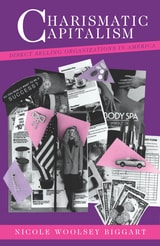
Charismatic Capitalism
Direct Selling Organizations in AmericaNicole Woolsey Biggart
University of Chicago Press, 1990
The first full-scale study of this industry, Charismatic Capitalism, revises the standard contention that the rationalization of social institutions is an inevitable consequence of advanced capitalism. Nicole Woolsey Biggart argues instead that less rational organizations built on social networks may actually be more economically viable.

Charlotte Perkins Gilman and a Woman's Place in America
Edited by Jill Bergman
University of Alabama Press, 2017
Charlotte Perkins Gilman and a Woman’s Place in America is a pioneering collection that probes how depictions of space, confinement, and liberation establish both the difficulty and necessity of female empowerment. Turning Victorian notions of propriety and a woman’s place on its ear, this finely crafted essay collection studies Gilman’s writings and the manner in which they push back against societal norms and reject male-dominated confines of space.
The contributors present fascinating and innovative readings of some of Gilman’s most significant works. By examining the settings in “The Yellow Wallpaper” and Herland, for example, the volume analyzes Gilman’s construction of place, her representations of male dominance and female subjugation, and her analysis of the rules and obligations that women feel in conforming to their assigned place: the home.
Additionally, this volume delineates female resistance to this conformity. Contributors highlight how Gilman’s narrators often choose resistance over obedient captivity, breaking free of the spaces imposed upon them in order to seek or create their own habitats. Through biographical interpretations of Gilman’s work that focus on the author’s own renouncement of her “natural” role of wife and mother, contributors trace her relocation to the American West in an attempt to appropriate the masculinized spaces of work and social organization.
Engaging, well-researched, and deftly written, the essays in this collection will appeal to scholars of Gilman, literature, and gender issues alike.
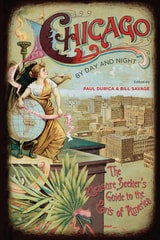
Chicago by Day and Night
The Pleasure Seeker's Guide to the Paris of AmericaPaul Durica and Bill Savage
Northwestern University Press, 2013
Chicago by Day and Night: The Pleasure Seeker’s Guide to the Paris of America is an actual guidebook to Chicago for visitors to the World’s Columbian Exposition of 1893. This unauthorized handbook to the rowdy city outside the elegant fairgrounds explores pleasures high and low. The theaters and music, architectural glories, parks and boulevards, churches and synagogues, and other elevated pursuits the authors included in 1893 gave the book a veneer of high culture. But the book owed its popularity to its insider tips about Chicago's lurid and louche entertainments—drink, gambling, and sex. With a wink and tongue firmly in cheek, the original authors condemned Gilded Age vice while offering curious travelers precise directions to the dubious, decadent, and debauched quarters of the Windy City.
To introduce this compulsively readable, gift-quality journey through the Chicago of 1893, Chicago writers and humorists Paul Durica and Bill Savage have added an expert introduction to Gilded Age Chicago and the World's Columbian Exposition. Showcasing the first Ferris wheel, dazzling new electrification technologies, and exhibits from around the world, the Exposition was Chicago’s chance to prove it had risen from the ashes of the Great Fire and would claim a place among the world’s great cities.
Both a perfect keepsake or gift for Chicago travelers as well as an invaluable text for readers interested in the history of Chicago, the Midwest, or Gilded Age urban life, Chicago by Day and Night is a beloved classic of Chicago writing.
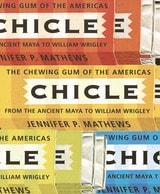
Chicle
The Chewing Gum of the Americas, From the Ancient Maya to William WrigleyJennifer P. Mathews
University of Arizona Press, 2009
Chicle is a history in four acts, all of them focused on the sticky white substance that seeps from the sapodilla tree when its bark is cut. First, Jennifer Mathews recounts the story of chicle and its earliest-known adherents, the Maya and Aztecs. Second, with the assistance of botanist Gillian Schultz, Mathews examines the sapodilla tree itself, an extraordinarily hardy plant that is native only to Mesoamerica and the Caribbean. Third, Mathews presents the fascinating story of the chicle and chewing gum industry over the last hundred plus years, a tale (like so many twentieth-century tales) of greed, growth, and collapse. In closing, Mathews considers the plight of the chicleros, the “extractors” who often work by themselves tapping trees deep in the forests, and how they have emerged as icons of local pop culture—portrayed as fearless, hard-drinking brawlers, people to be respected as well as feared.
Before Dentyne® and Chiclets®, before bubble gum comic strips and the Doublemint® twins, there was gum, oozing from jungle trees like melting candle wax under the slash of a machete. Chicle tells us everything that happened next. It is a spellbinding story.
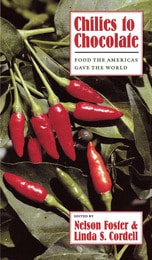
Chilies to Chocolate
Food the Americas Gave the WorldNelson Foster and Linda S. Cordell
University of Arizona Press, 1992
Chilies to Chocolate traces the biological and cultural history of some New World crops that have worldwide economic importance. Drawing on disciplines as diverse as anthropology, ethnobotany, and agronomy, it focuses on the domestication and use of these plants by native peoples and their dispersion into the fields and kitchens of the Old World: tomatoes to Italy, chili peppers throughout Asia, cacao wherever a sweet tooth craves chocolate. Indeed, potatoes and maize now rank with wheat and rice as the world's principal crops.
"The sweetness of corn on the cob is sweeter for knowing the long, winding way by which it has come into one's hands," observe Foster and Cordell. Featuring contributions by Gary Nabhan, Alan Davidson, and others, Chilies to Chocolate will increase readers' appreciation of the foods we all enjoy, of the circuitous routes by which they have become part of our diets, and of the vital role that Native Americans have played in this process.
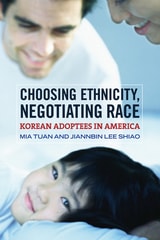
Choosing Ethnicity, Negotiating Race
Korean Adoptees in AmericaMia Tuan
Russell Sage Foundation, 2011
Christianity and the Mass Media in America
Toward a Democratic AccommodationQuentin J. Schultze
Michigan State University Press, 2003
The mass media and religious groups in America regularly argue about news bias, sex and violence on television, movie censorship, advertiser boycotts, broadcast and film content rating systems, government regulation of the media, the role of mass evangelism in a democracy, and many other issues. In the United States the major disputes between religion and the media usually have involved Christian churches or parachurch ministries, on the one hand, and the so-called secular media, on the other. Often the Christian Right locks horns with supposedly liberal Eastern media elite and Hollywood entertainment companies. When a major Protestant denomination calls for an economic boycott of Disney, the resulting news reports suggest business as usual in the tensions between faith groups and media empires.
Schultze demonstrates how religion and the media in America have borrowed each other’s rhetoric. In the process, they have also helped to keep each other honest, pointing out respective foibles and pretensions. Christian media have offered the public as well as religious tribes some of the best media criticism— better than most of the media criticism produced by mainstream media themselves. Meanwhile, mainstream media have rightly taken particular churches to task for misdeeds as well as offered some surprisingly good depictions of religious life.
The tension between Christian groups and the media in America ultimately is a good thing that can serve the interest of democratic life. As Alexis de Tocqueville discovered in the 1830s, American Christianity can foster the “habits of the heart” that ward off the antisocial acids of radical individualism. And, as John Dewey argued a century later, the media offer some of our best hopes for maintaining a public life in the face of the religious tribalism that can erode democracy from within. Mainstream media and Christianity will always be at odds in a democracy. That is exactly the way it should be for the good of each one.

Churching Of America
Finke, Roger
Rutgers University Press, 1992
Cities of Gold
Legendary Kingdoms, Quixotic Quests, and Fantastic New World WealthBill Yenne
Westholme Publishing, 2011
A History of Exploration for Real and Mythical Treasures in the Americas
For half a millennium, stories of vast treasures—El Dorado, Manoa, the Seven Cities of Cibola, the Lost Dutchman Mine—have been part of the lore of the Americas. Long before the Europeans set foot in the New World, myths and rumors of fabulous wealth in distant lands, such as the kingdom of Prester John, were told and retold so often that they were assumed to be true. When Spanish explorers first made contact with the Aztec and Inca civilizations, they found cultures that were literally dripping with gold. This evidence made it easy to believe the native stories of even greater wealth just beyond the horizon. In these uncharted lands, dreamers sought their fortunes: Francisco de Coronado ranged over the North American plains in search of the elusive Quivira; Gonzalo Pizarro, brother of the Incan conqueror, and Lope Aguirre, the “Wrath of God,” were both part of ill-fated expeditions in search of El Dorado; and Leonard Clark walked out of the Amazon after World War II with gold and claimed he had found that fabled kingdom.
Collision Course
Economic Change, Criminal Justice Reform, and Work in AmericaKathleen Auerhahn
Rutgers University Press, 2022
Recently, a widespread consensus has emerged that the era of “mass incarceration” is at an end, reflected in a declining prison population. Criminal justice reforms such as diversion and problem-solving courts, a renewed focus on reentry, and drug policy reform have as their goal keeping more individuals with justice system involvement out of prisons, in the community and subsequently in the labor force, which lacks the capacity to accommodate these additional would-be workers. This poses significant problems for criminal justice practice, which relies heavily on employment as a signal of offenders’ intentions to live a law-abiding lifestyle. The diminished capacity of the economy to utilize the labor of all who have historically been expected to work presents significant challenges for American society. Work, in the American ethos is the marker of success, masculinity and how one “contributes to society.” What are the consequences of ignoring these converging structural trends? This book examines these potential consequences, the meaning of work in American society, and suggests alternative redistributive and policy solutions to avert the collision course of these economic and criminal justice policy trends.
Colonial Search For A Southern Eden
Louis B. Wright
University of Alabama Press, 2008
European imperialists began to dream of other kinds of wealth besides gold in the New World
The Colonial Search for a Southern Eden compiles three insightful lectures delivered by renowned historian Louis B. Wright at the Dancy Foundation in 1951. Wright explores the 17th‑century English colonial vision for the American South—not as a gold rush, but as a fertile terrain primed for economic prosperity through well‑planned plantations and commercial crops.
Across its concise 75 pages, Wright charts the transformation of settlers’ aspirations—from hopes of quick wealth to cultivated visions of tobacco, silk, sugar, and cotton plantations meant to create a utopian "Southern Eden". These were carefully cultivated not just for their profitability but to establish structured, enduring societies complementary to English economic goals.
Wright—a Guggenheim Fellow, Benjamin Franklin Medalist, and former director of the Folger Shakespeare Library—brings scholarly precision and elegant prose to this study, making it accessible to both historians and general readers. Publishers and reviewers have praised it as “extremely interesting and well written,” highlighting its focused yet comprehensive interpretation of colonial Southern motivations and their long-term implications. This work stands as a pivotal contribution to early American economic and colonial history—offering a nuanced understanding of how idealistic and ideological goals shaped plantation culture and southern development in the Atlantic colonies.
With its concise structure and authoritative voice, The Colonial Search for a Southern Eden is ideal for historians, students, and enthusiasts seeking to understand the ideological underpinnings of colonial Southern society.
Coloniality at Large
Latin America and the Postcolonial DebateMabel Moraña, Enrique Dussel, and Carlos A. Jáuregui, eds.
Duke University Press, 2008
Written by internationally renowned scholars based in Latin America, the United States, and Europe, the essays reflect multiple disciplinary and ideological perspectives. Some are translated into English for the first time. The collection includes theoretical reflections, literary criticism, and historical and ethnographic case studies focused on Ecuador, Guatemala, Mexico, Brazil, the Andes, and the Caribbean. Contributors examine the relation of Marxist thought, dependency theory, and liberation theology to Latin Americans’ experience of and resistance to coloniality, and they emphasize the critique of Occidentalism and modernity as central to any understanding of the colonial project. Analyzing the many ways that Latin Americans have resisted imperialism and sought emancipation and sovereignty over several centuries, they delve into topics including violence, identity, otherness, memory, heterogeneity, and language. Contributors also explore Latin American intellectuals’ ambivalence about, or objections to, the “post” in postcolonial; to many, globalization and neoliberalism are the contemporary guises of colonialism in Latin America.
Contributors: Arturo Arias, Gordon Brotherston, Santiago Castro-Gómez, Sara Castro-Klaren, Amaryll Chanady, Fernando Coronil, Román de la Campa, Enrique Dussel, Ramón Grosfoguel, Russell G. Hamilton, Peter Hulme, Carlos A. Jáuregui, Michael Löwy, Nelson Maldonado-Torres, José Antonio Mazzotti, Eduardo Mendieta, Walter D. Mignolo, Mario Roberto Morales, Mabel Moraña, Mary Louise Pratt, Aníbal Quijano, José Rabasa, Elzbieta Sklodowska, Catherine E. Walsh
Color Lines, Country Lines
Race, Immigration, and Wealth Stratification in AmericaLingxin Hao
Russell Sage Foundation, 2007

Coming through the Fire
Surviving Race and Place in AmericaC. Eric Lincoln
Duke University Press, 1996
Coming through the Fire, with its fiercely intelligent, passionate, and clear-eyed view of race and class conflict, makes a major contribution to understanding—and thereby healing—the terrible rift that has opened up in the heart of America. Lincoln explores the nature of biracial relationships, the issue of transracial adoption, violence—particularly black-on-black violence—the “endangered” black male, racism as power, the relationship between Blacks and Jews, our multicultural melting pot, and Minister Louis Farrakhan.Without sidestepping painful issues, or sacrificing a righteous anger, the author argues for “no-fault reconciliation,” for mutual recognition of the human endowment we share regardless of race, preparing us as a nation for the true multiculture tomorrow will demand.
Readers familiar with Lincoln’s earlier groundbreaking work on the Black Muslims and on the black church will be eagerly awaiting the publication of Coming through the Fire. Others will simply find C. Eric Lincoln’s personal story and his exploration of survival and race in America to be absorbing and compelling reading.
Comparative Indigeneities of the Américas
Toward a Hemispheric ApproachEdited by M. Bianet Castellanos, Lourdes Gutiérrez Nájera, and Arturo J. Aldama
University of Arizona Press, 2012
The effects of colonization on the Indigenous peoples of the Américas over the past 500 years have varied greatly. So too have the forms of resistance, resilience, and sovereignty. In the face of these differences, the contributors to this volume contend that understanding the commonalities in these Indigenous experiences will strengthen resistance to colonial forces still at play. This volume marks a critical moment in bringing together transnational and interdisciplinary scholarship to articulate new ways of pursuing critical Indigenous studies.
Comparative Indigeneities of the Américas highlights intersecting themes such as indigenísmo, mestizaje, migration, displacement, autonomy, sovereignty, borders, spirituality, and healing that have historically shaped the experiences of Native peoples across the Américas. In doing so, it promotes a broader understanding of the relationships between Native communities in the United States and Canada and those in Latin America and the Caribbean and invites a hemispheric understanding of the relationships between Native and mestiza/o peoples.
Through path-breaking approaches to transnational, multidisciplinary scholarship and theory, the chapters in this volume advance understandings of indigeneity in the Américas and lay a strong foundation for further research. This book will appeal to scholars and students in the fields of anthropology, literary and cultural studies, history, Native American and Indigenous studies, women and gender studies, Chicana/o studies, and critical ethnic studies.
Ultimately, this deeply informative and empowering book demonstrates the various ways that Indigenous and mestiza/o peoples resist state and imperial attempts to erase, repress, circumscribe, and assimilate them.
Conquistador in Chains
Cabeza de Vaca and the Indians of the AmericasDavid A. Howard
University of Alabama Press, 1996
Unlike many Spanish conquistadores who brought to the Americas a wave of disease, destruction, and oppression, Cabeza de Vaca’s stated intention was to pursue a different kind of conquest—one that would be just and humane, true to Spanish religion and law, and one that safeguarded liberty and justice for the indigenous peoples of the New World.
Bringing to South America skills and experiences earned with native peoples in North America, however, Cabeza de Vaca both failed to understand the indigenous peoples in the south and alienated many Spanish settlers in the Rio de la Plata Province, whose economic interests he threatened. Eventually the Spanish colonists formed a conspiracy to remove him from power and return him to Spain in chains.
That Cabeza de Vaca was overthrown is not surprising. His ideas and policies opposed the self-interest of most of the first Spaniards who had come to America, although he inspired the support of many even after his humiliating return to Spain. In Conquistador in Spain, historian David Howard provides a fascinating account of the rise and fall of this colonial idealist.
Conservancy
The Land Trust Movement in AmericaRichard Brewer
Dartmouth College Press, 2004
Conspiracy Theory in America
By Lance deHaven-Smith
University of Texas Press, 2013
Ever since the Warren Commission concluded that a lone gunman assassinated President John F. Kennedy, people who doubt that finding have been widely dismissed as conspiracy theorists, despite credible evidence that right-wing elements in the CIA, FBI, and Secret Service—and possibly even senior government officials—were also involved. Why has suspicion of criminal wrongdoing at the highest levels of government been rejected out-of-hand as paranoid thinking akin to superstition?
Conspiracy Theory in America investigates how the Founders’ hard-nosed realism about the likelihood of elite political misconduct—articulated in the Declaration of Independence—has been replaced by today’s blanket condemnation of conspiracy beliefs as ludicrous by definition. Lance deHaven-Smith reveals that the term “conspiracy theory” entered the American lexicon of political speech to deflect criticism of the Warren Commission and traces it back to a CIA propaganda campaign to discredit doubters of the commission’s report. He asks tough questions and connects the dots among five decades’ worth of suspicious events, including the assassinations of John and Robert Kennedy, the attempted assassinations of George Wallace and Ronald Reagan, the crimes of Watergate, the Iran-Contra arms-for-hostages deal, the disputed presidential elections of 2000 and 2004, the major defense failure of 9/11, and the subsequent anthrax letter attacks.
Sure to spark intense debate about the truthfulness and trustworthiness of our government, Conspiracy Theory in America offers a powerful reminder that a suspicious, even radically suspicious, attitude toward government is crucial to maintaining our democracy.
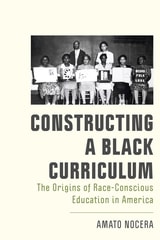
Constructing a Black Curriculum
The Origins of Race-Conscious Education in AmericaAmato Nocera
Rutgers University Press, 2027
Constructing a Black Curriculum reframes how we understand Black Americans’ intellectual and political engagement with education during the first half of the twentieth century. It traces the powerful, diffuse movement created by Black Americans to build what Nocera calls a “Black Curriculum:" a communal effort to represent Black identity, guide racial consciousness, and rebut claims of inferiority. This curriculum first developed as a public educational project in Black learned societies and during the Harlem Renaissance before making its way into schools. The struggle for a Black curriculum was not only a fight against white supremacy, but also an internal debate among Black advocates over the very nature of how race should be represented and taught. This book illuminates this struggle through the work of Black intellectuals (Alexander Crummell, Carter G. Woodson, Hubert Harrison, and Alain Locke) and the intellectual contributions of African American educators (Nannie Burroughs, Jane Dabney Shackelford, and Julia Davis). This essential history provides vital context for contemporary debates over curriculum reform, racial knowledge, and the enduring quest for educational equity.
Consuming Work
Youth Labor in AmericaYasemin Besen-Cassino
Temple University Press, 2014
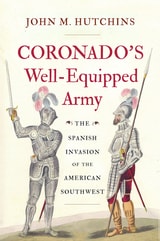
Coronado's Well-Equipped Army
The Spanish Invasion of the American SouthwestJohn M. Hutchins
Westholme Publishing, 2023
Winner of Two Colorado Book Awards
The historic 1540–1542 expedition of Captain-General Francisco Vasquez de Coronado is popularly remembered as a luckless party of exploration which wandered the American Southwest and then blundered onto the central Great Plains of Texas, Oklahoma, and Kansas. The expedition, as historian John M. Hutchins relates in Coronado’s Well-Equipped Army: The Spanish Invasion of the American Southwest, was a military force of about 1,500 individuals, made up of Spanish soldiers, Indian warrior allies, and camp followers. Despite the hopes for a peaceful conquest of new lands—including those of a legendary kingdom of Cibola—the expedition was obliged to fight a series of battles with the natives in present-day Sonora, California, Arizona, and New Mexico. The final phase of the invasion was less warlike, as the members of the expedition searched the Great Plains in vain for a wealthy civilization called Quivira.While much has been written about the march of Coronado and his men, this is the first book to address the endeavor as a military campaign of potential conquest like those conducted by other conquistadors. This helps to explain many of the previously misunderstood activities of the expedition. In addition, new light is cast on the non-Spanish participants, including Mexican Indian allies and African retainers, as well as the important roles of women.Cosmopolitans and Parochials
Modern Orthodox Jews in AmericaSamuel C. Heilman and Steven M. Cohen
University of Chicago Press, 1989
Heilman and Cohen reveal that American Jewish Orthodoxy is not a monolith by distinguishing its three broad varieties: the "traditionalists," the "centrists," and the "nominally" orthodox. To illuminate this full spectrum of orthodoxy the authors focus on the "centrists," taking us through the dimensions of their ritual observances, religious beliefs, community life, and their social, political, and sexual attitudes. Both parochial and cosmopolitan, orthodox and liberal, these Jews are characterized by their dualism, by their successful involvement in both the modern Western world and in traditional Jewish culture. In painting this provocative and fascinating portrait of what Jewish Orthodoxy has become in America today, Heilman and Cohen's study also sheds light on the larger picture of the persistence of religion in the modern world.
Covenant Marriage
The Movement to Reclaim Tradition in AmericaNock, Steven
Rutgers University Press, 2008
This book explores a movement that emerged over the past fifteen years, which aims to do just that. Guided by certain politicians and religious leaders who herald marriage as a solution to a range of longstanding social problems, a handful of state governments enacted "covenant marriage" laws, which require couples to choose between a conventional and a covenant marriage. While the familiar type of union requires little effort to enter and can be terminated by either party unilaterally, covenant marriage requires premarital counseling, an agreement bound by fault-based rules or lengthy waiting periods to exit, and a legal stipulation that divorce can be granted only after the couple has received counseling.
Drawing on interviews with over 700 couples-half of whom have chosen covenant unions-this book not only evaluates the viability of public policy in the intimate affairs of marriage, it also explores how growing public discourse is causing men and women to rethink the meaning of marriage.
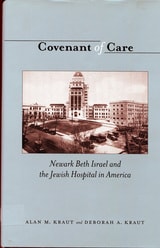
Covenant of Care
Newark Beth Israel and the Jewish Hospital in AmericaKraut, Alan M
Rutgers University Press, 2006
Where were you born? Were you born at the Beth? Many thousands of Americans-Jewish and non-Jewish-were born at a hospital bearing the Star of David and named Beth Israel, Mount Sinai, or Montefiore. In the United States, health care has been bound closely to the religious impulse. Newark Beth Israel Hospital is a distinguished modern medical institution in New Jersey whose history opens a window on American health care, the immigrant experience, and urban life. Alan M. and Deborah A. Kraut tell the story of this important institution, illuminating the broader history of voluntary nonprofit hospitals created under religious auspices initially to serve poor immigrant communities. Like so many Jewish hospitals in the early half of the twentieth century, "the Beth" cared not only for its own community's poor and underprivileged, a responsibility grounded in the Jewish traditions of tzedakah ("justice") and tikkun olam ("to heal the world"), but for all Newarkers.
Since it first opened its doors in 1902, the Beth has been an engine of social change. Jewish women activists and immigrant physicians founded an institution with a nonsectarian admissions policy and a welcome mat for physicians and nurses seeking opportunity denied them by anti-Semitism elsewhere. Research, too, flourished at the Beth. Here dedicated medical detectives did path-breaking research on the Rh blood factor and pacemaker development. When economic shortfalls and the Great Depression threatened the Beth's existence, philanthropic contributions from prominent Newark Jews such as Louis Bamberger and Felix Fuld, the efforts of women volunteers, and, later, income from well-insured patients saved the institution that had become the pride of the Jewish community.
The Krauts tell the Beth Israel story against the backdrop of twentieth-century medical progress, Newark's tumultuous history, and the broader social and demographic changes altering the landscape of American cities. Today, the United States, in the midst of another great wave of immigration, once again faces the question of how to provide newcomers with culturally sensitive and economically accessible medical care. Covenant of Care will inform and inspire all those working to meet these demands, offering a compelling look at the creative ways that voluntary hospitals navigated similar challenges throughout the twentieth century.
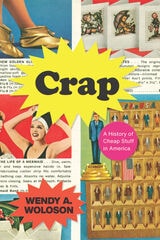
Crap
A History of Cheap Stuff in AmericaWendy A. Woloson
University of Chicago Press, 2020
In Crap: A History of Cheap Stuff in America, Wendy A. Woloson takes seriously the history of objects that are often cynically-made and easy to dismiss: things not made to last; things we don't really need; things we often don't even really want. Woloson does not mock these ordinary, everyday possessions but seeks to understand them as a way to understand aspects of ourselves, socially, culturally, and economically: Why do we—as individuals and as a culture—possess these things? Where do they come from? Why do we want them? And what is the true cost of owning them?
Woloson tells the history of crap from the late eighteenth century up through today, exploring its many categories: gadgets, knickknacks, novelty goods, mass-produced collectibles, giftware, variety store merchandise. As Woloson shows, not all crap is crappy in the same way—bric-a-brac is crappy in a different way from, say, advertising giveaways, which are differently crappy from commemorative plates. Taking on the full brilliant and depressing array of crappy material goods, the book explores the overlooked corners of the American market and mindset, revealing the complexity of our relationship with commodity culture over time.
By studying crap rather than finely made material objects, Woloson shows us a new way to truly understand ourselves, our national character, and our collective psyche. For all its problems, and despite its disposability, our crap is us.

Crisis in Korea
America, China and the Risk of WarTim Beal
Pluto Press, 2011
The South Korean warship Cheonan was sunk in mysterious circumstances on 26 March 2010. The remarkable events that followed are analysed by Tim Beal and woven into a larger study of the increasingly volatile relations between North and South Korea and US concern about the rise of China.
South Korea's stance towards the North has hardened significantly since the new conservative government came to power. Beal argues that the South moved quickly to use the sinking of the Cheonan to put international pressure on the North, even before the cause of the sinking had been established. The US followed suit by attempting to pressurise China into condemning North Korea. The media reports at the time presented an open and shut case of unprovoked North Korean aggression, but the evidence points towards the accidental triggering of a South Korean mine as the cause and South Korean fabrication to incriminate the North.
With the South bent on forcing the fall of the North's regime with US help and China unlikely to stand idly by, this book offers an essential guide to the key factors behind the crisis and possible solutions.

Cross-Border Commemorations
Celebrating Swedish Settlement in AmericaAdam Hjorthén
University of Massachusetts Press, 2018
Focusing on two celebrations of Swedish settlement in America—the 1938 New Sweden Tercentenary and the 1948 Swedish Pioneer Centennial—Hjorthén examines a wide variety of sources to demonstrate how cultural leaders, politicians, and businessmen used these events to promote international relations between the United States and Sweden during times of great geopolitical transformation. Cross-Border Commemorations argues that scholarship on public commemoration should expand beyond national borders and engage the shared and contested meanings of history across local, national, and transnational contexts.
Cumbia!
Scenes of a Migrant Latin American Music GenreHéctor Fernández L Hoeste and Pablo Vila, eds.
Duke University Press, 2013
Contributors. Cristian Alarcón, Jorge Arévalo Mateus, Leonardo D'Amico, Héctor Fernández L'Hoeste, Alejandro L. Madrid, Kathryn Metz, José Juan Olvera Gudiño, Cathy Ragland, Pablo Semán, Joshua Tucker, Matthew J. Van Hoose, Pablo Vila
Curators and Culture
The Museum Movement in America, 1740-1870Joel J. Orosz
University of Alabama Press, 1990
Tracing the birth of American museums and the curators who shaped a nation’s cultural identity.
As they formed their pioneer museums, these men were guided not so much by European examples, but rather by the imperatives of the American democratic culture, including the Enlightenment, the simultaneous decline of the respectability and rise of the middle classes, the Age of Egalitarianism, and the advent of professionalism in the sciences. Thus the pre-1870 American museum was neither the frivolous sideshow some critics have imagined, nor the enclave for elitists that others have charged. Instead, the proprietors displayed serious motives and egalitarian aspirations.
The conflicting demands for popular education on the one hand and professionalism on the other were a continuing source of tension in American museums after about 1835, but by 1870 the two claims had synthesized into a rough parity. This synthesis, the "American Compromise," has remained the basic model of museums in America down to the present. Thus, by 1870, the form of the modern American museum as an institution which simultaneously provides popular education and promotes scholarly research was completely developed.
Curtains?
The Future of the Arts in AmericaMichael M. Kaiser
Brandeis University Press, 2015