Results by title
85 books match the query 'Americas' and 9 start with c

Cannibal Democracy
Race and Representation in the Literature of the AmericasZita Nunes
University of Minnesota Press, 2008
Zita Nunes argues that the prevailing narratives of identity formation throughout the Americas share a dependence on metaphors of incorporation and, often, of cannibalism. From the position of the incorporating body, the construction of a national and racial identity through a process of assimilation presupposes a remainder, a residue.
Nunes addresses works by writers and artists who explore what is left behind in the formation of national identities and speak to the limits of the contemporary discourse of democracy. Cannibal Democracy tracks its central metaphor’s circulation through the work of writers such as Mário de Andrade, W. E. B. Du Bois, and Toni Morrison and journalists of the black press, as well as work by visual artists including Magdalena Campos-Pons and Keith Piper, and reveals how exclusion-understood in terms of what is left out-can be fruitfully understood in terms of what is left over from a process of unification or incorporation.
Nunes shows that while this remainder can be deferred into the future-lurking as a threat to the desired stability of the present-the residue haunts discourses of national unity, undermining the ideologies of democracy that claim to resolve issues of race.
Zita Nunes is associate professor of English at the University of Maryland, College Park.
Centenary Subjects
Race, Reason, and Rupture in the AmericasShawn McDaniel
Vanderbilt University Press, 2021
Arielismo takes its name from José Enrique Rodó’s foundational essay Ariel (1900), a wide‑ranging gospel dedicated to Latin American youth that incited a cultural awakening under the banner of the spirit throughout the Americas at an ominous juncture—when the US co-opted the Cuban War of Independence in 1898, effectively rebranding it as the Spanish‑American War. Rodó’s optimistic message of transcendence as an antidote to the encroaching empire quickly became one of the most pervasive and malleable paradigms of regional empowerment, reverberating throughout a range of Latin Americanist projects in the twentieth and twenty‑first centuries.
Centenary Subjects recovers a series of important but understudied essays penned by arielista writers, radicals, pedagogues, prophets, and politicians of diverse stripes in the early twentieth century, and analyzes how, under the auspices of the arielista platform, young people emerged as historical subjects invested with unprecedented cultural capital, increasing political power, and an urgent mandate to break with the past and transform the sociopolitical and cultural landscape of their countries. But their respective designs harbor racial, epistemological, aesthetic, and anarchistic strains that bring into sharper relief the conflicting signals that the centenary subject had to parse with respect to race, reason, and rupture.
Chicle
The Chewing Gum of the Americas, From the Ancient Maya to William WrigleyJennifer P. Mathews
University of Arizona Press, 2009
Chicle is a history in four acts, all of them focused on the sticky white substance that seeps from the sapodilla tree when its bark is cut. First, Jennifer Mathews recounts the story of chicle and its earliest-known adherents, the Maya and Aztecs. Second, with the assistance of botanist Gillian Schultz, Mathews examines the sapodilla tree itself, an extraordinarily hardy plant that is native only to Mesoamerica and the Caribbean. Third, Mathews presents the fascinating story of the chicle and chewing gum industry over the last hundred plus years, a tale (like so many twentieth-century tales) of greed, growth, and collapse. In closing, Mathews considers the plight of the chicleros, the “extractors” who often work by themselves tapping trees deep in the forests, and how they have emerged as icons of local pop culture—portrayed as fearless, hard-drinking brawlers, people to be respected as well as feared.
Before Dentyne® and Chiclets®, before bubble gum comic strips and the Doublemint® twins, there was gum, oozing from jungle trees like melting candle wax under the slash of a machete. Chicle tells us everything that happened next. It is a spellbinding story.
Christianity, Social Change, and Globalization in the Americas
Peterson, Anna L
Rutgers University Press, 2001
Organized around three central themes-family, youth, and community; democratization, citizenship, and political participation; and immigration and transnationalism-the book argues that, at the local level, religion helps people, especially women and youths, solidify their identities and confront the challenges of the modern world. Religious communities are seen as both peaceful venues for people to articulate their needs, and forums for building participatory democracies in the Americas. Finally, the contributors examine how religion enfranchises poor women, youths, and people displaced by war or economic change and, at the same time, drives social movements that seek to strengthen family and community bonds disrupted by migration and political violence.
Conquest of the New Word
Experimental Fiction and Translation in the AmericasBy Johnny Payne
University of Texas Press, 1993
Latin American fiction won great acclaim in the United States during the 1960s, when many North American writers and critics felt that our national writing had reached a low ebb. In this study of experimental fiction from both Americas, Johnny Payne argues that the North American reception of the "boom" in Latin American fiction distorted the historical grounding of this writing, erroneously presenting it as mainly an exotic "magical realism." He offers new readings that detail the specific, historical relation between experimental fiction and various authors' careful, deliberate deformations and reformations of the political rhetoric of the modern state.
Payne juxtaposes writers from Argentina and Uruguay with North American authors, setting up suggestive parallels between the diverse but convergent practices of writers on both continents. He considers Nelson Marra in conjunction with Donald Barthelme and Gordon Lish; Teresa Porzecanski with Harry Mathews; Ricardo Piglia with John Barth; Silvia Schmid and Manuel Puig with Fanny Howe and Lydia Davis; and Jorge Luis Borges and Luisa Valenzuela with William Burroughs and Kathy Acker.
With this innovative, dual-continent approach, Conquest of the New Word will be of great interest to everyone working in Latin American literature, women's studies, translation studies, creative writing, and cultural theory.
Conquistador in Chains
Cabeza de Vaca and the Indians of the AmericasDavid A. Howard
University of Alabama Press, 1996
Unlike many Spanish conquistadores who brought to the Americas a wave of disease, destruction, and oppression, Cabeza de Vaca’s stated intention was to pursue a different kind of conquest—one that would be just and humane, true to Spanish religion and law, and one that safeguarded liberty and justice for the indigenous peoples of the New World.
Bringing to South America skills and experiences earned with native peoples in North America, however, Cabeza de Vaca both failed to understand the indigenous peoples in the south and alienated many Spanish settlers in the Rio de la Plata Province, whose economic interests he threatened. Eventually the Spanish colonists formed a conspiracy to remove him from power and return him to Spain in chains.
That Cabeza de Vaca was overthrown is not surprising. His ideas and policies opposed the self-interest of most of the first Spaniards who had come to America, although he inspired the support of many even after his humiliating return to Spain. In Conquistador in Spain, historian David Howard provides a fascinating account of the rise and fall of this colonial idealist.
Cowboys and Caudillos
Frontier Ideology of the AmericasTom R. Sullivan
University of Wisconsin Press, 1990
Cultural Agency in the Americas
Doris Sommer, ed.
Duke University Press, 2006
Based in North and South America, scholars from fields including anthropology, performance studies, history, literature, and communications studies explore specific variations of cultural agency across Latin America. Contributors reflect, for example, on the paradoxical programming and reception of a state-controlled Cuban radio station that connects listeners at home and abroad; on the intricacies of indigenous protests in Brazil; and the formulation of cultural policies in cosmopolitan Mexico City. One contributor notes that trauma theory targets individual victims when it should address collective memory as it is worked through in performance and ritual; another examines how Mapuche leaders in Argentina perceived the pitfalls of ethnic essentialism and developed new ways to intervene in local government. Whether suggesting modes of cultural agency, tracking exemplary instances of it, or cautioning against potential missteps, the essays in this book encourage attentiveness to, and the multiplication of, the many extraordinary instantiations of cultural resourcefulness and creativity throughout Latin America and beyond.
Contributors. Arturo Arias, Claudia Briones, Néstor García Canclini, Denise Corte, Juan Carlos Godenzzi, Charles R. Hale, Ariana Hernández-Reguant, Claudio Lomnitz, Jesús Martín Barbero, J. Lorand Matory, Rosamel Millamán, Diane M. Nelson, Mary Louise Pratt, Alcida Rita Ramos, Doris Sommer, Diana Taylor, Santiago Villaveces
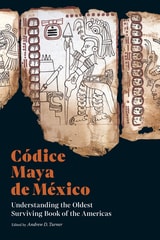
Códice Maya de México
Understanding the Oldest Surviving Book of the AmericasAndrew D. Turner
J. Paul Getty Trust, The, 2022
Ancient Maya scribes recorded prophecies and astronomical observations on the pages of painted books. Although most were lost to decay or destruction, three pre-Hispanic Maya codices were known to have survived, when, in the 1960s, a fourth book that differed from the others appeared in Mexico under mysterious circumstances. After fifty years of debate over its authenticity, recent investigations using cutting-edge scientific and art historical analyses determined that Códice Maya de México (formerly known as Grolier Codex) is in fact the oldest surviving book of the Americas, predating all others by at least two hundred years.
This volume provides a multifaceted introduction to the creation, discovery, interpretation, and scientific authentication of Códice Maya de México. In addition, a full-color facsimile and a page-by-page guide to the iconography make the codex accessible to a wide audience. Additional topics include the uses and importance of sacred books in Mesoamerica, the role of astronomy in ancient Maya societies, and the codex's continued relevance to contemporary Maya communities.
This volume is published to accompany an exhibition on view at the J. Paul Getty Museum at the Getty Center from October 18, 2022, to January 15, 2023.