Results by title
234 books match the query 'Americas (North, Central, South, West Indies)' and 15 start with c
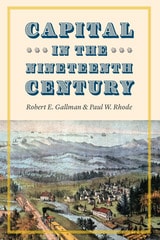
Capital in the Nineteenth Century
Robert E. Gallman and Paul W. Rhode
University of Chicago Press, 2020
When we think about history, we often think about people, events, ideas, and revolutions, but what about the numbers? What do the data tell us about what was, what is, and how things changed over time? Economist Robert E. Gallman (1926–98) gathered extensive data on US capital stock and created a legacy that has, until now, been difficult for researchers to access and appraise in its entirety.
Gallman measured American capital stock from a range of perspectives, viewing it as the accumulation of income saved and invested, and as an input into the production process. He used the level and change in the capital stock as proxy measures for long-run economic performance. Analyzing data in this way from the end of the US colonial period to the turn of the twentieth century, Gallman placed our knowledge of the long nineteenth century—the period during which the United States began to experience per capita income growth and became a global economic leader—on a strong empirical foundation. Gallman’s research was painstaking and his analysis meticulous, but he did not publish the material backing to his findings in his lifetime. Here Paul W. Rhode completes this project, giving permanence to a great economist’s insights and craftsmanship. Gallman’s data speak to the role of capital in the economy, which lies at the heart of many of the most pressing issues today.
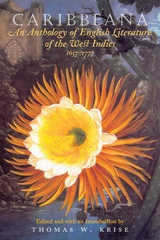
Caribbeana
An Anthology of English Literature of the West Indies, 1657-1777Edited by Thomas W. Krise
University of Chicago Press, 1999
Caribbeana offers invaluable period commentaries on slavery, colonialism, gender relations, African and European history, natural history, agriculture, and medicine. Highlights include several of the earliest protests against slavery; a superb ode by the Cambridge-educated Afro-Jamaican poet Francis Williams; James Grainger's extended georgic poem, The Sugar Cane; Frances Seymour's poignant tale of the Englishman Inkle who sells his Indian savior-lover Yarico into slavery; and several descriptions of the West Indies during the early years of settlement.
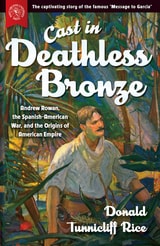
Cast in Deathless Bronze
Andrew Rowan, the Spanish-American War, and the Origins of American EmpireDonald Tunnicliff Rice
West Virginia University Press, 2016
Donald Tunnicliff Rice reveals the facts behind the story of “A Message to García” while using Rowan’s biography as a window into the history of the Spanish-American War, the Philippine War, and the Moro Rebellion. The result is a compellingly written narrative containing many details never before published in any form, and also an accessible perspective on American diplomatic and military history in the late nineteenth and early twentieth centuries.

Challenging Uneven Development
An Urban Agenda for the 1990sNyden, Philip
Rutgers University Press, 1991
The editors and contributors to this volume are not willing to accept what is known as uneven development, where some cities win and some lose. They look at two practical consequences of urban growth: the change in residence patterns as neighborhoods gentrify, and the change in employment patterns, as factory workers lose jobs and white-collar workers gain jobs. The editors' goal is to highlight the alternatives to uneven development and to the growth ideology. They outline and advocate specific policies, including affordable housing, changes in taxation, and direct community participation in planning and zoning decisions.
Challenging Uneven Development begins with a rousing discussion of the pervasiveness of the community redevelopment ideology. The growth machine defines the language of the debate. The next group of chapters examine residence patterns--how communities have organized to fight gentrification, why residential integration is essential for good planning as well as morality, and what strategies can be used to achieve racial diversity. Another chapter emphasizes the role of lenders in regulating the flow of credit within communities. Disinvestment by credit providers causes decline, and opens the way for gentrification, which displaces local residents. The impact of taxes in stimulating the growth machine is also explained.
Later chapters move beyond gentrification issues to examine other problems of economic restructuring. They look at how blacks, Latinos, and women have been affected by the growth of service sector jobs. The final chapter serves as a strategic guide to those who wish to establish a progressive agenda for community-based economic development. The authors call for social change, not unimaginative reform.
The contributors to this volume are leaders or researchers from community organizations, civic groups, government agencies, and universities. In addition to the editors, they are Mel King, Teresa Cordova, Daniel Lauber, Jena Pogge, David Flax-Hatch, Arthur Lyons, Wendy Wintermute, Charles Hicklin, Jeffrey D. Reckinger, David Mosena, Charlotte Chun, Raymndo Flores, Luther Snow, Deborah Bennett, John Betancur, and Patricia Wright. They have presented "state-of-the-art" progressive policy solutions for urban problems.
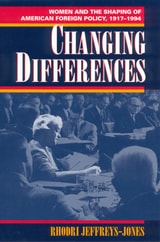
Changing Differences
Women and the Shaping of American Foreign Policy, 1917-1994Jeffreys-Jones, Rhodri
Rutgers University Press, 1995
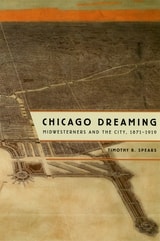
Chicago Dreaming
Midwesterners and the City, 1871-1919Timothy B. Spears
University of Chicago Press, 2005
Through innovative readings of Theodore Dreiser, Willa Cather, and Richard Wright, Spears argues that the migratory perspective was crucial to the rise of Chicago's emerging literary culture. In following the paths of several well-known migrants, including Jane Addams, cartoonist John T. McCutcheon, and businessman John Glessner, Spears also shows how the view from the hinterland permeated urban culture and informed the development of key Chicago institutions. Further exploring the notion of dreaming, he brings to light the internal desires that lured Midwestern migrants to the city as well as the nostalgia that led them to dream of the homes they left behind.
With this fascinating new take on the rise of Chicago, Chicago Dreaming blurs the line between country and city to reveal the provincial character of modern urban culture.

Chicago
Growth of a MetropolisHarold M. Mayer and Richard C. Wade
University of Chicago Press, 1969
This volume, however, which comprises over 1,000 pictures and 50 maps, tries to do more than show physical development—it attempts to suggest how the city expanded and why it looks the way it does. Because it asks different questions, this book differs markedly from other "pictorial histories" of American cities. Instead of emphasizing society and customs, this volume deals with the physical conditions of life. In place of the conventional interest in "founding fathers" and leading families, it is more concerned with street scenes and ordinary people. Without neglecting downtown, it also reaches into the residential areas and neighborhood shopping centers. Moreover, this volume is concerned with suburbs and "satellite" towns as well as the historic city.
"Chicago: Growth of a Metropolis is an incredible book. Like its subject it is excessive, and nothing succeeds like excess. It is handsomely designed, with a thousand photographs that document the physical growth and the spatial patterns of the city. . . . A dimensionalism comes through that no other city has. Carl Sandburg sang it in his poetry, and the book does more to grasp it . . . than any other book I have seen."—Hugh Newell Jacobson, New Republic
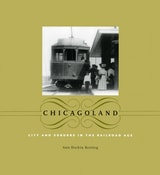
Chicagoland
City and Suburbs in the Railroad AgeAnn Durkin Keating
University of Chicago Press, 2005
Historian and coeditor of the acclaimed Encyclopedia of Chicago, Ann Durkin Keating resurrects for us here the bustling network that defined greater Chicagoland. Taking a new approach to the history of the city, Keating shifts the focus to the landscapes and built environments of the metropolitan region. Organized by four categories of settlements-farm centers, industrial towns, commuter suburbs, and recreational and institutional centers-that framed the city, Chicagoland offers the collective history of 230 neighborhoods and communities, the people who built them, and the structures they left behind that still stand today.
Keating reanimates nineteenth-century Chicagoland with more than a hundred photographs and maps; we find here the taverns, depots, and way stations that were the hubs of the region's vibrant, mobile life. Keating also includes an appendix of driving tours so readers can see this history for themselves. Chicagoland takes us into the buildings and sites that are still part of our landscape and repopulates them with the stories and characters behind their creation. The result is a wide-angle historical view of Chicago, an entirely new way to understand the region.

Chilam Balam "Prophecies"
The Spanish Invasion of Yucatán Turned on its HeadBruce Love with Shigeto Yoshida
University of Utah Press, 2027
Cities of Gold
Legendary Kingdoms, Quixotic Quests, and Fantastic New World WealthBill Yenne
Westholme Publishing, 2011
A History of Exploration for Real and Mythical Treasures in the Americas
For half a millennium, stories of vast treasures—El Dorado, Manoa, the Seven Cities of Cibola, the Lost Dutchman Mine—have been part of the lore of the Americas. Long before the Europeans set foot in the New World, myths and rumors of fabulous wealth in distant lands, such as the kingdom of Prester John, were told and retold so often that they were assumed to be true. When Spanish explorers first made contact with the Aztec and Inca civilizations, they found cultures that were literally dripping with gold. This evidence made it easy to believe the native stories of even greater wealth just beyond the horizon. In these uncharted lands, dreamers sought their fortunes: Francisco de Coronado ranged over the North American plains in search of the elusive Quivira; Gonzalo Pizarro, brother of the Incan conqueror, and Lope Aguirre, the “Wrath of God,” were both part of ill-fated expeditions in search of El Dorado; and Leonard Clark walked out of the Amazon after World War II with gold and claimed he had found that fabled kingdom.
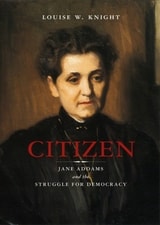
Citizen
Jane Addams and the Struggle for DemocracyLouise W. Knight
University of Chicago Press, 2005
Citizen covers the first half of Addams's life, from 1860 to 1899. Knight recounts how Addams, a child of a wealthy family in rural northern Illinois, longed for a life of larger purpose. She broadened her horizons through education, reading, and travel, and, after receiving an inheritance upon her father's death, moved to Chicago in 1889 to co-found Hull House, the city's first settlement house. Citizen shows vividly what the settlement house actually was—a neighborhood center for education and social gatherings—and describes how Addams learned of the abject working conditions in American factories, the unchecked power wielded by employers, the impact of corrupt local politics on city services, and the intolerable limits placed on women by their lack of voting rights. These experiences, Knight makes clear, transformed Addams. Always a believer in democracy as an abstraction, Addams came to understand that this national ideal was also a life philosophy and a mandate for civic activism by all.
As her story unfolds, Knight astutely captures the enigmatic Addams's compassionate personality as well as her flawed human side. Written in a strong narrative voice, Citizen is an insightful portrait of the formative years of a great American leader.
“Knight’s decision to focus on Addams’s early years is a stroke of genius. We know a great deal about Jane Addams the public figure. We know relatively little about how she made the transition from the 19th century to the 20th. In Knight’s book, Jane Addams comes to life. . . . Citizen is written neither to make money nor to gain academic tenure; it is a gift, meant to enlighten and improve. Jane Addams would have understood.”—Alan Wolfe, New York Times Book Review
“My only complaint about the book is that there wasn’t more of it. . . . Knight honors Addams as an American original.”—Kathleen Dalton, Chicago Tribune
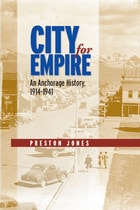
City for Empire
An Anchorage History, 1914-1941Preston Jones
University of Alaska Press, 2010
First settled in 1915, Anchorage, Alaska, was founded with the American empire in mind. During World War I, it served as a conduit through which coal could be shipped to the Pacific, where the US Navy was engaged with Japan. Decades later, during World War II, Anchorage became an equally important site for the defense of the mainland and the projection of American power. City for Empire tells the story of Anchorage's development in that period, focusing in particular on the international context of the city's early decades and its surprisingly diverse inhabitants. A thorough yet accessible read, City for Empire captures the history of this remarkable city.
Constituting Central American–Americans
Transnational Identities and the Politics of DislocationCárdenas, Maritza E
Rutgers University Press, 2018
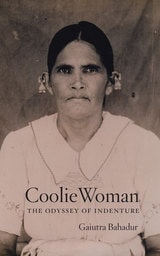
Coolie Woman
The Odyssey of IndentureGaiutra Bahadur
University of Chicago Press, 2013
Shunned by society, and sometimes in mortal danger, many coolie women were either runaways, widows, or outcasts. Many of them left husbands and families behind to migrate alone in epic sea voyages—traumatic “middle passages”—only to face a life of hard labor, dismal living conditions, and, especially, sexual exploitation. As Bahadur explains, however, it is precisely their sexuality that makes coolie women stand out as figures in history. Greatly outnumbered by men, they were able to use sex with their overseers to gain various advantages, an act that often incited fatal retaliations from coolie men and sometimes larger uprisings of laborers against their overlords. Complex and unpredictable, sex was nevertheless a powerful tool.
Examining this and many other facets of these remarkable women’s lives, Coolie Woman is a meditation on survival, a gripping story of a double diaspora—from India to the West Indies in one century, Guyana to the United States in the next—that is at once a search for one’s roots and an exploration of gender and power, peril and opportunity.
Crafting Equality
America's Anglo-African WordCeleste Michelle Condit and John Louis Lucaites
University of Chicago Press, 1993
Drawing upon little studied speeches, newspapers, magazines, and other public discourse, Condit and Lucaites survey the shifting meaning of equality from 1760 to the present as a process of interaction and negotiation among different social groups in American politics and culture. They make a powerful case for the critical role of black Americans in actively shaping what equality has come to mean in our political conversation by chronicling the development of an African-American rhetorical community. The story they tell supports a vision of equality that embraces both heterogeneity and homogeneity as necessary for maintaining the balance between liberty and property.
A compelling revision of an important aspect of America's history, Crafting Equality will interest anyone wanting to better understand the role public discourse plays in affecting the major social and political issues of our times. It will also interest readers concerned with the relationship between politics and culture in America's increasingly multi-cultural society.