Results by title
653 books match the query 'Animals' and 29 start with c
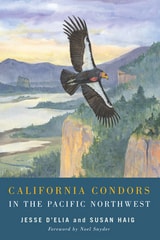
California Condors in the Pacific Northwest
Jesse D'Elia and Susan M. Haig
Oregon State University Press, 2013
Despite frequent depiction as a bird of California and the desert southwest, North America’s largest avian scavenger once graced the skies of the Pacific Northwest, from northern California to British Columbia. This important volume documents the condor’s history in the region, from prehistoric times to the early twentieth century, and explores the challenges of reintroduction.
Jesse D’Elia and Susan Haig investigate the paleontological and observational record as well as the cultural relationships between Native American tribes and condors, providing the most complete assessment to date of the condor’s occurrence in the Pacific Northwest. They evaluate the probable causes of regional extinction and the likelihood that condors once bred in the region, and they assess factors that must be considered in determining whether they could once again thrive in Northwest skies.
Incorporating the newest research and findings and more than eighty detailed historical accounts of human encounters with these birds of prey, California Condors in the Pacific Northwest sets a new standard for examining the historical record of a species prior to undertaking a reintroduction effort. It is a vital reference for academics, agency decision makers, conservation biologists, and readers interested in Northwest natural history. The volume is beautifully illustrated by Ram Papish and includes a number of previously unpublished photographs.
Canoe Country Wildlife
A Field Guide to the North Woods and Boundary WatersMark Stensaas
University of Minnesota Press, 2004
Warblers, wolves, and whirligig beetles—the creatures of the canoe countrywilderness come alive in Canoe Country Wildlife. In this read-aloud treasure, “Sparky” Stensaas, naturalist and storyteller, intrigues you with his tales of encounters with the forest inhabitants—from tiny toads to majestic moose.
Canoe Country Wildlife, a friendly field guide, introduces you to the wildlife you are most likely to see as you travel in the North Woods. It describes these creatures and their habits accurately so you’ll know where and when to look for them. Detailed line drawings illustrate each animal clearly so you’ll recognize what you’re seeing.
The book is filled with fascinating little-known facts: Did you know that wood frogs can freeze solid, only to live again? That loons can fly a hundred miles an hour? That chipmunks can carry seventy sunflower seeds in their cheeks?
Canoe Country Wildlife includes handy checklists to help you keep track of the critters you encounter, a calendar for you to record the natural events you witness, and activities—one for each animal—that will help both adults and children learn by discovery.
Carry Canoe Country Wildlife in your pack. Your trip will be more enjoyable and your memories will last forever. It’s a great gift for anyone who loves the outdoors.
Capturing the Commons
Devising Institutions to Manage the Maine Lobster IndustryJames M. Acheson
University Press of New England, 2004
Caribou Herds of Northwest Alaska, 1850-2000
Ernest S. Burch, Jr.
University of Alaska Press, 2012
In his final, major publication Ernest S. “Tiger” Burch Jr. reconstructs the distribution of caribou herds in northwest Alaska using data and information from research conducted over the past several decades as well as sources that predate western science by more than one hundred years. Additionally, he explores human and natural factors that contributed to the demise and recovery of caribou and reindeer populations during this time. Burch provides an exhaustive list of published and unpublished literature and interviews that will intrigue laymen and experts alike. The unflinching assessment of the roles that humans and wolves played in the dynamics of caribou and reindeer herds will undoubtedly strike a nerve. Supplemental essays before and after the unfinished work add context about the author, the project of the book, and the importance of both.
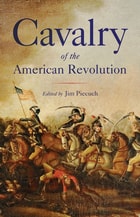
Cavalry of the American Revolution
Jim Piecuch
Westholme Publishing, 2012
Nine Historians and Writers Investigate the Role of Cavalry in the War for Independence
From the bitterly contested no-man’s-land between American and British lines in New York and New Jersey to the scorching pine forests of the South, the cavalry of both armies fought valiantly throughout the American Revolution. This volume explores several aspects of cavalry’s role in the war, which has often been overlooked in general histories. The topics covered include the development of the Continental Army’s cavalry arm, European influences on American cavalry training and tactics, accounts of several important cavalry raids and battles, and histories of mounted units such as the Continental Light Dragoons, American rangers in the South Carolina backcountry, and the British army’s Queen’s Rangers and “Black Dragoons,” the latter force composed entirely of former slaves. The essays also examine the roles of important commanders, including Brigadier General Francis “Swamp Fox” Marion, Lieutenant Colonel William Washington, and Colonel Anthony Walton White of the American army, and British cavalry leaders Banastre “Bloody Ban” Tarleton and John Graves Simcoe, as well as the American prisoners of war who switched sides and served in the “British Legion.” The authors of the essays include acclaimed military historians Gregory J. W. Urwin and Lawrence E. Babits. Readers with a general interest in military history, as well as those with more specific interests in the American Revolution or the history of the cavalry arm, and anyone who wishes to undertake further study of these subjects, will find the essays fresh, engaging, and informative.
@font-face { font-family: "Times New Roman";}@font-face { font-family: "HelveticaNeue-LightCond";}p.MsoNormal, li.MsoNormal, div.MsoNormal { margin: 0in 0in 0.0001pt; font-size: 12pt; font-family: "Times New Roman"; }table.MsoNormalTable { font-size: 10pt; font-family: "Times New Roman"; }div.Section1 { page: Section1; }
Contents
Gregory J. W. Urwin: The Continental Light Dragoons, 1776-1783
Lee F. McGee: European Influences on Continental Cavalry
John M. Hutchins: Cavalry Action at Poundridge, New York
Donald J. Gara: Cavalry Battles in New York and New Jersey
Scott A. Miskimon: Anthony Walton White: A Revolutionary Dragoon
Michael C. Scoggins: South Carolina’s Backcountry Rangers
Lawrence E. Babits and Joshua B. Howard: Continentals in Tarleton’s
British Legion
Charles F. Price: Cavalry Operations at Eutaw Springs
Jim Piecuch: The “Black Dragoons”
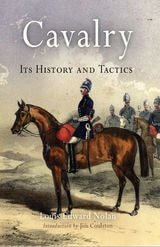
Cavalry
Its History and TacticsLouis Edward Nolan
Westholme Publishing, 2020
A New Edition of One of the Great Military Treatises of the Nineteenth Century
First published in 1853, Cavalry: Its History and Tactics had a major impact on military theorists and officers for decades—it was reprinted as a manual during the American Civil War—and its influence on European cavalry performance can be traced into World War I. It is an intelligent work which discusses the history and development of cavalry over the ages, advocates a program of reform for Britain’s horsed troops, and covers many aspects of equipment, training, drill, organization, formation, and battlefield tactics. The author, an experienced and gifted cavalryman, first served in the Austrian army, then joined the British army’s 15th Hussars in 1839, fought in India, and became the regimental riding master. Captain Nolan’s 1852 tour of European armies, wide reading in many languages, and service in Europe and India makes Cavalry an extraordinary statement on mid-nineteenth-century theory and practice.
As historian Jon Coulston explains in his introduction, Nolan was writing at the cusp of technological change, drawing upon the experiences of the Napoleonic Wars, continental suppression of the 1848 Revolutions, and Britain’s wars in India, but with an eye to firepower developments on the eve of the Crimean War. In 1854, at the Battle of Balaklava, Nolan rode with the written order which unleashed the Charge of the Light Brigade, an action in which he lost his life. Presented here as the first modern reprint, complete with a new introduction and further reading, Nolan’s Cavalry remains a hallmark of military history.
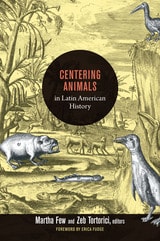
Centering Animals in Latin American History
Martha Few and Zeb Tortorici, eds.
Duke University Press, 2013
Contributors. Neel Ahuja, Lauren Derby, Regina Horta Duarte, Martha Few, Erica Fudge, León García Garagarza, Reinaldo Funes Monzote, Heather L. McCrea, John Soluri, Zeb Tortorici, Adam Warren, Neil L. Whitehead
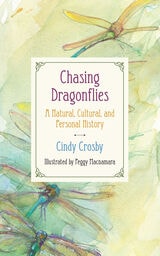
Chasing Dragonflies
A Natural, Cultural, and Personal HistoryCindy Crosby; Illustrations by Peggy Macnamara
Northwestern University Press, 2020
Chasing Dragonflies: A Natural, Cultural, and Personal History is an engaging, beautifully illustrated introduction to these remarkable insects. Drawing on her experiences as a natural history instructor, dragonfly monitor, cancer survivor, grandmother, and steward, Crosby tells the stories of dragonflies: their roles in poetry and art, their fascinating sex life—unique within the animal kingdom—and their evolution from dark-water dwellers to denizens of the air. We follow Crosby and other citizen-scientists into the prairies, wetlands, and woodlands of the Midwest, where they observe the environment and chronicle dragonfly populations and migration to decipher critical clues about our changing waterways and climate.
Woven throughout are personal stories: reflections on the author’s cancer diagnosis and recovery, change, loss, aging, family, joy, and discovering what it means to be at home in the natural world. Crosby draws an intimate portrait of a landscape teeming with variety and mystery, one that deserves our attention and conservation. As warm as it is informative, this book will interest gardeners, readers of literary nonfiction, and anyone intrigued by transformation, whether in nature or our personal lives.
Chasing Giants
In Search of the World's Largest Freshwater FishZeb Hogan
University of Nevada Press, 2023
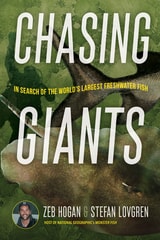
On May 1, 2005, a Thai fisherman caught a truly monstrous Mekong giant catfish. At 646 pounds, it captured the world’s attention, and with awe and wonder, it was deemed the largest freshwater fish on record. There was no denying its size, but when biologist and research associate professor Hogan saw a photo of the fish, he wondered if it really was the biggest in the world. To his surprise, no one had systematically sought to answer the question: Which of the giant freshwater species really was the largest?
Seeking to answer that question has brought Hogan face to face with massive arapaima and piranha in the Amazon, alligator gar in Texas, pigeon-eating wels catfish in France, stingrays in Cambodia, and the gnarled-toothed sawfish in Australia. Part of his scientific adventure has been captured on Monster Fish, and Hogan now tells the full story of his 25-year quest to understand the mysteries of some of the oldest, largest, most bizarre creatures on Earth.
The fate of these giant fish motivates Hogan to understand the various species he studies. The megafish’s numbers are dwindling, and the majority of them face extinction. In this book, he teams up with award-winning journalist Stefan Lovgren to tell, for the first time, the remarkable and troubling story of the world’s largest freshwater fish. It is a story that stretches across the globe, chronicling a race against the clock to find and protect these ancient leviathans before they disappear forever.
Chasing Giants: In Search of the World’s Largest Freshwater Fish combines science, adventure, and wonder to provide insights into the key role the massive fish of our lakes and rivers play in our past, present, and future.
Cheetahs of the Serengeti Plains
Group Living in an Asocial SpeciesT. M. Caro
University of Chicago Press, 1994
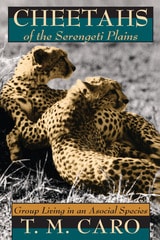
Why do cheetah cubs stay with their mother for a full year after weaning? Why do adolescents remain in groups? Why do adult males live in permanent associations with each other? Why do adult females live alone? Through observations on the costs and benefits of group living, Caro offers new insight into the complex behavior of this extraordinary species. For example, contrary to common belief about cooperative hunting in large carnivores, he shows that neither adolescents nor adult males benefit from hunting in groups.
With many surprising findings, and through comparisons with other cat species, Caro enriches our understanding of the evolution of social behavior and offers new perspectives on conservation efforts to save this charismatic and endangered carnivore.
Chichi and the Great Flood
Brooke McWherter
Michigan Publishing Services, 2019
Chorus of Cranes
The Cranes of North America and the WorldPaul A. Johnsgard, Photographs by Thomas D. Mangelsen
University Press of Colorado, 2015
“Since long before medieval times cranes have been considered messengers of the gods, calling annually from on high to remind humans below of the passing years and of their own mortality. Now it is up to humans to take responsibility for controlling our own fate—and also to cry out to protect not only cranes but all the other wonderful creatures that share our increasingly fragile and threatened planetary ecosystem with us."
—Paul A. Johnsgard, from the acknowledgments
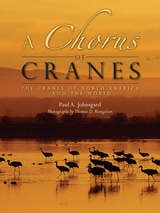
Accompanied by the stunning photography of Thomas D. Mangelsen, A Chorus of Cranes details the natural history, biology, and conservation issues surrounding the abundant sandhill crane and the endangered whooping crane in North America. Author Paul A. Johnsgard, one of the leading authorities on cranes and crane biology, describes the fascinating social behaviors, beautiful natural habitats, and grueling seasonal migrations that have stirred the hearts of people as far back as medieval times and garnered the crane a place in folklore and mythology across continents.
Johnsgard has substantially updated and significantly expanded his 1991 work Crane Music, incorporating new information on the biology and status of these two North American cranes and providing abbreviated summaries on the other thirteen crane species of the world. The stories of these birds and their contrasting fates provide an instructive and moving history of bird conservation in North America. A Chorus of Cranes is a gorgeous and invaluable resource for crane enthusiasts, birders, natural historians, and conservationists alike.
The University Press of Colorado gratefully acknowledges the generous support of the Iain Nicholson Audubon Center at Rowe Sanctuary, Audubon Nebraska, Ron and Judy Parks, Wagon Tongue Creek Farm, and the Trull Foundation toward the publication of this book.
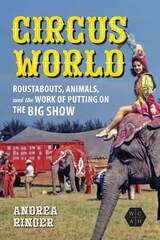
Circus World
Roustabouts, Animals, and the Work of Putting on the Big ShowAndrea Ringer
University of Illinois Press, 2024
Andrea Ringer examines the industry-wide circus world--the collection of shows that traveled by rail, wagon, steamboat, and car--and the traditional and nontraditional laborers who created it. Performers and their onstage labor played an integral part in the popularity of the circus. But behind the scenes, other laborers performed the endless menial tasks that kept the show on the road. Circus operators regulated employee behavior both inside and outside the tent even as the employees themselves blurred the line between leisure and labor until, in all parts of the show, the workers could not escape their work.
Illuminating and vivid, Circus World delves into the gender, class, and even species concerns within an extinct way of life.
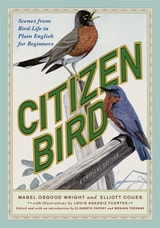
Citizen Bird
Scenes from Bird-Life in Plain English for Beginners, A Critical EditionMabel Osgood Wright
Rutgers University Press, 2025
Born of a collaboration between naturalist Mabel Osgood Wright, ornithologist Elliott Coues, and bird artist Louis Agassiz Fuertes, the book is vital to the history of birding and the broader study of nineteenth-century American culture and literature. This new edition of Citizen Bird preserves the original book’s 111 drawings and adds explanatory footnotes, supplemental historical material, and a new introduction. More than a century and a quarter after its original publication, Elizabeth Cherry and Meghan Freeman contextualize the book in the tradition and history of birding and discuss the roles of its authors and illustrator in birding history. A landmark text in the history of American conservationism, Citizen Bird is a timeless classic that will bring joy to birdwatchers of all ages.
Climate Ghosts
Migratory Species in the AnthropoceneNancy Langston
Brandeis University Press, 2021
Environmental historian Nancy Langston explores three “ghost species” in the Great Lakes watershed—woodland caribou, common loons, and lake sturgeon. Ghost species are those that have not gone completely extinct, although they may be extirpated from a particular area. Their traces are still present, whether in DNA, in small fragmented populations, in lone individuals roaming a desolate landscape in search of a mate. We can still restore them if we make the hard choices necessary for them to survive. In this meticulously researched book, Langston delves into how climate change and human impact affected these now ghost species. Climate Ghosts covers one of the key issues of our time.
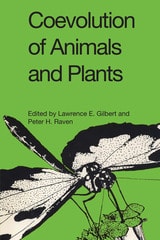
Coevolution of Animals and Plants
Symposium V, First International Congress of Systematic and Evolutionary Biology, 1973Edited by Lawrence E. Gilbert and Peter H. Raven
University of Texas Press, 1975
It has long been recognized that plants and animals profoundly affect one another’s characteristics during the course of evolution. However, the importance of coevolution as a dynamic process involving such diverse factors as chemical communication, population structure and dynamics, energetics, and the evolution, structure, and functioning of ecosystems has been widely recognized for a comparatively short time. Coevolution represents a point of view about the structure of nature that only began to be fully explored in the late twentieth century. The papers presented here herald its emergence as an important and promising field of biological research.
Coevolution of Animals and Plants is the first book to focus on the dynamic aspects of animal-plant coevolution. It covers, as broadly as possible, all the ways in which plants interact with animals. Thus, it includes discussions of leaf-feeding animals and their impact on plant evolution as well as of predator-prey relationships involving the seeds of angiosperms. Several papers deal with the most familiar aspect of mutualistic plant-animal interactions—pollination relationships. The interactions of orchids and bees, ants and plants, and butterflies and plants are discussed. One article provides a fascinating example of more indirect relationships centered around the role of carotenoids, which are produced by plants but play a fundamental part in the visual systems of both plants and animals.
Coevolution of Animals and Plants provides a general conceptual framework for studies on animal-plant interaction. The papers are written from a theoretical, rather than a speculative, standpoint, stressing patterns that can be applied in a broader sense to relationships within ecosystems.
Contributors to the volume include Paul Feeny, Miriam Rothschild, Christopher Smith, Brian Hocking, Lawrence Gilbert, Calaway Dodson, Herbert Baker, Bernd Heinrich, Doyle McKey, and Gordon Frankie.
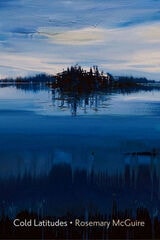
Cold Latitudes
Rosemary McGuire
University of Alaska Press, 2021
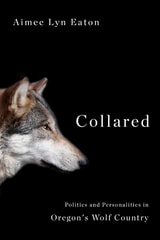
Collared
Politics and Personalities in Oregon's Wolf CountryAimee Lyn Eaton
Oregon State University Press, 2013
Teeming with the tension and passion that accompany one of North America’s most controversial apex predators, Collared tracks the events that unfolded when wolves from the reintroduced population of the northern Rocky Mountains dispersed west across state lines into Oregon.
In a forthright and personal style, Aimee Lyn Eaton takes readers from meeting rooms in the state capitol to ranching communities in the rural northeast corner of the state. Using on-the-ground inquiry, field interviews, and in-depth research, she shares the story of how wolves returned to Oregon and the repercussions of their presence in the state.
Collared: Politics and Personalities in Oregon’s Wolf Country introduces readers to the biologists, ranchers, conservationists, state employees, and lawyers on the front lines, encouraging a deeper, multifaceted understanding of the controversial and storied presence of wolves in Oregon.
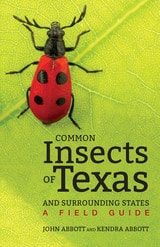
Common Insects of Texas and Surrounding States
A Field GuideBy John Abbott and Kendra Abbott
University of Texas Press, 2020
Thanks to its size and geographic position, Texas is home to nearly 30,000 species of insects, likely making its insect population the most diverse in the nation. Ranging from eastern and western to temperate and tropical species, this vast array of insects can be difficult to identify. In Common Insects of Texas and Surrounding States, John and Kendra Abbott have created the state's most comprehensive field guide to help readers recognize and understand these fascinating creatures.
Containing 1,300 species and more than 2,700 photographs, this guide offers a wealth of information about the characteristics and behaviors of Texas's insects. Each chapter introduces an order with a discussion of general natural history and a description of other qualities helpful in distinguishing its various species, while every species' entry provides a state map showing where it is most likely to be found, a key displaying its seasonal distribution, information about its habitat, and corresponding photos. Featuring colored tabs for quick reference, a glossary, and information about other arthropods, this guide is the perfect companion for anyone wanting to identify and learn more about the many insects of Texas.
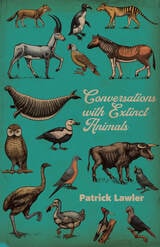
Conversations with Extinct Animals
A NovelPatrick Lawler
University of Alabama Press, 2024
An experimental narrative by eco-fiction author and poet Patrick Lawler evolves out of the interactions between twenty-four extinct animals and those characters who struggle for significance in the face of their own extinction.
Patrick Lawler’s second novel, Conversations with Extinct Animal, is a dialogue between psychology and ecology—between poetry and story. A suicide note masquerading as a love letter, the novel transcends genres and keeps kaleidoscopically shifting: sometimes it is an elegy, and sometimes it is a therapy session—but always these are the field notes for the end of the world.
As a collection of characters associated with The Facility come to terms with an individual’s death, they must confront their own losses amid the colossal absence of the twenty-four extinct animals. All the characters float between various inexplicable, mystifying “syndromes” that call into question their identities and, ultimately, call into question the elements of story itself. “Looking at pictures of the Extinct Animals, I can’t help but wonder if it is too late to save the world—especially since there are so many different worlds,” observes the narrator of the novel in his efforts to save the unsavable.

Coralations
Melody Jue
University of Minnesota Press, 2025
A captivating meditation on coral beyond iconic tropical corals
Coralations is a philosophical exploration of the media that come into focus when we shift our attention from the highly recognizable coral of the tropics. Focusing on soft corals and deep-water corals leads to different narratives about climate change and involves different analogies to media. Through thought-provoking analyses of photography, science fiction, visual art, and scientific images, Melody Jue renews our curiosity and broadens our understanding of corals beyond the dominant narratives about their endangerment. Coralations shows how paying attention to particular corals can change what we take for granted.
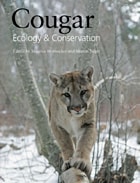
Cougar
Ecology and ConservationEdited by Maurice Hornocker and Sharon Negri
University of Chicago Press, 2009
The cougar is one of the most beautiful, enigmatic, and majestic animals in the Americas. Eliciting reverence for its grace and independent nature, it also triggers fear when it comes into contact with people, pets, and livestock or competes for hunters’ game. Mystery, myth, and misunderstanding surround this remarkable creature.
The cougar’s range once extended from northern Canada to the tip of South America, and from the Pacific to the Atlantic, making it the most widespread animal in the western hemisphere. But overhunting and loss of habitat vastly reduced cougar numbers by the early twentieth century across much of its historical range, and today the cougar faces numerous threats as burgeoning human development encroaches on its remaining habitat.
When Maurice Hornocker began the first long-term study of cougars in the Idaho wilderness in 1964, little was known about this large cat. Its secretive nature and rarity in the landscape made it difficult to study. But his groundbreaking research yielded major insights and was the prelude to further research on this controversial species.
The capstone to Hornocker’s long career studying big cats, Cougar is a powerful and practical resource for scientists, conservationists, and anyone with an interest in large carnivores. He and conservationist Sharon Negri bring together the diverse perspectives of twenty-two distinguished scientists to provide the fullest account of the cougar’s ecology, behavior, and genetics, its role as a top predator, and its conservation needs. This compilation of recent findings, stunning photographs, and firsthand accounts of field research unravels the mysteries of this magnificent animal and emphasizes its importance in healthy ecosystem processes and in our lives.
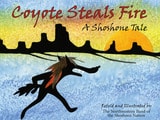
Coyote Steals Fire
A Shoshone TaleNorthwestern Band of the Shoshone Nation
Utah State University Press, 2005
"Coyote was tired of being cold," says this traditional Shoshone tale about the arrival of fire in the northern Wasatch region.
Members of the Northwestern Band of the Shoshone Nation developed the concept for this retelling in collaboration with book arts teacher Tamara Zollinger. Together, they wrote and illustrated the book.
Bright watercolor-and-salt techniques provide a winning background to the hand-cut silhouettes of the characters. The lively, humorous story about Coyote and his friends is complemented perfectly by later pages written by Northwestern Shoshone elders on the historical background and cultural heritage of the Shoshone nation.
An audio CD with the voice of Helen Timbimboo telling the story in Shoshone and singing two traditional songs makes this book not only good entertainment but an important historical document, too.
Crab Wars
A Tale of Horseshoe Crabs, Bioterrorism, and Human HealthWilliam Sargent
University Press of New England, 2006
Crab Wars
A Tale of Horseshoe Crabs, Ecology, and Human HealthWilliam Sargent
Brandeis University Press, 2021
Because every drug certified by the FDA must be tested using the horseshoe crab derivative known as Limulus lysate, a multimillion-dollar industry has emerged involving the license to bleed horseshoe crabs and the rights to their breeding grounds. William Sargent presents a thoroughly accessible insider’s guide to the discovery of the lysate test, the exploitation of the horseshoe crab at the hands of multinational pharmaceutical conglomerates, local fishing interests, and the legal and governmental wrangling over the creatures’ ultimate fate. In the end, the story of the horseshoe crab is a sobering reflection on the unintended consequences of scientific progress and the danger of self-regulated industries controlling a limited natural resource. This new edition brings the story up to date as companies race to manufacture alternatives to the horseshoe crab blood, which is now essential for testing vaccines such as those developed to counter COVID-19. However, horseshoe crab populations are still dwindling, with profound implications not only for the future of the crabs themselves but also for the ecosystems that depend on them.
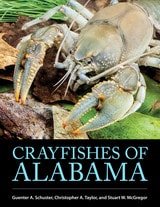
Crayfishes of Alabama
Guenter A. Schuster, Christopher A. Taylor, and Stuart W. McGregor
University of Alabama Press, 2022
A comprehensive assessment of the 99 known species of crayfishes inhabiting the state of Alabama
Crayfishes are common organisms in many freshwater habitats. They are usually the largest invertebrates and often represent the greatest amount of invertebrate biomass in their environments. Identified as a keystone species in many ecological communities, aquatic biologists are fond of saying “they eat everything, and everything eats them.”
Crayfishes—sometimes called crawfishes, crawdads, mudbugs, ditchbugs, yabbies, and flusskrebs—are taxonomically and ecologically a diverse group of aquatic crustaceans. There are more than 600 known species worldwide and North America alone is home to more than 400. As home to 99 documented species, Alabama is a global hotspot for crayfish diversity.
Crayfishes of Alabama is the first comprehensive reference work on the subject and provides the most up-to-date information on the vast range of crayfishes known to reside in Alabama. The authors have collected specimens and data from the state’s major and minor waterways and lakes, as well as specialized habitats such as burrows, caves, roadside ditches, marshes, swamps, and temporary autumnal ponds. This volume represents the most in-depth treatment of crayfishes found in the southeastern United States and offers detailed species accounts including descriptions of morphological characters, color, maximum size, comparative species, distribution and habitat, biology, crayfish associates, and conservation status. The species accounts are accentuated with color photographs, photographic morphological plates, and dot maps showing state and national distributions. A photographic key is provided to guide the identification of all 99 species.
Creatures Of Habitat
The Changing Nature of Wildlife and Wild Places in Utah and the Intermountain WestMark Gerard Hengesbaugh
Utah State University Press, 2001
From flying squirrels on high wooded plateaus to hanging gardens in redrock canyons, the Intermountain West is home to some of the world's rarest and most fascinating animals and plants. Creatures of Habitat details many unique but little-known talents of this region's strange and wonderful wild inhabitants and descibes their connections with native environments. For example, readers will learn about the pronghorn antelope's supercharged cardiovascular system, a brine shrimp-powered shorebird that each year flies nonstop from the Great Salt Lake to Central Argentina, and a rare mustard plant recently discovered on Mount Ogden. Emphasizing how increasing loss and degradation of habitat hinders native species' survival, Mark Gerard Hengesbaugh discusses what is happening to wildlife and wild places and what is being done about it.
Well illustrated, this book has habitat maps, pen-and-ink illustrations, and fifty photos of wildlife and wild places selected by photo editor Dan Miller. Also included are guides to wildlife viewing and lists of Utah species, including those considered sensitive, threatened, or endangered.
Critical Terms for Animal Studies
Edited by Lori Gruen
University of Chicago Press, 2018
Animal Studies is a rapidly growing interdisciplinary field devoted to examining, understanding, and critically evaluating the complex relationships between humans and
other animals. Scholarship in Animal Studies draws on a variety of methodologies to explore these multi-faceted relationships in order to help us understand the ways in which other animals figure in our lives and we in theirs.
Bringing together the work of a group of internationally distinguished scholars, the contribution in Critical Terms for Animal Studies offers distinct voices and diverse perspectives, exploring significant concepts and asking important questions. How do we take non-human animals seriously, not simply as metaphors for human endeavors, but as subjects themselves? What do we mean by anthropocentrism, captivity, empathy, sanctuary, and vulnerability, and what work do these and other critical terms do in Animal Studies?
An indispensable reference for the field, Critical Terms for Animal Studies not only provides a framework for thinking about animals as subjects of their own experiences, but also serves as a touchstone to help us think differently about our conceptions of what it means to be human, and the impact human activities have on the more than human world.
Crooked Cats
Beastly Encounters in the AnthropoceneNayanika Mathur
University of Chicago Press, 2021
There are many theories on why and how a big cat comes to prey on humans, with the ecological collapse emerging as a central explanatory factor. Yet, uncertainty over the precise cause of crookedness persists. Crooked Cats explores in vivid detail the many lived complexities that arise from this absence of certain knowledge to offer startling new insights into both the governance of nonhuman animals and their intimate entanglements with humans. Through creative ethnographic storytelling, Crooked Cats illuminates the Anthropocene in three critical ways: as method, as a way of reframing human-nonhuman relations on the planet, and as a political tool indicating the urgency of academic engagement. Weaving together “beastly tales” spun from encounters with big cats, Mathur deepens our understanding of the causes, consequences, and conceptualization of the climate crisis.