Results by title
59 books match the query 'Antiques & Collectibles' and 7 start with c

Catalogue of Watermarks in Italian Printed Maps, ca. 1540-1600
David Woodward
University of Chicago Press, 1996
Fifteen years in the making, this catalogue will be an essential reference for bibliographers and archivists dealing with rare books and maps of the period, for map collectors, map librarians, and scholars and librarians working with early printed items and manuscripts.
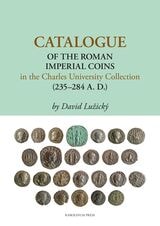
Catalogue of the Roman Imperial Coins in the Charles University Collection (235–284 A.D.)
David Lužický
Karolinum Press, 2026
Spotlights over five hundred Roman Imperial coins from Charles University's vast collection of ancient coins.
Charles University’s collection of ancient coins in its present state has existed since l945. Greek, Roman, and other ancient coins were entrusted to the care of the Seminar for Ancient History and compiled into a single collection along with antique coins from the original collection of the Czech University. The collection contains about 4,000 pieces altogether, mostly in silver and bronze.
This publication presents a catalogue of 564 Roman Imperial coins dating from 235 to 284 A. D. and is part of efforts to gradually catalogue the entirety of Charles University’s collection of ancient coins, stored in the depository of the CU Institute of Greek and Latin Studies. The book builds upon Václav Marek’s 1985 monograph, The Roman Republican Coins in the Collection of Charles University, and Federico Gambacorta’s 2013 continuation titled Catalogue of the Late Roman, Byzantine and Barbaric Coins in the Charles University Collection (364–1092 A. D.).
Clay
The History and Evolution of Humankind’s Relationship with Earth’s Most Primal ElementSuzanne Staubach
University Press of New England, 2013
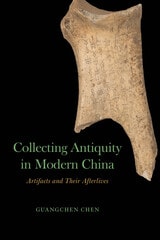
Collecting Antiquity in Modern China
Artifacts and Their AfterlivesGuangchen Chen
University of Chicago Press, 2026
In this book, Guangchen Chen argues that discerning collectors used antiquities to upend dominant discourses on history and cultural memory in twentieth-century China. Examining four categories of ancient artifacts—“carving” (oracle bones), “rubbing” (imprints of inscriptions and books), “brushing” (calligraphy), and “weaving” (textiles and costumes)—Chen explains how their modern (re)emergences changed our understanding of the relationship between tradition and modernity, textuality and materiality, and the very meaning of “Chineseness.”
Chen considers intellectuals such as Wang Yirong, Liu E, Luo Zhenyu, Wang Guowei, and Chen Mengjia, who played a pivotal role in the oracle bones’ modern reception. He also looks to major literary figures including Lu Xun, whose engagements with textual remnants of the past inspired his critique of Chinese culture; Guo Moruo, whose work on the calligraphic masterpiece Lantingxu contributed to the cultural-political climate that sparked the Cultural Revolution; Shi Zhecun, whose interest in inscriptions on ancient stelae helped him to hold fast to intellectual integrity in the face of political pressure; and Shen Congwen, whose obsession with ancient textiles saved him from committing suicide after his writing fell out of favor. These antiquarians used their collections as a strategy to synchronize historical time and to challenge two dominant yet contrasting ideologies in modern China: a regressive idealization of antiquity and an unquestioning trust in linear progress. During this turbulent period, long-lost artifacts came to function as omens, warnings, and revelations from another time, generating new meanings that were uniquely relevant to the present.
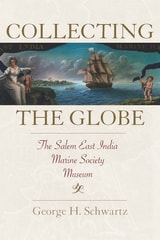
Collecting the Globe
The Salem East India Marine Society MuseumGeorge H. Schwartz
University of Massachusetts Press, 2020
Collecting the Globe presents the first in-depth exploration of the East India Marine Society Museum, the precursor to the internationally acclaimed Peabody Essex Museum. Offering fresh perspectives on museums in the United States before the Civil War and how they helped shape an American identity, George H. Schwartz explores the practices of collecting, exhibiting, and interpreting a diversity of international objects and art in the early United States.
Corpus Vasorum Antiquorum, Fascicule 10
Athenian Red-Figure Column and Volute KratersDespoina Tsiafakis
J. Paul Getty Trust, The, 2019
This new fascicule of the CVA—the tenth issued by the J. Paul Getty Museum and the first ever to be published open access—presents a selection of Attic red-figure column and volute kraters ranging from 520 to 510 BCE through the early fourth century BCE. Among the works included are a significant dinoid volute krater and a volute krater with the Labors of Herakles that is attributed to the Kleophrades Painter.
The free online edition of this open-access catalogue is available at www.getty.edu/publications/cva10/. Also available are free PDF, EPUB, and Kindle/MOBI downloads of the book, CSV and JSON downloads of the object data, and JPG downloads of the catalogue images.
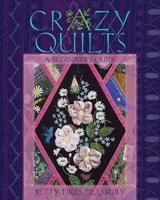
Crazy Quilts
A Beginner’s GuideBetty Fikes Pillsbury
Ohio University Press, 2016
Textile artist and instructor Betty Fikes Pillsbury has won hundreds of awards for her homages to the elegance of Victorian crazy quilting. Grounded in traditional methods but crafted with elements of whimsy, each piece stands on its own as a work of art. In this definitive guide, Pillsbury shares her methods for piecing, embroidering, and embellishing. Her instructions equip readers at any level of quilting skill to use those techniques to express their own visions.
Encouraging her readers to see functional and artistic possibilities beyond quilts (wall hangings, purses, and pillowcases are just some of the options), Pillsbury shows them how to make each work by hand, the slow cloth way. An inspiring primer for beginning and experienced quilters alike, this meticulously illustrated how-to book is far more expansive than previous guides. Pillsbury—a master of the form—shows us why crazy quilting belongs firmly in the twenty-first century.