Results by title
490 books match the query 'Asian' and 56 start with c
CROSS-CULTURAL VISIONS IN AFRICAN AMERICAN MODERNISM
FROM SPATIAL NARRATIVE TO JAZZ HAIKUYOSHINOBU HAKUTANI
The Ohio State University Press, 2006
In writing Black Boy, the centerpiece of the Chicago Renaissance, Wright was inspired by Theodore Dreiser. Because the European and African cultural visions that Wright, Ralph Ellison, Alice Walker, and Toni Morrison acquired were buttressed by the universal humanism that is common to all cultures, this ideology is shown to transcend the problems of society. Fascinated by Eastern thought and art, Wright, Walker, Sonia Sanchez, and James Emanuel wrote highly accomplished poetry and prose. Like Ezra Pound, Wright was drawn to classic haiku, as reflected in the 4,000 haiku he wrote at the end of his life. As W. B. Yeats’s symbolism was influenced by his cross-cultural visions of noh theatre and Irish folklore, so is James Emanuel’s jazz haiku energized by his cross-cultural rhythms of Japanese poetry and African American music.
The book demonstrates some of the most visible cultural exchanges in modern and postmodern African American literature. Such a study can be extended to other contemporary African American writers whose works also thrive on their cross-cultural visions, such as Amiri Baraka, Ishmael Reed, Charles Johnson, and haiku poet Lenard Moore.
Cage Of Fireflies
Modern Japanese HaikuLucien Stryk
Ohio University Press, 1993
In all arts — music, painting, dance, theatre — change has come with that startling moment of dissatisfaction when the artist upends complacency, shocks the old to its foundations, and emerges with clear vision. He has had the courage to rescue his art from dullness. Two of Japan’s “Great Four” of haiku, Basho (1644-94) and Shiki (1862-1902), were such revolutionaries, albeit two hundred years apart. Before Basho, haiku was but a pleasant occupation for the idle. He set about transforming it with such success that experts to this day agree that his were the first true haiku.
Shiki, who lived into the 20th century, was passionate in his attempt to salvage haiku from its past, sending out shock waves by dismissing virtually all earlier work, including most of Basho’s. He saw it as his mission to make a difference — to let nothing, not even the most revered, stand in the way. He proclaimed, “A poem has no meaning. It is feeling alone.” And he practiced what he preached.
Autumn wind:
gods, Buddha—
lies, lies, lies.
These modern Japanese poets, many of whom are translated here into English for the first time, learned as much from Basho as from Shiki, and from Buson (1715-83) and Issa (1763-1827), the “Great Four.” Yet in a sense they are followers of Shiki, in spite of the harshness of his views and the impossibly high standards he demanded. They were forced to reckon with him, became willing participants in a heated dialogue with him. They had to: his spirit dominated the age. Stryk captures that spirit here, in this Cage of Fireflies.
Call This Mutiny
[uncollected poems]Craig Santos Perez
Omnidawn, 2024
The seventh book from award-winning Chamoru author Craig Santos Perez, Call This Mutiny brings together poems that were originally published in journals and anthologies from 2008 to 2023. Throughout these selected poems, Perez offers critical explorations of native cultures, decolonial politics, colonial histories, and the entangled ecologies of his homeland of Guam, his current home of Hawaiʻi, and the larger Pacific region in relation to the Global South and the Indigenous Fourth World. Perez’s poetry draws on the power of storytelling to share Indigenous history and culture and to offer healing from the trauma of colonialism and injustice. As he writes, “If we can write the ocean, we will never be silenced.”
Capital Choices
Sectoral Politics and the Variation of Sovereign WealthJuergen Braunstein
University of Michigan Press, 2019
Sovereign wealth funds are state-controlled pools of capital that hold financial and real assets, including shares of state enterprises, and manage them to grow the nation’s base of sovereign wealth. The dramatic rise of sovereign wealth funds (SWFs) in both number and size—this group is now larger than the size of global private equity and hedge funds, combined—and the fact that most are located in non-OECD countries, has raised concern about the direction of capitalism. Yet SWFs are not a homogenous group of actors. Why do some countries with large current account surpluses, notably China, create SWFs while others, such as Switzerland and Germany, do not? Why do other countries with no macroeconomic justification, such as Senegal and Turkey, create SWFs? And why do countries with similar macroeconomic features, such as Kuwait and Qatar or Singapore and Hong Kong, choose different types of SWFs?
Capital Choices analyzes the creation of different SWFs from a comparative political economy perspective, arguing that different state-society structures at the sectoral level are the drivers for SWF variation. Juergen Braunstein focuses on the early formation period of SWFs, a critical but little understood area given the high levels of political sensitivity and lack of transparency that surround SWF creation. Braunstein’s novel analytical framework provides practical lessons for the business and finance organizations and policymakers of countries that have created, or are planning to create, SWFs.
Capital Choices
Sectoral Politics and the Variation of Sovereign WealthJuergen Braunstein
University of Michigan Press, 2022
Sovereign wealth funds are state-controlled pools of capital that hold financial and real assets, including shares of state enterprises, and manage them to grow the nation’s base of sovereign wealth. The dramatic rise of sovereign wealth funds (SWFs) in both number and size—this group is now larger than the size of global private equity and hedge funds, combined—and the fact that most are located in non-OECD countries, has raised concern about the direction of capitalism. Yet SWFs are not a homogenous group of actors. Why do some countries with large current account surpluses, notably China, create SWFs while others, such as Switzerland and Germany, do not? Why do other countries with no macroeconomic justification, such as Senegal and Turkey, create SWFs? And why do countries with similar macroeconomic features, such as Kuwait and Qatar or Singapore and Hong Kong, choose different types of SWFs?
Capital Choices analyzes the creation of different SWFs from a comparative political economy perspective, arguing that different state-society structures at the sectoral level are the drivers for SWF variation. Juergen Braunstein focuses on the early formation period of SWFs, a critical but little understood area given the high levels of political sensitivity and lack of transparency that surround SWF creation. Braunstein’s novel analytical framework provides practical lessons for the business and finance organizations and policymakers of countries that have created, or are planning to create, SWFs.
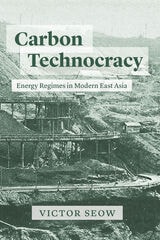
Carbon Technocracy
Energy Regimes in Modern East AsiaVictor Seow
University of Chicago Press, 2021
The coal-mining town of Fushun in China’s Northeast is home to a monstrous open pit. First excavated in the early twentieth century, this pit grew like a widening maw over the ensuing decades, as various Chinese and Japanese states endeavored to unearth Fushun’s purportedly “inexhaustible” carbon resources. Today, the depleted mine that remains is a wondrous and terrifying monument to fantasies of a fossil-fueled future and the technologies mobilized in attempts to turn those developmentalist dreams into reality.
In Carbon Technocracy, Victor Seow uses the remarkable story of the Fushun colliery to chart how the fossil fuel economy emerged in tandem with the rise of the modern technocratic state. Taking coal as an essential feedstock of national wealth and power, Chinese and Japanese bureaucrats, engineers, and industrialists deployed new technologies like open-pit mining and hydraulic stowage in pursuit of intensive energy extraction. But as much as these mine operators idealized the might of fossil fuel–driven machines, their extractive efforts nevertheless relied heavily on the human labor that those devices were expected to displace. Under the carbon energy regime, countless workers here and elsewhere would be subjected to invasive techniques of labor control, ever-escalating output targets, and the dangers of an increasingly exploited earth.
Although Fushun is no longer the coal capital it once was, the pattern of aggressive fossil-fueled development that led to its ascent endures. As we confront a planetary crisis precipitated by our extravagant consumption of carbon, it holds urgent lessons. This is a groundbreaking exploration of how the mutual production of energy and power came to define industrial modernity and the wider world that carbon made.
Carbon Technocracy
Energy Regimes in Modern East AsiaVictor Seow
University of Chicago Press, 2021
Audiobook edition
A forceful reckoning with the relationship between energy and power through the history of what was once East Asia’s largest coal mine.
The coal-mining town of Fushun in China’s Northeast is home to a monstrous open pit. First excavated in the early twentieth century, this pit grew like a widening maw over the ensuing decades, as various Chinese and Japanese states endeavored to unearth Fushun’s purportedly “inexhaustible” carbon resources. Today, the depleted mine that remains is a wondrous and terrifying monument to fantasies of a fossil-fueled future and the technologies mobilized in attempts to turn those developmentalist dreams into reality.
In Carbon Technocracy, Victor Seow uses the remarkable story of the Fushun colliery to chart how the fossil fuel economy emerged in tandem with the rise of the modern technocratic state. Taking coal as an essential feedstock of national wealth and power, Chinese and Japanese bureaucrats, engineers, and industrialists deployed new technologies like open-pit mining and hydraulic stowage in pursuit of intensive energy extraction. But as much as these mine operators idealized the might of fossil fuel–driven machines, their extractive efforts nevertheless relied heavily on the human labor that those devices were expected to displace. Under the carbon energy regime, countless workers here and elsewhere would be subjected to invasive techniques of labor control, ever-escalating output targets, and the dangers of an increasingly exploited earth.
Although Fushun is no longer the coal capital it once was, the pattern of aggressive fossil-fueled development that led to its ascent endures. As we confront a planetary crisis precipitated by our extravagant consumption of carbon, it holds urgent lessons. This is a groundbreaking exploration of how the mutual production of energy and power came to define industrial modernity and the wider world that carbon made.
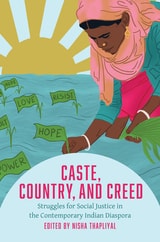
Caste, Country, and Creed
Struggles for Social Justice in the Contemporary Indian DiasporaNisha Thapliyal
Rutgers University Press, 2026
What happens when ancient systems of oppression travel across oceans? How do Indian diaspora communities across five nations challenge centuries-old systems of oppression while building new forms of solidarity? Caste, Country, and Creed: Struggles for Social Justice in the Contemporary Indian Diaspora takes readers inside the dynamic world of contemporary social justice activism spanning Aotearoa New Zealand, Australia, Canada, the United States, and the United Kingdom.
This groundbreaking collection brings together the voices of artists, activists, and scholar-activists who are reshaping conversations about caste discrimination, Islamophobia, and Hindu nationalism beyond India's borders. Through intimate first-person accounts and critical reflections, contributors reveal how diaspora activists are creating powerful counter-narratives and mobilizing collective resistance across local and transnational networks.
The book documents the lived realities of organizing—the values, knowledge traditions, and pivotal moments that spark political protest. Caste, Country, and Creed shows how activists construct alternative knowledge to dissent, build solidarity, and inspire political participation. Contributors offer nuanced insights into the complex relationships and power dynamics that sustain collective action for social justice in the Indian diaspora.
For copyright reasons, this edition is not for sale in India.
Centrestage
Essays on Theatre, Indian and InterculturalAnanda Lal
Seagull Books, 2026
In Centrestage, theater scholar Ananda Lal presents a compelling collection of essays encompassing over thirty years of research, reflection, and firsthand engagement with performance. From the emergence of Indian drama in English in the mid-nineteenth century to the diverse and sometimes contentious plays of the twenty-first century, Lal explores a two-hundred-year trajectory of Indian and intercultural theater with clarity and insight. The first part of the volume examines Indian theater history, proceeding from the colonial era to the contemporary scene in Kolkata and current theater pedagogy in India. The second part delves into the provocative world of intercultural theater, interrogating global academic representations of Indian performance and the work of such celebrated directors as Peter Brook and Tim Supple.
Challenging Beijing's Mandate of Heaven
Taiwan's Sunflower Movement and Hong Kong's Umbrella MovementMing-sho Ho
Temple University Press, 2019
In 2014, the Sunflower Movement in Taiwan grabbed international attention as citizen protesters demanded the Taiwan government withdraw its free-trade agreement with China. In that same year, in Hong Kong, the Umbrella Movement sustained 79 days of demonstrations, protests that demanded genuine universal suffrage in electing Hong Kong’s chief executive. It too, became an international incident before it collapsed. Both of these student-led movements featured large-scale and intense participation and had deep and far-reaching consequences. But how did two massive and disruptive protests take place in culturally conservative societies? And how did the two “occupy”-style protests against Chinese influences on local politics arrive at such strikingly divergent results?
Challenging Beijing’s Mandate of Heaven aims to make sense of the origins, processes, and outcomes of these eventful protests in Taiwan and Hong Kong. Ming-sho Ho compares the dynamics of the two movements, from the existing networks of activists that preceded protest, to the perceived threats that ignited the movements, to the government strategies with which they contended, and to the nature of their coordination. Moreover, he contextualizes these protests in a period of global prominence for student, occupy, and anti-globalization protests and situates them within social movement studies.
Changing Lives in Laos
Society, Politics, and Culture in a Post-Socialist StateEdited by Vanina Bouté and Vatthana Pholsena
National University of Singapore Press, 2017
Chasing the American Dream in China
Chinese Americans in the Ancestral HomelandLeslie Kim Wang
Rutgers University Press, 2021
China and the Internet
Using New Media for Development and Social ChangeSong Shi
Rutgers University Press, 2024
China as Number One?
The Emerging Values of a Rising PowerYang Zhong and Ronald F. Inglehart
University of Michigan Press, 2024
One of the most significant global events in the last forty years has been the rise of China— economically, technologically, politically, and militarily. The question on people's minds for decades has been whether China will replace the United States as a superpower in the near future. But for China, this power must be comprehensive — having strong economic and militant forces are only two pieces of the puzzle. China must also possess soft power, such as attractive ideologies, values, and culture.
China as Number One? explores China’s soft powers through the eyes of Chinese citizens. Utilizing data from the World Values Survey, the contributors to this collection analyze the potential soft power of a rising China by examining its residents' social values. A comprehensive study of changes and continuities in the political and social values of Chinese citizens, the book examines findings in the context of evolutionary modernization theory and cross-national comparison.
China's Avant-Garde Fiction
An AnthologyJing Wang, ed.
Duke University Press, 1998
Jing Wang has selected provocative examples of this new school of writing, which gained prominence in the late 1980s. Contradicting many long-cherished beliefs about Chinese writers—including the alleged tradition of writing as a political act against authoritarianism—these stories make a dramatic break from conventions of modern Chinese literature by demonstrating an irreverence toward history and culture and by celebrating the artificiality of storytelling. Enriched by the work of a distinguished group of translators, this collection presents an aesthetic experience that may have outraged many revolutionary-minded readers in China, but one that also occupies an important place in the canon of Chinese literature. China’s Avant-Garde Fiction brings together a group of exceptional writers (including Raise the Red Lantern author Su Tong) to the attention of an English-speaking audience.
This book will be enjoyed by those interested in Chinese literature, culture, and society—particularly readers of contemporary fiction.
Contributors. Bei Cun, Can Xue, Gei Fei, Ma Yuan, Su Tong, Sun Ganlu, Yu Hua
Translators. Eva Shan Chou, Michael S. Duke, Howard Goldblatt, Ronald R. Janssen, Andrew F. Jones, Denis C. Mair, Victor H. Mair, Caroline Mason, Beatrice Spade, Kristina M. Torgeson, Jian Zhang, Zhu Hong
China's Battler Poetry
Writing Like There's No TomorrowBy Maghiel van Crevel
University of Westminster Press, 2026
Three hundred million Chinese have left the countryside for the cities since the 1980s, in a flood wave of labor migration that has fueled China’s rise. Known as ‘battlers,’ they belong to a new underclass who face exploitation, discrimination, and harrowing insecurity. And they write poetry.
Battler poetry speaks of being ground down in the factory workshop, of being forced into sex work, of being robbed of your youth. It has made its way into mass media and labor activism, and developed uneasy relations with the literary establishment. It aligns with writing elsewhere in the world that shows the power of poetry as an expression of sociopolitical identity.
Who are China’s battler poets? Where do they find the time and energy, after a 12-hour shift on the assembly line or on a courier moped in big-city traffic? What is their poetry like? Where is it published? Who reads it? What happens when it travels abroad? How has the Chinese state responded? What can battler poetry tell us about the nexus of aesthetics and social experience, in a world where inequality reigns?
China’s Battler Poetry tells the gripping story of an ‘unlikely’ genre. Building on textual and cultural analysis, ethnographic fieldwork, and the collection of underground source material, it sits at the interface of the humanities and social science. It is driven by a desire to understand poetry as both art and social practice, looking at its words through the lifeworlds of its authors and the other way around.
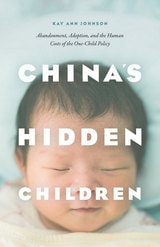
China's Hidden Children
Abandonment, Adoption, and the Human Costs of the One-Child PolicyKay Ann Johnson
University of Chicago Press, 2016
Johnson spent years talking with the Chinese parents driven to relinquish their daughters during the brutal birth-planning campaigns of the 1990s and early 2000s, and, with China’s Hidden Children, she paints a startlingly different picture. The decision to give up a daughter, she shows, is not a facile one, but one almost always fraught with grief and dictated by fear. Were it not for the constant threat of punishment for breaching the country’s stringent birth-planning policies, most Chinese parents would have raised their daughters despite the cultural preference for sons. With clear understanding and compassion for the families, Johnson describes their desperate efforts to conceal the birth of second or third daughters from the authorities. As the Chinese government cracked down on those caught concealing an out-of-plan child, strategies for surrendering children changed—from arranging adoptions or sending them to live with rural family to secret placement at carefully chosen doorsteps and, finally, abandonment in public places. In the twenty-first century, China’s so-called abandoned children have increasingly become “stolen” children, as declining fertility rates have left the dwindling number of children available for adoption more vulnerable to child trafficking. In addition, government seizures of locally—but illegally—adopted children and children hidden within their birth families mean that even legal adopters have unknowingly adopted children taken from parents and sent to orphanages.
The image of the “unwanted daughter” remains commonplace in Western conceptions of China. With China’s Hidden Children, Johnson reveals the complex web of love, secrecy, and pain woven in the coerced decision to give one’s child up for adoption and the profound negative impact China’s birth-planning campaigns have on Chinese families.
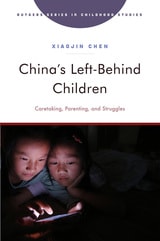
China's Left-Behind Children
Caretaking, Parenting, and StrugglesXiaojin Chen
Rutgers University Press, 2024
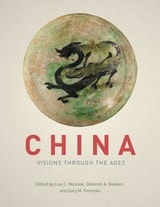
China
Visions through the AgesEdited by Lisa C. Niziolek, Deborah A. Bekken and Gary M. Feinman
University of Chicago Press, 2018
China’s long history is one of the richest and most complex in the known world, and the Cyrus Tang Hall of China offers visitors a wonderful, comprehensive survey of it through some 350 artifacts on display, spanning from the Paleolithic period to present day. Now, with China: Visions through the Ages, anyone can experience the marvels of this exhibition through the book’s beautifully designed and detailed pages. Readers will gain deeper insight into The Field Museum’s important East Asian collections, the exhibition development process, and research on key aspects of China’s fascinating history. This companion book, edited by the exhibition’s own curatorial team, takes readers even deeper into the wonders of the Cyrus Tang Hall of China and enables them to study more closely the objects and themes featured in the show. Mirroring the exhibition’s layout of five galleries, the volume is divided into five sections. The first section focuses on the Paleolithic and Neolithic periods; the second, the Bronze Age, the first dynasties, and early writing; the third, the imperial system and power; the fourth, religion and performance; and the fifth, interregional trade and the Silk Routes. Each section also includes highlights containing brief stories on objects or themes in the hall, such as the famous Lanting Xu rubbing.
With chapters from a diverse set of international authors providing greater context and historical background, China: Visions through the Ages is a richly illustrated volume that allows visitors, curious readers, and China scholars alike a chance to have an enduring exchange with the objects featured in the exhibition and with their multifaceted histories.
China’s Challenges and International Order Transition
Beyond “Thucydides's Trap”Edited by Huiyun Feng and Kai He
University of Michigan Press, 2020
China’s Challenges and International Order Transition introduces an integrated conceptual framework of “international order” categorized by three levels (power, rules, and norms) and three issue-areas (security, political, and economic). Each contributor engages one or more of these analytical dimensions to examine two questions: (1) Has China already challenged this dimension of international order? (2) How will China challenge this dimension of international order in the future?
The contested views and perspectives in this volume suggest it is too simple to assume an inevitable conflict between China and the outside world. With different strategies to challenge or reform the many dimensions of international order, China’s role is not a one-way street. It is an interactive process in which the world may change China as much as China may change the world.
The aim of the book is to broaden the debate beyond the “Thucydides Trap” perspective currently popular in the West. Rather than offering a single argument, this volume offers a platform for scholars, especially Chinese scholars vs. Western scholars, to exchange and debate their different views and perspectives on China and the potential transition of international order.
Chinese Dreams
Pound, Brecht, Tel QuelEric Hayot
University of Michigan Press, 2011
China’s profound influence on the avant-garde in the 20th century was nowhere more apparent than in the work of Ezra Pound, Bertolt Brecht, and the writers associated with the Parisian literary journal Tel quel. Chinese Dreams explores the complex, intricate relationship between various “Chinas”—as texts—and the nation/culture known simply as “China”—their context—within the work of these writers. Eric Hayot calls into question the very means of representing otherness in the history of the West and ultimately asks if it might be possible to attend to the political meaning of imagining the other, while still enjoying the pleasures and possibilities of such dreaming. The latest edition of this critically acclaimed book includes a new preface by the author.
“Lucid and accessible . . . an important contribution to the field of East-West comparative studies, Asian studies, and modernism.”
—Comparative Literature Studies
“Instead of trying to decipher the indecipherable ‘China’ in Western literary texts and critical discourses, Hayot chose to show us why and how ‘China’ has remained, and will probably always be, an enchanting, ever-elusive dream. His approach is nuanced and refreshing, his analysis rigorous and illuminating.”
—Michelle Yeh, University of California, Davis
Chinese Modern
The Heroic and the QuotidianXiaobing Tang
Duke University Press, 2000
Tang uncovers crucial clues to modern Chinese literary and cultural practices through readings of Wu Jianren’s 1906 novel The Sea of Regret and works by canonical writers Lu Xun, Ding Ling, and Ba Jin. For the midcentury, he broadens his investigation by considering theatrical, cinematic, and visual materials in addition to literary texts. His reading of the 1963 play The Young Generation reveals the anxiety and terror underlying the exhilarating new socialist life portrayed on the stage. This play, enormously influential when it first appeared, illustrates the utopian vision of China’s lyrical age and its underlying discontents—both of which are critical for understanding late-twentieth-century China. Tang closes with an examination of post–Cultural Revolution nostalgia for the passion of the lyrical age.
Throughout Chinese Modern Tang suggests a historical and imaginative affinity between apparently separate literatures and cultures. He thus illuminates not only Chinese modernity but also the condition of modernity as a whole, particularly in light of the postmodern recognition that the market and commodity culture are both angel and devil.
This elegantly written volume will be invaluable to students of China, Asian studies, literary criticism, and cultural studies, as well as to readers who study modernity.

Chinese Modernism in the Era of Reforms
Cultural Fever, Avant-Garde Fiction, and the New Chinese CinemaXudong Zhang
Duke University Press, 1997
In examining the aesthetic and philosophical formulations of the New Era’s intellectual elites, Zhang first analyzes the intense cultural and intellectual debates, known as the “Great Cultural Discussion” or “Cultural Fever” that took place in Chinese urban centers in the mid- and late 1980s. Chinese literary modernism is then explored, specifically in relation to Deng Xiaoping’s sweeping reforms and with a focus on the changing literary sensibility and avant-garde writers such as Yu Hua, Ge Fei, and Su Tong. Lastly, Zhang looks at the the making of New Chinese Cinema and films such as Yellow Earth, Horse Thief, and King of the Children—films through which Fifth Generation filmmakers first developed a style independent from socialist realism. By tracing the origins and contemporary elaboration of the idea of Chinese modernism, Zhang identifies the discourse of modernism as one of the decisive formal articulations of the social dynamism and cultural possibilities of post-Mao China.
Capturing the historical experience and the cultural vision of China during a crucial decade in its emergence as a world power, Chinese Modernism in the Era of Reforms will interest students and scholars of modernism, Chinese literature and history, film studies, and cultural studies.
Chinese Narrative Poetry
The Late Han Through T'ang DynastiesDore J. Levy
Duke University Press, 1988
Drawing on both classical Chinese critical works and the most recent Western contributions to the theory of narrative, Levy shows how narrative elements developed out of the lyrical conventions of shih. In doing so, she accomplishes a double purpose, guiding the modern reader to an understanding of the nature of narrative in Chinese poetry and shedding light on the ways in which Chinese poets adapted the devises of lyric to the needs of a completely different expressive mode.
Students of Chinese literature will welcome this pathbreaking study, but Chinese Narrative Poetry will interest other scholars as well because it addresses questions of crucial importance for literary theory and comparative literature, particularly the central issue of the applicability of Western critical concepts to non-Western literature and culture.
Chinese Netizens' Opinions on Death Sentences
An Empirical ExaminationBin Liang and Jianhong Liu
University of Michigan Press, 2021
Few social issues have received more public attention and scholarly debate than the death penalty. While the abolitionist movement has made a successful stride in recent decades, a small number of countries remain committed to the death penalty and impose it with a relatively high frequency. In this regard, the People’s Republic of China no doubt leads the world in both numbers of death sentences and executions. Despite being the largest user of the death penalty, China has never conducted a national poll on citizens’ opinions toward capital punishment, while claiming “overwhelming public support” as a major justification for its retention and use.
Chinese Netizens’ Opinions on Death Sentences: An Empirical Examination uses a forum of public comments to explore and examine Chinese netizens’ opinions on the death penalty. Based on a content analysis of 38,512 comments collected from 63 cases in 2015, this study examines the diversity and rationales of netizens’ opinions, netizens’ interactions, and their evaluation of China’s criminal justice system. In addition, the book discusses China’s social, systemic, and structural problems and critically examines the rationality of netizens’ opinions based on Habermas’s communicative rationality framework. Readers will be able to contextualize Chinese netizens’ discussions and draw conclusions about commonalities and uniqueness of China’s death penalty practice.
Chinese Theories of Literary Creation
A Historical and Critical IntroductionZong-qi Cai, issue editor
Duke University Press, 2024
Chinese Thought from Confucius to Mao Tse-tung
Herrlee Glessner Creel
University of Chicago Press, 1971
"There exists nowhere else such a well-written presentation of the main trends in Chinese thought in so brief a space. The text is not cluttered with Chinese names and the pages are not weighed down with footnotes—but the references are there for those who want them, with suggestions for further readings. This is a book which can be understood by those who have never read anything else about China."—The New York Times Book Review
Chinese Visions of World Order
Tianxia, Culture, and World PoliticsBan Wang, editor
Duke University Press, 2017
Contributors. Daniel A. Bell, Chishen Chang, Kuan-Hsing Chen, Prasenjit Duara, Hsieh Mei-yu, Haiyan Lee, Mark Edward Lewis, Lin Chun, Viren Murthy, Lisa Rofel, Ban Wang, Wang Hui, Yiqun Zhou
Chinese Whispers
Toward a Transpacific PoeticsYunte Huang
University of Chicago Press, 2022
In this new book, the noted critic and best-selling author Yunte Huang explores the dynamics of poetry and poetics in the age of globalization, particularly questions of translatability, universality, and risk in the transpacific context. “Chinese whispers” refers to an American children’s game dating to the years of the Cold War, a period in which everything Chinese, or even Chinese sounding, was suspect. Taking up various manifestations of the phrase in the twentieth and twenty-first centuries, Huang investigates how poetry, always to a significant degree untranslatable, complicates the transpacific production of meanings and values.
The book opens with the efforts of I. A. Richards, arguably the founder of Anglo-American academic literary criticism, to promote Basic English in China in the early twentieth century. It culminates by resituating Ernest Fenollosa’s famous essay “The Chinese Written Character as a Medium for Poetry,” exploring the ways in which Chinese has historically enriched but also entrapped the Western conception of language.

Chitrakar
Benode Behari Mukherjee
Seagull Books, 2026
What happens when a passage from the world of light to the world of darkness opens onto a new chapter of life? A retrospective account of a pioneering Indian artist who continued to paint after losing his eyesight.
Benode Behari Mukherjee (1904–1980) was one of the most influential and highly regarded artists in the history of modern Indian art. Chitrakar brings together four broadly autobiographical pieces written by Benode Behari after he lost his eyesight in the summer of 1957. The Artist is a selective reminiscence recapturing various pictures from the years of his childhood, apprenticeship, and maturity, up to the time he became blind. Master of the Household is a candid and complex fictionalized account of his struggle to come to terms with his blindness and continue making art. The Creator is a simple, but telling, parable about the vanity of inordinate ambition. Finally, Art Quest outlines his philosophy of art and the basic elements of his work.
In the sensitive and empathetic hands of K. G. Subramanyan, once his student and later himself a major figure in the Indian art scene, this translation, appearing for the first time in English, is a precious and timeless document.
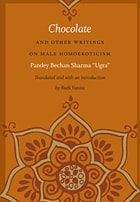
Chocolate and Other Writings on Male Homoeroticism
Pandey Bechan Sharma
Duke University Press, 2009
The stories depict male homoeroticism in quotidian situations: a man brings a lover to his disapproving friend’s house; a good-looking young man becomes the object of desire at his school. The love never ends well, but the depictions are not always unsympathetic. Although Ugra claimed that the stories were aimed at suppressing homosexuality by exposing it, Vanita highlights the ambivalence of his characterizations. Cosmopolitan, educated, and hedonistic, the Hindu and Muslim men he portrayed quote Hindi and Urdu poetry to express their love, and they justify same-sex desire by drawing on literature, philosophy, and world history. Vanita’s introduction includes anecdotal evidence that Chocolate was enthusiastically received by India’s homosexual communities.
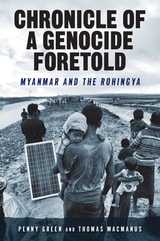
Chronicle of a Genocide Foretold
Myanmar and the RohingyaPenny Green
Rutgers University Press, 2027
Chronicle of a Genocide Foretold is a powerful account of one of the most devastating human crises of the 21st century. Drawing on firsthand research conducted in Burma (Myanmar) and neighboring countries, the book uncovers how the Rohingya Muslims have been systematically isolated, impoverished, and targeted in a state-led genocidal campaign. Through more than 150 interviews with survivors, local officials, religious leaders, and international actors, the authors reveal how discrimination, mass displacement, and organized brutality have created conditions that meet the legal, criminological, and moral definition of genocide. The book also challenges the silence and complicity of the international community. Accessible and grounded in rigorous research, this book speaks to scholars, activists, policymakers, and anyone concerned with justice, human rights, and the global failure to prevent genocide.
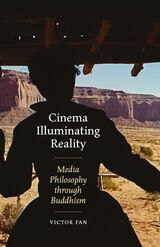
Cinema Illuminating Reality
Media Philosophy through BuddhismVictor Fan
University of Minnesota Press, 2022
A new critical approach to cinema and media based on Buddhism as a philosophical discourse
How can a philosophical discourse generated in Asia help us reframe and renew cinema and media theory? Cinema Illuminating Reality provides a possible way to do this by using Buddhist ideas to examine the intricate relationship between technicity and consciousness in the cinema. The resulting dialogue between Buddhism and Euro-American philosophy is the first of its kind in film and media studies.
Victor Fan examines cinema’s ontology and ontogenetic formation and how such a formational process produces knowledge, political agency, and in-aesthetics. Buddhism allows Fan to deconstruct binary thinking and reimagine media as an ecology, rethinking cinema in relational terms between the human and the machine. Along the way, Fan considers a wide variety of case studies from around the globe, while paying special attention to how contemporary Tibeto-Sinophone filmmakers have adopted relational thinking to detail ways of rebuilding a world that appears to be beyond repair.
From Chinese queer cinema to a reexamination of Japanese master Ozu’s work and its historical reception to Christian Petzold’s 2018 existential thriller Transit, CinemaIlluminating Reality forges a remarkable path between Buddhist studies and cinema studies, casting vital new light on both of these important subjects.
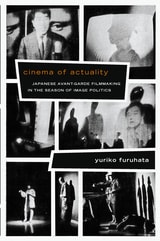
Cinema of Actuality
Japanese Avant-Garde Filmmaking in the Season of Image PoliticsYuriko Furuhata
Duke University Press, 2013
Civilizing War
Imperial Politics and the Poetics of National RuptureNasser Mufti
Northwestern University Press, 2018
Honorable Mention for the 2019 Sonya Rudikoff Prize, awarded by the Northeast Victorian Studies Association
Civilizing War traces the historical transformation of civil war from a civil affair into an uncivil crisis. Civil war is today synonymous with the global refugee crisis, often serving as grounds for liberal-humanitarian intervention and nationalist protectionism.
In Civilizing War, Nasser Mufti situates this contemporary conjuncture in the long history of British imperialism, demonstrating how civil war has been and continues to be integral to the politics of empire. Through comparative readings of literature, criticism, historiography, and social analysis, Civilizing War shows how writers and intellectuals of Britain’s Anglophone empire articulated a “poetics of national rupture” that defined the metropolitan nation and its colonial others.
Mufti’s tour de force marshals a wealth of examples as diverse as Thomas Carlyle, Benjamin Disraeli, Friedrich Engels, Arthur Conan Doyle, Rudyard Kipling, Joseph Conrad, V. S. Naipaul, Nadine Gordimer, and Michael Ondaatje to examine the variety of forms this poetics takes—metaphors, figures, tropes, puns, and plot—all of which have played a central role in Britain’s civilizing mission and its afterlife. In doing so, Civilizing War shifts the terms of Edward Said’s influential Orientalism to suggest that imperialism was not only organized around the norms of civility but also around narratives of civil war.
Coalition Politics and Cabinet Decision Making
A Comparative Analysis of Foreign Policy ChoicesJuliet Kaarbo
University of Michigan Press, 2013
Every day, coalition cabinets make policy decisions critical to international politics. Juliet Kaarbo examines the dynamics of these multiparty cabinets in parliamentary democracies in order to assess both the quality of coalition decision making and the degree to which coalitions tend to favor peaceful or military solutions. Are coalition cabinets so riddled by conflict that they cannot make foreign policy effectively, or do the multiple voices represented in the cabinet create more legitimate and imaginative responses to the international system? Do political and institutional constraints inherent to coalition cabinets lead to nonaggressive policies? Or do institutional and political forces precipitate more belligerent behavior?
Employing theory from security studies and political psychology as well as a combination of quantitative cross-national analyses and twelve qualitative comparative case studies of foreign policy made by coalition cabinets in Japan, the Netherlands, and Turkey, Kaarbo identifies the factors that generate highly aggressive policies, inconsistency, and other policy outcomes. Her findings have implications not merely for foreign policy but for all types of decision making and policy-making by coalition governments.
Cold War and Sinophone Culture at the Borders
Shuang Shen
University of Michigan Press, 2027
Cold War and Sinophone Culture at the Borders examines Sinophone literary and cultural production in relation to the politics of the global Cold War and decolonization in Hong Kong, Singapore, and Malaysia. As we reckon with the historical and contemporary geopolitical standoffs in the Cold War–divided territories, Shuang Shen draws attention to the diasporic communities outside Chinese sovereign territories and shows that these supposedly peripheral locations were in fact significant cultural and political hot spots.
Shen demonstrates how Cold War borders exerted geo-power over strategic hot spots, organized global flows of populations and cultures, hardened the boundaries of aesthetic debates, and managed interracial relationships and plurilingual exchange. The multifold bordering effect in turn complicates the common perception of the border as a mechanism of territorial division. Cold War and Sinophone Culture at the Borders proposes that a critical examination of borders—not just territorial divisions, but also social, political, and aesthetic boundaries––can tap into different structures of power without needing to incorporate them into a single binary framework of the metropole versus colony.
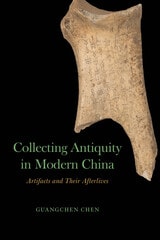
Collecting Antiquity in Modern China
Artifacts and Their AfterlivesGuangchen Chen
University of Chicago Press, 2026
In this book, Guangchen Chen argues that discerning collectors used antiquities to upend dominant discourses on history and cultural memory in twentieth-century China. Examining four categories of ancient artifacts—“carving” (oracle bones), “rubbing” (imprints of inscriptions and books), “brushing” (calligraphy), and “weaving” (textiles and costumes)—Chen explains how their modern (re)emergences changed our understanding of the relationship between tradition and modernity, textuality and materiality, and the very meaning of “Chineseness.”
Chen considers intellectuals such as Wang Yirong, Liu E, Luo Zhenyu, Wang Guowei, and Chen Mengjia, who played a pivotal role in the oracle bones’ modern reception. He also looks to major literary figures including Lu Xun, whose engagements with textual remnants of the past inspired his critique of Chinese culture; Guo Moruo, whose work on the calligraphic masterpiece Lantingxu contributed to the cultural-political climate that sparked the Cultural Revolution; Shi Zhecun, whose interest in inscriptions on ancient stelae helped him to hold fast to intellectual integrity in the face of political pressure; and Shen Congwen, whose obsession with ancient textiles saved him from committing suicide after his writing fell out of favor. These antiquarians used their collections as a strategy to synchronize historical time and to challenge two dominant yet contrasting ideologies in modern China: a regressive idealization of antiquity and an unquestioning trust in linear progress. During this turbulent period, long-lost artifacts came to function as omens, warnings, and revelations from another time, generating new meanings that were uniquely relevant to the present.
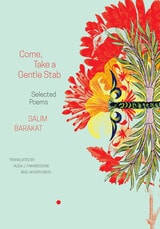
Come, Take a Gentle Stab
Selected PoemsSalim Barakat
Seagull Books, 2021
Although Salim Barakat is one of the most renowned and respected contemporary writers in Arabic letters, he remains virtually unknown in the English-speaking world. This first collection of his poetry in English, representing every stage of his career, remedies that startling omission. Come, Take a Gentle Stab features selections from his most acclaimed works of poetry, including excerpts from his book-length poems, rendered into an English that captures the exultation of language for which he is famous.
A Kurdish-Syrian man, Barakat chose to write in Arabic, the language of cultural and political hegemony that has marginalized his people. Like Paul Celan, he mastered the language of the oppressor to such an extent that the course of the language itself has been compelled to bend to his will. Barakat pushes Arabic to a point just beyond its linguistic limits, stretching those limits. He resists coherence, but never destroys it, pulling back before the final blow. What results is a figurative abstraction of struggle, as alive as the struggle itself. And always beneath the surface of this roiling water one can glimpse the deep currents of ancient Kurdish culture.
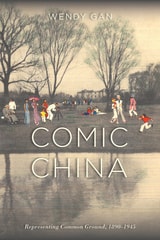
Comic China
Representing Common Ground, 1890-1945Wendy Gan
Temple University Press, 2018
Wendy Gan’s Comic China investigates the circumstances and motivations of cross-cultural humor. How do works that trade in laughter shape our understanding of Western discourses about China? Is humor meant to be inclusive or exclusive? Does it protect or challenge the status quo? Gan suggests that the simple, straightforward laugh may actually be a far more intricate negotiation of power relations.
Gan unpacks texts by authors who had little real contact with China as well as writers whose proximity to China influenced their representations. Looking beyond the familiar canon of serious modernist texts and the Yellow Peril classics of popular fiction, Gan analyzes turn-of-the-twentieth-century musical comedies set in the Far East, Ernest Bramah’s chinoiserie-inspired tales, and interwar travel writing. She also considers the comic works of the missionary Arthur Henderson Smith, the former Maritime Customs Officer J.O.P. Bland, and the Shanghai journalist and advertising man Carl Crow.
Though it includes humor that is less than complimentary to the Chinese, Comic China reminds us that laughter is tied to our common humanity. Gan navigates the humor used in comic depictions ultimately to find, not superiority or ridicule, but common ground.
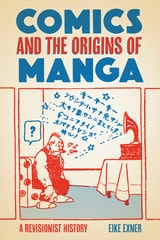
Comics and the Origins of Manga
A Revisionist HistoryEike Exner
Rutgers University Press, 2022
Japanese comics, commonly known as manga, are a global sensation. Critics, scholars, and everyday readers have often viewed this artform through an Orientalist framework, treating manga as the exotic antithesis to American and European comics. In reality, the history of manga is deeply intertwined with Japan’s avid importation of Western technology and popular culture in the early twentieth century.
Comics and the Origins of Manga reveals how popular U.S. comics characters like Jiggs and Maggie, the Katzenjammer Kids, Felix the Cat, and Popeye achieved immense fame in Japan during the 1920s and 1930s. Modern comics had earlier developed in the United States in response to new technologies like motion pictures and sound recording, which revolutionized visual storytelling by prompting the invention of devices like speed lines and speech balloons. As audiovisual entertainment like movies and record players spread through Japan, comics followed suit. Their immediate popularity quickly encouraged Japanese editors and cartoonists to enthusiastically embrace the foreign medium and make it their own, paving the way for manga as we know it today.
By challenging the conventional wisdom that manga evolved from centuries of prior Japanese art and explaining why manga and other comics around the world share the same origin story, Comics and the Origins of Manga offers a new understanding of this increasingly influential artform.

Communism, Religion, and Revolt in Banten in the Early Twentieth Century
Mis Sea#86Michael Williams
Ohio University Press, 1990
Twice in this century popular revolts against colonial rule have occured in the Banten district of West Java. These revolts, conducted largely under an Islamic leadership, also proclaimed themselves Communist. Islamic Communism is seemingly a paradox. This is especially the case when one considers that probably no religion has proved more resistant to Communist ideology than Islam.
Michael Williams here details the complicated history of the Bantenese revolts in the twentieth century and probes the ideological riddle of Islamic Communism. Modern history is replete with examples of regions with a long history of organizing themselves politically to resist intrusion on their territory, resources, and people. This book establishes that in Indonesia, the Bantenese were among the most practiced exponents of resistance.
Complex Rivalry
The Dynamics of India-Pakistan ConflictSurinder Mohan
University of Michigan Press, 2022
While a substantial body of research explains how the conflict between India and Pakistan originated and developed over time, a systematic and multivariate inquiry cutting across different IR paradigms to understand this rivalry is rare or limited. Surinder Mohan contributes to the understanding of India and Pakistan’s rivalry by presenting a new type of framework, also known as complex rivalry model. This comprehensive model, by not limiting its theoretical tool-kit to any single paradigm, is unique in its approach and better positioned to debate and answer baffling questions that the single-paradigm-based studies address rather inadequately and in isolation.
This book, through an examination of fifty-seven militarized disputes between 1947 and 2021, explains the life cycle of India-Pakistan rivalry in four phases: initiation; development; maintenance; and a possible transformation/termination. Mohan delineates five specific conditions that evolved the subcontinental conflict into a complex rivalry: first, its survival in spite of the Bangladesh War and the end of the Cold War; second, its linkage with other rivalries; third, the inclusion of nuclear factor; fourth, the dyadic stability in the militarized disputes and hostility level despite changes in the regime type; and fifth, the dyad’s involvement in a multilayered conflict pattern. To break this deadlock and mitigate their longstanding differences, Mohan proposes that India and Pakistan must reframe their national priorities and political goals so that the new situation or combinations of conditions would assist their peace strategists to downgrade the dyadic hostility and implement risky policies to make headway to a promising transformation.
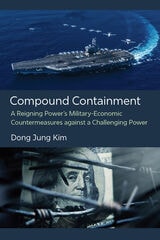
Compound Containment
A Reigning Power's Military-Economic Countermeasures against a Challenging PowerDong Jung Kim
University of Michigan Press, 2022
When does a reigning great power of the international system supplement military containment of a challenging power by restricting its economic exchanges with that state? Scholars of great power politics have traditionally focused on examining a reigning power’s military containment of a challenging power. In direct contrast, Compound Containment demonstrates that these conventional studies are flawed without a sound understanding of the multilayered aspects of containment strategy in great power politics. Since economic capacity and military power are intimately linked to one another, countering a challenging power requires addressing both economic and military dimensions. Nonetheless, this nexus of security and economy in a reigning power’s response to a challenging power cannot be explained by traditional theories that dominate research in international security. Author Dong Jung Kim fills a gap in the scholarship on great power competition by investigating when a reigning power will make its military containment of a challenging power “compound” by simultaneously employing restrictive economic measures. Its main theoretical claims are corroborated by an analysis of key historical cases of reigning power-challenging power competition. This book also offers policy prescriptions for the United States by examining whether the United States is in a position to complement military containment of China with restrictive economic measures.
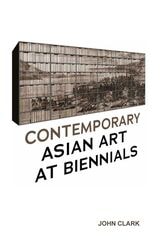
Contemporary Asian Art at Biennials
John Clark
National University of Singapore Press, 2025
How did contemporary Asian art move from the margins to the global stage, and what role did biennials play in shaping its trajectory? In this incisive study, renowned art historian John Clark unpacks the rise of biennials in Asia since the 1990s and depicts how these sprawling exhibitions have challenged and reinforced the forces of globalization. By examining key biennials in Australia, China, Japan, and Singapore, Clark exposes the tensions between national agendas, independent curatorial ambitions, and the neoliberal art economy that transformed once-radical movements into global spectacles. He explores how biennials create networks of artists and curators who simultaneously resist and reproduce the very systems they critique, shaping not just regional art scenes but the broader narrative of contemporary art itself.
As the euphoria surrounding global contemporary art fades, Clark’s deeply researched history offers a crucial reexamination of the structures that have defined Asian art on the world stage. Richly illustrated and rigorously argued, Contemporary Asian Art at Biennials is a valuable resource for scholars, curators, and those interested in the shifting dynamics of the art world.
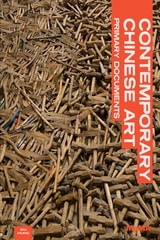
Contemporary Chinese Art
Primary DocumentsWu Hung, editor
Duke University Press, 2010
Publication of the Museum of Modern Art
Contemporary Korean Poetry
Won Ko
University of Iowa Press, 1970
The boundaries of poetry in English are expanded with Contemporary Korean Poetry, the first major scholarly anthology introducing twentieth century Korean poetry in English. In translating 181 poems by 140 poets, Ko Won manages to capture the feeling and mood of the original work, retaining the intended simplicity for effect.
Contradictory Indianness
Indenture, Creolization, and Literary ImaginaryAtreyee Phukan
Rutgers University Press, 2022
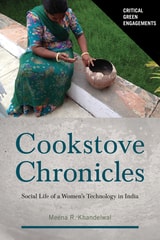
Cookstove Chronicles
Social Life of a Women’s Technology in IndiaMeena R. Khandelwal
University of Arizona Press, 2024
Based on anthropological research in Rajasthan, Cookstove Chronicles argues that the supposedly obsolete chulha persists because it offers women control over the tools needed to feed their families. Their continued use of old stoves alongside the new is not a failure to embrace new technologies but instead a strategy to maximize flexibility and autonomy. The chulha is neither the villain nor hero of this story. It produces particulate matter that harms people’s bodies, leaves soot on utensils and walls, and accelerates glacial melting and atmospheric warming. Yet it also depends on renewable biomass fuel and supports women’s autonomy as a local, do-it-yourself technology.
Meena Khandelwal, a feminist anthropologist, describes her collaboration with engineers, archaeologists, and others. She employs critical social theory and reflections from fieldwork to bring together research from a range of fields, including history, geography, anthropology, energy and environmental studies, public health, and science and technology studies (STS). In so doing she not only demystifies multidisciplinary research but also highlights the messy reality of actual behavior.
Cookstove Chronicles critically examines why, despite extensive development efforts, use of the chulha persists. It offers an important new framework for looking at development, technology, environmental change, and human behavior.
Cosmopolitan Love
Utopian Vision in D. H. Lawrence and Eileen ChangSijia Yao
University of Michigan Press, 2023
Finalist: 2024 Southern Atlantic Modern Language Association (SAMLA) Book Award Finalist | 05/21/2024
Love, and the different manifestations of it, is a common theme in literature around the world. In Cosmopolitan Love, Sijia Yao examines the writings of D. H. Lawrence, a British writer whose literature focused primarily on interpersonal relationships in domestic settings, and Eileen Chang, a Chinese writer who migrated to the United States and explored Chinese heterosexual love in her writing. While comparing the writings of a Chinese writer and an English one, Yao avoids a direct comparison between East and West that could further enforce binaries. Instead, she uses the comparison to develop an idea of cosmopolitanism that shows how the writers are in conversation with their own culture and with each other. Both D. H. Lawrence and Eileen Chang wrote stories that are influenced by—but sometimes stand in opposition to—their own cultures. They offer alternative understandings of societies dealing with modernism and cultural globalization. Their stories deal with emotional pain caused by the restrictions of local politics and economics and address common themes of incestuous love, sexual love, adulterous love, and utopian love. By analyzing their writing, Yao demonstrates that the concept of love as a social and political force can cross cultural boundaries and traditions to become a basis for human meaning, the key to a cosmopolitan vision.