Results by title
49 books match the query 'Collection'

A Collection of Ranter Writings
Spiritual Liberty and Sexual Freedom in the English RevolutionNigel Smith
Pluto Press, 2014
The Ranters - like the Levellers and the Diggers - were a group of religious libertarians who flourished during the English Civil War (1642–1651), a period of social and religious turmoil which saw, in the words of the historian Christopher Hill, 'the world turned upside down'.
A Collection of Ranter Writings is the most notable attempt to anthologise the key Ranter writings, bringing together some of the most remarkable, visionary and unforgettable texts. The subjects range from the limits to pleasure and divine right, to social justice and collective action.
The Ranters have intrigued and captivated generations of scholars and philosophers. This carefully curated collection will be of great interest to historians, philosophers and all those trying to understand past radical traditions.
Alternative Pathways to Complexity
A Collection of Essays on Architecture, Economics, Power, and Cross-Cultural AnalysisLane F. Fargher
University Press of Colorado, 2016
A group of highly distinguished scholars takes up important issues, theories, and methods stemming from the nascent body of research on comparative archaeology to showcase and apply important theories of households, power, and how the development of complex societies can be extended and refined. Drawing on the archaeological, ethnohistorical, and ethnographic records, the chapters in this volume contain critical investigations on the role of collective action, economics, and corporate cognitive codes in structuring complex societies.
Alternative Pathways to Complexity is an important addition to theoretical development and empirical research on Mesoamerica, the Old World, and cross-cultural studies. The theoretical implications addressed in the chapters will have broad appeal for scholars grappling with alternative pathways to complexity in other regions as well as those addressing diverse cross-cultural research.
Contributors: Sarah B. Barber, Cynthia L. Bedell, Christopher S. Beekman, Frances F. Berdan, Tim Earle, Carol R. Ember, Gary M. Feinman, Arthur A. Joyce, Stephen A. Kowalewski, Lisa J. LeCount, Linda M. Nicholas, Peter N. Peregrine, Peter Robertshaw, Barbara L. Stark, T. L. Thurston, Deborah Winslow, Rita Wright
Antirevialism in Antebellum America
A Collection of Religious VoicesBratt, James D
Rutgers University Press, 2005
But revivalism has always generated opposition, too, even in its century of glory. In Anti-Revivalism in Antebellum America, James D. Bratt offers extensive introductions to primary anti-revivalist documents. These works range from the Philadelphia Methodist John F. Watson's protests against camp meetings in 1819, to Elizabeth Cady Stanton's "Eighty Years and More," written in 1898, in which she recalls her youthful encounter with revival preaching and her rebound into political activism and religious agnosticism. Through the recovered voices of antebellum religious critics, Bratt shows how American culture was already being reshaped a generation before the Civil War and how evangelical religion stood at the center of a "culture war."
If revivals typified the era when Americans launched and defined their new nation, then objections to these revivals embodied the growing discontent at what the nation had become. An important and long overdue collection, this book urges an understanding of anti-revival literature both in the context of the era when it emerged as well as in terms of the broader dynamic of American life.
Includes selections from Orestes Brownson, Horace Bushnell, Calvin Colton, Orville Dewey, Albert Baldwin Dod, George Elley, Charles G. Finney, John Williamson Nevin, Stephen Olin, Phoebe Palmer, Daniel Alexander Payne, Ephraim Perkins, Elizabeth Cady Stanton, Joseph Smith, Harriet Beecher Stowe, La Roy Sunderland, John Fanning Watson, Ellen G. White, and Friedrich C. D. Wyneken.
Arkansas Biography
A Collection of Notable LivesNancy Williams
University of Arkansas Press, 2000
Art Essays
A CollectionAlexandra Kingston-Reese
University of Iowa Press, 2021
Contributors: Chloe Aridjis, Tash Aw, Claire-Louise Bennett, Teju Cole, Geoff Dyer, Sheila Heti, Katie Kitamura, Chris Kraus, Jhumpa Lahiri, Ben Lerner, Orhan Pamuk, Ali Smith, Zadie Smith, Heidi Sopinka, Hanya Yanagihara
Building Fires in the Snow
A Collection of Alaska LGBTQ Short Fiction and PoetryEdited by Martha Amore and Lucian Childs
University of Alaska Press, 2016
In these pages we see the panoply of LGBTQ life in Alaska today, from the quotidian urban adventures of a family—shopping, going out, working—to intimate encounters with Alaska’s breathtaking natural beauty. At a time of great change and major strides in LGBTQ civil rights, Building Fires in the Snow shows us an Alaska that shatters stereotypes and reveals a side of Alaska that’s been little seen until now.
Chol (Mayan) Folktales
A Collection of Stories from the Modern Maya of Southern MexicoNicholas A. Hopkins
University Press of Colorado, 2016
The rich Chol oral narrative tradition is represented by eleven stories, each printed in the original language of the storytellers with parallel English translations and accompanied by a brief introduction that provides the relevant cultural and mythological background. Included with eight of the stories is a link to an audio clip of the tale told aloud in the Chol language. In addition, Chol (Mayan) Folktales introduces a model for the analysis of narratives that can be used to demonstrate the existence of a tradition of storytelling applicable to other Maya lore, including Classic period hieroglyphic texts.
Creating a nuanced sense of the Mayan oral tradition and revealing a highly structured literary style, this collection provides insight into contemporary Maya culture as well as a greater understanding of Classic period society. It will be of interest to students and scholars of folklore and literature and to anthropologists and linguists.
Chronic Obstructive Pulmonary Disease
A Collection of Personal StoriesEdited by Sara K. Whisenant and Mary Kay Hamby
Michigan Publishing Services, 2018
In Chronic Obstructive Pulmonary Disease: A Collection of Personal Stories, you will learn what COPD is and what it is not. Written in the actual voices of real patients and family members, you will hear what worried them, what helped them, the good advice they have to share, and even some unexpected joys discovered in the course of their journey. There is also a long list of resources for those who are exploring COPD topics. This collection of personal stories and photos was written by COPD patients and family members for the benefit of newly-diagnosed patients and their families. The authors want you to know that you are not alone.
Proceeds from this book will be used to improve the patient experience at Michigan Medicine.
Chronicling Childhood Cancer
A Collection of Personal Stories by Children and Teens with CancerTrisha Karena Paul
Michigan Publishing Services, 2014
This book is a resource for all those interested in learning more about childhood cancer, including health practitioners, family, and friends. These stories also have the potential to help other youth diagnosed with cancer.
All of the proceeds received by the University of Michigan Division of Pediatric Hematology/Oncology for this book will be donated: 50% to the Block Out Cancer campaign for pediatric cancer research at the University of Michigan and 50% to the Child and Family Life Program at the University of Michigan C.S. Mott Children’s Hospital.

Chronicling Idiopathic Pulmonary Fibrosis
A Collection of Personal StoriesSara Whisenant
Michigan Publishing Services, 2016
In “Chronicling Idiopathic Pulmonary Fibrosis: A Collection of Personal Stories,” you’ll hear the voices of real patients and family members as they talk about what worries them, the coping techniques they have tried and the bright spots of beauty they have found in the course of their journey with this disease. Readers will learn what IPF is and what it is not. They will find new resources and even some questions to help guide their own thoughts when reflecting on what an IPF diagnosis means to them.
The author is grateful to the FRIENDS of the University of Michigan Hospitals Patient Education Library for their generous support of this book. Proceeds from this book will be used to improve the patient experience at the University of Michigan Health System.
Collectio CCCC capituloru, The Collection in 400 Chapters
Introduction and TextSven Meeder
Catholic University of America Press, 2024
Collection and Delivery of Traffic and Travel Information
Paul Burton
The Institution of Engineering and Technology, 2021
Compendium
A Collection of Thoughts on ProsodyDonald Justice
Omnidawn, 2017
Defending AI Research
A Collection of Essays and ReviewsEdited by John McCarthy
CSLI, 1996

Eat Like the Hogs
A Collection of Favorite Recipes from Razorback GreatsKaren Van Horn
University of Arkansas Press, 2025
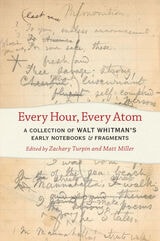
Every Hour, Every Atom
A Collection of Walt Whitman's Early Notebooks and FragmentsWalt Whitman, Zachary Turpin and Matt Miller
University of Iowa Press, 2020
Some of the dimmest years in Walt Whitman’s life precede the advent of Leaves of Grass in 1855, when he was working as a journalist and fiction writer. Starting around 1850, what he’d begun writing in his personal notebooks was far more enigmatic than anything he’d done before.
One of Whitman’s most secretive projects during this timeframe was a novel, Life and Adventures of Jack Engle; serialized anonymously in the spring of 1852, and rediscovered and properly published in 2017. The key to the novel’s later discovery were plot notes Whitman had made in one of his private notebooks.
Whitman’s invaluable notebooks have been virtually inaccessible to the public, until now. Maintaining the early notebooks’ wild, syncretic feel and sample illustrations of Whitman’s beautiful and unkempt pages, scholars Zachary Turpin and Matt Miller’s thorough transcriptions have made these notebooks available to all; sharing Whitman’s secret space for developing his poetry, his writing, his philosophy, and himself.
Fandom, Now in Color
A Collection of VoicesRukmini Pande
University of Iowa Press, 2020
Fandom, Now in Color gathers together seemingly contradictory narratives that intersect at the (in)visibility of race/ism in fandom and fan studies. This collection engages the problem by undertaking the different tactics of decolonization—diversifying methodologies, destabilizing canons of “must-read” scholarship by engaging with multiple disciplines, making whiteness visible but not the default against which all other kinds of racialization must compete, and decentering white fans even in those fandoms where they are the assumed majority. These new narratives concern themselves with a broad swath of media, from cosplay and comics to tabletop roleplay and video games, and fandoms from Jane the Virgin to Japan’s K-pop scene. Fandom, Now in Color asserts that no one answer or approach can sufficiently come to grips with the shifting categories of race, racism, and racial identity.
Contributors: McKenna Boeckner, Angie Fazekas, Monica Flegel, Elizabeth Hornsby, Katherine Anderson Howell, Carina Lapointe, Miranda Ruth Larsen, Judith Leggatt, Jenni Lehtinen, joan miller, Swati Moitra, Samira Nadkarni, Indira Neill Hoch, Sam Pack, Rukmini Pande, Deepa Sivarajan, Al Valentín
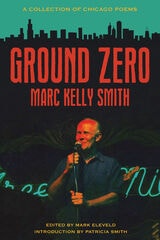
Ground Zero
A Collection of Chicago PoemsMarc Kelly Smith; Edited by Mark Eleveld; With an introduction by Patricia Smith
Northwestern University Press, 2021
Inception and implosion, Chicago’s grit and grandiosity all come together in the finite poetic power of the original Slam igniter, renowned poet Marc Kelly Smith and his retrospect denotation, Ground Zero.
A cultural, community, and adversarial figure, Smith has challenged the status quo and raised new questions about an environment in a state of continuous calamity. Smith’s power and influence have inspired celebrated figures who cut their teeth on both the stage and the page under his watchful eye—always speaking in the traditions of Carl Sandburg and Gwendolyn Brooks. Ground Zero challenges but pays homage to the thousand underbellies of Chicago with Smith’s wicked, cigarette-in-the-beer language: “I ain’t diggin’ no concrete coffin, / No backyard mausoleum / To keep me a pickle sweet aplenty / Plied with sardines and pork sausage wieners / Livin’ out the chance that some bubble-flesh victim / Will come puckered up and scabby lipped / To kiss me in the name of a new mankind.”
Ground Zero leaves no doubt. The Slampapi / instigator / visionary / you-may-love-me-or-hate-me-but-my-history-will-always-be-chiseled-in-everything-the-poetry-world-does-next collects a survey of his land and his experience, no matter how beautiful or flawed. This book lets the landmines of imagery and Chicago’s slow and uneasy drawl showcase one of our most original voices.

History and the Social Web
A Collection of EssaysAugust C. Krey
University of Minnesota Press, 1955
History and the Social Web was first published in 1955. Minnesota Archive Editions uses digital technology to make long-unavailable books once again accessible, and are published unaltered from the original University of Minnesota Press editions.
In this volume of twelve essays a distinguished historian demonstrates that the roots and branches of history form a continuous social web, that the events and societies of pasts eras and modern times form a complex and interlocking pattern when seen as a whole, and that a knowledge of history has a profound application to the problems and pleasures of the present. The volume includes the well-known essay, "A City That Art Built," which has long been out of print. The first group of essays is devoted to aspects of medieval and renaissance history, and those in the second section point up the continuity of the thread of world history. The essays on law, education, and medicine which form a part of the first section will be of particular interest to members of these professions.

ICD Connection
Living with an Implantable Cardioverter Defibrillator: A Collection of Patient & Family StoriesEdited by Helen McFarland, RN
Michigan Publishing Services, 2012

ICD Connection
Living with an Implantable Cardioverter Defibrillator: A Collection of Stories from Women & MenEdited by Helen McFarland, RN
Michigan Publishing Services, 2014
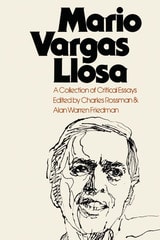
Mario Vargas Llosa
A Collection of Critical EssaysEdited by Charles Rossman and Alan Warren Friedman
University of Texas Press, 1978
The Peruvian Mario Vargas Llosa has been acclaimed throughout the literary world as one of Latin America's finest writers, yet until recently little has been written about his work in English. While his work has the subject of an increasing flow of critical commentary in Spanish and his major novels have been translated into English, this is the first full-scale critical treatment of Vargas Llosa published in the English language.
These articles by a number of established writers and critics appraise Vargas Llosa's individual novels as well as the body of his work. The Time of the Hero, The Green House, Conversation in The Cathedral, and Pantaleón y las visitadoras are examined in order of publication, A second group of more general essays ranges across Vargas Llosa's work and explores pervasive themes and concerns.
Two pieces by José Miguel Oviedo serve as a coda. In a bilingual interview, Oviedo and Vargas Llosa discuss Vargas Llosa's novel La tía Julia y el escribidor. Oviedo concludes with a critical discussion of that novel. A Vargas Llosa chronology compiled by the editors is also included.
Most of these essays originally appeared in 1977 as a special issue of Texas Studies in Literature and Language. The concluding essay by Oviedo was prepared especially for this edition.
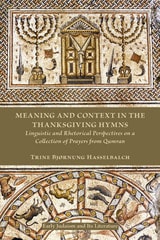
Meaning and Context in the Thanksgiving Hymns
Linguistic and Rhetorical Perspectives on a CollectionTrine Bjørnung Hasselbalch
SBL Press, 2015
A new reading strategy for the Thanksgiving Hymns
Hasselbalch asserts that current theories about the social background of Thanksgiving Hymns are unable to explain its heterogeneous character. Instead the author suggests a reading strategy that leaves presumptions about the underlying social contexts aside to instead consider the collection’s hybridity as a clue to understanding the collection as a whole.
Features:
- Systemic Functional Linguistics applied to four Hodayot
- Analysis that highlights the role of a mediator in the agency of God
- An approach that highlights the unity of the collection

Moving Your Library
Getting the Collection from Here to ThereSteven Carl Fortriede
American Library Association, 2010

Museum Pieces
Collectors and CollectionNeil Harris
University of Chicago Press, 0
An eminent historian assembles a career-long group of essays about art collecting and the leadership, strategies, and shifting cultural power of American art museums as they have emerged over the past 150 years.
Museums and their cultural power, and the vagaries of collecting in the United States have fascinated University of Chicago historian Neil Harris for more than sixty years. In this collection of eighteen lively essays from across his distinguished career, Harris addresses period rooms, visitor research, museum education, museum branding and merchandising, and the persistent influence of individual collectors and patrons such as J. Pierpont Morgan, among other important topics. Harris’s geographical range is broad, too, with considerations of museums in Boston, New York, Washington, D.C., Toledo, Chicago, Denver, and elsewhere.
Harris remains one of a very small number of art-minded scholars whose work on museums, taste, and collecting not only can be read by other historians of the United States but can be read with real profit. In a rich and reflective introduction, Harris connects his deep interest in recurring subjects to both his own intellectual biography and broader trends in American scholarship.
Playwrights for Tomorrow
A Collection of Plays, Volume 1Arthur H. Ballet, EditorIntroduction by Arthur H. Ballet
University of Minnesota Press, 1966
Playwrights for Tomorrow was first published in 1966. Minnesota Archive Editions uses digital technology to make long-unavailable books once again accessible, and are published unaltered from the original University of Minnesota Press editions.
Four young playwrights, James Schevill, Megan Terry, Elizabeth Johnson, and Terrence McNally, are represented in this collection, which includes four one-act plays and one three-act play. The authors are writers who have participated in an experimental program at the University of Minnesota under the auspices of the Office for Advanced Drama Research, of which Arthur H. Ballet is the director.
The program of the Office for Advanced Drama Research, established with the aid of a grant from the Rockefeller Foundation, provides an opportunity for promising young playwrights to develop their talents in a situation which offers them, among other advantages, the chance to have their plays actually produced. Dr. Ballet describes the project in an introduction.
The plays which make up this collection are two related one-act plays, The Space Fan and The Master (titled together American Power), by James Schevill; Ex-Miss Cooper Queen on a Set of Pills by Megan Terry; A Bad Play for an Old Lady by Elizabeth Johnson; and And Things That Go Bump in the Night by Terrence McNally. Each playwright provides a discussion of his work, and production data are given. All except one of the plays were produced at the Tyrone Guthrie Theatre in Minneapolis. In addition, one of them, And Things That Go Bump in the Night, has been given on Broadway.
Just as the experimental productions helped the playwrights evaluate their work, publication of the plays will, it is hoped, contribute further to the critical process by giving the plays the benefits of wider audiences and broader appraisal.
Another collection of plays by writers associated with the program of the Office for Advanced Drama Research is available in a second volume.
Playwrights for Tomorrow
A Collection of Plays, Volume 11Arthur H. Ballet, EditorIntroduction by Arthur H. Ballet
University of Minnesota Press, 1973
Playwrights for Tomorrow was first published in 1973. Minnesota Archive Editions uses digital technology to make long-unavailable books once again accessible, and are published unaltered from the original University of Minnesota Press editions.
This volume presents four plays by writers who have worked under the program of the Office for Advanced Drama Research (O.A.D.R.) at the University of Minnesota, an experimental project which provides promising playwrights with the opportunity of working with cooperating theatres in the production of their plays. Arthur H. Ballet, the editor, is director of the
O.A.D.R.
The plays in this volume and the theatres which cooperated in their production are Boxes by Susan Yankowitz, Magic Theatre, Berkeley, California; Canvas by David Roszkowski, Scorpio Rising Theatre, Los Angeles; Bierce Takes on the Railroad! by Philip A. Bosakowski, Theatre III, College of Marin, Kentfield, California; and Chamber Piece by John O'Keefe, Magic Theatre, Berkeley, California.
In an introduction Professor Ballet discussed the program and accomplishments of the O. A.D.R., which was established with the aid of a Rockefeller Foundation grant. He writes: "It seemed obvious that no artist worked in more lonely isolation and needed more direct contact with the theatre than the playwright. Despite loud pronouncements . . . that theatres outside of New York were searching for new plays and writers, the evidence indicates that very few theatres really wanted to work with unknown but living playwrights. The O.A.D.R., in its small way, has tried to open a highway . . . between new, often untried writers and willing, even brave theatres.
As Speech and Drama (England) pointed out in a review of earlier volumes of the Playwrights for Tomorrow series: "Schemes like this one at Minnesota deserve the highest praise. On the evidence of these volumes, the executive committee which operates this venture is not attempting to impose any single imprint on its authors—a further example of the generosity of the patronage."
Playwrights for Tomorrow
A Collection of Plays, Volume 12Arthur H. Ballet, EditorIntroduction by Arthur H. Ballet
University of Minnesota Press, 1975
Playwrights for Tomorrow was first published in 1975. Minnesota Archive Editions uses digital technology to make long-unavailable books once again accessible, and are published unaltered from the original University of Minnesota Press editions.
This twelfth volume in the series of collections of plays by writers who have worked under the auspices of the Office for Advanced Drama Research (O.A.D.R.) at the University of Minnesota contains four plays and an introduction by Arthur H. Ballet. The O.A.D.R., of which Professor Ballet is the director, is an experimental project which provides promising playwrights with the opportunity to work with cooperating theatres in the production of their plays.
The plays which make up this collection are The Root by McCarthy Coyle, Wilson by George Greanias, A Lean and Hungry Priest by Warren Kliewer, and A Bunch of the Gods Were Sitting Around One Day by James Spencer. The plays by Mr. Coyle and by Mr. Spencer were produced at the American Conservatory Theatre of San Francisco. Mr. Greanias's play was staged at the Alley Theatre in Houston, and Mr. Kliewer's was given, in an earlier version, at the Scorpio Rising Theatre, Los Angeles.
In his introduction Professor Ballet points out that works by playwrights in the O.A.D.R. program have been produced not only in cooperating theatres in the United States but in Australia, New Zealand, Scotland, and Canada as well. It grows increasingly difficult, he writes, to find playhouses willing to risk an "imperfect" new play and playwright or to challenge their audiences to dare explore unknown dramatic and theatrical territory. "More dangerous still," he comments, "has been the tendency for some directors to make theatre their own, highly personal art. Many important, and many more unimportant, theatres have become showcases for artistic directors who impose their will on all work, old or new."
Playwrights for Tomorrow
A Collection of Plays, Volume 13Arthur H. Ballet, EditorIntroduction by Arthur H. Ballet
University of Minnesota Press, 1975
Playwrights for Tomorrow was first published in 1975. Minnesota Archive Editions uses digital technology to make long-unavailable books once again accessible, and are published unaltered from the original University of Minnesota Press editions.
Four plays by writers who have worked under the auspices of the Office for Advanced Drama Research (O.A.D.R.) at the University of Minnesota are published in this volume, the thirteenth in the series of such collections. The O.A.D.R. program, which is directed by Arthur H.. Ballet, the series editor, provides an opportunity for promising playwrights to work with cooperating theatres in the production of their plays.
The plays in this volume are The Tunes of Chicken Little by Robert Gordon, The Inheritance by Ernest A. Joselovitz, Blessing by Joseph Landon, and The Kramer by Mark Medoff. Three of the plays—those by Robert Gordon, Joseph Landon, and Mark Medoff—were produced by the American Conservatory Theatre of San Francisco. The play by Mr. Joselovitz was presented by the University of Minnesota Theatre in Minneapolis.
In his introduction Mr. Ballet comments on the achievements and problems of the O.A.D.R. program. He reports that since the program began it had had about one hundred plays produced in some sixty theatres, not only in the United States but also in Australia, New Zealand, Scotland, and Canada. However, he writes, it became increasingly difficult to find playhouses willing to risk the challenge of new plays and playwrights. "More dangerous still," he writes, "has been the tendency for some directors to make theatre their own, highly personal art. Because so many of these directors only like what they know, and they don't know what to make of new work at all, they cannot truly judge and anticipate as a stage piece anything beyond their immediate ken. The rejections are cavalier and unthinking. The directors' lament that there are no new, exciting playwrights must be answered with the accusation that there really are damned few new, exciting, perceptive directors."
Playwrights for Tomorrow
A Collection of Plays, Volume 2Arthur H. Ballet, EditorIntroduction by Arthur H. Ballet
University of Minnesota Press, 1966
Playwrights for Tomorrow was first published in 1966. Minnesota Archive Editions uses digital technology to make long-unavailable books once again accessible, and are published unaltered from the original University of Minnesota Press editions.
This is the second volume of a collection of plays by writers who have participated in an experimental program at the University of Minnesota under the auspices of the Office for Advanced Drama Research, of which Arthur H. Ballet is the director. Three young playwrights, Maria Irene Fornes, Nick Bortez, and Lee H. Kalcheim, are represented in the collection with two one-act plays and two three-act plays.
Under the program, which is described by Dr. Ballet in his introduction, promising young playwrights are given assistance in developing their talents. Among other opportunities, they are offered the chance to have their plays actually produced.
The plays in this volume are Tango Palace and The Successful Life of Three: A Skit for Vaudeville,two one-act plays by Maria Irene Fornes; Shelter Area, a three-act play by Nick Boretz; and The Boy Who Came to Leave,a three-act play by Lee H. Kalcheim. In addition to the scripts, each playwright provides a discussion of his work in a preface. Production data for each play are given also.
Both of the plays by Miss Fornes were produced at the Firehouse Theatre in Minneapolis, and Tango Palace also was given at the Actor's Workshop in San Francisco. Shelter Area was presented in the Playwrights' Premiere Season at the University of Minnesota. Mr. Kalcheim's play was given at the Theatre in the Round, Minneapolis.
The plays in this volume and in Volume 1 of the collection range widely in theme and subject matter but they share a common trait - each represents a new and exciting voice in the American theatre.
Playwrights for Tomorrow
A Collection of Plays, Volume 3Arthur H. Ballet, EditorIntroduction by Arthur H. Ballet
University of Minnesota Press, 1967
Playwrights for Tomorrow was first published in 1967. Minnesota Archive Editions uses digital technology to make long-unavailable books once again accessible, and are published unaltered from the original University of Minnesota Press editions.
Five writers are represented in this third volume of a series of collections of plays by dramatists who have participated in an experimental program conducted at the University of Minnesota by the Office for Advanced Drama Research. Dr. Arthur H. Ballet, editor of the series, is the director of the program. The plays in this volume are Five Easy Payments by John Lewin, Where Is de Queen? by Jean-Claude van Itallie, The Great Git-Away by Romeo Muller, With Malice Aforethought by John Stranack, and I, Elizabeth Otis, Being of Sound Mind by Philip Barber.
As Dr. Ballet explains in his introduction, the program of the Office for Advanced Drama Research provides a testing ground for promising playwrights by giving them a chance to have their plays actually produced. Publication of the plays makes them available to larger audiences and to further critical appraisal.
Playwrights for Tomorrow
A Collection of Plays, Volume 4Arthur H. Ballet, EditorIntroduction by Arthur H. Ballet
University of Minnesota Press, 1967
Playwrights for Tomorrow was first published in 1967. Minnesota Archive Editions uses digital technology to make long-unavailable books once again accessible, and are published unaltered from the original University of Minnesota Press editions.
This is the fourth in a series of volumes which offer collections of plays by dramatists who have participated in an experimental program conducted at the University of Minnesota under the auspices of the Office of Advanced Drama Research (O.A.D.R.). Dr. Arthur H. Ballet, editor of the series, is the director of the O.A.D.R.
This volume contains three full-length plays and one short play. They are The World Tipped Over, and Laying on Its Side (one act) by Mary Feldhaus-Weber, Visions of Sugar Plums by Barry Pritchard, The Strangler by Arnold Powell, and The Long War by Kevin O' Morrison. Mary Feldhaus-Weber is a St. Paul poet who has chosen to work in the theatre. Mr. Pritchard, a former playwright in residence at Theatre St. Paul, now writes for television and films in Hollywood. Mr. Powell is a teacher and theatre director at Birmingham-Southern College in Atlanta, and Mr. O'Morrison pursues an acting career in the Broadway theatre.
As Dr. Ballet explains in his introduction, the program of the O.A.D.R. is designed to give promising playwrights a testing ground for their ideas, skills, and talents by providing them with a chance to have their plays actually produced and, whenever possible, the opportunity of working with the producing groups. He points out that a number of the writers associated with the O.A.D.R. have subsequently moved into the mainstream of contemporary American theatre. Publication of the plays will, it is hoped, bring them to the attention of larger audiences and stimulate further critical appraisal.
Playwrights for Tomorrow
A Collection of Plays, Volume 5Arthur H. Ballet, EditorIntroduction by Arthur H. Ballet
University of Minnesota Press, 1969
Playwrights for Tomorrow was first published in 1969. Minnesota Archive Editions uses digital technology to make long-unavailable books once again accessible, and are published unaltered from the original University of Minnesota Press editions.
This is the fifth volume in a continuing series of collections of plays by dramatists who have participated in an experimental program conducted at the University of Minnesota under the auspices of the Office of Advanced Drama Research (O.A.D.R.). Dr. Arthur H. Ballet, editor of the series, is the director of the O.A.D.R.
The plays published here are Fair Beckoning One by Sarah Monson Koebnick and The New Chautauqua by Frederick Gaines. In an introduction Dr. Ballet comments briefly on the work of the playwrights included in this volume. Of Mrs. Koebnick and her play, Fair Beckoning One,he writes: "Without intending or implying condescension, it is quite safe to say that Sarah Koebnick is the rarest of all theatre birds: a primitive who is both a skilled writer and a keen observer. Her tradition is not modern, unless Ibsen is still considered a modernist, but her awareness and her ability to create touching characters and situations are qualities seldom evident in what comes into our office. Her play, Fair Beckoning One, is about a century away from the work of a Gaines or a Sainer, but her compassion is very 'with it.'"
Of Mr. Gaines and The New Chautauqua he writes: "A graduate-student enterprise, the AnyPlace Theatre, in the summer of 1968 turned Minnesota into a commedia dell'arte territory by carrying plays to the people in the streets. It was, by all measures, enormously successful, and it can be most proud that it presented works of two new writers, with the aid of the O.A.D.R. Fred Gaines is himself a graduate student and an exciting prolific new writer in the theatre. The New Chautauqua is one of his best works (and perhaps one of the best pieces O.A.D.R. has worked with): part commedia, part protest, part entertainment, part commitment, and part sheer, marvelous theatre."
Playwrights for Tomorrow
A Collection of Plays, Volume 6Arthur H. Ballet, EditorIntroduction by Arthur H. Ballet
University of Minnesota Press, 1969
Playwrights for Tomorrow was first published in 1969. Minnesota Archive Editions uses digital technology to make long-unavailable books once again accessible, and are published unaltered from the original University of Minnesota Press editions.
Three plays are published in this sixth volume of a series of collections of plays by dramatists who have participated in an experimental program conducted by the Office for Advanced Drama Research (O.A.D.R.), University of Minnesota. Dr. Arthur H. Ballet, editor of the series, is the director of the program.
The plays in this volume are The Thing Itself by Arthur Sainer, The Marriage Test by Jonathan Gillman, and The End of the World; or, Fragments from a Work in Progress by Keith Neilson. In an introduction Dr. Ballet briefly describes the O.A.D.R. program and comments on the three plays.
Of Mr. Sainer and his play Dr. Ballet writes: "Arthur Sainer represents a new wave in theatrical writing, the semi-improvisational piece which really takes on life only in production, but which also speaks with a voice as old and honorable as theatre itself. The Firehouse Theatre, with its unique and skillful dedication to innovative theatre, brought The Things Itself to exciting production for enthusiastic audiences." Jonathan Gillman's The Marriage Test is, he writes, "a rare and sparkling work for the stage: a classic farce." On the third play and its author he comments: "The End of the World by Keith Neilson was the first play provided with facilities under the O.A.D.R. outside the Minneapolis-St. Paul area in an attempt to see if the program could work at long distance as well as it has at home. The play, the playwright, and the O.A.D.R. were blessed with a wonderful company, theatre, and audience at the Playhouse in the Park, Cincinnati, Ohio, and above all with a dedicated and talented director in Brooks Jones. Neilson is a continuous creator in theatre."
Playwrights for Tomorrow
A Collection of Plays, Volume 7Arthur H. Ballet, EditorIntroduction by Arthur H. Ballet
University of Minnesota Press, 1971
Playwrights for Tomorrow was first published in 1971. Minnesota Archive Editions uses digital technology to make long-unavailable books once again accessible, and are published unaltered from the original University of Minnesota Press editions.
This is the seventh volume in the series Playwrights for Tomorrow,which makes available collections of plays by dramatists who have participated in the program of the Office for Advanced Drama Research (O.A.D.R.) at the University of Minnesota. Arthur H. Ballet, the series editor, is the director of the O.A.D.R. Under the program of the O.A.D.R., promising playwrights are awarded grants and given the opportunity of having their plays produced by college, community, or experimental theatre groups.
In his introduction to this volume Professor Ballet comments on the experience and progress of the O.A.D.R. program. He points out that the playwrights included here represent the first full year of O.A.D.R. work with the theatres in various parts of the country. Previously the productions of the plays under the O.A.D.R. program had been limited to theatrical groups in or near Minneapolis and St. Paul.
The plays in this volume are Grace and George and God by Alexander Hierholzer, Assassin! by David Ball, Freddie the Pigeon by Seymour Leichman, Rags by Nancy Walter, The Orientals by Stephen Grecco, and Drive-In by David Kranes. Six delightful sketches by Mr. Leichman illustrate his play. Details about the initial productions of the plays and sidelights about the authors and their work are given by Professor Ballet in his introduction.
The locales for the premieres of these plays included Cincinnati's Playhouse in the Part, where two of the plays were given; the Firehouse Theatre in Minneapolis; Yale University's Drama School; the Theatre in the Round, Minneapolis; and the theatre at Birmingham-Southern College in Alabama.
Playwrights for Tomorrow
A Collection of Plays, Volume 8Arthur H. Ballet, EditorIntroduction by Arthur H. Ballet
University of Minnesota Press, 1972
Playwrights for Tomorrow was first published in 1972. Minnesota Archive Editions uses digital technology to make long-unavailable books once again accessible, and are published unaltered from the original University of Minnesota Press editions.
Three playwrights are represented in this, the eighth volume of the continuing series Playwrights for Tomorrow, which makes available the work of playwrights who have been sponsored by the University of Minnesota Office for Advanced Drama Research. Under the program of the O.A.D.R., which is aided by a grant from the Rockefeller Foundation, writers are given the opportunity to work on their scripts and have their plays produced by cooperating theater companies. The program is directed by Arthur H. Ballet, the series editor.
The three plays in this volume are A Gun Play by Yale M. Udoff, Anniversary on Weedy Hill by Allen Joseph, and The Nihilist by William N. Monson. Professor Ballet provides an introduction in which he explains the purpose and scope of the O.A.D.R. program, recounts some of its history and accomplishments, and tells a little about the O.A.D.R. productions of each of the plays included here.
A Gun Play was produced by the Hartford Stage Company in Hartford, Connecticut, under the direction of Paul Weidner. Later it had an off-Broadway run in New York City, staged by commercial producers. The author, Yale Udoff, is a professional writer primarily involved in the mass media.
Anniversary on Weedy Hill was produced by Theatre West, a professional company in West Hollywood, California. Allen Joseph, the author, a professional actor in film and television, turned to playwriting in the midst of a well-established career in the theater.
The Nihilist was the second play of the O.A.D.R. offered through the facilities of the University of California at Davis Theatre under the direction of Alfred Rossi. William Monson, the playwright, is from the world of academe.
Playwrights for Tomorrow
A Collection of Plays, Volume 9Arthur H. Ballet, EditorIntroduction by Arthur H. Ballet
University of Minnesota Press, 1972
Playwrights for Tomorrow was first published in 1972. Minnesota Archive Editions uses digital technology to make long-unavailable books once again accessible, and are published unaltered from the original University of Minnesota Press editions.
This is the ninth volume in the continuing series Playwrights for Tomorrow,which makes available collections of plays by dramatists who have participated in the program of the Office for Advanced Drama Research at the University of Minnesota. Arthur H. Ballet, the series editor, is the director of the program.
Professor Ballet writes an introduction to the volume, sketching a history of the O.A.D.R. program, telling about some of its accomplishments and programs, and giving information about the playwrights and productions of the plays included here. He explains: "The O.A.D.R. was established in 1963 at the University of Minnesota, with financial aid from the Rockefeller Foundation, to provide an opportunity for playwrights seeking to try fresh paths, an opportunity to have their work performed without the pressures endemic to the commercial theatre."
The plays in this volume are Encore by David Korr, Madam Popov by Gladden Schrock, Children of the Kingdom by The Company Theatre Ensemble with script by Don Keith Opper, and Psalms of Two Davids by Joel Schwartz. Encore and Madam Popov were presented, in separate productions, at the Other Place Theatre of the Tyrone Guthrie Theater in Minneapolis. Children of the Kingdom was presented by The Company Theatre in Los Angeles. Psalms of Two Davids was produced at the College of Marin in California under the direction of James Dunn. Two of the plays—Children of the Kingdom and Psalms of Two Davids —are full-length and the other two are one-act plays.
Push
A Collection of PoemsRonald F. Smits
University of Scranton Press, 2009
In this sophisticated debut collection, Ronald F. Smits deftly weaves the comic with the tragic as he vividly recreates days past in rural Pennsylvania. With a boyish charm, the eighty poems in Push lyrically recall baseball games, campouts under the stars, and dusty treks along lonely back roads—bringing to life a vision of mid-century America that is by turns nostalgic and clear-eyed, humorous and heartfelt. A masterly evocation of a place and a time that feel quintessentially American, Push opens our eyes to the twinned power of literature and memory.

Rijksmuseum
The Building, the Collection and the Outdoor GalleryEdited by Cees W. de Jong and Patrick Spijkerman
Amsterdam University Press, 2015
The museum recently reopened after a ten-year renovation that cost more than $400 million, and the result is stunning: never before has the Rijksmuseum’s collection been displayed so well. This book offers a lavishly illustrated chronicle of both the collection and the building that houses it. Though nothing can replace an actual trip to the Rijksmuseum—as the more than two million annual visitors can attest—this book comes as close as possible, taking art lovers on a virtual tour of the greatest masterworks of Western art in a building that is brilliantly designed to show them at their best.

Sherman Alexie
A Collection of Critical EssaysJeff Berglund
University of Utah Press, 2010
Sherman Alexie is, by many accounts, the most widely read American Indian writer in the United States and likely in the world. A literary polymath, Alexie's nineteen published books span a variety of genres and include his most recent National Book Award-winning The Absolutely True Diary of a Part-Time Indian.
Now, for the first time, a volume of critical essays is devoted to Alexie's work both in print and on the big screen. Editors Jeff Berglund and Jan Roush have assembled twelve leading scholars of American Indian literature to provide new perspectives on a writer with his finger on the pulse of America.
Interdisciplinary in their approach to Alexie's work, these essays cover the writer's entire career, and are insightful and accessible to scholars and lay readers alike. This volume is a worthy companion to the work of one of our nations's most recognized contemporary voices.
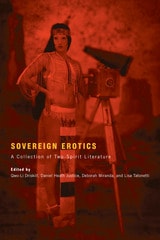
Sovereign Erotics
A Collection of Two-Spirit LiteratureEdited by Qwo-Li Driskill, Daniel Heath Justice, Deborah Miranda, and Lisa Tatonetti
University of Arizona Press, 2011
This landmark collection strives to reflect the complexity of identities within Native Gay, Lesbian, Bisexual, Transgender, Queer, and Two-Spirit (GLBTQ2) communities. Gathering together the work of established writers and talented new voices, this anthology spans genres (fiction, nonfiction, poetry, and essay) and themes (memory, history, sexuality, indigeneity, friendship, family, love, and loss) and represents a watershed moment in Native American and Indigenous literatures, Queer studies, and the intersections between the two.
Collaboratively, the pieces in Sovereign Erotics demonstrate not only the radical diversity among the voices of today’s Indigenous GLBTQ2 writers but also the beauty, strength, and resilience of Indigenous GLBTQ2 people in the twenty-first century.
Contributors: Indira Allegra, Louise Esme Cruz, Paula Gunn Allen, Qwo-Li Driskill, Laura Furlan, Janice Gould, Carrie House, Daniel Heath Justice, Maurice Kenny, Michael Koby, M. Carmen Lane, Jaynie Lara, Chip Livingston, Luna Maia, Janet McAdams, Deborah Miranda, Daniel David Moses, D. M. O’Brien, Malea Powell, Cheryl Savageau, Kim Shuck, Sarah Tsigeyu Sharp, James Thomas Stevens, Dan Taulapapa McMullin, William Raymond Taylor, Joel Waters, and Craig Womack
The Best Science Stories and How They Work
A Collection with CommentaryEdited by Siri Carpenter
University of Chicago Press, 2026
An invitation to engage with some of today’s most respected science journalists as they take readers beneath the surface to reveal the making of eleven of the best science stories.
With eleven deeply reported, artfully crafted stories and annotations by some of the most thoughtful and respected science journalists working today, The Best Science Stories and How They Work is more than the sum of its impressive parts. Experience the pleasure of reading a “Best of” anthology, attending a science writing masterclass, and meeting journalists who become more than their familiar bylines. Each piece benefits from an introduction, annotations, and a conversation between the piece’s author and annotator.
Siri Carpenter—editor of this book and cofounder of The Open Notebook, a leading source of training and educational materials for journalists who cover science—has long considered what’s behind the best writing. The pieces in this guide are drawn from a range of publications such as Scientific American, Nature, The Atlantic, and The New York Times Magazine and offer a unique perspective on how great science journalism happens: the careful structuring of a narrative, the delicate balance of skepticism and wonder, the ethical challenges of working with sources, the artistry of prose that sings. Readers will not only encounter outstanding examples of stellar storytelling, but they will also understand how these successful stories were reported and written, revealing the choices fundamental to good science journalism. Following each annotation, a Q&A with the original author provides an intimate look at the decisions and challenges that shaped their work.
Taken together, these pieces and annotations reveal the detailed, technical narrative work required to tell science stories. The book will delight, inspire, and equip readers with new tools to appreciate the stories that matter most.
Contributors: Jordana Cepelewicz, Shraddha Chakradhar, Nadia Drake, Ben Goldfarb, Sabrina Imbler, Ferris Jabr, Emily Laber-Warren, Stephanie M. Lee, Dana Mackenzie, Amy Maxmen, Emiliano Rodríguez Mega, Kendra Pierre-Louis, Debbie Ponchner, Sandeep Ravindran, Mary Roach, Paola Rosa-Aquino, Ashley Smart, Jessica Seigel, Ramin Skibba, Kamala Thiagarajan, Bijal Trivedi, and Ed Yong
The Born in the Spring
A Collection of Spring WildflowersJune Carver Roberts
Ohio University Press, 2024
The Collection of Antiquities of the American Academy in Rome
Larissa Bonfante and Helen Nagy, editors
University of Michigan Press, 2016
The Edda
A Collection of EssaysR.J. Glendinning
University of Manitoba Press, 1983

The Missing Piece
A Collection of Kidney Transplant StoriesEdited by Megan Podschlne
Michigan Publishing Services, 2018
This uplifting book contains practical advice and a helpful list of resources for patients and family members. It is a must-read for those who are facing dialysis and/or kidney transplant and for those considering becoming a living donor.
The book’s editor has dedicated this book to new patients, understanding that patient-to-patient communication is a unique and effective way to improve patient and family education. Proceeds from this book will be used to improve the patient experience at Michigan Medicine.
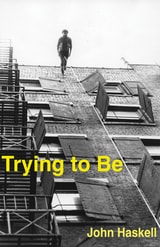
Trying to Be
A CollectionJohn Haskell
University of Alabama Press, 2025
With lyrical precision and aching intimacy, Trying to Be moves through history, memory, and the performance of ephemeral identity, as John Haskell assembles a quiet manifesto for how to think, how to live, and how to feel ourselves in our bodies.
Trying to Be is a book about presence, absence, and the intricate art of inhabiting one’s own life. John Haskell—known for his genre-defying literary voice—moves through a series of intimate, sharply observed portraits: Francis Bacon and his doomed lover; Danny Kaye and his split personality; Sophia Loren; Diego Velázquez; Ulrike Meinhof; and Yvonne Rainer’s radical reinvention of what dance can be.
But this isn’t cultural commentary as ornament. These figures mirror Haskell’s own attempts to grapple with grief, estrangement, memory, and the failures of language. The result is a book that blurs the line between criticism and confession, art history and personal inventory. Whether recalling a botched friendship, a beloved mentor, or the carefully choreographed movement in a dance workshop, Haskell searches for new ways of becoming—through art, through awareness, through stories that have the quality of song. In prose that’s quiet but unflinching, Trying to Be asks: What do we do with our bodies, our memories, and our regrets when even language feels exhausted? And what happens when, against the odds, we keep going?

Under 25
Duke Narrative and Verse, 1945–1962: A Collection of Short Stories and Verse by Sixteen Duke AuthorsWilliam M. Blackburn, ed.
Duke University Press, 0

WHITE TATTOO
A COLLECTION OF SHORT STORIESWilliam J. Cobb
The Ohio State University Press, 2002
The White Tattoo is a smart, always surprising collection of American stories. William J. Cobb knows and loves his character and places. His first collection of short stories, The White Tattoo, revels in the undeniable allure of the physical world even as it is juxtaposed with the twists and kinks of psychological and emotional pain. At one extreme is the tense, torturous psychology of “Motel Ice,” whose narrative voice emerges from the mind of a mentally disturbed Jehovah’s Witness gazing out on a world of temptation and redemption. Similarly hyperdramatic in its conclusion and its arc of betrayal and violent aftermath, “For All You Dorks, Blah Blah Blah” conjures up a sleepwalking, murderous father who is less culpable in the harm he causes but all the while most destructive.
Stylistically, the stories crackle, snap, and zing. Several of them, including “The Wishes,” “The Atmosphere of Vienna,” and “Dark Matter,” use an idiosyncratic, Tilt-O-Whirl narrative marked by a swirling, shifting focus and point of view, trying to create a multifaceted, complex vision of the world by dipping in and out of the consciousness of various characters.