Results by title
200 books match the query 'Asian American & Pacific Islander' and 12 start with c
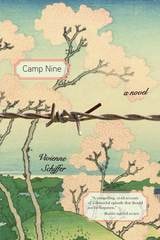
Camp Nine
A NovelVivienne Schiffer
University of Arkansas Press, 2011
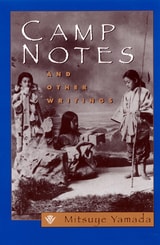
Camp Notes and Other Writings
Yamada, Mitsuye
Rutgers University Press, 1998
Honorable Mention of the 1999 Gustavus Myers Outstanding Book Awards
Two collections by an important Asian American writer -- Camp Notes and Other Poeems and Desert Run: Poems and Stories -- return to print in one volume.
Mitsuye Yamada was born in Kyushu, Japan, and raised in Seattle, Washington, until the outbreak of World War II when her family was removed to a concentration camp in Idaho. Camp Notes and Other Writings recounts this experience.
Yamada's poetry yields a terse blend of emotions and imagery. Her twist of words creates a twist of vision that make her poetry come alive. The weight of her cultural experience-the pain of being perceived as an outsider all of her life-permeates her work.
Yamada's strength as a poet stems from the fact that she has managed to integrate both individual and collective aspects of her background, giving her poems a double impact. Her strong portrayal of individual and collective life experience stands out as a distinct thread in the fabric of contemporary literature by women.
"The core poems of Camp Notes and the title come from the notes I had taken when I was in camp, and it wasn’t published until thirty years after most of it was written. I was simply describing what was happening to me, and my thoughts. But, in retrospect, the collection takes on a kind of expanded meaning about that period in our history. As invariably happens, because Japanese American internment became such an issue in American history, I suppose I will be forever identified as the author of Camp Notes. Of course, I try to show that it’s not the only thing I ever did in my whole life; I did other things besides go to an internment camp during World War II. So, in some ways I keep producing to counteract that one image that gets set in the public mind. At the time that I was writing it, I wasn’t necessarily a political person. Now, when I reread it, even to myself, I think it probably has a greater warning about the dangers of being not aware, not aware of one’s own rights, not aware of helping other people who may be in trouble. I think that it does speak to our present age very acutely." -- Mitsuye Yamada, "You should not be invisible”: An Interview with Mitsuye Yamada, Contemporary Women's Writing, March 2014, Vol. 8 Issue 1
Read the whole interview at: https://academic.oup.com/cww/article/8/1/1/414906/You-should-not-be-invisible-An-Interview-with
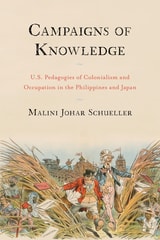
Campaigns of Knowledge
U.S. Pedagogies of Colonialism and Occupation in the Philippines and JapanMalini Johar Schueller
Temple University Press, 2019
The creation of a new school system in the Philippines in 1898 and educational reforms in occupied Japan, both with stated goals of democratization, speaks to a singular vision of America as savior, following its politics of violence with benevolent recuperation. The pedagogy of recovery—in which schooling was central and natives were forced to accept empire through education—might have shown how Americans could be good occupiers, but it also created projects of Orientalist racial management: Filipinos had to be educated and civilized, while the Japanese had to be reeducated and “de-civilized.”
In Campaigns of Knowledge, Malini Schueller contrapuntally reads state-sanctioned proclamations, educational agendas, and school textbooks alongside political cartoons, novels, short stories, and films to demonstrate how the U.S. tutelary project was rerouted, appropriated, reinterpreted, and resisted. In doing so, she highlights how schooling was conceived as a process of subjectification, creating particular modes of thought, behaviors, aspirations, and desires that would render the natives docile subjects amenable to American-style colonialism in the Philippines and occupation in Japan.
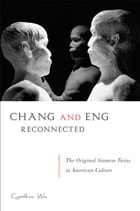
Chang and Eng Reconnected
The Original Siamese Twins in American CultureCynthia Wu
Temple University Press, 2012
Conjoined twins Chang and Eng Bunker have fascinated the world since the nineteenth century. In her captivating book, Chang and Eng Reconnected, Cynthia Wu traces the “Original Siamese Twins” through the terrain of American culture, showing how their inseparability underscored tensions between individuality and collectivity in the American popular imagination.
Using letters, medical documents and exhibits, literature, art, film, and family lore, Wu provides a trans-historical analysis that presents the Bunkers as both a material presence and as metaphor. She also shows how the twins figure in representations of race, disability, and science in fictional narratives about nation building.
As astute entrepreneurs, the twins managed their own lives; nonetheless, as Chang and Eng Reconnected shows, American culture has always viewed them through the multiple lenses of difference.
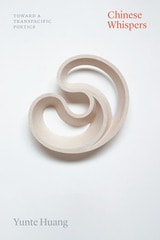
Chinese Whispers
Toward a Transpacific PoeticsYunte Huang
University of Chicago Press, 2022
In this new book, the noted critic and best-selling author Yunte Huang explores the dynamics of poetry and poetics in the age of globalization, particularly questions of translatability, universality, and risk in the transpacific context. “Chinese whispers” refers to an American children’s game dating to the years of the Cold War, a period in which everything Chinese, or even Chinese sounding, was suspect. Taking up various manifestations of the phrase in the twentieth and twenty-first centuries, Huang investigates how poetry, always to a significant degree untranslatable, complicates the transpacific production of meanings and values.
The book opens with the efforts of I. A. Richards, arguably the founder of Anglo-American academic literary criticism, to promote Basic English in China in the early twentieth century. It culminates by resituating Ernest Fenollosa’s famous essay “The Chinese Written Character as a Medium for Poetry,” exploring the ways in which Chinese has historically enriched but also entrapped the Western conception of language.
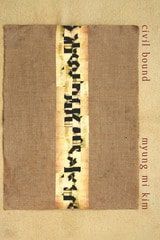
Civil Bound
Myung Mi Kim
Omnidawn, 2019

Classical Reception in Asian American Literature
Christopher Waldo
University of Michigan Press, 2027
Troubled by the discipline’s historical relationship to white supremacy, classical scholars have begun to reexamine their fundamental assumptions about the relevance of ancient Greece and Rome to the modern world. After decades in which classical reception was relegated to the periphery of the discipline, a consensus has developed that the study of modern interactions with antiquity is inherently valuable. One of the newest branches of classical reception focuses on the cultural productions and political realities of Asian Americans. Contending that the Asian American authors discussed herein understand the ancient world as fundamentally unstable, Classical Reception in Asian American Literature interrogates this instability as manifested in fragmentation, violence, mythology, allusion, performance, and memory.
The study explores the written works of Theresa Hak Kyung Cha, Ocean Vuong, Quan Barry, Chang-rae Lee, David Lau, Sally Wen Mao, Johanna Hedva, Hoa Nguyen, and Vi Khi Nao. Via their written works, Christopher Waldo explores the bond between Demeter and Persephone, Telemachus’ identity as a fatherless son, the relationship between diasporic authors and Sappho, reinventions of mythology surrounding the Trojan War, and more. In Classical Reception in Asian American Literature, the literary traditions of the East and West collide to illuminate the threads of connection between the ancient and modern worlds.
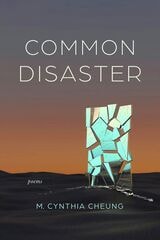
Common Disaster
PoemsM. Cynthia Cheung
Acre Books, 2025
As a front-line physician, M. Cynthia Cheung started writing poetry during the worst days of the COVID-19 pandemic. Her remarkable debut collection, Common Disaster, chronicles these experiences. Confronting not just the coronavirus but also war crimes and the death of loved ones, Cheung shows us that the pandemic is only one of many disasters we hold in common. In poems that look to both the past and future, she takes a stand against the extinction of self and memory, challenging the violence of erasure.
The period covered by the book is geologic and vast. It examines present-day evidence of ancient human activity and natural history, including the Lascaux caves, asteroid craters, tar pits, and Viking ruins. The poems include ghazals, thoughtful free verse, and work that takes up the page in reframing classical Chinese oracular texts to situate the pain of a doctor in crisis.
As a physician-poet, Cheung asks us to see beyond the every day to the devastating truths about the human condition.
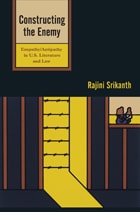
Constructing the Enemy
Empathy/Antipathy in U.S. Literature and LawRajini Srikanth
Temple University Press, 2011
In her engaging book, Constructing the Enemy, Rajini Srikanth probes the concept of empathy, attempting to understand its different types and how it is—or isn't—generated and maintained in specific circumstances.
Using literary texts to illuminate issues of power and discussions of law, Srikanth focuses on two case studies— the internment of Japanese citizens and Japanese Americans in World War II, after the bombing of Pearl Harbor, and the detainment of Muslim Americans and individuals from various nations in the U.S. prison at Guantanamo Bay.
Through primary documents and interviews that reveal why and how lawyers become involved in defending those who have been designated “enemies,” Srikanth explores the complex conditions under which engaged citizenship emerges. Constructing the Enemy probes the seductive promise of legal discourse and analyzes the emergence and manifestation of empathy in lawyers and other concerned citizens and the wider consequences of this empathy on the institutions that regulate our lives.
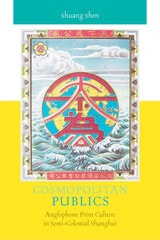
Cosmopolitan Publics
Anglophone Print Culture in Semi-Colonial ShanghaiShen, Shuang
Rutgers University Press, 2009
Cosmopolitan Publics focuses on China's "cosmopolitans," Western-educated intellectuals who returned to Shanghai in the late 1920s to publish in English and who, ultimately, became both cultural translators and citizens of the wider world. Shuang Shen highlights their work in publications such as The China Critic and T'ien Hsia, providing readers with a broader understanding of the role and function of cultural mixing, translation, and multilingualism in China's cultural modernity.
Decades later, as nationalist biases and political restrictions emerged within China, the influence of the cosmopolitans was neglected and the significance of cosmopolitan practice was underplayed. Shen's encompassing study revisits and presents the experience of Chinese modernity as far more heterogeneous, emergent, and transnational than it has been characterized until now.
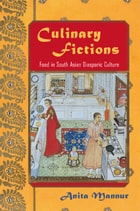
Culinary Fictions
Food in South Asian Diasporic CultureAnita Mannur
Temple University Press, 2009
For South Asians, food regularly plays a role in how issues of race, class, gender, ethnicity, and national identity are imagined as well as how notions of belonging are affirmed or resisted. Culinary Fictions provides food for thought as it considers the metaphors literature, film, and TV shows use to describe Indians abroad. When an immigrant mother in Jhumpa Lahiri’s The Namesake combines Rice Krispies, Planters peanuts, onions, salt, lemon juice, and green chili peppers to create a dish similar to one found on Calcutta sidewalks, it evokes not only the character’s Americanization, but also her nostalgia for India.
Food, Anita Mannur writes, is a central part of the cultural imagination of diasporic populations, and Culinary Fictions maps how it figures in various expressive forms. Mannur examines the cultural production from the Anglo-American reaches of the South Asian diaspora. Using texts from novels—Chitra Divakaruni’s Mistress of Spices and Shani Mootoo’s Cereus Blooms at Night—and cookbooks such as Madhur Jaffrey’s Invitation to Indian Cooking and Padma Lakshmi’s Easy Exotic, she illustrates how national identities are consolidated in culinary terms.
Cutlish
Rajiv Mohabir
Four Way Books, 2021