Results by title
60 books match the query 'Britain' and 3 start with c
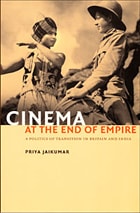
Cinema at the End of Empire
A Politics of Transition in Britain and IndiaPriya Jaikumar
Duke University Press, 2006
In addition to close readings of British and Indian films of the late colonial era, Jaikumar draws on a wealth of historical and archival material, including parliamentary proceedings, state-sponsored investigations into colonial filmmaking, trade journals, and intra- and intergovernmental memos regarding cinema. Her wide-ranging interpretations of British film policies, British initiatives in colonial film markets, and genres such as the Indian mythological film and the British empire melodrama reveal how popular film styles and controversial film regulations in these politically linked territories reconfigured imperial relations. With its innovative examination of the colonial film archive, this richly illustrated book presents a new way to track historical change through cinema.
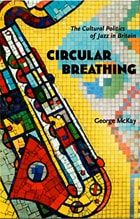
Circular Breathing
The Cultural Politics of Jazz in BritainGeorge McKay
Duke University Press, 2005
McKay explores the music in relation to issues of whiteness, blackness, and masculinity—all against a backdrop of shifting imperial identities, postcolonialism, and the Cold War. He considers objections to the music’s spread by the “anti-jazzers” alongside the ambivalence felt by many leftist musicians about playing an “all-American” musical form. At the same time, McKay highlights the extraordinary cultural mixing that has defined British jazz since the 1950s, as musicians from Britain’s former colonies—particularly from the Caribbean and South Africa—have transformed the genre. Circular Breathing is enriched by McKay’s original interviews with activists, musicians, and fans and by fascinating images, including works by the renowned English jazz photographer Val Wilmer. It is an invaluable look at not only the history of jazz but also the Left and race relations in Great Britain.
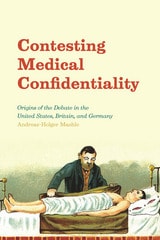
Contesting Medical Confidentiality
Origins of the Debate in the United States, Britain, and GermanyAndreas-Holger Maehle
University of Chicago Press, 2016
In Contesting Medical Confidentiality, Andreas-Holger Maehle travels back to the origins of this increasingly relevant issue. He offers the first comparative analysis of professional and public debates on medical confidentiality in the United States, Britain, and Germany during the late nineteenth and early twentieth centuries, when traditional medical secrecy first came under pressure from demands of disclosure in the name of public health. Maehle structures his study around three representative questions of the time that remain salient today: Do physicians have a privilege to refuse court orders to reveal confidential patient details? Is there a medical duty to report illegal procedures to the authorities? Should doctors breach confidentiality in order to prevent the spread of disease? Considering these debates through a unique historical perspective, Contesting Medical Confidentiality illuminates the ethical issues and potentially grave consequences that continue to stir up public debate.