50 books match the query 'Child' and 6 start with c

cover of Certain Language Skills in Children: Their Development and Interrelationships

Certain Language Skills in Children

Their Development and Interrelationships

Mildred Templin

University of Minnesota Press, 1957
Certain Language Skills in Children was first published in 1957. Minnesota Archive Editions uses digital technology to make long-unavailable books once again accessible, and are published unaltered from the original University of Minnesota Press editions.No. 26 in the Institute of Child Welfare Monograph SeriesThe data presented in this monograph have practical application for child psychologists, pediatricians, school nurses, and others dealing with young children in a clinical or remedial situation. The work provides norms on the development of articulation of speech sounds, sound discrimination, sentence structure, and vocabulary, as well as the interrelations of these language skills in children from ages three to eight. Since verbal expression is frequently the medium through which social interaction, cognition, and other behavior aspects are studied, knowledge of the probable verbal performance of children can often be vital in determining a design for an experimental study.
[more]
cover of Child of a Turbulent Century

Child of a Turbulent Century

Victor Erlich

Northwestern University Press, 2006

Victor Erlich was born in 1914, at the threshold of what the great Russian poet Anna Akhmatova called "the real twentieth century," in Petrograd, a place indelibly marked by that century's violent dislocations and upheavals. His story, begun on the eve of the First World War and taking him through Russia, Poland, Lithuania, Germany, and the U. S. Army, is in many ways a memoir of that "real twentieth century," reflecting its lethal nature and shaped by the "fearful symmetry" of the age of totalitarianism. Erlich's grandfather, the legendary Jewish historian Simon Dubnov, was felled in December 1941 by a Nazi bullet; his father, Henryk Erlich, a leader of the Jewish Bund and a prominent figure in Russian and Polish socialism, took his life in Stalin's prison in May 1942. To read about Erlich's life growing up at the intersection of the century's darkest currents is to experience history firsthand from the Russian Revolution to the end of the Second World War-and to know what it truly is to be a child of the century.

Erlich conjures up what it was like to be a Bundist, the intensity of Socialist life at the time, the thinking after the Nazi invasion of Poland-before the pact between Hitler and Stalin became apparent. Figures such as Eleanor Roosevelt, Wendel Wilkie, Marc and Bella Chagall make appearances, as well as the famous logician Tarski, flunking Erlich in math. Throughout, despite the darkness, even the horror, of much of what he describes, the author maintains the beguiling tone and the warm manner of one who has reached the new millennium with rare and hard-won insight into the human comedy of his time.
[more]
cover of Child of the Fire: Mary Edmonia Lewis and the Problem of Art History's Black and Indian Subject

Child of the Fire

Mary Edmonia Lewis and the Problem of Art History's Black and Indian Subject

Kirsten Pai Buick

Duke University Press, 2010

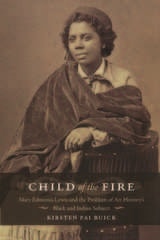
Child of the Fire is the first book-length examination of the career of the nineteenth-century artist Mary Edmonia Lewis, best known for her sculptures inspired by historical and biblical themes. Throughout this richly illustrated study, Kirsten Pai Buick investigates how Lewis and her work were perceived, and their meanings manipulated, by others and the sculptor herself. She argues against the racialist art discourse that has long cast Lewis’s sculptures as reflections of her identity as an African American and Native American woman who lived most of her life abroad. Instead, by seeking to reveal Lewis’s intentions through analyses of her career and artwork, Buick illuminates Lewis’s fraught but active participation in the creation of a distinct “American” national art, one dominated by themes of indigeneity, sentimentality, gender, and race. In so doing, she shows that the sculptor variously complicated and facilitated the dominant ideologies of the vanishing American (the notion that Native Americans were a dying race), sentimentality, and true womanhood.

Buick considers the institutions and people that supported Lewis’s career—including Oberlin College, abolitionists in Boston, and American expatriates in Italy—and she explores how their agendas affected the way they perceived and described the artist. Analyzing four of Lewis’s most popular sculptures, each created between 1866 and 1876, Buick discusses interpretations of Hiawatha in terms of the cultural impact of Henry Wadsworth Longfellow’s epic poem The Song of Hiawatha; Forever Free and Hagar in the Wilderness in light of art historians’ assumptions that artworks created by African American artists necessarily reflect African American themes; and The Death of Cleopatra in relation to broader problems of reading art as a reflection of identity.
[more]
cover of Child of the Holy Ghost

Child of the Holy Ghost

Robert Laxalt

University of Nevada Press, 1997
The second installment in Laxalt's Basque-family trilogy, this novel takes an adult-aged Pete to the Basque Country to uncover his parents' secret reasons for immigrating to the U.S. Pete finds himself stepping back into a medieval morality, into the rigid and unrelenting code of his ancestors, older and stronger than reason. Denied by his own blood kin, cold anger forges his determination to pierce the silence of the villagers and learn the circumstances of Maitia’s, his mother’s birth. One by one, the ghosts rise up, piecing together the story of Maitia’s shame and her resolve to gain the respect that could only be found in America. Interwoven is the story of Petya, Pete’s father, forced to flee the high Pyrenees by accident and find a new life as a lonely sheepherder in the northern deserts of Nevada. His struggles with loneliness and the temptations of emerging manhood provide a background for the stark reality of a young immigrant whose pain and growing sense of self-determination transform him into the essential being we know as American.
[more]
cover of Cochlear Implants in Children: Ethics and Choices

Cochlear Implants in Children

Ethics and Choices

John B. Christiansen

Gallaudet University Press, 2002

Cochlear Implants in Children: Ethics and Choices addresses every facet of the ongoing controversy about implanting cochlear hearing devices in children as young as 12 months old and in some cases, younger. Authors John B. Christiansen and Irene W. Leigh and contributors Jay Lucker and Patricia Elizabeth Spencer analyzed the sensitive issues connected with the procedure by reviewing 439 responses to a survey of parents with children who have cochlear implants. They followed up with interviews of the parents of children who have had a year's experience using their implants, and also the children themselves. Their findings shape the core of this useful and telling study.

       Cochlear Implants begins with a history of their development and an explanation of how implants convert sound into electric impulses that stimulate the brain. The second section focuses on pediatric implants, starting with the ways parents coped with the discovery that their child was deaf. Parents share how they learned about cochlear implants and how they chose an implant center. They also detail their children's experiences with the implants after surgery, and their progress with language acquisition and in school.

       The final part treats the controversy associated with cochlear implants, particularly the reaction of the Deaf community and the ethics of implanting young children without their consent. Cochlear Implants concludes with sage observations and recommendations for parents and professionals that complete it as the essential book on the pros and cons of this burgeoning technology.
[more]
cover of Cradle of Liberty: Race, the Child, and National Belonging from Thomas Jefferson to W. E. B. Du Bois

Cradle of Liberty

Race, the Child, and National Belonging from Thomas Jefferson to W. E. B. Du Bois

Caroline F. Levander

Duke University Press, 2006

Throughout American literature, the figure of the child is often represented in opposition to the adult. In Cradle of Liberty Caroline F. Levander proposes that this opposition is crucial to American political thought and the literary cultures that surround and help produce it. Levander argues that from the late eighteenth century through the early twentieth, American literary and political texts did more than include child subjects: they depended on them to represent, naturalize, and, at times, attempt to reconfigure the ground rules of US national belonging. She demonstrates how, as the modern nation-state and the modern concept of the child (as someone fundamentally different from the adult) emerged in tandem from the late eighteenth century forward, the child and the nation-state became intertwined. The child came to represent nationalism, nation-building, and the intrinsic connection between nationalism and race that was instrumental in creating a culture of white supremacy in the United States.

Reading texts by John Adams, Thomas Paine, Harriet Beecher Stowe, Augusta J. Evans, Mark Twain, Pauline Hopkins, William James, José Martí, W. E. B. Du Bois, and others, Levander traces the child as it figures in writing about several defining events for the United States. Among these are the Revolutionary War, the US-Mexican War, the Civil War, and the US expulsion of Spain from the Caribbean and Cuba. She charts how the child crystallized the concept of self—a self who could affiliate with the nation—in the early national period, and then follows the child through the rise of a school of American psychology and the period of imperialism. Demonstrating that textual representations of the child have been a potent force in shaping public opinion about race, slavery, exceptionalism, and imperialism, Cradle of Liberty shows how a powerful racial logic pervades structures of liberal democracy in the United States.

[more]