Results by title
267 books match the query 'Children' and 68 start with c
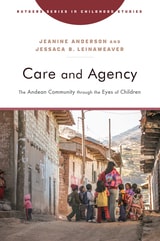
Care and Agency
The Andean Community through the Eyes of ChildrenJeanine Anderson
Rutgers University Press, 2025
Carrying a Secret in My Heart
Children of the Victims of the Reprisals after the Hungarian Revolution in 1956 - An Oral HistoryZsuzsanna Korösi
Central European University Press, 2003

Certain Language Skills in Children
Their Development and InterrelationshipsMildred Templin
University of Minnesota Press, 1957
Charity and Children in Renaissance Florence
The Ospedale degli Innocenti, 1410-1536Philip Gavitt
University of Michigan Press, 1991
Alongside the architectural splendor and intellectual brilliance of early Renaissance Florence there existed a second world of poverty, misery, social despair, and child abandonment. The Ospedale degli Innocenti (Hospital of the Innocents), designed and built between 1419 and 1445 by the renowned architect Filippo Brunelleschi, united these disparate worlds. Christian charity and compassion, as well as the humanist commitment to social perfection, family values, and love for children, were intertwined with a civic pride in which charity curried God's favor and invoked God's blessings on the city's fortunes.
Based on a close and attentive reading of archival material from the hospital and from the Florentine State Archives, Charity and Children in Renaissance Florence both chronicles the concerns and ambivalence of parents who abandoned children and follows the lives of the hospital's inhabitants from childhood to death. The book also demonstrates how hospital officials deliberately duplicated the structure and values of the Florentine family within the hospital walls. Gavitt's research shows that early modern foundling hospitals were not charnel houses where parents knowingly and impersonally abandoned their unwanted children to certain death. Charity and Children in Renaissance Florence provokes reflection on the contrast between our own views on the care of homeless children and those of the Italian Renaissance.
Winner of the Society for Italian Historical Studies 1988 Award for Best Unpublished Manuscript.
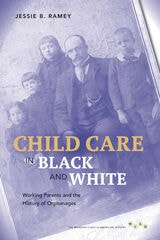
Child Care in Black and White
Working Parents and the History of OrphanagesJessie B. Ramey
University of Illinois Press, 2013
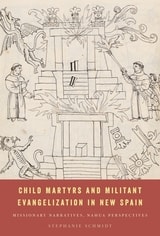
Child Martyrs and Militant Evangelization in New Spain
Missionary Narratives, Nahua PerspectivesStephanie Schmidt
University of Texas Press, 2025
Examines the many iterations of a story of child martyrdom in colonial Mexico.
A cornerstone of the evangelization of early New Spain was the conversion of Nahua boys, especially the children of elites. They were to be emissaries between Nahua society and foreign missionaries, hastening the transmission of the gospel. Under the tutelage of Franciscan friars, the boys also learned to act with militant zeal. They sermonized and smashed sacred objects. Some went so far as to kill a Nahua religious leader. For three boys from Tlaxcala, the reprisals were just as deadly.
In Child Martyrs and Militant Evangelization in New Spain, Stephanie Schmidt sheds light on a rare manuscript about Nahua child converts who were killed for acts of zealotry during the late 1520s. This is the Nahuatl version of an account by an early missionary-friar, Toribio de Benavente Motolinía. To this day, Catholics venerate the slain boys as Christian martyrs who suffered for their piety. Yet Franciscan accounts of the boys’ sacrifice were influenced by ulterior motives, as the friars sought to deflect attention from their missteps in New Spain. Illuminating Nahua perspectives on this story and period, Schmidt leaves no doubt as to who drove this violence as she dramatically expands the knowledgebase available to students of colonial Latin America.
Child-Sized History
Fictions of the Past in U.S. ClassroomsSara L. Schwebel
Vanderbilt University Press, 2011
Books like Johnny Tremain, The Witch of Blackbird Pond, Island of the Blue Dolphins, and Roll of Thunder, Hear My Cry stimulate children's imagination, transporting them into the American past and projecting them into an American future. As works of historical interpretation, however, many are startlingly out of step with current historiography and social sensibilities, especially with regard to race. Unlike textbooks, which are replaced on regular cycles and subjected to public tugs-of-war between the left and right, historical novels have simply--and quietly--endured. Taken individually, many present troubling interpretations of the American past. But embraced collectively, this classroom canon provides a rare pedagogical opportunity: it captures a range of interpretive voices across time and place, a kind of "people's history" far removed from today's state-sanctioned textbooks.
Teachers who employ historical novels in the classroom can help students recognize and interpret historical narrative as the product of research, analytical perspective, and the politics of the time. In doing so, they sensitize students to the ways in which the past is put to moral and ideological uses in the present.
Featuring separate chapters on American Indians, war, and slavery, Child-Sized History tracks the changes in how young readers are taught to conceptualize history and the American nation.
Childhood in a Sri Lankan Village
Shaping Hierarchy and DesireChapin, Bambi L
Rutgers University Press, 2014
Over ten years ago, anthropologist Bambi Chapin traveled to a rural Sri Lankan village to begin answering this question, getting to know the toddlers in the village, then returning to track their development over the course of the following decade. Childhood in a Sri Lankan Village offers an intimate look at how these children, raised on the tenets of Buddhism, are trained to set aside selfish desires for the good of their families and the community. Chapin reveals how this cultural conditioning is carried out through small everyday practices, including eating and sleeping arrangements, yet she also explores how the village’s attitudes and customs continue to evolve with each new generation.
Combining penetrating psychological insights with a rigorous observation of larger social structures, Chapin enables us to see the world through the eyes of Sri Lankan children searching for a place within their families and communities. Childhood in a Sri Lankan Village offers a fresh, global perspective on child development and the transmission of culture.
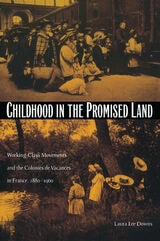
Childhood in the Promised Land
Working-Class Movements and the Colonies de Vacances in France, 1880–1960Laura Lee Downs
Duke University Press, 2002
At the heart of the study lie the municipal colonies de vacances, organized by the working-class cities of the Paris red belt. Located in remote villages or along the more inexpensive stretches of the Atlantic coast, the municipal colonies gathered their young clientele into variously structured "child villages," within which they were to live out particular, ideal visions of the collective life of children throughout the long summer holiday. Focusing on the creation of and participation in these summer camps, Laura Lee Downs presents surprising insights into the location and significance of childhood in French working-class cities and, ultimately, within the development of modern France.
Drawing on a rich array of historical sources, including dossiers and records of municipal colonies discovered in remote town halls of the Paris suburbs, newspaper accounts, and interviews with adults who participated in the colonies as children, Downs reveals how diverse groups—including local Socialist and Communist leaders and Catholic seminarians—seized the opportunity to shape the minds and bodies of working-class youth. Childhood in the Promised Land shows how, in creating the summer camps, these various groups combined pedagogical theories, religious convictions, political ideologies, and theories about the relationship between the countryside and children's physical and cognitive development. At the same time, the book sheds light on classic questions of social control, highlighting the active role of the children in shaping their experiences.
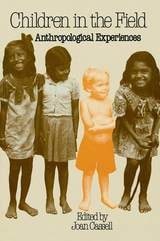
Children In The Field
edited by Joan Cassell
Temple University Press, 1994

Children Of Strangers
Kathryn Morgan
Temple University Press, 1981
Children and Childhood in American Religions
Browning, Don S
Rutgers University Press, 2009
- How the Catholic Church confronts the tension between its teachings about children and actual practic
- The Oglala Lakota's struggle to preserve their spiritual tradition
- The impact of modernity on Hinduism
Only by discussing the unique challenges faced by all religions, and their followers, can we take the first step toward a greater understanding for all of us.
Children and Childhood in World Religions
Primary Sources and TextsBrowning, Don S
Rutgers University Press, 2009
Each of six chapters, edited by world-class scholars, focuses on one religious tradition and includes an introduction and a selection of primary texts ranging from legal to liturgical and from the ancient to the contemporary. Through both the scholarly introductions and the primary sources, this comprehensive volume addresses a range of topics, from the sanctity of birth to a child's relationship to evil, showing that issues regarding children are central to understanding world religions and raising significant questions about our own conceptions of children today.
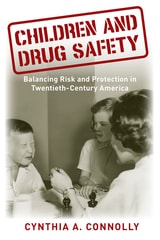
Children and Drug Safety
Balancing Risk and Protection in Twentieth-Century AmericaConnolly, Cynthia A
Rutgers University Press, 2018
Children and Drug Safety traces the development, use, and marketing of drugs for children in the twentieth century, a history that sits at the interface of the state, business, health care providers, parents, and children. This book illuminates the historical dimension of a clinical and policy issue with great contemporary significance—many of the drugs administered to children today have never been tested for safety and efficacy in the pediatric population.
Each chapter of Children and Drug Safety engages with major turning points in pediatric drug development; themes of children’s risk, rights, protection and the evolving context of childhood; child-rearing; and family life in ways freighted with nuances of race, class, and gender. Cynthia A. Connolly charts the numerous attempts by Congress, the Food and Drug Administration, the American Academy of Pediatrics, and leading pediatric pharmacologists, scientists, clinicians, and parents to address a situation that all found untenable.
Open access edition funded by the National Endowment for the Humanities.
The text of this book is licensed under a Creative Commons Attribution NonCommercial-NoDerivatives 4.0 International License: https://creativecommons.org/licenses/by-nc-nd/4.0/
Children and Other Wild Animals
Notes on badgers, otters, sons, hawks, daughters, dogs, bears, air, bobcats, fishers, mascots, Charles Darwin, newts, sturgeon, roasting squirrels, parrots, elk, foxes, tigers and various other zoological mattersBrian Doyle
Oregon State University Press, 2014
In these short vignettes, Doyle explores the seethe of life on this startling planet, the astonishing variety of our riveting companions, and the joys available to us when we pause, see, savor, and celebrate the small things that are not small in the least.
Doyle’s trademark quirky prose is at once lyrical, daring, and refreshing; his essays poignant but not pap, sharp but not sermons, and revelatory at every turn. Throughout there is humor and humility and a palpable sense of wonder, with passages of reflection so true and hard earned they make you stop and reread a line, a paragraph, a page.
Children & Other Wild Animals gathers previously unpublished work with selections that have appeared in Orion, The Sun, Utne Reader, High Country News, and The American Scholar, as well as Best American Essays (“The Greatest Nature Essay Ever”) and Best American Nature and Science Writing (“Fishering”). “The Creature Beyond the Mountain,” Doyle’s paean to the mighty and mysterious sturgeon of the Pacific Northwest, won the John Burroughs Award for Outstanding Nature Essay. As he notes in that tribute to all things “sturgeonness”:
“Sometimes you want to see the forest and not the trees. Sometimes you find yourself starving for what’s true, and not about a person but about all people. This is how religion and fascism were born, but it’s also why music is the greatest of arts, and why stories matter, and why we all cannot help staring at fires and great waters.”
Children and Play in the Holocaust
Games among the ShadowsGeorge Eisen
University of Massachusetts Press, 1988

Children and the Communities
Paul Henderson
Pluto Press, 1995
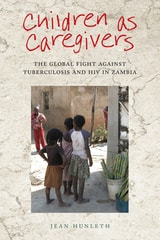
Children as Caregivers
The Global Fight against Tuberculosis and HIV in ZambiaHunleth, Jean
Rutgers University Press, 2017
In Zambia, due to the rise of tuberculosis and the closely connected HIV epidemic, a large number of children have experienced the illness or death of at least one parent. Children as Caregivers examines how well intentioned practitioners fail to realize that children take on active caregiving roles when their guardians become seriously ill and demonstrates why understanding children’s care is crucial for global health policy.
Using ethnographic methods, and listening to the voices of the young as well as adults, Jean Hunleth makes the caregiving work of children visible. She shows how children actively seek to “get closer” to ill guardians by providing good care. Both children and ill adults define good care as attentiveness of the young to adults’ physical needs, the ability to carry out treatment and medication programs in the home, and above all, the need to maintain physical closeness and proximity. Children understand that losing their guardians will not only be emotionally devastating, but that such loss is likely to set them adrift in Zambian society, where education and advancement depend on maintaining familial, reciprocal relationships.
View a gallery of images from the book (https://www.flickr.com/photos/childrenascaregivers)
Download the open access ebook.
Children as Social Butterflies
Navigating Belonging in a Diverse Swiss KindergartenUrsina Jaeger
Rutgers University Press, 2025
This book is also freely available online as an open-access digital edition, published with the support of the Swiss National Science Foundation.
Children in New Religions
Palmer, Susan J
Rutgers University Press, 1999
Children in Prehistoric Puebloan Southwest
Kathryn Kamp
University of Utah Press, 2002
Is there evidence of children in the archaeological record? Some would answer no, that "subadults" can only be distinguished when there is osteological confirmation. Others might suggest that the reason children don’t exist in prehistory is because no one has looked for them, much as no one had looked for women in the same context until recently.
Focusing on the Southwest, contributors to this volume attempt to find some of those children, or at least show how they might be found. They address two issues: what was the cultural construction of childhood? What were childrens' lives like?
Determining how cultures with written records have constructed childhood in the past is hard enough, but the difficulty is magnified in the case of ancient Puebloan societies. The contributors here offer approaches from careful analysis of artifacts and skeletal remains to ethnographic evidence in rock art. Topics include ceramics and evidence of child manufacture and painting, cradleboards, evidence of child labor, and osteological evidence of health conditions.
Children in Slavery through the Ages
Gwyn Campbell
Ohio University Press, 2009
Significant numbers of the people enslaved throughout world history have been children. The vast literature on slavery has grown to include most of the history of this ubiquitous practice, but nearly all of it concentrates on the adult males whose strong bodies and laboring capacities preoccupied the masters of the modern Americas. Children in Slavery through the Ages examines the children among the enslaved across a significant range of earlier times and other places; its companion volume will examine the children enslaved in recent American contexts and in the contemporary/modern world.
This is the first collection to focus on children in slavery. These leading scholars bring our thinking about slaving and slavery to new levels of comprehensiveness and complexity. They further provide substantial historical depth to the abuse of children for sexual and labor purposes that has become a significant humanitarian concern of governments and private organizations around the world in recent decades.
The collected essays in Children in Slavery through the Ages fundamentally reconstruct our understanding of enslavement by exploring the often-ignored role of children in slavery and rejecting the tendency to narrowly equate slavery with the forced labor of adult males. The volume’s historical angle highlights many implications of child slavery by examining the variety of children’s roles—as manual laborers and domestic servants to court entertainers and eunuchs—and the worldwide regions in which the child slave trade existed.
Children in Tactical Gear
Peter Mishler
University of Iowa Press, 2024
Children in the Muslim Middle East
Edited by Elizabeth Warnock Fernea
University of Texas Press, 1995
Today nearly half of all people in the Middle East are under the age of fifteen. Yet little is known about the new generation of boys and girls who are growing up in a world vastly different from that of their parents, a generation who will be the leaders of tomorrow. This groundbreaking anthology is an attempt to look at the current situation of children by presenting materials by both Middle Eastern and Western scholars. Many of the works have been translated from Arabic, Persian, and French.
The forty-one pieces are organized into sections on the history of childhood, growing up, health, work, education, politics and war, and play and the arts. They are presented in many forms: essays in history and social science, poems, proverbs, lullabies, games, and short stories. Countries represented are Egypt, Jordan, Morocco, Tunisia, Israel/West Bank, Kuwait, Saudi Arabia, Iran, Iraq, Syria, Sudan, Lebanon, Turkey, Yemen, and Afghanistan.
This book complements Elizabeth Fernea's earlier works, Women and the Family in the Middle East and Middle Eastern Muslim Women Speak (coedited with Basima Bezirgan). Like them, it will be important reading for everyone interested in the Middle East and in women's and children's issues.
Children of Afghanistan
The Path to PeaceEdited by Jennifer Heath and Ashraf Zahedi
University of Texas Press, 2014
The first comprehensive look at youth living in a country attempting to rebuild itself after three decades of civil conflict, Children of Afghanistan relies on the research and fieldwork of twenty-one experts to cover an incredible range of topics. Focusing on the full scope of childhood, from birth through young adulthood, this edited volume examines a myriad of issues: early childhood socialization in war and peace; education, literacy, vocational training, and apprenticeship; refugee life; mental and physical health, including disabilities and nutrition; children’s songs, folktales, and art; sports and play; orphans; life on the streets; child labor and children as family breadwinners; child soldiers and militarization; sexual exploitation; growing up in prison; marriage; family violence; and other issues vital to understanding, empowerment, and transformation.
Children of Afghanistan is the first volume that not only attempts to analyze the range of challenges facing Afghan children across class, gender, and region but also offers solutions to the problems they face. With nearly half of the population under the age of fifteen, the future of the country no doubt lies with its children. Those who seek peace for the region must find solutions to the host of crises that have led the United Nations to call Afghanistan “the worst place on earth to be born.” The authors of Children of Afghanistan provide child-centered solutions to rebuilding the country’s cultural, social, and economic institutions.

Children of Alcoholics
A Critical Appraisal of Theory and ResearchKenneth J. Sher
University of Chicago Press, 1991
Children of Atlantis
Zdenko Lešic
Central European University Press, 1995
Children of Cuarón
Speculative Futures Through Cinematic FictionMatt Garcia
Rutgers University Press, 2027
Alfonso Cuarón’s Children of Men thrusts readers into a gripping near-future world where environmental collapse and global infertility have fortified borders and torn apart the fabric of society. Its stark depictions of mass deportation, lawless border zones, and the desperate fight for survival echo powerfully through Octavia Butler’s prophetic novels Parable of the Sower and Parable of the Talents, where environmental breakdown, migration, childbirth, and the resilience of women’s bodies form the core of her visionary storytelling. Remarkably, the futures imagined in these works are no longer distant—Butler’s 2024 has arrived, and Cuarón’s 2027 is nearly here. Children of Cuarón: Speculative Futures Through Cinematic Fiction ignites bold, necessary conversations about borders, immigration, and the urgent political, environmental, and social challenges facing our world today. By examining how speculative fiction dares to imagine what comes next, this book invites readers to confront the realities of our present—and the possibilities of our future—with fresh eyes and uncompromising clarity.
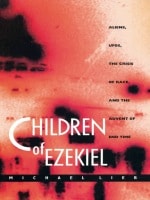
Children of Ezekiel
Aliens, UFOs, the Crisis of Race, and the Advent of End TimeMichael Lieb
Duke University Press, 1998
Beginning with the merkabah chariot literature of Hebrew and Gnostic mysticism, Lieb shows how religiously inspired people concerned with annihilating their heretical enemies seized on Ezekiel’s vision as revealing the technologically superior instrument of God’s righteous anger. He describes how many who seek to know the unknowable that is the power of God conceive it in technological terms—and how that power is associated with political aims and a heralding of the end of time. For Milton, Ezekiel’s chariot becomes the vehicle in which the Son of God does battle with the rebellious angels. In the modern age, it may take the form of a locomotive, tank, airplane, missile, or UFO. Technology itself is seen as a divine gift and an embodiment of God in the temporal world. As Lieb demonstrates, the impetus to produce modern technology arises not merely from the desire for profit or military might but also from religious-spiritual motives.
Including discussions of conservative evangelical Christian movements, Reagan’s ballistic shooting gallery in the sky, and the Nation of Islam’s vision of the “mother plane” as the vehicle of retribution in the war against racial oppression, Children of Ezekiel will enthrall readers who have been captivated, either through religious belief or intellectual interests, by a common thread uniting millennial religious beliefs, racial conflict, and political and militaristic aspirations.
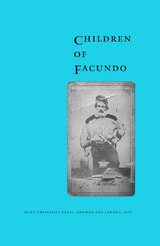
Children of Facundo
Caudillo and Gaucho Insurgency during the Argentine State-Formation Process (La Rioja, 1853-1870)Ariel de la Fuente
Duke University Press, 2000
La Rioja, a province in the northwest section of the country, was the land of the caudillos immortalized by Domingo F. Sarmiento, particularly in his foundational and controversial book Facundo. De la Fuente focuses on the repeated rebellions in this district during the 1860s, when Federalist caudillos and their followers, the gauchos, rose up against the new Unitarian government. In this social and cultural analysis, de la Fuente argues that the conflict was not a factional struggle between two ideologically identical sectors of the elite, as commonly depicted. Instead, he believes, the struggle should be seen from the perspective of the lower-class gauchos, for whom Unitarianism and Federalism were highly differentiated party identities that represented different experiences during the nineteenth century. To reconstruct this rural political culture de la Fuente relies on sources that heretofore have been little used in the study of nineteenth-century Latin American politics, most notably a rich folklore collection of popular political songs, folktales, testimonies, and superstitions passed down by old gauchos who had been witnesses or protagonists of the rebellions. Criminal trial records, private diaries, and land censuses add to the originality of de la Fuente’s study, while also providing a new perspective on Sarmiento’s works, including the classic Facundo.
This book will interest those specializing in Latin American history, literature, politics, and rural issues.
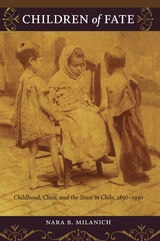
Children of Fate
Childhood, Class, and the State in Chile, 1850–1930Nara B. Milanich
Duke University Press, 2009
Milanich pays particular attention to family law, arguing that liberal legal reforms wrought in the 1850s, which left the paternity of illegitimate children purposely unrecorded, reinforced not only patriarchal power but also hierarchies of class. Through vivid stories culled from judicial and notarial sources and from a cache of documents found in the closet of a Santiago orphanage, she reveals how law and bureaucracy helped create an anonymous underclass bereft of kin entitlements, dependent on the charity of others, and marginalized from public bureaucracies. Milanich also challenges the recent scholarly emphasis on state formation by highlighting the enduring importance of private, informal, and extralegal relations of power within and across households. Children of Fate demonstrates how the study of children can illuminate the social organization of gender and class, liberalism, law, and state power in modern Latin America.
Children of God in the World
Paul O'Callaghan
Catholic University of America Press, 2016
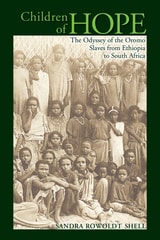
Children of Hope
The Odyssey of the Oromo Slaves from Ethiopia to South AfricaSandra Rowoldt Shell
Ohio University Press, 2018
In Children of Hope, Sandra Rowoldt Shell traces the lives of sixty-four Oromo children who were enslaved in Ethiopia in the late-nineteenth century, liberated by the British navy, and ultimately sent to Lovedale Institution, a Free Church of Scotland mission in the Eastern Cape, South Africa, for their safety. Because Scottish missionaries in Yemen interviewed each of the Oromo children shortly after their liberation, we have sixty-four structured life histories told by the children themselves.
In the historiography of slavery and the slave trade, first passage narratives are rare, groups of such narratives even more so. In this analytical group biography (or prosopography), Shell renders the experiences of the captives in detail and context that are all the more affecting for their dispassionate presentation. Comparing the children by gender, age, place of origin, method of capture, identity, and other characteristics, Shell enables new insights unlike anything in the existing literature for this region and period.
Children of Hope is supplemented by graphs, maps, and illustrations that carefully detail the demographic and geographic layers of the children’s origins and lives after capture. In this way, Shell honors the individual stories of each child while also placing them into invaluable and multifaceted contexts.
Children of Katrina
By Alice Fothergill and Lori Peek
University of Texas Press, 2015
Winner, Betty and Alfred McClung Lee Book Award, Association for Humanist Sociology, 2016
Outstanding Scholarly Contribution Award of the Section on Children and Youth, American Sociological Association, 2016
Honorable Mention, Leo Goodman Award, Methodology Section, American Sociological Association, 2016
When children experience upheaval and trauma, adults often view them as either vulnerable and helpless or as resilient and able to easily “bounce back.” But the reality is far more complex for the children and youth whose lives are suddenly upended by disaster. How are children actually affected by catastrophic events and how do they cope with the damage and disruption?
Children of Katrina offers one of the only long-term, multiyear studies of young people following disaster. Sociologists Alice Fothergill and Lori Peek spent seven years after Hurricane Katrina interviewing and observing several hundred children and their family members, friends, neighbors, teachers, and other caregivers. In this book, they focus intimately on seven children between the ages of three and eighteen, selected because they exemplify the varied experiences of the larger group. They find that children followed three different post-disaster trajectories—declining, finding equilibrium, and fluctuating—as they tried to regain stability. The children’s moving stories illuminate how a devastating disaster affects individual health and well-being, family situations, housing and neighborhood contexts, schooling, peer relationships, and extracurricular activities. This work also demonstrates how outcomes were often worse for children who were vulnerable and living in crisis before the storm. Fothergill and Peek clarify what kinds of assistance children need during emergency response and recovery periods, as well as the individual, familial, social, and structural factors that aid or hinder children in getting that support.
Children of Other Worlds
Exploitation in the Global MarketJeremy Seabrook
Pluto Press, 2001
Children of Zion
Henryk Grynberg
Northwestern University Press, 1997

Children of the Albatross
Anaïs Nin
Ohio University Press, 1959
Children of the Albatross is divided into two sections: “The Sealed Room” focuses on the dancer Djuna and a set of characters, chiefly male, who surround her; “The Café” brings together a cast of characters already familiar to Nin’s readers, but it is their meeting place that is the focal point of the story.
As always, in Children of the Albatross, Nin’s writing is inseparable from her life. From Djuna’s story, told in “The Sealed Room” through hints and allusions, hazy in their details and chronology, the most important event to emerge is her father’s desertion (like Nin’s) when she was sixteen. By rejecting realistic writing for the experience and intuitions she drew from her diary, Nin was able to forge a novelistic style emphasizing free association, spontaneity, and improvisation, a technique that finds its parallel in the jazz music performed at the café where Nin’s characters meet.
Children of the Albatross
Anaïs Nin
Ohio University Press, 2023
The second novel in Anaïs Nin’s Cities of the Interior series, Children of the Albatross is divided into two sections: “The Sealed Room” focuses on the dancer Djuna and a set of characters, chiefly male, who surround her; “The Café” brings together a cast of characters already familiar to Nin’s readers, but it is their meeting place that is the focal point of the story.
As always, in Children of the Albatross, Nin’s writing is inseparable from her life. From Djuna’s story, told in “The Sealed Room” through hints and allusions, hazy in their details and chronology, the most important event to emerge is her father’s desertion (as Nin’s father did) when she was sixteen. By rejecting realistic writing for the experience and intuitions she drew from her diary, Nin was able to forge a novelistic style emphasizing free association, spontaneity, and improvisation, a technique that finds its parallel in the jazz music performed at the café where Nin’s characters meet.

Children of the Atomic Bomb
An American Physician’s Memoir of Nagasaki, Hiroshima, and the Marshall IslandsJames N. Yamazaki and Louis B. Fleming
Duke University Press, 1995
Children of the Atomic Bomb is Dr. Yamazaki’s account of a lifelong effort to understand and document the impact of nuclear explosions on children, particularly the children conceived but not yet born at the time of the explosions. Assigned in 1949 as Physician-in-Charge of the United States Atomic Bomb Casualty Commission in Nagasaki, Yamazaki had served as a combat surgeon at the Battle of the Bulge where he had been captured and held as a prisoner of war by the Germans. In Japan he was confronted with violence of another dimension—the devastating impact of a nuclear blast and the particularly insidious effects of radiation on children.
Yamazaki’s story is also one of striking juxtapositions, an account of a Japanese-American’s encounter with racism, the story of a man who fought for his country while his parents were interned in a concentration camp in Arkansas. Once the object of discrimination at home, Yamazaki paradoxically found himself in Japan for the first time as an American, part of the Allied occupation forces, and again an outsider. This experience resonates through his work with the children of Nagasaki and Hiroshima and with the Marshallese people who bore the brunt of America’s postwar testing of nuclear weapons in the Pacific.
Recalling a career that has spanned five decades, Dr. Yamazaki chronicles the discoveries that helped chart the dangers of nuclear radiation and presents powerful observations of both the medical and social effects of the bomb. He offers an indelible picture of human tragedy, a tale of unimaginable suffering, and a dedication to healing that is ultimately an unwavering, impassioned plea for peace.

Children of the Boat People
A Study of Educational SuccessNathan Caplan, Marcella H. Choy, and John K. Whitmore
University of Michigan Press, 1991
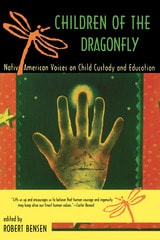
Children of the Dragonfly
Native American Voices on Child Custody and EducationRobert Bensen
University of Arizona Press, 2001
Native American children have long been subject to removal from their homes for placement in residential schools and, more recently, in foster or adoptive homes. The governments of both the United States and Canada, having reduced Native nations to the legal status of dependent children, historically have asserted a surrogate parentalism over Native children themselves.
Children of the Dragonfly is the first anthology to document this struggle for cultural survival on both sides of the U.S.-Canadian border. Through autobiography and interviews, fiction and traditional tales, official transcripts and poetry, these voices— Seneca, Cherokee, Mohawk, Navajo, and many others— weave powerful accounts of struggle and loss into a moving testimony to perseverance and survival. Invoking the dragonfly spirit of Zuni legend who helps children restore a way of life that has been taken from them, the anthology explores the breadth of the conflict about Native childhood.
Included are works of contemporary authors Sherman Alexie, Joy Harjo, Luci Tapahonso, and others; classic writers Zitkala-Sa and E. Pauline Johnson; and contributions from twenty important new writers as well. They take readers from the boarding school movement of the 1870s to the Sixties Scoop in Canada and the Indian Child Welfare Act of 1978 in the United States. They also spotlight the tragic consequences of racist practices such as the suppression of Indian identity in government schools and the campaign against Indian childbearing through involuntary sterilization.
CONTENTS
Part 1. Traditional Stories and Lives
Severt Young Bear (Lakota) and R. D. Theisz, To Say "Child"
Zitkala-Sa (Yankton Sioux), The Toad and the Boy
Delia Oshogay (Chippewa), Oshkikwe's Baby
Michele Dean Stock (Seneca), The Seven Dancers
Mary Ulmer Chiltoskey (Cherokee), Goldilocks Thereafter
Marietta Brady (Navajo), Two Stories
Part 2. Boarding and Residential Schools
Embe (Marianna Burgess), from Stiya: or, a Carlisle Indian Girl at Home
Black Bear (Blackfeet), Who Am I?
E. Pauline Johnson (Mohawk), As It Was in the Beginning
Lee Maracle (Stoh:lo), Black Robes
Gordon D. Henry, Jr. (White Earth Chippewa), The Prisoner of Haiku
Luci Tapahonso (Navajo), The Snakeman
Joy Harjo (Muskogee), The Woman Who Fell from the Sky
Part 3. Child Welfare and Health Services
Problems That American Indian Families Face in Raising Their Children, United States Senate, April 8 and 9, 1974
Mary TallMountain (Athabaskan), Five Poems
Virginia Woolfclan, Missing Sister
Lela Northcross Wakely (Potawatomi/Kickapoo), Indian Health
Sherman Alexie (Spokane/Coeur d'Alene), from Indian Killer
Milton Lee (Cheyenne River Sioux) and Jamie Lee, The Search for Indian
Part 4. Children of the Dragonfly
Peter Cuch (Ute), I Wonder What the Car Looked Like
S. L. Wilde (Anishnaabe), A Letter to My Grandmother
Eric Gansworth (Onondaga), It Goes Something Like This
Kimberly Roppolo (Cherokee/Choctaw/Creek), Breeds and Outlaws
Phil Young (Cherokee) and Robert Bensen, Wetumka
Lawrence Sampson (Delaware/Eastern Band Cherokee), The Long Road Home
Beverley McKiver (Ojibway), When the Heron Speaks
Joyce carlEtta Mandrake (White Earth Chippewa), Memory Lane Is the Next Street Over
Alan Michelson (Mohawk), Lost Tribe
Patricia Aqiimuk Paul (Inupiaq), The Connection
Terry Trevor (Cherokee/Delaware/Seneca), Pushing up the Sky
Annalee Lucia Bensen (Mohegan/Cherokee), Two Dragonfly Dream Songs
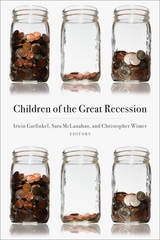
Children of the Great Recession
Irwin Garfinkel
Russell Sage Foundation, 2016
Several contributors examine the recession’s impact on the economic well-being of families, including changes to income, poverty levels, and economic insecurity. Irwin Garfinkel and Natasha Pilkauskas find that in cities with high unemployment rates during the recession, incomes for families with a college-educated mother fell by only about 5 percent, whereas families without college degrees experienced income losses three to four times greater. Garfinkel and Pilkauskas also show that the number of non-college-educated families enrolled in federal safety net programs—including Medicaid, the Earned Income Tax Credit, and the Supplemental Nutrition Assistance Program (or food stamps)—grew rapidly in response to the Great Recession.
Other researchers examine how parents’ physical and emotional health, relationship stability, and parenting behavior changed over the course of the recession. Janet Currie and Valentina Duque find that while mothers and fathers across all education groups experienced more health problems as a result of the downturn, health disparities by education widened. Daniel Schneider, Sara McLanahan and Kristin Harknett find decreases in marriage and cohabitation rates among less-educated families, and Ronald Mincy and Elia de la Cruz-Toledo show that as unemployment rates increased, nonresident fathers’ child support payments decreased. William Schneider, Jeanne Brooks-Gunn, and Jane Waldfogel show that fluctuations in unemployment rates negatively affected parenting quality and child well-being, particularly for families where the mother did not have a four-year college degree.
Although the recession affected most Americans, Children of the Great Recession reveals how vulnerable parents and children paid a higher price. The research in this volume suggests that policies that boost college access and reinforce the safety net could help protect disadvantaged families in times of economic crisis.
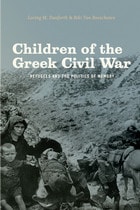
Children of the Greek Civil War
Refugees and the Politics of MemoryLoring M. Danforth and Riki Van Boeschoten
University of Chicago Press, 2011
Marshalling archival records, oral histories, and ethnographic fieldwork, the authors analyze the evacuation process, the political conflict surrounding it, the children’s upbringing, and their fates as adults cut off from their parents and their homeland. They also give voice to seven refugee children who poignantly recount their childhood experiences and heroic efforts to construct new lives in diaspora communities throughout the world. A much-needed corrective to previous historical accounts, Children of the Greek Civil War is also a searching examination of the enduring effects of displacement on the lives of refugee children.
Children of the Holocaust
Arnost Lustig
Northwestern University Press, 1995
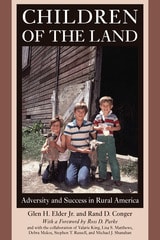
Children of the Land
Adversity and Success in Rural AmericaGlen H. Elder Jr. and Rand D. Conger
University of Chicago Press, 2000
In Children of the Land, the authors ask whether traditional observations about farm families—strong intergenerational ties, productive roles for youth in work and social leadership, dedicated parents and a network of positive engagement in church, school, and community life—apply to three hundred Iowa children who have grown up with some tie to the land. The answer, as this study shows, is a resounding yes. In spite of the hardships they faced during the agricultural crisis of the 1980s, these children, whose lives we follow from the seventh grade to after high school graduation, proved to be remarkably successful, both academically and socially.
A moving testament to the distinctly positive lifestyle of Iowa families with connections to the land, this uplifting book also suggests important routes to success for youths in other high risk settings.
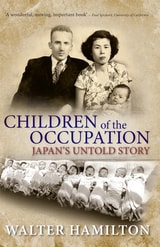
Children of the Occupation
Japan's Untold StoryHamilton, Walter
Rutgers University Press, 2013
Based on interviews with or research on 150 konketsuji—a now-taboo word for "mixed-blood" Japanese—journalist Walter Hamilton presents vivid first-person accounts of these adults as they remember their experiences of childhood loss. Using archival material from organizations dedicated to assisting the children, he combines moving personal tales with historical and political analyses of international race relations and immigration policy, particularly in North America and Australia.
Not only were attitudes and behaviors of the Japanese biased against the mixed-race children, but so were the restrictive and prejudicial immigration policies of the fathers’ native countries. Japan’s racial intolerance was fully matched in the nations it fought against. Hamilton examines how attitudes about race relations have evolved and traces the impact of racial ideology on national policy and cultural identity in Australia, Japan, and the United States.
Children of the Rainforest
Shaping the Future in AmazoniaCamilla Morelli
Rutgers University Press, 2023
Children of the Series and How They Grew
or A Century of Heroines & Heroes, Romantic, Comic, MoralFaye Riter Kensinger
University of Wisconsin Press, 1987
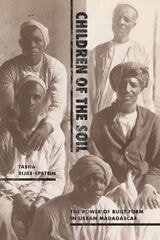
Children of the Soil
The Power of Built Form in Urban MadagascarTasha Rijke-Epstein
Duke University Press, 2023
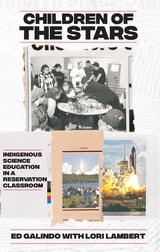
Children of the Stars
Indigenous Science Education in a Reservation ClassroomEd Galindo
Oregon State University Press, 2022
In Children of the Stars, Galindo relates his experience with this first team and with successive student teams, who continued to participate in NASA programs over the course of a decade. He discusses the challenges of teaching American Indian students, from the practical limits of a rural reservation school to the importance of respecting and incorporating Indigenous knowledge systems. In describing how he had to earn the trust of his students to truly be successful as their teacher, Galindo also touches on the complexities of community belonging and understanding; although Indigenous himself, Galindo is not a member of the Shoshone-Bannock tribes and was still an outsider who had as much to learn as the students.
Children of the Stars is the story of students and a teacher, courage and hope. Written in a conversational style, it’s an accessible story about students who were supported and educated in culturally relevant ways and so overcame the limitations of an underfunded reservation school to reach great heights.