Results by title
134 books match the query 'Chinese' and 22 start with c
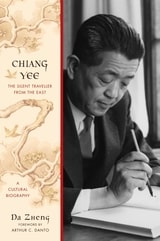
Chiang Yee
The Silent Traveller from the East--A Cultural BiographyZheng, Da
Rutgers University Press, 2010
This biography is more than a recounting of extraordinary accomplishments. It also embraces the transatlantic life experience of Yee who traveled from China to England and then on to the United States, where he taught at Columbia University, to his return to China in 1975, after a forty-two year absence. Interwoven is the history of the communist revolution in China; the battle to save England during World War II; the United States during the McCarthy red scare era; and, eventually, thawing Sino-American relations in the 1970s. Da Zheng uncovers Yee's encounters with racial exclusion and immigration laws, displacement, exile, and the pain and losses he endured hidden behind a popular public image.
China's Battler Poetry
Writing Like There's No TomorrowBy Maghiel van Crevel
University of Westminster Press, 2026
Three hundred million Chinese have left the countryside for the cities since the 1980s, in a flood wave of labor migration that has fueled China’s rise. Known as ‘battlers,’ they belong to a new underclass who face exploitation, discrimination, and harrowing insecurity. And they write poetry.
Battler poetry speaks of being ground down in the factory workshop, of being forced into sex work, of being robbed of your youth. It has made its way into mass media and labor activism, and developed uneasy relations with the literary establishment. It aligns with writing elsewhere in the world that shows the power of poetry as an expression of sociopolitical identity.
Who are China’s battler poets? Where do they find the time and energy, after a 12-hour shift on the assembly line or on a courier moped in big-city traffic? What is their poetry like? Where is it published? Who reads it? What happens when it travels abroad? How has the Chinese state responded? What can battler poetry tell us about the nexus of aesthetics and social experience, in a world where inequality reigns?
China’s Battler Poetry tells the gripping story of an ‘unlikely’ genre. Building on textual and cultural analysis, ethnographic fieldwork, and the collection of underground source material, it sits at the interface of the humanities and social science. It is driven by a desire to understand poetry as both art and social practice, looking at its words through the lifeworlds of its authors and the other way around.
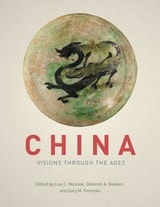
China
Visions through the AgesEdited by Lisa C. Niziolek, Deborah A. Bekken and Gary M. Feinman
University of Chicago Press, 2018
China’s long history is one of the richest and most complex in the known world, and the Cyrus Tang Hall of China offers visitors a wonderful, comprehensive survey of it through some 350 artifacts on display, spanning from the Paleolithic period to present day. Now, with China: Visions through the Ages, anyone can experience the marvels of this exhibition through the book’s beautifully designed and detailed pages. Readers will gain deeper insight into The Field Museum’s important East Asian collections, the exhibition development process, and research on key aspects of China’s fascinating history. This companion book, edited by the exhibition’s own curatorial team, takes readers even deeper into the wonders of the Cyrus Tang Hall of China and enables them to study more closely the objects and themes featured in the show. Mirroring the exhibition’s layout of five galleries, the volume is divided into five sections. The first section focuses on the Paleolithic and Neolithic periods; the second, the Bronze Age, the first dynasties, and early writing; the third, the imperial system and power; the fourth, religion and performance; and the fifth, interregional trade and the Silk Routes. Each section also includes highlights containing brief stories on objects or themes in the hall, such as the famous Lanting Xu rubbing.
With chapters from a diverse set of international authors providing greater context and historical background, China: Visions through the Ages is a richly illustrated volume that allows visitors, curious readers, and China scholars alike a chance to have an enduring exchange with the objects featured in the exhibition and with their multifaceted histories.
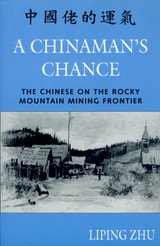
Chinaman's Chance
The Chinese on the Rocky Mountain Mining FrontierLiping Zhu
University Press of Colorado, 2000
Thus, the Chinese portrayed all the stereotypical frontier roles-victors, victims, and villains. Their basic material needs were guaranteed, and many individuals were able to climb up the economic ladder. Frontier justice was used to settle disputes; Chinese-Americans frequently challenged white opponents in the various courts as well as in gun battles.
Interesting and provocative, A Chinaman's Chance not only offers general readers a narrative account of the Rocky Mountain mining frontier, but also introduces a fresh interpretation of the Chinese experience in nineteenth-century America to scholars interested in Asian American studies, immigration history, and ethnicity in the American West.
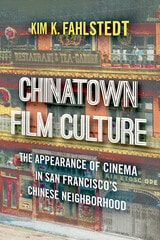
Chinatown Film Culture
The Appearance of Cinema in San Francisco’s Chinese NeighborhoodKim K. Fahlstedt
Rutgers University Press, 2020
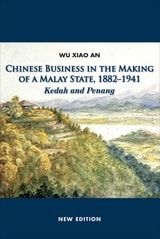
Chinese Business in the Making of a Malay State, 1882-1941
Kedah and PenangWu Xiao An
National University of Singapore Press, 2010
Using Penang and Kedah as a case study, Wu draws on archival sources, family histories and an examination of legal arrangements and the press to show that personal business and business networks were not bound by the territorial borders of traditional or modern states, but extended across much of Southeast Asia and into China. His demonstration of the complexity of interactions involving new migrants, sojourners and settlers, both Chinese and non-Chinese, challenges understandings of state formation and economic growth in colonial Malaya based on ethnic stereotypes and accounts of events limited by fixed political boundaries.
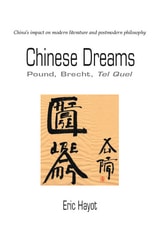
Chinese Dreams
Pound, Brecht, Tel QuelEric Hayot
University of Michigan Press, 2011
China’s profound influence on the avant-garde in the 20th century was nowhere more apparent than in the work of Ezra Pound, Bertolt Brecht, and the writers associated with the Parisian literary journal Tel quel. Chinese Dreams explores the complex, intricate relationship between various “Chinas”—as texts—and the nation/culture known simply as “China”—their context—within the work of these writers. Eric Hayot calls into question the very means of representing otherness in the history of the West and ultimately asks if it might be possible to attend to the political meaning of imagining the other, while still enjoying the pleasures and possibilities of such dreaming. The latest edition of this critically acclaimed book includes a new preface by the author.
“Lucid and accessible . . . an important contribution to the field of East-West comparative studies, Asian studies, and modernism.”
—Comparative Literature Studies
“Instead of trying to decipher the indecipherable ‘China’ in Western literary texts and critical discourses, Hayot chose to show us why and how ‘China’ has remained, and will probably always be, an enchanting, ever-elusive dream. His approach is nuanced and refreshing, his analysis rigorous and illuminating.”
—Michelle Yeh, University of California, Davis
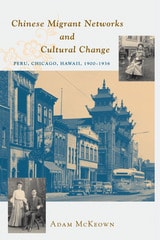
Chinese Migrant Networks and Cultural Change
Peru, Chicago, and Hawaii 1900-1936Adam McKeown
University of Chicago Press, 2001
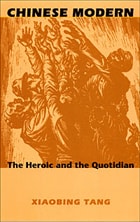
Chinese Modern
The Heroic and the QuotidianXiaobing Tang
Duke University Press, 2000
Tang uncovers crucial clues to modern Chinese literary and cultural practices through readings of Wu Jianren’s 1906 novel The Sea of Regret and works by canonical writers Lu Xun, Ding Ling, and Ba Jin. For the midcentury, he broadens his investigation by considering theatrical, cinematic, and visual materials in addition to literary texts. His reading of the 1963 play The Young Generation reveals the anxiety and terror underlying the exhilarating new socialist life portrayed on the stage. This play, enormously influential when it first appeared, illustrates the utopian vision of China’s lyrical age and its underlying discontents—both of which are critical for understanding late-twentieth-century China. Tang closes with an examination of post–Cultural Revolution nostalgia for the passion of the lyrical age.
Throughout Chinese Modern Tang suggests a historical and imaginative affinity between apparently separate literatures and cultures. He thus illuminates not only Chinese modernity but also the condition of modernity as a whole, particularly in light of the postmodern recognition that the market and commodity culture are both angel and devil.
This elegantly written volume will be invaluable to students of China, Asian studies, literary criticism, and cultural studies, as well as to readers who study modernity.
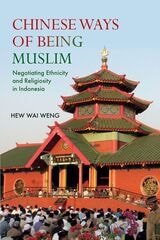
Chinese Ways of Being Muslim
Negotiating Ethnicity and Religiosity in IndonesiaHew Wai Weng
National University of Singapore Press, 2018
Chinese Whispers
Toward a Transpacific PoeticsYunte Huang
University of Chicago Press, 2022
In this new book, the noted critic and best-selling author Yunte Huang explores the dynamics of poetry and poetics in the age of globalization, particularly questions of translatability, universality, and risk in the transpacific context. “Chinese whispers” refers to an American children’s game dating to the years of the Cold War, a period in which everything Chinese, or even Chinese sounding, was suspect. Taking up various manifestations of the phrase in the twentieth and twenty-first centuries, Huang investigates how poetry, always to a significant degree untranslatable, complicates the transpacific production of meanings and values.
The book opens with the efforts of I. A. Richards, arguably the founder of Anglo-American academic literary criticism, to promote Basic English in China in the early twentieth century. It culminates by resituating Ernest Fenollosa’s famous essay “The Chinese Written Character as a Medium for Poetry,” exploring the ways in which Chinese has historically enriched but also entrapped the Western conception of language.
Chinese and Japanese Music-Dramas
J. I. Crump and William P. Malm, Editors
University of Michigan Press, 1975
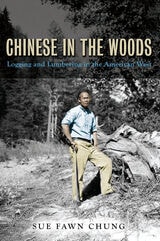
Chinese in the Woods
Logging and Lumbering in the American WestSue Fawn Chung
University of Illinois Press, 2015
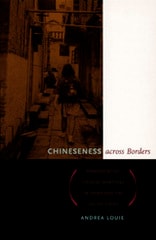
Chineseness across Borders
Renegotiating Chinese Identities in China and the United StatesAndrea Louie
Duke University Press, 2004
Louie focuses on “In Search of Roots,” a program that takes young Chinese American adults of Cantonese descent to visit their ancestral villages in China’s Guangdong province. Through ethnographic interviews and observation, Louie examines the experiences of Chinese Americans both during village visits in China and following their participation in the program, which she herself took part in as an intern and researcher. She presents a vivid portrait of two populations who, though connected through family ties generations back, are meeting for the first time in the context of a rapidly changing contemporary China. Louie situates the participants’ and hosts’ shifting understandings of China and Chineseness within the context of transnational flows of people, media, goods, and money; China’s political and economic policies; and the racial and cultural politics of the United States.
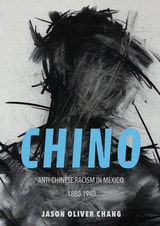
Chino
Anti-Chinese Racism in Mexico, 1880-1940Jason Oliver Chang
University of Illinois Press, 2017
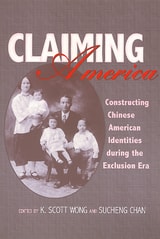
Claiming America
edited by K. Scott Wong and Sucheng Chan
Temple University Press, 1998
The second section shows how children of the immigrants developed a sense of themselves as having a distinct identity as Chinese Americans. For this generation, many of the opportunities available to other immigrants' children were simply inaccessible. In some districts explicit policies kept Chinese children in segregated schools; in many workplaces discriminatory practices kept them from being hired or from advancing beyond the lowest positions. In the 1930s, in fact, some Chinese Americans felt their only option was to emigrate to China, where they could find jobs better matched to their abilities. Many young Chinese women who were eager to take advantage of the educational and work options opening to women in the wider U.S. society first had to overcome their family's opposition and then racism. As the personal testimonies and historical biographies eloquently attest, these young people deeply felt the contradictions between Chinese and American ways; but they also saw themselves as having to balance the demands of the two cultures rather than as having to choose between them.
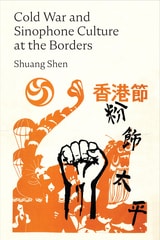
Cold War and Sinophone Culture at the Borders
Shuang Shen
University of Michigan Press, 2027
Cold War and Sinophone Culture at the Borders examines Sinophone literary and cultural production in relation to the politics of the global Cold War and decolonization in Hong Kong, Singapore, and Malaysia. As we reckon with the historical and contemporary geopolitical standoffs in the Cold War–divided territories, Shuang Shen draws attention to the diasporic communities outside Chinese sovereign territories and shows that these supposedly peripheral locations were in fact significant cultural and political hot spots.
Shen demonstrates how Cold War borders exerted geo-power over strategic hot spots, organized global flows of populations and cultures, hardened the boundaries of aesthetic debates, and managed interracial relationships and plurilingual exchange. The multifold bordering effect in turn complicates the common perception of the border as a mechanism of territorial division. Cold War and Sinophone Culture at the Borders proposes that a critical examination of borders—not just territorial divisions, but also social, political, and aesthetic boundaries––can tap into different structures of power without needing to incorporate them into a single binary framework of the metropole versus colony.
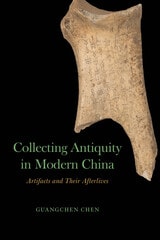
Collecting Antiquity in Modern China
Artifacts and Their AfterlivesGuangchen Chen
University of Chicago Press, 2026
In this book, Guangchen Chen argues that discerning collectors used antiquities to upend dominant discourses on history and cultural memory in twentieth-century China. Examining four categories of ancient artifacts—“carving” (oracle bones), “rubbing” (imprints of inscriptions and books), “brushing” (calligraphy), and “weaving” (textiles and costumes)—Chen explains how their modern (re)emergences changed our understanding of the relationship between tradition and modernity, textuality and materiality, and the very meaning of “Chineseness.”
Chen considers intellectuals such as Wang Yirong, Liu E, Luo Zhenyu, Wang Guowei, and Chen Mengjia, who played a pivotal role in the oracle bones’ modern reception. He also looks to major literary figures including Lu Xun, whose engagements with textual remnants of the past inspired his critique of Chinese culture; Guo Moruo, whose work on the calligraphic masterpiece Lantingxu contributed to the cultural-political climate that sparked the Cultural Revolution; Shi Zhecun, whose interest in inscriptions on ancient stelae helped him to hold fast to intellectual integrity in the face of political pressure; and Shen Congwen, whose obsession with ancient textiles saved him from committing suicide after his writing fell out of favor. These antiquarians used their collections as a strategy to synchronize historical time and to challenge two dominant yet contrasting ideologies in modern China: a regressive idealization of antiquity and an unquestioning trust in linear progress. During this turbulent period, long-lost artifacts came to function as omens, warnings, and revelations from another time, generating new meanings that were uniquely relevant to the present.
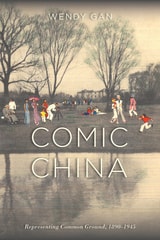
Comic China
Representing Common Ground, 1890-1945Wendy Gan
Temple University Press, 2018
Wendy Gan’s Comic China investigates the circumstances and motivations of cross-cultural humor. How do works that trade in laughter shape our understanding of Western discourses about China? Is humor meant to be inclusive or exclusive? Does it protect or challenge the status quo? Gan suggests that the simple, straightforward laugh may actually be a far more intricate negotiation of power relations.
Gan unpacks texts by authors who had little real contact with China as well as writers whose proximity to China influenced their representations. Looking beyond the familiar canon of serious modernist texts and the Yellow Peril classics of popular fiction, Gan analyzes turn-of-the-twentieth-century musical comedies set in the Far East, Ernest Bramah’s chinoiserie-inspired tales, and interwar travel writing. She also considers the comic works of the missionary Arthur Henderson Smith, the former Maritime Customs Officer J.O.P. Bland, and the Shanghai journalist and advertising man Carl Crow.
Though it includes humor that is less than complimentary to the Chinese, Comic China reminds us that laughter is tied to our common humanity. Gan navigates the humor used in comic depictions ultimately to find, not superiority or ridicule, but common ground.
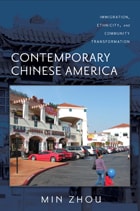
Contemporary Chinese America
Immigration, Ethnicity, and Community TransformationMin Zhou, foreword by Alejandro Portes
Temple University Press, 2009
Contemporary Chinese America is the most comprehensive sociological investigation of the experiences of Chinese immigrants to the United States—and of their offspring—in the late twentieth and early twenty-first centuries. The author, Min Zhou, is a well-known sociologist of the Chinese American experience. In this volume, she collects her original research on a range of subjects, including the causes and consequences of emigration from China, demographic trends of Chinese Americans, patterns of residential mobility in the U.S., Chinese American "ethnoburbs," immigrant entrepreneurship, ethnic enclave economies, gender and work, Chinese language media, Chinese schools, and intergenerational relations. The concluding chapter, "Rethinking Assimilation," ponders the future for Chinese Americans. Also included are an extensive bibliography and a list of recommended documentary films.
While the book is particularly well-suited for college courses in Chinese American studies, ethnic studies, Asian studies, and immigration studies, it will interest anyone who wants to more fully understand the lived experience of contemporary Chinese Americans.
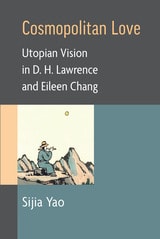
Cosmopolitan Love
Utopian Vision in D. H. Lawrence and Eileen ChangSijia Yao
University of Michigan Press, 2023
Finalist: 2024 Southern Atlantic Modern Language Association (SAMLA) Book Award Finalist | 05/21/2024
Love, and the different manifestations of it, is a common theme in literature around the world. In Cosmopolitan Love, Sijia Yao examines the writings of D. H. Lawrence, a British writer whose literature focused primarily on interpersonal relationships in domestic settings, and Eileen Chang, a Chinese writer who migrated to the United States and explored Chinese heterosexual love in her writing. While comparing the writings of a Chinese writer and an English one, Yao avoids a direct comparison between East and West that could further enforce binaries. Instead, she uses the comparison to develop an idea of cosmopolitanism that shows how the writers are in conversation with their own culture and with each other. Both D. H. Lawrence and Eileen Chang wrote stories that are influenced by—but sometimes stand in opposition to—their own cultures. They offer alternative understandings of societies dealing with modernism and cultural globalization. Their stories deal with emotional pain caused by the restrictions of local politics and economics and address common themes of incestuous love, sexual love, adulterous love, and utopian love. By analyzing their writing, Yao demonstrates that the concept of love as a social and political force can cross cultural boundaries and traditions to become a basis for human meaning, the key to a cosmopolitan vision.
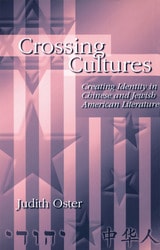
Crossing Cultures
Creating Identity in Chinese and Jewish American LiteratureJudith Oster
University of Missouri Press, 2003