496 books match the query 'Christian Theology' and 35 start with c
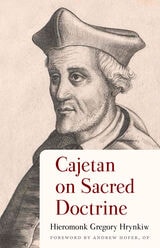
cover of Cajetan on Sacred Doctrine

Cajetan on Sacred Doctrine

Hieromonk Gregory Hrynkiw

Catholic University of America Press, 2020
Cardinal Tommaso de Vio (1469-1534), commonly known as Cajetan, remains a misunderstood figure. Cajetan on Sacred Doctrine is the first ever monograph on Cajetan as a theologian in his own right, and it fills an immense lacuna in the debate on the nature of sacred doctrine from the Thomism of the Renaissance. Confirming Cajetan as a key protagonist within the emergent Reformation, this work delivers an indispensable immersion into his theological method in relation to his closest predecessors and contemporaries: Hervaeus Natalis, Blessed Duns Scotus, Gregory of Rimini, Johannes Capreolus, Silvestro Mazzolini da Prierio, Martin Luther, and others. The first ever commentary on St. Thomas Aquinas’s entire Summa Theologiae was published by Cajetan. This monograph focuses primarily on the Summa Theologiae Ia pars, question 1, concerning sacred doctrine, and how Cajetan unpacks the potency of Aquinas’s opening syllogism, setting forth a coherent division of the question, and ultimately touching the mind of Aquinas when revealing the articles of the Apostles’ Creed as the Summa Theologiae’s macrostructure. Finally, we are shown how Cajetan emphasizes the essential link between ecclesiology and the communication of sacred doctrine, especially the papacy’s role in guaranteeing the proposal and explication of the faith. Cajetan’s accomplishments as a biblical exegete established him as a renowned Renaissance scholar and a forerunner of future ecumenical dialogue. Furthermore, his grasp of theology’s perennial properties continue to make him an important interlocutor in the renewed quest for a unity in theology in an ever more fragmented aggregation of theologies. Cajetan’s theological labor is a perpetuation of the via antiqua, a biblical-theological worldview handed down through Tradition. St. Gregory the Theologian (329-390), the via antiqua’s preeminent Eastern representative and chief theological constructor of Christendom, offers the monograph’s author--himself a Byzantine Hieromonk--a prime opportunity for a few closing insights on the innate symphony between two very distant periods and distinct theological traditions within the one ecumenical Church.
[more]
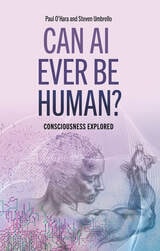
cover of Can AI Ever Be Human? Consciousness Explained

Can AI Ever Be Human? Consciousness Explained

Steven Umbrello

Catholic University of America Press, 2026
Can a machine ever truly be human? In an age where artificial intelligence writes poems, diagnoses illnesses, and converses with uncanny fluency, the line between human and machine seems to blur. Yet beneath the surface lies a fundamental distinction. Drawing on Bernard Lonergan’s insights as well as the rich Catholic intellectual tradition, Can AI Ever Be Human? argues that while machines can simulate aspects of human behavior, they cannot cross the threshold into genuine consciousness. O’Hara and Umbrello guide readers through the essential structures of human knowing: experience, understanding, judgment, and decision. In doing so, they show how each involves intentionality, self-awareness, and freedom. These uniquely human capacities cannot be reduced to algorithms or replicated by even the most advanced neural networks. The book also addresses pressing ethical and theological questions: What does it mean to be made in the image of God? How do we preserve human dignity in a world increasingly shaped by artificial intelligence? Far from being anti-technology, O’Hara and Umbrello affirm the value of AI as a tool that emulates a Turing machine, although constrained by Gödel’s theorem, while rejecting the illusion that it can replace human beings. Accessible yet rigorous, Can AI Ever Be Human? speaks to scholars, students, clergy, and general readers alike. It is essential reading for anyone interested in the intersection of technology, scientific methodology, philosophy, and theology, and for all who seek to understand what makes us irreducibly human in an era of rapid technological change.
[more]
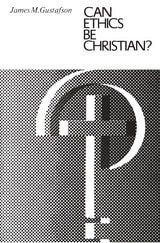
cover of Can Ethics Be Christian?

Can Ethics Be Christian?

James M. Gustafson

University of Chicago Press, 1977

Is there a special relation between religious beliefs and moral behavior? In particular, is there a distinctive Christian moral character and how is this manifested in moral actions? The influential theologian James M. Gustafson probes these questions and offers an analysis of the distinctively religious reasons of the "heart and mind" which constitute the basis for a Christian ethics.

Professor Gustafson grounds his discussion in a concrete example of moral conduct which deeply impressed him. The incident—narrated in detail at the start and referred to throughout—concerns a nonreligious colleague who came to the aid of an intoxicated soldier. Although seemingly trivial, this incident, in the author's view, approximates the normal sorts of experiences in which individuals have to make moral decisions every day; it becomes a touchstone to investigate the logical, social, and religious elements in moral decision making.
[more]
cover of Canonizing Francisco Solano: Devotion, Politics, and a New Model of Sanctity in the Early Americas

Canonizing Francisco Solano

Devotion, Politics, and a New Model of Sanctity in the Early Americas

Carlos Piccone Camere

Catholic University of America Press, 2026

Francisco Solano (1549–1610), a Spanish-born Franciscan friar, spent roughly half of his religious life in the Viceroyalty of Peru, where he became known as a zealous preacher, tireless missionary, a friar devoted to prayer and penance, and a reputed wonderworker. Among the many exemplary missionaries of the early modern Catholic world, he acquired an extraordinary reputation for sanctity in the decades following his death. Yet despite being one of the earliest officially promoted canonization causes from the Americas, and despite an initially auspicious process, his canonization advanced only slowly through a long and complex path. Canonizing Francisco Solano offers the first full-length study in English of Solano’s canonization process and uses his case to illuminate the making of sainthood in the Spanish Empire. Moving beyond official papal documents and conventional hagiographic narratives, the book draws on archival research in Rome, Madrid, Seville, and Lima to examine how sanctity was not only recognized but also debated, promoted, delayed, and reshaped by competing interests and institutional priorities. The book demonstrates how the slow progress of Solano’s cause was shaped by changing Roman procedures after the Council of Trent, tensions within the Franciscan world, competition with other causes such as that of Rosa de Lima, and the political priorities of the papacy, the Spanish monarchy, and colonial elites. In this account, canonization appears not merely as a devotional or theological process, but also as a field of negotiation in which papal authority, imperial ambition, religious orders, and local aspirations all played a role. Solano’s case opens a new perspective on colonial Peru, early modern Rome, and the wider Catholic world, while offering a broader contribution to the history of sanctity, canonization, and the relationship between religion and power in the early Americas.
[more]
cover of Catholic Cosmotechnics for the AI Age

Catholic Cosmotechnics for the AI Age

Luigi Russi

St. Augustine's Press, 2026
[more]
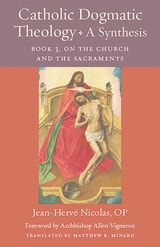
cover of Catholic Dogmatic Theology: A Synthesis, Book 3: On the Church and the Sacraments

Catholic Dogmatic Theology

A Synthesis, Book 3: On the Church and the Sacraments

Jean-Herve Nicolas

Catholic University of America Press, 2024
Every discipline, including theology, requires a synthetic overview of its acquisitions and open questions, a kind of "topography" to guide the new student and refresh the gaze of specialists. In his Synthèse dogmatique, Fr. Jean-Hervé Nicolas, OP (1910-2001) presents just such a map of Thomistic theology, focusing on the central topics of Dogmatic Theology: The One and Triune God, Christology, Mariology, Ecclesiology, the Sacraments, and the Last Things. Drawing on decades of research and teaching, Fr. Nicolas synthetically presents these topics from a faithfully Thomistic perspective. While broadly and genially engaging the theological literature of the 20th century, he nonetheless remains deeply indebted to the Thomistic school that would have formed him in his youth as a theologian. This provides the reader with an unparalleled theological vision, masterfully bringing forth, at once, what is new and what is classical. Catholic Theology: A Dogmatic Synthesis is being published in English as a multi-volume work. In this volume, Fr. Nicolas takes up the raison d’être for the mission of the Holy Spirit: the work of sanctification in and through the Church, the mystical body of Christ and sacrament of salvation. In the ecclesiology articulated in this volume, he presents a theology of the Church that is at once wholly Thomistic and also faithful to the great themes of the Second Vatican Council, drawing especially from the works of Journet, Congar, and Bouyer, in critical dialogue with other theologians of his day. He then presents a complete and detailed sacramental theology, both concerning the nature of the sacraments in general, as well as concerning each sacrament in particular, carefully striving to balance positive and scholastic theology. Serving as a professor for decades, including at the University of Fribourg, Fr. Nicolas was at once a profound scholar and a masterful pedagogue. Gathering the work of a lifetime into a single pedagogical narrative, Fr. Nicolas's Catholic Theology: A Dogmatic Synthesis provides a resource for students and scholars alike. In view of the hyper-specialization of theology today, this series of volumes provides readers with a synthetic and sapiential overview of the fundamentals of dogmatic theology from a robust and profound Thomistic perspective.
[more]
cover of Catholic Dogmatic Theology: A Synthesis: Book 1, On the Trinitarian Mystery of God

Catholic Dogmatic Theology

A Synthesis: Book 1, On the Trinitarian Mystery of God

Jean Herve Nicolas, OP

Catholic University of America Press, 2021
Every discipline, including theology, requires a synthetic overview of its acquisitions and open questions, a kind of “topography” to guide the new student and refresh the gaze of specialists. In his Synthèse dogmatique, Fr. Jean-Hervé Nicolas, OP (1910-2001) presents just such a map of Thomistic theology, focusing on the central topics of Dogmatic Theology: The One and Triune God, Christology, Mariology, Ecclesiology, the Sacraments, and the Last Things. Drawing on decades of research and teaching, Fr. Nicolas synthetically presents these topics from a faithfully Thomistic perspective. While broadly and genially engaging the theological literature of the 20th century, he nonetheless remains deeply indebted to the Thomistic school that would have formed him in his youth as a theologian. This provides the reader with an unparalleled theological vision, masterfully bringing forth, at once, what is new and what is classical. Catholic Theology: A Dogmatic Synthesis will be published in English as a multi-volume work. In this volume, Fr. Nicolas discusses the nature of theological science and the mystery of the Triune God. At once historically-informed and speculatively-detailed, this volume carefully introduces the reader to classical Thomistic positions concerning the theological articulation of the Trinitarian mystery, including the topic of the divine missions, that is, the sending of the Son and the Spirit in the economy of salvation, thereby providing an important connection between the dogmatic portion of theology and its spiritual / moral concerns. Given the central luminosity of the Trinitarian mystery in the life of faith and in theology, this volume is a pivotal chapter in theological reflection. Indeed, objectively speaking, it is the most important discussion in all of theology. Serving as a professor for decades, including at the University of Fribourg, Fr. Nicolas was at once a profound scholar and a masterful pedagogue. Gathering the work of a lifetime into a single pedagogical narrative, Fr. Nicolas’s Catholic Theology: A Dogmatic Synthesis provides a resource for students and scholars alike. In view of the hyper-specialization of theology today, this series of volumes provides readers with a synthetic and sapiential overview of the fundamentals of dogmatic theology from a robust and profound Thomistic perspective.
[more]
cover of Catholic Dogmatic Theology: A Synthesis: Book 2: On the Incarnation and Redemption

Catholic Dogmatic Theology

A Synthesis: Book 2: On the Incarnation and Redemption

Jean-Herve Nicolas

Catholic University of America Press, 2022
Every discipline, including theology, requires a synthetic overview of its acquisitions and open questions, a kind of "topography" to guide the new student and refresh the gaze of specialists. In his Synthèse dogmatique, Fr. Jean-Hervé Nicolas, OP (1910-2001) presents just such a map of Thomistic theology, focusing on the central topics of Dogmatic Theology: The One and Triune God, Christology, Mariology, Ecclesiology, the Sacraments, and the Last Things. Drawing on decades of research and teaching, Fr. Nicolas synthetically presents these topics from a faithfully Thomistic perspective. While broadly and genially engaging the theological literature of the 20th century, he nonetheless remains deeply indebted to the Thomistic school that would have formed him in his youth as a theologian. This provides the reader with an unparalleled theological vision, masterfully bringing forth, at once, what is new and what is classical. Catholic Theology: A Dogmatic Synthesis will be published in English as a multi-volume work. In this volume, Fr. Nicolas discusses the mysteries of faith directly connected with the Redemptive Incarnation: the formation of orthodox Christological dogma in the course of the first centuries of the Church; the nature of the Hypostatic Union; the latter's effects in Christ's holiness, knowledge, and incarnate activity; the mariological mysteries connected to the divine maternity; the soteriological meaning of Christ's vicarious satisfaction; and the eschatological return of Christ in Glory. Serving as a professor for decades, including at the University of Fribourg, Fr. Nicolas was at once a profound scholar and a masterful pedagogue. Gathering the work of a lifetime into a single pedagogical narrative, Fr. Nicolas's Catholic Theology: A Dogmatic Synthesis provides a resource for students and scholars alike. In view of the hyper-specialization of theology today, this series of volumes provides readers with a synthetic and sapiential overview of the fundamentals of dogmatic theology from a robust and profound Thomistic perspective.
[more]
cover of Catholic Dogmatic Theology: A Synthesis: Book 4: On Creation and the Creator

Catholic Dogmatic Theology

A Synthesis: Book 4: On Creation and the Creator

Jean-Herve Nicolas, OP, Jean-Herve

Catholic University of America Press, 2024
Every discipline, including theology, requires a synthetic overview of its acquisitions and open questions, a kind of "topography" to guide the new student and refresh the gaze of specialists. In his Synthèse dogmatique, Fr. Jean-Hervé Nicolas, OP (1910-2001) presents just such a map of Thomistic theology, focusing on the central topics of Dogmatic Theology: The One and Triune God, Christology, Mariology, Ecclesiology, the Sacraments, and the Last Things. Drawing on decades of research and teaching, Fr. Nicolas synthetically presents these topics from a faithfully Thomistic perspective. While broadly and genially engaging the theological literature of the 20th century, he nonetheless remains deeply indebted to the Thomistic school that would have formed him in his youth as a theologian. This provides the reader with an unparalleled theological vision, masterfully bringing forth, at once, what is new and what is classical. Catholic Dogmatic Theology: A Synthesis is being published in English as a multi-volume work. In this volume, originally written as a supplement to his large Synthèse dogmatique, Fr. Nicolas returns to the theological topics of the One God and Creation. In a tightly unified presentation, he discusses: what we can naturally and supernaturally know about the One God; the nature of creation and providence; the nature of bodily creatures and their evolution; the nature and activity of spiritual creatures, men and angels alike; the problem of evil; and the relationship between the natural and the supernatural. By returning to these themes classically treated in the context of the Prima pars of the Summa theologiae, Fr. Nicolas presents his readers with the completion of his dogmatic synthesis. Serving as a professor for decades, including at the University of Fribourg, Fr. Nicolas was at once a profound scholar and a masterful pedagogue. Gathering the work of a lifetime into a single pedagogical narrative, Fr. Nicolas's Catholic Dogmatic Theology: A Synthesis provides a resource for students and scholars alike. In view of the hyper-specialization of theology today, this series of volumes provides readers with a synthetic and sapiential overview of the fundamentals of dogmatic theology from a robust and profound Thomistic perspective.
[more]
cover of Christ Our Hope: An Introduction to Eschatology

Christ Our Hope

An Introduction to Eschatology

Paul O'Callaghan

Catholic University of America Press, 2011
Christ Our Hope is a masterful reflection on Christian eschatology, in a textbook of twelve accessible chapters.
[more]
cover of Christ the Educator

Christ the Educator

Catholic University of America Press, 1954
No description available
[more]
cover of Christian America and the Kingdom of God: White Christian Nationalism from the Puritans through January 6, 2021

Christian America and the Kingdom of God

White Christian Nationalism from the Puritans through January 6, 2021

Richard T. Hughes and Christina Littlefield

University of Illinois Press, 2025

The myth of a Christian America fuels a powerful political force sure of its moral superiority and intent on implementing a Christian nationalist agenda. Richard T. Hughes and Christina Littlefield draw on discussions of civil religion and forms of nationalism to explore the complex legal and cultural arguments for a Christian America. The authors also provide an in-depth examination of the Bible’s words on the “chosen nation” and “kingdom of God” that Christian nationalists quote to support the idea of the US as a Christian nation.

A timely new edition of the acclaimed work, Christian America and the Kingdom of God spotlights how the centuries-long pursuit of a Christian America has bred an aggressive white Christian nationalism that twists faith, unleashes unchristian behavior, and threatens the nation.
[more]
cover of Christian Instruction; Admonition and Grace; The Christian Combat; Faith, Hope and Charity

Christian Instruction; Admonition and Grace; The Christian Combat; Faith, Hope and Charity

Saint Augustine

Catholic University of America Press, 1950
No description available
[more]
cover of Christian faith & human understanding: studies on the Eucharist, Trinity, and the human person

Christian faith & human understanding

studies on the Eucharist, Trinity, and the human person

Robert Sokolowski

Catholic University of America Press, 2006
In this collection of essays, renowned philosopher Robert Sokolowski illustrates how Christian faith is not an alternative to reason, but rather an enhancement of it.
[more]
cover of Christianity and Philosophical Culture in the Fifth Century: The controversy about the Human Soul in the West

Christianity and Philosophical Culture in the Fifth Century

The controversy about the Human Soul in the West

Ernest Fortin

St. Augustine's Press, 2019
[more]
cover of Christianity, Social Change, and Globalization in the Americas

Christianity, Social Change, and Globalization in the Americas

Peterson, Anna L

Rutgers University Press, 2001

This volume resulted from a collaborative research project into responses of Protestant and Catholic religious communities in the Americas to the challenges of globalization. Contributors from the fields of religion, anthropology, political science, and sociology draw on fieldwork in Peru, El Salvador, and the United States to show the interplay of economic globalization, migration, and growing religious pluralism in Latin America.

Organized around three central themes-family, youth, and community; democratization, citizenship, and political participation; and immigration and transnationalism-the book argues that, at the local level, religion helps people, especially women and youths, solidify their identities and confront the challenges of the modern world. Religious communities are seen as both peaceful venues for people to articulate their needs, and forums for building participatory democracies in the Americas. Finally, the contributors examine how religion enfranchises poor women, youths, and people displaced by war or economic change and, at the same time, drives social movements that seek to strengthen family and community bonds disrupted by migration and political violence.
[more]
cover of Church and Communion: An Introduction to Ecumenical Theology, Second Edition

Church and Communion

An Introduction to Ecumenical Theology, Second Edition

Philip Goyret

Catholic University of America Press, 2021
This book is about ecumenism, from a Catholic point of view. The first part, chapters 1 and 2, describe the history of divisions within the Church, as well as of the efforts to bring about Christian unity. The second part examines Ecumenism from a systematic theological perspective. This first part takes into account the different factors that led to definitive ruptures within the Church, which usually are not only theological. The text gives useful information about what happened after the respective divisions as well as about the various attempts to restore unity, the development of the Ecumenical Movement in the 20th Century, and the current situation of ecumenical dialogue within the Catholic Church. While offering insight into the sad history that has led to the present disunity, this work also highlights the way Christians have sought to bring to fulfill the petition of Christ that his disciples might be one, as He and the Father are one. The second part―chapters three, four and five―offers a systematic theological analysis of unity in the Church, from the point of view of dogmatic theology. We find here an explanation of the Catholic concept of ecumenism, of how Catholic theology understands the unity of the Church, and, finally, of the Catholic principles which sustain the efforts for regaining unity in the Church. The Second Vatican Council, and particularly the Constitution Lumen gentium and the Decree Unitatis redintegratio, are at the foundation of these reflections. At the same time, since the theology of the Church and the life of the Church are intimately connected, there is a profound link between this dogmatic section and the earlier historical section. The last chapter, about the practice of ecumenism, is also written from a theological perspective, but with more links with life and spirituality. The chapter recalls that ecumenism can never simply remain a set of theological principles, but rather inspires an attitude and action in charity which are essential to the Christian life.
[more]
cover of Church, State, and Society: An Introduction to Catholic Social Doctrine, Second Edition

Church, State, and Society

An Introduction to Catholic Social Doctrine, Second Edition

J. Brian Benestad

Catholic University of America Press, 2025
Church, State, and Society explains the nuanced understanding of human dignity and the common good found in the Catholic intellectual tradition. It makes the case that liberal-arts education is an essential part of the common good because it helps people understand their dignity and all that justice requires. The book is divided into four parts. The first treats key themes of social life: the dignity of the human person, human rights, natural law, and the common good. Part two focuses on the three principal mediating institutions of civil society: the family, the Church, and the Catholic university. Part three considers the economy, work, poverty, immigration, and the environment, while part four focuses on the international community and just war principles. The conclusion discusses tension between Catholic Social Doctrine and liberal democracy. This second edition contains new chapters on religious liberty, cooperation with evil, issues around gender ideology, and contemporary questions of Catholics in political life, including regarding the reception of the sacraments. The book also includes new material on economic and social teaching of the Magisterium promulgated since the first edition, especially related to the teaching of Benedict XVI.
[more]
cover of Colors and Textures of Roman North Africa: Essays in Memory of Maureen A. Tilley

Colors and Textures of Roman North Africa

Essays in Memory of Maureen A. Tilley

Elizabeth A. Clark

Catholic University of America Press, 2023

This book serves two purposes: first, it celebrates the career of the late Maureen Tilley; second, it provides a “state of the field” look at some of the latest scholarship on Christian North Africa in late antiquity. The chapters, written by both senior scholars and the next generation of North African researchers, fills gaps in some of our understandings of the colorful people, places, and disputes that arose in the unique environment of Christian North Africa. The book centers around Augustine, Donatist studies, and North African biblical interpretation, representing Tilley’s major areas of interest, while also ensuring coverage of Tertullian (a major figure in the North African church and one of Tilley’s hobbyhorses) and the pilgrimages to North Africa and other places. It contributes to the field(s) by providing new scholarship from some of the biggest names in Christian North Africa studies (Patout Burns, Robin Jensen, Bill Tabbernee, Anthony Dupont, and Allan Fitzgerald) and in Patristic/early Christian studies writ large (Blake Leyerle and Geoffrey Dunn) while demonstrating the new trajectories of Christian North Africa research from early career (Alden Bass) and emerging (Colum Dever) scholars. The editors were Tilley’s dissertation director (the late Liz Clark) and one of her last mentees (Zach Smith), so the entire collection has a meta-view of academic genealogy – knowledge flowing from Tilley’s mentor, through colleagues and mentees, and down through and to the next generation who carry on those legacies.
[more]
cover of Commentaries on the Psalms, Volume

Commentaries on the Psalms, Volume

St. Hilary of Poitiers

Catholic University of America Press, 2027
Hilary of Poitiers (d. 367), famous for his role in the Trinitarian debates of the fourth century, was a key figure in the emergence of Western, Latin theology and biblical exegesis. His writings reflect his deep engagement with the major Greek thinkers of his time as well as his distinctive approach to the moral and spiritual meaning of Scripture. His extensive treatment of the Psalms, translated here into English for the first time, is the earliest that survives from the Latin West. The work, which Hilary composed between 364 and his death in 367, reflects his mature theology, comprising an Instructio or introduction, as well as commentary on fifty-seven Psalms (1, 2, 9, 13, 14, 51–69, 91, 119 to 150; LXX numbering) and an extended treatise on Psalm 118. While the Commentaries have received relatively little scholarly attention, they reward close reading. They reflect not only Hilary’s own keen interest in the linguistic and theological features of the biblical text, but also his debts to the traditions of interpretation that were circulating among the pro-Nicene thinkers of his time. Close study of this work reveals how Hilary supplemented his own earlier methods of figurative exegesis by engaging Greek sources, especially the thought of Origen of Alexandria (c. 185–c. 255), and by incorporating insights from his developing pro-Nicene theology. Although Hilary attends to the historical meaning of the Psalms, he regularly views Christ as the true author of the prayers. Thus, the Commentaries are closely linked to his Christological and Trinitarian writings, as well as to his theology of kenosis and deification.
[more]
cover of Commentary on Matthew

Commentary on Matthew

D.H. St. Hilary of Poiters

Catholic University of America Press, 2012
St. Jerome (347-420) has been considered the pre-eminent scriptural commentator among the Latin Church Fathers. His Commentary on Matthew, written in 398 and profoundly influential in the West, appears here for the first time in English translation.
[more]
cover of Commentary on Matthew

Commentary on Matthew

Saint Jerome

Catholic University of America Press, 2008
His Commentary on Matthew, written in 398 and profoundly influential in the West, appears here for the first time in English translation. Jerome covers the entire text of Matthew's gospel by means of brief explanatory comments that clarify the text literally and historically.
[more]
cover of Commentary on the Songs of Songs

Commentary on the Songs of Songs

Vittorio Rupert of Deutz

Catholic University of America Press, 2024
This is the first English translation of a major work by Rupert of Deutz, arguably the most prolific Christian author since Augustine. During his lifetime, which spanned the eleventh and twelfth centuries, Rupert engaged in controversies on the Eucharist and on predestination and composed works on the Trinity, salvation in Christ, and other major theological topics. An ardent defender of a monastic theology that focused on the interpretation of Scripture and the liturgy, Rupert is well known also for his distinctive hermeneutical approach to the Bible. His Commentary on the Songs of Songs builds on the long Hebrew-Christian tradition of allegorical interpretation of this Old Testament book but adds a radically original dimension to it: it interprets the text as a dialogue between Jesus and Mary and unfolds in this context a novel approach to Mary, who is presented as the teacher of the apostles and assumed to have participated in the Apostolic Council, described in Acts 15. Rupert has prefaced his commentary with a letter to Thietmar, bishop of Verden (in northern Germany), as well as a prologue in which he reflects on his experience of being called to perform this exegetical task. The complete translation by Jieon Kim and Vittorio Hösle of this major work (up to now translated only into German) is preceded by an introduction that discusses Rupert's life and works, as well as the history of the interpretation of the Song of Songs, and offers hermeneutical reflections on Rupert's methodology.
[more]
cover of Communication Culture in a Digital Age: Being Seriously Relational

Communication Culture in a Digital Age

Being Seriously Relational

Cristian Mendoza

St. Augustine's Press, 2023

Why are human beings so attracted to information and communication technologies? Developments in this field have formed new social networks around these technologies and that seem to compete with pre-existing structures in human lives. Cristian Mendoza and Lluís Clavell confront this phenomenon and its effect on human happiness, but have no desire to condemn the trajectory of human reliance on communication technology. Rather, they see an opportunity to explore human nature at greater depths. Only in this way can our use of technology properly support human activity and not sabotage our grasp of reality. 

Mendoza and Clavell's treatment of this topic renders an important philosophical conversation about digital realities and how they can actually make human life more human. This book provides a framework for using human attraction to information and communication tech for human benefit. It can be done! The authors apply the work of old and new masters to help open the new horizons of communication technology wherein human beings can flourish.
[more]
cover of Comparative Essays on the Poetry and Prose of John Donne and George Herbert: Combined Lights

Comparative Essays on the Poetry and Prose of John Donne and George Herbert

Combined Lights

Russell M. Hillier

University of Delaware Press, 2022
This book brings together ten essays on John Donne and George Herbert composed by an international group of scholars. The volume represents the first collection of its kind to draw close connections between these two distinguished early modern thinkers and poets who are justly coupled because of their personal and artistic association. The contributors' distinctive new approaches and insights illuminate a variety of topics and fields while suggesting new directions that future study of Donne and Herbert might take. Some chapters explore concrete instances of collaboration or communication between Donne and Herbert, and others find fresh ways to contextualize the Donnean and Herbertian lyric, carefully setting the poetry alongside discourses of apophatic theology or early modern political theory, while still others link Herbert's verse to Donne's devotional prose. Several chapters establish specific theological and aesthetic grounds for comparison, considering Donne and Herbert's respective positions on religious assurance, comic sensibility, and virtuosity with poetic endings. 
[more]
cover of Comparative Reformed Church Polity: Similarities and Differences

Comparative Reformed Church Polity

Similarities and Differences

Leon van den Broeke

Central European University Press, 2026

The World Communion of Reformed churches (WCRC) actually has 233 members and all of these churches have in some form legal norms for their constitutional set-up. How do they look like, what is similar to them and where are the di¬fferences? What in the constitutional set-up of the Reformed churches is influenced by the organisational principles that the 16th century Reformers developed for the church and what is the outcome of the, sometimes strong, in fluence of state law? Where do we see constitutional transplants due to the fact that some churches grew out of others? With which topics are all Reformed Churches currently dealing? Finally, to what extent does the Reformed branch on the tree of Christian churches di¬ er from other Christian churches? This books contains expert papers on Reformed church polity in ¬different countries. By comparing a series of church polity topics it wants to foster an understanding of the richness of Reformed church polity in history and at present. This book, then, seeks to enlarge the knowledge on Reformed church polity and, in the meantime, to contribute to ecumenism. If you would like to order the book for delivery outside of the Netherlands, please email orders@aup.nl
[more]
cover of Comparative Reformed Church Polity: Similarities and Differences

Comparative Reformed Church Polity

Similarities and Differences

Leon van den Broeke

Central European University Press, 2026
The World Communion of Reformed churches (WCRC) actually has 233 members and all of these churches have in some form legal norms for their constitutional set-up. How do they look like, what is similar to them and where are the di¬fferences? What in the constitutional set-up of the Reformed churches is influenced by the organisational principles that the 16th century Reformers developed for the church and what is the outcome of the, sometimes strong, in fluence of state law? Where do we see constitutional transplants due to the fact that some churches grew out of others? With which topics are all Reformed Churches currently dealing? Finally, to what extent does the Reformed branch on the tree of Christian churches di¬ er from other Christian churches? This books contains expert papers on Reformed church polity in ¬different countries. By comparing a series of church polity topics it wants to foster an understanding of the richness of Reformed church polity in history and at present. This book, then, seeks to enlarge the knowledge on Reformed church polity and, in the meantime, to contribute to ecumenism. If you would like to order the book for delivery outside of the Netherlands, please email orders@aup.nl
[more]
cover of Confessions

Confessions

Saint Augustine

Catholic University of America Press, 1953
No description available
[more]
cover of Consolation to Stagirius

Consolation to Stagirius

Robert G.T. St. John Chrysostom

Catholic University of America Press, 2025
John Chrysostom (d. 407) was first a priest in Antioch and later the short-lived archbishop of Constantinople. Although best known as a preacher, throughout his career he also wrote a number of letters and treatises, primarily to ascetic and clerical audiences. The Consolation to Stagirius is one of these treatises, written early in his career. Over three books, Chrysostom seeks to comfort his acquaintance, Stagirius, both for the suffered experienced at the hands of a demon – manifesting in nightmares and seizures – and for the melancholy he was experiencing due to estrangement with his father. The sources that Chrysostom draws on for this consolation are primarily biblical narratives: the lives of the scriptural saints. The first book comprises mainly arguments for God’s providence over Stagirius’ life and the lives of all the saints. Stagirius is to find comfort in the fact that God directs all things—including those that seem evil—for the benefit of those whom he loves. The second and third books are then extended narrations of the sufferings of the patriarchs and the prophets and, much more briefly, the apostles. Stagirius is to compare his sufferings to those who went before and to learn that suffering is no indication of a lack of God’s providential care. This treatise thus contributes to our understanding of early Christian attitudes towards the problem of suffering and the means of God’s providence in the lives of the saints.
[more]
cover of Contemplation and Kingdom

Contemplation and Kingdom

Kevin Hart

St. Augustine's Press, 2020

This book rises out of Dr. Kevin Hart’s 2020 Aquinas Lecture at the University of Dallas. Contemplation and Kingdom seeks to retrieve aspects of Richard of St. Victor's treatment of contemplation, principally in De arca mystica, and does so by weighing Thomas Aquinas's reservations about this treatment in the Summa theologiæ. Is Aquinas right to object, as Augustine does in De Doctrina Christiana, that our contemplation should go directly to God and not be stalled in the consideration of the natural world? What relation is there between Jesus's preaching of the Kingdom and the contemplation of God? Is the contemplative life consistent with Jesus's injunction to love both God and neighbor? These are the principal questions considered in the book.

This book is vintage Hart, erudite, well written, a treat for a wide readership. It is an example of how theology ought to be done, with a clarity and depth unsurpassed in today’s scholarly world. Its blend of anglo-saxon elegance and continental insights will be praised in the Academy and outside. – Jean-Yves Lacoste, Clare Hall, Cambridge
In the light of great contemporary interest in contemplation, this brilliant and erudite work is a stunning example. The focus on Richard of St. Victor and Thomas Aquinas is especially appropriate. Theologians and philosophers will be especially thankful for Kevin Hart’s work on the actuality of contemplation. – David Tracy, University of Chicago 

Kevin Hart holds the Edwin B. Kyle Chair of Christian Theology at the University of Virginia where he is also Courtesy Professor of English and Courtesy Professor of French. In 2020 he was awarded the Aquinas Medal by the Department of Philosophy at the University of Dallas. His 2020 Étienne Gilson Lectures, given at L'Institut Catholique de Paris, offer a fresh approach to the theology of the imago dei in Augustine. His 2020 Gifford Lectures, given at Glasgow University, examine various questions to do with the theology of contemplation and propose a new "hermeneutics of contemplation." His most recent scholarly publications include Kingdoms of God and Poetry and Revelation, and his most recent collections of poetry are Wild Track: New and Selected Poems and Barefoot.
[more]
cover of Contemplation and the Cross: A Catholic Introduction to the Spiritual Life

Contemplation and the Cross

A Catholic Introduction to the Spiritual Life

Thomas Joseph White, OP

Catholic University of America Press, 2025
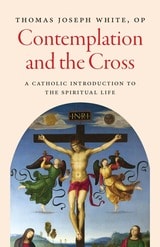
What are the aims of the Christian spiritual life and how can we deepen our life in Christ? What is the Catholic form of the spiritual life and what are its causes? This book serves as an introduction to Catholic spirituality by examining the mystery of Jesus Christ- His Crucifixion, and His Resurrection- as the center of our spiritual life. The central argument of the book is that the life, death, and resurrection of Jesus present us with the form or essence of the Christian spiritual life and orient us toward union with the Trinity as the final end or aim of human existence. The means of union with God through sacraments, the interior life of the theological virtues (faith, hope, and charity), and the virtue of religion are considered as vehicles by which we rejoin God in Christ. The effects of the Cross are considered in our life by a study of the spiritual and corporal works of mercy. The Virgin Mary is considered as a model of the spiritual life. What results is a Christ-centered spirituality that is sacramental and Marian, and that depicts the life of the Church living in contemplative charity as the basic expression of Catholic spirituality.
[more]
cover of Continuing the Reformation: Essays on Modern Religious Thought

Continuing the Reformation

Essays on Modern Religious Thought

B. A. Gerrish

University of Chicago Press, 1993

Modern Christian religious thought, B. A. Gerrish argues, has constantly revised the inherited faith. In these twelve essays, written or published in the 1980s, one of the most distinguished historical theologians of our time examines the changes that occurred as the Catholic tradition gave way to the Reformation and an interest in the phenomenon of believing replaced adherence to unchanging dogma.

Gerrish devotes three essays to each of four topics: Martin Luther and the Reformation; religious belief and the Age of Reason; Friedrich Schleiermacher and the renewal of Protestant theology; and Schleiermacher's disciple Ernst Troeltsch, for whom the theological task was to give a rigorous account of the faith prevailing in a particular religious community at a particular time. Gerrish shows how faith itself has become a primary object of inquiry, not only in the newly emerging philosophy of religion but also in a new style of church theology which no longer assumes that faith rests on immutable dogmas. For Gerrish, the new theology of Protestant liberalism takes for its primary object of inquiry the changing forms of the religious life. This important book will interest scholars of systematic Christian theology, modern intellectual and cultural history, and the history and philosophy of religion.
[more]
cover of Counsels of Imperfection: Thinking Through Catholic Social Teaching

Counsels of Imperfection

Thinking Through Catholic Social Teaching

Edward Hadas

Catholic University of America Press, 2021
For more than a century, the teaching authority of the Catholic Church has attempted to walk along with the modern world, criticizing what is bad and praising what is good. Counsels of Imperfection described the current state of that fairly bumpy journey. The book is divided into 11 chapters. First comes an introduction to ever-changing modernity and the unchanging Christian understanding of human nature and society. Then come two chapters on economics, including a careful delineation of the Catholic response, past and present, to socialism and capitalism. The next topic is government, with one chapter on Church and State, another on War, and a third that runs quickly through democracy, human rights, the welfare state, crimes and punishments (including the death penalty), anti-Semitism, and migration. Counsels of Imperfection then dedicates two chapters on ecology, including an enthusiastic analysis of Francis’s “technocratic paradigm”. The last topic is the family teaching, which presents the social aspects of the Church’s sexual teaching. A brief concluding chapter looks at the teaching’s changing response to the modern world, and at the ambiguous Catholic appreciation of the modern idea of progress. For each topic, Counsels of Imperfection provides biblical, historical and a broad philosophical background. Thomas Aquinas appears often, but so does G. W. F Hegel. The goal is not only to explain what the Church really says, but also how it got to its current position and who it is arguing with. In the spirit of a doctrine that is always in development, Counsels of Imperfection points out both strong-points and imperfections in the teaching. The book should be of interest to specialists in Catholic Social Teaching, but its main audience is curious newcomers, especially people who do not want to be told that there are simple Catholic answers to the complicated problems of the modern world.
[more]
cover of Creation through Evolution: New Perspectives from Thomistic Theology and Philosophy

Creation through Evolution

New Perspectives from Thomistic Theology and Philosophy

Nicanor Pier Giorgio Austriaco

Catholic University of America Press, 2025
Written and revised over the past three years, Creation through Evolution contains ten new essays that directly respond to the most common philosophical and theological objections put forward by Catholics who are skeptical about evolutionary theory. Significantly, the authors use the conceptual framework of St. Thomas Aquinas as a starting point to engage in the faith and science dialogue and they take the Catechism of the Catholic Church as their starting point. The contributors believe that the solutions proposed by these essays to the disputed questions raised by skeptics are novel and robust. The contents of the essays were presented at colloquia at the University of Oxford and Providence College and were revised in response to criticisms and comments raised by the other participants at these meetings. The chapters were written to respond to Catholic skeptics of Darwinian evolution. They are meant to be read not only by scholars but also by graduate and undergraduate students. Creation through Evolution will be of interest to the informed Catholic reader who is struggling to reconcile evolutionary theory with the claims of the Catechism of the Catholic Church.
[more]
cover of Cross and Creation: A Theological Introduction to Origen of Alexandria

Cross and Creation

A Theological Introduction to Origen of Alexandria

Mark E. Therrien

Catholic University of America Press, 2022

Even though the theology of Origen of Alexandria has shaped the Christian Tradition in almost every way, the controversies over his legacy have been seemingly endless. One major interpretative trend, for example, has suggested Origen’s theology is really akin to the heterodox Gnostics against whom he wrote than the actual teaching of the Gospel, since he (supposedly) had a disdainful attitude towards Creation and ultimately saw little redemptive meaning in the Passion. In Cross and Creation: A Theological Introduction to Origen of Alexandria, Mark Therrien offers an original interpretation of Origen’s theology. Focusing on some of Origen’s most important works (especially On First Principles and the Commentary on John, but ultimately making reference to his writings more broadly), this book retrieves and examines some of the foundational pillars of Origen’s theology through close readings and re-examinations of those texts. It examines eight of these theological foundations: God, Christ, the Holy Spirit, the end, the soul, the world, the cross, and deification. Moreover, by showing the connections between Origen’s understanding of these foundational pillars, it also shows the coherence of his theology as a whole. Taken collectively, what emerges from these eight chapters is that two doctrines specially shape Origen’s theology: Cross and Creation. As Therrien shows, Origen did not hold contempt for Creation. Rather, Origen thinks that Creation emerges from the very life of God as eternally foreknown and provided for in the person of Christ, the Wisdom of God the Father. Moreover, he also holds that, though fallen, Creation will be restored according to its original, eternal intention in God precisely through the Passion of Jesus Christ on the Cross. The Cross is thus not minimalized in Origen’s theology; it is rather its very center.
[more]