Results by title
80 books match the query 'Christianity and politics' and 11 start with c
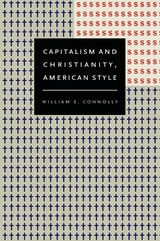
Capitalism and Christianity, American Style
William E. Connolly
Duke University Press, 2008
Connolly describes how the evangelical-capitalist machine works, how its themes resound across class lines, and how it infiltrates numerous aspects of American life. Proposing changes in sensibility and strategy to challenge this machine, Connolly contends that the liberal distinction between secular public and religious private life must be reworked. Traditional notions of unity or solidarity must be translated into drives to forge provisional assemblages comprised of multiple constituencies and creeds. The left must also learn from the political right how power is infused into everyday institutions such as the media, schools, churches, consumption practices, corporations, and neighborhoods. Connolly explores the potential of a “tragic vision” to contest the current politics of existential resentment and political hubris, explores potential lines of connection between it and theistic faiths that break with the evangelical right, and charts the possibility of forging an “eco-egalitarian” economy. Capitalism and Christianity, American Style is William E. Connolly’s most urgent work to date.
Catholicism and Politics in Communist Societies
Pedro Ramet, ed.
Duke University Press, 1990
Catholicism has, on the one hand, traditionally regarded earthly life as of secondary importance—as an instrument of spiritual transformation—and, on the other, has ascribed great value to the early institutions of the church, taking great interest in temporal matters that affects its institutional concerns. Against the backdrop of this duality, the church has changed over the centuries, adapting to local and national conditions. Catholicism and Politics in Communist Societies surveys these local and national adaptations in their historical contexts, linking the past experience of the church to its present circumstances. Organized around themes of tradition vs. modernity, hierarchy vs. lower clergy, and institutional structure vs. grass-roots organization, this comprehensive volume presents a detailed, country-by-country portrait of the political and social status of the church today in communist and socialist settings.
Contributors. Pedro Ramet, Arthur F. McGovern, Roman Solchanyk, Ivan Hvat, Robert F. Goeckel, C. Chrypinski, Milan J. Reban, Leslie Laszlo, Janice Broun, Eric O. Hanson, Stephen Denney, Thomas E. Quigley, Humberto Belli, Hansjakob Stehle, George H. Williams
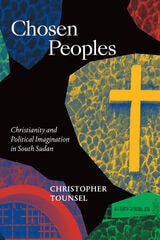
Chosen Peoples
Christianity and Political Imagination in South SudanChristopher Tounsel
Duke University Press, 2021
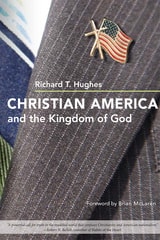
Christian America and the Kingdom of God
Richard T. Hughes
University of Illinois Press, 2012
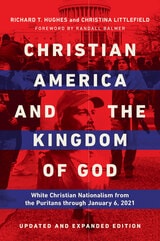
Christian America and the Kingdom of God
White Christian Nationalism from the Puritans through January 6, 2021Richard T. Hughes and Christina Littlefield
University of Illinois Press, 2025
A timely new edition of the acclaimed work, Christian America and the Kingdom of God spotlights how the centuries-long pursuit of a Christian America has bred an aggressive white Christian nationalism that twists faith, unleashes unchristian behavior, and threatens the nation.
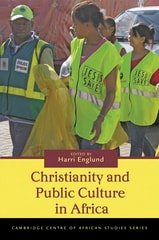
Christianity and Public Culture in Africa
Harri Englund
Ohio University Press, 2011
Christianity and Public Culture in Africa takes readers beyond familiar images of religious politicians and populations steeped in spirituality. It shows how critical reason and Christian convictions have combined in surprising ways as African Christians confront issues such as national constitutions, gender relations, and the continuing struggle with HIV/AIDS.
The wide-ranging essays included here explore rural Africa and the continent’s major cities, colonial and missionary legacies, and mass media images in the twenty-first century. They also reveal the diversity of Pentecostalism in Africa and highlight the region’s remarkable denominational diversity. Scholars and students alike will find these essays timely and impressive.
The contributors demonstrate how the public significance of Christianity varies across time and place. They explore rural Africa and the continent’s major cities, and colonial and missionary situations, as well as mass-mediated ideas and images in the twenty-first century. They also reveal the plurality of Pentecostalism in Africa and keep in view the continent’s continuing denominational diversity. Studentsand scholars will find these topical studies to be impressive in scope.
Contributors: Barbara M. Cooper, Harri Englund, Marja Hinfelaar, Nicholas Kamau-Goro, Birgit Meyer, Michael Perry Kweku Okyerefo, Damaris Parsitau, Ruth Prince, James A. Pritchett, Ilana van Wyk
Church State Corporation
Construing Religion in US LawWinnifred Fallers Sullivan
University of Chicago Press, 2020
Through readings of the opinions of the US Supreme Court and other legal texts, Sullivan shows how “the church” as a religious collective is granted special privilege in US law. In-depth analyses of Hosanna-Tabor v. EEOC and Burwell v. Hobby Lobby reveal that the law tends to honor the religious rights of the group—whether in the form of a church, as in Hosanna-Tabor, or in corporate form, as in Hobby Lobby—over the rights of the individual, offering corporate religious entities an autonomy denied to their respective members. In discussing the various communities that construct the “church-shaped space” in American law, Sullivan also delves into disputes over church property, the legal exploitation of the black church in the criminal justice system, and the recent case of Masterpiece Cakeshop v. Colorado Civil Rights Commission. Brimming with insight, Church State Corporation provocatively challenges our most basic beliefs about the ties between religion and law in ostensibly secular democracies.
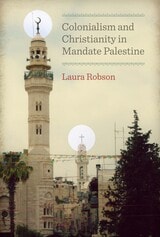
Colonialism and Christianity in Mandate Palestine
By Laura Robson
University of Texas Press, 2011
Drawing on a rich base of British archival materials, Arabic periodicals, and secondary sources, Colonialism and Christianity in Mandate Palestine brings to light the ways in which the British colonial state in Palestine exacerbated sectarianism. By transforming Muslim, Christian, and Jewish religious identities into legal categories, Laura Robson argues, the British ultimately marginalized Christian communities in Palestine. Robson explores the turning points that developed as a result of such policies, many of which led to permanent changes in the region's political landscapes. Cases include the British refusal to support Arab Christian leadership within Greek-controlled Orthodox churches, attempts to avert involvement from French or Vatican-related groups by sidelining Latin and Eastern Rite Catholics, and interfering with Arab Christians' efforts to cooperate with Muslims in objecting to Zionist expansion. Challenging the widespread but mistaken notion that violent sectarianism was endemic to Palestine, Colonialism and Christianity in Mandate Palestine shows that it was intentionally stoked in the wake of British rule beginning in 1917, with catastrophic effects well into the twenty-first century.
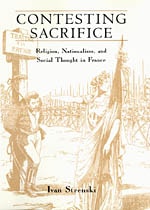
Contesting Sacrifice
Religion, Nationalism, and Social Thought in FranceIvan Strenski
University of Chicago Press, 2002
Strenski suggests that the annihilating spirituality rooted in the Catholic model of Eucharistic sacrifice persuaded the judges in the Dreyfus Case to overlook or play down his possible innocence because a scapegoat was needed to expiate the sins of France and save its army from disgrace. Strenski also suggests that the French army's strategy in World War I, French fascism, and debates over public education and civic morals during the Third Republic all owe much to Catholic theology of sacrifice and Protestant reinterpretations of it. Pointing out that every major theorist of sacrifice is French, including Bataille, Durkheim, Girard, Hubert, and Mauss, Strenski argues that we cannot fully understand their work without first taking into account the deep roots of sacrificial thought in French history.
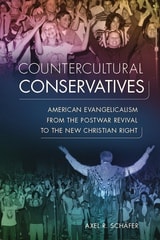
Countercultural Conservatives
American Evangelicalism from the Postwar Revival to the New Christian RightAxel R. Schäfer
University of Wisconsin Press, 2012
In the mid-twentieth century, far more evangelicals supported such “liberal” causes as peace, social justice, and environmental protection. Only gradually did the conservative evangelical faction win dominance, allying with the Republican Party of Ronald Reagan and, eventually, George W. Bush.
In Countercultural Conservatives Axel Schäfer traces the evolution of a diffuse and pluralistic movement into the political force of the New Christian Right. In forging its complex theological and political identity, evangelicalism did not simply reject the ideas of 1960s counterculture, Schäfer argues. For all their strict Biblicism and uncompromising morality, evangelicals absorbed and extended key aspects of the countercultural worldview.
Carefully examining evangelicalism’s internal dynamics, fissures, and coalitions, this book offers an intriguing reinterpretation of the most important development in American religion and politics since World War II.
Cults, Martyrs and Good Samaritans
Religion in Contemporary English Political DiscourseJames Crossley
Pluto Press, 2018
From the paternalistic Christianity used to justify ever-intensifying neoliberalism, to the ethnonationalist and protectionist Christianity of Theresa May and Brexit, to the socialist constructions of Christianity by Jeremy Corbyn and Momentum, Crossley guides us through the love affair between politics and Christianity.. Drawing on interviews with politicians, activists, revolutionaries, and voters on either side of Brexit, Crossley reveals how religion is linked to positions on issues of class, capitalism, and foreign policy, and how it can can often challenge dominant class interests, obfuscate potential causes of unrest, and even justify military intervention.