Results by title
153 books match the query 'Cities and towns' and 18 start with c
China Urban
Ethnographies of Contemporary CultureNancy N. Chen, Constance D. Clark, Suzanne Z. Gottschang, and Lyn Jeffery, eds.
Duke University Press, 2001
Through close attention to everyday lives and narratives and with a particular focus on gender, market, and spatial practices, this collection stresses that, in the case of China, rural life and the impact of socialism must be considered in order to fully comprehend the urban. Individual essays note the impact of legal barriers to geographic mobility in China, the proliferation of different urban centers, the different distribution of resources among various regions, and the pervasive appeal of the urban, both in terms of living in cities and in acquiring products and conventions signaling urbanity. Others focus on the direct sales industry, the Chinese rock music market, the discursive production of femininity and motherhood in urban hospitals, and the transformations in access to healthcare.
China Urban will interest anthropologists, sociologists, political scientists, and those studying urban planning, China, East Asia, and globalization.
Contributors. Tad Ballew, Susan Brownell, Nancy N. Chen, Constance D. Clark, Robert Efird, Suzanne Z. Gottschang, Ellen Hertz, Lisa Hoffman, Sandra Hyde, Lyn Jeffery, Lida Junghans, Louisa Schein, Li Zhang
Cities Beyond Crisis
Race, Affect, and Urban Culture in Twenty-First-Century IberiaCatalina Iannone
Vanderbilt University Press, 2025
In Cities Beyond Crisis, Catalina Iannone studies the rapid evolution of Iberian urban centers in the years following the 2008 financial crisis, identifying how this event catalyzed a protracted period of unraveling and reorganization in the region. Arguing that the affects and effects of the crisis are best understood when embedded within local environments, Cities Beyond Crisis focuses on how textual, visual, and spatial interventions both drove and contested change in two racially diverse, historically marginalized neighborhoods in the capital cities of Spain and Portugal—Madrid’s Lavapiés and Lisbon’s Mouraria. Through a critical examination of the narratives shaping public perception of these spaces, whether promoting their development and consumption or challenging market-oriented trends, Iannone demonstrates how the stories that stakeholders across the ideological spectrum told about these districts illuminate enduring attachments and aspirations in each nation’s relationship to race. By approaching the study of space as a contested and contingent social product, this book takes an interdisciplinary approach, drawing from both humanistic and social science theories and practices to show how cultural production shapes and is shaped by the built environment.
Cities Surround The Countryside
Urban Aesthetics in Postsocialist ChinaRobin Visser
Duke University Press, 2010
In the 1980s, writers, filmmakers, and artists began to probe the contradictions in China’s urbanization policies and rhetoric. Powerful neorealist fiction, cinema, documentaries, paintings, photographs, performances, and installations contrasted forms of glittering urban renewal with the government’s inattention to a livable urban infrastructure. Narratives and images depicting the melancholy urban subject came to illustrate ethical quandaries raised by urban life. Visser relates her analysis of this art to major transformations in urban planning under global neoliberalism, to the development of cultural studies in the Chinese academy, and to ways that specific cities, particularly Beijing and Shanghai, figure in the cultural imagination. Despite the environmental and cultural destruction caused by China’s neoliberal policies, Visser argues for the emergence of a new urban self-awareness, one that offers creative resolutions for the dilemmas of urbanism through new forms of intellectual engagement in society and nascent forms of civic governance.
Cities and Citizenship
James Holston, ed.
Duke University Press, 1998
Just as relations between nations are changing in the current phase of global capitalism, so too are relations between nations and cities. Written by internationally prominent scholars, the essays in Cities and Citizenship propose that “place” remains fundamental to these changes and that cities are crucial places for the development of new alignments of local and global identity. Through case studies from Africa, Europe, Latin America, and North America, the volume shows how cities make manifest national and transnational realignments of citizenship and how they generate new possibilities for democratic politics that transform people as citizens. Previously published as a special issue of Public Culture that won the 1996 Best Single Issue of a Journal Award from the Professional/Scholarly Publishing Division of the Association of American Publishers, the collection showcases a photo essay by Cristiano Mascaro, as well as two new essays by James Holston and Thomas Bender.
Cities and Citizenship will interest students and scholars of anthropology, geography, sociology, planning, and urban studies, as well as globalization and political science.
Contributors. Arjun Appadurai, Etienne Balibar, Thomas Bender, Teresa P. R. Caldeira, Mamadou Diouf, Dilip Parameshwar Gaonkar, James Holston, Marco Jacquemet, Christopher Kamrath, Cristiano Mascaro, Saskia Sassen, Michael Watts, Michel Wieviorka
Cities and Economic Development
From the Dawn of History to the PresentPaul Bairoch
University of Chicago Press, 1988
In this revised translation of De Jéricho à Mexico, Paul Bairoch seeks the answers to these questions and provides a comprehensive study of the evolution of the city and its relation to economic life. Bairoch examines the development of cities from the dawn of urbanization (Jericho) to the explosive growth of the contemporary Third World city. In particular, he defines the roles of agriculture and industrialization in the rise of cities.
"A hefty history, from the Neolithic onward. It's ambitious in scope and rich in subject, detailing urbanization and, of course, the links between cities and economies. Scholarly, accessible, and significant."—Newsday
"This book offers a path-breaking synthesis of the vast literature on the history of urbanization."—John C. Brown, Journal of Economic Literature
"One leaves this volume with the feeling of positions intelligently argued and related to the existing state of theory and knowledge. One also has the pleasure of reading a book unusually well-written. It will long both be a standard and stimulate new thought on the central issue of urban and economic growth."—Thomas A. Reiner, Annals of the American Academy of Political and Social Science
Cities in the Anthropocene
New Ecology and Urban PoliticsIhnji Jon
Pluto Press, 2021
Climate change is real, and extreme weather events are its physical manifestations. These extreme events affect how we live and work in cities, and subsequently the way we design, plan, and govern them. Taking action ‘for the environment’ is not only a moral imperative; instead, it is activated by our everyday experience in the city.
Based on the author’s site visits and interviews in Darwin (Australia), Tulsa (Oklahoma), Cleveland (Ohio), and Cape Town (South Africa), this book tells the story of how cities can lead a transformative pro-environment politics.
National governments often fail to make binding agreements that bring about radical actions for the environment. This book shows how cities, as local sites of mobilizing a collective, political agenda, can be frontiers for activating the kind of environmental politics that appreciates the role of ‘nature’ in the everyday functioning of our urban life.
Cities in the Urban Age
A DissentRobert A. Beauregard
University of Chicago Press, 2018
For Beauregard, the city is a cauldron for four haunting contradictions. First, cities are equally defined by both their wealth and their poverty. Second, cities are simultaneously environmentally destructive and yet promise sustainability. Third, cities encourage rule by political machines and oligarchies, even as they are essentially democratic and at least nominally open to all. And fourth, city life promotes tolerance among disparate groups, even as the friction among them often erupts into violence. Beauregard offers no simple solutions or proposed remedies for these contradictions; indeed, he doesn’t necessarily hold that they need to be resolved, since they are generative of city life. Without these four tensions, cities wouldn’t be cities. Rather, Beauregard argues that only by recognizing these ambiguities and contradictions can we even begin to understand our moral obligations, as well as the clearest paths toward equality, justice, and peace in urban settings.
Cities, Sin, and Social Reform in Imperial Germany
Andrew Lees
University of Michigan Press, 2002
Thematically and methodologically wide-ranging and innovative, this volume considers a broad spectrum of responses not only to the supposed breakdown of social cohesion but also to specific forms of deviant behavior. It draws on large numbers of writings from the period by clergymen, jurists, medical doctors, educators, social workers, and others. This literature illuminates the histories not only of urbanization and cities but also of sexuality and Christianity, crime and criminology, leisure and education, youth and women, charity and social work, and the welfare state as well as local government.
Focusing on positive instead of escapist responses to the challenges that inhered in urban society, this work can be read as part of an ongoing reassessment of the German Empire that points away from the idea that Germans were traveling an antimodernist Sonderweg, or special path, that led inevitably to National Socialism and the Third Reich. Although intended primarily for scholars and students of modern Germany, this book should speak to a variety of readers, among them anyone who cares about the history of cities, deviant behavior, or social reform.
Andrew Lees is Professor of History, Rutgers University.
City Scripts
Narratives of Postindustrial Urban FuturesEdited by Barbara Buchenau, Jens Martin Gurr, and Maria Sulimma
The Ohio State University Press, 2023
Storytelling shapes how we view our cities, legitimizing histories, future plans, and understandings of the urban. City Scripts responds to calls by literary theorists to engage a new kind of narrative analysis that recalibrates close reading and interpretation to the multiple ways in which narratives “do things”—how they intervene in the world and take action in everyday life. A multidisciplinary cast of contributors approaches this new way of looking at cities through the stories people tell about them, looking especially at political activism and urban planning, which depend on the invention of plausible stories of connectedness and of a redemptive future.
The stakes are especially high in cities where economic, ecological, and social futures are delimited by histories of large-scale extraction and racialized industrial labor. Contributors thus focus on cities in postindustrial areas of Germany and the United States, examining how narratives about cities become scripts and how these scripts produce real-life results. This approach highlights how uses of narrative and scripting appeal to stakeholders in urban change. These actors continually deploy narrative, media, and performance, with consequences for urban futures worldwide.
Contributors:
Lieven Ameel, Juliane Borosch, Barbara Buchenau, Florian Deckers, Barbara Eckstein, Kornelia Freitag, Walter Grünzweig, Randi Gunzenhäuser, Jens Martin Gurr, Elisabeth Haefs, Chris Katzenberg, Johannes Maria Krickl, Renee M. Moreno, Hanna Rodewald, Julia Sattler, Maria Sulimma, James A. Throgmorton, Michael Wala, Katharina Wood
Claiming Neighborhood
New Ways of Understanding Urban ChangeJohn Betancur
University of Illinois Press, 2016
As the authors show, a diverse collection of people including urban policy experts, elected officials, investors, resident leaders, institutions, community-based organizations, and many others compete to control how neighborhoods change and are characterized. Betancur and Smith argue that neighborhoods have become sites of consumption and spaces to be consumed. Discourse is used to add and subtract value from them. The romanticized image of "the neighborhood" exaggerates or obscures race and class struggles while celebrating diversity and income mixing. Scholars and policy makers must reexamine what sustains this image and the power effects produced in order to explain and govern urban space more equitably.
Close-Up
How to Read the American CityGrady Clay
University of Chicago Press, 1980
"The emphasis on the informal aspects of city-shaping—topographical, historical, economic and social—does much to counteract the formalist approach to American urban design. Close-Up...should be required reading for anyone wishing to understand Americans and their cities."—Roger Cunliffe, Architectural Review
"Close-Up is a provocative and stimulating book."—Thomas J. Schlereth, Winterthur Portfolio
"Within this coherent string of essays, the urban dweller or observer, as well as the student, will find refreshing strategies for viewing the environmental 'situations' interacting to form a landscape."—Dallas Morning News
"Clay's Close-Up, first published in 1973, is still a key book for looking at the real American city. Too many urban books and guidebooks concentrate on the good parts of the city....Clay looks at all parts of the city, the suburbs, and the places between cities, and develops new terms to describe parts of the built environment—fronts, strips, beats, stacks, sinks, and turf. No one who wants to understand American cities or to describe them, should fail to know this book. The illustrations are of special interest to the guidebook writer."—American Urban Guidenotes
Code and Clay, Data and Dirt
Five Thousand Years of Urban MediaShannon Mattern
University of Minnesota Press, 2017
For years, pundits have trumpeted the earthshattering changes that big data and smart networks will soon bring to our cities. But what if cities have long been built for intelligence, maybe for millennia? In Code and Clay, Data and Dirt Shannon Mattern advances the provocative argument that our urban spaces have been “smart” and mediated for thousands of years.
Offering powerful new ways of thinking about our cities, Code and Clay, Data and Dirt goes far beyond the standard historical concepts of origins, development, revolutions, and the accomplishments of an elite few. Mattern shows that in their architecture, laws, street layouts, and civic knowledge—and through technologies including the telephone, telegraph, radio, printing, writing, and even the human voice—cities have long negotiated a rich exchange between analog and digital, code and clay, data and dirt, ether and ore.
Mattern’s vivid prose takes readers through a historically and geographically broad range of stories, scenes, and locations, synthesizing a new narrative for our urban spaces. Taking media archaeology to the city’s streets, Code and Clay, Data and Dirt reveals new ways to write our urban, media, and cultural histories.
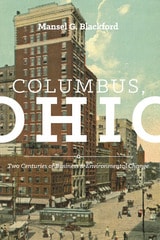
Columbus, Ohio
Two Centuries of Business and Environmental ChangeMansel G. Blackford
The Ohio State University Press, 2016
Precisely because they lived in a midsize, midwestern city, Columbus residents could learn from the earlier experiences of their counterparts in older, larger coastal metropolises, and then go beyond them. Not having large sunk costs in pre-existing water systems, Columbus residents could, for instance, develop new, world-class, state-of-the-art methods for treating water and sewage, steps essential for urban expansion. Columbus, Ohio explores how city residents approached urban challenges—especially economic and environmental ones—and how they solved them.
Columbus, Ohio: Two Centuries of Business and Environmental Change concludes that scholars and policy makers need to pay much more attention to environmental issues in the shaping of cities, and that they need to look more closely at what midwestern metropolises accomplished, as opposed to simply examining coastal cities.
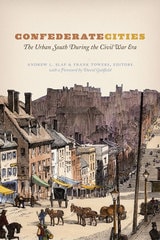
Confederate Cities
The Urban South during the Civil War EraEdited by Andrew L. Slap and Frank Towers
University of Chicago Press, 2015
Confederate Cities, edited by Andrew L. Slap and Frank Towers, shifts the focus from the agrarian economy that undergirded the South to the cities that served as its political and administrative hubs. The contributors use the lens of the city to examine now-familiar Civil War–era themes, including the scope of the war, secession, gender, emancipation, and war’s destruction. This more integrative approach dramatically revises our understanding of slavery’s relationship to capitalist economics and cultural modernity. By enabling a more holistic reading of the South, the book speaks to contemporary Civil War scholars and students alike—not least in providing fresh perspectives on a well-studied war.
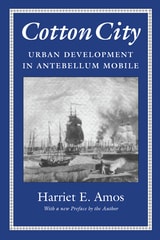
Cotton City
Urban Development in Antebellum MobileHarriet E. Amos Doss
University of Alabama Press, 2001
The exploration of the North-South relationship and the growth of of antebellum Mobile.
Cotton City offers a compelling exploration of Mobile, Alabama’s transformation into a thriving urban center during the antebellum period. Historian Harriet E. Amos examines how economic ambition, civic planning, and the cotton trade shaped the city’s development between 1819 and 1861. Through detailed archival research, Amos reveals how Mobile’s leaders sought to modernize infrastructure, expand commerce, and assert the city’s regional importance—all while navigating the tensions of slavery, class, and Southern identity.
This richly contextualized study highlights the interplay between urban growth and the broader forces of the Southern economy, making Cotton City a vital contribution to the histories of the American South, urbanization, and antebellum society.

Creative Spaces
Urban Culture and Marginality in Latin AmericaEdited by Niall Geraghty and Adriana Laura Massidda
University of London Press, 2019
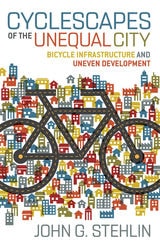
Cyclescapes of the Unequal City
Bicycle Infrastructure and Uneven DevelopmentJohn G. Stehlin
University of Minnesota Press, 2019
A critical look at the political economy of urban bicycle infrastructure in the United States
Not long ago, bicycling in the city was considered a radical statement or a last resort, and few cyclists braved the inhospitable streets of most American cities. Today, however, the urban cyclist represents progress and the urban “renaissance.” City leaders now undertake ambitious new bicycle infrastructure plans and bike share schemes to promote the environmental, social, and economic health of the city and its residents. Cyclescapes of the Unequal City contextualizes and critically examines this new wave of bicycling in American cities, exploring how bicycle infrastructure planning has become a key symbol of—and site of conflict over—uneven urban development.
John G. Stehlin traces bicycling’s rise in popularity as a key policy solution for American cities facing the environmental, economic, and social contradictions of the previous century of sprawl. Using in-depth case studies from San Francisco, Philadelphia, and Detroit, he argues that the mission of bicycle advocacy has converged with, and reshaped, the urban growth machine around a model of livable, environmentally friendly, and innovation-based urban capitalism. While advocates envision a more sustainable city for all, the deployment of bicycle infrastructure within the framework of the neoliberal city in many ways intensifies divisions along lines of race, class, and space.
Cyclescapes of the Unequal City speaks to a growing interest in bicycling as an urban economic and environmental strategy, its role in the politics of gentrification, and efforts to build more diverse coalitions of bicycle advocates. Grounding its analysis in both regional political economy and neighborhood-based ethnography, this book ultimately uses the bicycle as a lens to view major shifts in today’s American city.