Results by title
206 books match the query 'City Planning & Urban Development' and 25 start with c
Canfield Drive
A History of Race and the American City on a Street in St. LouisMatthew Knox Averett
University of Missouri Press, 2027
Winner of the 2026 Missouri Conference on History Book Award; the 2026 Missouri History Book Award; and shortlisted for the 2026 ASU Humanities Book Award
On August 9, 2014, Michael Brown and a friend were walking down Canfield Drive, a residential street in the St. Louis suburb of Ferguson. There, they encountered Ferguson Police Officer Darren Wilson. Moments later, Brown was dead on the street—shot by Wilson at least six times. That evening, a memorial appeared on the pavement where he had fallen. In the days that followed, vigils turned into protests, and protests into an Uprising, as police in riot gear faced off with a grieving, outraged community. For nearly two weeks, Ferguson commanded the nation’s attention. The killing of Michael Brown was an outrage and it should not have happened. But Canfield Drive was primed for tragedy long before that fatal encounter because the street was already a place of racial conflict. This was no accident.
Canfield Drive: A History of Race and the American City on a Street in St. Louis uncovers the deeper history behind the street where Brown died, tracing how race and the built environment have long intersected in St. Louis—from the city’s founding to the Ferguson Uprising. The book follows the story of Black space across two centuries: from early Black communities, to the birth of the St. Louis Blues, to the Halcyon days of The Ville, to the destruction of Mill Creek Valley, to the tragedy of Pruitt-Igoe, and to the construction of Canfield Drive. Though Canfield Drive is the first comprehensive history of St. Louis’s Black urban landscape, it is more than just St. Louis's story. Canfield Drive details the racial engineering of the American city. Here is the machinery of American segregation laid bare: occupancy covenants, court decisions, racial steering, white flight, public housing, voucher systems, and predatory policing that combine to transform neighborhoods into traps. Here too are the people who fought back, building community against staggering odds and securing civil rights reforms that transformed America's understanding of government's obligations to its citizens.
Canfield Drive provides a powerful lens on the national story of race and the American city and reveals how Michael Brown's death was not just one officer's deadly decision, but the inevitable outcome of America's built environment—a tragedy centuries in the making, on a street designed for violence. This is how a place becomes a powder keg. This is how history erupts into headlines. This is the story behind the story that America couldn't look away from. This is the story of how a street came to matter, and how it came to stand for something far greater than itself.
Capital Development
Mandate Era Amman and the Construction of the Hashemite State (1921–1946)Harrison B. Guthorn
Gingko, 2021
Amman, the capital of Jordan, contends with a crisis of identity rooted in how it grew to become a symbol for the Anglo-Hashemite government first, and a city second. As a representation of the new centralized authority, Amman became the seat of the Mandatory government that orchestrated the development of Transjordan, the British mandate established in 1921.
Despite its diminutive size, the city grew to house all the components necessary for a thriving and cohesive state by the end of the British mandate in 1946. However, in spite of its modernizing and regulatory ambitions, the Transjordan government did not control all facets of life in the region. Instead, the story of Transjordan is one of tensions between the state and the realities of the region, and these limitations forced the government to scale down its aspirations. This book presents the history of Amman’s development under the rule of the British mandate from 1921–46 and illustrates how the growth of the Anglo-Hashemite state imbued the city with physical, political, and symbolic significance.
Carving Out the Commons
Tenant Organizing and Housing Cooperatives in Washington, D.C.Amanda Huron
University of Minnesota Press, 2018
An investigation of the practice of “commoning” in urban housing and its necessity for challenging economic injustice in our rapidly gentrifying cities
Provoked by mass evictions and the onset of gentrification in the 1970s, tenants in Washington, D.C., began forming cooperative organizations to collectively purchase and manage their apartment buildings. These tenants were creating a commons, taking a resource—housing—that had been used to extract profit from them and reshaping it as a resource that was collectively owned by them.
In Carving Out the Commons, Amanda Huron theorizes the practice of urban “commoning” through a close investigation of the city’s limited-equity housing cooperatives. Drawing on feminist and anticapitalist perspectives, Huron asks whether a commons can work in a city where land and other resources are scarce and how strangers who may not share a past or future come together to create and maintain commonly held spaces in the midst of capitalism. Arguing against the romanticization of the commons, she instead positions the urban commons as a pragmatic practice. Through the practice of commoning, she contends, we can learn to build communities to challenge capitalism’s totalizing claims over life.
Chasing World-Class Urbanism
Global Policy versus Everyday Survival in Buenos AiresJacob Lederman
University of Minnesota Press, 2020
Questions increasingly dominant urban planning orthodoxies and whether they truly serve everyday city dwellers
What makes some cities world class? Increasingly, that designation reflects the use of a toolkit of urban planning practices and policies that circulates around the globe. These strategies—establishing creative districts dedicated to technology and design, “greening” the streets, reinventing historic districts as tourist draws—were deployed to build a globally competitive Buenos Aires after its devastating 2001 economic crisis. In this richly drawn account, Jacob Lederman explores what those efforts teach us about fast-evolving changes in city planning practices and why so many local officials chase a nearly identical vision of world-class urbanism.
Lederman explores the influence of Northern nongovernmental organizations and multilateral agencies on a prominent city of the global South. Using empirical data, keen observations, and interviews with people ranging from urban planners to street vendors he explores how transnational best practices actually affect the lives of city dwellers. His research also documents the forms of resistance enacted by everyday residents and the tendency of local institutions and social relations to undermine the top-down plans of officials. Most important, Lederman highlights the paradoxes of world-class urbanism: for instance, while the priorities identified by international agencies are expressed through nonmarket values such as sustainability, inclusion, and livability, local officials often use market-centric solutions to pursue them. Further, despite the progressive rhetoric used to describe urban planning goals, in most cases their result has been greater social, economic, and geographic stratification.
Chasing World-Class Urbanism is a much-needed guide to the intersections of culture, ideology, and the realities of twenty-first-century life in a major Latin American city, one that illuminates the tension between technocratic aspirations and lived experience.
Chicago Metropolis 2020
The Chicago Plan for the Twenty-First CenturyElmer W. Johnson
University of Chicago Press, 2001
Nearly a century later, Chicago, like all cities, faces similar dilemmas: how to reconcile privatism with public control, growth with restraint, wealth with poverty, and beauty with industry. And as it did a hundred years ago with the Burnham Plan, the Commercial Club has sponsored a wholly contemporary plan for the city's future development. Written by Elmer W. Johnson, a lawyer and civic leader, Chicago Metropolis 2020 is a guide for those in all spheres of influence who are working to make cities economically and socially vigorous while addressing the greatest problems modern metropolises face. While Burnham's plan primarily addressed architecture and spatial planning, Chicago Metropolis 2020 addresses all facets of urban life, from public education to suburban sprawl, from transportation to social and economic segregation, with the expressed goal of continuing Chicago's tradition of renewal and foresight.
Chicago Metropolis 2020 is an ambitious and necessary plan for a major city at the turn of the century. In scope and execution, it aims at nothing less than economic vibrancy, quality of life, and equity of opportunity.
Cities and the Health of the Public
Nicholas Freudenberg
Vanderbilt University Press, 2006
This book assesses the primary determinants of well-being in cities, including the social and physical environments, diet, and health care and social services. The book includes chapters on the history of public health in cities, the impact of urban sprawl and urban renewal on health, and the challenges facing cities in the developing world. It also examines conditions such as infectious diseases, violence and disasters, and mental illness.
Cities in the Anthropocene
New Ecology and Urban PoliticsIhnji Jon
Pluto Press, 2021
Climate change is real, and extreme weather events are its physical manifestations. These extreme events affect how we live and work in cities, and subsequently the way we design, plan, and govern them. Taking action ‘for the environment’ is not only a moral imperative; instead, it is activated by our everyday experience in the city.
Based on the author’s site visits and interviews in Darwin (Australia), Tulsa (Oklahoma), Cleveland (Ohio), and Cape Town (South Africa), this book tells the story of how cities can lead a transformative pro-environment politics.
National governments often fail to make binding agreements that bring about radical actions for the environment. This book shows how cities, as local sites of mobilizing a collective, political agenda, can be frontiers for activating the kind of environmental politics that appreciates the role of ‘nature’ in the everyday functioning of our urban life.
Cities of Farmers
Urban Agricultural Practices and ProcessesJulie C. Dawson and Alfonso Morales
University of Iowa Press, 2016
Implementing urban agriculture often requires change in the physical, political, and social-organizational landscape. Beginning with a look at how and why city people grew their own food in the early twentieth century, the contributors to Cities of Farmers examine the role of local and regional regulations and politics, especially the creation of food policy councils, in making cities into fertile ground for farming. The authors describe how food is produced and distributed in cities via institutions as diverse as commercial farms, community gardens, farmers’ markets, and regional food hubs. Growing food in vacant lots and on rooftops affects labor, capital investment, and human capital formation, and as a result urban agriculture intersects with land values and efforts to build affordable housing. It also can contribute to cultural renewal and improved health.
This book enables readers to understand and contribute to their local food system, whether they are raising vegetables in a community garden, setting up a farmers’ market, or formulating regulations for farming and composting within city limits.
CONTRIBUTORS
Catherine Brinkley, Benjamin W. Chrisinger, Nevin Cohen, Michèle Companion, Lindsey Day-Farnsworth, Janine de la Salle, Luke Drake, Sheila Golden, Randel D. Hanson, Megan Horst, Nurgul Fitzgerald, Becca B. R. Jablonski, Laura Lawson, Kara Martin, Nathan McClintock, Alfonso Morales, Jayson Otto, Anne Pfeiffer, Anne Roubal, Todd M. Schmit, Erin Silva, Michael Simpson, Lauren Suerth, Dory Thrasher, Katinka Wijsman
Citizenship and Governance in a Changing City
Somerville, MASusan Ostrander
Temple University Press, 2013
In Citizenship and Governance in a Changing City, Susan Ostrander shows how beneath current high levels of engagement by Somerville residents lies a struggle about who should be the city's elected leaders and how they should conduct the city's affairs. It is a struggle waged between diverse residents--relatively new immigrants and a new middle class-trying to gain a foothold in democratic participation, and the city's political "old guard."
Citizenship and Governance in a Changing City informs current debates about the place of immigrants in civic and political life, and the role of voluntary associations in local politics and government. In the process, Ostrander provides useful lessons for many midsize urban communities.
Citizenship, Democracy and Belonging in Suburban Britain
Making the LocalDavid Jeevendrampillai
University College London, 2021
An activist group in outer London’s Surbiton suburb, the Seething Villagers commemorate a fictional local history through tongue-in-cheek community festivals. These admittedly “stupid” gatherings celebrate a mythical village of Seething and its many adventures, including a run-in with a mountain-crushing giant. Citizenship, Democracy and Belonging in Suburban Britain explores how the Seething Villagers and other suburbanite fantasies fashion community in the face of neoliberal isolation. By taking the artists’ playfulness seriously, David Jeevendrampillai demonstrates how suburbanites develop fellow-feeling without access to traditional community centers.
City Scripts
Narratives of Postindustrial Urban FuturesEdited by Barbara Buchenau, Jens Martin Gurr, and Maria Sulimma
The Ohio State University Press, 2023
Storytelling shapes how we view our cities, legitimizing histories, future plans, and understandings of the urban. City Scripts responds to calls by literary theorists to engage a new kind of narrative analysis that recalibrates close reading and interpretation to the multiple ways in which narratives “do things”—how they intervene in the world and take action in everyday life. A multidisciplinary cast of contributors approaches this new way of looking at cities through the stories people tell about them, looking especially at political activism and urban planning, which depend on the invention of plausible stories of connectedness and of a redemptive future.
The stakes are especially high in cities where economic, ecological, and social futures are delimited by histories of large-scale extraction and racialized industrial labor. Contributors thus focus on cities in postindustrial areas of Germany and the United States, examining how narratives about cities become scripts and how these scripts produce real-life results. This approach highlights how uses of narrative and scripting appeal to stakeholders in urban change. These actors continually deploy narrative, media, and performance, with consequences for urban futures worldwide.
Contributors:
Lieven Ameel, Juliane Borosch, Barbara Buchenau, Florian Deckers, Barbara Eckstein, Kornelia Freitag, Walter Grünzweig, Randi Gunzenhäuser, Jens Martin Gurr, Elisabeth Haefs, Chris Katzenberg, Johannes Maria Krickl, Renee M. Moreno, Hanna Rodewald, Julia Sattler, Maria Sulimma, James A. Throgmorton, Michael Wala, Katharina Wood
City and Environment
Christopher G. Boone and Ali Modarres
Temple University Press, 2006
City of Industry
Genealogies of Power in Southern CaliforniaValle, Victor
Rutgers University Press, 2011
Valle investigated an untapped archive of Industry's built landscape, media coverage, and public records, including sealed FBI reports, to uncover a cascading series of scandals. A kaleidoscopic view of the corruption that resulted when local land owners, media barons, and railroads converged to build the city, this suspenseful narrative explores how new governmental technologies and engineering feats propelled the rationality of privatization using their property-owning servants as tools.
Valle's tale of corporate greed begins with the city's founder James M. Stafford and ends with present day corporate heir, Edward Roski Jr., the nation's biggest industrial developerùco-owner of the L.A. Staples Arena and possible future owner of California's next NFL franchise. Not to be forgotten in Valle's captivating story are Latino working class communities living within Los Angeles's distribution corridors, who suffer wealth disparities and exposure to air pollution as a result of diesel-burning trucks, trains, and container ships that bring global trade to their very doorsteps. They are among the many victims of City of Industry.
Claiming Neighborhood
New Ways of Understanding Urban ChangeJohn Betancur
University of Illinois Press, 2016
As the authors show, a diverse collection of people including urban policy experts, elected officials, investors, resident leaders, institutions, community-based organizations, and many others compete to control how neighborhoods change and are characterized. Betancur and Smith argue that neighborhoods have become sites of consumption and spaces to be consumed. Discourse is used to add and subtract value from them. The romanticized image of "the neighborhood" exaggerates or obscures race and class struggles while celebrating diversity and income mixing. Scholars and policy makers must reexamine what sustains this image and the power effects produced in order to explain and govern urban space more equitably.
Climate Bridge
An International Perspective on How to Enact Climate Action at the Government Public InterfaceWolfram Höfer
Rutgers University Press, 2025
Co-designing Infrastructures
Community Collaboration for Liveable CitiesSarah Bell, Charlotte Johnson, Kat Austen, Gemma Moore, and Tse-Hui Teh
University College London, 2023
Co-designing Infrastructures tells the story of a research program designed to bring the power of engineering and technology into the hands of grassroots community groups in order to create bottom-up solutions to global crises. The authors examine in detail four projects in London in detail that exemplify collaboration with engineers, designers, and scientists to enact urban change. The projects at the heart of the book are grounded in specific settings that face challenges familiar to urban communities throughout the world. This place-based approach to infrastructure is of international relevance as a foundation for urban resilience and sustainability. The authors document the tools used to deliver this work, providing guidance for others who are working to deliver local technical solutions to complex social and environmental problems around the world.
Co-production of Knowledge in Action
Emancipatory Strategies for Urban EqualityEdited by Cassidy Johnson, Vanesa Castán Broto, Wilbard Kombe, Catalina Ortiz, Barbara Lipietz, Emmanuel Osuteye, and Caren Levy
University College London, 2025
In urban development, co-production refers to a strategy that prioritizes collaboration across multiple institutions and with citizens, aiming to enable conflict resolution and transformative change. However, critics contend that these theoretical ambitions often have limited practical impact. Co-production of Knowledge in Action examines how co-production is articulated and deployed in cities such as Lima, Freetown, Kampala, Dar es Salaam, and Delhi. It engages with ongoing experiences of co-production-inspired action, mapping the different aspirations that inform co-production practices and their impacts on urban communities. Critiquing co-production strategies for urban development in relation to practical experiences in these cities, this volume adopts a postcolonial approach to knowledge production as a means to transform urban planning practices.
Colonias and Public Policy in Texas and Mexico
Urbanization by StealthBy Peter M. Ward
University of Texas Press, 1999
Today in Texas, over 1500 colonias in the counties along the Mexican border are home to some 400,000 people. Often lacking basic services, such as electricity, water and sewerage, fire protection, policing, schools, and health care, these "irregular" subdivisions offer the only low-cost housing available to the mostly Hispanic working poor.
This book presents the results of a major study of colonias in three transborder metropolitan areas and uncovers the reasons why colonias are spreading so rapidly. Peter Ward compares Texas colonias with their Mexican counterparts, many of which have developed into fully integrated working-class urban communities. He describes how Mexican governments have worked with colonia residents to make physical improvements and upgrade services-a model that Texas policymakers can learn from, Ward asserts. Finally, he concludes with a hard-hitting checklist of public policy initiatives that need to be considered as colonia housing policy enters its second decade in Texas.
Combat Zoning
Military Land-Use Planning In NevadaDavid Loomis
University of Nevada Press, 1993
Loomis provides a clear and disturbing picture of military land-use planning and how it has affected residents in Nevada. He contends that a lack of citizen participation in the development of land-use plans is a weakness in the planning process and that both the military and the citizenry should take an active role to avoid future conflicts.
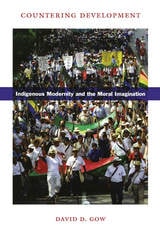
Countering Development
Indigenous Modernity and the Moral ImaginationDavid D. Gow
Duke University Press, 2008
Through ethnographic fieldwork conducted annually in Cauca from 1995 through 2002, Gow compares the development plans of the three communities, looking at both the planning processes and the plans themselves. In so doing, he demonstrates that there is no single indigenous approach to development and modernity. He describes differences in how each community defined and employed the concept of culture, how they connected a concern with culture to economic and political reconstruction, and how they sought to assert their own priorities while engaging with the existing development resources at their disposal. Ultimately, Gow argues that the moral vision advanced by the indigenous movement, combined with the growing importance attached to human rights, offers a fruitful way to think about development: less as a process of integration into a rigidly defined modernity than as a critical modernity based on a radical politics of inclusive citizenship.
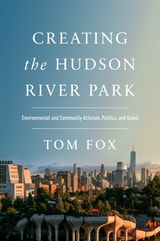
Creating the Hudson River Park
Environmental and Community Activism, Politics, and GreedTom Fox
Rutgers University Press, 2024
The 4-mile-long, 550-acre Hudson River Park is nearing completion and is the largest park built in Manhattan since Central Park opened more than 150 years ago. It has transformed a derelict waterfront, protected the Hudson River estuary, preserved commercial maritime activities, created new recreational opportunities for millions of New Yorkers, enhanced tourism, stimulated redevelopment in adjacent neighborhoods, and set a precedent for waterfront redevelopment. The Park attracts seventeen million visitors annually. Creating the Hudson River Park is a first-person story of how this park came to be. Working together over three decades, community groups, civic and environmental organizations, labor, the real estate and business community, government agencies, and elected officials won a historic victory for environmental preservation, the use and enjoyment of the Hudson River, and urban redevelopment. However, the park is also the embodiment of a troubling trend toward the commercialization of America’s public parks.
After the defeat of the $2.4 billion Westway plan to fill 234 acres of the Hudson in 1985, the stage was set for the revitalization of Manhattan’s West Side waterfront. Between 1986 and 1998 the process focused on the basics like designing an appropriate roadway, removing noncompliant municipal and commercial activities from the waterfront, implementing temporary improvements, developing the Park’s first revenue-producing commercial area at Chelsea Piers, completing the public planning and environmental review processes, and negotiating the 1998 Hudson River Park Act that officially created the Park. From 1999 to 2009 planning and construction were funded with public money and focused on creating active and passive recreation opportunities on the Tribeca, Greenwich Village, Chelsea, and Hell’s Kitchen waterfronts.
However, initial recommendations to secure long term financial support for the Park from the increase in adjacent real estate values that resulted from the Park’s creation were ignored. City and state politicians had other priorities and public funding for the Park dwindled. The recent phase of the project, from 2010 to 2021, focused on “development” both in and adjacent to the Park. Changes in leadership, and new challenges provide an opportunity to return to a transparent public planning process and complete the redevelopment of the waterfront for the remainder of the 21st-century. Fox’s first-person perspective helps to document the history of the Hudson River Park, recognizes those who made it happen and those who made it difficult, and provides lessons that may help private citizens and public servants expand and protect the public parks and natural systems that are so critical to urban well-being.
Critical Dialogues of Urban Governance, Development and Activism
London and TorontoEdited by Susannah Bunce, Nicola Livingstone, Loren March, Susan Moore, and Alan Walks
University College London, 2020
Crossing Great Divides
City and Country in Environmental and Political DisorderJohn D. Fairfield
Temple University Press, 2024
Conventional urban environmental reform has made modern city life possible, but it has done little to limit the despoliation of distant places. Nevertheless, the successes of urban environmental reform remind us of what is possible.
John Fairfield concludes with a case study of Phoenix, Arizona to demonstrate this dysfunctional relationship between city and country while developing a sympathetic critique of the Green New Deal. He suggests how we might bridge the “great divide” as we face the daunting challenges the twenty-first century is pressing upon us.
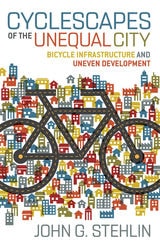
Cyclescapes of the Unequal City
Bicycle Infrastructure and Uneven DevelopmentJohn G. Stehlin
University of Minnesota Press, 2019
A critical look at the political economy of urban bicycle infrastructure in the United States
Not long ago, bicycling in the city was considered a radical statement or a last resort, and few cyclists braved the inhospitable streets of most American cities. Today, however, the urban cyclist represents progress and the urban “renaissance.” City leaders now undertake ambitious new bicycle infrastructure plans and bike share schemes to promote the environmental, social, and economic health of the city and its residents. Cyclescapes of the Unequal City contextualizes and critically examines this new wave of bicycling in American cities, exploring how bicycle infrastructure planning has become a key symbol of—and site of conflict over—uneven urban development.
John G. Stehlin traces bicycling’s rise in popularity as a key policy solution for American cities facing the environmental, economic, and social contradictions of the previous century of sprawl. Using in-depth case studies from San Francisco, Philadelphia, and Detroit, he argues that the mission of bicycle advocacy has converged with, and reshaped, the urban growth machine around a model of livable, environmentally friendly, and innovation-based urban capitalism. While advocates envision a more sustainable city for all, the deployment of bicycle infrastructure within the framework of the neoliberal city in many ways intensifies divisions along lines of race, class, and space.
Cyclescapes of the Unequal City speaks to a growing interest in bicycling as an urban economic and environmental strategy, its role in the politics of gentrification, and efforts to build more diverse coalitions of bicycle advocates. Grounding its analysis in both regional political economy and neighborhood-based ethnography, this book ultimately uses the bicycle as a lens to view major shifts in today’s American city.