Results by title
129 books match the query 'Civics & Citizenship' and 19 start with c

Can the Subaltern See?
Photographs as History, Volume 84Fernando Coronil , ed.
Duke University Press, 0
Each essay looks at the role of a particular photographic genre in the making of modern Latin American identities. Articles cover the adaptation in late-nineteenth-century Oaxaca of European type photography as a tool of imperialist enterprise and science, state consolidation, and consumer culture; the use of portrait photography by the K’iche Mayans of Quetzaltenango; and the family album—made up of snapshots, postcards, and other memorabilia—as a historical document.
Contributors. Greg Grandin, Daniel James, Mirta Zaida Lobato, Deborah Poole
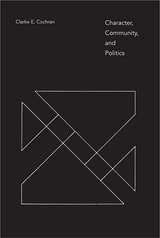
Character, Community, and Politics
Clarke E. Cochran
University of Alabama Press, 1982
The revival of political philosophy has frequently assumed that a theory of human well-being and fulfillment is necessary, preoccupied with questions of epistemology and technical conceptual analysis. In instances where the nature of the human good is considered, the paradigm of autonomous individualism customarily dominates. In Character, Community, and Politics, Cochran moves away from these prevailing ideas to develop a communal theory of political order, helping to redefine a number of fundamental, but often neglected, ideas. Chief among them are commitment, community, responsibility, and character—concepts Cochran develops through discussions of authority, freedom, pluralism, and the common good.
Drawing on a wide variety of fields, such as philosophy, ethics, literature, moral theology, and sociology, the author renews these concepts to outline a theory of human life and political order distinct from sclerotic categories such as conservatism, socialism, radicalism, or Marxism.
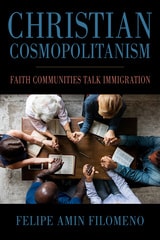
Christian Cosmopolitanism
Faith Communities Talk ImmigrationFelipe Amin Filomeno
Temple University Press, 2024
Christian Cosmopolitanism shows that mutual understanding can result when people share their personal stories, feelings, and thoughts about immigration. They reflect and deliberate on collaborative action to advance common interests and shared values, which can unleash the cosmopolitan potential of the Christian community.
Including practical tools for church leaders, Christian Cosmopolitanism promotes dialogue as a cultural practice that can help diverse communities overcome segregation and become socially cohesive.
Citizen Lobbyists
Local Efforts to Influence Public PolicyBrian Adams
Temple University Press, 2006
Citizen Power
A Citizen Leadership Manual Introducing the Art of No-Blame Problem SolvingHarry S. Pozycki
Rutgers University Press, 2020
Citizen Power
A Citizen Leadership Manual, New Jersey EditionHarry S. Pozycki
Rutgers University Press, 2021
Citizen Power portal (https://thecitizenscampaign.org/register/).
Citizens in the Present
Youth Civic Engagement in the AmericasMaria de los Angeles Torres, Irene Rizzini, and Norma Del Rio
University of Illinois Press, 2013

Citizenship and Social Class
Tom Bottomore and T. H. Marshall
Pluto Press, 1992
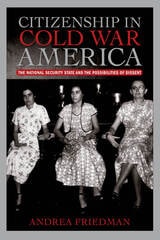
Citizenship in Cold War America
The National Security State and the Possibilities of DissentAndrea Friedman
University of Massachusetts Press, 2014
The stories told here capture a wide-ranging debate about the workings of the national security state and the meaning of American citizenship. Some of the participants in this debate—women like war bride Ellen Knauff and Pentagon employee Annie Lee Moss—were able to make their own experiences compelling examples of the threats posed by the national security regime. Others, such as Ruth Reynolds and Lolita Lebrón, who advocated an end to American empire in Puerto Rico, or the psychiatrist Fredric Wertham, who sought to change the very definition of national security, were less successful. Together, however, they exposed the gap between democratic ideals and government policies.
Friedman traverses immigration law and loyalty boards, popular culture and theoretical treatises, U.S. court-rooms and Puerto Rican jails, to demonstrate how Cold War repression made visible in new ways the unevenness and limitations of American citizenship. Highlighting the ways that race and gender shaped critiques and defenses of the national security regime, she offers new insight into the contradictions of Cold War political culture.
Citizenship
A ReaderPaul A. B. Clarke
Pluto Press, 1994

Citoyennes
Women and the Ideal of Citizenship in Eighteenth-Century FranceAnnie K. Smart
University of Delaware Press, 2012
Did women have a civic identity in eighteenth-century France? In Citoyennes: Women and the Ideal of Citizenship in Eighteenth-Century France, Annie Smart contends that they did. While previous scholarship has emphasized the ideal of domestic motherhood or the image of the republican mother, Smart argues persuasively that many pre-revolutionary and revolutionary texts created another ideal for women–the ideal of civic motherhood. Smart asserts that women were portrayed as possessing civic virtue, and as promoting the values and ideals of the public sphere.
Contemporary critics have theorized that the eighteenth-century ideal of the Republic intentionally excluded women from the public sphere. According to this perspective, a discourse of “Rousseauean” domestic motherhood stripped women of an active civic identity, and limited their role to breastfeeding and childcare. Eighteenth-century France marked thus the division between a male public sphere of political action and a female private sphere of the home.
Citoyennes challenges this position and offers an alternative model of female identity. This interdisciplinary study brings together a variety of genres to demonstrate convincingly that women were portrayed as civic individuals. Using foundational texts such as Jean-Jacques Rousseau’s Emile, or on Education (1762), revolutionary gouaches of Lesueur, and vaudeville plays of Year II of the Republic (1793/1794), this study brilliantly shows that in text and image, women were represented as devoted to both the public good and their families.
In addition, Citoyennes offers an innovative interpretation of the home. Through re-examining sphere theory, this study challenges the tendency to equate the home with private concerns, and shows that the home can function as a site for both private life and civic identity.
Citoyennes breaks new ground, for it both rectifies the ideal of domestic Rousseauean motherhood, and brings a fuller understanding to how female civic identity operated in important French texts and images.
Published by University of Delaware Press. Distributed worldwide by Rutgers University Press.
Civic Hopes and Political Realities
Immigrants, Community Organizations, and Political EngagementS. Karthick Ramakrishnan
Russell Sage Foundation, 2008
Civic and Uncivic Values in Kosovo
History, Politics, and Value TransformationSabrina P. Ramet
Central European University Press, 2015
Coming of Political Age
American Schools and the Civic Development of Immigrant YouthRebecca M. Callahan
Russell Sage Foundation, 2013
Communities and Law
Politics and Cultures of Legal IdentitiesGad Barzilai
University of Michigan Press, 2005
--Choice
"A remarkable achievement."
--Malcolm Feeley, University of California, Berkeley
"A rich, subtle, and wide-ranging analysis of the complex interaction between law and culture in Israeli society."
--Pnina Lahav, Boston University School of Law
"Barzilai makes a major contribution to thinking about state-society relations, pointing researchers to the plurality of communities harboring different sorts of legal identities, consciousness, and practices."
--Joel Migdal, University of Washington
Communities and Law examines the intersection of communities, cultures, and laws in public life, asking important questions about how nonruling communities confront the law in their efforts to achieve political goals.
Community-Centered Journalism
Engaging People, Exploring Solutions, and Building TrustAndrea Wenzel
University of Illinois Press, 2020
Andrea Wenzel models new practices of community-centered journalism that build trust across boundaries of politics, race, and class, and prioritize solutions while engaging the full range of local stakeholders. Informed by case studies from rural, suburban, and urban settings, Wenzel's blueprint reshapes journalism norms and creates vigorous storytelling networks between all parts of a community. Envisioning a portable, rather than scalable, process, Wenzel proposes a community-centered journalism that, once implemented, will strengthen lines of local communication, reinvigorate civic participation, and forge a trusting partnership between media and the people they cover.
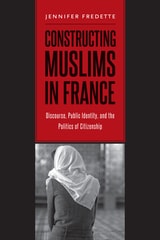
Constructing Muslims in France
Discourse, Public Identity, and the Politics of CitizenshipJennifer Fredette
Temple University Press, 2014
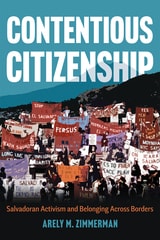
Contentious Citizenship
Salvadoran Activism and Belonging Across BordersArely M. Zimmerman
University of Arizona Press, 2026
Drawing on nearly fifty interviews with activists who fled El Salvador, Zimmerman traces how political refugees carried with them strategies of resistance and community organizing that shaped social justice movements in the United States. The book addresses the political turmoil and grassroots mobilizations in El Salvador, the sanctuary movement of the 1980s, contemporary activism, and the impact of women’s strategies and forms of resistance.
Essential reading for scholars and students of migration, Central American studies, and political movements, Contentious Citizenship is a bold intervention into contemporary debates on identity, legality, and resistance. Zimmerman’s work honors the ingenuity and resilience of Salvadoran activists and invites readers to consider what it means to belong.
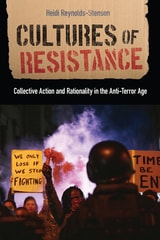
Cultures of Resistance
Collective Action and Rationality in the Anti-Terror AgeHeidi Reynolds-Stenson
Rutgers University Press, 2022
Cultures of Resistance provides new insight on a long-standing question: whether government efforts to repress social movements produce a chilling effect on dissent, or backfire and spur greater mobilization. In recent decades, the U.S. government’s repressive capacity has expanded dramatically, as the legal, technological, and bureaucratic tools wielded by agents of the state have become increasingly powerful. Today, more than ever, it is critical to understand how repression impacts the freedom to dissent and collectively express political grievances. Through analysis of activists’ rich and often deeply moving experiences of repression and resistance, the book uncovers key group processes that shape how individuals understand, experience, and weigh these risks of participating in collective action. Qualitative and quantitative analyses demonstrate that, following experiences of state repression, the achievement or breakdown of these group processes, not the type or severity of repression experienced, best explain why some individuals persist while others disengage. In doing so, the book bridges prevailing theoretical divides in social movement research by illuminating how individual rationality is collectively constructed, mediated, and obscured by protest group culture.