Results by title
90 books match the query 'Civil' and 13 start with c
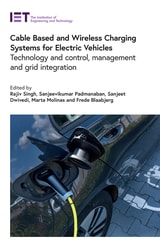
Cable Based and Wireless Charging Systems for Electric Vehicles
Technology and control, management and grid integrationRajiv Singh
The Institution of Engineering and Technology, 2021

Chicago River Bridges
Patrick T. McBriarty
University of Illinois Press, 2013
The first comprehensive guidebook of these remarkable features of Chicago's urban landscape, Chicago River Bridges chronicles more than 175 bridges spanning 55 locations along the Main Channel, South Branch, and North Branch of the Chicago River. With new full-color photography of the existing bridges by Kevin Keeley and Laura Banick and more than one hundred black and white images of bridges past, the book unearths the rich history of Chicago's downtown bridges from the Michigan Avenue Bridge to the often forgotten bridges that once connected thoroughfares such as Rush, Erie, Taylor, and Polk Streets.
Throughout, McBriarty delivers new research into the bridges' architectural designs, engineering innovations, and their impact on Chicagoans' daily lives. Describing the structure and mechanics of various kinds of moveable bridges (including vertical-lift, Scherer rolling lift, and Strauss heel trunnion mechanisms) in a manner that is accessible and still satisfying to the bridge aficionado, he explains how the dominance of the "Chicago-style" bascule drawbridge influenced the style and mechanics of bridges worldwide. Interspersed throughout are the human dramas that played out on and around the bridges, such as the floods of 1849 and 1992, the cattle crossing collapse of the Rush Street Bridge, or Vincent "The Schemer" Drucci's Michigan Avenue Bridge jump.
A confluence of Chicago history, urban design, and engineering lore, Chicago River Bridges illustrates Chicago's significant contribution to drawbridge innovation and the city's emergence as the drawbridge capital of the world. It is perfect for any reader interested in learning more about the history and function of Chicago's many and varied bridges. The introduction won The Henry N. Barkhausen Award for original research in the field of Great Lakes maritime history sponsored by the Association for Great Lakes Maritime History.
Civil and Corrupt Asia
Image and Text in the Itinerario and the Icones of Jan Huygen Van LinschotenErnst van den Boogaart
University of Chicago Press, 2003
Divine and Spoiled Asia reproduces these engravings and their captions (in English), together with an extensive analysis of them by historian Ernst van den Boogaart. In addition to providing unparalleled insights into early modern European views of the East, the engravings also contain valuable depictions of the peoples, customs, and flora and fauna of late sixteenth-century India and neighboring countries.
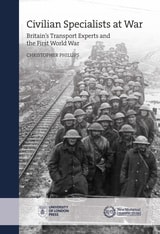
Civilian Specialists at War
Britain's transport experts and the First World WarChristopher Phillips
University of London Press, 2020
In Civilian Specialists at War, Christopher Phillips examines the relationship between industrial society and industrial warfare through the lens of Britain’s transport experts. Phillips analyzes the multiple connections between the army, the government, and the senior executives of some of prewar Britain’s largest industrial enterprises, revealing that civilian transport experts were a key component of Britain’s strategies in World War I. This book also details the application of recognizably civilian technologies and methods to the prosecution of war, and documents how transport experts were constrained by the political and military requirements of coalition warfare.
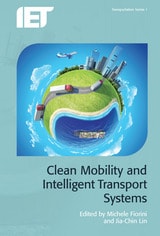
Clean Mobility and Intelligent Transport Systems
Michele Fiorini
The Institution of Engineering and Technology, 2015
Collection and Delivery of Traffic and Travel Information
Paul Burton
The Institution of Engineering and Technology, 2021

Concepts, Methodologies and Technologies for Domestic Retrofit
William Swan
The Institution of Engineering and Technology, 2026
Concrete Leviathan
The Interstate Highway System and State Building in Modern AmericaTeal Arcadi
University of Chicago Press, 2026
Offers an insightful new way to understand the construction and consequences of the US interstate highway system, expanding and revising the common story.
In Concrete Leviathan, historian Teal Arcadi denaturalizes the interstate highway system, interrogating the ideologies, fiscal mechanisms, and legal tools that led to the construction of a vast and permanent physical infrastructure—and then made it all but impossible to change course. Arcadi argues that the US interstate highway system was built by an unaccountable regime of law and political economy that systematically created and insulated structures of governance. The power of these administrative and physical structures has been such that even when people have mobilized to oppose or try to change them, their protests have tended only to reveal the extent and power of the infrastructural state.
At the same time, Concrete Leviathan shows how resistance to this infrastructure’s inequities generated new democratic ideas and practices, pointing toward more participatory structures of government and more equitable models of state building.
Concrete Revolution
Large Dams, Cold War Geopolitics, and the US Bureau of ReclamationChristopher Sneddon
University of Chicago Press, 2015
Founded in 1902, the Bureau became enmeshed in the US State Department’s push for geopolitical power following World War II, a response to the Soviet Union’s increasing global sway. By offering technical and water resource management advice to the world’s underdeveloped regions, the Bureau found that it could not only provide them with economic assistance and the United States with investment opportunities, but also forge alliances and shore up a country’s global standing in the face of burgeoning communist influence. Drawing on a number of international case studies—from the Bureau’s early forays into overseas development and the launch of its Foreign Activities Office in 1950 to the Blue Nile investigation in Ethiopia—Concrete Revolution offers insights into this historic damming boom, with vital implications for the present. If, Sneddon argues, we can understand dams as both technical and political objects rather than instruments of impartial science, we can better participate in current debates about large dams and river basin planning.
Control, Learning, and Optimization with Applications in Connected and Autonomous Vehicles
Weinan Gao
The Institution of Engineering and Technology, 2026
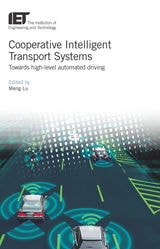
Cooperative Intelligent Transport Systems
Towards high-level automated drivingMeng Lu
The Institution of Engineering and Technology, 2019
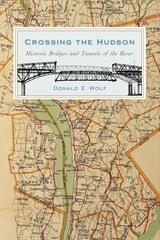
Crossing the Hudson
Historic Bridges and Tunnels of the RiverWolf, Donald
Rutgers University Press, 2010
Crossing the Hudson continues this story soon after the end of the war, in 1805, when the first bridge was completed. Donald E. Wolf simultaneously tracks the founding of the towns and villages along the water's edge and the development of technologies such as steam and internal combustion that demanded new ways to cross the river. As a result, innovative engineering was created to provide for these resources.
From hybrid, timber arch, and truss bridges on stone piers to long-span suspension and cantilevered bridges, railroad tunnels, and improvements in iron and steel technology, the construction feats that cross the Hudson represent technical elegance and physical beauty. Crossing the Hudson reveals their often multileveled stories--a history of where, why, when, and how these structures were built; the social, political, and commercial forces that influenced decisions to erect them; the personalities of the planners and builders; the unique connection between a builder and his bridge; and the design and construction techniques that turned mythical goals into structures of utility and beauty.
Cybersecurity in Transport Systems
Martin Hawley
The Institution of Engineering and Technology, 2022