Results by title
155 books match the query 'Civil rights movements' and 13 start with c
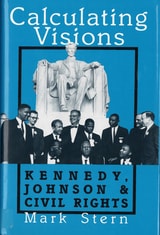
Calculating Visions
Kennedy, Johnson, and Civil RightsMark Stern
Rutgers University Press, 1992
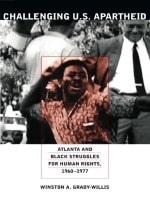
Challenging U.S. Apartheid
Atlanta and Black Struggles for Human Rights, 1960–1977Winston A. Grady-Willis
Duke University Press, 2006
Grady-Willis describes Black activism within a framework of human rights rather than in terms of civil rights. As he demonstrates, civil rights were only one part of a larger struggle for self-determination, a fight to dismantle a system of inequalities that he conceptualizes as “apartheid structures.” Drawing on archival research and interviews with activists of the 1960s and 1970s, he illuminates a wide range of activities, organizations, and achievements, including the neighborhood-based efforts of Atlanta’s Black working poor, clandestine associations such as the African American women’s group Sojourner South, and the establishment of autonomous Black intellectual institutions such as the Institute of the Black World. Grady-Willis’s chronicle of the politics within the Black freedom movement in Atlanta brings to light overlapping ideologies, gender and class tensions, and conflicts over divergent policies, strategies, and tactics. It also highlights the work of grassroots activists, who take center stage alongside well-known figures in Challenging U.S. Apartheid. Women, who played central roles in the human rights struggle in Atlanta, are at the foreground of this history.
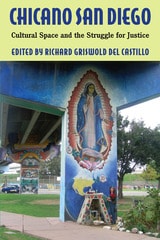
Chicano San Diego
Cultural Space and the Struggle for JusticeRichard Griswold del Castillo
University of Arizona Press, 2008
In chronologically ordered chapters, scholars discuss how Mexican and Chicana/o people have resisted and accommodated the increasingly Anglo-oriented culture of the region. The book’s early chapters recount the historical origins of San Diego and its development through the mid-nineteenth century, describe the “American colonization” that followed, and include examples of Latino resistance that span the twentieth century—from early workers’ strikes to the United Farm Workers movement of the 1960s. Later chapters trace the Chicana/o Movement in the community and in the arts; the struggle against the gentrification of the barrio; and the growth of community organizing (especially around immigrants’ rights) from the perspective of a community organizer.
To tell this sweeping story, the contributors use a variety of approaches. Testimonios retell individual lives, ethnographies relate the stories of communities, and historical narratives uncover what has previously been ignored or discounted. The result is a unique portrait of a marginalized population that has played an important but neglected role in the development of a major American border city.
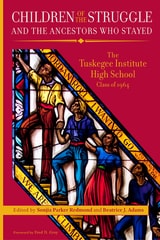
Children of the Struggle and the Ancestors Who Stayed
The Tuskegee Institute High School Class of 1964Edited by Sonjia Parker Redmond and Beatrice J. Adams, Foreword by Fred D. Gray
University of Alabama Press, 2025
WINNER OF THE ANNE B. AND JAMES B. MCMILLAN PRIZE
A powerful collection of firsthand stories from the Tuskegee Institute High School Class of 1964—students who came of age in the crucible of the Civil Rights Movement. Their stories uncover the bold choices of their ancestors who chose to stay and help shape the South.
Children of the Struggle and the Ancestors Who Stayed, edited by Sonjia Parker Redmond and Beatrice J. Adams, brings together twenty-one deeply personal narratives from members of the Tuskegee Institute High School Class of 1964. These students grew up at the heart of the Civil Rights Movement, coming of age during landmark legal battles, community-led voter registration efforts, and the long shadow of Jim Crow.
Graduating in the year of the Civil Rights Act and Freedom Summer, these young people had already helped desegregate Alabama schools. They marched from Selma to Montgomery, mourned the assassination of classmate Sammy Younge Jr., and witnessed firsthand the violent resistance to change that defined the era.
Rather than join the Great Migration northward, many of them followed the lead of their ancestors and chose to stay—becoming educators, organizers, and civic leaders. Their lives reflect a powerful legacy of resistance and renewal, rooted in a deep sense of place and purpose. This collection preserves their voices and honors the generations of Black families who fought for justice not only through protest, but by staying, building, and believing in the promise of the South.
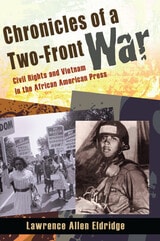
Chronicles of a Two-Front War
Civil Rights and Vietnam in the African American PressLawrence Allen Eldridge
University of Missouri Press, 2011
Eldridge reveals how the black press not only reported the war but also weighed its significance in the context of the civil rights movement.
Eldridge examines not only the role of reporters during the war, but also those of editors, commentators, and cartoonists. Especially enlightening is the research drawn from extensive oral histories by prominent journalist Ethel Payne, the first African American woman to receive the title of war correspondent. She described a widespread practice in black papers of reworking material from major white papers without providing proper credit, as the demand for news swamped the small budgets and limited staffs of African American papers. The author analyzes both the strengths of the black print media and the weaknesses in their coverage.
The black press ultimately viewed the Vietnam War through the lens of African American experience, blaming the war for crippling LBJ’s Great Society and the War on Poverty. Despite its waning hopes for an improved life, the black press soldiered on.
Civil Rights and African Americans
A Documentary HistoryAlbert Blaustein and Robert L. Zangrando
Northwestern University Press, 1991
Many of the documents included were previously scattered in hard-to-find sources, not readily available to instructors and students. Civil Rights and African Americans is the first collection of all the seminal texts of the civil rights struggle, an invaluable scholarly reference and riveting reading for anyone interested in the history of racial conflict in the United States.
Civil Rights in Bakersfield
Segregation and Multiracial Activism in the Central ValleyOliver A. Rosales
University of Texas Press, 2024
2024 Outstanding Book Award, National Association for Ethnic Studies
2025 Honorable Mention, Norris & Carol Hundley Award, Pacific Coast Branch of the American Historical Association
2025 The Ambassador Julian Nava Best Ethnic Studies Book, International Latino Book Awards
A multiracial history of civil rights coalitions beyond the farm worker movement in twentieth-century Bakersfield, California.
In Civil Rights in Bakersfield, Oliver Rosales uncovers the role of the multiracial west in shaping the course of US civil rights history. Focusing on Bakersfield, one of the few sizable cities within California’s Central Valley for much of the twentieth century in a region most commonly known as a bastion of political conservatism, oil, and industrial agriculture, Rosales documents how multiracial coalitions emerged to challenge histories of racial segregation and discrimination. He recounts how the region was home to both the historic farm worker movement, led by César Chávez, Dolores Huerta, and Larry Itliong, and also a robust multiracial civil rights movement beyond the fields. This multiracial push for civil rights reform included struggles for fair housing, school integration, public health, media representation, and greater political representation for Black and Brown communities. In expanding on this history of multiracial activism, Rosales further explores the challenges activists faced in community organizing and how the legacies of coalition building contribute to ongoing activist efforts in the Central Valley of today.
Civil Rights in Black and Brown
Histories of Resistance and Struggle in TexasEdited by Max Krochmal and J. Todd Moye
University of Texas Press, 2021
2022 Best Book Award, Oral History Association
Hundreds of stories of activists at the front lines of the intersecting African American and Mexican American liberation struggle
Not one but two civil rights movements flourished in mid-twentieth-century Texas, and they did so in intimate conversation with one another. Far from the gaze of the national media, African American and Mexican American activists combated the twin caste systems of Jim Crow and Juan Crow. These insurgents worked chiefly within their own racial groups, yet they also looked to each other for guidance and, at times, came together in solidarity. The movements sought more than integration and access: they demanded power and justice.
Civil Rights in Black and Brown draws on more than 500 oral history interviews newly collected across Texas, from the Panhandle to the Piney Woods and everywhere in between. The testimonies speak in detail to the structure of racism in small towns and huge metropolises—both the everyday grind of segregation and the haunting acts of racial violence that upheld Texas’s state-sanctioned systems of white supremacy. Through their memories of resistance and revolution, the activists reveal previously undocumented struggles for equity, as well as the links Black and Chicanx organizers forged in their efforts to achieve self-determination.
Collective Action and the Civil Rights Movement
Dennis Chong
University of Chicago Press, 1991
Congress and the First Civil Rights Era, 1861-1918
Jeffery A. Jenkins and Justin Peck
University of Chicago Press, 2021
The authors examine in detail how the Republican Party slowly withdrew its support for a meaningful civil rights agenda, as well as how Democrats and Republicans worked together to keep civil rights off the legislative agenda at various points. In doing so, Jenkins and Peck show how legal institutions can be used both to liberate and protect oppressed minorities and to assert the power of the white majority against those same minority groups.
Cradle of Freedom
Alabama and the Movement That Changed AmericaFrye Gaillard
University of Alabama Press, 2006
Cradle of Freedom puts a human face on the story of the black American struggle for equality in Alabama during the 1960s.
While exceptional leaders such as Martin Luther King Jr., Rosa Parks, Fred Shuttlesworth, Ralph Abernathy, John Lewis, and others rose up from the ranks and carved their places in history, the burden of the movement was not carried by them alone. It was fueled by the commitment and hard work of thousands of everyday people who decided that the time had come to take a stand.
Cradle of Freedom is tied to the chronology of pivotal events occurring in Alabama the Montgomery bus boycott, the Freedom Rides, the Letter from the Birmingham Jail, the bombing of the 16th Street Baptist Church, Bloody Sunday, and the Black Power movement in the Black Belt. Gaillard artfully interweaves fresh stories of ordinary people with the familiar ones of the civil rights icons. We learn about the ministers and lawyers, both black and white, who aided the movement in distinct ways at key points. We meet Vernon Johns, King's predecessor at the Dexter Avenue Baptist Church in Montgomery, who first suggested boycotting the buses and who wrote later, "It is a heart strangely un-Christian that cannot thrill with joy when the least of men begin to pull in the direction of the stars." We hear from John Hulett who tells how terror of lynching forced him down into ditches whenever headlights appeared on a night road. We see the Edmund Pettus Bridge beatings from the perspective of marcher JoAnne Bland, who was only a child at the time. We learn of E. D. Nixon, a Pullman porter who helped organize the bus boycott and who later choked with emotion when, for the first time in his life, a white man extended his hand in greeting to him on a public street.
How these ordinary people rose to the challenges of an unfair system with a will and determination that changed their times forever is a fascinating and extraordinary story that Gaillard tells with his hallmark talent. Cradle of Freedom unfolds with the dramatic flow of a novel, yet it is based on meticulous research. With authority and grace, Gaillard explains how the southern state deemed the cradle of the Confederacy became with great struggle, some loss, and much hope the cradle of freedom.
Crisis of Conscience
Arkansas Methodists and the Civil Rights StruggleJames T. Clemons
Butler Center for Arkansas Studies, 2007
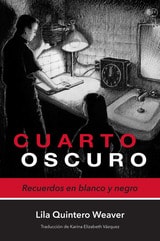
Cuarto oscuro
Recuerdos en blanco y negroLila Quintero Weaver, translated by Karina Elizabeth Vázquez
University of Alabama Press, 2018
Por medio de impresionantes ilustraciones, la autora ofrece una memoria cautivante y conmovedora de la infancia, las relaciones raciales, la etnicidad y la identidad en el sur de los Estados Unidos.
La novela gráfico de Lila Quintero-Weaver que obtuvo amplio reconocimiento crítico. Por medio de impresionantes ilustraciones, la autora ofrece una memoria cautivante y conmovedora de la infancia, las relaciones raciales, la etnicidad y la identidad en el sur de los Estados Unidos. Sus dibujos de estilo sutil, pero efectivo, refuerzan dramáticament una sentida narración.
En 1961, cuando la autora tenía cinco años, su familia salió de Buenos Aires, Argentina, para emigrar a los Estados Unidos y establecerse en Marion, un pueblo en el corazón del Black Belt de Alabama. En una región definida por la segregación racial, la familia Quintero, por su condición de clase media educada, se halló en una situación privilegiada para observar las tensiones que minaban la cultura y la sociedad en la que vivían.
Weaver salió de constancia de lo que signifacaba ser una niña latina en una le las regiones más racistas del sur de los Estados Unidos, tratando de entender tanto un país extranjero, como el horror de las relaciones raciales de nuestra nación. Excluida de las categorías raciales empleadas por entonces, la autora observó desde muy temprana edad las desigualdades de la cultura estadounidense, regida por un ideal de belleza femenina que privilegiaba a la mujer rubia y de ojos azules. A lo largo de su vida, Weaver ha luchado por encontrar su lugar en la sociedad norteamericana cuestionando la discriminación de su entorno. Cuarto oscuro contituye su legado visual y verbal sobre esa lucha.