Results by title
198 books match the query 'Community' and 28 start with c
Character, Community, and Politics
Clarke E. Cochran
University of Alabama Press, 1982
The revival of political philosophy has frequently assumed that a theory of human well-being and fulfillment is necessary, preoccupied with questions of epistemology and technical conceptual analysis. In instances where the nature of the human good is considered, the paradigm of autonomous individualism customarily dominates. In Character, Community, and Politics, Cochran moves away from these prevailing ideas to develop a communal theory of political order, helping to redefine a number of fundamental, but often neglected, ideas. Chief among them are commitment, community, responsibility, and character—concepts Cochran develops through discussions of authority, freedom, pluralism, and the common good.
Drawing on a wide variety of fields, such as philosophy, ethics, literature, moral theology, and sociology, the author renews these concepts to outline a theory of human life and political order distinct from sclerotic categories such as conservatism, socialism, radicalism, or Marxism.
Chican@ Artivistas
Music, Community, and Transborder Tactics in East Los AngelesMartha Gonzalez
University of Texas Press, 2020
As the lead singer of the Grammy Award–winning rock band Quetzal and a scholar of Chicana/o and Latina/o studies, Martha Gonzalez is uniquely positioned to articulate the ways in which creative expression can serve the dual roles of political commentary and community building. Drawing on postcolonial, Chicana, black feminist, and performance theories, Chican@ Artivistas explores the visual, musical, and performance art produced in East Los Angeles since the inception of NAFTA and the subsequent anti-immigration rhetoric of the 1990s.
Showcasing the social impact made by key artist-activists on their communities and on the mainstream art world and music industry, Gonzalez charts the evolution of a now-canonical body of work that took its inspiration from the Zapatista movement, particularly its masked indigenous participants, and that responded to efforts to impose systems of labor exploitation and social subjugation. Incorporating Gonzalez’s memories of the Mexican nationalist music of her childhood and her band’s journey to Chiapas, the book captures the mobilizing music, poetry, dance, and art that emerged in pre-gentrification corners of downtown Los Angeles and that went on to inspire flourishing networks of bold, innovative artivistas.
Chinese Americans in the Heartland
Migration, Work, and CommunityHuping Ling
Rutgers University Press, 2022
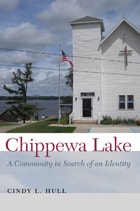
Chippewa Lake
A Community in Search of an IdentityCindy L. Hull
Michigan State University Press, 2012
Chippewa Lake is an idyllic waterfront community in north-central Michigan, popular with retirees and weekenders. The lake is surrounded by a rural farming community, but the area is facing a difficult transition as local demographics shift, and as it transforms from an agriculture-based economy to one that relies on wage labor. As farms have disappeared, local residents have employed a variety of strategies to adapt to a new economic structure. The community, meanwhile, has been indelibly affected by the advent of newcomers and retirees challenging the rural cultural values. An anthropologist with a background in sociology, Cindy L. Hull deftly weaves together oral accounts, historic documents, and participant surveys compiled from her nearly thirty years of living in the area to create a textured portrait of a community in flux.
Citizens, Cops, and Power
Recognizing the Limits of CommunitySteve Herbert
University of Chicago Press, 2006
That strategy seems to make sense, but in Citizens, Cops, and Power, Steve Herbert reveals the reasons why it rarely, if ever, works. Drawing on data he collected in diverse Seattle neighborhoods from interviews with residents, observation of police officers, and attendance at community-police meetings, Herbert identifies the many obstacles that make effective collaboration between city dwellers and the police so unlikely to succeed. At the same time, he shows that residents’ pragmatic ideas about the role of community differ dramatically from those held by social theorists.
Surprising and provocative, Citizens, Cops, and Power provides a critical perspective not only on the future of community policing, but on the nature of state-society relations as well.
City Dreams, Country Schemes
Community and Identity in the American WestKathleen A. Brosnan
University of Nevada Press, 2011
The American West, from the beginning of Euro-American settlement, has been shaped by diverse ideas about how to utilize physical space and natural environments to create cohesive, sometimes exclusive community identities. When westerners developed their towns, they constructed spaces and cultural identities that reflected alternative understandings of modern urbanity. The essays in City Dreams, Country Schemes utilize an interdisciplinary approach to explore the ways that westerners conceptualized, built, and inhabited urban, suburban, and exurban spaces in the twentieth century.
The contributors examine such topics as the attractions of open space and rural gentrification in shaping urban development; the role of tourism in developing national parks, historical sites, and California's Napa Valley; and the roles of public art, gender, and ethnicity in shaping urban centers. City Dreams, Country Schemes reveals the values and expectations that have shaped the West and the lives of the people who inhabit it.

Civic Agriculture
Reconnecting Farm, Food, and CommunityThomas A. Lyson
University Press of New England, 2004

Coffee and Community
Maya Farmers and Fair-Trade MarketsSarah Lyon
University Press of Colorado, 2010
Focusing on La Voz Que Clama en el Desierto-a cooperative in San Juan la Laguna, Guatemala-and its relationships with coffee roasters, importers, and certifiers in the United States, Coffee and Community argues that while fair trade does benefit small coffee-farming communities, it is more flawed than advocates and scholars have acknowledged. However, through detailed ethnographic fieldwork with the farmers and by following the product, fair trade can be understood and modified to be more equitable.
This book will be of interest to students and academics in anthropology, ethnology, Latin American studies, and labor studies, as well as economists, social scientists, policy makers, fair-trade advocates, and anyone interested in globalization and the realities of fair trade. Winner of the Society for Economic Anthropology Book Award
Coming Community
Giorgio Agamben
University of Minnesota Press, 1993
Communication and Community
Implications of Martin Buber's DialogueRonald C. Arnett. Foreword by Maurice Friedman
Southern Illinois University Press, 1986
Martin Buber’s work suggests that real life begins with two individuals engaged in dialogue, not just taking care of one’s own needs as described in social Darwinism.
Arnett argues that the end of the age of abundance demands that we give up the communicative strategies of the past and seek to work together in the midst of limited resources and an uncertain future. Today’s situation calls for an unwavering commitment to Buber’s “narrow ridge” concern for both self and community.
Arnett illustrates the narrow ridge definition of interpersonal communication with rich examples. His vignettes demonstrate effective and ineffective approaches to human community. An effective approach, he makes clear, incorporates not only openness to others’ points of view but also a willingness to be persuaded.
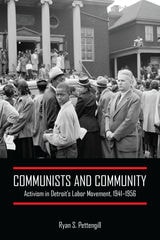
Communists and Community
Activism in Detroit's Labor Movement, 1941-1956Ryan S. Pettengill
Temple University Press, 2020
Communists and Community seeks to reframe the traditional chronology of the Communist Party in the United States as a means to better understand the change that occurred in community activism in the mid-twentieth century. Ryan Pettengill argues that Popular Front activism continued to flourish throughout the war years and into the postwar period. In Detroit, where there was a critical mass of heavy industry, Communist Party activists mobilized support for civil rights and affordable housing, brought attention to police brutality, sought protection for the foreign-born, and led a movement for world peace.
Communists and Community demonstrates that the Communist Party created a social space where activists became effective advocates for the socioeconomic betterment of a multiracial work force. Pettengill uses Detroit as a case study to examine how communist activists and their sympathizers maintained a community to enhance the quality of life for the city’s working class. He investigates the long-term effects of organized labor’s decision to force communists out of the unions and abandon community-based activism. Communists and Community recounts how leftists helped workers, people of color, and other under-represented groups became part of the mainstream citizenry in America.

Community In-Between / Urur Dhex Dhexad Ah
Portraits of Somali-Americans in ColumbusQorsho Hassan and Ruth M. Smith
The Ohio State University Press, 2017
A combination of storytelling and research connect each narrative to another, creating a strong framework for capturing the roles of young Somali Americans in community building through innovative initiatives such as designing a mixer bottle, beginning charitable programs, and educating the Somali community on voter rights. Two community artists help to capture the participants in their natural spaces, and their journey, aided by their empowering mentor, Riya Jama, bridges the gap of Somali females and their access to photography.
The portraits, stories, and artifacts throughout the book create a modicum of belonging. This new generation resiliently overcomes challenges such as racism, xenophobia, and Islamophobia while still maintaining their hope in the future. Community In-Between captures their spirit and unwavering faith.
The portraits, stories, and artifacts throughout the book create a modicum of belonging. This new generation resiliently overcomes challenges such as racism, xenophobia, and Islamophobia while still maintaining their hope in the future. Community In-Between captures their spirit and unwavering faith.
Community Without Unity
A Politics of Derridian ExtravaganceWilliam Corlett
Duke University Press, 1989
Now available in paperback with a new preface by the author, this award-winning book breaks new ground by challenging traditional concepts of community in political theory. William Corlett brings the diverse (and sometimes contradictory) work of Foucault and Derrida to bear on the thought of Pocock, Burke, Lincoln, and McIntyre, among others, to move beyond the conventional dichotomy of "individual vs. community," arguing instead that community is best advanced within a politics of difference.
Community and Autonomy
Institutions, Policies and Legitimacy in Multilevel EuropeFritz W. Scharpf
Campus Verlag, 2010
Since the mid-1980s, Fritz W. Scharpf has been investigating the evolution of the multilevel European polity and its impact on the effectiveness and legitimacy of democratic government in Europe. Community and Autonomy collects in one volume Scharpf’s nearly two decades of research on government in Europe and offers new contributions that focus on the asymmetric impact of European law on the institutions and policy legacies of EU member states and on the implications of these asymmetries for the democratic legitimacy of government at national and European levels.
Community and Frontier
A Ukrainian Settlement in the Canadian ParklandJohn C. Lehr
University of Manitoba Press, 2011
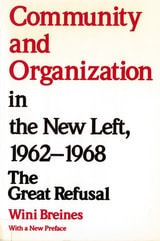
Community and Organization in the New Left, 1962-1968
The Great RefusalBreines, Wini
Rutgers University Press, 1989
Wini Breines traces the evolution of the New Left movement through the Free Speech Movement, Students for a Democratic Society (SDS), and SDS's community organization projects. For Breines, the movement's goal of participatory decision-making, even when it was not achieved, made up for its failure to take practical and direct action. By the late 1960s, antiwar activism contributed to the decline of the New Left, as the movement was flooded with new participants who did not share the founding generation's political experiences or values.
Originally published in 1982, Wini Breines's classic work now includes a new preface in which she reassesses, and for the most part affirms, her initial views of the movement. She argues that the movement remains effective in the midst of radical changes in activist movements. Breines also summarizes and evaluates the new and growing scholarship on the 1960s. Her provocative analysis of the New Left remains important today.
Community and Progress in Kant's Moral Philosophy
Kate A. Moran
Catholic University of America Press, 2012

Community and Solitude
New Essays on Johnson’s CircleLee, Anthony W
Bucknell University Press, 2019
Contributors: Christopher Catanese, James Caudle, Marilyn Francus, Christine Jackson-Holzberg, Claudia Thomas Kairoff, Elizabeth Lambert, Anthony W. Lee, James E. May, John Radner, and Lance Wilcox.
Published by Bucknell University Press. Distributed worldwide by Rutgers University Press.
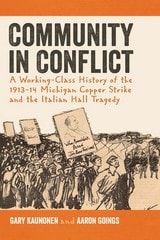
Community in Conflict
A Working-class History of the 1913-14 Michigan Copper Strike and the Italian Hall TragedyGary Kaunonen
Michigan State University Press, 2013
A mirror of great changes that were occurring on the national labor rights scene, the 1913–14 Michigan Copper Strike was a time of unprecedented social upheaval in Michigan’s Upper Peninsula. With organized labor taking an aggressive stance against the excesses of unfettered capitalism, the stage was set for a major struggle between labor and management. The Michigan Copper Strike received national attention and garnered the support of luminaries in organized labor like Mother Jones, John Mitchell, Clarence Darrow, and Charles Moyer. The hope of victory was overshadowed, however, by violent incidents like the shooting of striking workers and their family members, and the bitterness of a community divided. No other event came to symbolize or memorialize the strike more than the Italian Hall tragedy, in which dozens of workers and working-class children died. In Community in Conflict, the efforts of working people to gain a voice on the job and in their community through their unions, and the efforts of employers to crush those unions, take center stage. Previously untapped historical sources such as labor spy reports, union newspapers, coded messages, and artifacts shine new light on this epic, and ultimately tragic, period in American labor history.

Community, Cosmopolitanism and the Problem of Human Commonality
Vered Amit and Nigel Rapport
Pluto Press, 2012
In this follow up to their widely read earlier volume, The Trouble with Community, Vered Amit and Nigel Rapport ask: 'Do notions of community remain central to our sense of who we are, in the dislocating context of globalization, or can we see beyond community closures to a human whole?'
This volume explores the variable nature of contemporary sociality. It focuses on the ethical, organizational and emotional claims and opportunities sought or fashioned for mobilizing and evading social collectivities in a world of mobile subjects. Here is an examination of the tensions and interactions between everyday forms of fluid fellowship, culturally normative claims to identity, and opportunities for realizing a universal humanity.
The book offers a new perspective on human commonality through a dialogue between two eminent anthropologists who come from distinct, but complementary positions.
Congregation and Community
Ammerman, Nancy
Rutgers University Press, 1996
Change--in population, economy, and culture--is sweeping through American communities. Corner groceries are stocking new foods. New roads are being built and Main Streets abandoned. Schools have come and gone, and old friends move away as strangers arrive. But in every community, no matter how volatile, religious institutions provide for their members places of moral guidance and spiritual nurture, civic participation, and identity.
How do congregations react to significant community change? Why do some religious institutions decline in the face of racial integration while others adapt and grow? How do congregations make sense of economic distress? Do they provide havens from community upheaval or vehicles for change? Congregation and Community is the most comprehensive study to date of congregations in the face of community transformation. Nancy Ammerman and her colleagues include stories of over twenty congregations in nine communities from across the nation, communities with new immigrant populations, growing groups of gays and lesbians, rapid suburbanization, and economic dislocations.
With almost half of the nation's population attending religious services each week, it is impossible to understand change in American society without a close look at congregations. Congregation and Community will exist as a standard resource for years to come, and clergy, academics, and general readers alike will benefit from its insights.
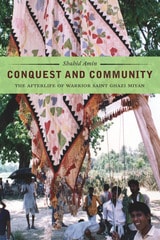
Conquest and Community
The Afterlife of Warrior Saint Ghazi MiyanShahid Amin
University of Chicago Press, 2016
Conquest and Community is Shahid Amin's answer. Covering more than eight hundred years of history, the book centers on the enduringly popular saint Ghazi Miyan, a youthful soldier of Islam whose shrines are found all over India. Amin details the warrior saint’s legendary exploits, then tracks the many ways he has been commemorated in the centuries since. The intriguing stories, ballads, and proverbs that grew up around Ghazi Miyan were, Amin shows, a way of domesticating the conquest—recognizing past conflicts and differences but nevertheless bringing diverse groups together into a community of devotees. What seems at first glance to be the story of one mythical figure becomes an allegory for the history of Hindu-Muslim relations over an astonishingly long period of time, and a timely contribution to current political and historical debates.
Conscience and Community
Sterling M. McMurrin, Obert C. Tanner, and Lowell L. BennionEdited by Robert Alan Goldberg, L. Jackson Newell, and Linda K. Newell
University of Utah Press, 2018
Lowell Bennion was founding director of the LDS Institute of Religion and professor of sociology at the University of Utah. He established multiple community service entities. Sterling McMurrin was distinguished professor of philosophy and history, dean of the graduate school, and former commissioner of education under JFK. He dismissed dogma and doctrine as barriers to a search for moral and spiritual understanding. Obert Tanner, also of the university’s Philosophy Department, excelled in teaching and business and became especially well known for philanthropy. The lives and work of these three men reveal the tensions between faith and reason, conscience and obedience. Their stories speak to us today because their concerns remain our concerns: racial justice, women’s equality, gay rights, and the meaning of integrity and conscience.

Conversation and Community
Chat in a Virtual WorldLynn Cherny
CSLI, 1999
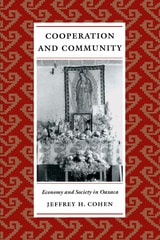
Cooperation and Community
Economy and Society in OaxacaBy Jeffrey H. Cohen
University of Texas Press, 2000
In the villages and small towns of Oaxaca, Mexico, as in much of rural Latin America, cooperation among neighbors is essential for personal and community survival. It can take many forms, from godparenting to sponsoring fiestas, holding civic offices, or exchanging agricultural or other kinds of labor. This book examines the ways in which the people of Santa Ana del Valle practice these traditional cooperative and reciprocal relationships and also invent new relationships to respond to global forces of social and economic change at work within their community.
Based on fieldwork he conducted in this Zapotec-speaking community between 1992 and 1996, Jeffrey Cohen describes continuities in the Santañeros' practices of cooperation, as well as changes resulting from transnational migration, tourism, increasing educational opportunities, and improved communications. His nuanced portrayal of the benefits and burdens of cooperation is buttressed by the words of many villagers who explain why and how they participate-or not-in reciprocal family and community networks. This rich ethnographic material offers a working definition of community created in and through cooperative relationships.
Courting the Community
Legitimacy and Punishment in a Community CourtChristine Zozula
Temple University Press, 2019
Community Courts are designed to handle a city’s low-level offenses and quality-of-life crimes, such as littering, loitering, or public drunkenness. Court advocates maintain that these largely victimless crimes jeopardize the well-being of residents, businesses, and visitors. Whereas traditional courts might dismiss such cases or administer a small fine, community courts aim to meaningfully punish offenders to avoid disorder escalating to apocalyptic decline.
Courting the Community is a fascinating ethnography that goes behind the scenes to explore how quality-of-life discourses are translated into court practices that marry therapeutic and rehabilitative ideas. Christine Zozula shows how residents and businesses participate in meting out justice—such as through community service, treatment, or other sanctions—making it more emotional, less detached, and more legitimate in the eyes of stakeholders. She also examines both “impact panels,” in which offenders, residents, and business owners meet to discuss how quality-of-life crimes negatively impact the neighborhood, as well as strategic neighborhood outreach efforts to update residents on cases and gauge their concerns.
Zozula’s nuanced investigation of community courts can lead us to a deeper understanding of punishment and rehabilitation and, by extension, the current state of the American court system.
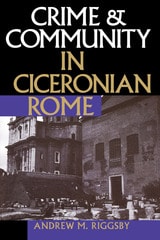
Crime and Community in Ciceronian Rome
By Andrew M. Riggsby
University of Texas Press, 1999
In the late Roman Republic, acts of wrongdoing against individuals were prosecuted in private courts, while the iudicia publica (literally "public courts") tried cases that involved harm to the community as a whole. In this book, Andrew M. Riggsby thoroughly investigates the types of cases heard by the public courts to offer a provocative new understanding of what has been described as "crime" in the Roman Republic and to illuminate the inherently political nature of the Roman public courts.
Through the lens of Cicero's forensic oratory, Riggsby examines the four major public offenses: ambitus (bribery of the electorate), de sicariis et veneficiis (murder), vis (riot), and repetundae (extortion by provincial administrators). He persuasively argues that each of these offenses involves a violation of the proper relations between the state and the people, as interpreted by orators and juries. He concludes that in the late Roman Republic the only crimes were political crimes.
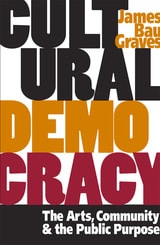
Cultural Democracy
The Arts, Community, and the Public PurposeJames Bau Graves
University of Illinois Press, 2004
Drawing upon a range of scholarship and illustrative anecdotes from his own experiences with cultural programs in ethnically diverse communities, Graves explains in convincing detail the dynamics of how traditional and grassroots cultures may survive and thrive--or not--and what we can do to provide them opportunities equal to those of mainstream, Eurocentric culture.