Results by title
87 books match the query 'Comparative' and 27 start with c
Comparative Education Review, volume 65 number 4 (November 2021)
The University of Chicago Press
University of Chicago Press Journals, 2021
Comparative Education Review, volume 66 number 1 (February 2022)
The University of Chicago Press
University of Chicago Press Journals, 2022
Comparative Education Review, volume 66 number 2 (May 2022)
The University of Chicago Press
University of Chicago Press Journals, 2022
Comparative Education Review, volume 66 number 3 (August 2022)
The University of Chicago Press
University of Chicago Press Journals, 2022
Comparative Education Review, volume 66 number 4 (November 2022)
The University of Chicago Press
University of Chicago Press Journals, 2022
Comparative Education Review, volume 67 number 1 (February 2023)
The University of Chicago Press
University of Chicago Press Journals, 2023
Comparative Education Review, volume 67 number 2 (May 2023)
The University of Chicago Press
University of Chicago Press Journals, 2023
Comparative Education Review, volume 67 number 3 (August 2023)
The University of Chicago Press
University of Chicago Press Journals, 2023
Comparative Education Review, volume 67 number 4 (November 2023)
The University of Chicago Press
University of Chicago Press Journals, 2023
Comparative Education Review, volume 67 number S1 (February 2023)
The University of Chicago Press
University of Chicago Press Journals, 2023
Comparative Education Review, volume 68 number 1 (February 2024)
The University of Chicago Press
University of Chicago Press Journals, 2024
Comparative Education Review, volume 68 number 2 (May 2024)
The University of Chicago Press
University of Chicago Press Journals, 2024
Comparative Education Review, volume 68 number 3 (August 2024)
The University of Chicago Press
University of Chicago Press Journals, 2024
Comparative Education Review, volume 68 number 4 (November 2024)
The University of Chicago Press
University of Chicago Press Journals, 2024
Comparative Education Review, volume 69 number 1 (February 2025)
The University of Chicago Press
University of Chicago Press Journals, 2025
Comparative Education Review, volume 69 number 2 (May 2025)
The University of Chicago Press
University of Chicago Press Journals, 2025
Comparative Education Review, volume 69 number 3 (August 2025)
The University of Chicago Press
University of Chicago Press Journals, 2025
Comparative Education Review, volume 69 number 4 (November 2025)
The University of Chicago Press
University of Chicago Press Journals, 2025
Comparative Education Review, volume 70 number 1 (February 2026)
The University of Chicago Press
University of Chicago Press Journals, 2026
Comparative Education Review, volume 70 number 2 (May 2026)
The University of Chicago Press
University of Chicago Press Journals, 2026
Comparative Education Review, volume 70 number 3 (August 2026)
The University of Chicago Press
University of Chicago Press Journals, 2026
Coronavirus Politics
The Comparative Politics and Policy of COVID-19Scott L. Greer, Elizabeth J. King, Elize Massard da Fonseca, André Peralta-Santos, Editors
University of Michigan Press, 2021

Courts
A Comparative and Political AnalysisMartin Shapiro
University of Chicago Press, 1981
Cross-National Comparative Research Using Panel Surveys
Special Issue of Journal of Human Resources 38:2 (Spring 2003)Edited by James P. Smith, Frank Stafford, and James R. Walker
University of Wisconsin Press, 2010
This special issue revises and expands on presentations given at a conference on comparative research using international panel surveys held in Ann Arbor, Michigan. Five of the articles explicitly or implicitly examine international differences in savings behavior and wealth accumulation. The final two articles use international comparisons to assess the status of young children.
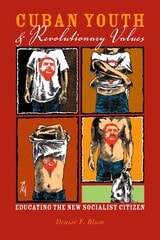
Cuban Youth and Revolutionary Values
Educating the New Socialist CitizenBy Denise F. Blum
University of Texas Press, 2011
Drawing on extensive fieldwork in Havana's secondary schools, Cuban Youth and Revolutionary Values is a remarkable ethnography, charting the government's attempts to transform a future generation of citizens. While Cuba's high literacy rate is often lauded, the little-known dropout rates among teenagers receive less scrutiny. In vivid, succinct reporting, educational anthropologist Denise Blum now shares her findings regarding this overlooked aspect of the Castro legacy.
Despite the fact that primary-school enrollment rates exceed those of the United States, the reverse is true for the crucial years between elementary school and college. After providing a history of Fidel Castro's educational revolution begun in 1953, Denise Blum delivers a close examination of the effects of the program, which was designed to produce a society motivated by benevolence rather than materialism. Exploring pioneering pedagogy, the notion of civic education, and the rural components of the program, Cuban Youth and Revolutionary Values brims with surprising findings about one of the most intriguing social experiments in recent history.
Cultural Economies Past and Present
By Rhoda H. Halperin
University of Texas Press, 1994
When anthropologists and other students of culture want to compare different societies in such areas as the organization of land, labor, trade, or barter, they often discover that individual researchers use these concepts inconsistently and from a variety of theoretical approaches, so that data from one society cannot be compared with data from another.
In this book, Rhoda Halperin offers an analytical tool kit for studying economic processes in all societies and at all times. She uniquely organizes the book around key concepts: economy, ecology, equivalencies, householding, storage, and time and the economy. These concepts are designed to facilitate the understanding of similarities, differences, and changes between contemporary and past economies. While this is not only a "how-to" book or handbook, it can be used as such. It will be of great value to scholars and students of archaeology and history, as well as to ethnographers and economists.
Curriculum as Conversation
Transforming Traditions of Teaching and LearningArthur N. Applebee
University of Chicago Press, 1996
“Applebee's central point, the need to teach 'knowledge in context,' is absolutely crucial for the hopes of any reformed curriculum. His experience and knowledge give his voice an authority that makes many of the current proposals on both the left and right seem shallow by comparison.”—Gerald Graff, University of Chicago