Results by title
264 books match the query 'Composition' and 30 start with c
Case for Critical Literacy
A History of Reading in Writing StudiesAlice S. Horning
Utah State University Press, 2024
This book examines how college-level instruction reached this point and provides pedagogical strategies that writing instructors and teachers can use to address the problem. Alice Horning makes the case for the importance of critical reading in the teaching of writing with intentionality and imagination, while sharing glimpses of her own personal history with reading and writing. Horning provides the context for understanding what college faculty face in their classrooms and offers a history of critical literacy that explains why, to date, it has mostly neglected or ignored the diverse statuses of students’ reading challenges.
The Case for Critical Literacy explores actionable options to better meet students’ literacy needs. College and university faculty, especially writing instructors, will benefit from an understanding of what has happened in the field and what needs to change.
Centros y Programas de Escritura en América Latina
Opciones teóricas y pedagógicas para la enseñanza de la escritura disciplinarEstela Inés Moyano
University Press of Colorado, 2023
Changing Conceptions, Changing Practices
Innovating Teaching across Disciplinesedited by Angela Glotfelter, Caitlin Martin, Mandy Olejnik, Ann Updike & Elizabeth Wardle
Utah State University Press, 2022
The authors draw on the threshold concepts framework, research in writing studies, and theories of learning, leadership, and change to deftly explore why faculty are often stymied in their efforts to design meaningful curricula for deep learning and how carefully scaffolded professional development for faculty teams can help make such change possible. This book is a powerful demonstration of how faculty members can be empowered when professional development leaders draw on a range of scholarship that is not typically connected.
In today’s climate, courses, programs, and institutions are often assessed by and rewarded for proxy metrics that have little to do with learning, with grave consequences for students. The stakes have never been higher, particularly for public higher education. Faculty members need opportunities to work together using their own expertise and to enact meaningful learning opportunities for students. Professional developers have an important role to play in such change efforts.
WAC scholars and practitioners, leaders of professional development and centers for teaching excellence, program administrators and curriculum committees from all disciplines, and faculty innovators from many fields will find not only hope but also a blueprint for action in Changing Conceptions, Changing Practices.
Contributors: Juan Carlos Albarrán, José Amador, Annie Dell'Aria, Kate de Medeiros, Keith Fennen, Jordan A. Fenton, Carrie E. Hall, Elena Jackson Albarrán, Erik N. Jensen, Vrinda Kalia, Janice Kinghorn, Jennifer Kinney, Sheri Leafgren, Elaine Maimon, Elaine Miller, Gaile Pohlhaus Jr., Jennifer J. Quinn, Barbara J. Rose, Scott Sander, Brian D. Schultz, Ling Shao, L. James Smart, Pepper Stetler
Changing of Knowledge in Composition
Contemporary PerspectivesLance Massey and Richard C Gephardt
Utah State University Press, 2011
Lance Massey and Richard Gebhardt offer in this collection many signs that composition again faces a moment of precariousness, even as it did in the 1980s—the years of the great divorce from literary studies. The contours of writing in the university again are rapidly changing, making the objects of scholarship in composition again unstable. Composition is poised to move not from modern to postmodern but from process to postprocess, from a service-oriented "field" to a research-driven "discipline." Some would say we are already there. Momentum is building to replace "composition" and the pedagogical imperative long implied in that term with a "writing studies" model devoted to the study of composition as a fundamental tool of, and force within, all areas of human activity.
Appropriately, contributors here use Stephen M. North's 1987 book The Making of Knowledge in Composition to frame and background their discussion, as they look at both the present state of the field and its potential futures. As in North's volume, The Changing of Knowledge in Composition describes a body of research and pedagogy brimming with conflicting claims, methodologies, and politics, and with little consensus regarding the proper subjects and modes of inquiry.
The deep ambivalence within the field itself is evident in this collection. Contributors here envision composition both as retaining its commitment to broad-based, generalized writing instruction and as heading toward content-based vertical writing programs in departments and programs of writing studies. They both challenge and affirm composition's pedagogical heritage. And they sound both sanguine and pessimistic notes about composition's future.
Changing the Subject
A Theory of Rhetorical EmpathyLisa Blankenship
Utah State University Press, 2019
Departing from agonistic win-or-lose rhetoric in the classical Greek tradition that has so strongly influenced Western thinking, Blankenship proposes that we ourselves are changed (“changing the subject” or the self) when we focus on trying to understand rather than simply changing an Other. This work is informed by her experiences growing up in the conservative South and now working as a professor in New York City, as well as the stories and examples of three people working across profound social, political, class, and gender differences: Jane Addams’s activist work on behalf of immigrants and domestic workers in Gilded Age Chicago; the social media advocacy of Brazilian rap star and former maid Joyce Fernandes for domestic worker labor reform; and the online activist work of Justin Lee, a queer Christian who advocates for greater understanding and inclusion of LGBTQ+ people in conservative Christian churches.
A much-needed book in the current political climate, Changing the Subject charts new theoretical ground and proposes ways of integrating principles of rhetorical empathy in our everyday lives to help fight the temptations of despair and disengagement. The book will appeal to students, scholars, and teachers of rhetoric and composition as well as people outside the academy in search of new ways of engaging across differences.
Civic Engagement in Global Contexts
International Education, Community Partnerships, and Higher EducationJim Bowman
Utah State University Press, 2021
Civic Engagement in Global Contexts provides examples and evidence of the critical self-reflection and iteration with community partners that make these projects important and valuable. Throughout its thirteen chapters, this collection provides practical pedagogical and administrative approaches for writing studies faculty engaging with global learning projects, as well as nuanced insight into how to navigate contact zones from the planning stages of projects to the hard work of self-reflection and change.
Partnerships and projects across national borders compel the field of rhetoric and composition to think through the ethics of writing studies program design and teaching practices. Doing this difficult work can disrupt presumptive notions of ownership that faculty and administrators hold concerning the fields involved in these projects and can even lead to decentering rhetoric/composition and other assumptions held by US-based institutions of higher education. Civic Engagement in GlobalContexts will be useful to instructors, advisors, and project managers of students in faculty-led project learning in overseas settings, international service learning through foreign study programs, and foreign study itself and to faculty members introducing civic engagement and community-based learning projects with foreign students in overseas institutions.
Contributors: Olga Aksakalova, James Austin, Maria de Lourdes Caudillo Zambrano, Rebecca Charry Roje, Patricia M. Dyer, Tara E. Friedman, Bruce Horner, Kathryn Johnson Gindlesparger, Adela C. Licona, Ian Mauer, Joyce Meier, Susan V. Meyers, Sadia Mir, Stephen T. Russell
Coding Streams of Language
Techniques for the Systematic Coding of Text, Talk, and Other Verbal DataCheryl Geisler
University Press of Colorado, 2020
Collaborations and Partnerships in User Experience
Joy Robinson
University Press of Colorado, 2026
Effective UX work is necessarily complex and challenging—and necessarily collaborative. Drawing on their extensive collective experience, the contributors to this edited collection offer valuable insights and practical guidance for UX professionals seeking to navigate the complexities of collaborative work and create effective, user-centered products and services. Collaborations and Partnerships in User Experience focuses on the importance of building and nurturing relationships, fostering open communication, and ensuring that all partners benefit from collaborative efforts. The chapters in the collection offer theoretical frameworks, case studies, and lessons learned from successful (and sometimes unsuccessful) collaborative projects. They also explore the challenges that can arise in UX collaborations, such as differing priorities, vocabularies, and institutional structures, as well as the strategies employed to overcome these hurdles and achieve meaningful outcomes.
Community Is the Way
Engaged Writing and Designing for Transformative Changeby Aimée Knight
University Press of Colorado, 2022
Community Is the Way
Engaged Writing and Designing for Transformative Changeby Aimée Knight
University Press of Colorado, 2022
Community Listening
Stories, Hauntings, PossibilitiesJenn Fishman
University Press of Colorado, 2025
Composing Music
A New ApproachWilliam Russo
University of Chicago Press, 1988
Composing Music is the perfect introduction to writing music of all sorts for engaged beginners.
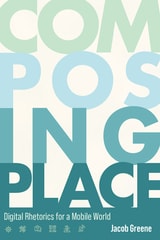
Composing Place
Digital Rhetorics for a Mobile WorldJacob Greene
Utah State University Press, 2022
Greene identifies three emerging “modalities” through which mobile technologies are being used by digital writers. First, to counter dominant discourses in contested spaces; second, to historicize entrenched narratives in iconic spaces; and third, to amplify marginalized voices in mundane spaces. Through these modalities, Greene employs Indigenous philosophies and theories that upend the ways that the discipline has centered placed-based rhetorics, offering digital writers better strategies for using mobile media as a platform for civic deliberation, social advocacy, and political action.
Composing Place offers close analyses of mobile media experiences created by various artists and digital media practitioners, as well as detailed overviews of Greene’s own projects (also accessible through the companion website: www.composingplace.com). These projects include a digital “countertour” of SeaWorld that demonstrates the ways in which the attraction is driven by capitalism; an augmented reality tour of Detroit’s Woodward Avenue; and a mobile advocacy project in Jacksonville, Florida, that demonstrates the inequitable effects of car-centric public infrastructure. Ultimately, by engaging with these theoretical frameworks, rhetorical design principles, and pedagogical practices of mobile writing, readers can utilize the unique affordances of mobile media in various teaching and research contexts.
Composing Research
A Contextualist Paradigm for Rhetoric and CompositionCindy Johanek
Utah State University Press, 2000
Cindy Johanek offers a new perspective on the ideological conflict between qualitative and quantitative research approaches, and the theories of knowledge that inform them. With a paradigm that is sensitive to the context of one's research questions, she argues, scholars can develop less dichotomous forms that invoke the strengths of both research traditions. Context-oriented approaches can lift the narrative from beneath the numbers in an experimental study, for example, or bring the useful clarity of numbers to an ethnographic study.
A pragmatic scholar, Johanek moves easily across the boundaries that divide the field, and argues for contextualist theory as a lens through which to view composition research. This approach brings with it a new focus, she writes. "This new focus will call us to attend to the contexts in which rhetorical issues and research issues converge, producing varied forms, many voices, and new knowledge, indeed reconstructing a discipline that will be simultaneously focused on its tasks, its knowledge-makers, and its students."
Composing Research is a work full of personal voice and professional commitment and will be a welcome addition to the research methods classroom and to the composition researcher's own bookshelf.
2000 Outstanding Scholarship Award from the International Writing Centers Association.
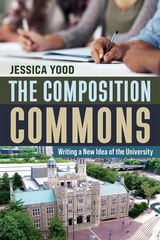
Composition Commons
Writing a New Idea of the UniversityJessica Yood
Utah State University Press, 2024
Jessica Yood traces the century-long origins of a writing-centered idea of the American university and tracks the resurgence of this idea today. Drawing on archival and classroom evidence from public colleges and universities and written in a lively autoethnographic voice, Yood names “genres of the commons”: intimate, informal writing activities that create peer-to-peer knowledge networks. She shows how these unique genres create collectivity—an academic commons—and calls on scholars to invest in composition as a course cultivating reflective, emergent, shared knowledge. Yood departs from movements that divest from the first-year composition classroom and details how an increasingly diverse student population composes complex, evolving cultural literacies that forge social bonds and forward innovation and intellectual and civic engagement.
The Composition Commons reclaims the commons as critical idea and writing classroom activities as essential practices for remaking higher education in the United States.
Composition and Cornel West
Notes toward a Deep DemocracyKeith Gilyard
Southern Illinois University Press, 2008
Composition and Cornel West: Notes toward a Deep Democracy identifies and explains key aspects of the work of Cornel West—the highly regarded scholar of religion, philosophy, and African American studies—as they relate to composition studies, focusing especially on three rhetorical strategies that West suggests we use in our questioning lives as scholars, teachers, students, and citizens.
In this study, author Keith Gilyard examines the strategies of Socratic Commitment (a relentless examination of received wisdom), Prophetic Witness (an abiding concern with justice and the plight of the oppressed), and Tragicomic Hope (a keep-on-pushing sensibility reflective of the African American freedom struggle). Together, these rhetorical strategies comprise an updated form of cultural criticism that West calls prophetic pragmatism.
This volume, which contains the only interview in which Cornel West directly addresses the field of composition,sketches the development of Cornel West’s theories of philosophy, political science, religion, and cultural studies and restates the link between Deweyan notions of critical intelligence and the notion of critical literacy developed by Ann Berthoff, Ira Shor, and Henry Giroux. Gilyard provides examples from the classroom to illustrate the possibilities of Socratic Commitment as part of composition pedagogy, shows the alignment of Prophetic Witness with traditional aims of critical composition, and in his chapter on Tragicomic Hope, addresses African American expressive culture with an emphasis on music and artists such as Curtis Mayfield, Marvin Gaye, Aretha Franklin, and Kanye West.
The first book to comprehensively connect the ideas of one of America's premier scholars of religion, philosophy and African American studies with composition theory and pedagogy, Composition and Cornel West will be valuable to scholars, teachers, and students interested in race, class, critical literacy, and the teaching of writing.
Composition and Literature
Bridging the GapEdited by Winifred Bryan Horner
University of Chicago Press, 1983
Composition and Rhetoric in Contentious Times
Rachel McCabe
Utah State University Press, 2023
Editors Rachel McCabe and Jennifer Juszkiewicz consider how educators can respond to multiple current crises relating to composition and rhetoric with generosity and cautious optimism; in the process, they address the current concerns about the longevity of the humanities. By engaging with social constructivist, critical race, socioeconomic, and activist pedagogies, each chapter provides an answer to the question, How can our courses help students become stronger writers while contending with current social, environmental, and ethical questions posed by the world around them? The contributors consider this question from numerous perspectives, recognizing the important ways that power and privilege affect our varying means of addressing this question.
Relying on both theory and practice, Composition and Rhetoric in Contentious Times engages the future of composition and rhetoric as a discipline shaped by recent and current global events. This text appeals to early-career writing program administrators, writing center directors, and professional specialists, as well as Advanced Placement high school instructors, graduate students, and faculty teaching graduate-level pedagogy courses.
Composition and the Rhetoric of Science
Engaging the Dominant DiscourseMichael J. Zerbe
Southern Illinois University Press, 2007
Composition in the Age of Austerity
Nancy Welch
Utah State University Press, 2016
In the face of the gradual saturation of US public education by the logics of neoliberalism, educators often find themselves at a loss to respond, let alone resist. Through state defunding and many other “reforms” fueled by austerity politics, a majority of educators are becoming casual labor in US universities while those who hang onto secure employment are pressed to act as self-supporting entrepreneurs or do more with less. Focusing on the discipline of writing studies, this collection addresses the sense of crisis that many educators experience in this age of austerity.
The chapters in this book chronicle how neoliberal political economy shapes writing assessments, curricula, teacher agency, program administration, and funding distribution. Contributors also focus on how neoliberal political economy dictates the direction of scholarship, because the economic and political agenda shaping the terms of work, the methods of delivery, and the ways of valuing and assessing writing also shape the primary concerns and directions of scholarship.
Composition in the Age of Austerity offers critical accounts of how the restructuring of higher education is shaping the daily realities of composition programs. The book documents the effects and implications of the current restructuring, examines how cherished rhetorical ideals actually leave the field unprepared to respond effectively to defunding and corporatizing trends, and establishes points of departure for collective response.
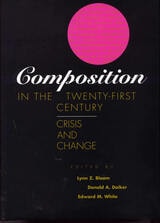
Composition in the Twenty-First Century
Crisis and ChangeEdited by Lynn Z. Bloom, Donald A. Daiker, and Edward M. White
Southern Illinois University Press, 1997
Despite its pervasiveness and its significance, composition has an unstable status within the curriculum. Writing programs and writing faculty are besieged by academic, political, and financial concerns that have not been well understood or addressed.
At many institutions, composition functions paradoxically as both the gateway to academic success and as the gatekeeper, reducing access to academic work and opportunity for those with limited facility in English. Although writing programs are expected to provide services that range from instruction in correct grammar to assisting—or resisting—political correctness, expanding programs and shrinking faculty get caught in the crossfire. The bottom line becomes the firing line as forces outside the classroom determine funding and seek to define what composition should do.
In search of that definition, the contributors ask and answer a series of specific and salient questions: What implications—intellectual, political, and institutional—will forces outside the classroom have on the quality and delivery of composition in the twenty-first century? How will faculty and administrators identify and address these issues? What policies and practices ought we propose for the century to come?
This book features sixteen position papers by distinguished scholars and researchers in composition and rhetoric; most of the papers are followed by invited responses by other notable compositionists. In all, twenty-five contributors approach composition from a wide variety of contemporary perspectives: rhetorical, historical, social, cultural, political, intellectual, economic, structural, administrative, and developmental. They propose solutions applicable to pedagogy, research, graduate training of composition teachers, academic administration, and public and social policy. In a very real sense, then, this is the only book to offer a map to the future of composition.
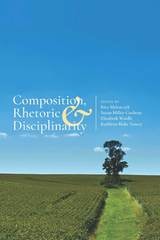
Composition, Rhetoric, and Disciplinarity
Rita Malenczyk
Utah State University Press, 2018
Edited by four nationally recognized leaders of composition scholarship, Composition, Rhetoric, and Disciplinarity asks a fundamental question: can Composition and Rhetoric, as a discipline, continue its historical commitment to pedagogy without sacrificing equal attention to other areas, such as research and theory? In response, contributors to the volume address disagreements about what it means to be called a discipline rather than a profession or a field; elucidate tensions over the defined breadth of Composition and Rhetoric; and consider the roles of research and responsibility as Composition and Rhetoric shifts from field to discipline.
Outlining a field with a complex and unusual formation story, Composition, Rhetoric, and Disciplinarity employs several lenses for understanding disciplinarity—theory, history, labor, and pedagogy—and for teasing out the implications of disciplinarity for students, faculty, institutions, and Composition and Rhetoric itself. Collectively, the chapters speak to the intellectual and embodied history leading to this point; to questions about how disciplinarity is, and might be, understood, especially with regard to Composition and Rhetoric; to the curricular, conceptual, labor, and other sites of tension inherent in thinking about Composition and Rhetoric as a discipline; and to the implications of Composition and Rhetoric’s disciplinarity for the future.
Contributors: Linda Adler-Kassner, Elizabeth H. Boquet, Christiane Donahue, Whitney Douglas, Doug Downs, Heidi Estrem, Kristine Hansen, Doug Hesse, Sandra Jamieson, Neal Lerner, Jennifer Helene Maher, Barry Maid, Jaime Armin Mejía, Carolyn R. Miller, Kelly Myers, Gwendolynne Reid, Liane Robertson, Rochelle Rodrigo, Dawn Shepherd, Kara Taczak
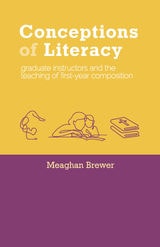
Conceptions of Literacy
Graduate Instructors and the Teaching of First-Year CompositionMeaghan Brewer
Utah State University Press, 2020
Brewer argues that conceptions of literacy undergird the work of writing instructors and that many of the anxieties around composition studies’ disciplinary status are related to the differences perceived between the field’s conceptions of literacy and those of the graduate instructors and adjuncts who teach the majority of composition courses. Conceptions of Literacy makes practical recommendations for how new graduate instructors can begin to perceive and interrogate their conceptions of literacy, which, while influential, are often too personal to recognize.
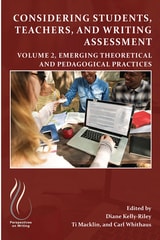
Considering Students, Teachers, and Writing Assessment, Vol 2
Emerging Theoretical and Pedagogical PracticeDiane Kelly-Riley
University Press of Colorado, 2024
Considering Students, Teachers, and Writing Assessment, Vol. 1
Technical and Political ContextsDiane Kelly-Riley
University Press of Colorado, 2024
CounterStories from the Writing Center
Frankie Condon
Utah State University Press, 2021
Practicing what Derrick Bell has termed “creative truth telling,” these writers are not concerned with individual white women in writing centres but with the social, political, and cultural capital that is the historical birthright of white, straight, cis-gendered women, particularly in writing centre studies. The essays collected in this volume test, defy, and overflow the bounds of traditional academic discourse in the service of powerful testimony, witness, and counterstory.
CounterStories from the Writing Center is a must-read for writing centre directors, scholars, and tutors who are committed to antiracist pedagogy and offers a robust intersectional analysis to those who seek to understand the relationship between the work of writing centres and the problem of racism. Accessible and usable for both graduate and undergraduate students of writing centre theory and practice, this work troubles the field’s commonplaces and offers a rich envisioning of what writing centres materially committed to inclusion and equity might be and do.
Contributors: Dianna Baldwin, Nicole Caswell, Mitzi Ceballos, Romeo Garcia, Neisha-Anne Green, Doug Kern, T. Haltiwanger Morrison, Bernice Olivas, Moira Ozias, Trixie Smith, Willow Trevino
Cripping Labor-Based Grading for More Equity in Literacy Courses
Asao B. Inoue
University Press of Colorado, 2024
Critical Data Storytelling in the Composition Classroom
Angela Laflen
Utah State University Press, 2025
At the heart of Laflen’s approach is critical data storytelling—a practice that equips students with the skills to understand, interpret, and ethically communicate with and about data through various multimodal formats. By teaching students to make informed decisions as data storytellers, Laflen addresses the ethical implications of working with data while offering practical strategies for reading and analyzing data stories. This approach empowers both students and teachers to engage critically with data as a tool for learning and communication. It also highlights how multimodal composition has yet to fully account for the central role of data in shaping contemporary communication and argumentation.
By focusing on the ethical and rhetorical dimensions of data storytelling, Critical Data Storytelling in the Composition Classroompresents a pedagogical approach that prepares students for the challenges of working with data in a rapidly evolving digital landscape. This flexible, adaptable model for teaching critical data literacy is of great interest to writing instructors, scholars in rhetoric and composition, and educators who seek to prepare students for the demands of a data-driven world.
Cross-Language Relations in Composition
Edited by Bruce Horner, Min-Zhan Lu, and Paul Kei Matsuda
Southern Illinois University Press, 2010
Cross-Language Relations in Composition brings together the foremost scholars in the fields of composition, second language writing, education, and literacy studies to address the limitations of the tacit English-only policy prevalent in composition pedagogy and research and to suggest changes for the benefit of writing students and instructors throughout the United States. Recognizing the growing linguistic diversity of students and faculty, the ongoing changes in the English language as a result of globalization, and the increasingly blurred categories of native, foreign, and second language English speakers, editors Bruce Horner, Min-Zhan Lu, and Paul Kei Matsuda have compiled a groundbreaking anthology of essays that contest the dominance of English monolingualism in the study and teaching of composition and encourage the pursuit of approaches that embrace multilingualism and cross-language writing as the norm for teaching and research.
The nine chapters comprising part 1 of the collection focus on the origins of the “English only” bias dominating U.S. composition classes and present alternative methods of teaching and research that challenge this monolingualism. In part 2, nine composition teachers and scholars representing a variety of theoretical, institutional, and professional perspectives propose new, compelling, and concrete ways to understand and teach composition to students of a “global,” plural English, a language evolving in a multilingual world.
Drawing on recent theoretical work on genre, complexity, performance and identity, as well as postcolonialism, Cross-Language Relations in Composition offers a radically new approach to composition teaching and research, one that will prove invaluable to all who teach writing in today’s multilingual college classroom.
Cruel Auteurism
Affective Digital Mediations toward Film-Compositionbonnie lenore kyburz
University Press of Colorado, 2019