Results by title
69 books match the query 'Conduct of life' and 4 start with c
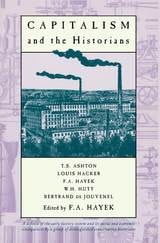
Capitalism and the Historians
Edited by F. A. Hayek
University of Chicago Press, 1963
The views generally held about the rise of the factory system in Britain derive from highly distorted accounts of the social consequences of that system—so say the distinguished economic historians whose papers make up this book. The authors offer documentary evidence to support their conclusion that under capitalism the workers, despite long hours and other hardships of factory life, were better off financially, had more opportunities, and led a better life than had been the case before the Industrial Revolution.
[more]
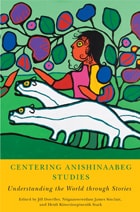
Centering Anishinaabeg Studies
Understanding the World through StoriesJill Doerfler
Michigan State University Press, 2013
For the Anishinaabeg people, who span a vast geographic region from the Great Lakes to the Plains and beyond, stories are vessels of knowledge. They are bagijiganan, offerings of the possibilities within Anishinaabeg life. Existing along a broad narrative spectrum, from aadizookaanag (traditional or sacred narratives) to dibaajimowinan (histories and news)—as well as everything in between—storytelling is one of the central practices and methods of individual and community existence. Stories create and understand, survive and endure, revitalize and persist. They honor the past, recognize the present, and provide visions of the future. In remembering, (re)making, and (re)writing stories, Anishinaabeg storytellers have forged a well-traveled path of agency, resistance, and resurgence. Respecting this tradition, this groundbreaking anthology features twenty-four contributors who utilize creative and critical approaches to propose that this people’s stories carry dynamic answers to questions posed within Anishinaabeg communities, nations, and the world at large. Examining a range of stories and storytellers across time and space, each contributor explores how narratives form a cultural, political, and historical foundation for Anishinaabeg Studies. Written by Anishinaabeg and non-Anishinaabeg scholars, storytellers, and activists, these essays draw upon the power of cultural expression to illustrate active and ongoing senses of Anishinaabeg life. They are new and dynamic bagijiganan, revealing a viable and sustainable center for Anishinaabeg Studies, what it has been, what it is, what it can be.
[more]
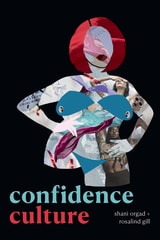
Confidence Culture
Shani Orgad and Rosalind Gill
Duke University Press, 2022
In Confidence Culture, Shani Orgad and Rosalind Gill argue that imperatives directed at women to “love your body” and “believe in yourself” imply that psychological blocks rather than entrenched social injustices hold women back. Interrogating the prominence of confidence in contemporary discourse about body image, workplace, relationships, motherhood, and international development, Orgad and Gill draw on Foucault’s notion of technologies of self to demonstrate how “confidence culture” demands of women near-constant introspection and vigilance in the service of self-improvement. They argue that while confidence messaging may feel good, it does not address structural and systemic oppression. Rather, confidence culture suggests that women—along with people of color, the disabled, and other marginalized groups—are responsible for their own conditions. Rejecting confidence culture’s remaking of feminism along individualistic and neoliberal lines, Orgad and Gill explore alternative articulations of feminism that go beyond the confidence imperative.
[more]
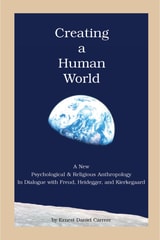
Creating a Human World
A New Psychological and Religious Anthropology In Dialogue with Freud, Heidegger, and KierkegaardErnest Daniel Carrere
University of Scranton Press, 2006
In Creating a Human World, Trappist monk and scholar Ernest Daniel Carrere explores what it means to be fully human, to live in a shared world, and to resist the easy tendency to flee reality and seek pleasure in material pursuits. To do so he examines the writings of three great modern thinkers—Sigmund Freud, Martin Heidegger, and Søren Kierkegaard—and proposes a new reading of their work in light of his own understanding of New Testament teachings.
Carrere elucidates the paradoxical spiritual truth that salvation lies not in an escape from humanity, but in embracing it. An interdisciplinary tour de force, this book will appeal to anyone interested in philosophy, psychology, religion, or cultural anthropology.
Carrere elucidates the paradoxical spiritual truth that salvation lies not in an escape from humanity, but in embracing it. An interdisciplinary tour de force, this book will appeal to anyone interested in philosophy, psychology, religion, or cultural anthropology.
[more]