Results by title
10 books match the query 'Sick'
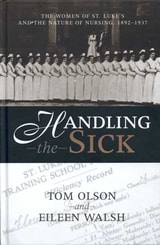
HANDLING THE SICK
Women of St Luke’s and the Nature of Nursing, 1892–1937Tom Olson and Eileen Walsh
The Ohio State University Press, 2004

Ministry to the Sick and Dying in the Late Medieval Church
Thomas M. Izbicki
Catholic University of America Press, 2023
Newer Dimensions of Patient Care
The Use of the Physical and Social Environment for Therapeutic PurposesEsther Lucille Brown
Russell Sage Foundation, 1961
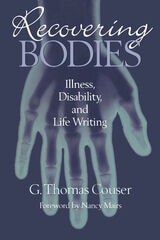
Recovering Bodies
Illness, Disability, and Life WritingG. Thomas Couser
University of Wisconsin Press, 1997
Responding to the recent growth of illness and disability narratives in the United States—such works as Juliet Wittman’s Breast Cancer Journal, John Hockenberry’s Moving Violations, Paul Monette’s Borrowed Time: An AIDS Memoir, and Lou Ann Walker’s A Loss for Words: The Story of Deafness in a Family—Couser addresses questions of both poetics and politics. He examines why and under what circumstances individuals choose to write about illness or disability; what role plot plays in such narratives; how and whether closure is achieved; who assumes the prerogative of narration; which conditions are most often represented; and which literary conventions lend themselves to representing particular conditions. By tracing the development of new subgenres of personal narrative in our time, this book explores how explicit consideration of illness and disability has enriched the repertoire of life writing. In addition, Couser’s discussion of medical discourse joins the current debate about whether the biomedical model is entirely conducive to humane care for ill and disabled people.
With its sympathetic critique of the testimony of those most affected by these conditions, Recovering Bodies contributes to an understanding of the relations among bodily dysfunction, cultural conventions, and identity in contemporary America.
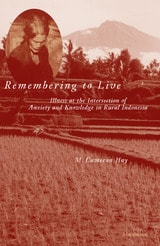
Remembering to Live
Illness at the Intersection of Anxiety and Knowledge in Rural IndonesiaM. Cameron Hay
University of Michigan Press, 2004

Sick to Death
An Andy Hayes MysteryAndrew Welsh-Huggins
Ohio University Press, 2024

The Wounded Storyteller
Body, Illness, and EthicsArthur W. Frank
University of Chicago Press, 1995
Ill people are more than victims of disease or patients of medicine; they are wounded storytellers. People tell stories to make sense of their suffering; when they turn their diseases into stories, they find healing.
Drawing on the work of authors such as Oliver Sacks, Anatole Broyard, Norman Cousins, and Audre Lorde, as well as from people he met during the years he spent among different illness groups, Frank recounts a stirring collection of illness stories, ranging from the well-known—Gilda Radner's battle with ovarian cancer—to the private testimonials of people with cancer, chronic fatigue syndrome, and disabilties. Their stories are more than accounts of personal suffering: they abound with moral choices and point to a social ethic.
Frank identifies three basic narratives of illness in restitution, chaos, and quest. Restitution narratives anticipate getting well again and give prominence to the technology of cure. In chaos narratives, illness seems to stretch on forever, with no respite or redeeming insights. Quest narratives are about finding that insight as illness is transformed into a means for the ill person to become someone new.

The Wounded Storyteller
Body, Illness, and Ethics, Second EditionArthur W. Frank
University of Chicago Press, 1997
Drawing on the work of authors such as Oliver Sacks, Anatole Broyard, Norman Cousins, and Audre Lorde, as well as from people he met during the years he spent among different illness groups, Frank recounts a stirring collection of illness stories, ranging from the well-known—Gilda Radner's battle with ovarian cancer—to the private testimonials of people with cancer, chronic fatigue syndrome, and disabilities. Their stories are more than accounts of personal suffering: they abound with moral choices and point to a social ethic.
In this new edition Frank adds a preface describing the personal and cultural times when the first edition was written. His new afterword extends the book’s argument significantly, writing about storytelling and experience, other modes of illness narration, and a version of hope that is both realistic and aspirational. Reflecting on both his own life during the creation of the first edition and the conclusions of the book itself, Frank reminds us of the power of storytelling as way to understanding our own suffering.

To Care for the Sick and Bury the Dead
African American Lodges and Cemeteries in TennesseeLeigh Ann Gardner
Vanderbilt University Press, 2022
These Black cemeteries dot the Tennessee landscape, but few know their history or the societies of care they represent. To Care for the Sick and Bury the Dead is the first book-length look at these cemeteries and the lodges that fostered them.
This book is a must-have for genealogists, historians, and family members of the people buried in these cemeteries.
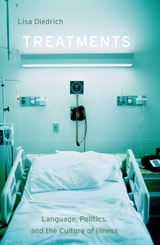
Treatments
Language, Politics, and the Culture of IllnessLisa Diedrich
University of Minnesota Press, 2007
Creative expression inspired by disease has been criticized as a celebration of victimhood, unmediated personal experience, or just simply bad art. Despite debate, however, memoirs written about illness—particularly AIDS or cancer—have proliferated since the late twentieth century and occupy a highly influential place on the cultural landscape today.
In Treatments, Lisa Diedrich considers illness narratives, demonstrating that these texts not only recount and interpret symptoms but also describe illness as an event that reflects wider cultural contexts, including race, gender, class, and sexuality. Diedrich begins this theoretically rigorous analysis by offering examples of midcentury memoirs of tuberculosis. She then looks at Susan Sontag’s Illness As Metaphor, Audre Lorde’s The Cancer Journals, and Eve Kosofsky Sedgwick’s “White Glasses,” showing how these breast cancer survivors draw on feminist health practices of the 1970s and also anticipate the figure that would appear in the wake of the AIDS crisis in the 1980s—the “politicized patient.” She further reveals how narratives written by doctors Abraham Verghese and Rafael Campo about treating people with AIDS can disrupt the doctor–patient hierarchy, and she explores practices of witnessing that emerge in writing by Paul Monette and John Bayley.
Through these records of intensely personal yet universal experience, Diedrich demonstrates how language both captures and fails to capture these “scenes of loss” and how illness narratives affect the literary, medical, and cultural contexts from which they arise. Finally, by examining the ways in which the sick speak and are spoken for, she argues for an ethics of failure—the revaluation of loss as creating new possibilities for how we live and die.
Lisa Diedrich is assistant professor of women’s studies at Stony Brook University.