Results by title
851 books match the query 'Congresses' and 66 start with c
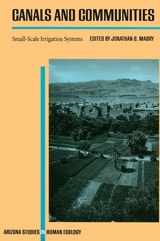
Canals and Communities
Small-Scale Irrigation SystemsJonathan B. Mabry
University of Arizona Press, 1996
CONTENTS
Introduction
The Ethnology of Irrigation: Cross-Cultural Characteristics of Local Water Management, Jonathan B. Mabry
Patterns of Cooperation and Conflict in Local Irrigation
1. La Gente es Muy Perra: Conflict and Cooperation over Irrigation Water in Cucurpe, Sonora, Mexico, Thomas E. Sheridan
2. Dhasheeg Agriculture in the Jubba Valley of Somalia, Catherine Besteman
3. The Dry and the Drier: Cooperation and Conflict in Moroccan Irrigation, John R. Welch
4. The Political Ecology of Irrigation in an Andean Peasant Community, Paul H. Gelles
Methods and Models for Analyzing Local Irrigation
5. Rapid Rural Appraisal of Arid Land Irrigation: A Moroccan Example, John R. Welch, Jonathan B. Mabry, and Hsain Ilahiane
6. Simulation Modelling of Balinese Irrigation, J. Stephen Lansing
7. Institutional Innovation in Small-Scale Irrigation Networks: A Cape Verdean Case, Mark W. Langworthy and Timothy J. Finan
Development Lessons from Local Irrigation
8. Qanats and Rural Societies: Sustainable Agriculture and Irrigation Cultures in Contemporary Iran, Michael E. Bonine
9. The Utility of Tradition in Sri Lankan Bureaucratic Irrigation: The Case of the Kirindi Oya Project, Pamela Stanbury
10. The Relevance of Indigenous Irrigation: A Comparative Analysis of Sustainability, Jonathan B. Mabry and David A. Cleveland
Conclusion
The Hydraulics of History: Evolutionary Trajectories of Local and Centralized Irrigation, Jonathan B. Mabry
Capital Controls and Capital Flows in Emerging Economies
Policies, Practices, and ConsequencesEdited by Sebastian Edwards
University of Chicago Press, 2007
Some scholars argue that the free movement of capital across borders enhances welfare; others claim it represents a clear peril, especially for emerging nations. In Capital Controls and Capital Flows in Emerging Economies, an esteemed group of contributors examines both the advantages and the pitfalls of restricting capital mobility in these emerging nations.
In the aftermath of the East Asian currency crises of 1997, the authors consider mechanisms that eight countries have used to control capital inflows and evaluate their effectiveness in altering the maturity of the resulting external debt and reducing macroeconomic vulnerability. This volume is essential reading for all those interested in emerging nations and the costs and benefits of restricting international capital flows.
Capital Flows and the Emerging Economies
Theory, Evidence, and ControversiesEdited by Sebastian Edwards
University of Chicago Press, 2000
Together these studies offer a new understanding of the empirical relationship between capital flows, international trade, and economic performance, and also afford key insights into realms of major policy concern.

Capitalism in Context
Essays on Economic Development and Cultural Change in Honor of R.M. HartwellEdited by John A. James and Mark Thomas
University of Chicago Press, 1994
Thirteen chapters cover: social progress during economic development; the influence of cultural values on social and economic change; economic foundations of development—labor, capital, and technology; and organizational arrangements—property rights, government, and markets. These studies will appeal to economists, historians, and social scientists alike for their wide-ranging treatments of economic development and cultural change.
The contributors are N. F. R. Crafts, Lance E. Davis, Stanley L. Engerman, David W. Galenson, Robert E. Gallman, Stephen Innes, John A. James, Eric L. Jones, Thomas W. Laqueur, Gary D. Libecap, Joel Mokyr, Douglass C. North, Mark Thomas, John J. Wallis, Jeffrey G. Williamson.
Caribbean Women Writers
Essays from the First International ConferenceSelwyn R. Cudjoe
University of Massachusetts Press, 1990
Caring, Curing, Coping
Nurse, Physician, and Patient RelationshipsEdited by Anne H. Bishop and John R. Scudder
University of Alabama Press, 1985
The fundamental mission of medicine is caring, and curing may be only one component of that broad mission
Carrots, Sticks, and Ethnic Conflict
Rethinking Development AssistanceMilton J. Esman and Ronald J. Herring, Editors
University of Michigan Press, 2003
Ceramic Ethnoarchaeology
Edited by William A. Longacre
University of Arizona Press, 1991
Drawing on projects undertaken around the world, in the Phillipines, East Africa, Mesoamerica, India, in both traditional and complex societies, the contributors focus on identifying social and behavioral sources of ceramic variation to show how analogical reasoning is fundamental to archaeological interpretation. As the number of pottery-making societies declines, opportunities for such research must be seized. By bringing together a variety of ceramic ethnoarchaeological analyses, this volume offers the profession a much-needed touchstone on method and theory for the study of pottery-making among living peoples.
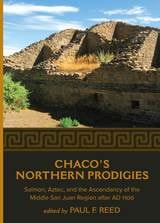
Chaco's Northern Prodigies
Salmon, Aztec, and the Ascendancy of the Middle San Juan Region after AD 1100Paul F Reed
University of Utah Press, 2011
Work by two groups of contributors resulted in this synthetic volume, which interprets thirty-five years of research at Salmon Ruins. Chaco’s Northern Prodigies also puts recent work at Salmon Ruins in the context of Middle San Juan archaeological research. It is a timely synopsis of the archaeology of this region of the Southwest.

Champions of Buddhism
Weikza Cults in Contemporary BurmaEdited by Bénédicte Brac de la Perrière, Guillaume Rozenberg, and Alicia Turner
National University of Singapore Press, 2014

Change and Continuity in Minangkabau
Local, Regional, and Historical Perspectives on West SumatraLynn L. Thomas
Ohio University Press, 1985
Focusing on Minangkabau proper, and treating several adjacent areas as well, this collection examines the resilience and adaptability of the Minangkabau in the face of outside political and economic pressures and of distortions in social science and legal theory. Individual studies address issues of kinship and other forms of social organization, ideology, and political and economic life. Together, they emphasize the integrity of Minangkabau social forms while revealing fascinating patterns of continuity and change in Minangkabau culture.
This collection will be of particular interest to anthropologists specializing in Southeast Asia, but it will also be important reading for those concerned with the issue of change and continuity in the third world generally.
Changes in Exchange Rates in Rapidly Developing Countries
Theory, Practice, and Policy IssuesEdited by Takatoshi Ito and Anne O. Krueger
University of Chicago Press, 1999
Historically, most developing nations have employed strict exchange rate controls and heavy protection of domestic industry-policies now thought to be at odds with sustainable and desirable rates of economic growth. By contrast, many East Asian nations maintained exchange rate regimes designed to achieve an attractive climate for exports and an "outer-oriented" development strategy. The result has been rapid and consistent economic growth over the past few decades.
Changes in Exchange Rates in Rapidly Developing Countries explores the impact of such diverse exchange control regimes in both historical and regional contexts, focusing particular attention on East Asia. This comprehensive, carefully researched volume will surely become a standard reference for scholars and policymakers.

Changing Our Own Words
Cheryl A. Wall
Rutgers University Press, 1991

Changing Pacific Forests
Historical Perspectives on the Pacific Basin Forest EconomyJohn Dargavel and Richard P. Tucker, eds.
Duke University Press, 1992
Drawing on a 1991 conference sponsored by the Forest History Society and the International Union of Forestry Research Organizations held in Honolulu, these papers address a range of topics related to the changing Pacific forests, including the remnants of colonialism, the emergence of the Third World, people and resources caught in the middle of policy decisions, land management, national forests, and subsistence use of the forest by indigenous peoples. Essays also explore macroeconomic theories of international trade and the interests of the United States and the former Soviet Union in the economic health of the region. Changing Pacific Forests will be of interest to scholars of the economy and environment of the Pacific Basin as well as of land management and the history of land use in general.
Contributors. Charles S. Backman, Thomas R. Cox, John Dargavel, Elizabeth Flint, Lim Hin Fui, G. R. Henning, Kenneth E. Jackson, Hiroaki Kakizawa, Nicholas K. Menzies, Andrew Price, John F. Richards, Jr., M. M. Roche, I. Gustin M. Tantra, Conrad Totman, Richard P. Tucker, Thomas R. Waggener
Changing Uganda
Dilemmas of Structural AdjustmentHölger Bernt Hansen
Ohio University Press, 1992
Yoweri Museveni battled to power in 1986. His government has impressed many observers as Uganda’s most innovative since it gained independence from Britain in 1962. The Economist recommended it as a model for other African states struggling to develop their resources in the best interests of their peoples.
But where was change to start? At the bottom in building resistance committees, or at the top in tough negotiations with the IMF? How was it to continue? Was it in the restructuring of the national army, in increasing respect for human rights, in the reform of education, in tackling AIDS, or in getting Ugandans to speak a common language? Was it in building more viable survival strategies for the poorest Ugandans or in restructuring the national constitution? The last five years have shown a radical approach to Uganda’s dilemmas.
Holger Bernt Hansen and Michael Twaddle previously edited Uganda Now. It was brought together at a significant moment just as President Museveni was gaining power in 1985-6. It was so much in demand that it even entered the magendo market on the streets of Kampala. The book, which is still in print, was described by The Canadian Journal of African Studies as ‘virtually a mini-encyclopedia of Uganda’ and by The African Studies Review as ‘the best overview of Uganda’s trauma in the last two decades.’
The editors have assembled another team of Ugandan and international scholars to review the dilemmas of introducing revolutionary changes in an African country deeply affected by structural adjustment plans which have been imposed from outside.
Charles S. Peirce and the Philosophy of Science
Papers from the Harvard Sesquicentennial CongressEdward C. Moore
University of Alabama Press, 1993
Interest in Charles Sanders Peirce (1839-1914) is today worldwide. Ernest Nagel of Columbia University wrote in 1959 that "there is a fair consensus among historians of ideas that Charles Sanders Peirce remains the most original, versatile, and comprehensive philosophical mind this country has yet produced." The breadth of topics discussed in the present volume suggests that this is as true today as it was in 1959.
Papers concerning Peirce's philosophy of science were given at the Harvard Congress by representatives from Italy, France, Sweden, Finland, Korea, India, Denmark, Greece, Brazil, Belgium, Spain, Germany, and the United States. The Charles S. Peirce Sesquicentennial International Congress opened at Harvard University on September 5, 1989, and concluded on the 10th—Peirce's birthday. The Congress was host to approximately 450 scholars from 26 different nations. The present volume is a compilation of selected papers presented at that Congress.
The philosophy of science and its logic are themes in the work of Charles Peirce that have been of greatest interest to scholars. Peirce was himself a physical scientist. He worked as an assistant at the Harvard Astronomical Observatory from 1869 to 1872 and made a series of astronomical observations there from 1872 to 1875. Solon I. Bailey says of these observations, "The first attempt at the Harvard Observatory to determine the form of the Milky Way, or the galactic system, was made by Charles S. Peirce....The investigation was of a pioneer nature, founded on scant data."
Peirce also made major contributions in fields as diverse as mathematical logic and psychology. C. I. Lewis has remarked that "the head and font of mathematical logic are found in the calculus of propositional functions as developed by Peirce and Schroeder." Peirce subsequently invented, almost from whole cloth, semiotics - the science of the meaning of signs. Ogden and Richards, the British critics, say that "by far the most elaborate and determined attempt to give an account of signs and their meanings is that of the American logician C. S. Peirce, from whom William James took the idea and the term Pragmatism, and whose Algebra of Dyadic Relations was developed by Schroeder."

Chimpanzees in Context
A Comparative Perspective on Chimpanzee Behavior, Cognition, Conservation, and WelfareEdited by Lydia M. Hopper and Stephen R. Ross
University of Chicago Press, 2020
After a foreword by Jane Goodall, the book features sections that examine chimpanzee life histories and developmental milestones, behavior, methods of study, animal communication, cooperation, communication, and tool use. The book ends with chapters that consider how we can apply contemporary knowledge of chimpanzees to enhance their care and conservation. Collectively, these chapters remind us of the importance of considering the social, ecological, and cognitive context of chimpanzee behavior, and how these contexts shape our comprehension of chimpanzees. Only by leveraging these powerful perspectives do we stand a chance at improving how we understand, care for, and protect this species.
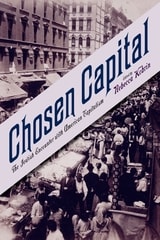
Chosen Capital
The Jewish Encounter with American CapitalismKobrin, Rebecca
Rutgers University Press, 2012
Surveying such diverse topics as Jews’ participation in the real estate industry, the liquor industry, and the scrap metal industry, as well as Jewish political groups and unions bent on reforming American capital, such as the American Labor Party and the International Ladies’ Garment Workers’ Union, contributors to this volume provide a new prism through which to view the Jewish encounter with America. The volume also lays bare how American capitalism reshaped Judaism itself by encouraging the mass manufacturing and distribution of foods like matzah and the transformation of synagogue cantors into recording stars. These essays force us to rethink not only the role Jews played in American economic development but also how capitalism has shaped Jewish life and Judaism over the course of the twentieth century.
Contributors:
Marni Davis, Georgia State University
Phyllis Dillon, independent documentary producer, textile conservator, museum curator
Andrew Dolkart, Columbia University
Andrew Godley, Henley Business School, University of Reading
Jonathan Karp, executive director, American Jewish Historical Society
Daniel Katz, Empire State College, State University of New York
Ira Katznelson, Columbia University
David S. Koffman, New York University
Eli Lederhendler, Hebrew University, Jerusalem
Jonathan Z. S. Pollack, University of Wisconsin—Madison
Jonathan D. Sarma, Brandeis University
Jeffrey Shandler, Rutgers University
Daniel Soyer, Fordham University
Christian Demonology and Popular Mythology
Éva Pócs
Central European University Press, 2006
Cities on the Beach
Management Issues of Developed Coastal BarriersEdited by Rutherford H. Platt, Sheila G. Pelczarski, and Barbara K. Burbank
University of Chicago Press, 1987
Citizens of Fear
Urban Violence in Latin AmericaRotker, Susana
Rutgers University Press, 2004
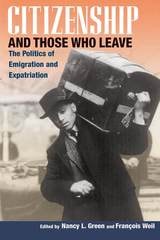
Citizenship and Those Who Leave
The Politics of Emigration and ExpatriationEdited by Nancy L. Green and Fran‡ois Weil
University of Illinois Press, 2006
Exit, like entry, has helped define citizenship over the last two centuries, yet little attention has been given to the politics of emigration. How have countries impeded or facilitated people leaving? How have they perceived and regulated those who leave? What relations do they seek to maintain with their citizens abroad and why? Citizenship and Those Who Leave reverses the immigration perspective to examine how nations define themselves not just through entry but through exit as well.
Clifford Geertz by His Colleagues
Edited by Richard A. Shweder and Byron Good
University of Chicago Press, 2005
As part of the American Anthropological Association's centennial celebration, the executive board sponsored a presidential session honoring Geertz. Clifford Geertz by His Colleagues compiles the twelve speeches given then by a distinguished panel of social scientists along with a concluding piece by Geertz in which he responds to each speaker and reflects on his own career. These edited speeches cover a broad range of topics, including Geertz's views on morality, cultural critique, interpretivism, time and change, Islam, and violence.
A fitting tribute to one of the great thinkers of our age, this collection will be enjoyed by anthropologists as well as students of psychology, history, and philosophy.
Codes of Conduct
Behavioral Research into Business EthicsDavid M. Messick
Russell Sage Foundation, 1996

Coevolution of Animals and Plants
Symposium V, First International Congress of Systematic and Evolutionary Biology, 1973Edited by Lawrence E. Gilbert and Peter H. Raven
University of Texas Press, 1975
It has long been recognized that plants and animals profoundly affect one another’s characteristics during the course of evolution. However, the importance of coevolution as a dynamic process involving such diverse factors as chemical communication, population structure and dynamics, energetics, and the evolution, structure, and functioning of ecosystems has been widely recognized for a comparatively short time. Coevolution represents a point of view about the structure of nature that only began to be fully explored in the late twentieth century. The papers presented here herald its emergence as an important and promising field of biological research.
Coevolution of Animals and Plants is the first book to focus on the dynamic aspects of animal-plant coevolution. It covers, as broadly as possible, all the ways in which plants interact with animals. Thus, it includes discussions of leaf-feeding animals and their impact on plant evolution as well as of predator-prey relationships involving the seeds of angiosperms. Several papers deal with the most familiar aspect of mutualistic plant-animal interactions—pollination relationships. The interactions of orchids and bees, ants and plants, and butterflies and plants are discussed. One article provides a fascinating example of more indirect relationships centered around the role of carotenoids, which are produced by plants but play a fundamental part in the visual systems of both plants and animals.
Coevolution of Animals and Plants provides a general conceptual framework for studies on animal-plant interaction. The papers are written from a theoretical, rather than a speculative, standpoint, stressing patterns that can be applied in a broader sense to relationships within ecosystems.
Contributors to the volume include Paul Feeny, Miriam Rothschild, Christopher Smith, Brian Hocking, Lawrence Gilbert, Calaway Dodson, Herbert Baker, Bernd Heinrich, Doyle McKey, and Gordon Frankie.
Collecting Visible Evidence
Jane Gaines
University of Minnesota Press, 1999
A redefinition of the nature of documentary film.
In documentary studies, the old distinctions between fiction and nonfiction no longer apply, as contemporary film and video artists produce works that defy classification. Coming together to make sense of these developments, the contributors to this book effectively redefine documentary studies. They trace the documentary impulse in the early detective camera, in the reenactment of battle scenes from World War I, and in the telecast of the Nevada A-bomb test in 1952. Other topics include experiments in virtual reality; the crisis of representation in anthropology; and video art and documentary work that challenge the asymmetry of the postcolonial us/them divide.
Contributors: Jenny Cool; Elizabeth Cowie, U of Kent; Faye Ginsburg, New York U; Tom Gunning, U of Chicago; Eithne Johnson; Alexandra Juhasz, Pitzer College; Neil Lerner, Davidson College; Akira Mizuta Lippit, San Francisco State U; Nancy Lutkehaus, USC; James M. Moran; Vivian Sobchack, UCLA; Linda Williams, U of California, Berkeley; Mark Williams, Dartmouth College; Mark J. P. Wolf, Concordia U, Wisconsin.
College Choices
The Economics of Where to Go, When to Go, and How to Pay for ItEdited by Caroline M. Hoxby
University of Chicago Press, 2004
In College Choices, Caroline Hoxby and a distinguished group of economists show how students and their families really make college decisions—how they respond to financial aid options, how peer relationships figure in the decision-making process, and even whether they need mentoring to get through the admissions process. Students of all sorts are considered—from poor students, who may struggle with applications and whether to continue on to college, to high aptitude students who are offered "free rides" at elite schools. College Choices utilizes the best methods and latest data to analyze the college decision-making process, while explaining how changes in aid and admissions practices inform those decisions as well.
Commodity Prices and Markets
Edited by Takatoshi Ito and Andrew K. Rose
University of Chicago Press, 2011
Fluctuations of commodity prices, most notably of oil, capture considerable attention and have been tied to important economic effects, such as inflation and low rates of economic growth. Commodity Prices and Markets advances our understanding of the consequences of these fluctuations, providing both general analysis and a particular focus on the countries of the Pacific Rim. The volume addresses three distinct subjects: the difficulties in forecasting commodity prices, the effects of exogenous commodity price shocks on the domestic economy, and the relationship between price shocks and monetary policy. The ability to forecast commodity prices is difficult but of great importance to businesses and governments, and this volume will be invaluable to professionals and policy makers interested in the field.

Communicating with the Spirits
Gábor Klaniczay
Central European University Press, 2005
Comparative Arawakan Histories
Rethinking Language Family and Culture Area in AmazoniaEdited by Jonathan D. Hill and Fernando Santos-Granero
University of Illinois Press, 2002
Comparative Media Systems
European and Global PerspectivesMiklós Sükösd
Central European University Press, 2010
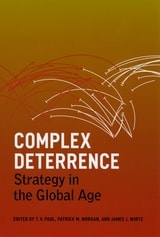
Complex Deterrence
Strategy in the Global AgeEdited by T. V. Paul, Patrick M. Morgan, and James J. Wirtz
University of Chicago Press, 2009
As the costs of a preemptive foreign policy in Iraq have become clear, strategies such as containment and deterrence have been gaining currency among policy makers. This comprehensive book offers an agenda for the contemporary practice of deterrence—especially as it applies to nuclear weapons—in an increasingly heterogeneous global and political setting.
Moving beyond the precepts of traditional deterrence theory, this groundbreaking volume offers insights for the use of deterrence in the modern world, where policy makers may encounter irrational actors, failed states, religious zeal, ambiguous power relationships, and other situations where the traditional rules of statecraft do not apply. A distinguished group of contributors here examines issues such as deterrence among the Great Powers; the problems of regional and nonstate actors; and actors armed with chemical, biological, and nuclear weapons. Complex Deterrence will be a valuable resource for anyone facing the considerable challenge of fostering security and peace in the twenty-first century.
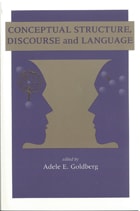
Conceptual Structure, Discourse and Language
Edited by Adele Goldberg
CSLI, 1996
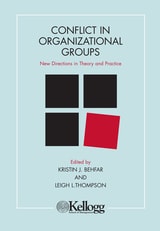
Conflict in Organizational Groups
New Directions in Theory and PracticeLeigh Thompson
Northwestern University Press, 2007
The chapters in this book were presented at a conference held at the Kellogg School of Management in June 2005 entitled Conflict in Organizational Groups: New Directions in Theory and Practice. The Kellogg Team and Group Research Center (KTAG) and the Kellogg School of Management cosponsored the conference. The goal of the conference was to bring together both junior and senior scholars from a variety of disciplines to discuss their newest ideas and current trends in group conflict research. The chapters in this book represent perspectives from the fields of business, political science, sociology, and psychology.
The idea to organize a conference about conflict in organizational groups arose from three interrelated and exciting opportunities for theory and practice--both the academic and business press have focused growing attention on the management challenges of organizational groups; the academic community has begun to integrate various disciplinary perspectives, as evidenced by a growing number of cross-disciplinary coauthorships and thematic conferences; and several statistical and methodological advances have allowed scholars to better model variables across levels of analysis.
Taken together, these three reasons inspired the assembling of the interdisciplinary mix of seasoned and newly minted authors who in this volume tackle important and complex questions about group conflict. Their chapters represent cutting-edge advances in theory, methodology, and challenges to dominant perspectives.
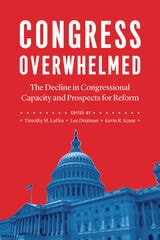
Congress Overwhelmed
The Decline in Congressional Capacity and Prospects for ReformEdited by Timothy M. LaPira, Lee Drutman, and Kevin R. Kosar
University of Chicago Press, 2020
The essays in Congress Overwhelmed assess Congress’s declining capacity and explore ways to upgrade it. Some provide broad historical scope. Others evaluate the current decay and investigate how Congress manages despite the obstacles. Collectively, they undertake the most comprehensive, sophisticated appraisal of congressional capacity to date, and they offer a new analytical frame for thinking about—and improving—our underperforming first branch of government.
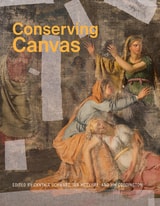
Conserving Canvas
Cynthia Schwarz
J. Paul Getty Trust, The, 2023
In 2019, Yale University, with the support of the Getty Foundation, held an international conference, where nearly four hundred attendees from more than twenty countries gathered to discuss a vital topic: how best to conserve paintings on canvas. It was the first major symposium on the subject since 1974, when wax-resin and glue-paste lining reigned as the predominant conservation techniques. Over the past fifty years, such methods, which were often destructive to artworks, have become less widely used in favor of more minimalist approaches to intervention. More recent decades have witnessed the reevaluation of traditional practices as well as focused research supporting significant new methodologies, procedures, and synthetic materials for the care and conservation of paintings on fabric supports.
Conserving Canvas compiles the proceedings of the conference, presenting a wide array of papers and posters that provide important global perspectives on the history, current state, and future needs of the field. Featuring an expansive glossary of terms that will be an invaluable resource for conservators, this publication promises to become a standard reference for the international conservation community.
The free online edition of this open-access publication is available at getty.edu/publications/conserving-canvas. Also available are free PDF and EPUB downloads of the book.
Constituent Interests and U.S. Trade Policies
Alan V. Deardorff and Robert M. Stern
University of Michigan Press, 1998
Constitution for a Disunited Nation
On Hungary's 2011 Fundamental LawGábor Attila Tóth
Central European University Press, 2013

Constraint-Based Syntax and Semantics
Papers in Honor of Danièle GodardEdited by Anne Abeille and Olivier Bonami
CSLI, 2018
Constructing Rhetorical Education
Edited by Marie Secor and Davida Charney
Southern Illinois University Press, 1992
In nineteen essays illustrating its many aspects, this book offers an argument for what it takes to construct a complete rhetorical education.
The editors take an approach that is pragmatic and pluralistic, based as it is on the assumptions that a rhetorical education is not limited to teaching freshman composition (or any specific writing course) and that the contexts in which such an education occurs are not limited to classrooms. This thought-provoking volume stresses that while a rhetorical education results in the growth of writing skills, its larger goal is to foster critical thinking.
Constructions of Race, Place, and Nation
Peter Jackson
University of Minnesota Press, 1993
Constructions of the Classical Body
James I. Porter, Editor
University of Michigan Press, 2002
Classical scholarship has traditionally neglected the prominence of the body in antiquity. Constructions of the Classical Body theorizes that the study of antiquity is necessarily a study of the body, and that attention to this fact can lead to a much-needed shift in the way in which classical studies are approached today. This volume aims to reestablish the relevance of the problem of the body at the perimeters of several different kinds of inquiry, and, in this way, to help open up a field of possibilities for future study. The range covered by the essays in this volume is sweeping: from Corinthian vaseware to Athenian and Roman politics, poetry from Homer to Ovid, medical writers from the Hippocratic corpus to the diary of Aelius Aristides (second century c.e.), philosophy (Seneca, Porphyry), the Greek novel, Christian apocrypha, Ovid's medieval reception, and twentieth century film. This range is a consequence of the multidisciplinarity that any study of the body requires, and it attests to the particular richness of the body in classical antiquity and as an object for study today. The volume illustrates that body is located between traditional borders, not within them; the body dissolves traditional objects of study and joins areas usually kept apart. Retracing the fate of the body is thus a way of rendering antiquity truly strange again -- it allows us to see the past afresh, with open eyes. This volume includes essays by Carlin A. Barton, Anne Carson, Eric Downing, Catherine Edwards, Maud W. Gleason, John Henderson, Ralph Hexter, S. C. Humphreys, Helen King, Leslie Kurke, Robert Lamberton, David S. Potter, Amy Richlin, Giulia Sissa, Maria Wyke, and Froma I. Zeitlin, along with an introduction by James I. Porter. ". . . a superb collection, one that I know will be most welcome not only in the field of classical studies, but in the libraries of all those interested in the history and historicity of the body." --Page duBois, University of California, San Diego

Constructs of Prophecy in the Former and Latter Prophets and Other Texts
Lester L. Grabbe
SBL Press, 2011
Explore the ancient context of prophecy and prophetic figures
This collection of essays examines the construction of prophecy in the Former and Latter Prophets, Chronicles, Daniel, and even in the Quran. This unique anthology recognizes that these texts do not simply describe the prophetic phenomena but rather depict prophets according to various conventional categories or their own individual points of view. Each essay analyzes how these writings portray prophecy or prophets to better understand how the respective authors structured their writings.
Features
- Introduction and twelve essays cover prophecy in the Hebrew Bible and the Quran
- Essays examine the relationship between the prophets and the cult, oral pronouncements and written collections, and divination, prophecy, and apocalypticism
- Additional essays raise questions about the prophetic persona and examine the prophets in hermeneutical perspective
Contemporary Archaeologies of the Southwest
William Walker
University Press of Colorado, 2011
Chapters address place-making in Chaco Canyon, recent trends in landscape archaeology, the formation of identities, landscape boundaries, and the movement associated with these aspects of place-making. They address how interaction of peoples with objects brings landscapes to life. Representing a diverse cross section of Southwestern archaeologists, the authors of this volume push the boundaries of archaeological method and theory, building a strong foundation for future Southwest studies.
This book will be of interest to professional and academic archaeologists, as well as students working in the American Southwest.
Contemporary Marriage
Kingsley Davis
Russell Sage Foundation, 1985
Contextualizing Israel's Sacred Writings
Ancient Literacy, Orality, and Literary ProductionBrian B. Schmidt
SBL Press, 2015
An essential resource exploring orality and literacy in the pre-Hellenistic southern Levant and the Hebrew Bible
Situated historically between the invention of the alphabet, on the one hand, and the creation of ancient Israel's sacred writings, on the other, is the emergence of literary production in the ancient Levant. In this timely collection of essays by an international cadre of scholars, the dialectic between the oral and the written, the intersection of orality with literacy, and the advent of literary composition are each explored as a prelude to the emergence of biblical writing in ancient Israel. Contributors also examine a range of relevant topics including scripturalization, the compositional dimensions of orality and textuality as they engage biblical poetry, prophecy, and narrative along with their antecedents, and the ultimate autonomy of the written in early Israel. The contributors are James M. Bos, David M. Carr, André Lemaire, Robert D. Miller II, Nadav Na'aman, Raymond F. Person Jr., Frank H. Polak, Christopher A. Rollston, Seth L. Sanders, Joachim Schaper, Brian B. Schmidt, William M. Schniedewind, Elsie Stern, and Jessica Whisenant.
Features
- Addresses questions of literacy and scribal activity in the Levant and Negev
- Articles examine memory, oral tradition, and text criticism
- Discussion of the processes of scripturalization

Controlling Crime
Strategies and TradeoffsEdited by Philip J. Cook, Jens Ludwig, and Justin McCrary
University of Chicago Press, 2011
Criminal justice expenditures have more than doubled since the 1980s, dramatically increasing costs to the public. With state and local revenue shortfalls resulting from the recent recession, the question of whether crime control can be accomplished either with fewer resources or by investing those resources in areas other than the criminal justice system is all the more relevant.
Controversial Concordats
The Vatican's Relations with Napoleon, Mussolini, and HitlerFrank J. Coppa
Catholic University of America Press, 1999

Conventional Arms Control and East-West Security
Robert D. Blackwill and F. Stephen Larrabee, eds.
Duke University Press, 1989

Coordinates
Placing Science Fiction and FantasyGeorge E Slusser
Southern Illinois University Press, 1983
These thirteen original essays were written specifically for the Third J. Lloyd Eaton Conference on Science Fiction and Fantasy Literature, held February 21–22, 1981, at the University of California, Riverside.
Leslie Fiedler sets the tone of this volume by fixing a basic set of coordinates—that of “elitist” and “popular” standards.
Those replying to his charge are: Eric S. Rabkin, Professor of English at the University of Michigan and author of The Fantasticin Literature, “The Descent of Fantasy”; Gerald Prince, Professor of French at the University of Pennsylvania, “How New is New?”; Mark Rose, Professor of English at the University of California at Santa Barbara, author of Alien Encounters, “Jules Verne: Journey to the Center of Science Fiction”; Joseph Lenz, who teaches English Literature at the University of Michigan, “Manifest Destiny: Science Fiction Epic and Classical Forms”; Michelle Massé, of the English Department at the George Mason University, “‘All you have to do is know what you want’: Individual Expectations in Triton”;Gary K. Wolfe, who teaches English at Roosevelt University, author of The Known and the Unknown, “Autoplastic and Alloplastic Adaptations in Science Fiction: ‘Waldo’ and ‘Desertion’”; Robert Hunt, an editor with Glencoe Press, “Science Fiction for the Age of Inflation: Reading Atlas Shrugged in the 1980s”; George R. Guffey, Professor of English at UCLA, “Fahrenheit 451and the ‘Cubby-Hole Editors’ of Ballantine Books”; H. Bruce Franklin, Professor of English and American Literature at Rutgers University at Newark, “America as Science Fiction: 1939”; Sandra M. Gilbert, Professor of English at the University of California at Davis, and coauthor with Susan Gubar of Madwoman in the Attic, “Rider Haggard’s Heart of Darkness”; the aforementioned Susan Gubar, Professor of English at Indiana University, “She in Her/and: Feminism as Fantasy”; and George R. Slusser, Curator of the Eaton Collection, “Death and the Mirror: Existential Fantasy.”