Results by title
98 books match the query 'Control' and 21 start with c
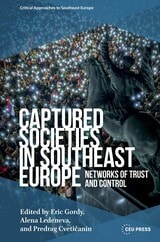
Captured Societies in Southeast Europe
Networks of Trust and ControlEric Gordy
Central European University Press, 2025
This book presents findings from a collaborative, multidisciplinary research project. Over three years, a group of forty researchers examined informal practices in nine Southeast European states, adopting a mix of qualitative and quantitative methodologies.
This close look at the Balkans illuminates persistent deficits in state legitimacy and capacity. The evidence allows a critical assessment of “Europeanisation” processes that produce only superficial formal changes, and of ways that networks of mutual assistance turn into instruments of social control and closure.
Characterisation and Control of Defects in Semiconductors
Filip Tuomisto
The Institution of Engineering and Technology, 2020
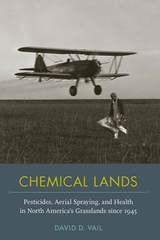
Chemical Lands
Pesticides, Aerial Spraying, and Health in North America’s Grasslands since 1945David D. Vail
University of Alabama Press, 2018
An exploration of the elaborate relationship between farmers, aerial sprayers, agriculturalists, crop pests, chemicals, and the environment.
The controversies in the 1960s and 1970s that swirled around indiscriminate use of agricultural chemicals—their long-term ecological harm versus food production benefits—were sparked and clarified by biologist Rachel Carson’s Silent Spring (1962). This seminal publication challenged long-held assumptions concerning the industrial might of American agriculture while sounding an alarm for the damaging persistence of pesticides, especially chlorinated hydrocarbons such as DDT, in the larger environment.
In Chemical Lands: Pesticides, Aerial Spraying, and Health in North America’s Grasslands since 1945 David D. Vail shows, however, that a distinctly regional view of agricultural health evolved. His analysis reveals a particularly strong ethic in the North American grasslands where practitioners sought to understand and deploy insecticides and herbicides by designing local scientific experiments, engineering more precise aircraft sprayers, developing more narrowly specific chemicals, and planting targeted test crops. Their efforts to link the science of toxicology with environmental health reveal how the practitioners of pesticides evaluated potential hazards in the agricultural landscape while recognizing the production benefits of controlled spraying.
Chemical Lands adds to a growing list of books on toxins in the American landscape. This study provides a unique Grasslands perspective of the Ag pilots, weed scientists, and farmers who struggled to navigate novel technologies for spray planes and in the development of new herbicides/insecticides while striving to manage and mitigate threats to human health and the environment.
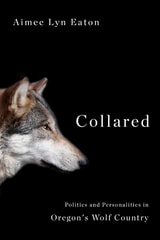
Collared
Politics and Personalities in Oregon's Wolf CountryAimee Lyn Eaton
Oregon State University Press, 2013
Teeming with the tension and passion that accompany one of North America’s most controversial apex predators, Collared tracks the events that unfolded when wolves from the reintroduced population of the northern Rocky Mountains dispersed west across state lines into Oregon.
In a forthright and personal style, Aimee Lyn Eaton takes readers from meeting rooms in the state capitol to ranching communities in the rural northeast corner of the state. Using on-the-ground inquiry, field interviews, and in-depth research, she shares the story of how wolves returned to Oregon and the repercussions of their presence in the state.
Collared: Politics and Personalities in Oregon’s Wolf Country introduces readers to the biologists, ranchers, conservationists, state employees, and lawyers on the front lines, encouraging a deeper, multifaceted understanding of the controversial and storied presence of wolves in Oregon.
Communication, Control and Security Challenges for the Smart Grid
S.M. Muyeen
The Institution of Engineering and Technology, 2017
Communication, Control and Security Challenges for the Smart Grid
Advanced security, optimization, and emerging technologies in smart grids, Volume 2S.M. Muyeen
The Institution of Engineering and Technology, 2026
Communication, Control and Security Challenges for the Smart Grid
Foundations and core systems of smart grids, Volume 1S.M. Muyeen
The Institution of Engineering and Technology, 2026

Control and Crisis in Colonial Kenya
The Dialectic of DominationBruce Berman
Ohio University Press, 1990
This history of the political economy of Kenya is the first full length study of the development of the colonial state in Africa.
Professor Berman argues that the colonial state was shaped by the contradictions between maintaining effective political control with limited coercive force and ensuring the profitable articulation of metropolitan and settler capitalism with African societies.
This dialectic of domination resulted in both the uneven transformation of indigenous societies and in the reconstruction of administrative control in the inter-war period.
The study traces the evolution of the colonial state from its skeletal beginnings in the 1890s to the complex bureaucracy of the post-1945 era which managed the growing integration of the colony with international capital. These contradictions led to the political crisis of the Mau Mau emergency in 1952 and to the undermining of the colonial state.
The book is based on extensive primary sources including numerous interviews with Kenyan and British participants. The analysis moves from the micro-level of the relationship of the District Commissioners and the African population to the macro-level of the state and the political economy of colonialism.
Professor Berman uses the case of Kenya to make a sophisticated contribution to the theory of the state and to the understanding of the dynamics of the development of modern African political and economic institutions.

Control and Estimation of Dynamical Nonlinear and Partial Differential Equation Systems
Theory and applicationsGerasimos Rigatos
The Institution of Engineering and Technology, 2022

Control and Order in French Colonial Louisbourg, 1713-1758
A.J.B. Johnston
Michigan State University Press, 2001
Control and Order in French Colonial Louisbourg, 1713-1758 is the culmination of nearly a quarter century of research and writing on 18th-century Louisbourg by A. J. B. Johnston. The author uses a multitude of primary archival sources-official correspondence, court records, parish registries, military records, and hundreds of maps and plans-to put together a detailed analysis of a distinctive colonial society. Located on Cape Breton Island (then known as Île Royale), the seaport and stronghold of Louisbourg emerged as one of the most populous and important settlements in all of New France. Its economy was based on fishing and trade, and the society that developed there had little or nothing to do with the fur trade, or the seigneurial regime that characterized the Canadian interior. Johnston traces the evolution of a broad range of controlling measures that were introduced and adapted to achieve an ordered civil and military society at Louisbourg. Town planning, public celebrations, diversity in the population, use of punishments, excessive alcohol consumption, the criminal justice system, and sexual abuse are some of the windows that reveal attempts to control and regulate society. A. J. B. Johnston's Control and Order in French Colonial Louisbourg offers both a broad overview of the colony's evolution across its half-century of existence, and insightful analyses of the ways in which control was integrated into the mechanisms of everyday life.

Control and Subversion
Gender Relations in TajikistanColette Harris
Pluto Press, 2004
Control and Subversion investigates the relationship of gender to the inner workings of social control, such as exposing ways in which Tajik society threatens men’s masculinity, thereby bringing them to force family members into conformity, irrespective of the suffering this may cause. It examines how masculine and feminine gender characteristics influence personal relationships and explores gender relations at their most intimate – from the secret musings of adolescent girls, through the painful experiences of young men, to the trauma of sexual initiation. Although largely concentrating on contemporary life, the book also discusses historical materials and Soviet influence on Tajik society. Control and Subversion is essential reading for anyone interested in Central Asia, Muslim societies, the lives of Muslim women, or gender in a Muslim context.

Control of Mechatronic Systems
Levent Güvenç
The Institution of Engineering and Technology, 2017

Control of Permanent Magnet Actuators for Robotics Applications
Chao Gong
The Institution of Engineering and Technology, 2025
Control of Prosthetic Hands
Challenges and emerging avenuesKianoush Nazarpour
The Institution of Engineering and Technology, 2021

Control of the Imaginary
Reason and Imagination in Modern TimesLuiz Costa LimaTranslated by Ronald W. SousaIntroduction by Ronald W. SousaAfterword by Jochen Schulte-Sasse
University of Minnesota Press, 1989
Control of the Imaginary was first published in 1989. Minnesota Archive Editions uses digital technology to make long-unavailable books once again accessible, and are published unaltered from the original University of Minnesota Press editions.
In Control of the Imaginary Luiz Costa Lima explains how the distinction between truth and fiction emerged at the beginning of modern times and why, upon its emergence, fiction fell under suspicion. Costa Lima not only describes the continuous relationship between Western notions of reason and subjectivity over a broad time-frame—the Renaissance to the first decade of the twentieth century—but he uses this occasion to reexamine the literary traditions of France, Italy, Spain, Portugal, England, and Germany. The book reconstructs the dominant frames in the European tradition between the Middle Ages and the nineteenth century from the perspective of a Latin American who sees the culture of his native Brazil haunted by unresolved questions from the Northern Hemisphere. Costa Lima manages to synthesize positions from philosophy, anthropology, sociology, psychology, linguistics, and history without separating the theoretical discussion from his historical reconstructions.
The first chapter situates the problem and grounds the emergent distinction between truth and fiction in a very close analysis of one of the first European historians, Fernao Lopes, who sets the tone for the condemnation of fiction in the name of the truth of history and the potential for individual interpretation. Costa Lima pursues these notions through the aesthetic debates of the seventeenth and eighteenth centuries to the writings of the French historian Michelet. He also devotes an illuminating chapter to the invention of the strictures imposed on fiction.

Control, Communication, Monitoring and Protection of Smart Grids
Bidyadhar Subudhi
The Institution of Engineering and Technology, 2024

Control, Learning, and Optimization with Applications in Connected and Autonomous Vehicles
Weinan Gao
The Institution of Engineering and Technology, 2026

Coordination of Distributed Energy Resources in Microgrids
Optimisation, control, and hardware-in-the-loop validationYan Xu
The Institution of Engineering and Technology, 2022
Crisis and Control
Institutional Change in Financial Market RegulationEdited by Renate Mayntz
Campus Verlag, 2012
Crisis and Control
The Militarization of Protest PolicingLesley J. Wood
Pluto Press, 2014
Crisis and Control explains how neoliberal transformations of political and economic systems are militarising the policing of protest, based on a compelling empirical study of police agencies and practices from 1995 until the present.
Lesley J. Wood shows that the increasing role of the security and defense industries, professional police associations, anti-terrorism initiatives and ‘best practices’ in policing networks have accelerated the use of less lethal weapons, pre-emptive arrests, infiltration and barricading strategies against protesters.
The book uses Bourdieu and Boltanski to analyse court transcripts, police reports, policy, training materials and the conference programs of professional police organisations to argue that police agencies are neither omnipotent strategists, nor simple tools of the elite, but institutions struggling to maintain legitimacy, resources and autonomy in a changing field.
Cultivating Crisis
The Human Cost of Pesticides in Latin AmericaBy Douglas L. Murray
University of Texas Press, 1994
Since World War II, the Green Revolution has boosted agricultural production in Latin America and other parts of the Third World, with money, technical assistance, and other forms of aid from United States development agencies. But the Green Revolution came at a high price—massive pesticide dependence that has caused serious socioeconomic and public health problems and widespread environmental damage.
In this study, Douglas Murray draws on ten years of field research to tell the stories of international development strategies, pesticide problems, and agrarian change in Latin America. Interwoven with his considerations of economic and geopolitical dimensions are the human consequences for individual farmers and rural communities.
This highly interdisciplinary study, integrating the perspectives of sociology, ecology, economics, political science, and public health, adds an important voice to the debate on opportunities for and obstacles to more lasting and sustainable development in the Third World. It will be of interest to a wide audience in the social and environmental sciences.