Results by title
161 books match the query 'Cuba' and 26 start with c
Cachita's Streets
The Virgin of Charity, Race, and Revolution in CubaJalane D. Schmidt
Duke University Press, 2015
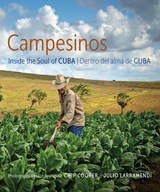
Campesinos
Inside the Soul of CubaChip Cooper and Julio Larramendi
University of Alabama Press, 2017
Into the center of this world traveled two photographers to document these extraordinary people. One, Julio Larramendi, was born in Cuba and has spent his whole life there. The other, Chip Cooper, came to visit for the first time from his native Alabama more than a decade ago. Together, Cooper and Larramendi have captured the light, sounds, and spirit of the campesino landscape and the humble and determined people who inhabit it, ways of living that have not changed, in many instances, for a century or more. From green tobacco fields and winding roads to the faces, both stern and smiling, of children and their close-knit families, Cooper and Larramendi have captured in this landmark volume the rhythms and traditions of contemporary rural Cuban life in ways never before documented.
Capitalism, God, and a Good Cigar
Cuba Enters the Twenty-first CenturyLydia Chávez, ed.
Duke University Press, 2005
Based on reporting by journalists, writers, and documentary filmmakers since 2001, each of the essays collected here covers a particular dimension of contemporary Cuban society, revealing what it is like to have lived, for more than a decade, suspended between communism and capitalism. There are pieces on hip hop musicians, fiction writing and censorship, the state of ballet and the performing arts, and the role of computers and the Internet. Other essays address the shrinking yet still sizeable numbers of true believers in the promise of socialist revolution, the legendary cigar industry, the changing state of religion, the significance of the recent influx of money and people from Spain, and the tensions between recent Cuban emigrants and previous generations of exiles. Including more than seventy striking documentary photographs of Cuba’s people, countryside, and city streets, this richly illustrated collection offers keen, even-handed insights into the abundant ironies of life in Cuba today.
Contributors. Juliana Barbassa, Ana Campoy, Mimi Chakarova, Lydia Chávez, John Coté, Julian Foley, Angel González, Megan Lardner, Ezequiel Minaya, Daniela Mohor, Archana Pyati, Alicia Roca, Olga R. Rodríguez, Bret Sigler, Annelise Wunderlich
Cast in Deathless Bronze
Andrew Rowan, the Spanish-American War, and the Origins of American EmpireDonald Tunnicliff Rice
West Virginia University Press, 2016
Donald Tunnicliff Rice reveals the facts behind the story of “A Message to García” while using Rowan’s biography as a window into the history of the Spanish-American War, the Philippine War, and the Moro Rebellion. The result is a compellingly written narrative containing many details never before published in any form, and also an accessible perspective on American diplomatic and military history in the late nineteenth and early twentieth centuries.
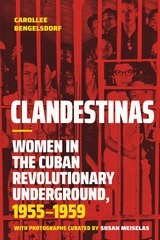
Clandestinas
Women in the Cuban Revolutionary Underground, 1955–1959Carollee Bengelsdorf. With Photographs Curated by Susan Meiselas.
Duke University Press, 2025
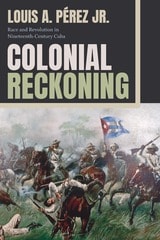
Colonial Reckoning
Race and Revolution in Nineteenth-Century CubaLouis A. Pérez Jr.
Duke University Press, 2023
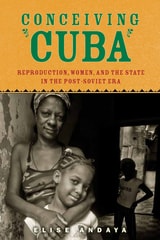
Conceiving Cuba
Reproduction, Women, and the State in the Post-Soviet EraAndaya, Elise
Rutgers University Press, 2014
Winner of the Adele E. Clarke Book Award from ReproNetwork
After Cuba’s 1959 revolution, the Castro government sought to instill a new social order. Hoping to achieve a new and egalitarian society, the state invested in policies designed to promote the well-being of women and children. Yet once the Soviet Union fell and Cuba’s economic troubles worsened, these programs began to collapse, with serious results for Cuban families.
Conceiving Cuba offers an intimate look at how, with the island’s political and economic future in question, reproduction has become the subject of heated public debates and agonizing private decisions. Drawing from several years of first-hand observations and interviews, anthropologist Elise Andaya takes us inside Cuba’s households and medical systems. Along the way, she introduces us to the women who wrestle with the difficult question of whether they can afford a child, as well as the doctors who, with only meager resources at their disposal, struggle to balance the needs of their patients with the mandates of the state.
Andaya’s groundbreaking research considers not only how socialist policies have profoundly affected the ways Cuban families imagine the future, but also how the current crisis in reproduction has deeply influenced ordinary Cubans’ views on socialism and the future of the revolution. Casting a sympathetic eye upon a troubled state, Conceiving Cuba gives new life to the notion that the personal is always political.
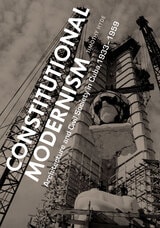
Constitutional Modernism
Architecture and Civil Society in Cuba, 1933-1959Timothy Hyde
University of Minnesota Press, 2013
How does architecture make its appearance in civil society? Constitutional Modernism pursues this challenging question by exploring architecture, planning, and law as cultural forces. Analyzing the complex entanglements between these disciplines in the Cuban Republic, Timothy Hyde reveals how architects joined with other professionals and intellectuals in efforts to establish a stable civil society, from the promulgation of a new Cuban Constitution in 1940 up until the Cuban Revolution.
By arguing that constitutionalism was elaborated through architectural principles and practices as well as legal ones, Hyde offers a new view of architectural modernism as a political and social instrument. He contends that constitutionalism produced a decisive confluence of law and architecture, a means for planning the future of Cuba. The importance of architecture in this process is laid bare by Hyde’s thorough scrutiny of a variety of textual, graphical, and physical artifacts. He examines constitutional articles, exhibitions, interviews, master plans, monuments, and other primary materials as acts of design.
Read from the perspective of architectural history, Constitutional Modernism demonstrates how the modernist concepts that developed as an international discourse before the Second World War evolved through interactions with other disciplines into a civil urbanism in Cuba. And read from the perspective of Cuban history, the book explains how not only material products such as buildings and monuments but also the immaterial methods of architecture as a cultural practice produced ideas that had consequential effects on the political circumstances of the nation.
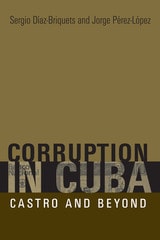
Corruption in Cuba
Castro and BeyondBy Sergio Díaz-Briquets and Jorge Pérez-López
University of Texas Press, 2006
While Fidel Castro maintained his longtime grip on Cuba, revolutionary scholars and policy analysts turned their attention from how Castro succeeded (and failed), to how Castro himself would be succeeded—by a new government. Among the many questions to be answered was how the new government would deal with the corruption that has become endemic in Cuba. Even though combating corruption cannot be the central aim of post-Castro policy, Sergio Díaz-Briquets and Jorge Pérez-López suggest that, without a strong plan to thwart it, corruption will undermine the new economy, erode support for the new government, and encourage organized crime. In short, unless measures are taken to stem corruption, the new Cuba could be as messy as the old Cuba.
Fidel Castro did not bring corruption to Cuba; he merely institutionalized it. Official corruption has crippled Cuba since the colonial period, but Castro's state-run monopolies, cronyism, and lack of accountability have made Cuba one of the world's most corrupt states. The former communist countries in Eastern Europe were also extremely corrupt, and analyses of their transitional periods suggest that those who have taken measures to control corruption have had more successful transitions, regardless of whether the leadership tilted toward socialism or democracy. To that end, Díaz-Briquets and Pérez-López, both Cuban Americans, do not advocate any particular system for Cuba's next government, but instead prescribe uniquely Cuban policies to minimize corruption whatever direction the country takes after Castro. As their work makes clear, averting corruption may be the most critical obstacle in creating a healthy new Cuba.
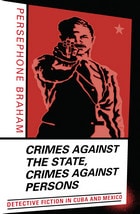
Crimes against the State, Crimes against Persons
Detective Fiction in Cuba and MexicoPersephone Braham
University of Minnesota Press, 2004
An interpretation of the ideologies and kinships of detective fiction in Cuba and Mexico
The transplanted, inherently modern detective genre serves as an especially effective lens for exposing the fissures and divergences of modernity in post-1968 Mexico and revolutionary Cuba.
Combining in-depth critical analyses with the theoretical insights of current literary and cultural theory and Latin American postmodern studies, Crimes against the State, Crimes against Persons shows how the Cuban novela negra examines the Revolution through an incisive chronicle of life under a decaying regime, and how the Mexican neopoliciaco reveals the oppressive politics of modernization and globalization in Latin America.International in scope, comparative in approach, Braham’s study presents a unique inquiry into the ethical and aesthetic complexities that Latin American authors face in adapting genre detective fiction—a modern, metropolitan model—to radically diverse creative and ideological programs. Considering the work of writers such as Leonardo Padura Fuentes and Paco Ignacio Taibo II, as well as such English-language influences as G. K. Chesterton and Chester Himes, Braham also addresses Marxist critiques of the culture industry and emergent Latin American concepts of postmodernity.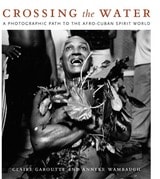
Crossing the Water
A Photographic Path to the Afro-Cuban Spirit WorldClaire Garoutte and Anneke Wambaugh
Duke University Press, 2007
A book of more than 150 striking photographs in both black and white and color, Crossing the Water includes images of elaborate Santería altars and Palo spirit cauldrons, as well as of Santiago and his religious “family” engaged in ritual practices: the feeding of the spirits, spirit possession, and private and collective healing ceremonies. As the charismatic head of a large religious community, Santiago helps his godchildren and others who consult him to cope with physical illness, emotional crises, contentious relationships, legal problems, and the hardships born of day-to-day survival in contemporary Cuba. He draws on the distinct yet intertwined traditions of Santería, Palo Monte, and Espiritismo to foster healing of both mind and body—the three religions form a coherent theological whole for him.
Santiago eventually became Garoutte’s and Wambaugh’s spiritual godfather, and Crossing the Water is informed by their experiences as initiates of Santería and Palo Monte. Their text provides nuanced, clear explanations of the objects and practices depicted in the images. Describing the powerful intensity of human-spirit interactions, and evoking the sights, smells, sounds, and choreography of ritual practice, Crossing the Water takes readers deep inside the intimate world of Afro-Cuban spirituality.
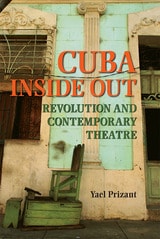
Cuba Inside Out
Revolution and Contemporary TheatreYael Prizant
Southern Illinois University Press, 2014
The collapse of the Soviet Union in 1989 drastically altered life in Cuba. Theatre artists were faced with new economic and social realities that changed their day-to-day experiences and ways of looking at the world beyond the island. The Cuban Revolution’s resistance to and intersections with globalization, modernity, emigration and privilege are central to the performances examined in this study. The first book-length study in English of Cuban and Cuban American plays, Cuba Inside Out provides a framework for understanding texts and performances that support, challenge, and transgress boundaries of exile and nationalism. Prizant reveals the intricacies of how revolution is staged theatrically, socially, and politically on the island and in the Cuban diaspora. This close examination of seven plays written since 1985 seeks to alter how U.S. audiences perceive Cuba, its circumstances, and its theatre.
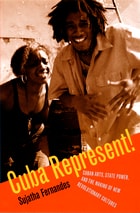
Cuba Represent!
Cuban Arts, State Power, and the Making of New Revolutionary CulturesSujatha Fernandes
Duke University Press, 2006
Combining textual analyses of films, rap songs, and visual artworks; ethnographic material collected in Cuba; and insights into the nation’s history and political economy, Fernandes details the new forms of engagement with official institutions that have opened up as a result of changing relationships between state and society in the post-Soviet period. She demonstrates that in a moment of extreme hardship and uncertainty, the Cuban state has moved to a more permeable model of power. Artists and other members of the public are collaborating with government actors to partially incorporate critical cultural expressions into official discourse. The Cuban leadership has come to recognize the benefits of supporting artists: rappers offer a link to increasingly frustrated black youth in Cuba; visual artists are an important source of international prestige and hard currency; and films help unify Cubans through community discourse about the nation. Cuba Represent! reveals that part of the socialist government’s resilience stems from its ability to absorb oppositional ideas and values.
Cuba and the Politics of Passion
By Damián J. Fernández
University of Texas Press, 2000
Cuban politics has long been remarkable for its passionate intensity, and yet few scholars have explored the effect of emotions on political attitudes and action in Cuba or elsewhere. This book thus offers an important new approach by bringing feelings back into the study of politics and showing how the politics of passion and affection have interacted to shape Cuban history throughout the twentieth century.
Damián Fernández characterizes the politics of passion as the pursuit of a moral absolute for the nation as a whole. While such a pursuit rallied the Cuban people around charismatic leaders such as Fidel Castro, Fernández finds that it also set the stage for disaffection and disconnection when the grand goal never fully materialized. At the same time, he reveals how the politics of affection-taking care of family and friends outside the formal structures of government-has paradoxically both undermined state regimes and helped them remain in power by creating an informal survival network that provides what the state cannot or will not.
Cuba and the United States
Intervention and Militarism, 1868-1933By Jose M. Hernández
University of Texas Press, 1993
When Cuba threw off the yoke of Spanish rule at the end of the nineteenth century, it did so with the help of another foreign power, the United States. Thereafter, the United States became involved in Cuban affairs, intervening twice militarily (1898-1902 and 1906-1909). What was the effect of U.S. intervention?
Conventional wisdom indicates that U.S. intervention hindered the rise of militarism in Cuba in the early years of statehood. This pathfinding study, however, takes just the opposite view. Jose M. Hernández argues that while U.S. influence may have checked the worst excesses of the Independence-war veterans who assumed control of Cuba's government, it did not completely deter them from resorting to violence. Thus, a tradition of using violence as a method for transferring power developed in Cuba that often made a mockery of democratic processes.
In substantiating this innovative interpretation, Hernández covers a crucial phase in Cuban history that has been neglected by most recent U.S. historians. Correcting stereotypes and myths, he takes a fresh and dispassionate look at Cuba's often romanticized struggle for political emancipation, describing and analyzing in persuasive detail civilmilitary relations throughout the period. This puts national hero Jose Martí's role in the 1895-1898 war of independence in an unusual perspective and sets in bold relief the historical forces that went underground in 1898-1902, only to resurface a few years later.
This study will be of interest to all students of hemispheric relations. It presents not only a more accurate picture of the Cuba spawned by American intervention, but also the Cuban side of a story that too frequently has been told solely from the U.S. point of view.
Cuba, Hot and Cold
Tom Miller
University of Arizona Press, 2017
A brilliant raconteur and expert on Cuba, Miller is full of enthralling behind-the-scenes stories. His subjects include one of the world’s most resourceful master instrument makers, the famous photo of Che Guevara, and the explosion of the USS Maine. A veteran of the underground press of the 1960s, Miller describes the day Cuba’s State Security detained him for distributing copies of the United Nations Human Rights Declaration of 1948 and explains how the dollar has become the currency of necessity. His warm reminiscences explain the complexities of life in Cuba.
Since his first visit to the island thirty years ago, Miller has shown us the real people of Havana and the countryside, the Castros and their government, and the protesters and their rigor. His first book on Cuba, Trading with the Enemy, brought readers into the “Special Period,” Fidel’s name for the country’s period of economic free fall. Cuba, Hot and Cold brings us up to date, providing intimate and authentic glimpses of day-to-day life.
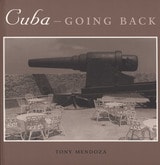
Cuba--Going Back
By Tony Mendoza
University of Texas Press, 1999
Imagine being unable to return to your homeland for thirty-six years. What would you do if you finally got a chance to go back?
In 1996, after travel restrictions between the United States and Cuba were relaxed, Cuban exile Tony Mendoza answered that question. Taking his cameras, notebooks, and an unquenchable curiosity, he returned for his first visit to Cuba since summer of 1960, when he emigrated with his family at age eighteen. In this book he presents over eighty evocative photographs accompanied by a beautifully written text that mingles the voices of many Cubans with his own to offer a compelling portrait of a resilient people awaiting the inevitable passing of the socialist system that has failed them.
His photographs and interviews bear striking witness to the hardships and inequalities that exist in this workers' "paradise," where the daily struggle to make ends meet on an average income of eight dollars a month has created a longing for change even in formerly ardent revolutionaries. At the same time, Cuba—Going Back is an eloquent record of a personal journey back in time and memory that will resonate with viewers and readers both within and beyond the Cuban American community. It belongs on the shelves of anyone who values excellent photography and well-crafted prose.
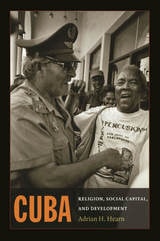
Cuba
Religion, Social Capital, and DevelopmentAdrian H. Hearn
Duke University Press, 2008
While conducting research, Hearn lived for one year each in two Santería temple-houses: one located in Old Havana and the other in Santiago de Cuba. During those stays he conducted numerous interviews: with the historian of Havana and the conservationist of Santiago de Cuba (officials roughly equivalent to mayors in the United States), acclaimed writers, influential leaders of Afro-Cuban religions, and many citizens involved in community development initiatives. Hearn draws on those interviews, his participant observation in the temple-houses, case studies, and archival research to convey the daily life experiences and motivations of religious practitioners, development workers, and politicians. Using the concept of social capital, he explains the state’s desire to incorporate tightly knit religious groups into its community development projects, and he illuminates a fundamental challenge facing Cuba’s religious communities: how to maintain their spiritual integrity and internal solidarity while participating in state-directed projects.
Cuban Cinema
Michael Chanan
University of Minnesota Press, 2004
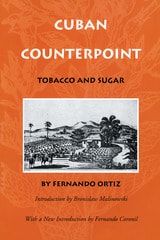
Cuban Counterpoint
Tobacco and SugarFernando Ortiz
Duke University Press, 1995
Ortiz presents his understanding of Cuban history in two complementary sections written in contrasting styles: a playful allegorical tale narrated as a counterpoint between tobacco and sugar and a historical analysis of their development as the central agricultural products of the Cuban economy. Treating tobacco and sugar both as agricultural commodities and as social characters in a historical process, he examines changes in their roles as the result of transculturation. His work shows how transculturation, a critical category Ortiz developed to grasp the complex transformation of cultures brought together in the crucible of colonial and imperial histories, can be used to illuminate not only the history of Cuba, but, more generally, that of America as well.
This new edition includes an introductory essay by Fernando Coronil that provides a contrapuntal reading of the relationship between Ortiz’s book and its original introduction by the renowned anthropologist Bronislaw Malinowski. Arguing for a distinction between theory production and canon formation, Coronil demonstrates the value of Ortiz’s book for anthropology as well as Cuban, Caribbean, and Latin American studies, and shows Ortiz to be newly relevant to contemporary debates about modernity, postmodernism, and postcoloniality.

Cuban Miami
Robert M Levine
Rutgers University Press, 2000
For two centuries, Cuban exiles have found their way to the United States, especially to Florida. But since Castro's victory in 1959, Miami has seen almost one million Cubans arrive by sea and air. The impact on this area has been enormous. Miami---known as the "Exile Capital"---has a greater cultural affinity to Havana and the rest of Latin America than to Tallahassee, Florida's capital.
Cuban Miami is the first analytical, photographic record of Cuban migration to south Florida. Robert M. Levine and Moises Asis have interviewed members of every sector of the Cuban exile community, from the first pioneers to the mass waves in the early 1960s to those who arrived by raft during the late 1990s. In their wide-ranging investigation of Cuban-U.S. history, they touch upon all aspects of Cuban influence: politics, cuisine, music, assimilation, discrimination, and institution buildings. Miami has more Cuban food establishments than the nearby island does. The city has been fertile ground for germinating a unique synthesis of Cuban and Americans are the most prosperous immigrant group in the United States today, this success has come at a price---living in exile can exact a personal toll.
Cuban Miami is a feast for the eyes, including 180 photographs and original cartoons drawn for the book by Jose M. Varela, a well-known member of the Cuban-American community.
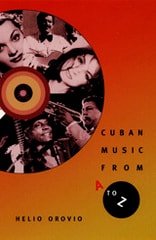
Cuban Music from A to Z
Helio Orovio
Duke University Press, 2004
The life’s work of Cuban historian and musician Helio Orovio, Cuban Music from A to Z presents the people, genres, and history of Cuban music. Arranged alphabetically and cross-referenced, the entries span from Abakuá music and dance to Eddy Zervigón, a Cuban bandleader based in New York City. They reveal an extraordinary fusion of musical elements, evident in the unique blend of African and Spanish traditions of the son musical genre and in the integration of jazz and rumba in the timba style developed by bands like Afrocuba, Chucho Valdés’s Irakeke, José Luis Cortés’s ng La Banda, and the Buena Vista Social Club. Folk and classical music, little-known composers and international superstars, drums and string instruments, symphonies and theaters—it’s all here.
Cuban Palimpsests
Jose Quiroga
University of Minnesota Press, 2005
In Cuban Palimpsests, José Quiroga explores the sites, both physical and imaginative, where memory bears upon Cuba’s collective history in ways that illuminate this extended moment of uncertainty. Crossing geographical, political, and cultural borders, Quiroga moves with ease between Cuba, Miami, and New York. He traces generational shifts within the exile community, contrasts Havana’s cultural richness with its economic impoverishment, follows the cloak-and-dagger narratives of revolutionary and counterrevolutionary spy fiction and film, and documents the world’s ongoing fascination with Cuban culture.
From the nostalgic photographs of Walker Evans to the iconic stature of Fidel Castro, from the literary expressions of despair to the beat of Cuban musical rhythms, from the haunting legacy of artist Ana Mendieta to the death of Celia Cruz and the reburial of Che Guevara, Cuban Palimpsests memorializes the ruins of Cuba’s past and offers a powerful meditation on its enigmatic place within the new world order.
José Quiroga is professor and department chair of Spanish and Portuguese at Emory University. He is the author of Understanding Octavio Paz and Tropics of Desire: Interventions from Queer Latino America.
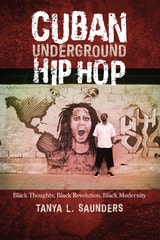
Cuban Underground Hip Hop
Black Thoughts, Black Revolution, Black ModernityBy Tanya L. Saunders
University of Texas Press, 2015
Honorable Mention, Barbara T. Christian Literary Award, Caribbean Studies Association, 2017
In the wake of the 1959 Cuban Revolution, a key state ideology developed: racism was a systemic cultural issue that ceased to exist after the Revolution, and any racism that did persist was a result of contained cases of individual prejudice perpetuated by US influence. Even after the state officially pronounced the end of racism within its borders, social inequalities tied to racism, sexism, and homophobia endured, and, during the economic liberalization of the 1990s, widespread economic disparities began to reemerge.
Cuban Underground Hip Hop focuses on a group of self-described antiracist, revolutionary youth who initiated a social movement (1996–2006) to educate and fight against these inequalities through the use of arts-based political activism intended to spur debate and enact social change. Their “revolution” was manifest in altering individual and collective consciousness by critiquing nearly all aspects of social and economic life tied to colonial legacies. Using over a decade of research and interviews with those directly involved, Tanya L. Saunders traces the history of the movement from its inception and the national and international debates that it spawned to the exodus of these activists/artists from Cuba and the creative vacuum they left behind. Shedding light on identity politics, race, sexuality, and gender in Cuba and the Americas, Cuban Underground Hip Hop is a valuable case study of a social movement that is a part of Cuba’s longer historical process of decolonization.
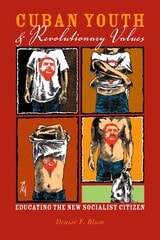
Cuban Youth and Revolutionary Values
Educating the New Socialist CitizenBy Denise F. Blum
University of Texas Press, 2011
Drawing on extensive fieldwork in Havana's secondary schools, Cuban Youth and Revolutionary Values is a remarkable ethnography, charting the government's attempts to transform a future generation of citizens. While Cuba's high literacy rate is often lauded, the little-known dropout rates among teenagers receive less scrutiny. In vivid, succinct reporting, educational anthropologist Denise Blum now shares her findings regarding this overlooked aspect of the Castro legacy.
Despite the fact that primary-school enrollment rates exceed those of the United States, the reverse is true for the crucial years between elementary school and college. After providing a history of Fidel Castro's educational revolution begun in 1953, Denise Blum delivers a close examination of the effects of the program, which was designed to produce a society motivated by benevolence rather than materialism. Exploring pioneering pedagogy, the notion of civic education, and the rural components of the program, Cuban Youth and Revolutionary Values brims with surprising findings about one of the most intriguing social experiments in recent history.
Cubans in Angola
South-South Cooperation and Transfer of Knowledge, 1976–1991Christine Hatzky
University of Wisconsin Press, 2015