Results by title
158 books match the query 'Cultural assimilation' and 12 start with c
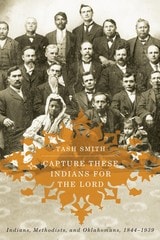
Capture These Indians for the Lord
Indians, Methodists, and Oklahomans, 1844-1939Tash Smith
University of Arizona Press, 2014
In Capture These Indians for the Lord, Tash Smith traces the trajectory of the Southern Methodist Church in Oklahoma when it was at the frontlines of the relentless push toward western expansion. Although many Native people accepted the missionaries’ religious practices, Smith shows how individuals found ways to reconcile the Methodist force with their traditional cultural practices. When the white population of Indian Territory increased and Native sovereignty came under siege during the allotment era of the 1890s, white communities marginalized Indians within the Church and exploited elements of mission work for their own benefit.
Later, with white indifference toward Indian missions peaking in the early twentieth century, Smith explains that as the remnants of the Methodist power weakened, Indian membership regained control and used the Church to regenerate their culture. Throughout, Smith explores the complex relationships between white and Indian community members and how these phenomena shaped Methodist churches in the twentieth century.
Changing on the Fly
Hockey through the Voices of South Asian CanadiansCourtney Szto
Rutgers University Press, 2021
Hockey and multiculturalism are often noted as defining features of Canadian culture; yet, rarely are we forced to question the relationship and tensions between these two social constructs. This book examines the growing significance of hockey in Canada’s South Asian communities. The Hockey Night in Canada Punjabi broadcast serves as an entry point for a broader consideration of South Asian experiences in hockey culture based on field work and interviews conducted with hockey players, parents, and coaches in the Lower Mainland of British Columbia. This book seeks to inject more “color” into hockey’s historically white dominated narratives and representations by returning hockey culture to its multicultural roots. It encourages alternative and multiple narratives about hockey and cultural citizenship by asking which citizens are able to contribute to the webs of meaning that form the nation’s cultural fabric.
Children of the Dragonfly
Native American Voices on Child Custody and EducationRobert Bensen
University of Arizona Press, 2001
Native American children have long been subject to removal from their homes for placement in residential schools and, more recently, in foster or adoptive homes. The governments of both the United States and Canada, having reduced Native nations to the legal status of dependent children, historically have asserted a surrogate parentalism over Native children themselves.
Children of the Dragonfly is the first anthology to document this struggle for cultural survival on both sides of the U.S.-Canadian border. Through autobiography and interviews, fiction and traditional tales, official transcripts and poetry, these voices— Seneca, Cherokee, Mohawk, Navajo, and many others— weave powerful accounts of struggle and loss into a moving testimony to perseverance and survival. Invoking the dragonfly spirit of Zuni legend who helps children restore a way of life that has been taken from them, the anthology explores the breadth of the conflict about Native childhood.
Included are works of contemporary authors Sherman Alexie, Joy Harjo, Luci Tapahonso, and others; classic writers Zitkala-Sa and E. Pauline Johnson; and contributions from twenty important new writers as well. They take readers from the boarding school movement of the 1870s to the Sixties Scoop in Canada and the Indian Child Welfare Act of 1978 in the United States. They also spotlight the tragic consequences of racist practices such as the suppression of Indian identity in government schools and the campaign against Indian childbearing through involuntary sterilization.
CONTENTS
Part 1. Traditional Stories and Lives
Severt Young Bear (Lakota) and R. D. Theisz, To Say "Child"
Zitkala-Sa (Yankton Sioux), The Toad and the Boy
Delia Oshogay (Chippewa), Oshkikwe's Baby
Michele Dean Stock (Seneca), The Seven Dancers
Mary Ulmer Chiltoskey (Cherokee), Goldilocks Thereafter
Marietta Brady (Navajo), Two Stories
Part 2. Boarding and Residential Schools
Embe (Marianna Burgess), from Stiya: or, a Carlisle Indian Girl at Home
Black Bear (Blackfeet), Who Am I?
E. Pauline Johnson (Mohawk), As It Was in the Beginning
Lee Maracle (Stoh:lo), Black Robes
Gordon D. Henry, Jr. (White Earth Chippewa), The Prisoner of Haiku
Luci Tapahonso (Navajo), The Snakeman
Joy Harjo (Muskogee), The Woman Who Fell from the Sky
Part 3. Child Welfare and Health Services
Problems That American Indian Families Face in Raising Their Children, United States Senate, April 8 and 9, 1974
Mary TallMountain (Athabaskan), Five Poems
Virginia Woolfclan, Missing Sister
Lela Northcross Wakely (Potawatomi/Kickapoo), Indian Health
Sherman Alexie (Spokane/Coeur d'Alene), from Indian Killer
Milton Lee (Cheyenne River Sioux) and Jamie Lee, The Search for Indian
Part 4. Children of the Dragonfly
Peter Cuch (Ute), I Wonder What the Car Looked Like
S. L. Wilde (Anishnaabe), A Letter to My Grandmother
Eric Gansworth (Onondaga), It Goes Something Like This
Kimberly Roppolo (Cherokee/Choctaw/Creek), Breeds and Outlaws
Phil Young (Cherokee) and Robert Bensen, Wetumka
Lawrence Sampson (Delaware/Eastern Band Cherokee), The Long Road Home
Beverley McKiver (Ojibway), When the Heron Speaks
Joyce carlEtta Mandrake (White Earth Chippewa), Memory Lane Is the Next Street Over
Alan Michelson (Mohawk), Lost Tribe
Patricia Aqiimuk Paul (Inupiaq), The Connection
Terry Trevor (Cherokee/Delaware/Seneca), Pushing up the Sky
Annalee Lucia Bensen (Mohegan/Cherokee), Two Dragonfly Dream Songs
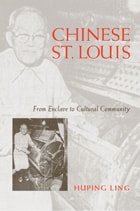
Chinese St Louis
From Enclave To Cultural CommunityHuping Ling
Temple University Press, 2004
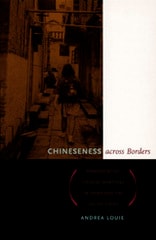
Chineseness across Borders
Renegotiating Chinese Identities in China and the United StatesAndrea Louie
Duke University Press, 2004
Louie focuses on “In Search of Roots,” a program that takes young Chinese American adults of Cantonese descent to visit their ancestral villages in China’s Guangdong province. Through ethnographic interviews and observation, Louie examines the experiences of Chinese Americans both during village visits in China and following their participation in the program, which she herself took part in as an intern and researcher. She presents a vivid portrait of two populations who, though connected through family ties generations back, are meeting for the first time in the context of a rapidly changing contemporary China. Louie situates the participants’ and hosts’ shifting understandings of China and Chineseness within the context of transnational flows of people, media, goods, and money; China’s political and economic policies; and the racial and cultural politics of the United States.

Claiming the Oriental Gateway
Prewar Seattle and Japanese AmericaAuthored by Shelley S. Lee
Temple University Press, 2012
In Claiming the Oriental Gateway, Shelley Sang-Hee Lee explores the various intersections of urbanization, ethnic identity, and internationalism in the experience of Japanese Americans in early twentieth-century Seattle. She examines the development and self-image of the city by documenting how U.S. expansion, Asian trans-Pacific migration, and internationalism were manifested locally—and how these forces affected residents’ relationships with one another and their surroundings.
Lee details the significant role Japanese Americans—both immigrants and U.S. born citizens—played in the social and civic life of the city as a means of becoming American. Seattle embraced the idea of cosmopolitanism and boosted its role as a cultural and commercial "Gateway to the Orient" at the same time as it limited the ways in which Asian Americans could participate in the public schools, local art production, civic celebrations, and sports. She also looks at how Japan encouraged the notion of the "gateway" in its participation in the Alaska-Yukon-Pacific Exposition and International Potlach.
Claiming the Oriental Gateway thus offers an illuminating study of the "Pacific Era" and trans-Pacific relations in the first four decades of the twentieth century.
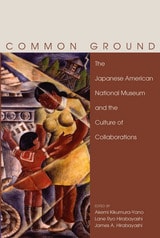
Common Ground
The Japanese American National Museum and the Culture of CollaborationsAkemi Kikumura-Yano
University Press of Colorado, 2005
Current scholarship in museum studies is generally limited to interpretations by scholars and curators. Common Ground brings descriptive data to the intellectual canon and illustrates how museum institutions must be transformed and recreated to suit the needs of the twenty-first century.
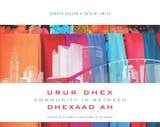
Community In-Between / Urur Dhex Dhexad Ah
Portraits of Somali-Americans in ColumbusQorsho Hassan and Ruth M. Smith
The Ohio State University Press, 2017
A combination of storytelling and research connect each narrative to another, creating a strong framework for capturing the roles of young Somali Americans in community building through innovative initiatives such as designing a mixer bottle, beginning charitable programs, and educating the Somali community on voter rights. Two community artists help to capture the participants in their natural spaces, and their journey, aided by their empowering mentor, Riya Jama, bridges the gap of Somali females and their access to photography.
The portraits, stories, and artifacts throughout the book create a modicum of belonging. This new generation resiliently overcomes challenges such as racism, xenophobia, and Islamophobia while still maintaining their hope in the future. Community In-Between captures their spirit and unwavering faith.
The portraits, stories, and artifacts throughout the book create a modicum of belonging. This new generation resiliently overcomes challenges such as racism, xenophobia, and Islamophobia while still maintaining their hope in the future. Community In-Between captures their spirit and unwavering faith.
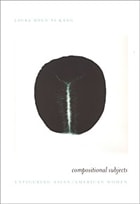
Compositional Subjects
Enfiguring Asian/American WomenLaura Hyun Yi Kang
Duke University Press, 2002
The book opens by tracking the jagged emergence of “Asian American women” as a distinct social identity over the past three decades. Kang then directs critical attention to how the attempts to compose them as discrete subjects of consciousness, visibility, and action demonstrate a broader, ongoing tension between socially particularized subjects and disciplinary knowledges. In addition to the shifting meanings and alignments of “Asian,” “American,” and “women,” the book examines the discourses, political and economic conditions, and institutional formations that have produced Asian/American women as generic authors, as visibly desirable and desiring bodies, as excludable aliens and admissible citizens of the United States, and as the proper labor for transnational capitalism. In analyzing how these enfigurations are constructed and apprehended through a range of modes including autobiography, cinematography, historiography, photography, and ethnography, Kang directs comparative attention to the very terms of their emergence as Asian/American women in specific disciplines.
Finally, Kang concludes with a detailed examination of selected literary and visual works by Korean women artists located in the United States and Canada, works that creatively and critically contend with the problematics of identification and representation that are explored throughout the book. By underscoring the forceful and contentious struggles that animate all of these compositional gestures, Kang proffers Asian/American women as a vexing and productive figure for cultural, political and epistemological critique.

Cosmopolitans and Parochials
Modern Orthodox Jews in AmericaSamuel C. Heilman and Steven M. Cohen
University of Chicago Press, 1989
Heilman and Cohen reveal that American Jewish Orthodoxy is not a monolith by distinguishing its three broad varieties: the "traditionalists," the "centrists," and the "nominally" orthodox. To illuminate this full spectrum of orthodoxy the authors focus on the "centrists," taking us through the dimensions of their ritual observances, religious beliefs, community life, and their social, political, and sexual attitudes. Both parochial and cosmopolitan, orthodox and liberal, these Jews are characterized by their dualism, by their successful involvement in both the modern Western world and in traditional Jewish culture. In painting this provocative and fascinating portrait of what Jewish Orthodoxy has become in America today, Heilman and Cohen's study also sheds light on the larger picture of the persistence of religion in the modern world.
Cultural Persistence
Continuity in Meaning and Moral Responsibility Among the Bearlake AthapaskansScott Rushforth
University of Arizona Press, 1991
Culture across Borders
Mexican Immigration and Popular CultureEdited by David R. Maciel and María Herrera-Sobek
University of Arizona Press, 1998