Results by title
110 books match the query 'Cultural pluralism' and 8 start with c

Center
Ideas and InstitutionsEdited by Liah Greenfeld and Michel Martin
University of Chicago Press, 1988
"Center" is a commonly used term with a variety of meanings. According to editors Liah Greenfeld and Michel Martin, "center" carries a twofold meaning when used as a concept. In its first sense, it is a synonym for "central value system," referring to irreducible values and beliefs that establish the identity of individuals and bind them into a common universe. In its second sense, "center" refers to "central institutional system," the authoritative institutions and persons who often express or embody the central value system. Both meanings imply a corresponding idea of "periphery," referring both to the elements of society that need to be integrated and to institutions and persons who lack authority.
The original essays compiled in this volume examine and apply the concept of the center in different contexts. The contributors come from a broad range of disciplines—classics, religion, philosophy, history, literary criticism, anthropology, political science, and sociology—which serves to underscore the far-reaching significance of the Shilsean theory of society. The interrelated subsets of the "center-periphery" theme addressed here include: symbolic systems, intellectuals, the expansion of the center into the periphery, parallel concepts in the work of other scholars besides Shils, and the paths of research inspired by these concepts. The volume features an introspective essay by Shils himself, in which he reexamines his central ideas in the light of new experiences and the ideas of others, some of them contained in this volume.
By drawing together such diverse scholars around a unified idea, this collection achieves a cohesion that makes it an exciting contribution to the comparative analysis of social and cultural systems. A collective effort in social theory, Center: Ideas and Institutions is a testimony to the breadth and complexity of one of man's ideas.
Century of Difference
How America Changed in the Last One Hundred YearsClaude S. Fischer
Russell Sage Foundation, 1976
Chinese Americans and the Politics of Race and Culture
Sucheng Chan
Temple University Press, 2008
Sucheng Chan introduces this valuable new anthology with a commanding discussion of the field of Chinese American studies, in which she examines its history and points the way ahead. Here she and Madeline Y. Hsu have brought together leading-edge scholarship from a new generation of thinkers, as useful for scholars as it is for undergraduate readers.
The contributors address a broad range of issues, from the activism of left-wing and Communist Chinese immigrants to the U.S. in the 1920s and early 1930s and humanitarian relief during the Sino-Japanese War to the construction of new Chinese regional identities in New York.
Confident Pluralism
Surviving and Thriving through Deep DifferenceJohn D. Inazu
University of Chicago Press, 2016
In Confident Pluralism, John D. Inazu analyzes the current state of the country, orients the contemporary United States within its broader history, and explores the ways that Americans can—and must—strive to live together peaceably despite our deeply engrained differences. Pluralism is one of the founding creeds of the United States—yet America’s society and legal system continues to face deep, unsolved structural problems in dealing with differing cultural anxieties and differing viewpoints. Inazu not only argues that it is possible to cohabitate peacefully in this country, but also lays out realistic guidelines for our society and legal system to achieve the new American dream through civic practices that value toleration over protest, humility over defensiveness, and persuasion over coercion.
The paperback edition includes a new preface that addresses the election of Donald Trump, the decline in civic discourse after the election, the Nazi march in Charlottesville, and more, this new edition of Confident Pluralism is an essential clarion call during one of the most troubled times in US history. Inazu argues for institutions that can work to bring people together as well as political institutions that will defend the unprotected. Confident Pluralism offers a refreshing argument for how the legal system can protect peoples’ personal beliefs and differences and provides a path forward to a healthier future of tolerance, humility, and patience.
Confident Pluralism
Surviving and Thriving through Deep DifferenceJohn D. Inazu
University of Chicago Press, 2018
In Confident Pluralism, John D. Inazu analyzes the current state of the country, orients the contemporary United States within its broader history, and explores the ways that Americans can—and must—strive to live together peaceably despite our deeply engrained differences. Pluralism is one of the founding creeds of the United States—yet America’s society and legal system continues to face deep, unsolved structural problems in dealing with differing cultural anxieties and differing viewpoints. Inazu not only argues that it is possible to cohabitate peacefully in this country, but also lays out realistic guidelines for our society and legal system to achieve the new American dream through civic practices that value toleration over protest, humility over defensiveness, and persuasion over coercion.
With a new preface that addresses the election of Donald Trump, the decline in civic discourse after the election, the Nazi march in Charlottesville, and more, this new edition of Confident Pluralism is an essential clarion call during one of the most troubled times in US history. Inazu argues for institutions that can work to bring people together as well as political institutions that will defend the unprotected. Confident Pluralism offers a refreshing argument for how the legal system can protect peoples’ personal beliefs and differences and provides a path forward to a healthier future of tolerance, humility, and patience.
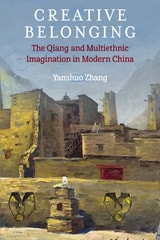
Creative Belonging
The Qiang and Multiethnic Imagination in Modern ChinaYanshuo Zhang
University of Michigan Press, 2026
China is a multicultural country home to fifty-five ethnic minority groups, yet due to linguistic and cultural barriers many of these groups remain understudied or unknown in the West. The Qiang, one of modern China’s officially recognized ethnic minorities, is also China’s longest-standing ethnoracial identity marker that has existed since the earliest recorded history of China. Creative Belonging investigates the formation and evolution of the Qiang as a people, a concept, and a cultural history in China. It further examines how the contemporary Qiang ethnic group interacts strategically with mainstream Chinese society, challenging the historically entrenched hierarchies between the sociocultural “centers” of China and its ethnic “peripheries.”
This book is based on years of ethnographic and textual-archival research in the Himalayan regions of southwest China, where the contemporary Qiang group resides. Drawing on a diverse range of official and local political discourses and previously unstudied literary, historiographical, and cinematic works, Yanshuo Zhang illuminates how the Qiang have carved out spaces of “creative belonging” within the parameters of multiculturalism in contemporary China. Rooted in ethnographic and textual-archival research, the book presents original materials produced by Qiang indigenous writers, scholars, artists, grassroots village cultural activists, and entrepreneurs at both the local and the global levels. Creative Belonging invites readers to rethink ethnicity and national belonging in China by centering minority groups’ efforts to expand the meanings and implications of “Chinese culture.”
Cultural Humility
David A. Hurley, Sarah R. Kostelecky, and Lori Townsend
American Library Association, 2022
Cultural humility is emerging as a preferred approach to diversity, equity, and inclusion (DEI) efforts within librarianship. At a time when library workers are critically examining their professional practices, cultural humility offers a potentially transformative framework of compassionate accountability; it asks us to recognize the limits to our knowledge, reckon with our ongoing fallibility, educate ourselves about the power imbalances in our organizations, and commit to making change. This Special Report introduces the concept and outlines its core tenets. As relevant to those currently studying librarianship as it is to long-time professionals, and applicable across multiple settings including archives and museums, from this book readers will
- learn why cultural humility offers an ideal approach for navigating the spontaneous interpersonal interactions in libraries, whether between patrons and staff or amongst staff members themselves;
- understand how it intersects with cultural competence models and critical race theory;
- see the ways in which cultural humility’s awareness of and commitment to challenging inequitable structures of power can act as a powerful catalyst for community engagement;
- come to recognize how a culturally humble approach supports DEI work by acknowledging the need for mindfulness in day-to-day interactions;
- reflect upon cultural humility’s limitations and the criticisms that some have leveled against it; and
- take away concrete tools for undertaking and continuing such work with patience and hope.
Cultural Pluralism, Identity Politics, and the Law
Austin Sarat and Thomas R. Kearns, Editors
University of Michigan Press, 2001