Results by title
89 books match the query 'Curricula' and 18 start with c
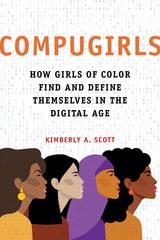
COMPUGIRLS
How Girls of Color Find and Define Themselves in the Digital AgeKimberly A. Scott
University of Illinois Press, 2021
Kimberly A. Scott explores this question and others as she details the National Science Foundation-funded enrichment project COMPUGIRLS. This groundbreaking initiative teaches tech skills to adolescent girls of color but, as importantly, offers a setting that emphasizes empowerment, community advancement, and self-discovery. Scott draws on her experience as an architect of COMPUGIRLS to detail the difficulties of translating participants' lives into a digital context while tracing how the program evolved. The dramatic stories of the participants show them blending newly developed technical and communication skills in ways designed to spark effective action and bring about important change.
A compelling merger of theory and storytelling, COMPUGIRLS provides a much-needed roadmap for understanding how girls of color can find and define their selves in today's digital age.
Called to Reckon
Replacing History and Reclaiming Mission at a Midwestern CollegeEdited by Jane E. Simonsen
Southern Illinois University Press, 2025
Canons by Consensus
Critical Trends and American Literature AnthologiesJoseph Csicsila, with a foreword by Tom Quirk
University of Alabama Press, 2004
The first systematic analysis of American literature textbooks used by college instructors in the last century
Scholars have long noted the role that college literary anthologies play in the rising and falling reputations of American authors. Canons by Consensus examines this classroom fixture in detail to challenge and correct a number of assumptions about the development of the literary canon throughout the 20th century.
Joseph Csicsila analyzes more than 80 anthologies published since 1919 and traces not only the critical fortunes of individual authors, but also the treatment of entire genres and groupings of authors by race, region, gender, and formal approach. In doing so, he calls into question accusations of deliberate or inadvertent sexism and racism. Selections by anthology editors, Csicsila demonstrates, have always been governed far more by prevailing trends in academic criticism than by personal bias.
Academic anthologies are found to constitute a rich and often overlooked resource for studying American literature, as well as an irrefutable record of the academy’s changing literary tastes throughout the last century.

Censorship and Selection
Issues and Answers for SchoolsHenry Reichman
American Library Association, 2001
Civics in a Digital Republic
A Transformative CurriculumRobert A. Waterson
West Virginia University Press, 2012
This innovative curriculum book provides key materials, resources, and tools to help secondary educators prepare their students to be engaged citizens of their community, state, nation and world. Five complete units of instruction, based on West Virginia Content Standards and Objectives, provide meaningful lessons while being mindful of the transition from tangible text to more digital curricula:
•Rights of the Individual•Freedoms of the Individual
•Responsibilities of the Individual
•Beliefs Concerning Societal Conditions
•Financial Literacy
•4 culminating activities for enrichment opportunities
•A matrix illustrating the West Virginia Content Standards and Objectives covered
•A matrix illustrating compliance with the National Council for the Social Studies Standards
•A curriculum toolbox that provides over 70 engaging web sites to visit and explore.
Compelling Belief
The Culture of American SchoolingStephen Arons
University of Massachusetts Press, 1986
Composition and Literature
Bridging the GapEdited by Winifred Bryan Horner
University of Chicago Press, 1983
Composition, Rhetoric, and Disciplinarity
Rita Malenczyk
Utah State University Press, 2018
Edited by four nationally recognized leaders of composition scholarship, Composition, Rhetoric, and Disciplinarity asks a fundamental question: can Composition and Rhetoric, as a discipline, continue its historical commitment to pedagogy without sacrificing equal attention to other areas, such as research and theory? In response, contributors to the volume address disagreements about what it means to be called a discipline rather than a profession or a field; elucidate tensions over the defined breadth of Composition and Rhetoric; and consider the roles of research and responsibility as Composition and Rhetoric shifts from field to discipline.
Outlining a field with a complex and unusual formation story, Composition, Rhetoric, and Disciplinarity employs several lenses for understanding disciplinarity—theory, history, labor, and pedagogy—and for teasing out the implications of disciplinarity for students, faculty, institutions, and Composition and Rhetoric itself. Collectively, the chapters speak to the intellectual and embodied history leading to this point; to questions about how disciplinarity is, and might be, understood, especially with regard to Composition and Rhetoric; to the curricular, conceptual, labor, and other sites of tension inherent in thinking about Composition and Rhetoric as a discipline; and to the implications of Composition and Rhetoric’s disciplinarity for the future.
Contributors: Linda Adler-Kassner, Elizabeth H. Boquet, Christiane Donahue, Whitney Douglas, Doug Downs, Heidi Estrem, Kristine Hansen, Doug Hesse, Sandra Jamieson, Neal Lerner, Jennifer Helene Maher, Barry Maid, Jaime Armin Mejía, Carolyn R. Miller, Kelly Myers, Gwendolynne Reid, Liane Robertson, Rochelle Rodrigo, Dawn Shepherd, Kara Taczak
Compositional Subjects
Enfiguring Asian/American WomenLaura Hyun Yi Kang
Duke University Press, 2002
The book opens by tracking the jagged emergence of “Asian American women” as a distinct social identity over the past three decades. Kang then directs critical attention to how the attempts to compose them as discrete subjects of consciousness, visibility, and action demonstrate a broader, ongoing tension between socially particularized subjects and disciplinary knowledges. In addition to the shifting meanings and alignments of “Asian,” “American,” and “women,” the book examines the discourses, political and economic conditions, and institutional formations that have produced Asian/American women as generic authors, as visibly desirable and desiring bodies, as excludable aliens and admissible citizens of the United States, and as the proper labor for transnational capitalism. In analyzing how these enfigurations are constructed and apprehended through a range of modes including autobiography, cinematography, historiography, photography, and ethnography, Kang directs comparative attention to the very terms of their emergence as Asian/American women in specific disciplines.
Finally, Kang concludes with a detailed examination of selected literary and visual works by Korean women artists located in the United States and Canada, works that creatively and critically contend with the problematics of identification and representation that are explored throughout the book. By underscoring the forceful and contentious struggles that animate all of these compositional gestures, Kang proffers Asian/American women as a vexing and productive figure for cultural, political and epistemological critique.

Constitutional Literacy
A Core Curriculum for a Mulitcultural NationToni Marie Massaro
Duke University Press, 1993
Constitutional Literacy plumbs the most powerful arguments for and against national standards to reveal that these curricular battles reflect a broader, culture-wrenching struggle over whether official recognition of race, ethnicity, gender, religion, or other differences causes more hostility and divisiveness than tolerance. Central to both conflicts is the tension between our desire for a shared national culture--the melting pot ideal--and our fervent belief in our right to dissent. Thus, Massaro shows, the American constitutional commitment to equality, freedom of speech, and freedom of religion is intensely relevant to the curriculum controversy. Constitutional history and practice reveal a crucial paradox: What binds Americans is their common faith in the right to break away from cultural consensus. As such, a call to a national curriculum is inherently a call to conflict and dissent.
Constitutional principles, past education reform efforts, multicultural critiques of American education, modern studies of students' knowledge of American history and government, and ten years of experience teaching law all come into play in Massaro's analysis, and she concludes that shoring up our store of shared knowledge is a proper national objective. But this common store, she insists, must reflect our cultural and ideological differences lest it distort the reality of American life, past and present. Massaro thus proposes that constitutional principles form the basis of a core curriculum for a multicultural nation.
In a debate often characterized by polemics and polls, this eloquent book presses for a different, more nuanced and responsive public vocabulary about race, gender, ethnicity, sexual orientation, and religion. Constitutional literacy, as Massaro defines it here, may be a necessary first step toward this goal.

Contemporary Design Education in Australia
Creating Transdisciplinary FuturesEdited by Lisa Scharoun, Deanna Meth, Philip Crowther, et al.
Intellect Books, 2023
This book offers a range of approaches to teaching higher education design students to learn to design collaboratively and creatively, through transdisciplinary, multidisciplinary, cross-disciplinary, and interdisciplinary learning experiences. It highlights that the premise of traditional disciplinary silos does little to advance the competencies needed for contemporary design and non-linear career paths and emphasizes the importance of higher education being responsive to changes in society, including fluctuating market demands, economic variations, uncertainties, and globalization. Chapters highlight approaches that address this changing landscape, to meet student, industry, and societal needs and reflect a range of design education contexts in which the authors have taught, with a focus on experiences at the Queensland University of Technology (QUT), Brisbane, Australia, but also including collaborations and comparative discussions elsewhere in Australia and globally, including Europe, Asia, the Middle East, and the United States.
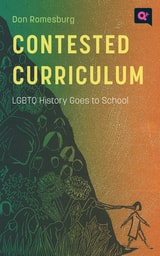
Contested Curriculum
LGBTQ History Goes to SchoolDon Romesburg
Rutgers University Press, 2025
What began in fits and starts in activism and educational materials across the late twentieth century led to the passage of California’s landmark FAIR Education Act in 2011, ensuring that LGBTQ history has a place in the K–12 classroom. Historian Don Romesburg, the lead scholar who worked with advocacy organizations to pass the act, recounts the decades-long struggle to integrate LGBTQ content into history education policy, textbooks, and classrooms. Looking at California and states that followed its lead, he assesses the challenges and opportunities presented by this new way of teaching history. Romesburg’s powerful case for LGBTQ-inclusive education is all the more urgent in this era of anti-gay book bans, regressive legislation, and attempts to diminish the vital role that inclusive and honest history education should play in a democratic nation.
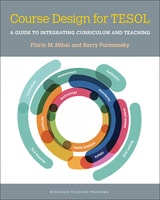
Course Design for TESOL
A Guide to Integrating Curriculum and TeachingFlorin M. Mihai and Kerry Purmensky
University of Michigan Press, 2016
Part I explores the basic language acquisition theories and their influences on current teaching practices in the field. Part II then moves on to the core elements of designing a curriculum or course: conducting the needs analysis, setting of course goals/objectives, designing the syllabus, and writing lesson plans.
Part III: Instructional Activities and Assessment Techniques features chapters on the teaching of listening, speaking, reading, writing, grammar, and culture. Within each of these chapters, the authors address the fundamental issues related to the teaching of each skill and then discuss the components of a good activity for that skill (and how to design one), and then offer four sample activities (one for each type of syllabus) and guidance on assessing that skill. The activities can be adapted for use in a variety of classrooms and settings.
Part IV addresses contemporary trends—curriculum issues in North America and Europe (standards and educational policy), practices in teaching in Asia (particularly China and Korea), and technology-enhanced learning.
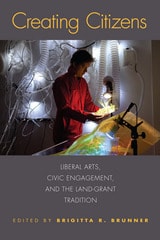
Creating Citizens
Liberal Arts, Civic Engagement, and the Land-Grant TraditionEdited by Brigitta R. Brunner
University of Alabama Press, 2016
Creating Citizens is a collection of essays about Community and Civic Engagement (CCE) learning at land-grant universities.
In Creating Citizens, professors and administrators at Auburn University’s College of Liberal Arts recount valuable, first-hand experiences teaching Community and Civic Engagement (CCE). They demonstrate that, contrary to many expectations, CCE instruction both complements the mission of liberal arts curricula and powerfully advances the fundamental mission of American land-grand institutions.
The nine essays in Creating Citizens offer structures for incorporating CCE initiatives into university programs, instructional methods and techniques, and numerous case studies and examples undertaken at Auburn University but applicable at any university. Many contributors describe their own rewarding experiences with CCE and emphasize the ways outreach efforts reinvigorate their teaching or research.
Creating Citizens recounts the foundation of land-grant institutions by the Morrill Act of 1862. Their mission is to instruct in agriculture, military science, and mechanics, but these goals augmented rather than replaced an education in the classics, or liberal arts. Land-grant institutions, therefore, have a special calling to provide a broad spectrum of society with an education that not only enriched the personal lives of their students, but the communities they are a part of. Creating Citizens demonstrates the important opportunities CCE instruction represents to any university but are especially close to the heart of the mission of land-grant colleges.
In open societies, the role and mission of public institutions of higher learning that are supported by public subsidies are perennial subjects of interest and debate. Creating Citizens provides valuable insights of interest to educators, education administrators, students, and policy makers involved in the field of higher education.
Creating Interdisciplinarity
Interdisciplinary Research and Teaching among College and University FacultyLisa R. Lattuca
Vanderbilt University Press, 2001
Whether exploring the connections between apparently related disciplines, such as English and women's studies, or such seemingly disparate fields as economics and theology, Lattuca moves away from previous definitions based on the degrees of integration across disciplines and instead focuses on the nature of the inquiry behind the work. She organizes her findings around the processes through which faculty pursue interdisciplinarity, the contexts (institutional, departmental, and disciplinary) in which faculty are working, and the ways in which those contexts relate to and affect the interdisciplinary work. Her findings result in useful suggestions for individuals concerned with the meaning of faculty work, the role and impact of disciplines in academe today, and the kinds of issues that should guide the evaluation of faculty scholarship.
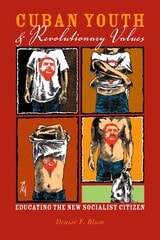
Cuban Youth and Revolutionary Values
Educating the New Socialist CitizenBy Denise F. Blum
University of Texas Press, 2011
Drawing on extensive fieldwork in Havana's secondary schools, Cuban Youth and Revolutionary Values is a remarkable ethnography, charting the government's attempts to transform a future generation of citizens. While Cuba's high literacy rate is often lauded, the little-known dropout rates among teenagers receive less scrutiny. In vivid, succinct reporting, educational anthropologist Denise Blum now shares her findings regarding this overlooked aspect of the Castro legacy.
Despite the fact that primary-school enrollment rates exceed those of the United States, the reverse is true for the crucial years between elementary school and college. After providing a history of Fidel Castro's educational revolution begun in 1953, Denise Blum delivers a close examination of the effects of the program, which was designed to produce a society motivated by benevolence rather than materialism. Exploring pioneering pedagogy, the notion of civic education, and the rural components of the program, Cuban Youth and Revolutionary Values brims with surprising findings about one of the most intriguing social experiments in recent history.

Culture Wars
School and Society in the Conservative RestorationIra Shor
University of Chicago Press, 1992
"An outstanding work of educational theory and history."—John Coatsworth, University of Chicago
Curriculum as Conversation
Transforming Traditions of Teaching and LearningArthur N. Applebee
University of Chicago Press, 1996
“Applebee's central point, the need to teach 'knowledge in context,' is absolutely crucial for the hopes of any reformed curriculum. His experience and knowledge give his voice an authority that makes many of the current proposals on both the left and right seem shallow by comparison.”—Gerald Graff, University of Chicago