Results by title
304 books match the query 'Death' and 10 start with c
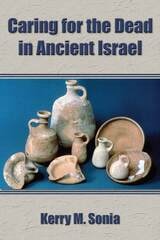
Caring for the Dead in Ancient Israel
Kerry M. Sonia
SBL Press, 2020
A new reconstruction of cultic practices surrounding death in ancient Israel
In Caring for the Dead in Ancient Israel, Kerry M. Sonia examines the commemoration and care for the dead in ancient Israel against the broader cultural backdrop of West Asia. This cult of dead kin, often referred to as ancestor cult, comprised a range of ritual practices in which the living provided food and drink offerings, constructed commemorative monuments, invoked the names of the dead, and protected their remains. This ritual care negotiated the ongoing relationships between the living and the dead and, in so doing, helped construct social, political, and religious landscapes in relationship to the past. Sonia explores the nature of this cult of dead kin in ancient Israel, focusing on its role within the family and household as well as its relationship to Israel’s national deity and the Jerusalem temple.
Features:
- A reevaluation of whether burial and necromantic rituals were part of the cult of dead kin
- A portrait of the various roles Israelite women played in the cult of dead kin
- A reassessment of biblical writers’ attitudes toward the cult of dead kin
Charlotte Brontë's World of Death
By Robert Keefe
University of Texas Press, 1979
By the age of eight, Charlotte Brontë had lost first her mother and then her two older sisters. Later, in a second wave of deaths, her brother and two younger sisters died, leaving her a sole survivor.
With subtlety and imagination, Robert Keefe examines Brontë’s works as the creative response to these losses, particularly the loss of her mother. Terrified and yet fascinated by death, struggling with guilt, remorse, and a deep sense of rejection, Charlotte Brontë found in art a way to come to terms with death through its symbolic reenactment. In her earlier writings she created a fictional world marked by devices that allow her to control or deny death. In her later works these mechanisms evolved into mature expressions of a profound psychological reality.
Brontë’s preoccupation with death is seen in her fiction in the recurring patterns of separation and exile. Keefe traces the development of these motifs in the juvenilia and the four novels: The Professor, Jane Eyre, Shirley, and Villette.
Unique in its emphasis on the maternal relationships in Brontë’s life and art, this study also explores certain aspects of her life that have often puzzled biographers.
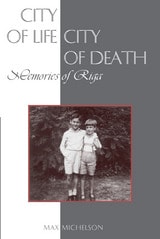
City of Life, City of Death
Memories of RigaMax Michelson
University Press of Colorado, 2001
Michelson had a serene boyhood in an upper middle-class Jewish family in Riga, Latvia--at least until 1940, when the fifteen-year old Michelson witnessed the annexation of Latvia by the Soviet Union. Private properties were nationalized, and Stalin's terror spread to Soviet Latvia. Soon after, Michelson's family was torn apart by the 1941 Nazi invasion of the Soviet Union. He quickly lost his entire family, while witnessing the unspeakable brutalities of war and genocide.
Michelson's memoir is an ode to his lost family; it is the speech of their muted voices and a thank you for their love. Although badly scarred by his experiences, like many other survivors he was able to rebuild his life and gain a new sense of what it means to be alive.
His experiences will be of interest to scholars of both the Holocaust and Eastern European history, as well as the general reader.
Communities of Death
Whitman, Poe, and the American Culture of MourningAdam C. Bradford
University of Missouri Press, 2014
Companions for the Passage
Stories of the Intimate Privilege of Accompanying the DyingMarjorie Ryerson
University of Michigan Press, 2005
Some of the interviewees are religious, some not; some encouraged their loved ones to accept death, others to fight it to the end. There are stories of heroic nurses and of indifferent hospital bureaucracies, of deaths that came too soon, and those that came at the end of a long, rich life. Possessing an affirmative quality that is anything but sentimental, ultimately these stories celebrate the experience of being present at the death of a loved one.

Competitiveness and Death
Trade and Politics in Cars, Beef, and DrugsGary Winslett
University of Michigan Press, 2021
Gary Winslett builds on new trade theories to explain when and why businesses are most likely to lobby governments to reduce these regulatory trade barriers. He argues that businesses prevail when they can connect with broader concerns about national economic competitiveness. He examines how activist organizations overcome collective action problems and defend regulatory differences, arguing that they succeed when they can link their desire for barriers with preventing needless death. Competitiveness and Death provides a political companion to new trade theories in economics, questioning cleavage-based explanations of trade politics, demonstrating the underappreciated importance of activists, suggesting the limits of globalization, providing in-depth examination of previously ignored trade negotiations, qualifying the California Effect (the shift toward stricter regulatory standards), and showing the relative rarity of regulations used as disguised protectionism.
Consoling Ghosts
Stories of Medicine and Mourning from Southeast Asians in ExileJean M. Langford
University of Minnesota Press, 2013
In conversation with emigrants from Laos and Cambodia, Jean M. Langford repeatedly met with spirits: the wandering souls of the seriously ill, dangerous ghosts of those who died by violence, restless ancestors displaced from their homes. For these emigrants, the dead not only appear in memories, safely ensconced in the past, but also erupt with a physical force into the daily life and dreams of the present.
Inspired by these conversations, Consoling Ghosts is a sustained contemplation of relationships with the dying and the dead. At their heart, as Langford’s work reveals, emigrants’ stories are parables not of cultural difference but rather of life and death. Langford inquires how and why spirits become implicated in remembering and responding to violence, whether the bloody violence of war or the more structural violence of social marginalization and poverty. What is at stake, she asks, when spirits break out of their usual confinement as symbolic figures for history, heritage, or trauma to haunt the corridors of hospitals and funeral homes? Emigrants’ theories and stories of ghosts, Langford suggests, inherently question the metaphorical status of spirits, in the process challenging both contemporary bioethics of dying and dominant styles of mourning. Consoling Ghosts explores the possibilities opened up by a more literal existence of ghosts, from the confrontation of shades of past violence through bodily ritual to rites of mourning that unfold in acts of material care for the dead instead of memorialization.
Ultimately the book invites us to consider alternate ways of facing death, conducting relationships with the dead and dying, and addressing the effects of violence that continue to reverberate in bodies and social worlds.
Continuing Bonds with the Dead
Parental Grief and Nineteenth-Century American AuthorsHarold K. Bush
University of Alabama Press, 2016
Grief transformed into legacy—how loss shaped the soul of American literature.
Harold K. Bush's Continuing Bonds with the Dead examines the profound transfiguration that the death of a child wrought on the literary work of nineteenth-century American writers. Taking as his subjects Harriet Beecher Stowe, Abraham Lincoln, William Dean Howells, Mark Twain, and W. E. B. Du Bois, Bush demonstrates how the death of a child became the defining "before-and-after moment" in their lives as adults and as artists. In narrating their struggles, Bush maps the intense field of creative energy induced by reverberating waves of parental grief and the larger nineteenth-century culture of mortality and grieving.
Bush explores in detail how each of these five writers grappled with and were altered by the loss of a child. He writes, for example, with moving insights about how the famed author of Adventures of Huckleberry Finn found himself adrift on a river of grief when meningitis struck down his daughter, Susy. In his deeply learned exploration of Twain's subsequent work, Bush illuminates how Twain wrote to cope with Susy's death, to make sense of her persistent presence in his life, and possibly to redeem her loss. Passionate and personal, Bush's insightful prose traces the paths of personal transformation each of these emblematic American writers took in order to survive the spiritual trauma of loss.
The savage Civil War was America's shared "before and after moment," the pivot upon which the nation's future swung. Bush's account of these five writers' grief amplifies our understanding of America's evolving, national relationship to mourning from then to the present.
Coping with Loss
A Guide to Death, Grief and Clinical Experiences with Dying PatientsErin Currey
Michigan Publishing Services, 2025
In a cure-focused profession, the death of a patient can often feel like a failure. Yet, every patient will inevitably transition from health to illness, independence to dependence, and life to death. These transitions often mark some of the most meaningful interactions between patients and care providers. Coping with Loss is a self-directed workbook that provides addresses common questions, concerns, and emotional responses to these interactions with dying patients. Each lesson opens with real stories of professional grief that will resonate with healthcare professionals at multiple stages of their careers. Critical topics covered include recognizing the diverse presentations of grief, identifying dying patients, decompressing individually, and debriefing as a team. Significant portions of the text discuss how challenging patient cases impact the formation of professional identity. Ultimately, this workbook provides a place for healthcare providers to reflect on their patient interactions and learn how to support themselves and their healthcare teams through grief.
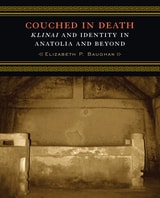
Couched in Death
Klinai and Identity in Anatolia and BeyondElizabeth P. Baughan
University of Wisconsin Press, 2013